Before an agent can plan, remember, or act, something has to decide what runs next, what happens when a step fails, and where the state lives between calls — that is workflow orchestration, and it is one of the two foundations this theme rests on. Skip it and every later pattern in the stack — planning, memory, multi-agent coordination — inherits control flow nobody actually designed. For an experienced developer, orchestration is also the most familiar-looking piece of the agent stack: DAGs, state machines, and retries are backend concerns wearing a new domain.
Two orchestration paradigms dominate 2026: DAGs for steps you can fix in advance, graph state machines for pipelines that loop and branch at runtime.
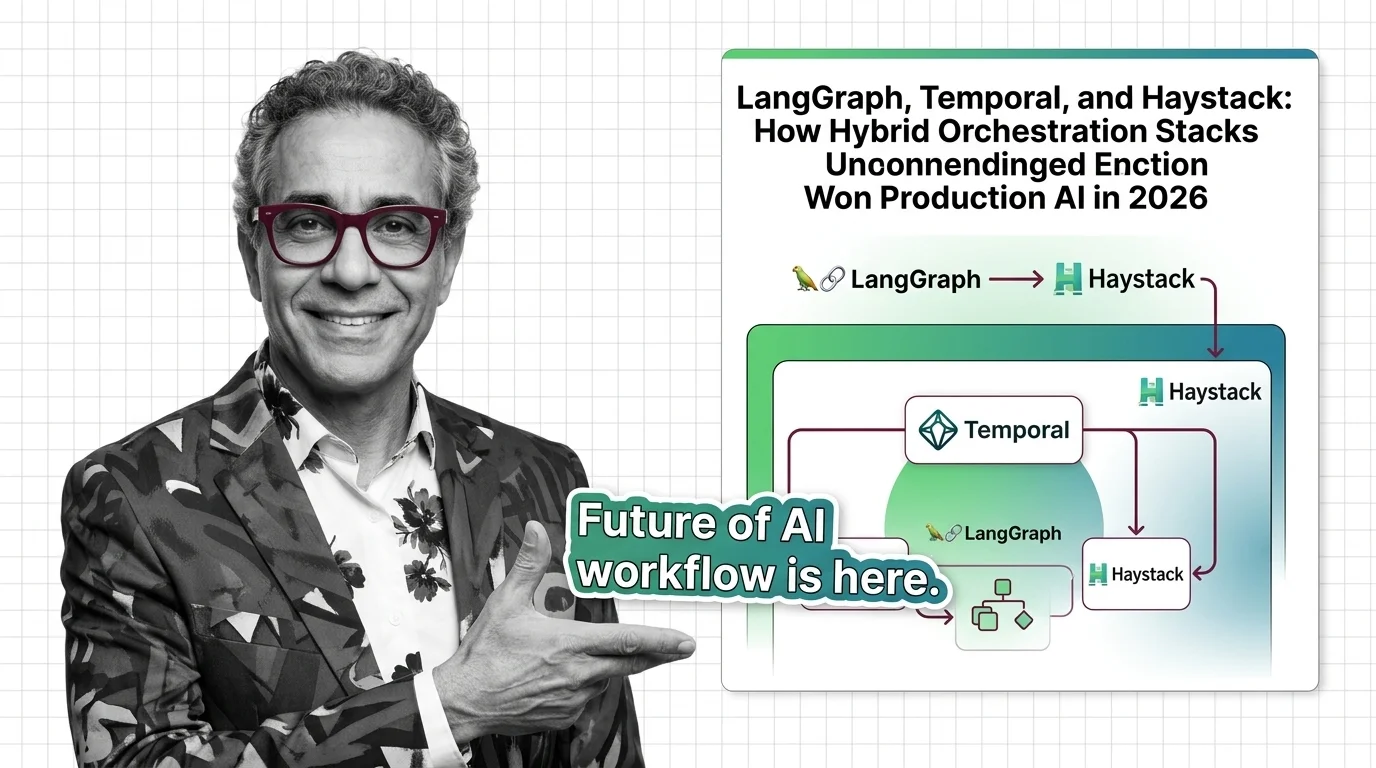
Production stacks increasingly pair a reasoning layer, like LangGraph, with a durable execution engine, like Temporal, instead of asking one tool to do both jobs.
The major orchestrators split by boundary, not feature list — LangGraph owns agent state, Temporal owns crash-surviving durability, Prefect owns the data pipeline around the agent.
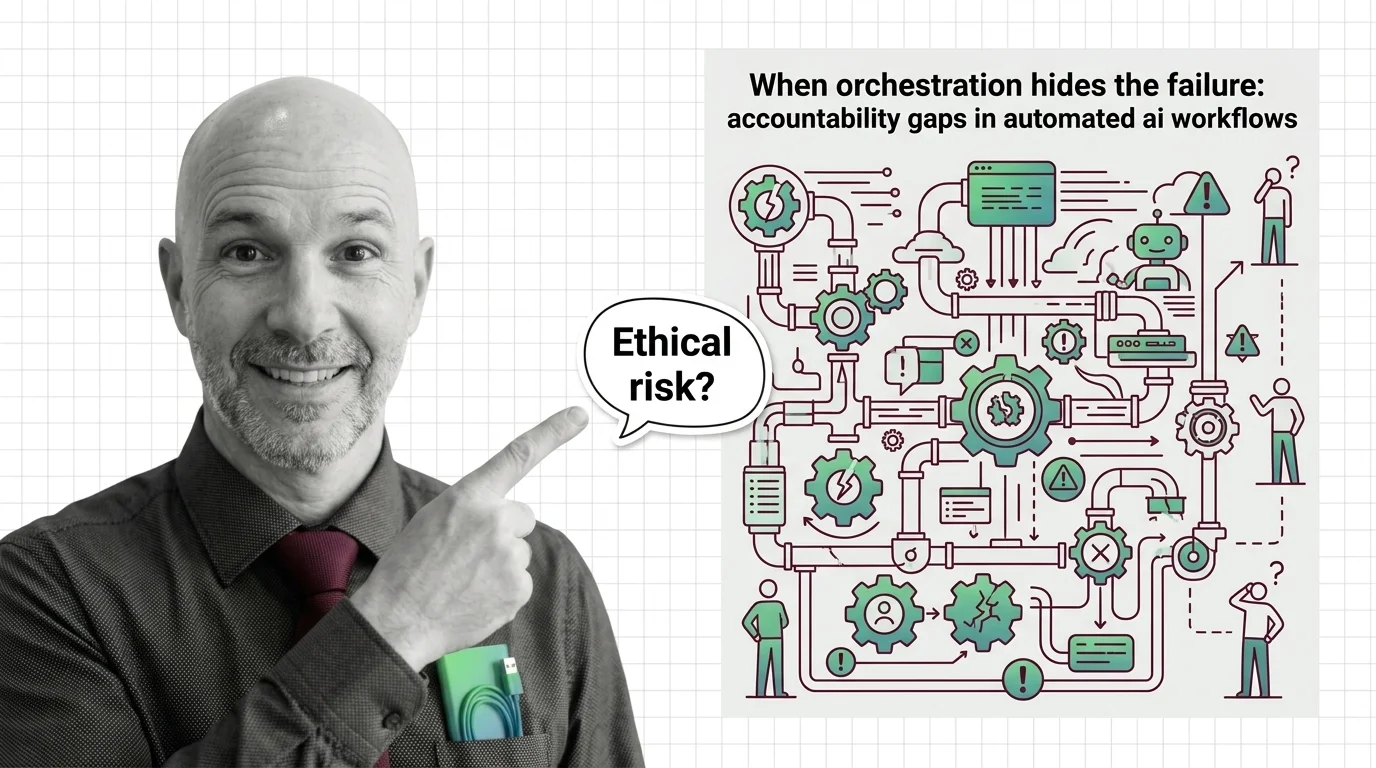
A workflow can look healthy on every dashboard metric while a step loops silently and produces confidently wrong output — orchestration guarantees structure, not correctness.
Reading this topic: from the two shapes to the failure mode nobody logs
Retries fix crashes, not confidently wrong output.
How workflow orchestration differs from state management and planning
Two neighbouring topics get folded into orchestration by habit, and each folding costs you a design decision.
Orchestration decides the step graph, branching, and retry policy; agent state management decides where the execution position persists between calls. A DAG can run entirely stateless, restarting fresh on every retry; a stateful agent can exist with no DAG or state machine wrapped around it at all. The two concerns are often bundled inside the same framework — LangGraph does both — but they answer different questions: “what happens next” versus “where did we leave off.”
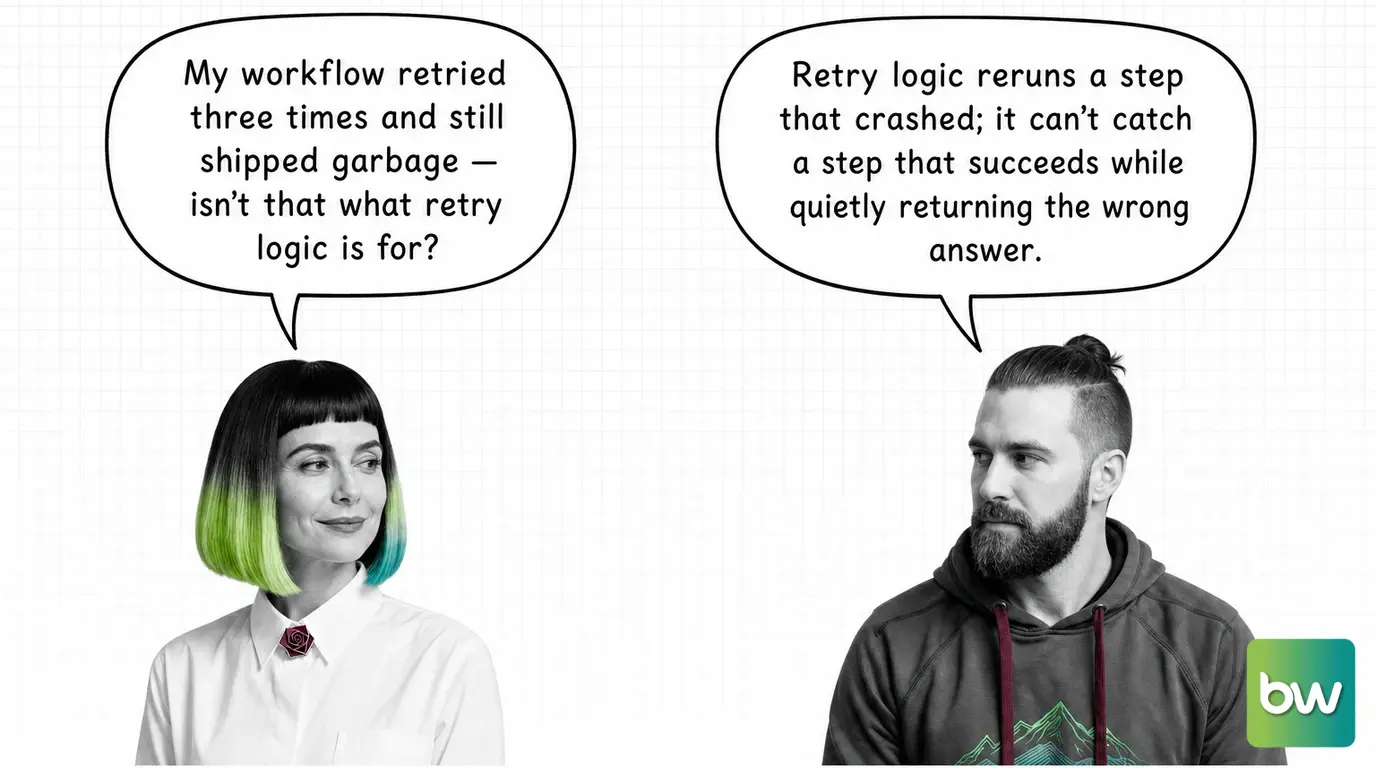
Orchestration’s retry logic re-runs a step that raised an error; it cannot detect a step that failed silently by returning a confident, wrong answer. Agent planning and reasoning patterns like Reflexion catch that failure mode instead, by having the model critique its own output — a semantic check no orchestrator performs. Production pipelines increasingly need both: deterministic retries for crashes, planning-level self-correction for wrong-but-successful steps.
Common questions about workflow orchestration
Q: Do I need a workflow orchestrator for a pipeline with only two or three steps?
A: Usually not. A small, fixed sequence with basic error handling gets you most of the reliability an orchestrator provides, without the extra infrastructure. The production guide treats orchestration as the answer to specific failure modes — crashes, long-running state, cross-boundary retries — so if none of those apply yet, wait.
Q: What’s the difference between an orchestrator retrying a step and a model retrying itself?
A: An orchestrator’s retry logic re-runs a step that raised an error; it cannot tell a step that failed silently by returning a confident, wrong answer. Planning patterns like Reflexion catch that instead, by having the model critique its own output — see the technical limits of DAG and state-machine orchestrators for where retry logic actually stops working.
Q: Why are production teams running more than one orchestration layer at once?
A: Because a single tool rarely owns both jobs well: reasoning frameworks handle agent state cleanly but not a server crash mid-run. Hybrid stacks wrap a reasoning layer like LangGraph inside a durable executor like Temporal, so each tool covers the failure mode it is actually built for.
Q: Can a workflow look healthy while it is actually failing?
A: Yes. A step can loop on the same output for tens of minutes while every dashboard metric stays green, because a 200 response and low latency say nothing about whether the content produced is correct. The accountability gaps this creates traces who is positioned to notice that kind of failure, and who usually isn’t.
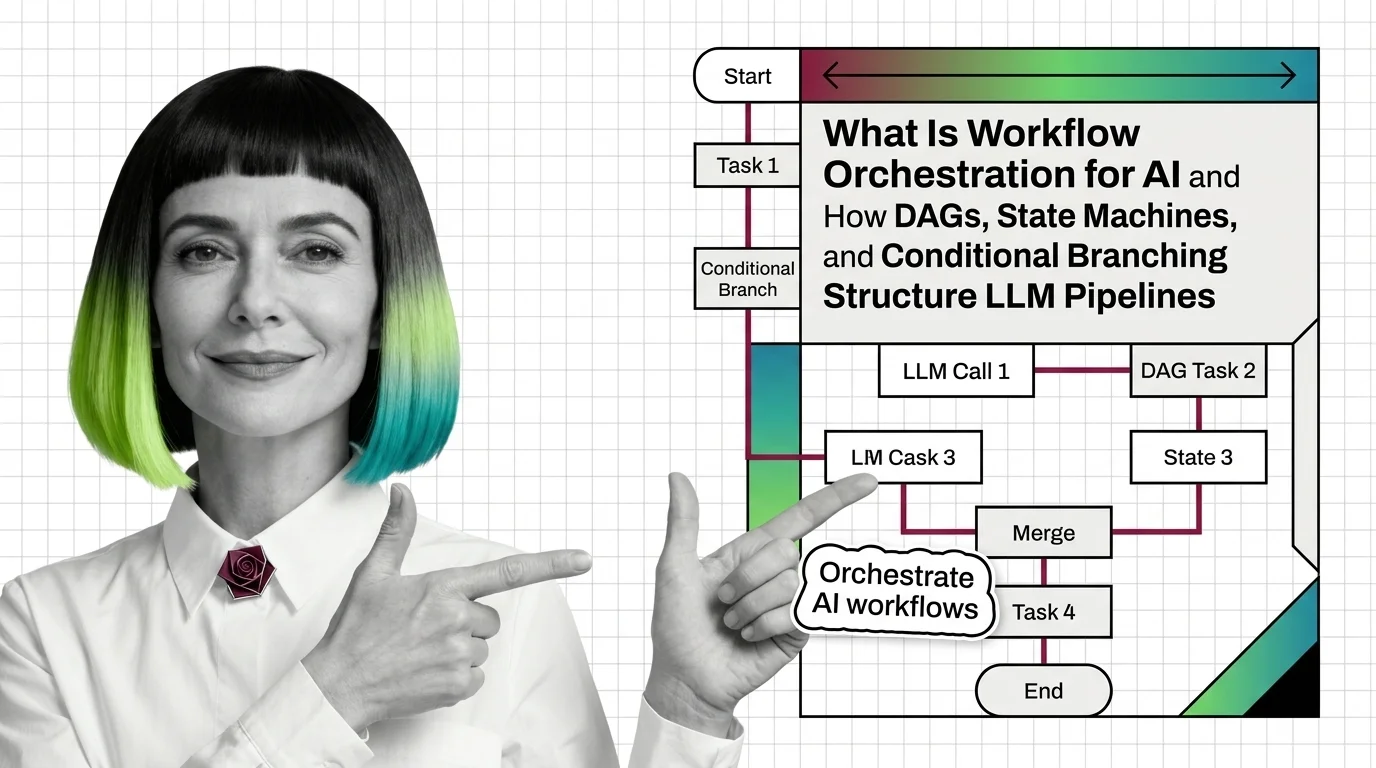
Workflow orchestration sits between raw LLM calls and fully autonomous agents. Understanding its core primitives—DAGs, state machines, branching, and retries—clarifies what AI pipelines can and cannot guarantee at runtime.
Workflow orchestration for AI coordinates LLM pipelines through DAGs, graph state machines, and event-driven step graphs over a durable execution layer.
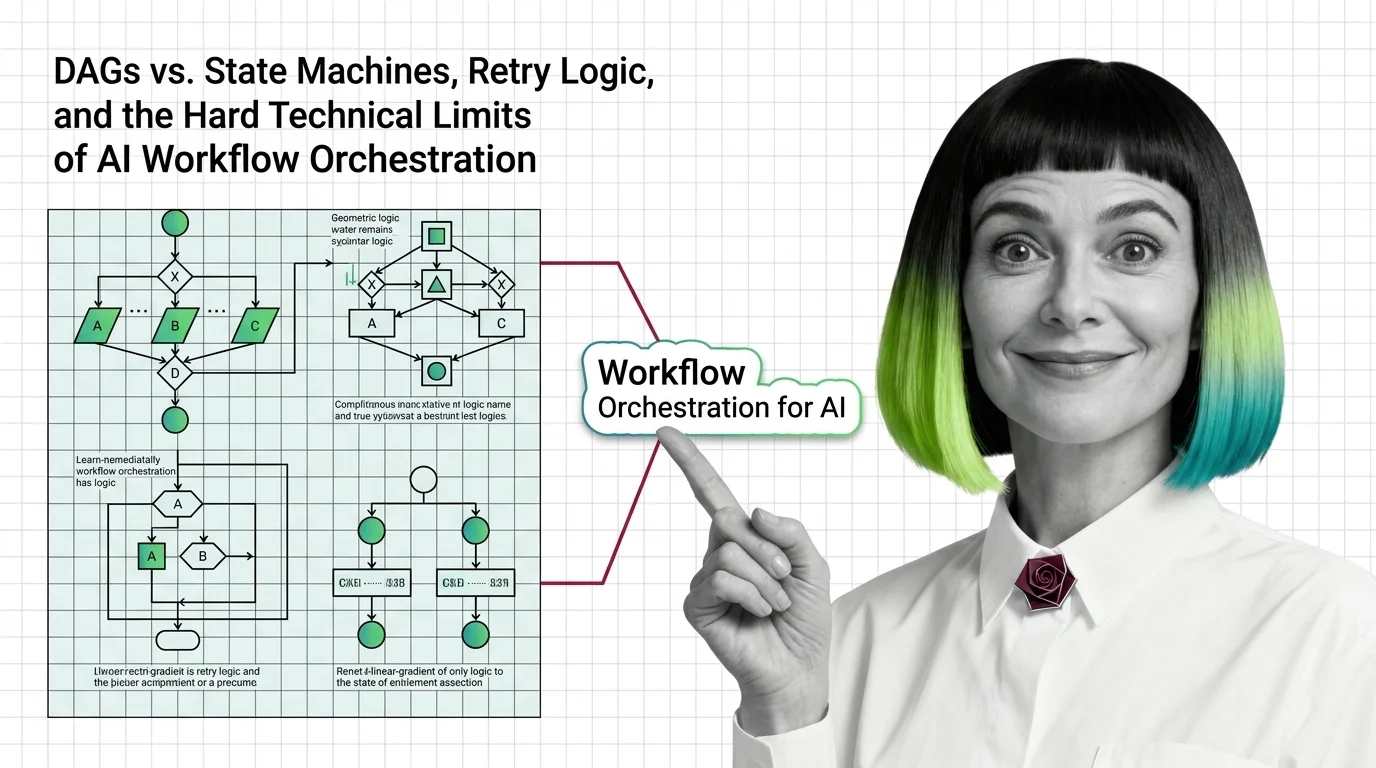
Workflow orchestration for AI splits into DAGs (Airflow, Prefect) and state machines (Temporal, LangGraph). Step Functions Standard caps at 25,000 events.
2
Build with Workflow Orchestration for AI
These guides walk through choosing an orchestration framework, wiring up retry logic, and handling partial failures. Expect concrete trade-offs between deterministic control and the flexibility autonomous agents promise.
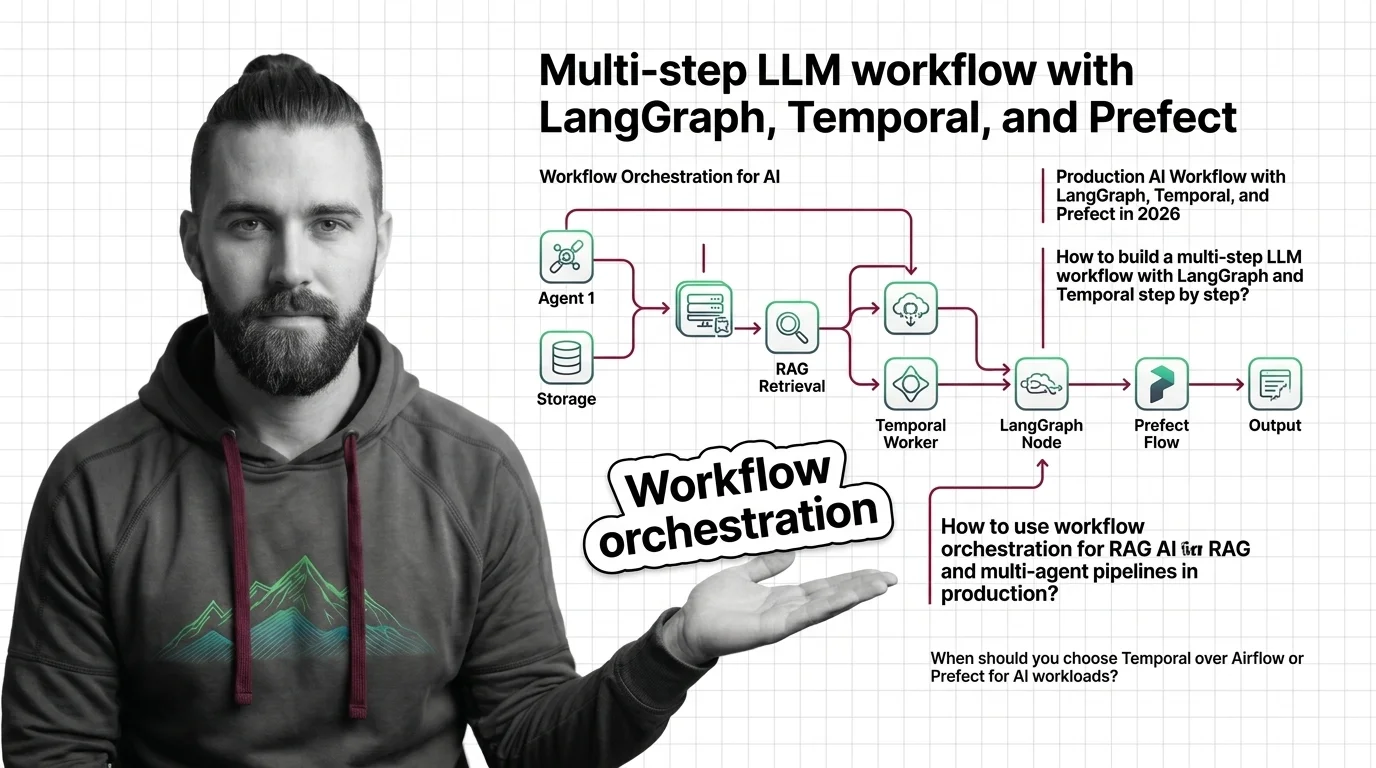
LangGraph runs agent reasoning, Temporal runs durable execution, Prefect runs the data-ML hand-off. Pick the boundary, not the brand.
3
What's Changing in 2026
Orchestration stacks are consolidating fast. Watching which frameworks production teams adopt reveals whether the industry trusts deterministic pipelines or is shifting toward more agentic execution.
LangGraph 1.0 inside Temporal's durable execution is the emerging 2026 production stack for AI agents. Single-framework agents proved too brittle.
4
Risks and Considerations
Orchestration can mask where a pipeline actually failed, making accountability murky. Consider how retries, fallbacks, and conditional branches affect auditability before deploying AI workflows in regulated or high-stakes contexts.
Automated AI workflows fail silently — HTTP 200 hides looping agents and cascading errors. EU AI Act Article 14 mandates human oversight from August 2026.