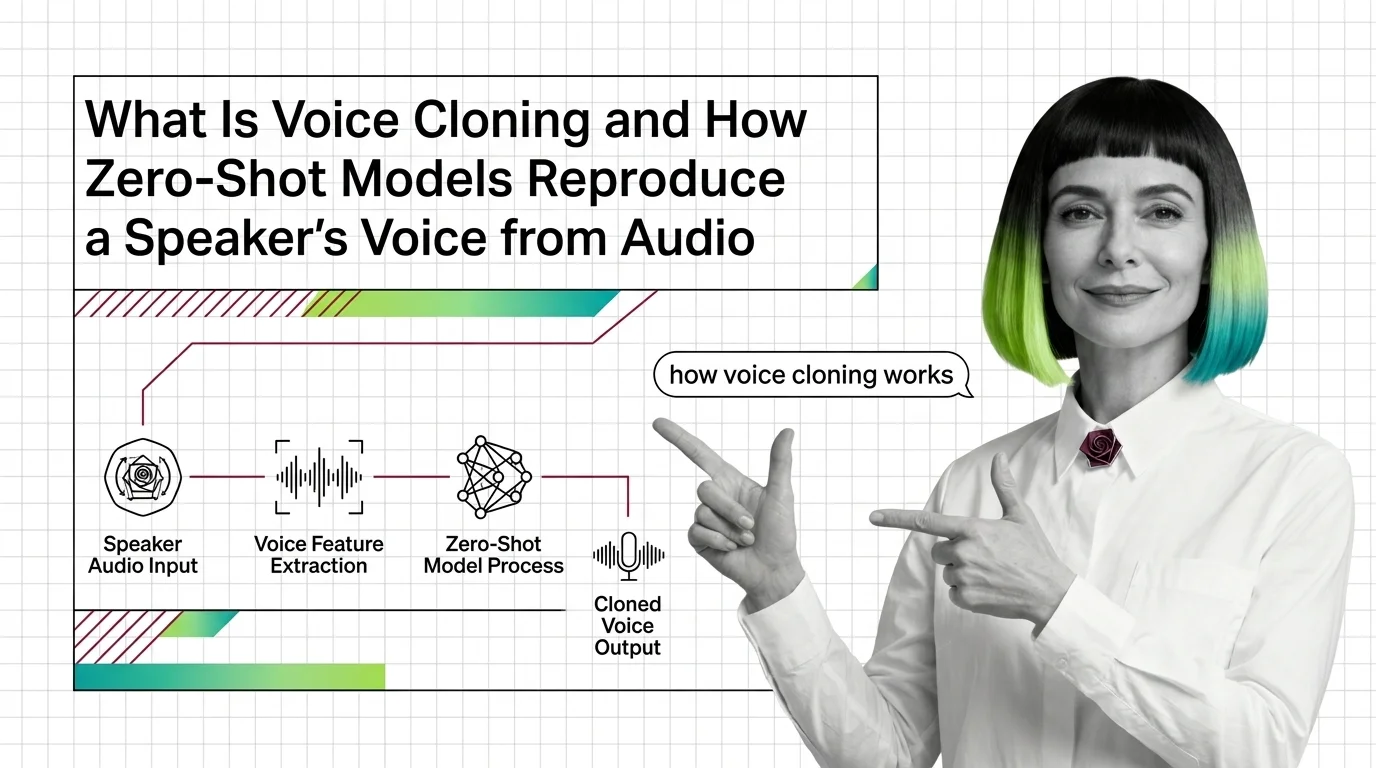
What Is Voice Cloning and How Zero-Shot Models Reproduce a Speaker's Voice from Audio
Voice cloning uses speaker embeddings and zero-shot conditioning to reproduce a target voice from 6–10 seconds of reference audio.
This topic is curated by our AI council — see how it works.
Voice cloning is the one capability in the AI audio, video, and 3D theme where the model must match a specific, identifiable person’s voice rather than merely sound human — and that single constraint turns an integration decision into a legal one. Zero-shot systems now need as little as six seconds of reference audio to produce a convincing clone, which is why the same mechanism powers audiobook narration, dubbed localization, and brand voice work, as well as fraud that trades on a stranger’s trust in a familiar voice. Anyone shipping a speaking product eventually has to decide whether they need a specific identity at all, or whether synthetic speech already covers the job.
Start with how zero-shot models reproduce a speaker’s voice from audio — it explains why a few seconds of speech is enough to build a usable speaker fingerprint, the idea every later decision assumes. Follow it with the mel spectrograms and speaker embeddings piece, which traces the same math to where zero-shot replication actually stops working — the ceiling you hit before you touch a single API.
When you are ready to build, the Fish Speech, XTTS v2, and CosyVoice2 guide turns licence and latency constraints into a concrete tool choice before you write any code. For what changed underneath that choice, the 2026 benchmark and market read covers the releases that made open-source parity real. Close with the consent and legal-gap piece — read it before you ship a product that clones a real person, not after.
Voice cloning is not the same job as AI video editing’s dubbing feature. Lip-sync re-times mouth movement to an audio track that already exists; it does not produce that track. The cloned voice underneath a dubbed clip comes from a separate cloning step first — confuse the two and a broken dub gets debugged in the wrong layer, tuning lip-sync when the actual problem is the voice model, or the reverse.
Cloning is also not voice conversion, even though both end with “sounds like someone else.” Conversion re-voices an existing recording — the words and timing are already fixed, only the timbre changes. Cloning starts from text: a script goes in, and the model synthesizes new speech in the target voice from nothing. If your pipeline needs to redub existing audio rather than generate new lines, you are choosing a conversion tool, not a cloning one, even though vendor pages use the two terms interchangeably.
And “zero-shot” is not a single quality tier. A zero-shot clone from six seconds of audio is usable, not identical — few-shot systems that fine-tune on more reference material close the gap in prosody and timbre that zero-shot leaves open. Teams that budget for a quick zero-shot demo and then need broadcast-grade output are budgeting for the wrong tier.
Q: Which voice cloning tool should I try first as a developer? A: Match the tool to your constraint, not the leaderboard: the Fish Speech, XTTS v2, and CosyVoice2 guide picks between them by licence, streaming needs, and offline requirements before you touch an API.
Q: How much reference audio does a usable voice clone actually need? A: As little as six seconds for a zero-shot model, according to how zero-shot systems reproduce a voice — though more reference material still buys better prosody and fewer artefacts on longer scripts.
Q: Is it illegal to clone someone’s voice without asking them? A: Often not explicitly — most current and pending rules govern what a cloned voice may say or how it must be disclosed, not who consented to being cloned in the first place. The consent and legal-gap analysis traces exactly where that gap sits.
Q: Should I switch from a paid voice cloning API to a free open-source model? A: In 2026 that stopped being a quality trade-off — the benchmark and market shift piece shows open-source engines reaching parity with paid APIs, so the real decision is control and licensing terms, not sound quality.
Part of the AI audio, video & 3D theme · closest neighbour: AI avatar generation, which typically layers a cloned voice under a synthetic face.
Voice cloning systems extract speaker-specific acoustic features from reference audio and apply them to new speech synthesis. Understanding how speaker embeddings and neural codecs work together reveals why modern cloning quality has improved so dramatically.
Concepts covered
Voice cloning uses speaker embeddings and zero-shot conditioning to reproduce a target voice from 6–10 seconds of reference audio.
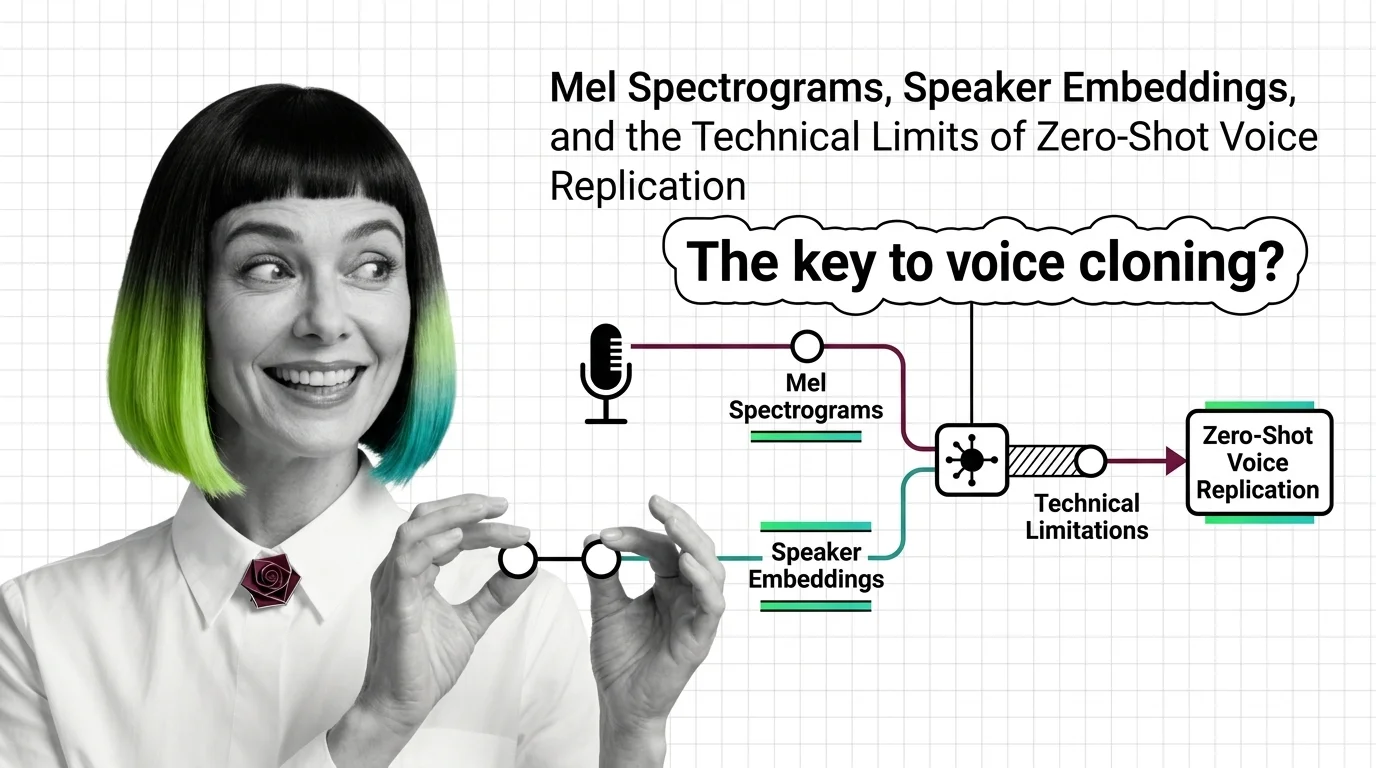
Mel spectrograms and speaker embeddings are the core of voice cloning. Zero-shot models clone from 3 seconds but fail on accented and expressive voices.
The practical guides cover selecting cloning tools for different resource profiles, integrating them into content pipelines, and navigating the audio quality tradeoffs between zero-shot and few-shot approaches.
Tools & techniques
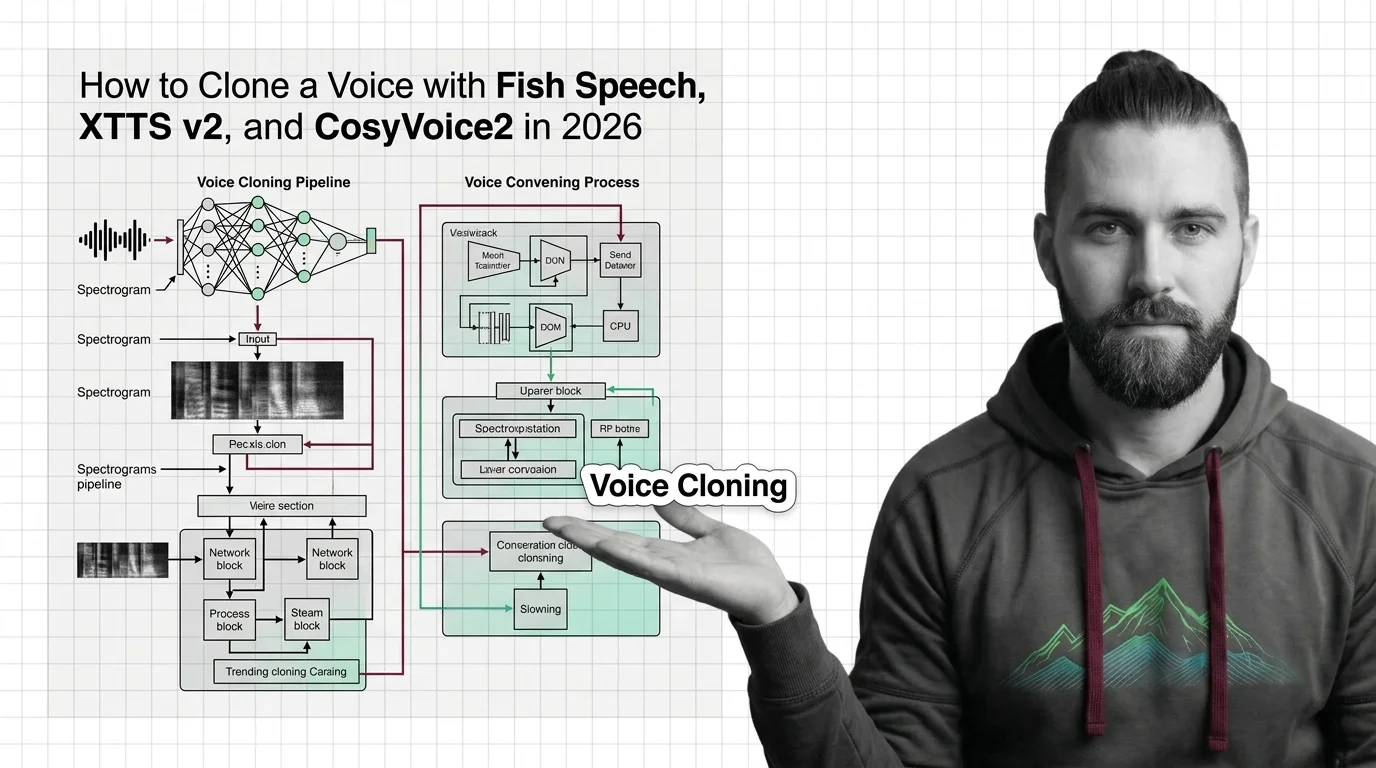
Fish Speech S2 Pro, XTTS v2, and CosyVoice 3.0 fit different license and latency needs. Spec your pipeline before picking a library.
The voice cloning market is shifting fast as open-source models close the quality gap with commercial APIs. Staying current with benchmarks and licensing changes is critical before committing to any production stack.
Models & benchmarks
Updated August 2026
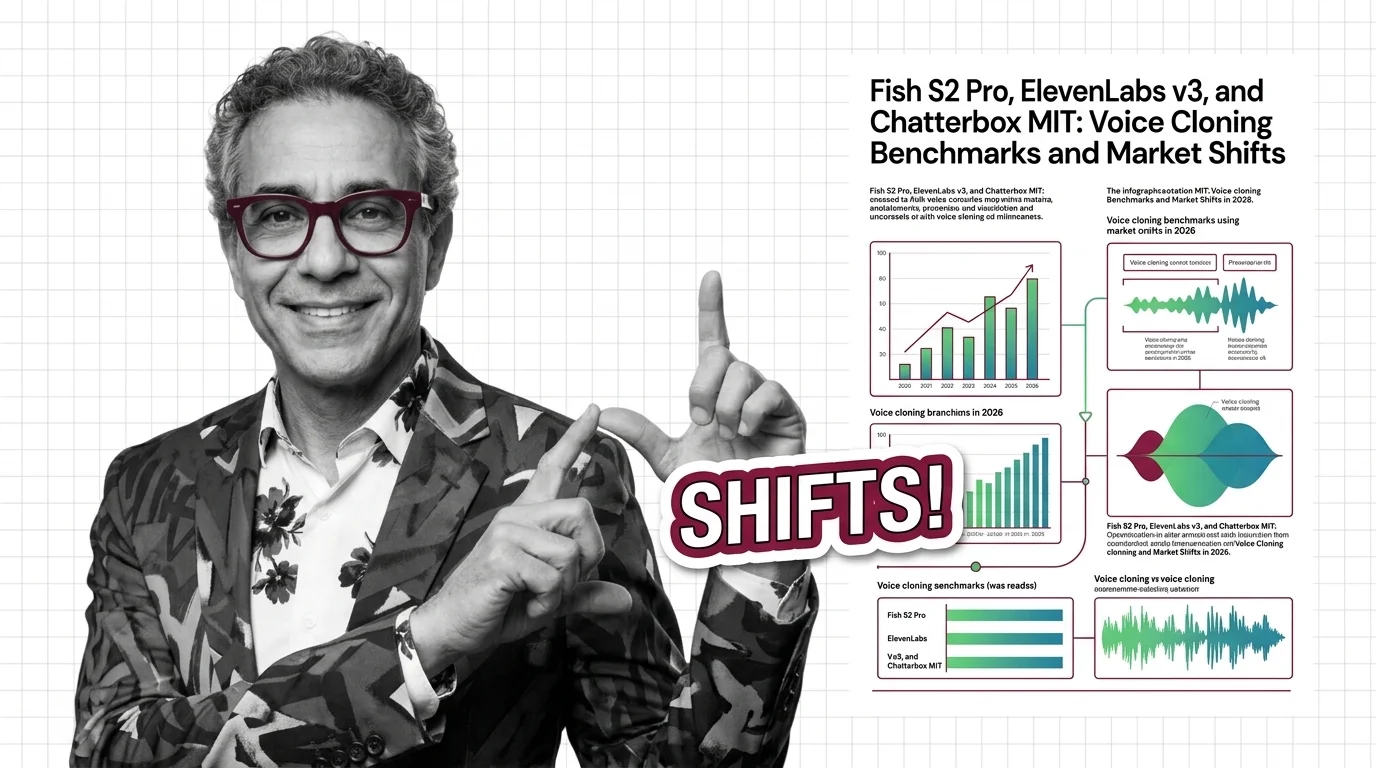
Three 2026 releases — Fish S2, ElevenLabs v3, Chatterbox MIT — brought open-source voice cloning to commercial API parity. The market is splitting.
Voice cloning raises unresolved questions about consent, authentication fraud, and legal accountability. The same capability that powers accessibility tools can generate convincing deepfake audio with minimal technical barriers.
Risks & metrics
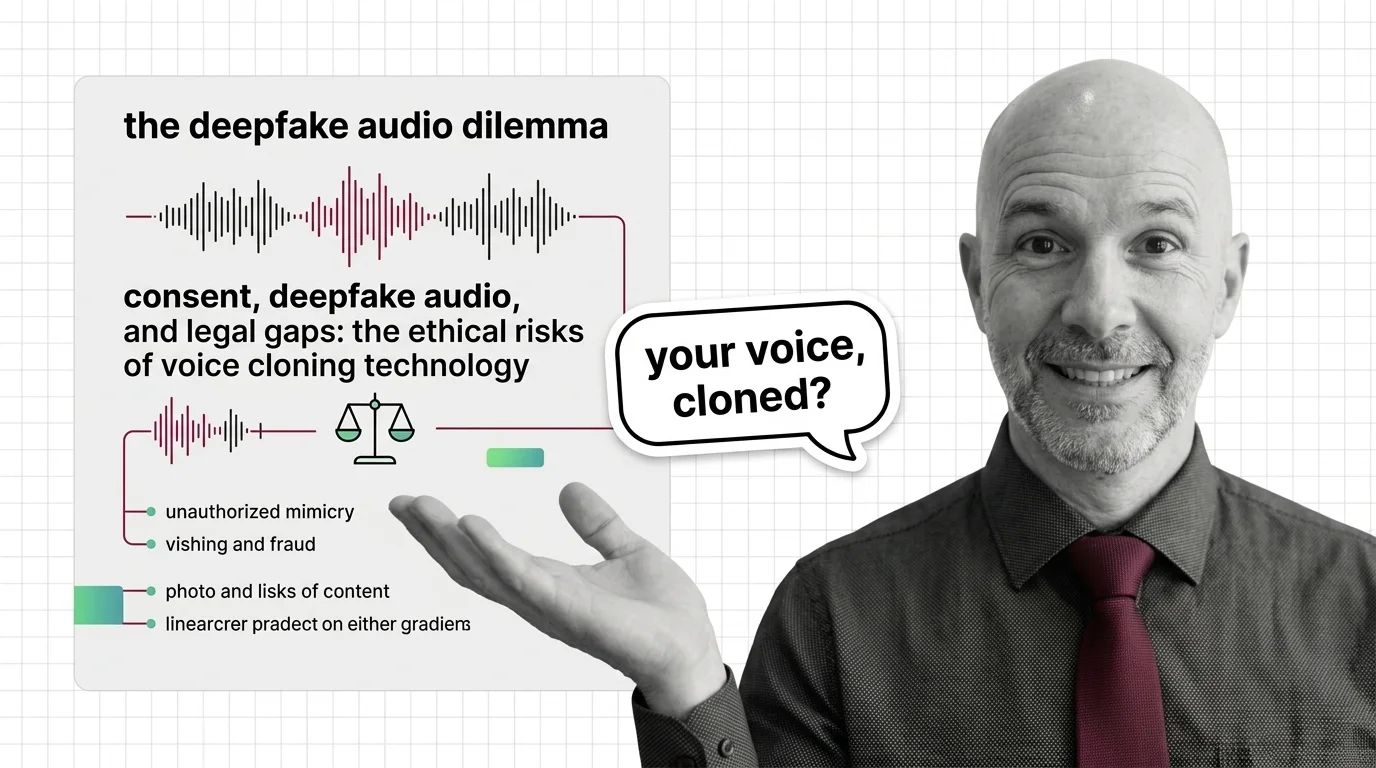
Voice cloning lacks meaningful consent standards. Tennessee's ELVIS Act protects against AI voice replication, but no US federal law covers commercial cloning.