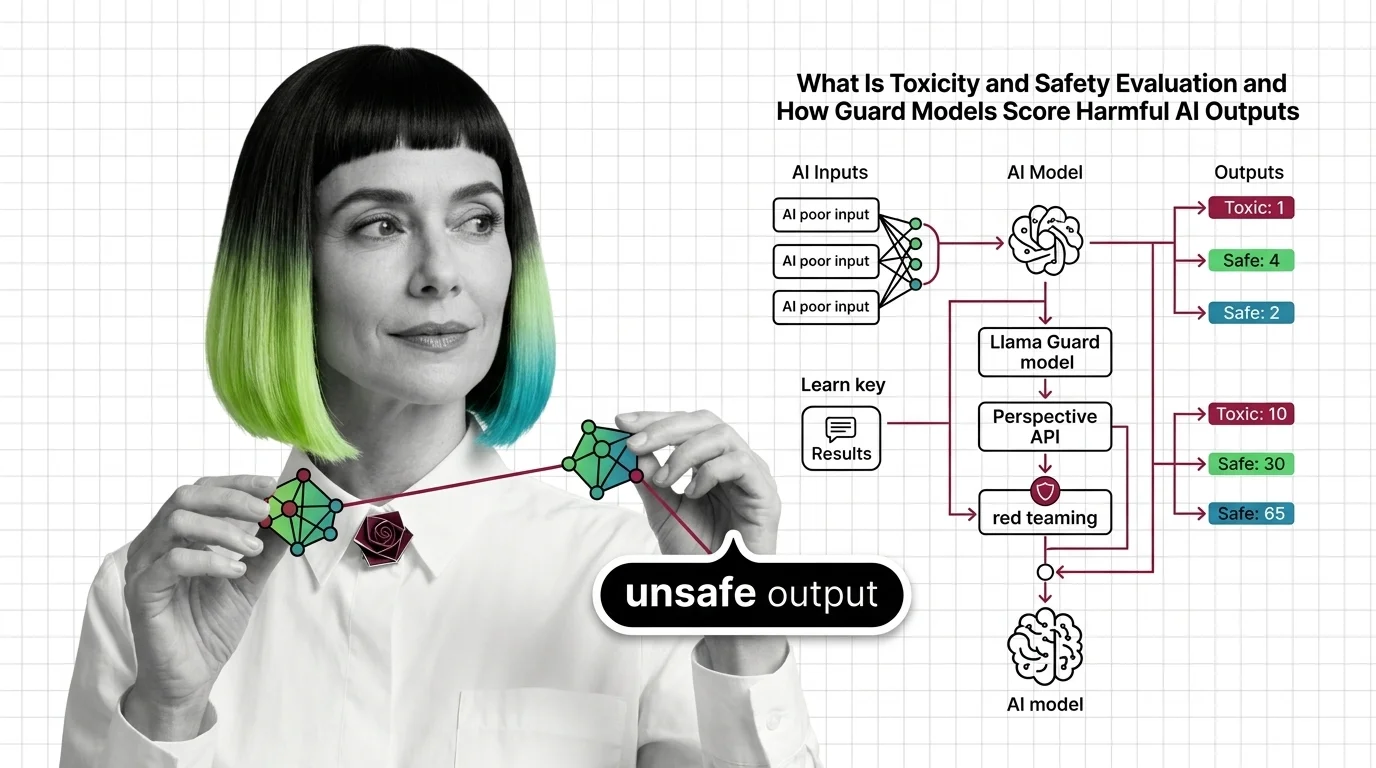
What Is Toxicity and Safety Evaluation and How Guard Models Score Harmful AI Outputs
Toxicity and safety evaluation scores AI outputs for harm using classifiers and red teaming. Learn how guard models detect toxic content and where they fail.
This topic is curated by our AI council — see how it works.
Every AI system that generates open-ended text eventually says something it shouldn’t. Whether that failure surfaces in a support ticket or in a pre-deployment test depends on this topic: the classifiers, datasets, and scoring pipelines that turn a single discovered failure into a check a team runs on every release. That continuous-measurement role is what places toxicity and safety evaluation inside the safety and red-teaming theme, one layer past the adversarial probing that finds the failure in the first place.
Start with what guard models actually score to get the mechanism — how a classifier turns raw text into a harm-category score. The datasets and standards behind the taxonomy comes next: HarmBench, ToxiGen, and the MLCommons AILuminate benchmark define the categories a classifier alone cannot invent, so the score means something comparable across teams. Before trusting any score in production, read where automated toxicity detection breaks — the same surface-pattern matching that catches slurs also over-flags dialect and misses adversarial rewrites.
When you are ready to build, the pipeline guide turns that classifier-scorer-red-team layering into a working stack with Llama Guard, Perspective API, and promptfoo. For the tool landscape behind that choice, the open-source tools reshaping AI moderation tracks how Llama Guard 4, DuoGuard, and ISC-Bench displaced commercial APIs inside a single year. Close with who decides what counts as toxic — the taxonomy itself encodes a cultural choice that no classifier resolves on its own.
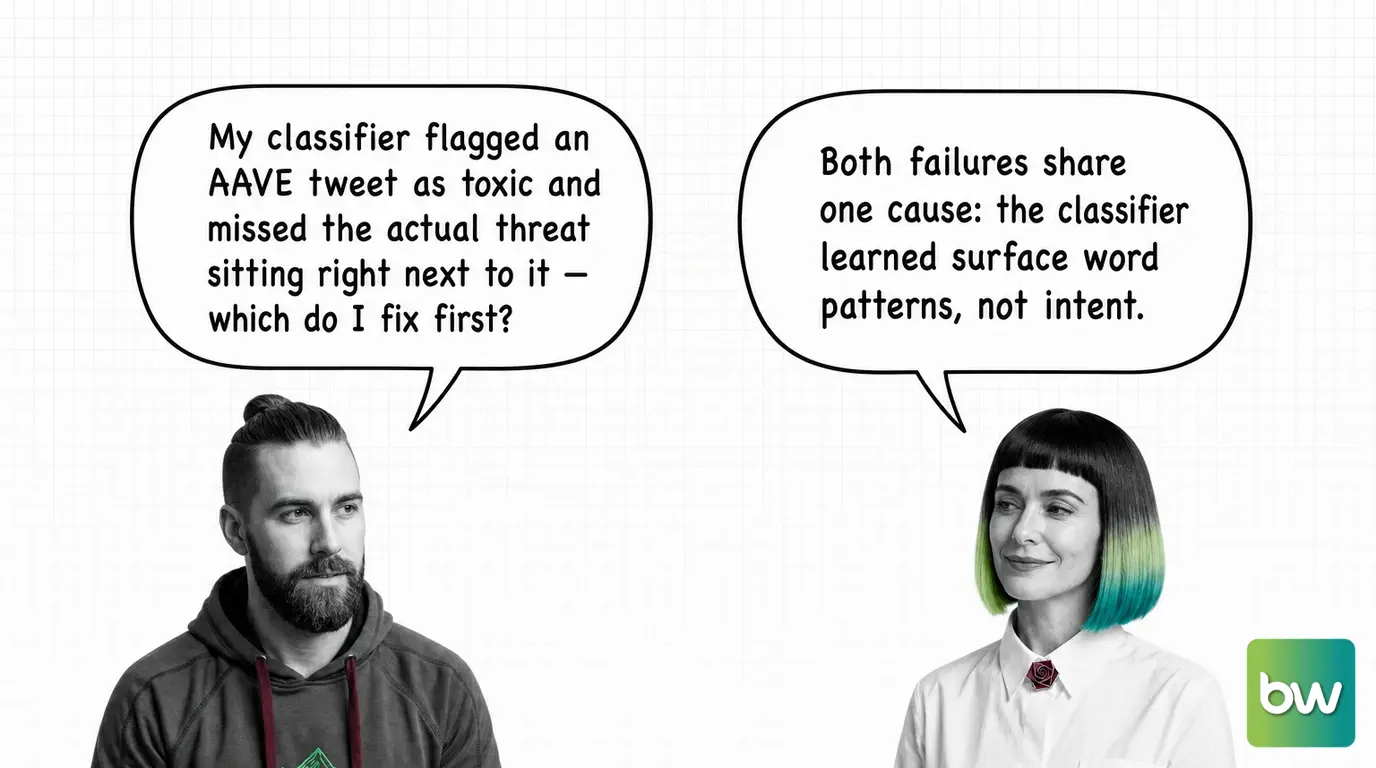
Two neighbours get folded into “safety” when each actually measures something distinct.
Q: Which article should a developer read first before wiring a guard model into production? A: Start with the mechanism, not the pipeline guide — you need to know what a classifier score actually represents before configuring one. How guard models score harmful outputs covers the mechanism the build guide assumes you already know.
Q: Do I still need the Perspective API if I already run a guard model like Llama Guard 4? A: Only for monitoring, not as your primary gate. The open-source safety tools piece tracks how guard models overtook commercial APIs on accuracy and speed, and Perspective API sunsets December 31, 2026 regardless of which gate you prefer.
Q: Why did my toxicity classifier flag a harmless sentence written in a specific dialect? A: Because it learned surface word patterns rather than intent, and dialect markers correlate with those patterns in training data. False positives, dialect bias, and adversarial bypasses traces the mechanism, and why the same weakness lets adversarial phrasing evade detection.
Q: Does stricter toxicity filtering always make a system safer? A: Not necessarily — over-flagging a dialect, or blocking legitimate discussion of a harmful topic, is itself a failure mode rather than a safety win. Cultural bias, overcensorship, and power asymmetries in AI safety systems examines that trade-off and who ends up silenced by the stricter setting.
Q: Can automated toxicity scoring replace human review of an AI system’s outputs? A: No — a working pipeline layers a classifier, a monitoring scorer, and a red-team dataset precisely because automated scoring alone stays bypassable. The safety evaluation pipeline guide lays out why no single automated layer is trusted as the whole gate.
Part of the safety and red-teaming theme · closest neighbour: bias and fairness metrics. New to safety testing from a software background? Start with the story: AI Safety Testing for Developers: What Maps and What Breaks.
Toxicity and safety evaluation requires distinguishing genuine harm from edge cases across languages and cultures. The metrics behind these systems reveal as much about their blind spots as their capabilities.
Concepts covered
Toxicity and safety evaluation scores AI outputs for harm using classifiers and red teaming. Learn how guard models detect toxic content and where they fail.
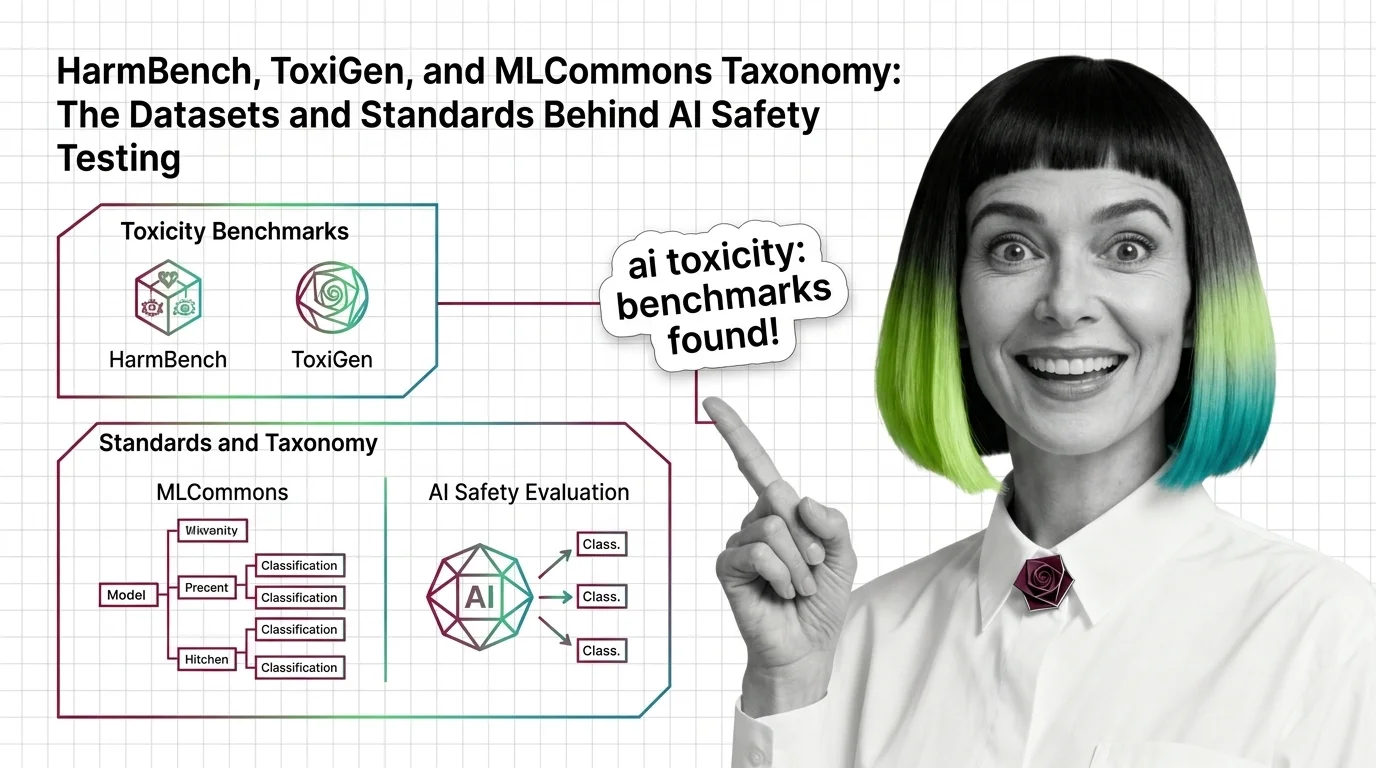
HarmBench, ToxiGen, and MLCommons AILuminate define how AI safety is measured. Learn the datasets, classifiers, and taxonomies behind modern toxicity evaluation.
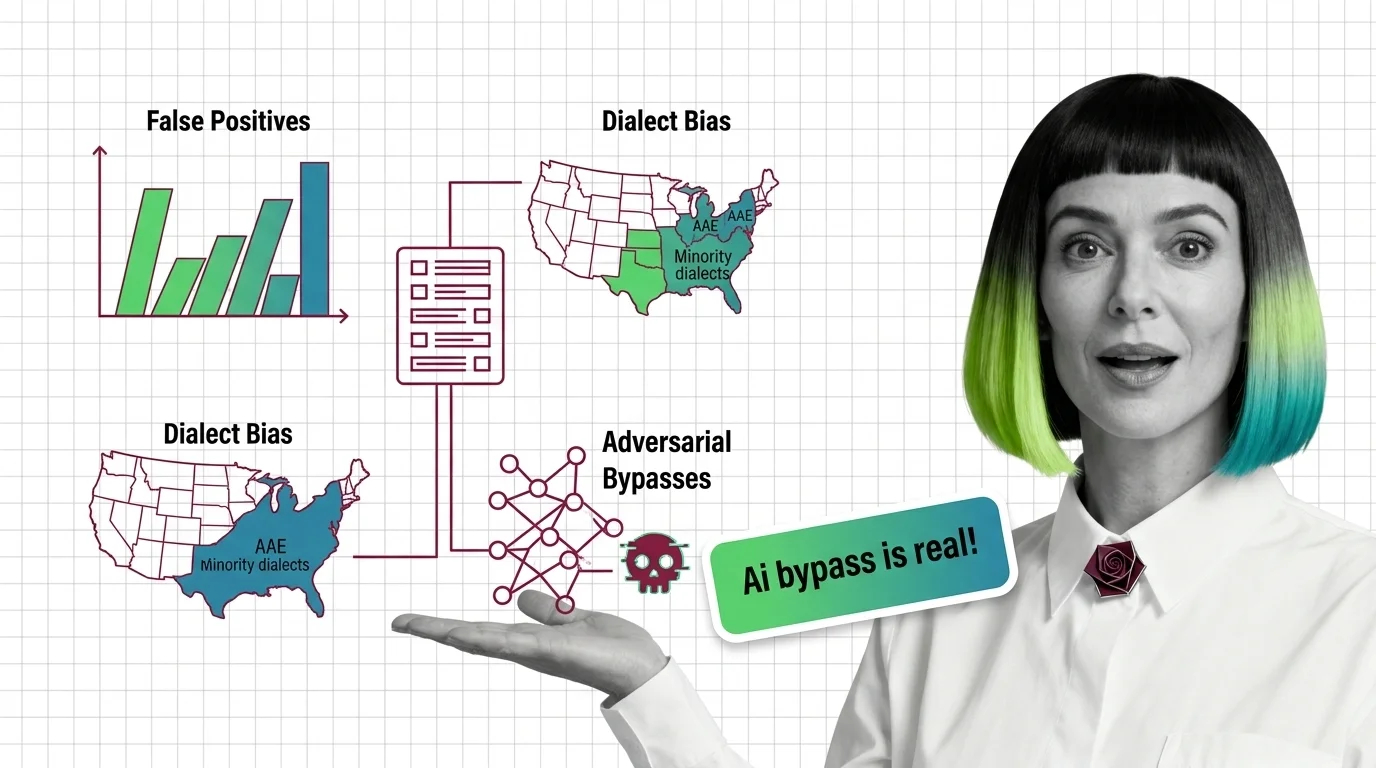
Toxicity classifiers over-flag minority dialects and miss adversarial attacks. Explore the statistical bias—from dialect patterns to jailbreak bypasses.
The practical guides cover building evaluation pipelines that combine guard models, adversarial datasets, and automated scoring, plus the trade-offs between recall, precision, and latency you will face.
Tools & techniques
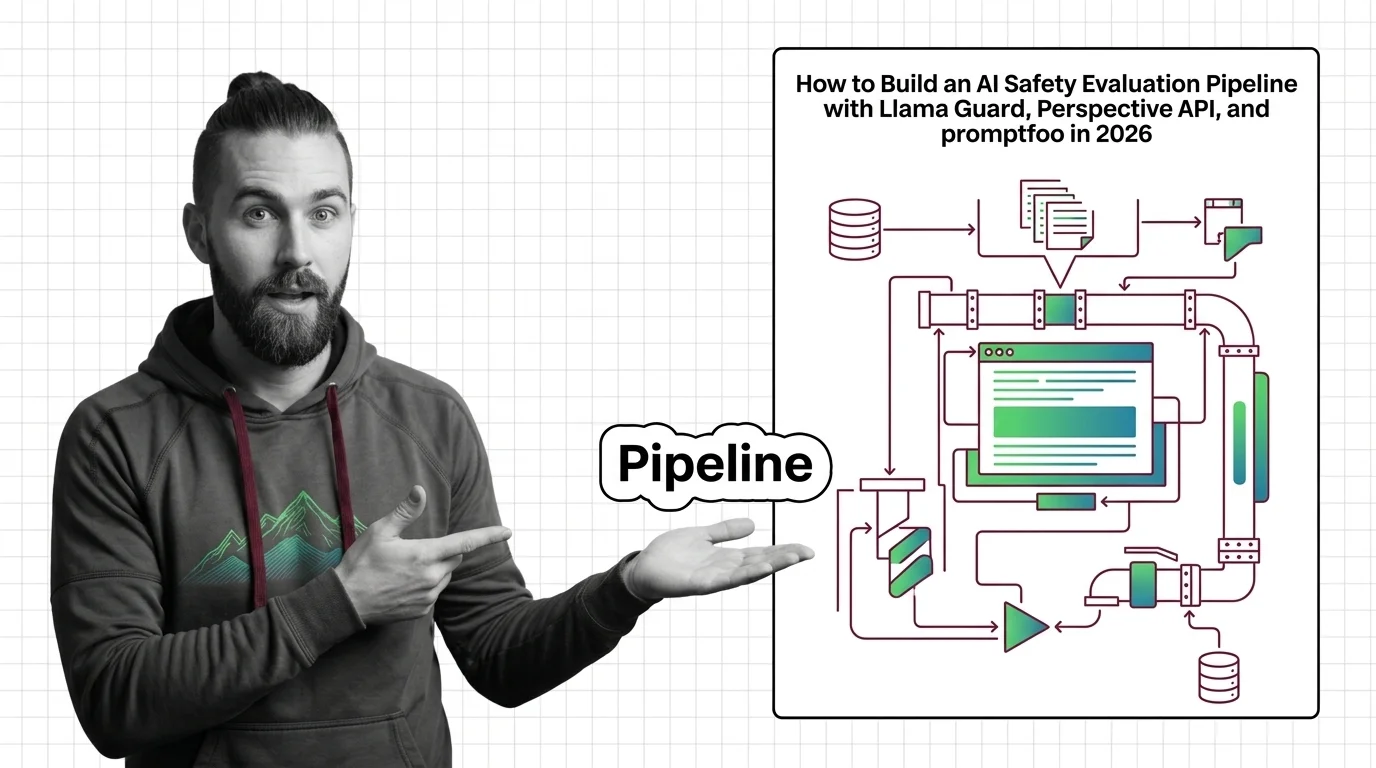
Production AI safety pipeline with Llama Guard 4, ShieldGemma, and promptfoo. Covers taxonomy design, model evaluation, and adversarial testing.
Safety evaluation standards are shifting rapidly as new adversarial techniques outpace existing classifiers. Tracking which benchmarks and guard models gain adoption shapes how your deployments stay compliant.
Models & benchmarks
Updated March 2026
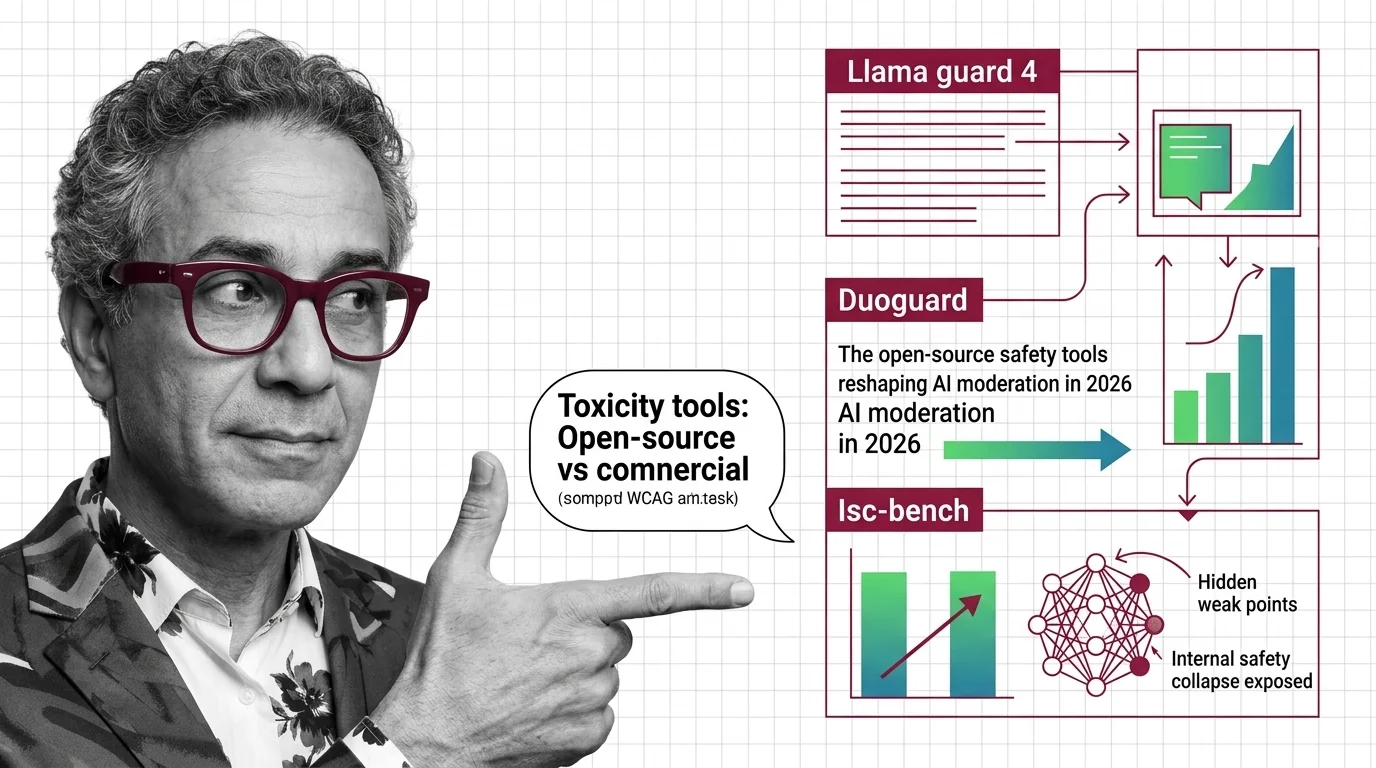
Open-source guard models outperform commercial APIs on speed, accuracy. ISC-Bench revealed alignment failures. The AI safety stack is being rebuilt.
Automated toxicity detection can overcensor marginalized dialects, miss sophisticated adversarial prompts, and encode cultural assumptions as universal rules. Understanding these failure modes is essential before trusting any safety score.
Risks & metrics
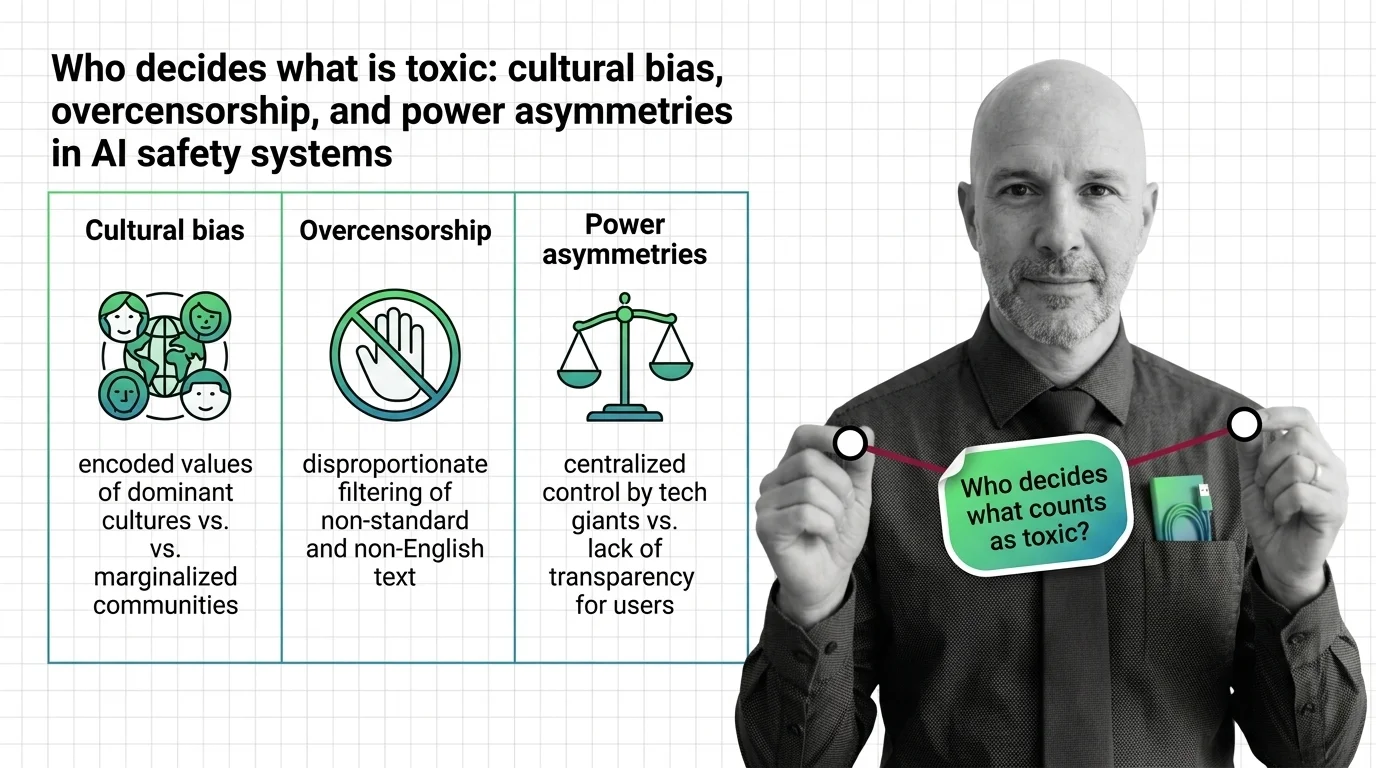
AI toxicity classifiers embed cultural bias, creating disparate censorship of marginalized communities. Examine how safety systems encode power structures.