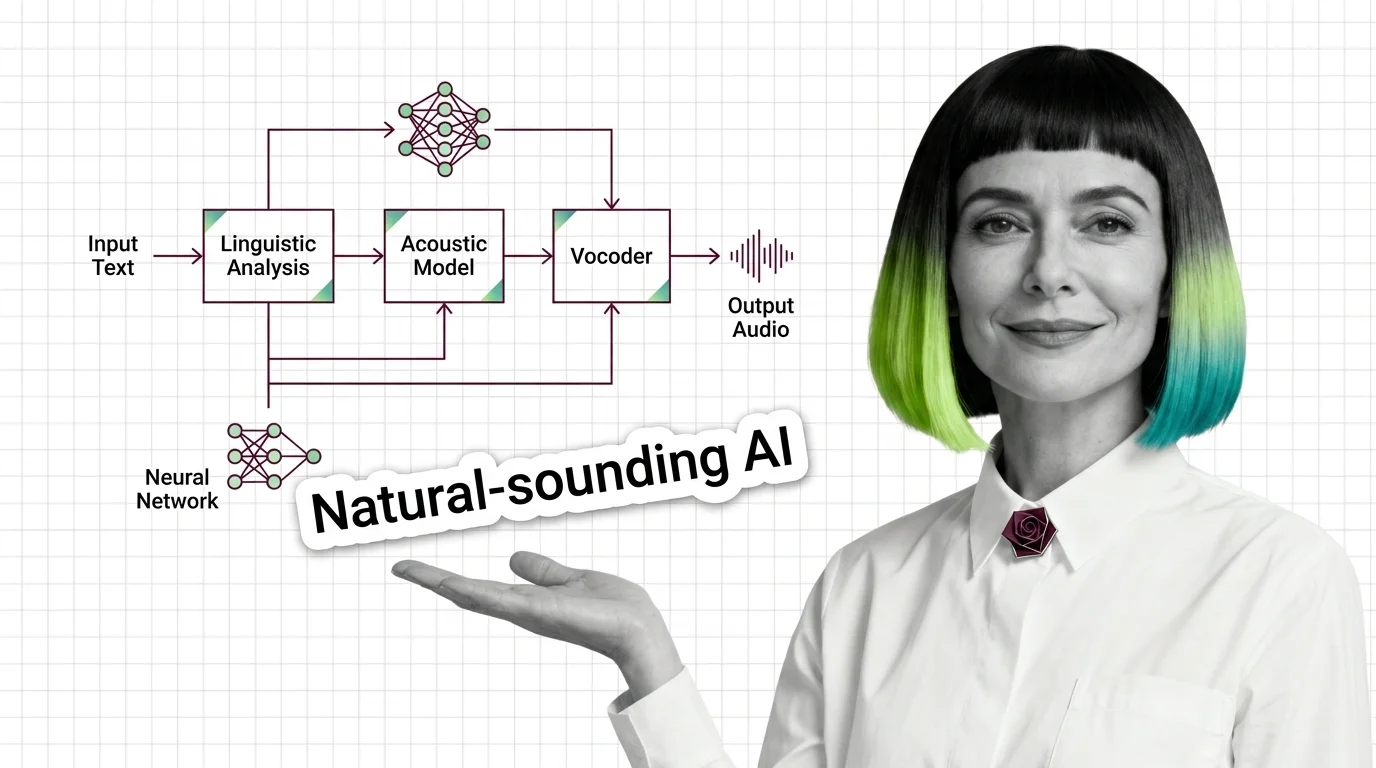
What Is Text-to-Speech AI and How Neural TTS Architectures Convert Text into Speech
Neural TTS converts text into speech through learned acoustic models. Tacotron 2 scored 4.53 MOS at ICASSP 2018; current systems hit sub-90ms latency.
This topic is curated by our AI council — see how it works.
Every voice a machine speaks in 2026 — a cloned narrator, a talking avatar, a customer-service agent — starts as a text-to-speech call underneath. That makes this topic the foundation layer of the AI audio, video, and 3D theme: get the engine choice right here and every product built on top inherits a natural, controllable voice; get it wrong and every downstream product inherits the same latency ceiling or flat prosody. It is also where the theme’s engineering questions are most mature, which is why the model and vendor decision deserves more scrutiny than a demo comparison gives it.
Start with how neural TTS architectures convert text into speech — it replaces the old phoneme-rule mental model with the acoustic-feature pipeline every later decision assumes. Read the prerequisites and hard technical limits of neural speech synthesis next, in the same sitting: it names the expressiveness-versus-latency ceiling that no vendor comparison escapes.
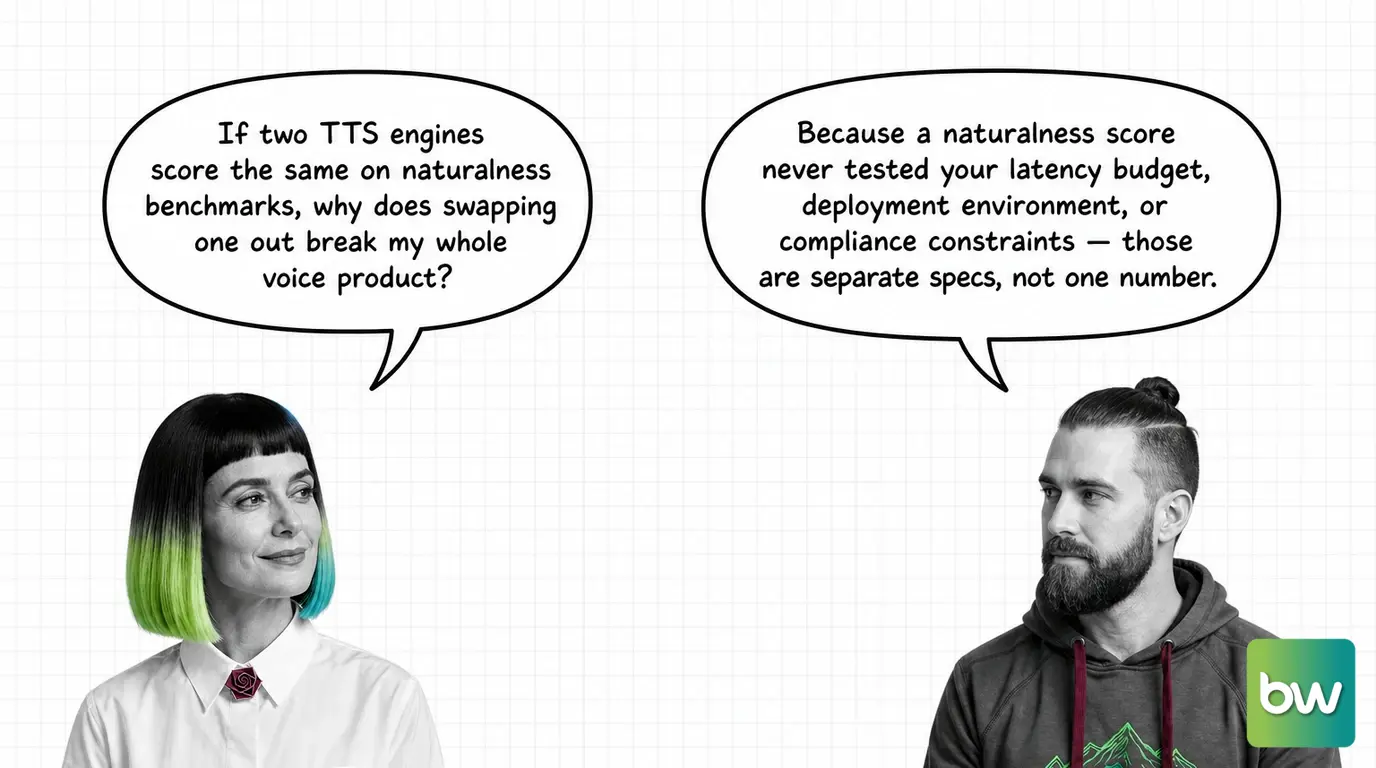
Once the mechanism is settled, the dedicated API vs. general LLM platform guide turns that trade-off into a selection framework built on latency budget, deployment environment, and compliance. If your product needs a specific person’s voice rather than a stock one, the voice cloning pipeline guide with XTTS-v2 and Fish Audio covers the build, licensing, and reference-audio handling that stock TTS never requires.
For the moving market context behind that choice, the 2026 TTS leaderboard read tracks how fast provider rankings shift. Close with the ethical risks of voice cloning without consent — if cloning a real voice is even a possibility on your roadmap, read it before you scope the feature, not after.
Three neighbours in this theme get folded into “text-to-speech” by habit, and each confusion sends the build in the wrong direction.
Q: Can a self-hosted, open-source TTS model realistically replace a paid API in production? A: For latency-tolerant or air-gapped deployments, yes — Kokoro is built for exactly that case, trading a managed endpoint for full control over hosting and cost. For real-time voice agents, the API-vs-platform guide still favors a managed engine tuned for streaming latency.
Q: Why does a neural TTS voice still sound flat on a long script even with a strong model? A: Expressiveness and low latency sit in direct tension in current architectures — pushing one further costs the other. The prerequisites explainer traces why no model fully escapes that ceiling, and what to check before blaming your integration.
Q: What legal exposure does adding voice cloning to a TTS product create? A: Cloning a real person’s voice without documented consent moves a product from synthetic narration into biometric-identity territory, where consent frameworks remain unsettled across jurisdictions. The ethics of voice cloning without consent traces exactly where that exposure sits.
Q: Should I commit to one specialist TTS vendor, or keep the architecture swappable? A: Keep it swappable — general AI platforms have entered the same quality tier as specialist APIs within months, and the 2026 market read shows rankings shifting fast enough that vendor lock-in is a real cost, not a convenience.
Part of the AI audio, video, and 3D theme · closest neighbour: voice cloning.
Text-to-Speech converts written words into spoken audio by modeling human speech production — capturing rhythm, emphasis, and emotional tone, not just the words themselves. Understanding how neural architectures approach this problem reveals why some systems sound natural while others do not.
Concepts covered
Neural TTS converts text into speech through learned acoustic models. Tacotron 2 scored 4.53 MOS at ICASSP 2018; current systems hit sub-90ms latency.
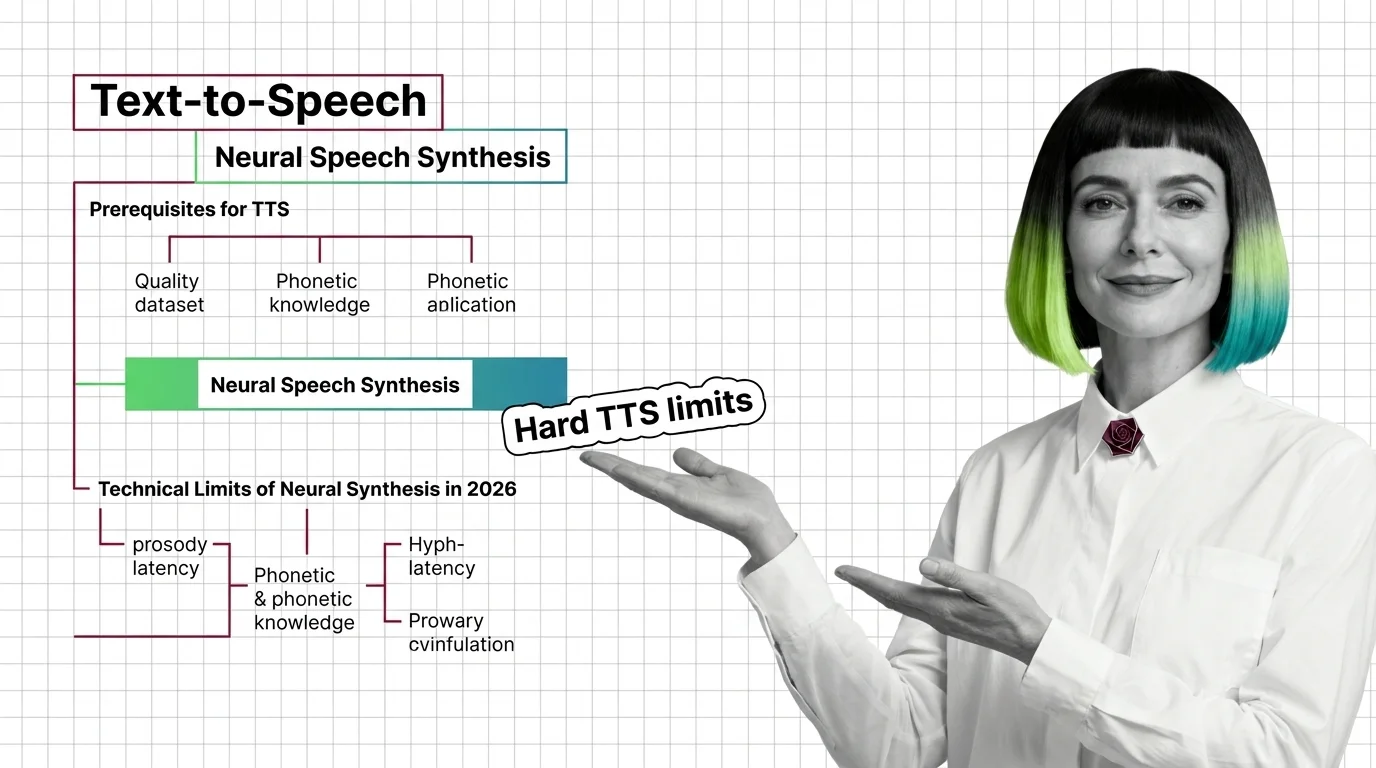
Neural TTS converts text to audio via phoneme processing, prosody modeling, and vocoders. In 2026, expressiveness and low latency remain in structural tension.
These guides cover selecting a TTS API versus a general-purpose platform, and building a voice cloning pipeline for production. Trade-offs between latency, voice fidelity, and cost determine which approach fits your workflow.
Tools & techniques
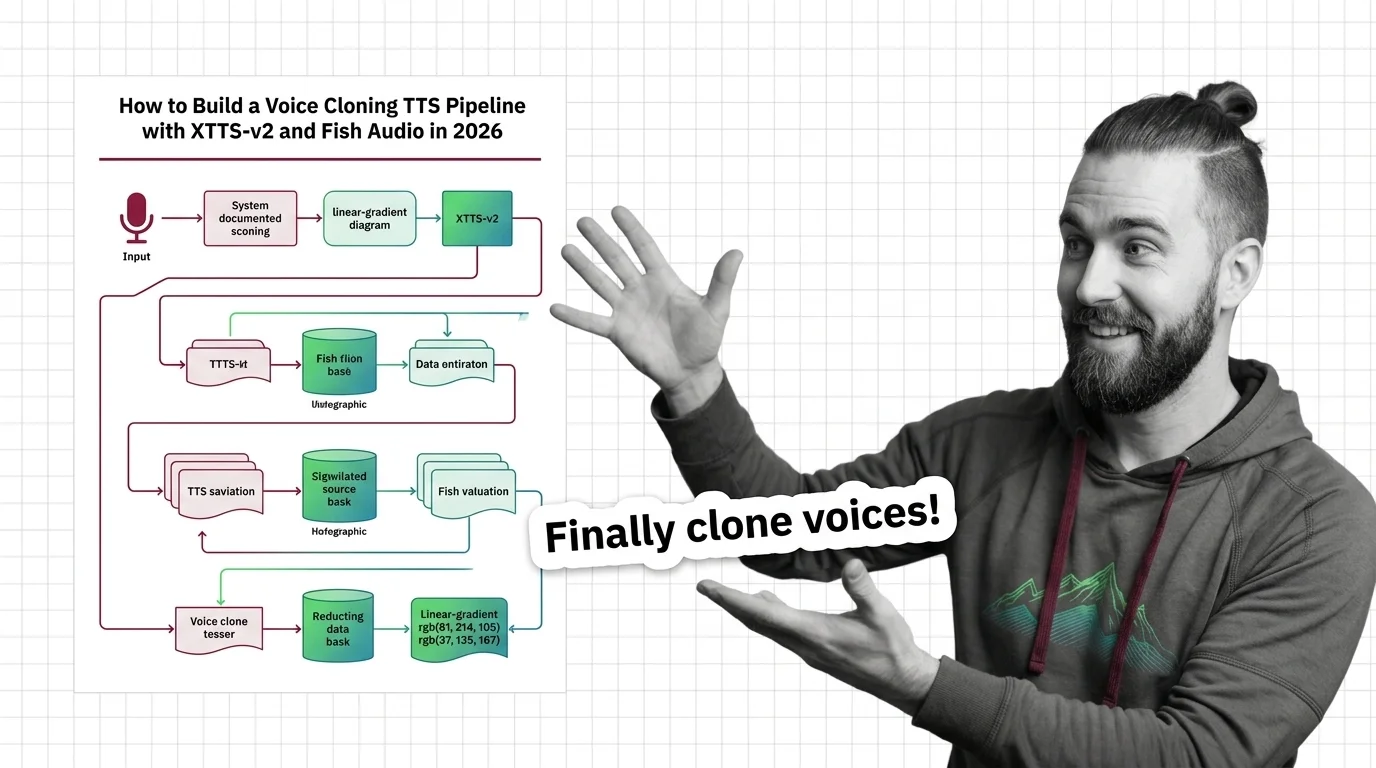
Build a voice cloning TTS pipeline with XTTS-v2 and Fish Audio in 2026. Correct install order, CPML license limits, streaming audio, and the managed API switch.
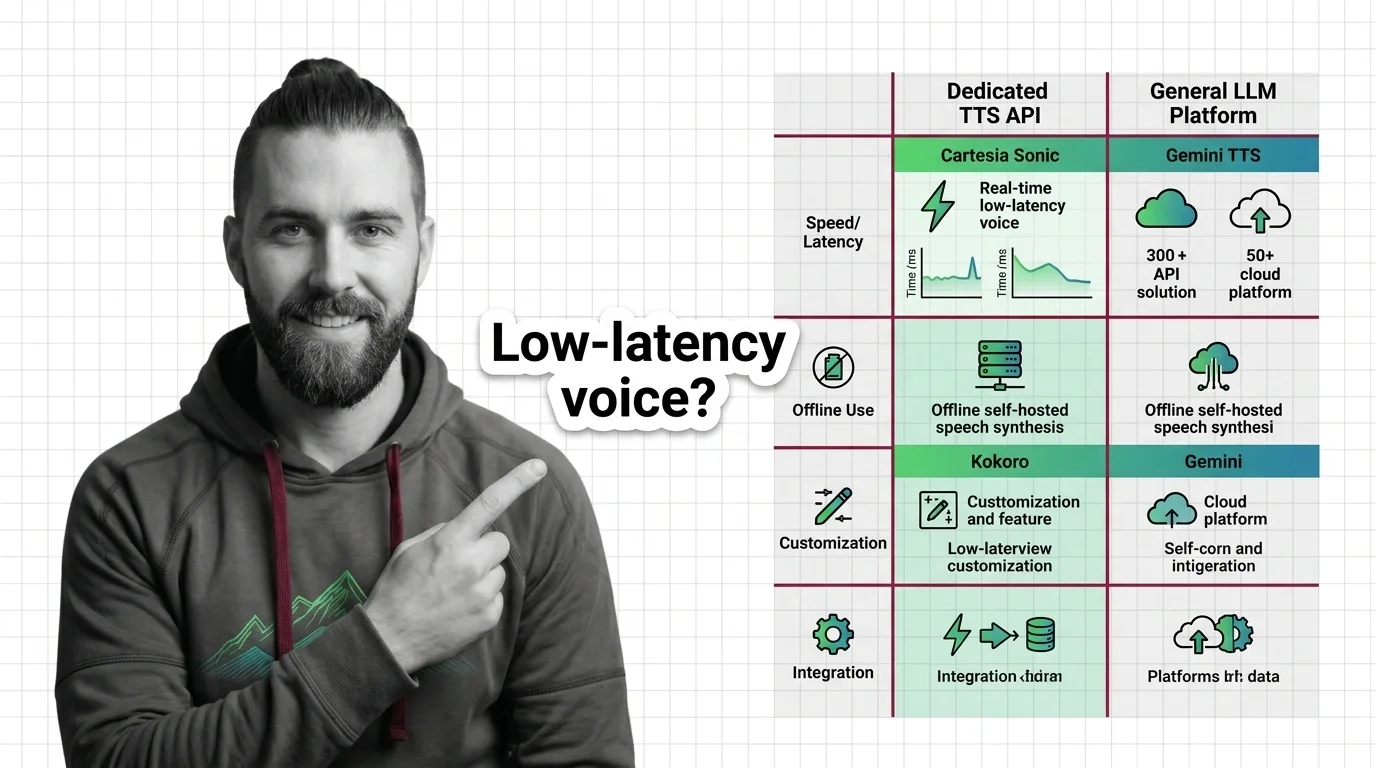
Cartesia Sonic-3.5, Kokoro-82M, and Gemini TTS each fit a different voice architecture. Specify latency, compliance, and deployment first.
The text-to-speech landscape is shifting fast, with new model releases compressing what used to be research-lab quality into production APIs. Staying current matters because provider rankings shift in months, not years.
Models & benchmarks
Updated August 2026
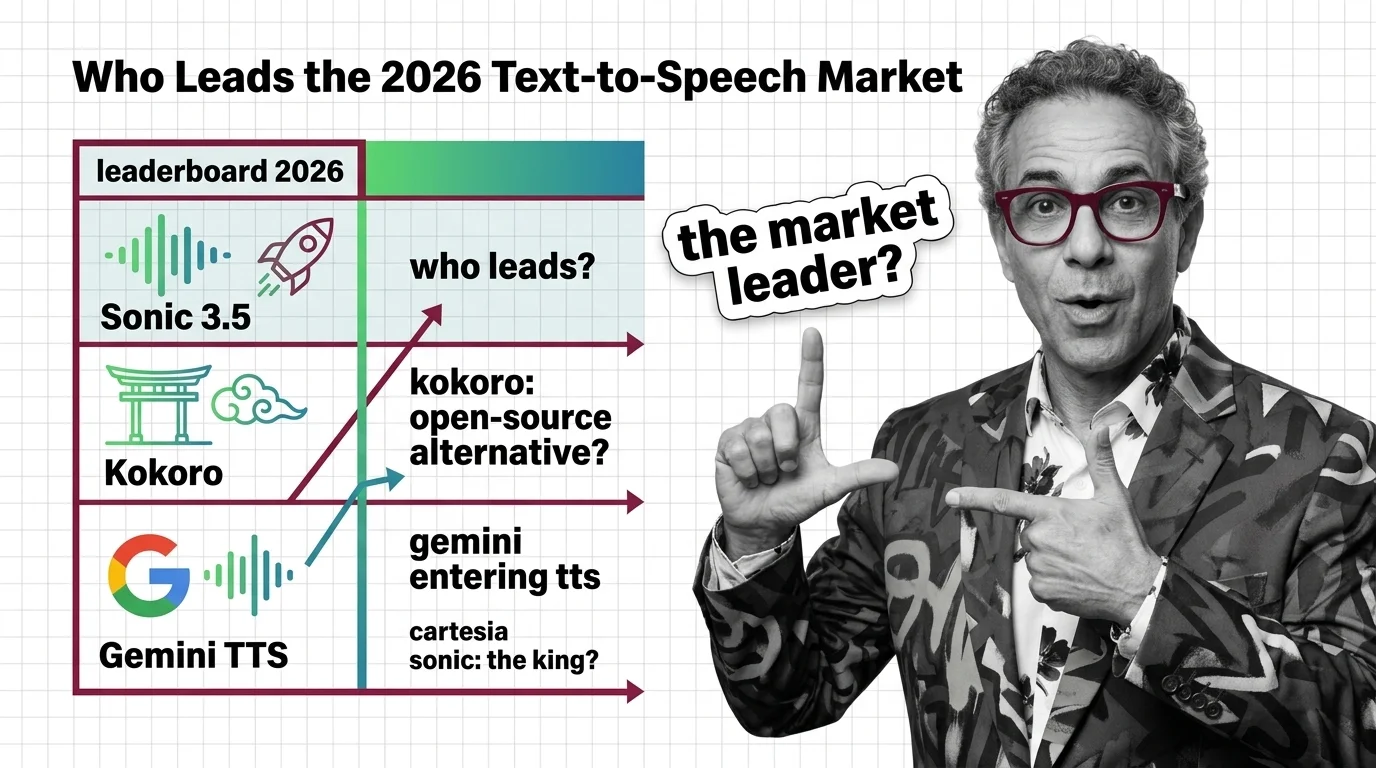
Sonic 3.5 tops the Artificial Analysis TTS leaderboard (ELO 1,218, sub-90ms). Gemini TTS ranks #2 on TTS Arena. Kokoro-82M self-hosts free, Apache 2.0.
Voice cloning built into modern TTS creates real risks: synthesized voices can misrepresent real people without consent. Before deploying, understand consent requirements and what your jurisdiction holds you liable for.
Risks & metrics
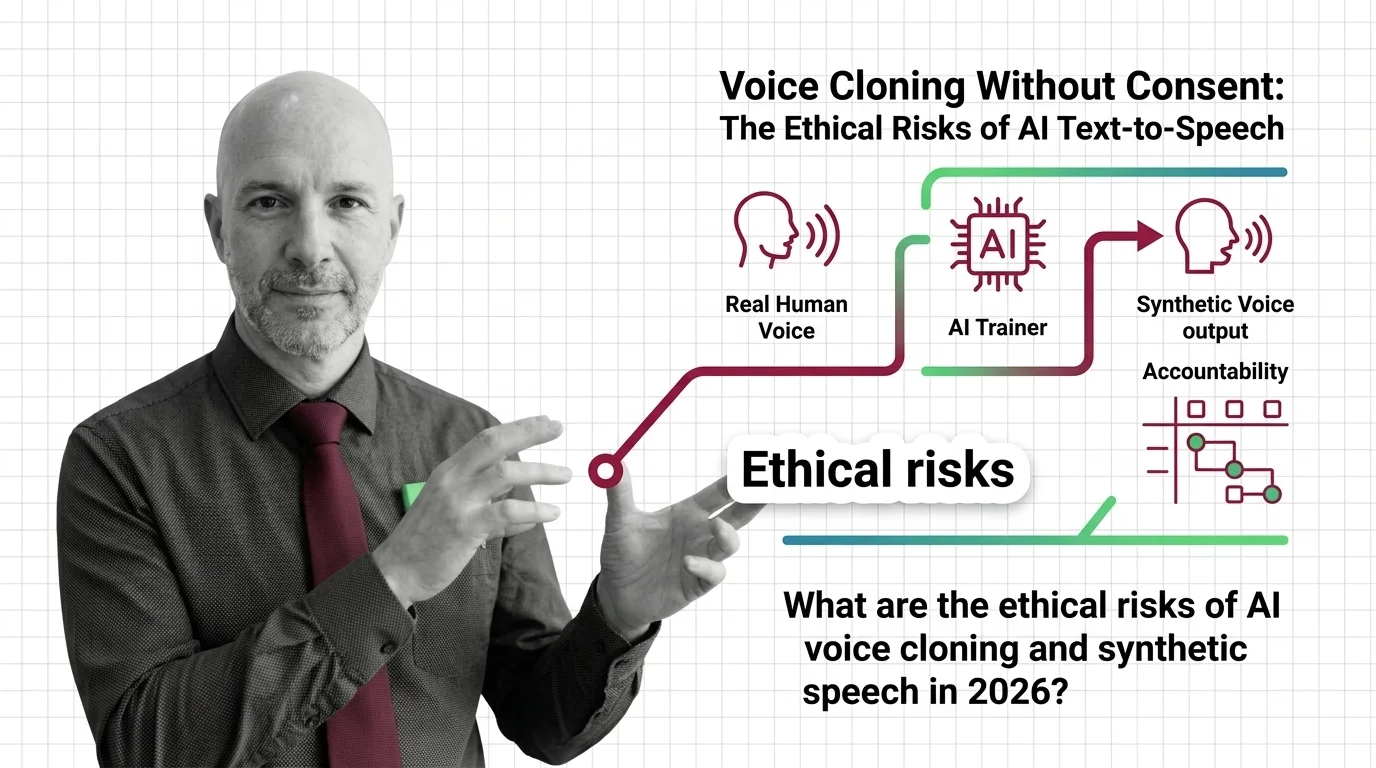
Voice cloning without consent is an accountability gap by design. Laws target outputs, not training data — and the most exposed lack legal recourse.