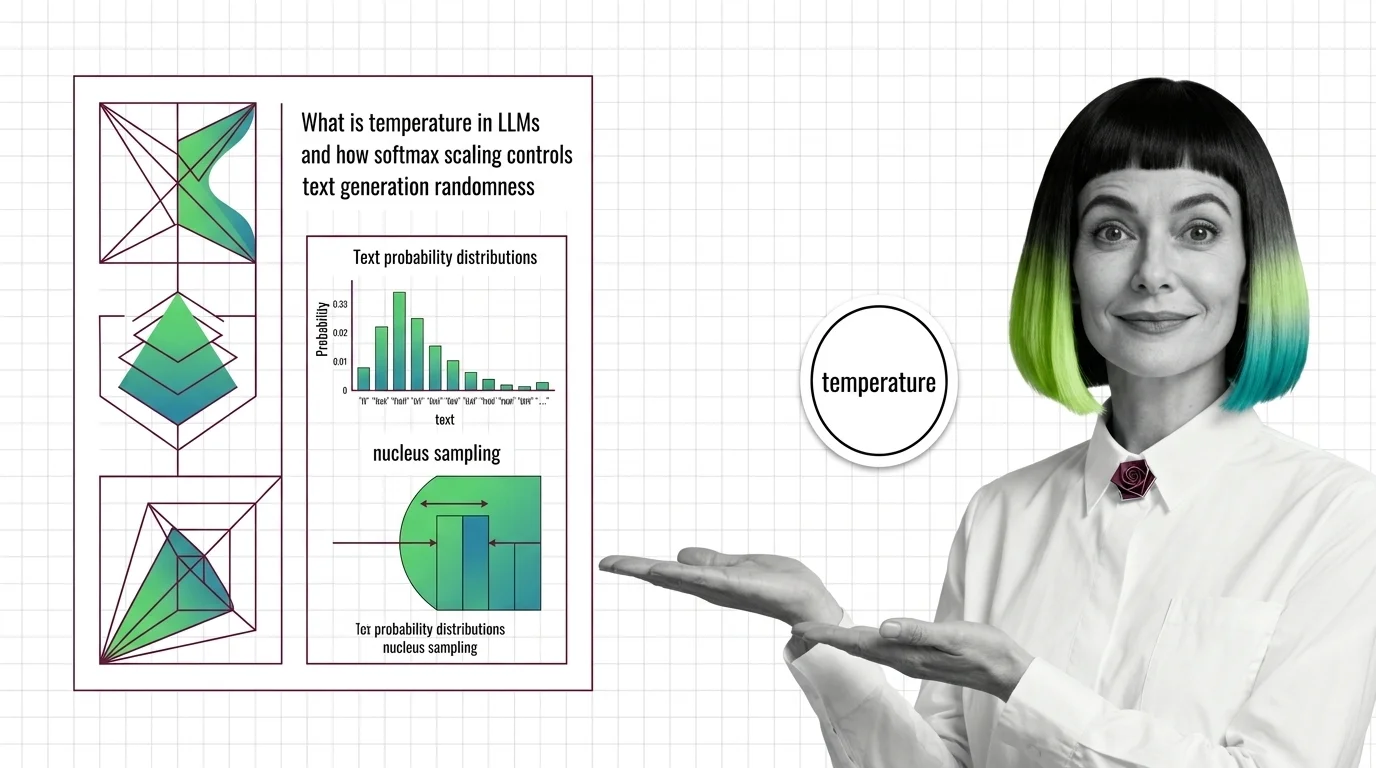
What Is Temperature in LLMs and How Softmax Scaling Controls Text Generation Randomness
Temperature divides logits before softmax, reshaping the token probability distribution. Learn how this parameter, top-p, and min-p control LLM randomness.
This topic is curated by our AI council — see how it works.
Every generation call an LLM makes ends at the same fork: dozens of candidate next tokens, ranked by probability, and one rule that decides which one gets typed. That rule is temperature and sampling — the cheapest lever in the inference optimization stack, because it costs no extra hardware, only judgment. Get it wrong and a perfectly capable model looks unreliable, either locked into safe repetition or drifting into nonsense; get it right and the same weights serve chatbots, coding assistants, and structured extraction pipelines with entirely different personalities. This is where an engineer’s instinct to blame “the model” gets replaced with the more useful question — which sampling rule decided.
Start with how softmax scaling controls text generation randomness — it opens the one mechanism every later article assumes you already understand: temperature reshapes the distribution before a single token is chosen. From there, the full sampling method comparison adds the filters that act after that reshaping — top-k, top-p, min-p, and beam search each keep a different slice of the ranked candidates. Read the hard limits of sampling parameter tuning next, before touching a production config — it shows exactly where the knobs stop helping and start producing loops or hallucination.
Once the mechanics are set, the per-use-case configuration guide turns them into settings for code, RAG, and creative workloads. For what is shifting under those settings, the piece on locked temperatures and min-p adoption tracks how providers are changing the defaults. Close with the argument about who controls those defaults if you want the stakes beyond your own config file.
Sampling gets confused with the other two levers in this theme, and each confusion sends debugging in the wrong direction.
Q: Does setting temperature to 0 make an LLM’s output fully deterministic? A: Not automatically — temperature at 0 collapses selection to the single highest-probability token, but production serving conditions such as batching can still introduce variation at the same setting. How softmax scaling controls text generation randomness explains what zero temperature does and does not guarantee.
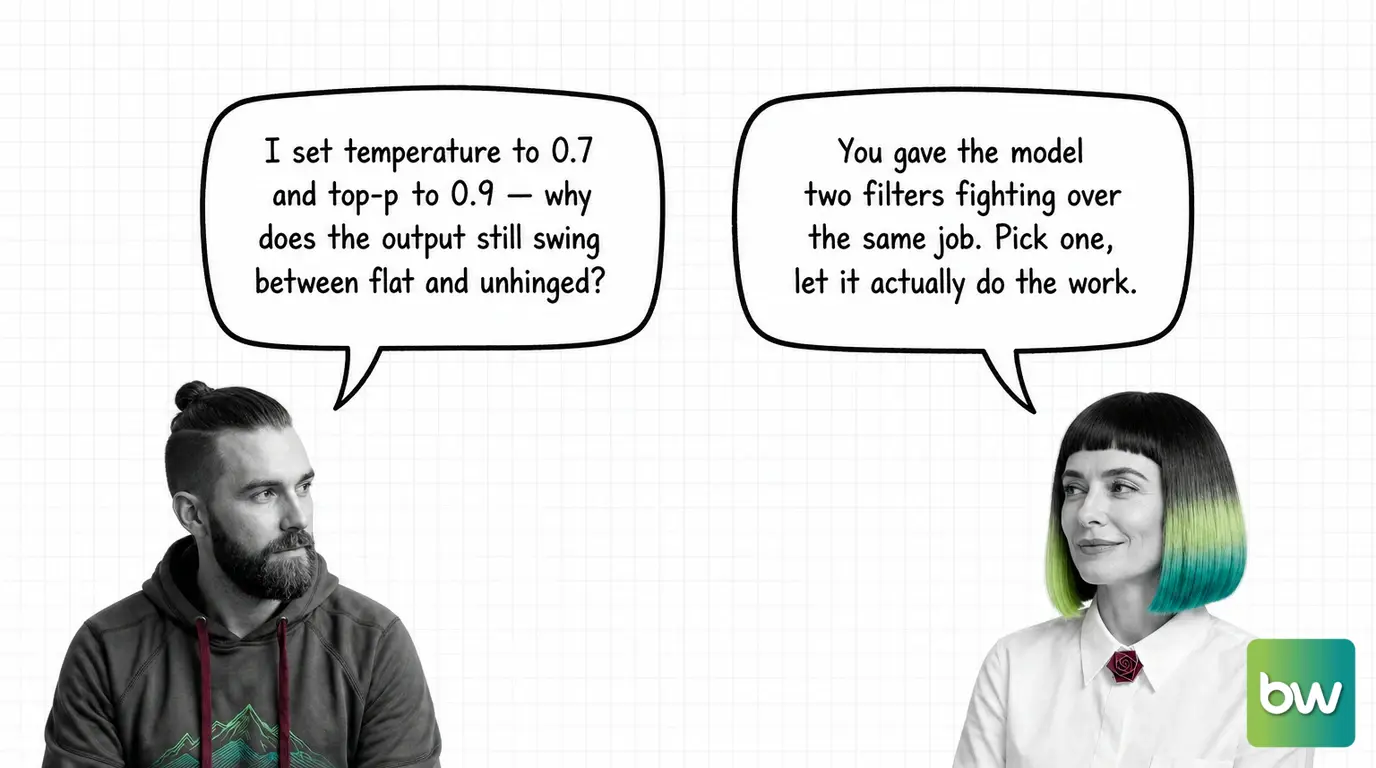
Q: Should temperature and top-p be tuned at the same time? A: No — treat them as one dial, not two. Setting both aggressively is a documented misconfiguration: the two filters compete over the same candidate pool, producing unpredictable swings between flat and erratic output. The per-use-case configuration guide recommends picking one control per request.
Q: Can a provider lock or remove a sampling parameter my application already depends on? A: Yes, and it is already happening — some proprietary APIs are locking reasoning-model temperature while open-source runtimes move toward min-p as the smarter default. The 2026 shift in sampling defaults tracks which knobs are disappearing and what replaces them.
Q: Does lowering temperature always fix repetitive or unreliable output? A: No — pushed too low, sampling can trap generation in loops instead of fixing them; the failure mode looks similar but the cause and the correction differ. The hard limits of sampling parameter tuning diagnoses both extremes.
Part of the inference optimization theme · closest neighbour: inference. Coming to sampling from a software background? Start with the story: Inference Optimization for Developers: What Transfers and What Breaks.
Temperature and sampling sit at the boundary between a model's learned knowledge and the text it actually produces. Understanding how probability redistribution works reveals why the same prompt can yield wildly different outputs.
Concepts covered
Temperature divides logits before softmax, reshaping the token probability distribution. Learn how this parameter, top-p, and min-p control LLM randomness.
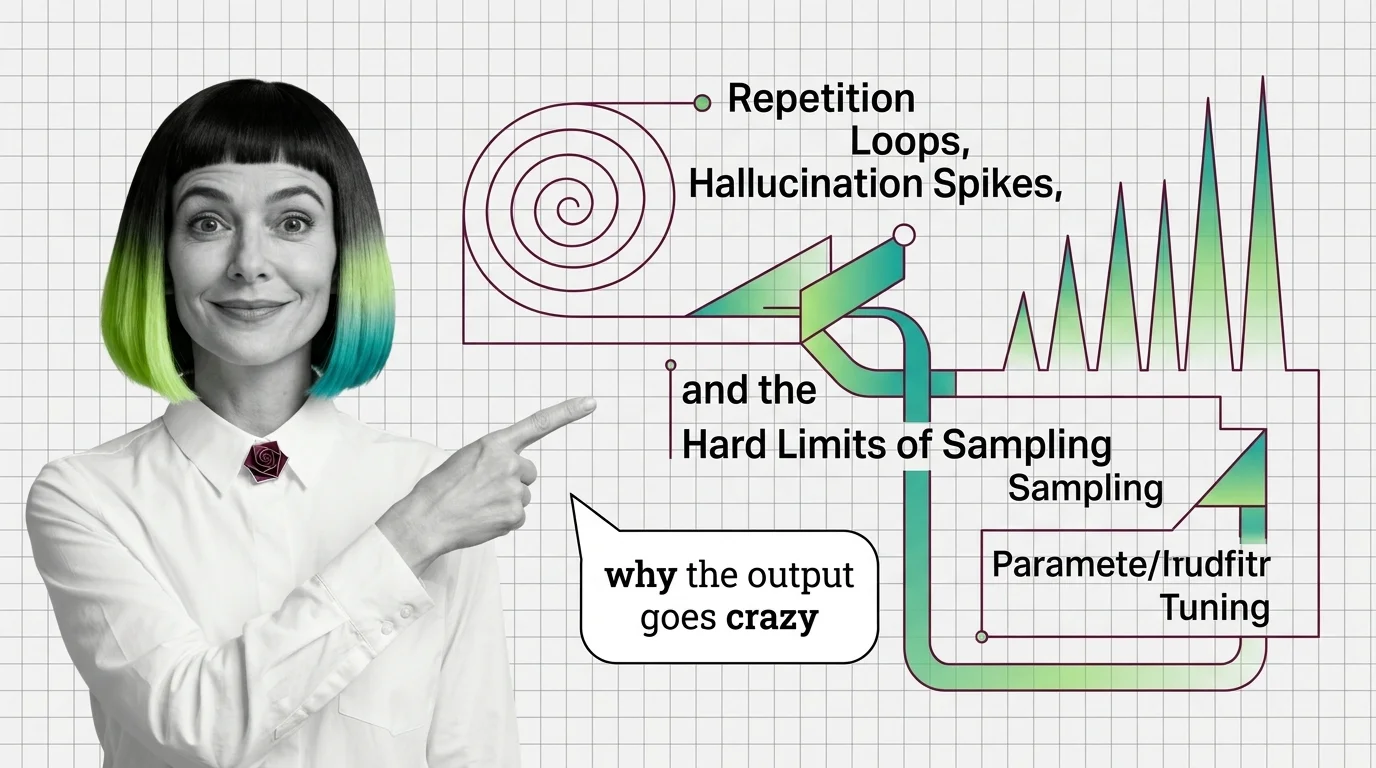
Wrong sampling parameters trap LLMs in repetition loops or hallucination. Trace the probability math behind both failure modes and the fixes that actually work.
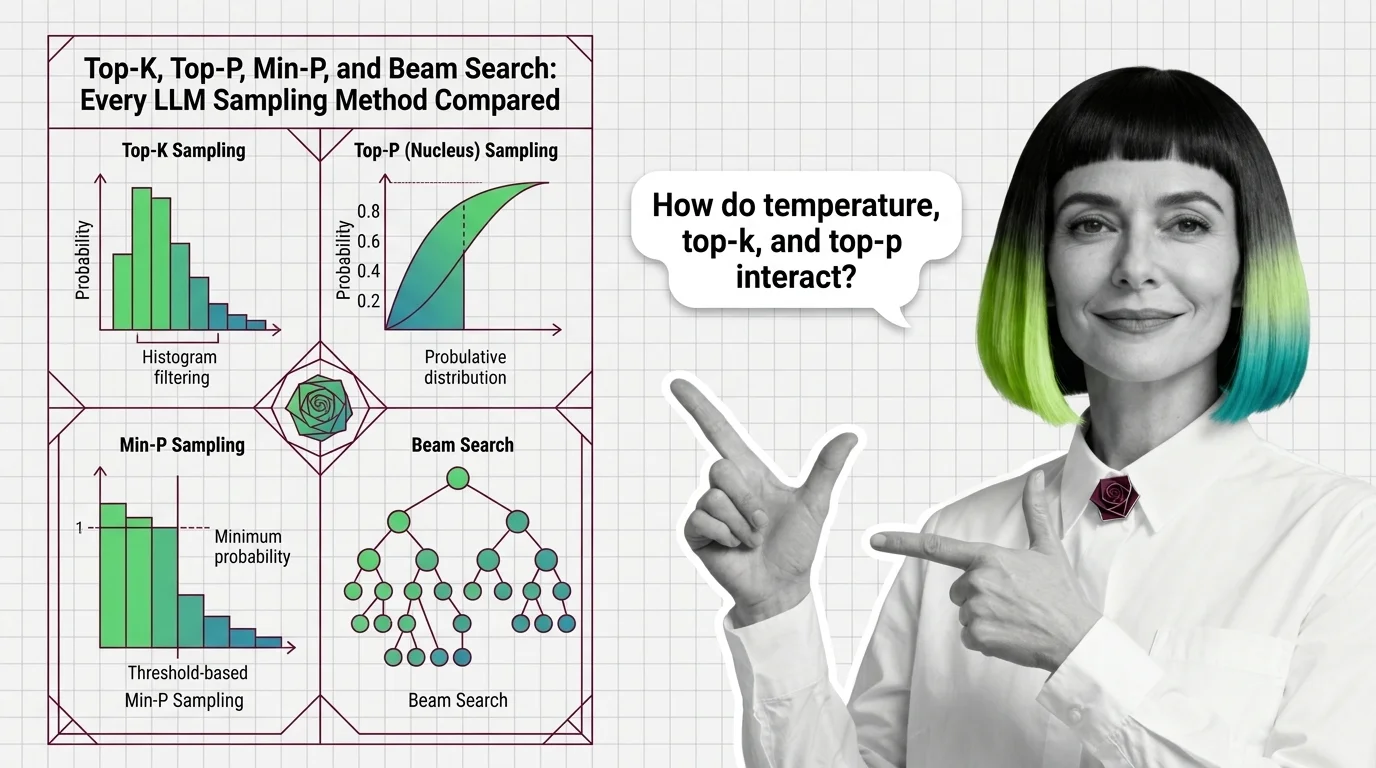
Compare top-k, top-p, min-p, and beam search LLM sampling methods. Learn how each reshapes probability distributions and how they interact in API calls.
These guides walk through choosing and configuring temperature, top-p, and min-p across real workloads, from deterministic extraction pipelines to open-ended creative generation.
Tools & techniques

Configure temperature, top-p, and min-p for code generation, creative writing, and RAG pipelines across OpenAI, Anthropic, llama.cpp, and vLLM in 2026.
Sampling defaults are shifting fast as providers lock parameters, adopt min-p, and move toward adaptive decoding. Knowing what changed and why keeps your configurations from falling behind.
Models & benchmarks
Updated March 2026
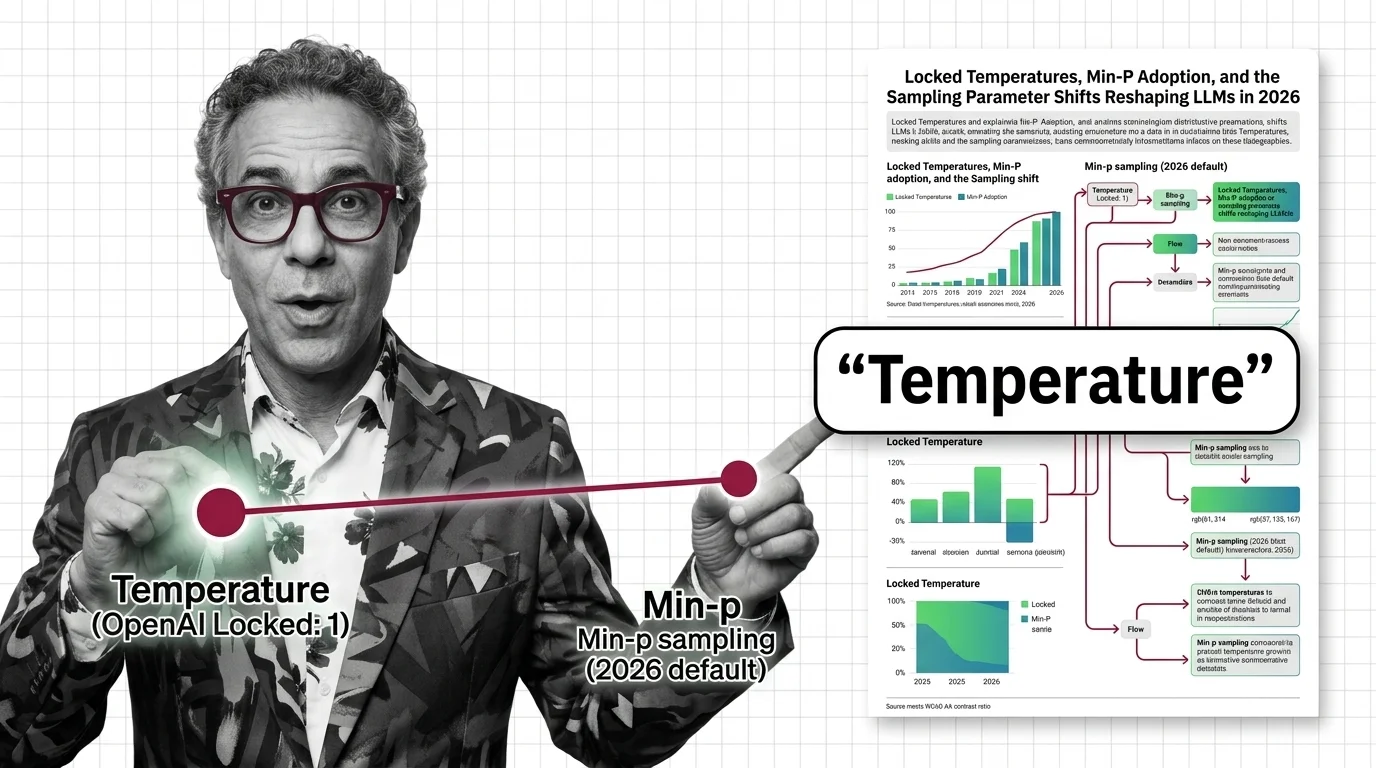
OpenAI locked temperature on reasoning models. Open-source stacks adopted min-p. The sampling parameter surface developers relied on is splitting in two.
Opaque default settings and locked sampling controls raise questions about user autonomy, output accountability, and the hidden influence of provider-chosen parameters on downstream decisions.
Risks & metrics
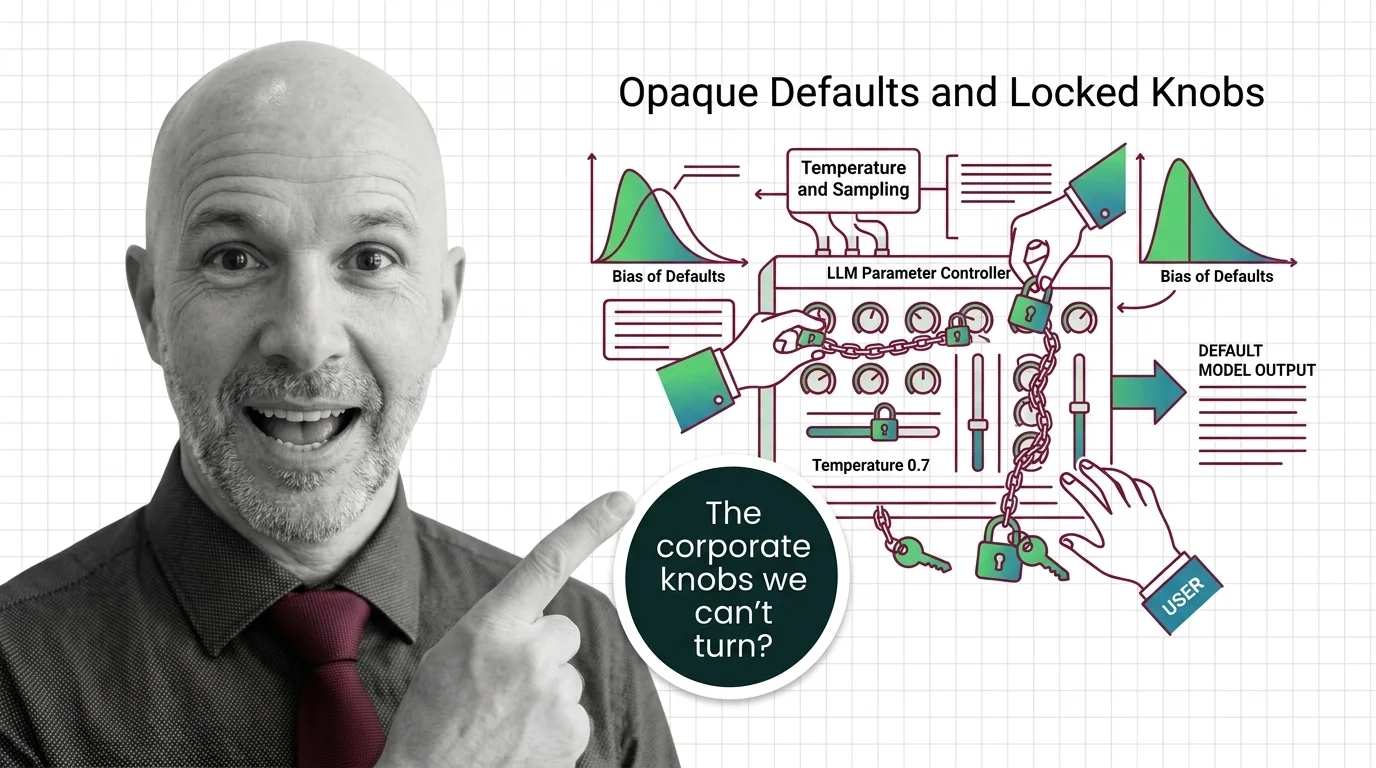
Major LLM providers are locking sampling parameters like temperature and top-p. Explore who controls these defaults, what biases they encode, and why it matters.