Sparse retrieval is the oldest lane in the retrieval-augmented generation stack, and 2026 confirmed it is not a legacy fallback: SPLADE, ELSER, and OpenSearch Neural Sparse all reached production-grade maturity in the same window, and every serious vector engine now ships hybrid retrieval by default. The reason is mechanical, not sentimental — dense embeddings blur past exact tokens (error codes, SKUs, legal citations, surnames) that term-based scoring was built to catch. For a developer wiring up retrieval, this topic is the lexical half of every hybrid pipeline you will eventually build.
Sparse retrieval scores documents by matching weighted terms in an inverted index, not by meaning — which is exactly why it still catches exact tokens dense embeddings miss.
BM25 and learned sparse models (SPLADE, ELSER) run on the same physics — posting lists and vocabulary mismatch. Learned sparse trades index size and latency for wider term coverage, not a different architecture.
Hybrid pipelines fuse sparse and dense rankings with reciprocal rank fusion on ranks alone, and every lane needs the same top-k budget for the fusion to be fair.
By 2026 the “dense vs sparse” debate is settled: hybrid retrieval is the production floor, not an either/or choice.
Reading sparse retrieval in order: weights, limits, fusion, then the ethics
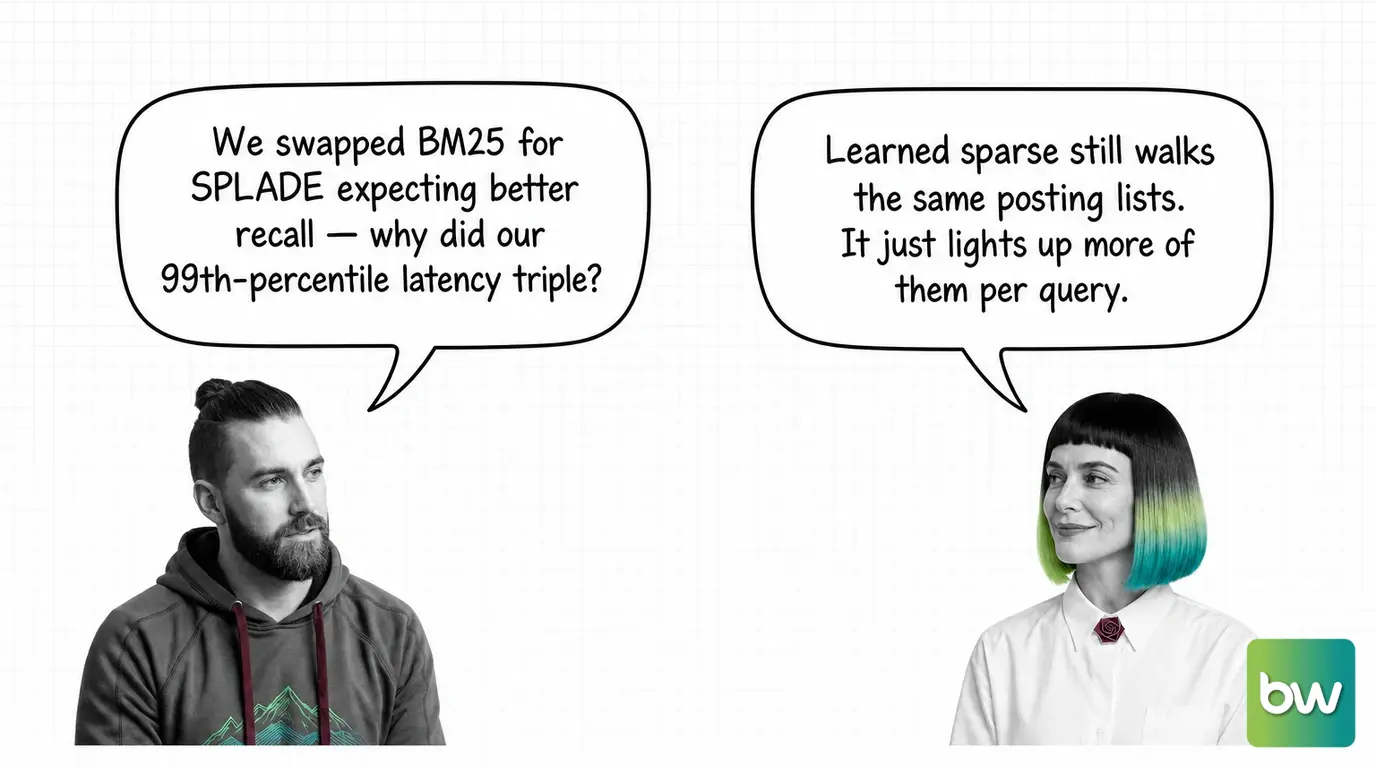
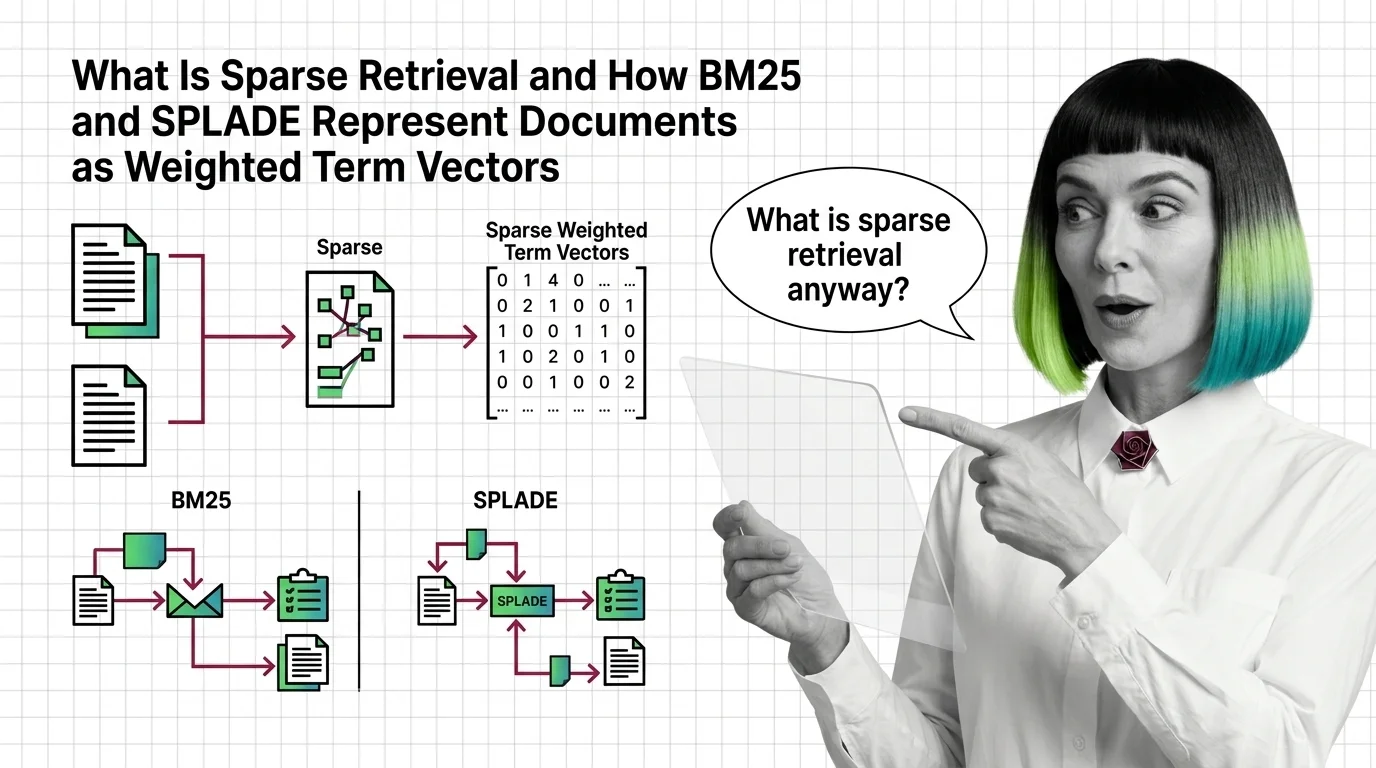
Start with how BM25 and SPLADE represent documents as weighted term vectors — it explains the inverted-index mechanics every later article assumes: most of a document’s term vector is zero, and BM25 or SPLADE decides what fills the rest. Then read the prerequisites and hard limits of BM25, SPLADE, and ELSER before you swap one for the other — “learned” does not mean “free”: both obey the same posting-list physics, and teams that upgrade expecting only better recall are often the ones whose 99th-percentile latency triples.
Learned sparse trades index size and latency for vocabulary coverage, not a new architecture.
BM25, learned sparse, and hybrid search are not the same choice
Two confusions cost teams the most time once they move past the basics.
BM25 is not SPLADE, and “learned” is not a free upgrade. BM25 weights terms with a fixed statistical formula; SPLADE and ELSER let a transformer expand which terms count and by how much. Both still walk an inverted index and both still miss what was never in the vocabulary — the difference is coverage and cost, not category.
Sparse retrieval is a lane, not the fusion.Hybrid search is the architecture that combines sparse and dense results; sparse retrieval alone only answers whether a document contains the right words, never whether it means the right thing. Confusing the lane for the pipeline is why some teams “add SPLADE” and expect embedding-level paraphrase tolerance from a term matcher.
Common questions about sparse retrieval
Q: Is sparse retrieval still worth running now that embedding quality has improved so much?
A: Yes — dense embeddings blur past exact tokens like error codes, SKUs, and rare names, which is exactly what term-based scoring was built to catch. By 2026 every major vector engine ships hybrid by default, and the hybrid pipeline guide treats sparse as a mandatory lane, not a legacy fallback.
Q: Should I replace BM25 with a learned sparse model like SPLADE or ELSER?
A: Only after you have budgeted for the latency and index-size cost — learned sparse expands the vocabulary a query matches against, meaning more posting lists to walk, not fewer. The prerequisites and hard limits article covers what breaks first.
Q: Which learned sparse engine should I track in 2026 — SPLADE-v3, ELSER v2, or OpenSearch Neural Sparse?
A: All three reached production-grade maturity in the same window, so the honest answer is to track the race rather than pick once and stop watching. The 2026 learned sparse retrieval race maps who shipped what, and what changed for latency and multilingual coverage.
Q: Is sparse retrieval actually more auditable than dense embeddings for high-stakes search?
A: It is more inspectable — you can see every term match and weight — but inspectable is not the same as audited. The ethics of sparse retrieval in high-stakes search argues that a trail nobody reads is not actually a safeguard.
Sparse retrieval looks deceptively simple — count words, weight them, rank documents — yet it remains one of the strongest baselines in information retrieval. Start here to see why term vectors still matter in the embedding era.
Sparse retrieval encodes documents as weighted term vectors. Here is how BM25 and SPLADE produce those weights and why they beat dense models on exact terms.
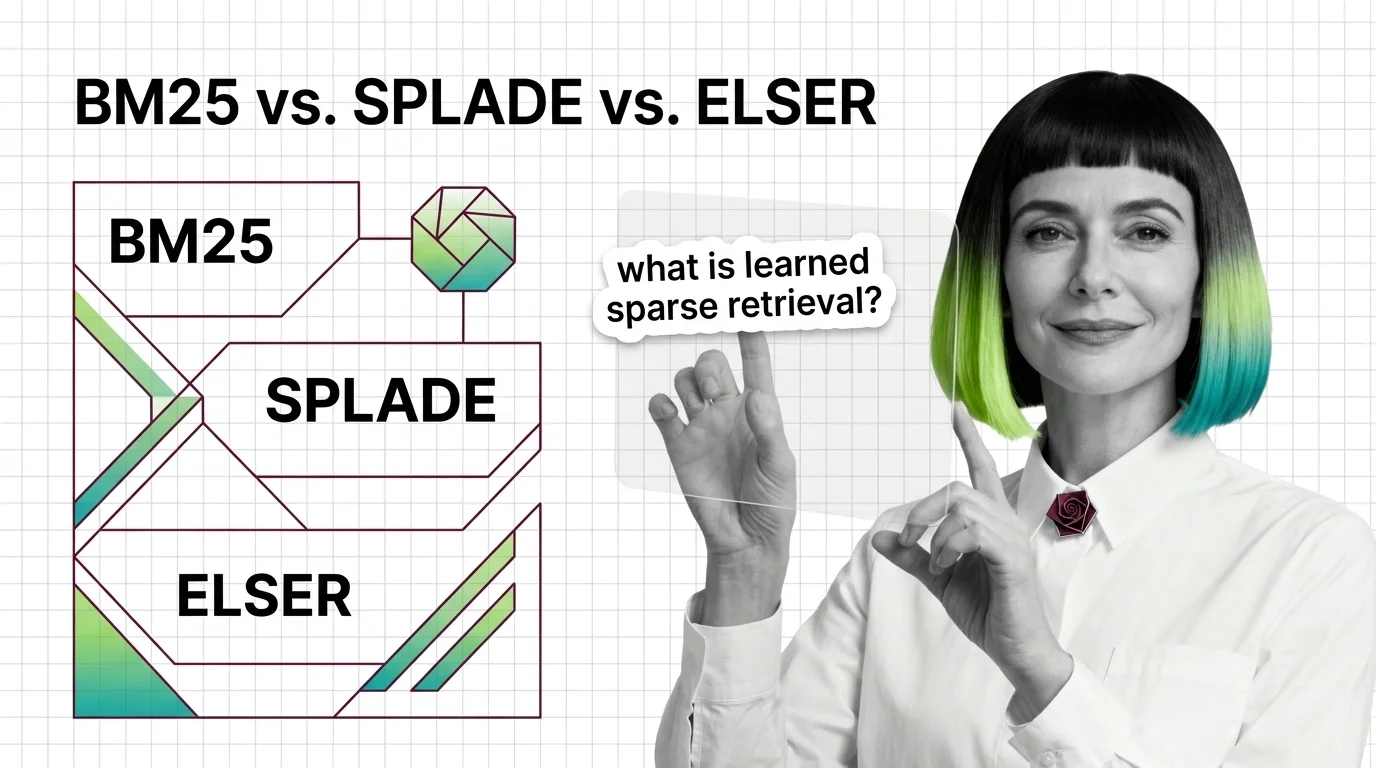
Sparse retrieval starts with BM25 and ends with ELSER and SPLADE-v3. Learn the math, the prerequisites, and where each method actually breaks down.
2
Build with Sparse Retrieval
Hybrid pipelines that combine sparse and dense retrieval consistently outperform either alone. These guides walk through index design, score fusion, and the trade-offs you will actually feel in production.
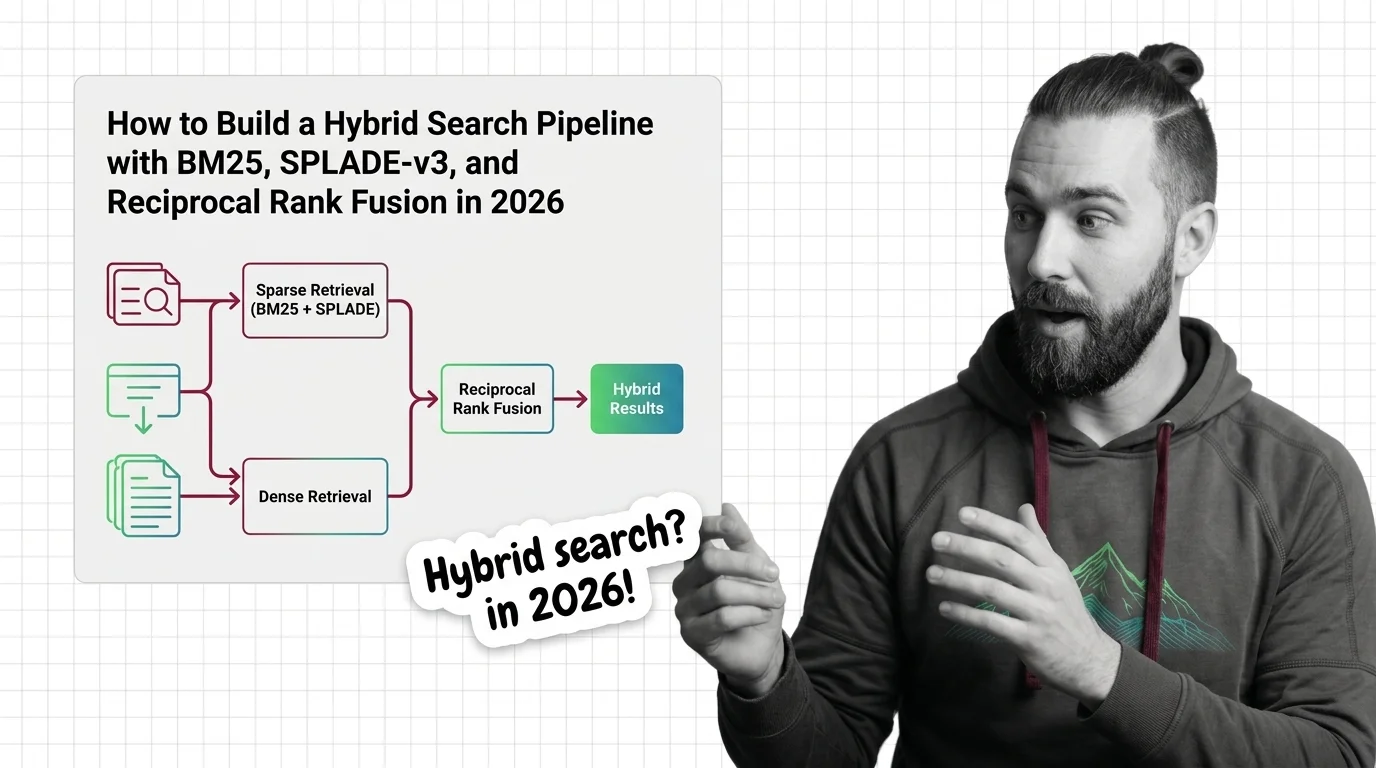
Vector search still misses rare terms. Here's how to architect a hybrid retrieval pipeline with BM25, SPLADE-v3, and Reciprocal Rank Fusion in 2026.
3
What's Changing in 2026
Learned sparse models are evolving fast, with new releases competing on quality, latency, and cost. Track which engines and benchmarks are setting the pace, and where the field is heading next.
Three learned sparse retrieval lines hit production in 2026 as hybrid search becomes the default RAG stack. Who's winning, who's losing, what to deploy now.
4
Risks and Considerations
Interpretable does not mean fair. Sparse retrieval inherits vocabulary bias, query intent gaps, and stale-index problems that can quietly distort high-stakes search results. Understand the ethical fault lines before you ship.
Sparse retrieval is sold as interpretable search for high-stakes domains. But interpretable is not innocent — the receipts mean nothing if no one reads them.