Every retrieval query eventually asks one question: out of millions of stored vectors, which ones actually match? Answering that at production scale means choosing not just a distance metric but whether to check every candidate exactly or trade some correctness for speed — a decision that ripples through everything the retrieval-augmented generation stack does downstream, from what a reranker sees to what the model ends up grounding on. Get this layer wrong, and no amount of tuning further up the pipeline fixes it.
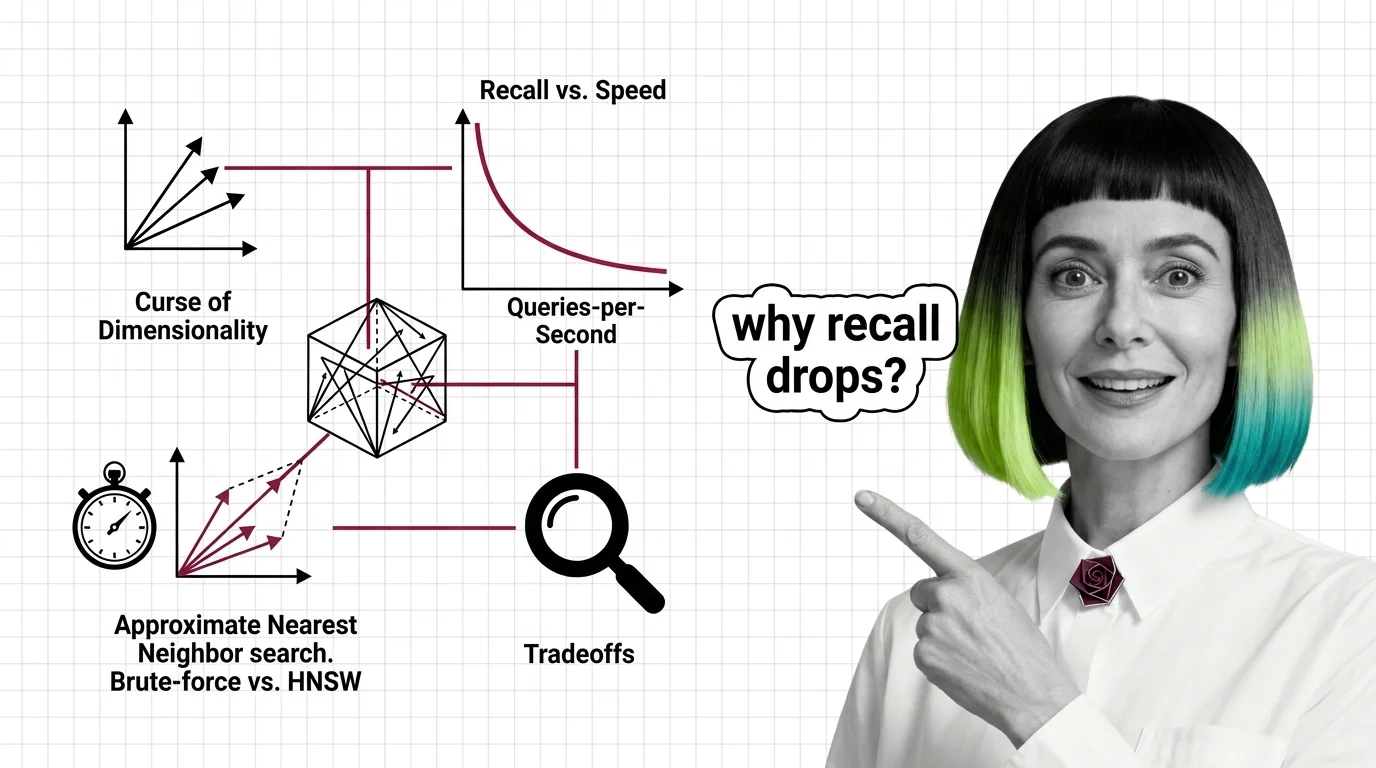
Approximate nearest neighbor search trades a guaranteed correct answer for speed — brute force still wins below the scale where distances stop carrying meaning.
The algorithm and the library are two separate decisions: HNSW, IVF, and LSH are the math; FAISS, HNSWlib, ScaNN, and USearch are the implementations racing each other on throughput.
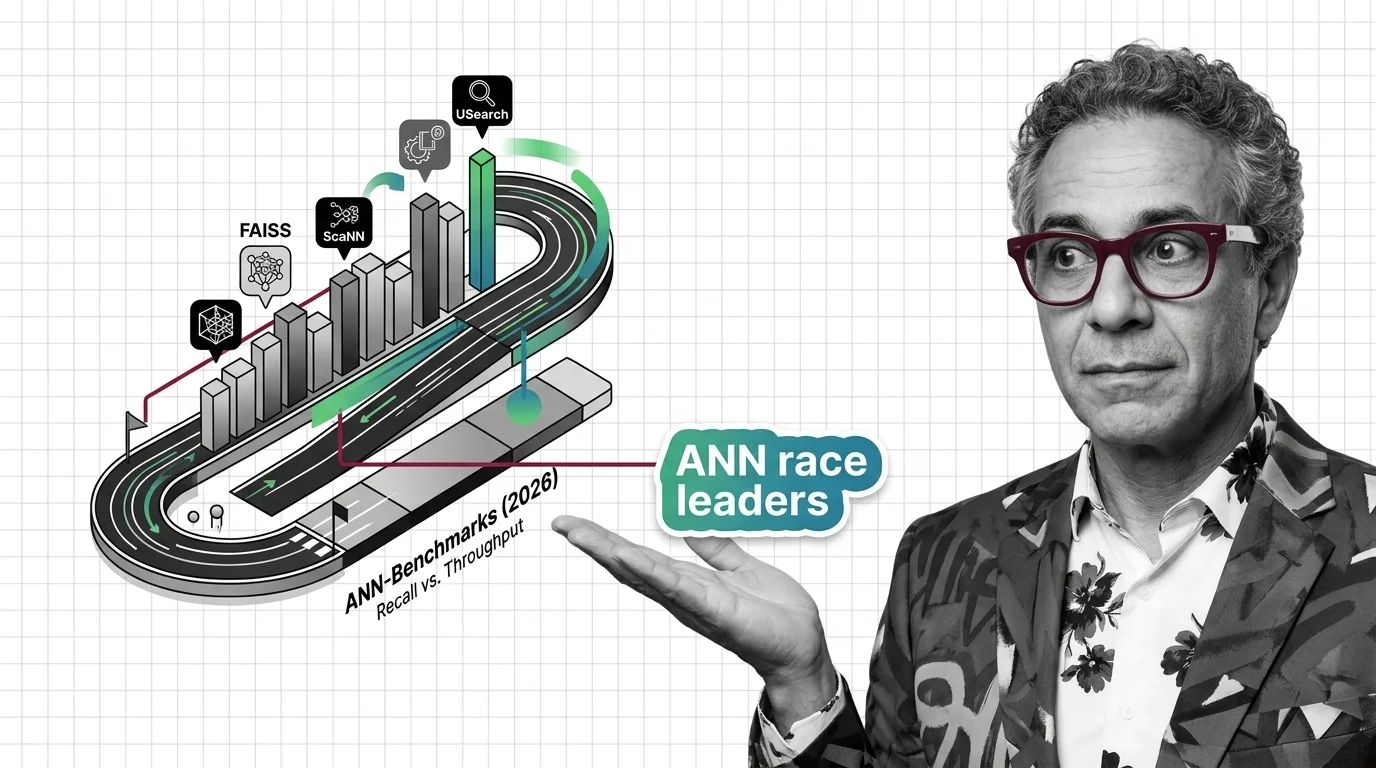
The ANN library market has split into throughput-first and scale-first camps, so a leaderboard win on one benchmark doesn’t guarantee a win on your infrastructure.
A distance metric measures geometry, not fairness — nearest-neighbor systems can silently propagate whatever bias is already encoded in the vectors they search.
The similarity search reading path: metric first, trade-offs after
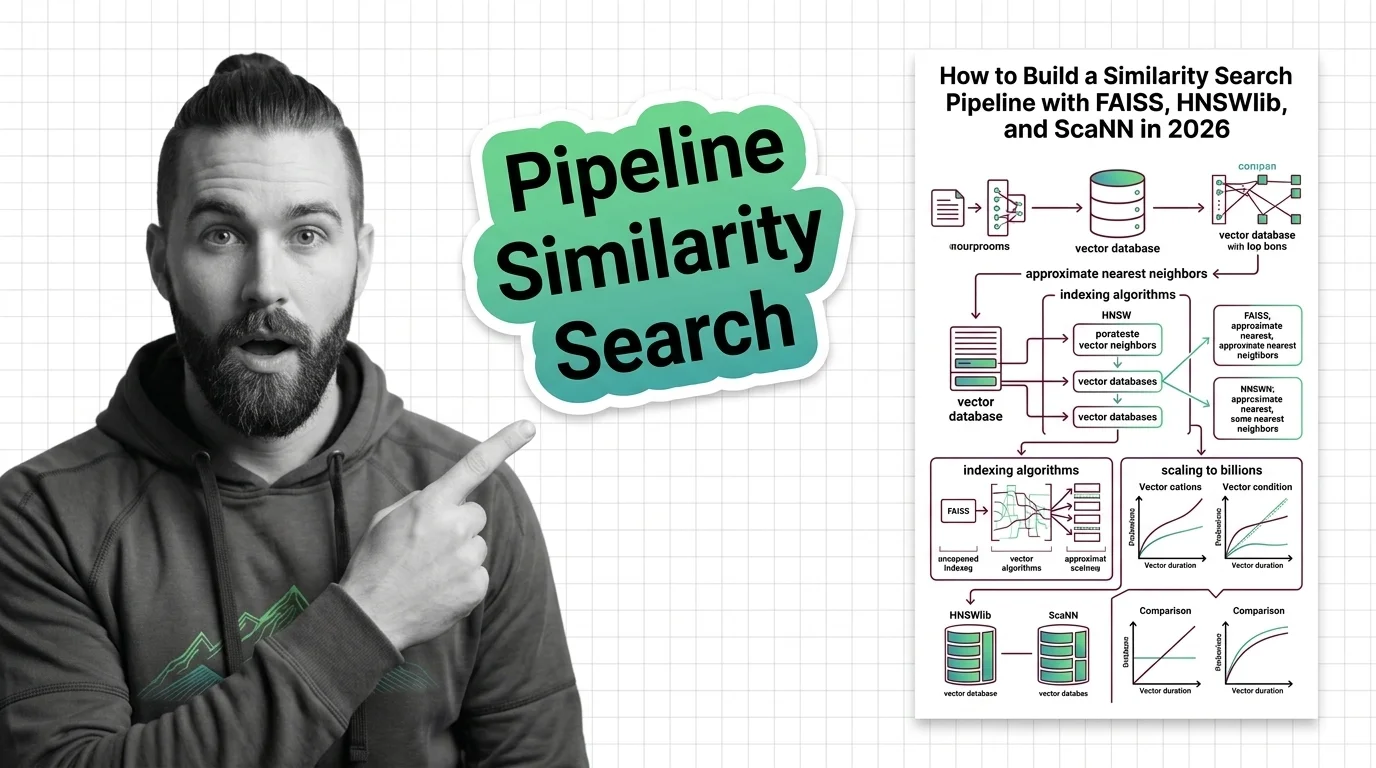
When you’re ready to build, the FAISS, HNSWlib, and ScaNN pipeline guide turns the theory into a working system with a library-selection framework based on constraints, not blog hype. For the state of that library market, the 2026 ANN library race tracks how FAISS, ScaNN, and USearch split into GPU-first, disk-first, and embedded-first strategies. Close with the accountability gaps in nearest-neighbor systems — if your search results will ever rank people rather than products, read it before those results ship, not after.
Approximate isn't a bug — it's the exchange rate between recall and speed you agreed to when you picked the index.
How similarity search differs from indexing, libraries, and exact matching
Three neighbours get mistaken for this topic, and each confusion sends debugging in the wrong direction.
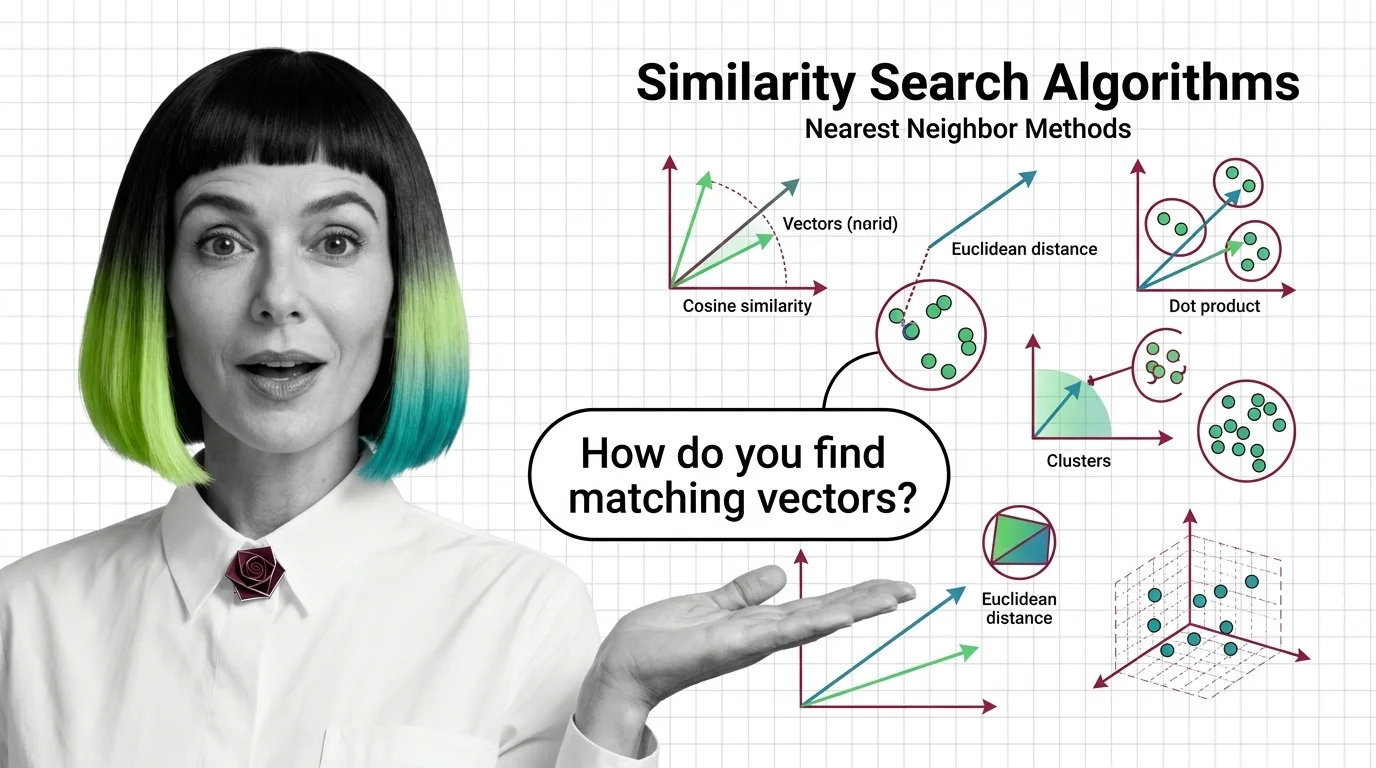
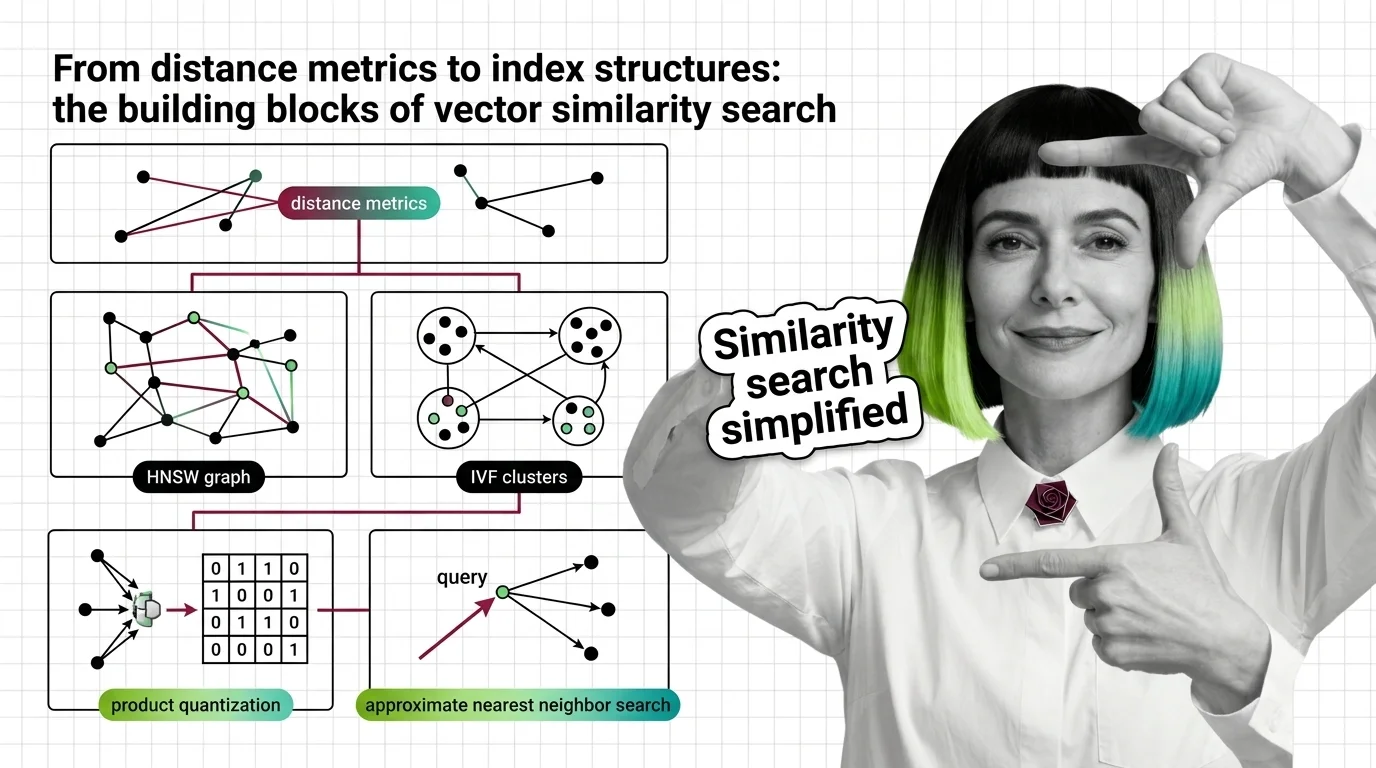
A similarity search algorithm is not a vector index. The algorithm defines what counts as “closest” — cosine, dot product, Euclidean — while vector indexing is the data structure that finds those closest vectors without checking every one. Wrong-feeling matches point to the metric or algorithm; slow queries point to the index. The metric and the shortcut are two separate specifications, and conflating them sends debugging in the wrong direction.
The algorithm is not the library. HNSW, IVF, and LSH are algorithms — the math describing how to search. FAISS, HNSWlib, ScaNN, and USearch are libraries that implement some subset of that math, and they don’t all implement it the same way: the 2026 library race split into throughput-first and scale-first camps, so the fastest library on one benchmark can lose on another.
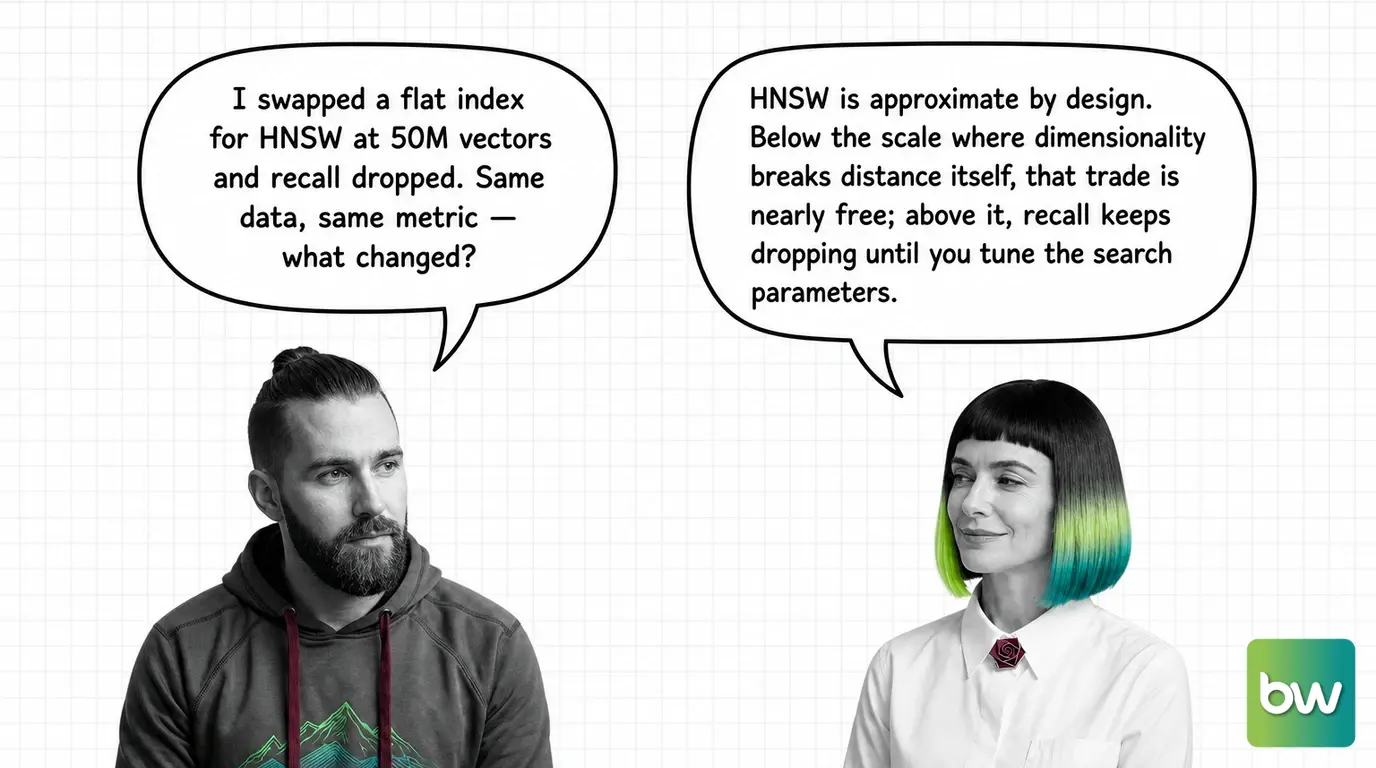
Exact is not approximate. Brute-force nearest neighbor always finds the true closest vectors; approximate methods trade some of that guarantee for orders-of-magnitude speed. Past a certain dimensionality, distances themselves stop carrying much signal — so at scale, approximate search is rarely optional. It is the only version of the problem that finishes in useful time.
Common questions about similarity search
Q: Can I run similarity search without a vector database?
A: Yes — the algorithm only needs vectors and a distance function; FAISS and HNSWlib run in-process with no database involved. A vector database adds persistence, filtering, and multi-tenant access on top of the same math, which matters at scale but isn’t required to prototype the matching itself.
Q: Why does my nearest-neighbor search return different top results when I rerun the exact same query?
A: Because most production systems use approximate methods, not brute force — they trade a guaranteed exact answer for speed, and index build randomness or search parameters can shift results slightly between runs. The recall-versus-speed trade-off has a hard mathematical floor, so exactness is never free past it.
Q: Does a faster similarity search library always mean better search quality?
A: No. The ANN library race in 2026 split into throughput-first and scale-first camps, and a library optimized for one can post worse recall on your data than a slower alternative. Benchmark on your own dataset with recall@k and latency together before committing to a library on speed alone.
Q: Does switching to a different distance metric fix biased nearest-neighbor results?
A: No — the metric only measures distance in whatever space the vectors already occupy; if that space encodes bias, cosine or Euclidean will surface it just as faithfully as any other metric. The accountability gap runs upstream of the metric choice, in the training data and the model that produced the vectors.
Similarity search algorithms translate the abstract problem of finding meaning into measurable distances between vectors. Understanding how different metrics shape retrieval reveals why no single algorithm suits every use case.
High-dimensional similarity search faces hard mathematical limits. Explore the curse of dimensionality, recall-speed tradeoffs, and when brute force wins.
Similarity search combines distance metrics, index structures, and quantization. Learn how HNSW, IVF, LSH, and product quantization trade accuracy for speed at scale.
2
Build with Similarity Search Algorithms
The practical guides cover building similarity search pipelines, selecting distance metrics for your data, and choosing index structures that balance recall against query latency.
Select between FAISS, HNSWlib, and ScaNN for production vector search. Specification-first approach covering index selection, quantization, and validation.
3
What's Changing in 2026
The similarity search landscape evolves as new index algorithms and hardware-aware optimizations reshape what is possible at scale. Falling behind means slower retrieval and wasted compute.
The ANN library race split into GPU-first and disk-first lanes. See which similarity search libraries lead in 2026 and what the fork means for your vector stack.
4
Risks and Considerations
Similarity search systems can silently propagate bias embedded in the underlying vectors, returning skewed results without any visible error signal. Understanding where accountability breaks down matters before deploying at scale.