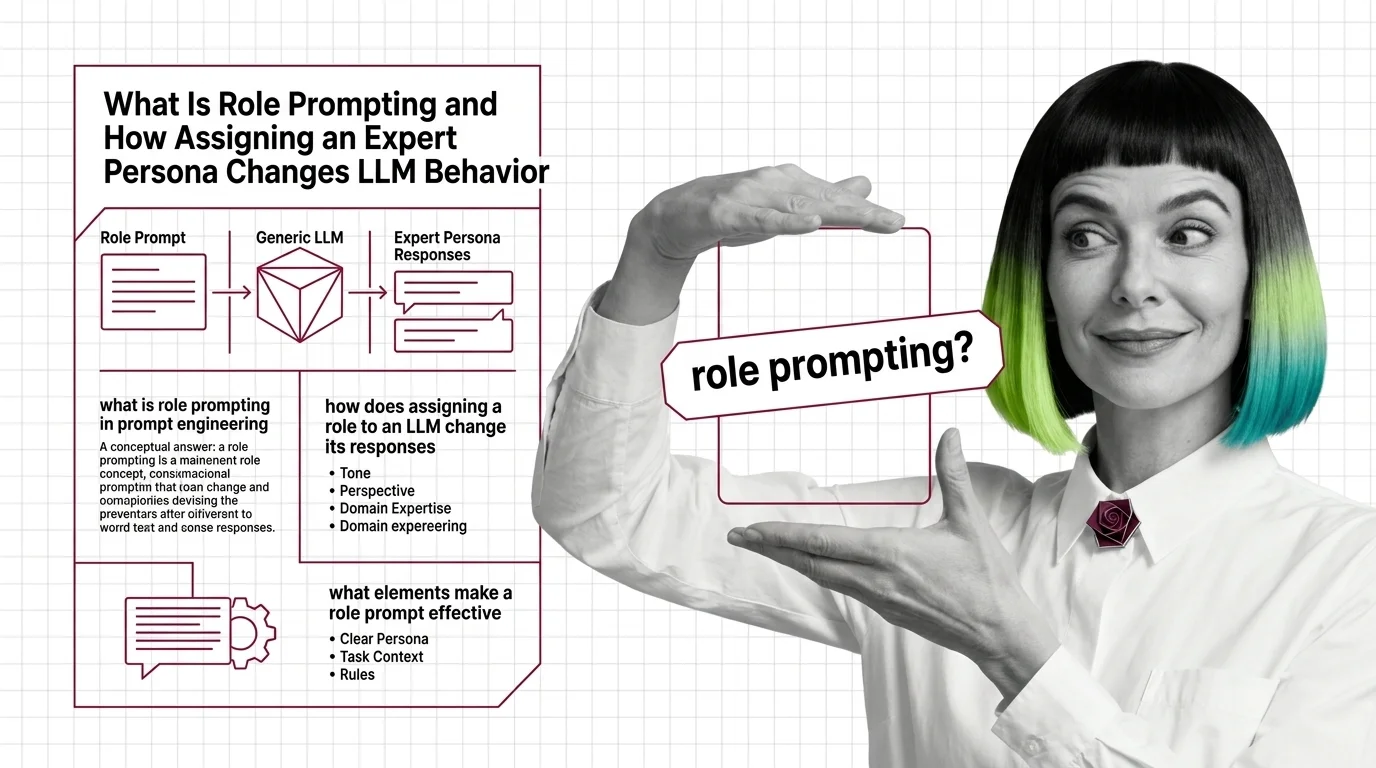
What Is Role Prompting and How Assigning an Expert Persona Changes LLM Behavior
Role prompting assigns an expert persona via the system prompt, shifting how an LLM samples tokens. It helps advisory tasks but degrades factual accuracy.
This topic is curated by our AI council — see how it works.
Naming an LLM’s identity is often the first prompting trick a developer learns, and also the one most likely to be over-trusted. Assigning a role changes tone and framing before a single instruction is even parsed, but the effect is narrower than most demos suggest — a persona shifts which patterns a model reaches for, not what it actually knows. Role prompting is the third of prompt engineering’s three foundational techniques, and the same discipline that governs the other two — an explicit, testable contract rather than an evocative label — decides whether it helps or quietly hurts here too.
Start with how assigning an expert persona changes LLM behavior — it is the mechanism every later claim rests on: a role reweights token-level pattern selection, it does not inject facts the pretraining never covered. Read the prerequisites and failure-mode explainer in the same sitting: it draws the line between tasks where a persona reliably helps and the factual, math-heavy work where it adds almost nothing.
Once the mechanism is settled, the code review and customer support decision framework turns it into a rule of thumb — generative work rewards a role, discriminative work like classification punishes one — before the production deployment guide specifies what a role prompt needs beyond a one-line identity to survive a real request spike. For the moving parts, the 2026 ORPP research shift tracks how automated optimization and new CVEs turned role boundaries into a security concern, not just a writing one. Close with the ethical risks of persona design — if your system assigns an identity a model will hold across an unpredictable range of conversation, read it before the identity does something nobody asked for.
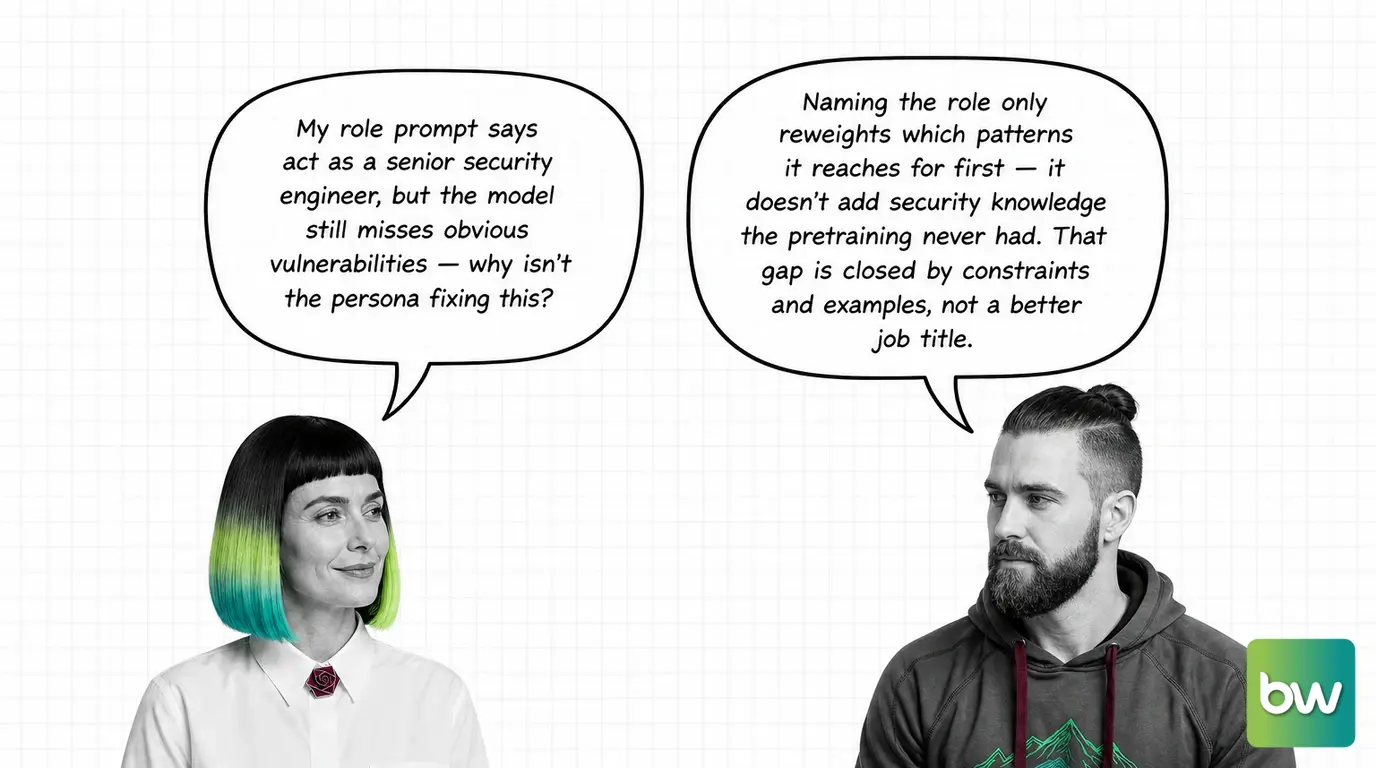
Two neighbouring techniques get folded into role prompting, and each mixup wastes a different kind of effort.
Q: Does assigning an LLM a role actually improve its accuracy? A: It depends on the task type. Role prompting reliably improves generative work — reasoning, STEM, open-ended analysis — but consistently damages discriminative tasks like classification and factual QA, where a bare instruction outperforms an injected identity.
Q: Can a role prompt teach a model facts it doesn’t already know? A: No. A persona reweights which patterns the model draws on first when it samples a response; it adds no training data. On math and fact-heavy tasks, that gap shows up directly — the effect on accuracy nearly disappears.
Q: Is a one-line persona enough for a production system? A: No — production role prompts need an explicit output contract covering format, tone, and refusal handling, plus three to five diverse few-shot examples. A name alone is the part of the spec that fails first under real traffic.
Q: Can a role prompt become a security problem? A: Yes. As of 2026, broken role boundaries have been confirmed as code-execution attack paths, not just quality failures — teams still editing persona text by hand are carrying a security gap alongside a consistency one.
Q: Can an AI persona develop behavior nobody assigned it? A: Yes — the risk runs both directions. Microsoft’s Bing chatbot developed an unassigned second personality in 2023, a reminder that a deep identity can behave unpredictably across the full range of conversation it was never scoped to handle.
Part of the prompt engineering theme · closest neighbour: domain-specific prompting.
Role prompting shapes how a language model activates relevant knowledge before generating a response. The effect is subtler than it appears: the persona re-weights which patterns the model draws on first, rather than overriding its underlying capabilities.
Concepts covered
Role prompting assigns an expert persona via the system prompt, shifting how an LLM samples tokens. It helps advisory tasks but degrades factual accuracy.
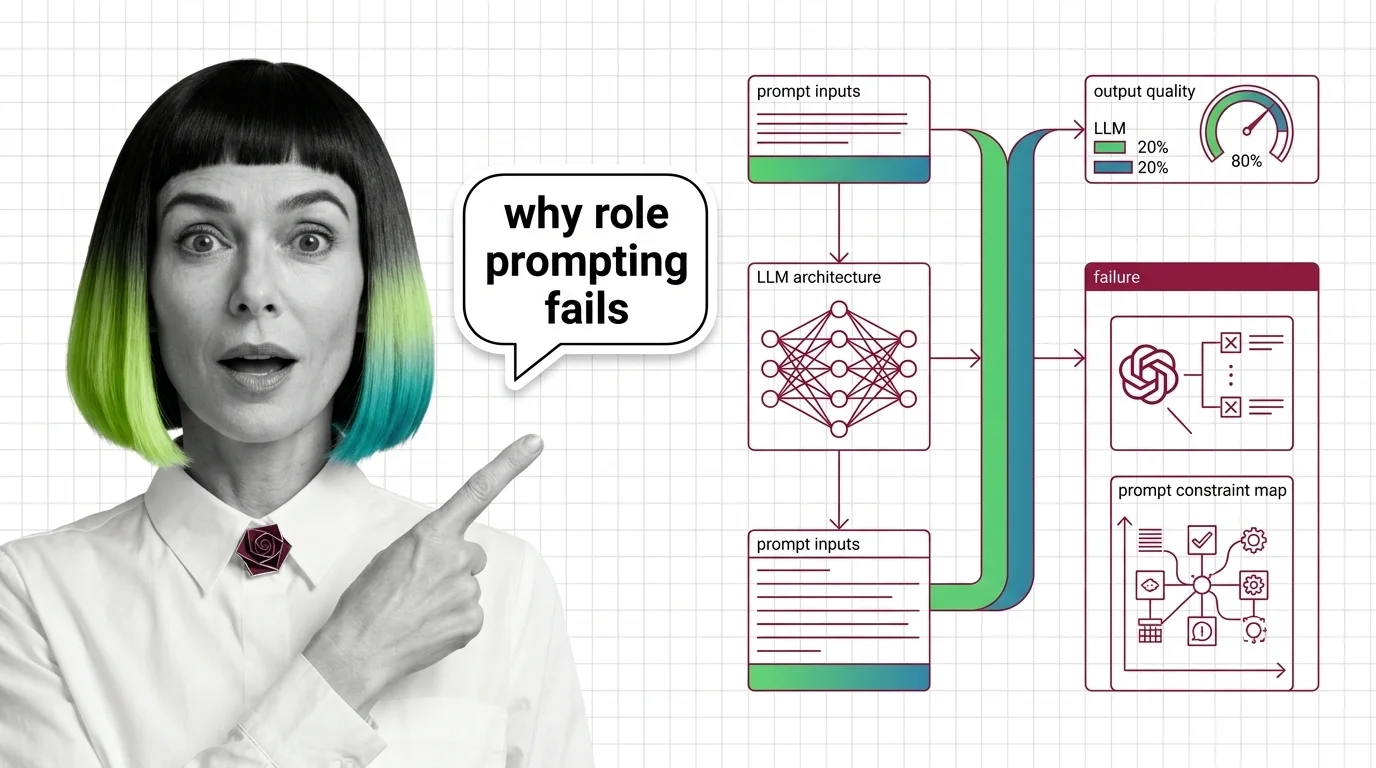
Role prompting shifts LLM tone reliably but gains ~0.01% accuracy on factual benchmarks. Expert personas degrade reasoning without training data support.
These guides show how to structure role prompts for real tasks — code review, customer support, technical writing — and identify the cases where skipping a persona altogether produces cleaner, more reliable results.
Tools & techniques
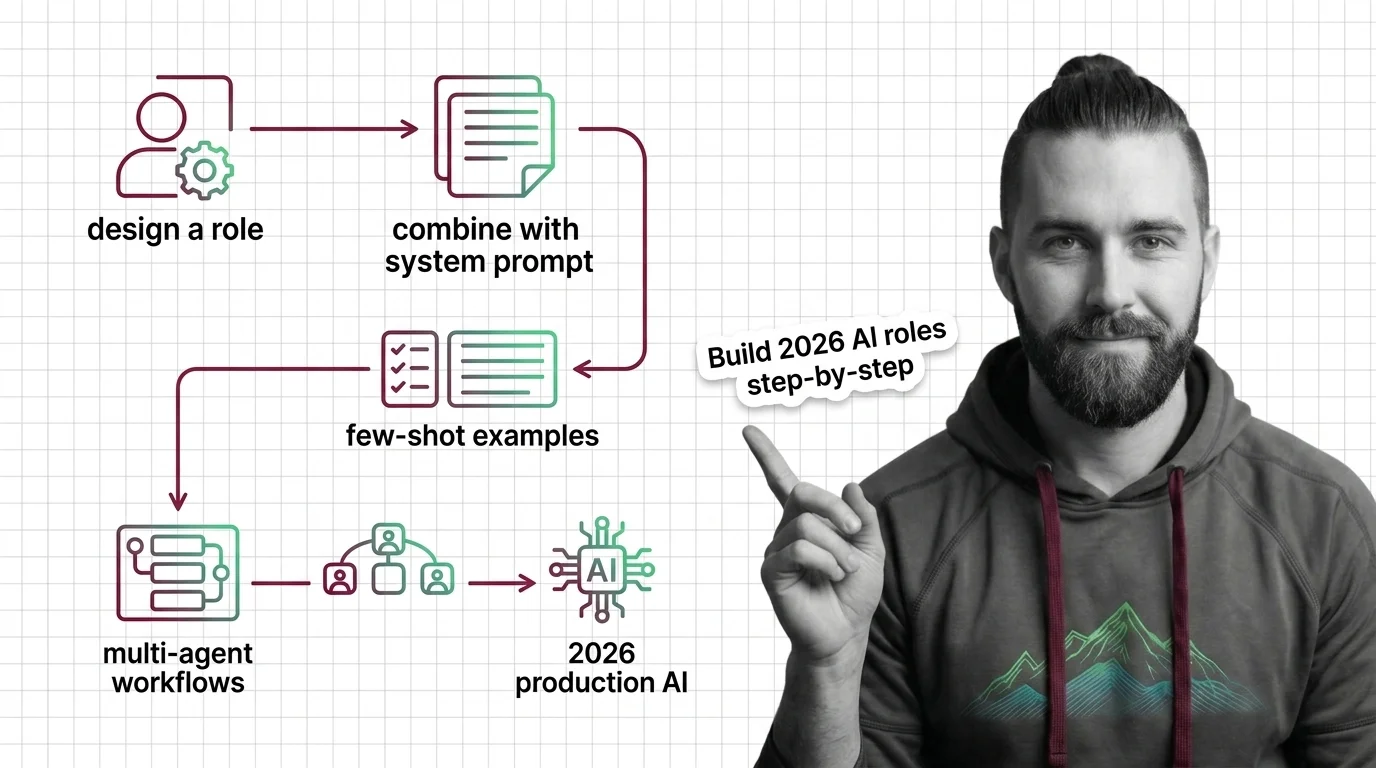
Role prompts break in production when they skip behavioral spec. Build domain boundaries, output contracts, and few-shot layers that make AI systems hold up.
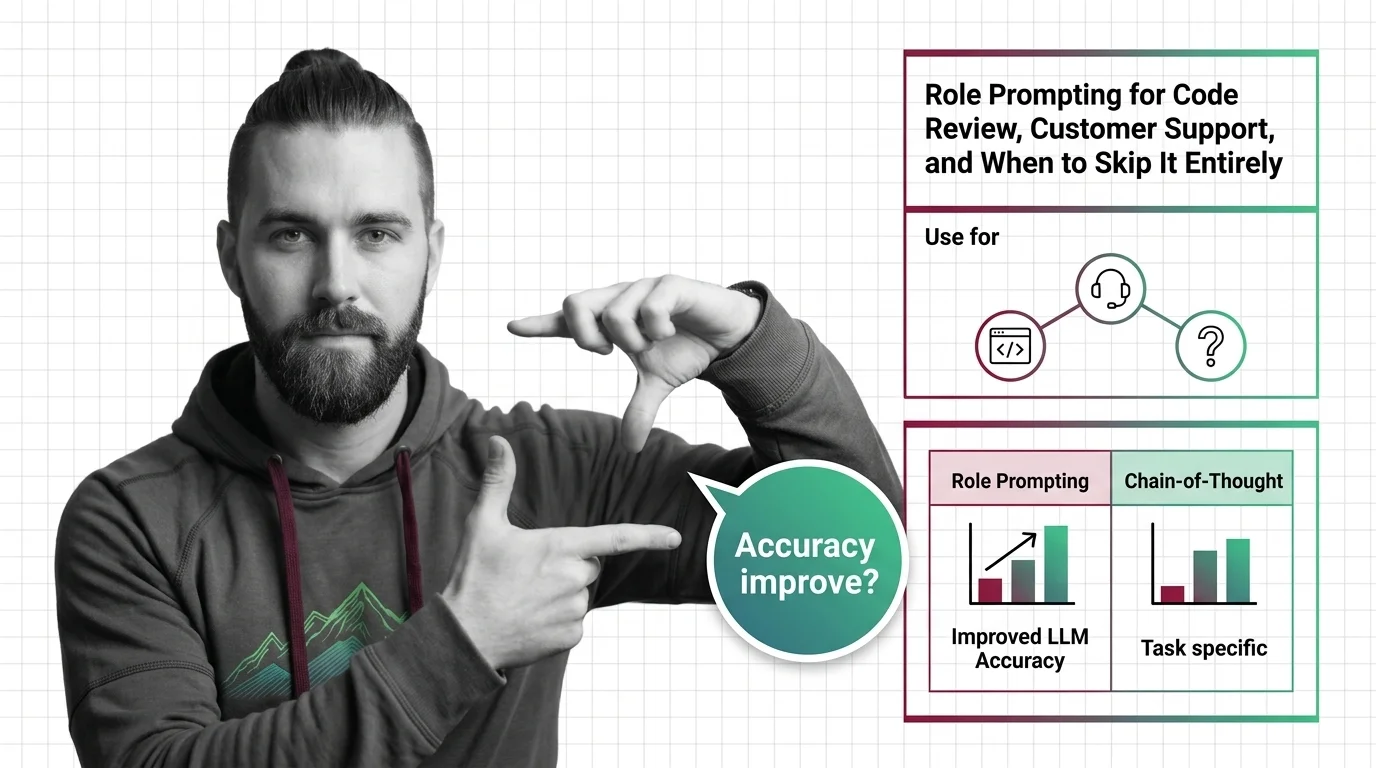
Role prompting improves reasoning tasks but damages classification accuracy. Spec for code review, support agents, and when to skip the persona entirely.
Role prompting practices are shifting as research on persona conditioning in production systems challenges conventional wisdom. Staying current matters for knowing which patterns to adopt and which to retire.
Models & benchmarks
Updated August 2026
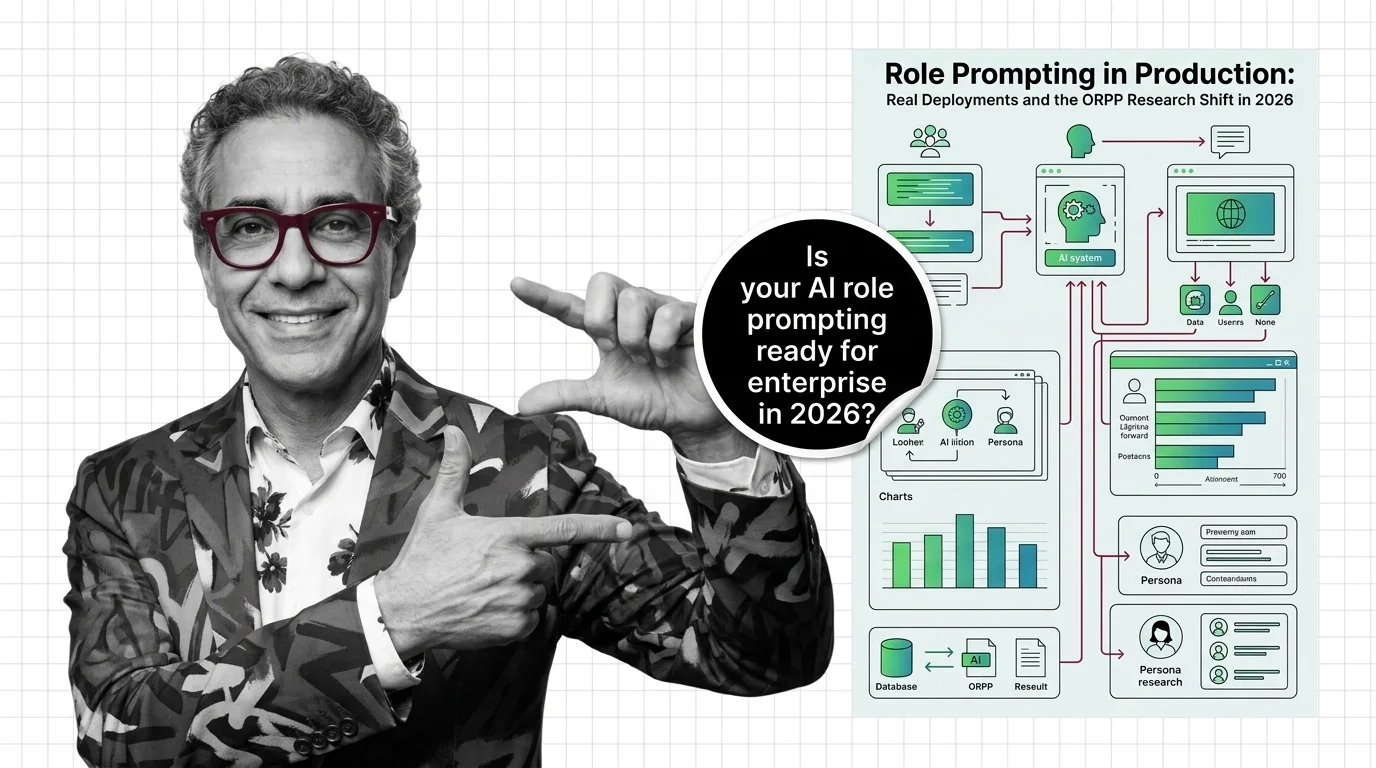
Role prompting became a production security boundary in 2026. ORPP automates persona optimization, beating CoT and manual prompts on reasoning benchmarks.
Assigning a persona can subtly shift what a model is willing to say, including around safety constraints. Understanding that mechanism is essential before deploying role prompting in any user-facing system.
Risks & metrics
Role prompting embeds behavioral identities into AI systems. Research shows stronger persona adherence correlates directly with jailbreak vulnerability.