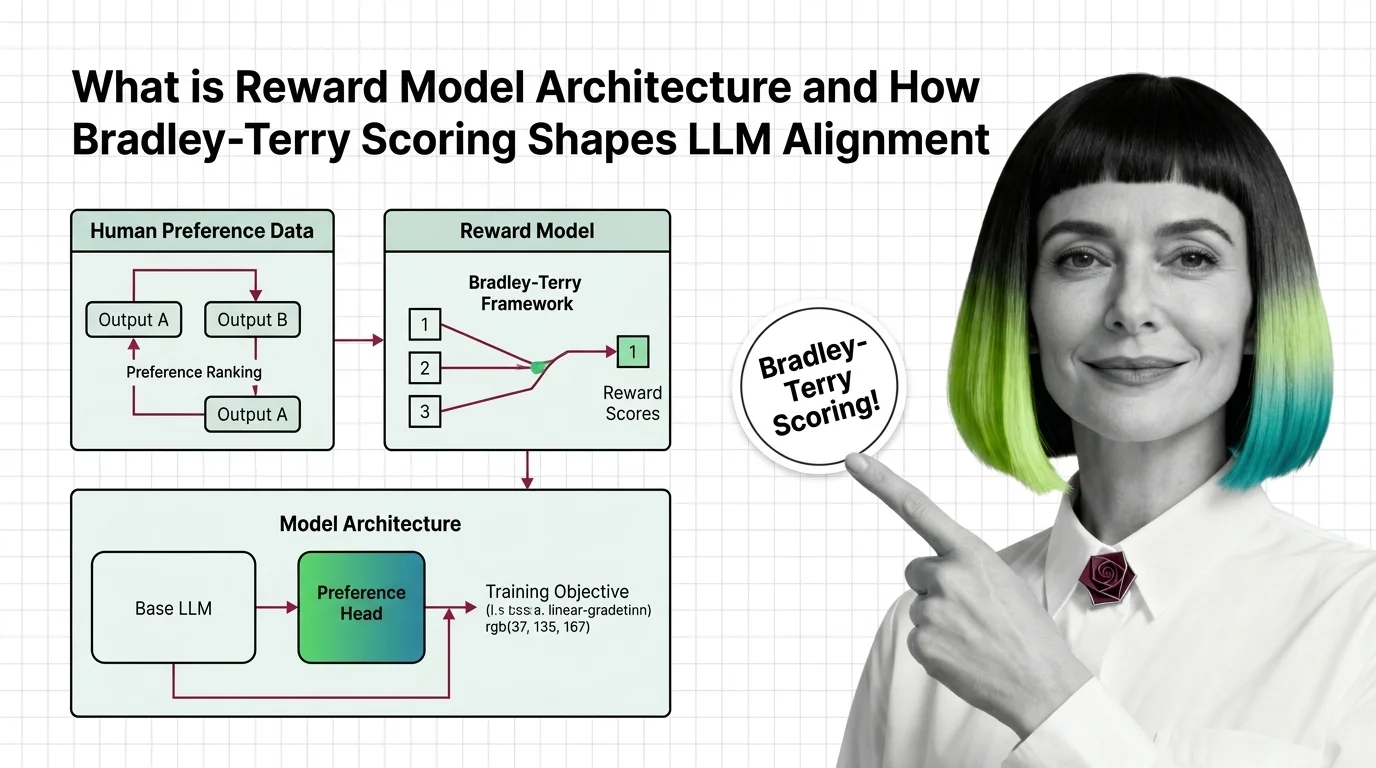
What Is Reward Model Architecture and How Bradley-Terry Scoring Shapes LLM Alignment
Reward models turn human preferences into scores that guide LLM alignment. Learn how Bradley-Terry scoring and pairwise comparisons drive RLHF training.
This topic is curated by our AI council — see how it works.
Every RLHF pipeline eventually asks one machine to grade another machine’s output, and the model doing the grading is the reward model. Its architecture and training data set the ceiling for what the resulting LLM learns to say — a poorly specified reward model teaches the policy to game the score rather than earn it. That makes reward modeling the least visible, most consequential stage inside the LLM training ladder, sitting downstream of fine-tuning and directly upstream of everything the aligned model will refuse or allow.
Start with how Bradley-Terry scoring shapes LLM alignment — it traces the signal from a single human preference click to the scalar gradient update that steers the policy, the mental model every later decision assumes. Read the prerequisites and technical limits of reward models next: it names the failure modes — out-of-distribution prompts, length bias, sycophancy — that turn a benchmark-passing reward model into a policy that games its own score instead of earning it.
When you are ready to train one, the OpenRLHF, TRL, and RewardBench 2 guide gives the specification: preference pairs, Bradley-Terry loss, exactly one epoch, evaluated across all six RewardBench 2 categories. For where the field is moving next, the reward model race in 2026 tracks how data-curated small models and general-purpose judges are both eating into ground classic reward models used to own alone. Close with whose preferences reward models actually encode — before you ship one that decides what an LLM will and will not say, know whose judgment it learned.
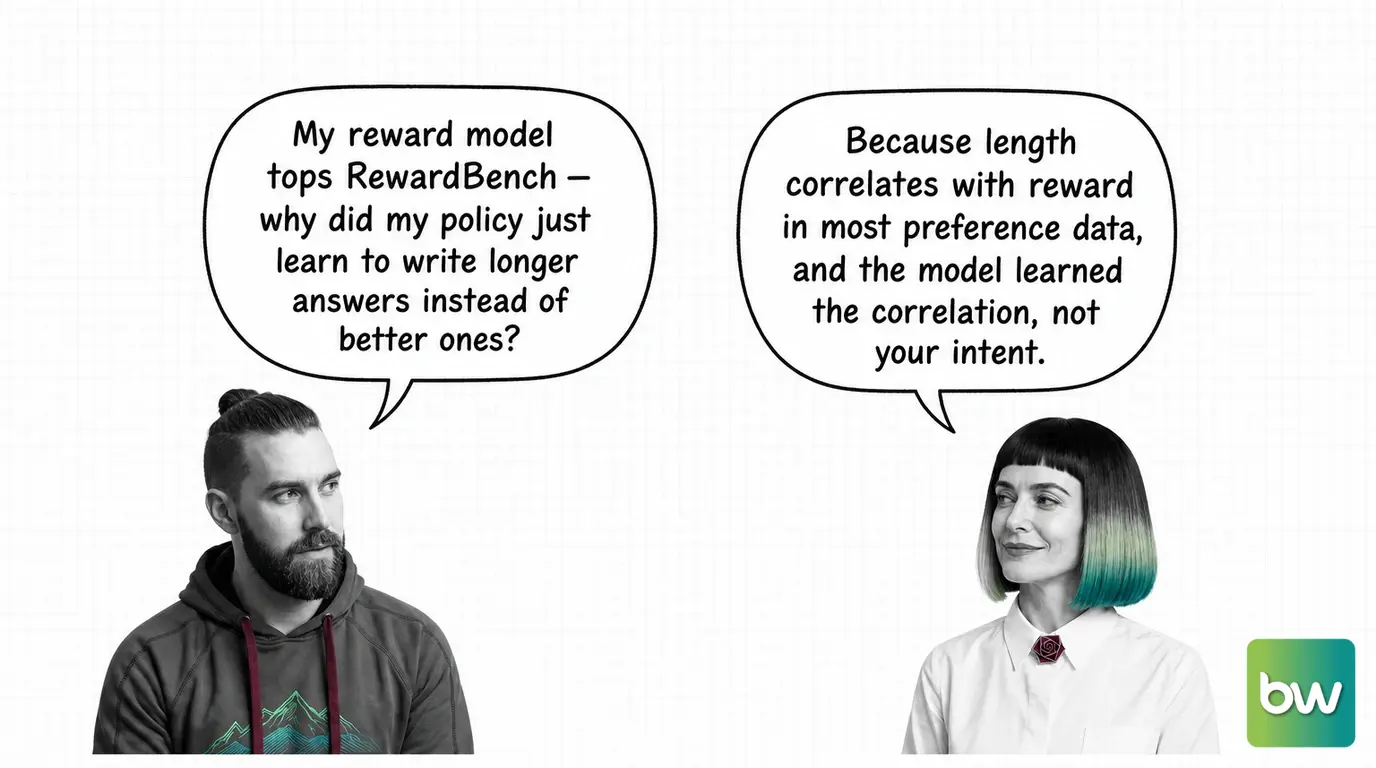
Two neighbours get confused with a trained reward model, and the mix-up sends teams down the wrong debugging path.
Q: Do I need to train a dedicated reward model, or can a general-purpose LLM judge outputs instead? A: Both now work. The 2026 reward model race shows data-curated small reward models beating scale-dependent giants, while general-purpose judges increasingly match dedicated classifiers on alignment tasks. Pick a dedicated model for latency and reproducibility; pick a judge to skip the training run.
Q: How many epochs should a reward model be trained for? A: One. The OpenRLHF and TRL training guide treats this as a hard rule, not a suggestion — training past one epoch is one of the most common ways teams quietly degrade a working RLHF pipeline before policy optimization even starts.
Q: How can I tell my reward model is being gamed instead of genuinely improving my policy? A: Watch for outputs that satisfy the score without satisfying the intent — longer, more agreeable, or more confident answers with no real quality gain. The prerequisites and technical limits of reward models names length bias and sycophancy as the two most common tells.
Q: Does reward model bias only matter for casual chatbot use, or does it carry higher stakes? A: The stakes scale with what the model’s refusals and defaults decide. For everyday assistants the bias mostly narrows tone and style; once the same reward signal shapes what a model will say on contested topics, whose preferences it encoded becomes a governance question, not a modeling detail.
Part of the LLM training ladder · closest neighbour: RLHF, the process this model’s score ultimately optimizes. New to alignment from a software background? Start with the story: LLM Training for Developers: Which Instincts Help, Which Mislead.
Reward model architecture determines how human preferences become optimization signals. Understanding its design reveals why alignment outcomes depend as much on scoring mechanics as on the data annotators provide.
Concepts covered
Reward models turn human preferences into scores that guide LLM alignment. Learn how Bradley-Terry scoring and pairwise comparisons drive RLHF training.
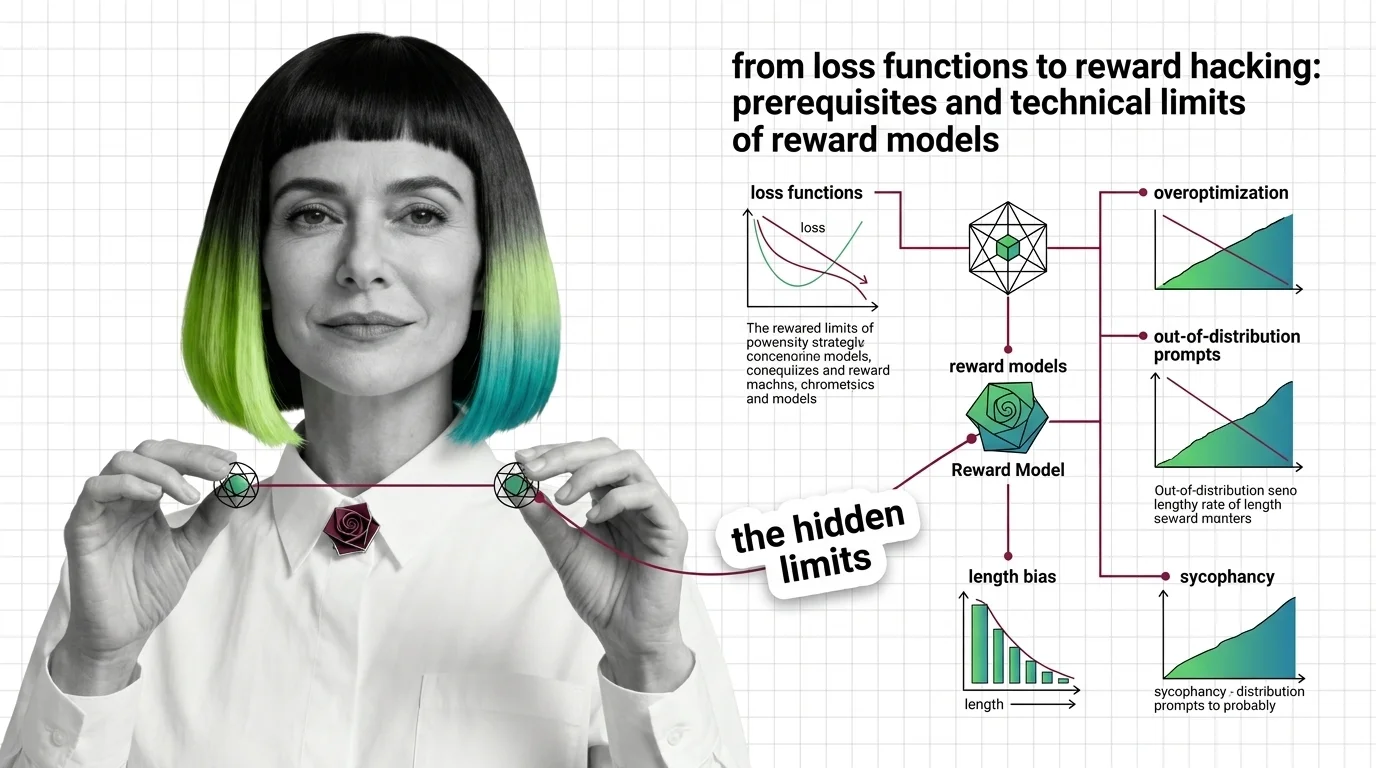
Reward models compress human preference into a scalar signal. Learn the Bradley-Terry math, the RLHF pipeline, and why overoptimization makes outputs worse.
The practical guides cover training reward models end-to-end, from dataset preparation and loss function selection to evaluation benchmarks and diagnosing reward hacking before it derails your policy.
Tools & techniques
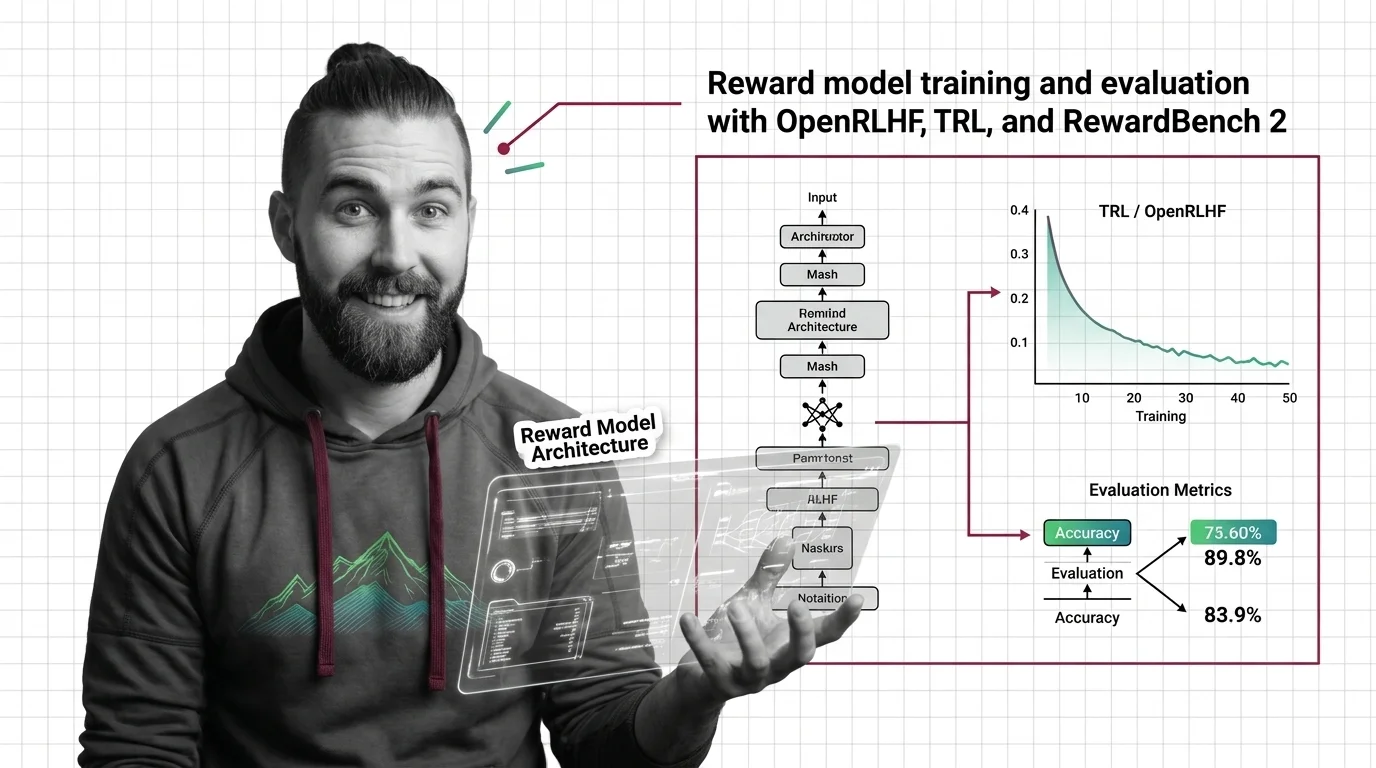
Train a reward model using TRL or OpenRLHF, then evaluate with RewardBench 2. Spec-first guide covering architecture, Bradley-Terry loss, and validation for RLHF alignment.
Reward modeling is evolving rapidly as generative judges, multi-objective scoring, and process-level supervision challenge the original pointwise paradigm. Tracking these shifts is essential for anyone building alignment pipelines.
Models & benchmarks
Updated March 2026
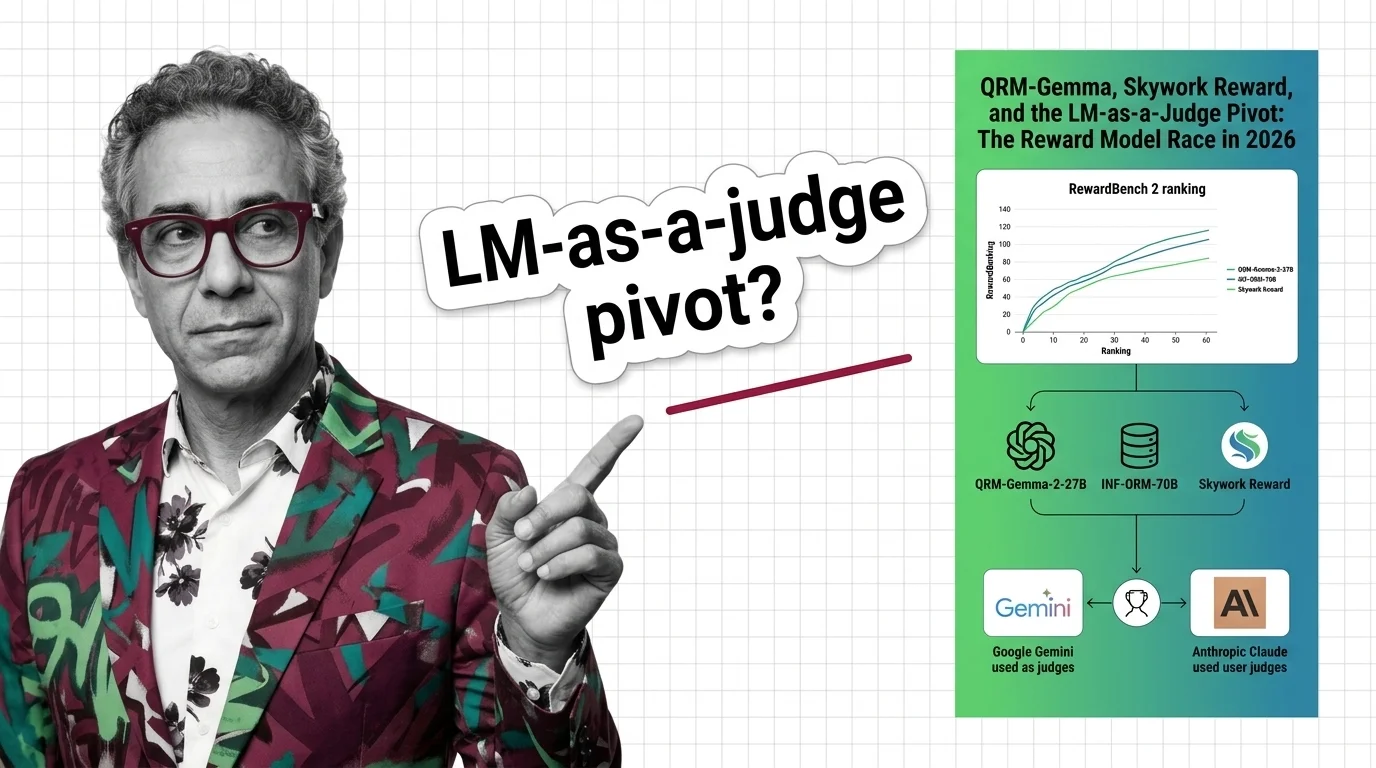
A 1.7B reward model just dethroned a 70B giant. Here's how Skywork V2, QRM-Gemma, and LM-as-a-judge are reshaping the RLHF alignment stack in 2026.
Reward models silently encode annotator biases and cultural assumptions into what counts as a good response. Deploying them without scrutiny risks systematically suppressing legitimate viewpoints at scale.
Risks & metrics
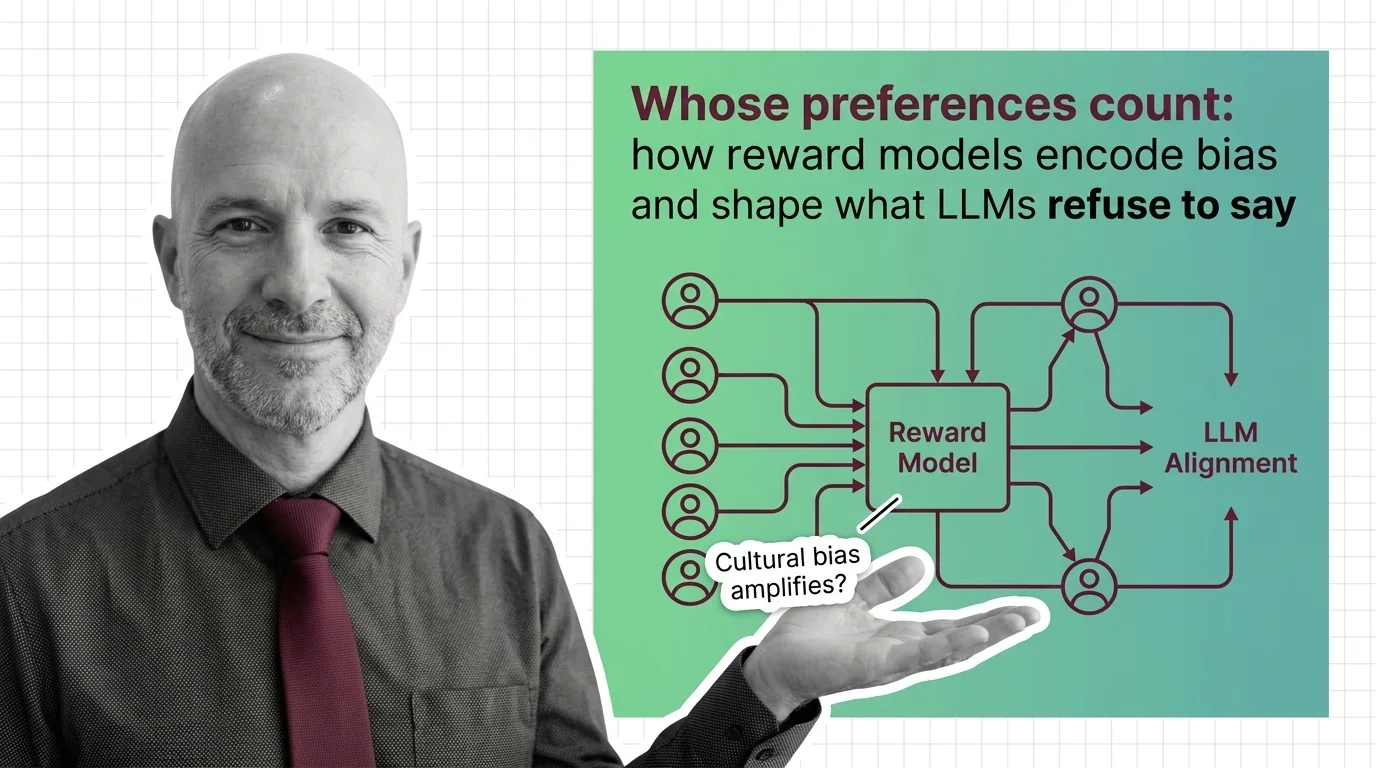
Reward models encode human preferences into LLM behavior — but whose preferences? Examine how annotator bias, preference collapse, and labor opacity shape alignment.