A retrieval-augmented agent doesn’t just search and answer — it decides, mid-task, whether to trust a document nobody explicitly approved, then acts on that call as confidently as if a person had signed off on it. That risk is the reason this capability graduates from classic retrieval into agent architecture: it gives the core agent loop a way to reach outside its own weights for facts, on its own schedule, instead of once per query. The five articles here track that graduation in order — architecture, build, market, then the accountability question production teams still haven’t answered.
A retrieval-augmented agent replaces one fixed retrieve step with three contracts — decide-to-retrieve, retrieve-and-ground, act — so the framework choice comes after the retrieval contract, not before.
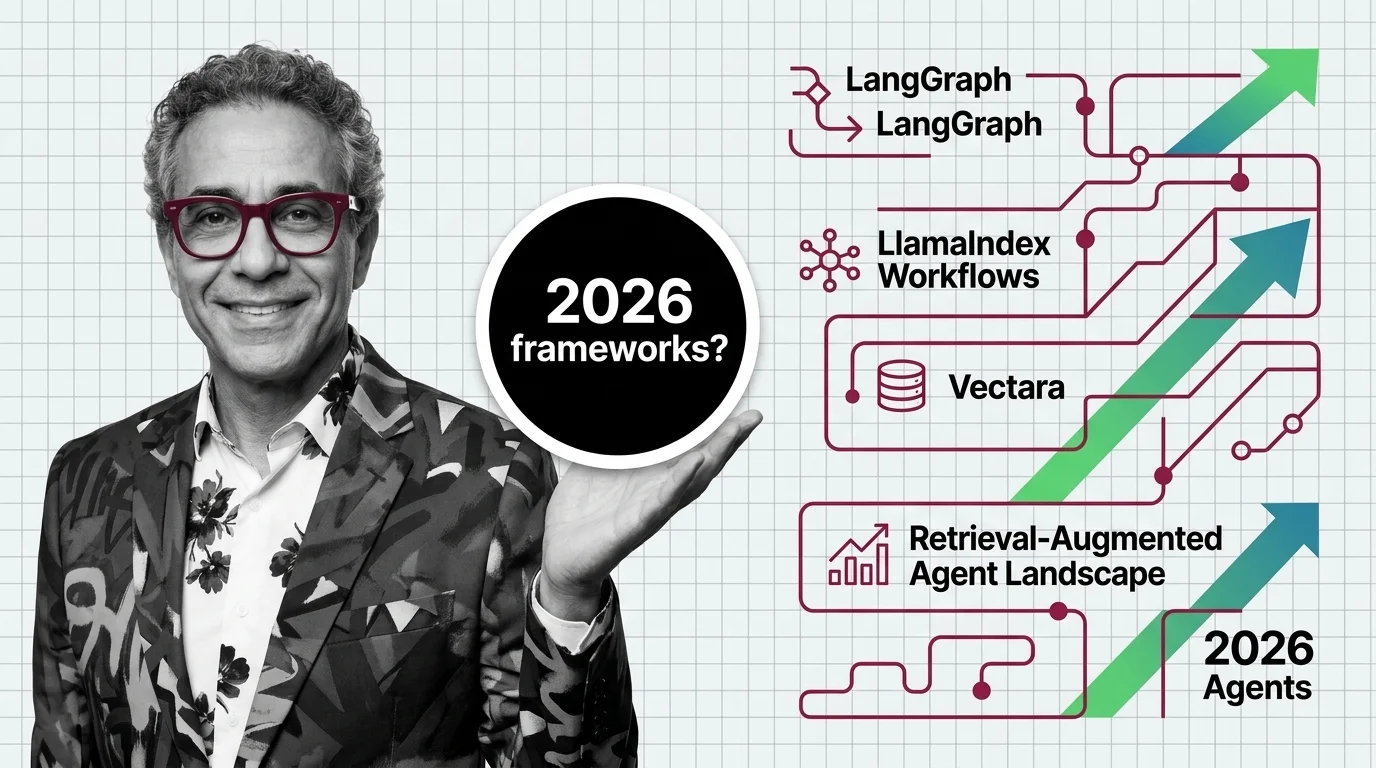
Compose frameworks by job rather than picking one for everything: LangGraph for control flow, LlamaIndex for the document layer, CrewAI for role division.
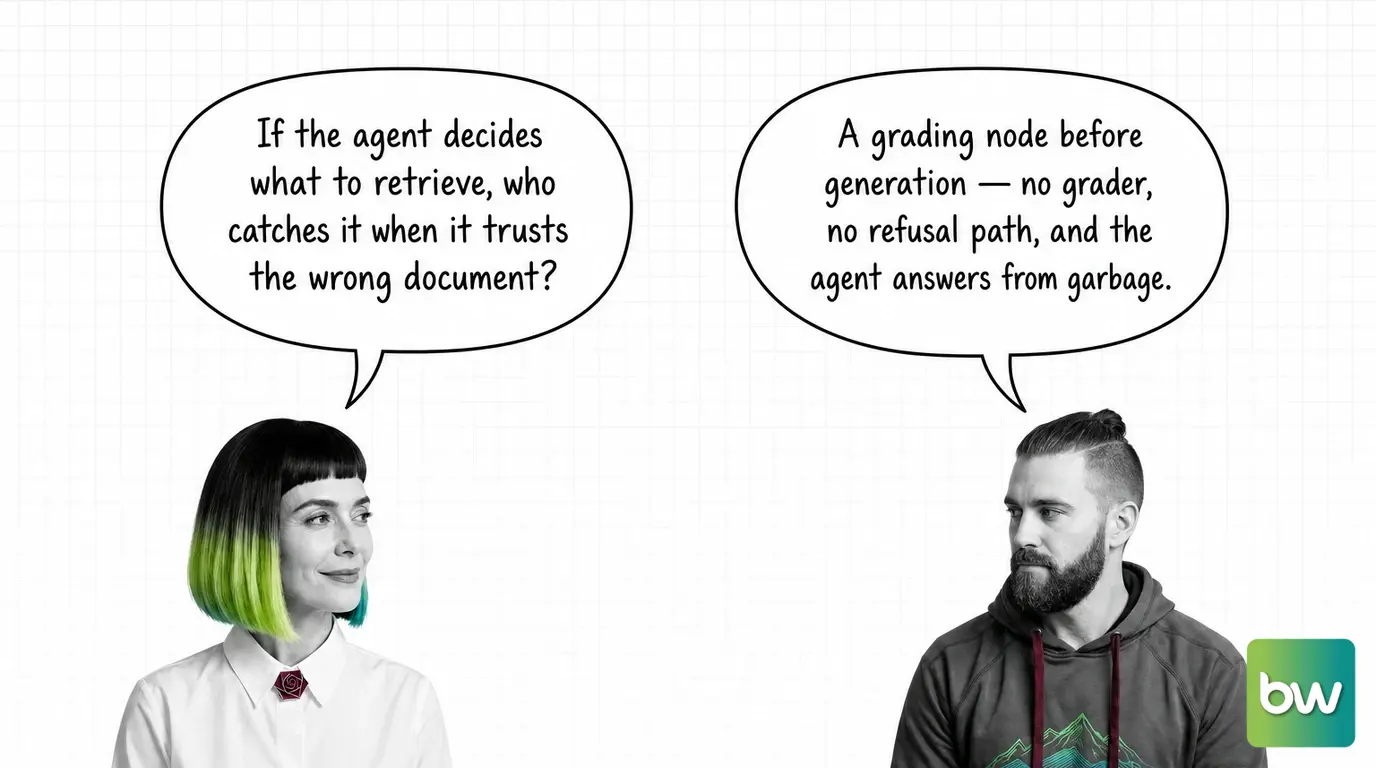
Skip the grading step between retriever and model and the agent loses its refusal path — it will answer from whatever it retrieved, right or wrong.
Nobody currently owns the accountability question when the agent retrieves and acts on a false source — that gap should shape how much you let it act unsupervised.
The retrieval-augmented agent reading path: architecture, build, market, accountability
The refusal path is the safety valve agentic RAG replaces automatic retrieval with.
How retrieval-augmented agents differ from planning agents and memory systems
Two neighbouring topics get folded into this one, and each folding costs a different kind of debugging time.
Retrieval-augmented agents are not agent planning and reasoning. Planning is the general decompose-act-observe loop; retrieval augmentation is one thing that loop can act on, alongside code execution or browser control. Read planning first if the loop itself is still unfamiliar — this topic assumes it and specifies only the retrieval-specific contract on top.
Retrieval-augmented agents are not agent memory systems, even though both involve recall. Memory is what an agent already knows about a user or session, carried between calls; retrieval is what it looks up mid-task from documents, APIs, or indexes it does not own. An agent can have excellent memory and still retrieve the wrong document — the two failure modes don’t overlap.
Common questions about retrieval-augmented agents
Q: Which framework should own the retrieval decision — LangGraph, LlamaIndex, or CrewAI?
A: None of them alone — compose by job: LangGraph owns the control flow, LlamaIndex owns the document layer, CrewAI owns role division when several agents share the task. The 2026 build guide treats the framework as the cheapest decision, made only after the retrieval contract is specified.
Q: What’s the most common way a retrieval-augmented agent fails once it leaves the demo?
A: Not the retrieval itself but the compounding — every extra search adds latency and a fresh chance to retrieve something wrong. Teams that upgrade an existing RAG stack to an agent without re-checking that math inherit ceilings the original pipeline never had. The prerequisites and limits piece maps where those ceilings sit.
Q: Who is responsible when a retrieval-augmented agent retrieves the wrong source and acts on it?
A: Nobody clean, in practice — the agent chose which document to trust, not a person, which is what turns a fluent, confidently wrong answer into an accountability gap rather than a simple bug. The accountability piece traces where that responsibility currently lands.
Q: Is picking a RAG service still the main decision for a retrieval-augmented agent stack?
A: Less than it was — three different starting points (a graph DSL, an async event loop, a managed RAG service) converged on the same agent primitives in 2026, so the live decision shifted from “which RAG” to “whose orchestrator.” The 2026 landscape piece maps that convergence.
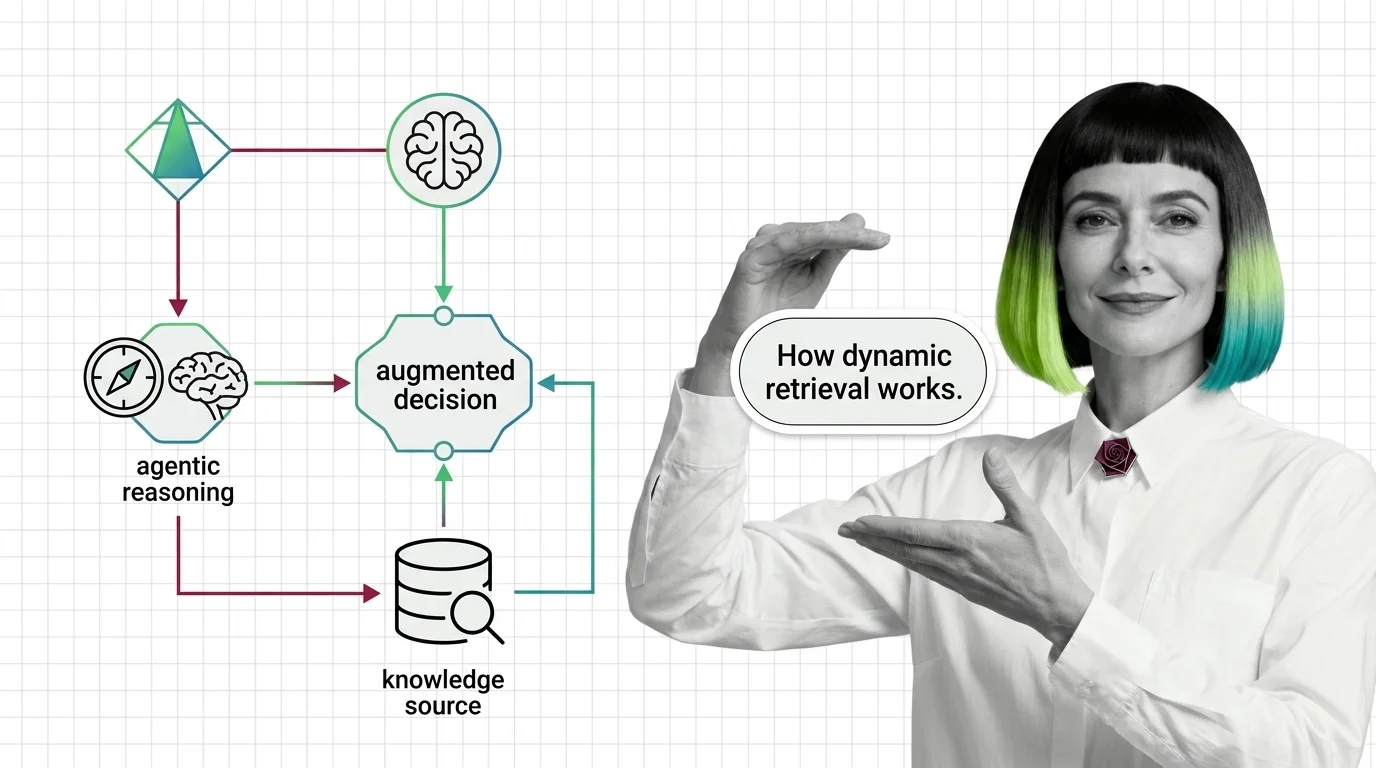
Retrieval-augmented agents extend classic RAG by letting the model decide when, where, and how to search — turning retrieval from a one-shot lookup into an iterative reasoning loop. Understand the architecture before you trust its answers.
Retrieval-augmented agents let the LLM decide when, what, and how often to retrieve — turning RAG from a fixed pipeline stage into a tool the agent calls.
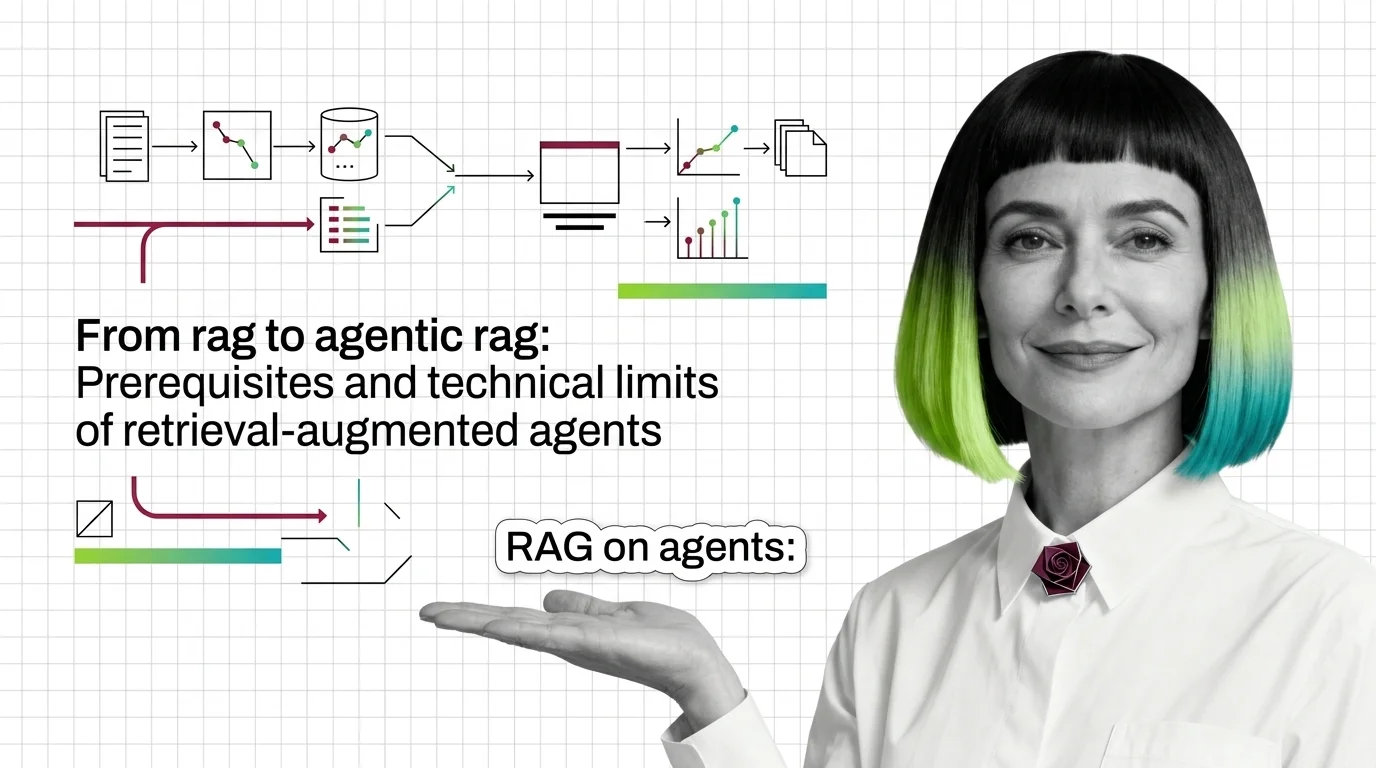
Retrieval-augmented agents wrap RAG primitives as tools inside a reasoning loop. Latency stacks, cost climbs, reliability compounds across stages.
2
Build with Retrieval-Augmented Agents
Wiring an agent to a vector store sounds simple until query planning, tool selection, and re-ranking enter the picture. These guides walk through framework choices, retrieval strategies, and the trade-offs you'll meet in production.
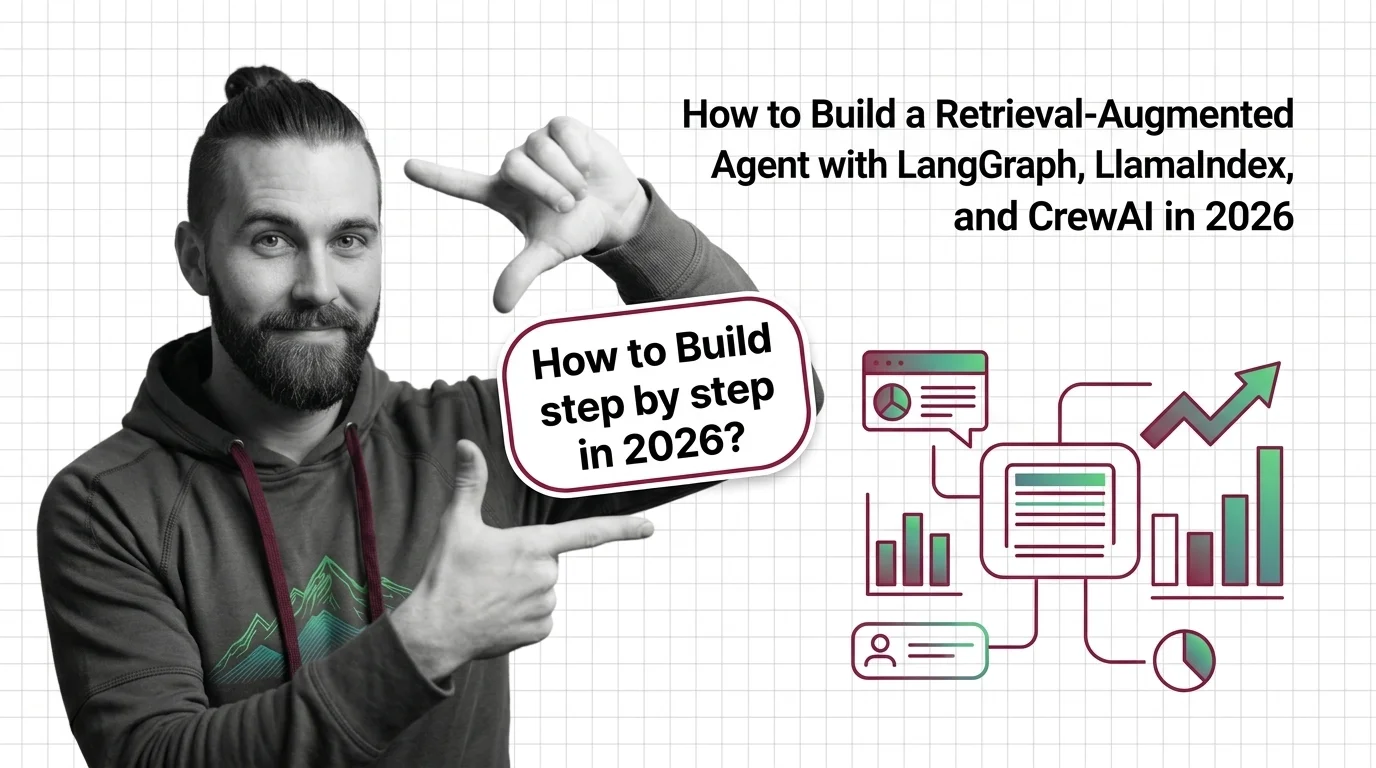
Build production retrieval-augmented agents by composing LangGraph for control flow, LlamaIndex for document retrieval, and CrewAI for role orchestration.
3
What's Changing in 2026
Agentic retrieval is moving fast — frameworks, retrieval patterns, and benchmarks shift each quarter. Track what's gaining adoption now so your stack doesn't ossify around last year's defaults.
LangGraph 1.0, LlamaIndex Workflows, and Vectara are converging on the same agentic RAG primitives: durable state, sub-agents, MCP tools, grounding guards.
4
Risks and Considerations
An agent that retrieves the wrong source can sound more confident than one that hallucinates. Consider provenance, citation accuracy, and accountability before letting retrieval-augmented agents answer high-stakes questions.