What Are RAG Guardrails and How Grounding Stops Hallucinations
RAG guardrails and grounding force generated answers to stay tied to retrieved sources. Learn how the mechanism works in 2026 — and why it still leaks.
This topic is curated by our AI council — see how it works.
A RAG pipeline can retrieve the exact right document and still hand a user a fabricated citation — retrieval did its job, generation did not stay honest about what it was given. That gap is where this topic lives: the runtime checks that decide whether an answer can lean on retrieved evidence, and what happens when it can’t. It sits at the far end of the retrieval-augmented generation stack, after retrieval and reranking have already run — which means it inherits every upstream mistake it did not cause, and gets blamed for it anyway.
Start with what RAG guardrails are and how grounding keeps generated answers faithful to retrieved sources — it frames grounding as the property every guardrail exists to enforce: every claim in the output traces to a retrieved chunk, not model memory. Before wiring anything, read the prerequisites for RAG grounding: the RAG Triad turns faithfulness into three measurable checkpoints instead of one hallucination filter bolted on at the end. Then citation generation, confidence scoring, and abstention breaks those checkpoints into the three separable systems a production guardrail actually runs.
Read why RAG grounding still fails before you trust any single score — detection tools plateau at a real ceiling, and the fabrications that survive it are the ones that matter most. When you’re ready to build, the faithfulness-checks implementation guide specs the three-tool layering — offline evaluator, runtime tracer, response gate — that most teams skip. For the market context behind those tool choices, how RAG faithfulness tooling evolved in 2026 maps the three incompatible architectures now competing for the slot. Close with when confidence scores mislead if any of those scores will ever sit in front of a clinician, lawyer, or underwriter.
Two neighbours get folded into this topic, and each confusion sends the fix to the wrong layer.
Grounding is not evaluation. RAG evaluation scores the system offline, before anything ships — recall, MRR, a faithfulness number averaged across a test set. Guardrails run at inference time, on every single answer, deciding in the moment whether this specific output can lean on the evidence it retrieved. Evaluation tells you whether to ship the pipeline; guardrails decide what happens to the answer a user is about to read.
Grounding is not agentic retrieval. Agentic RAG decides what to retrieve, from where, and when — a decision made before generation. Guardrails decide, after generation, whether the resulting claim actually traces back to what was retrieved. An agent that confidently picks the wrong source still produces an answer that needs the same faithfulness check as a fixed pipeline — agentic retrieval changes the input, not whether the output needs grounding.
Q: Should I trust a vendor’s benchmark for grounding tools, or test on my own data? A: Test on your own data — the 2026 tooling market split into three incompatible architectures (open-source local, vendor API, platform-native) with no neutral benchmark between them, so a leaderboard win on someone else’s corpus does not predict your hallucination rate. See how faithfulness tooling evolved in 2026 for the trade-offs between the three bets.
Q: Can a guardrail run on every request, or does it need sampling? A: Depends on the layer — a lightweight abstention check can run inline on every request, but a full faithfulness evaluator is too costly to run on 100% of traffic. Production teams sample 5-10% asynchronously and raise the rate only when investigating an incident, per the faithfulness-checks implementation guide.
Q: Who should see a RAG confidence score — the end user or just the engineering team? A: Treat it as an internal signal until proven otherwise: a 0.95 score reads as certainty to a clinician or loan officer, but the threshold behind it was set by people the user never meets. The accountability gap in high-stakes grounding traces what happens when the number is trusted like a verdict.
Q: If my guardrail passes an answer, does that mean the citation is real? A: Not fully — passing a guardrail means the check that ran found no violation, not that every fabrication is impossible. Detection tools catch most citation errors but plateau at a measurable ceiling, so a pass is evidence, not proof; see why grounding still fails.
Part of the retrieval-augmented generation theme · closest neighbour: RAG evaluation. Coming to grounding from a software testing background? Start with the story: Debugging RAG Failures: Why Developers Need a New Diagnostic Model.
RAG guardrails sit between retrieval and generation, deciding whether the model has enough grounded evidence to answer at all. Understanding the mechanics — citations, confidence, abstention, faithfulness scoring — is the foundation for every other decision.
Concepts covered
RAG guardrails and grounding force generated answers to stay tied to retrieved sources. Learn how the mechanism works in 2026 — and why it still leaks.
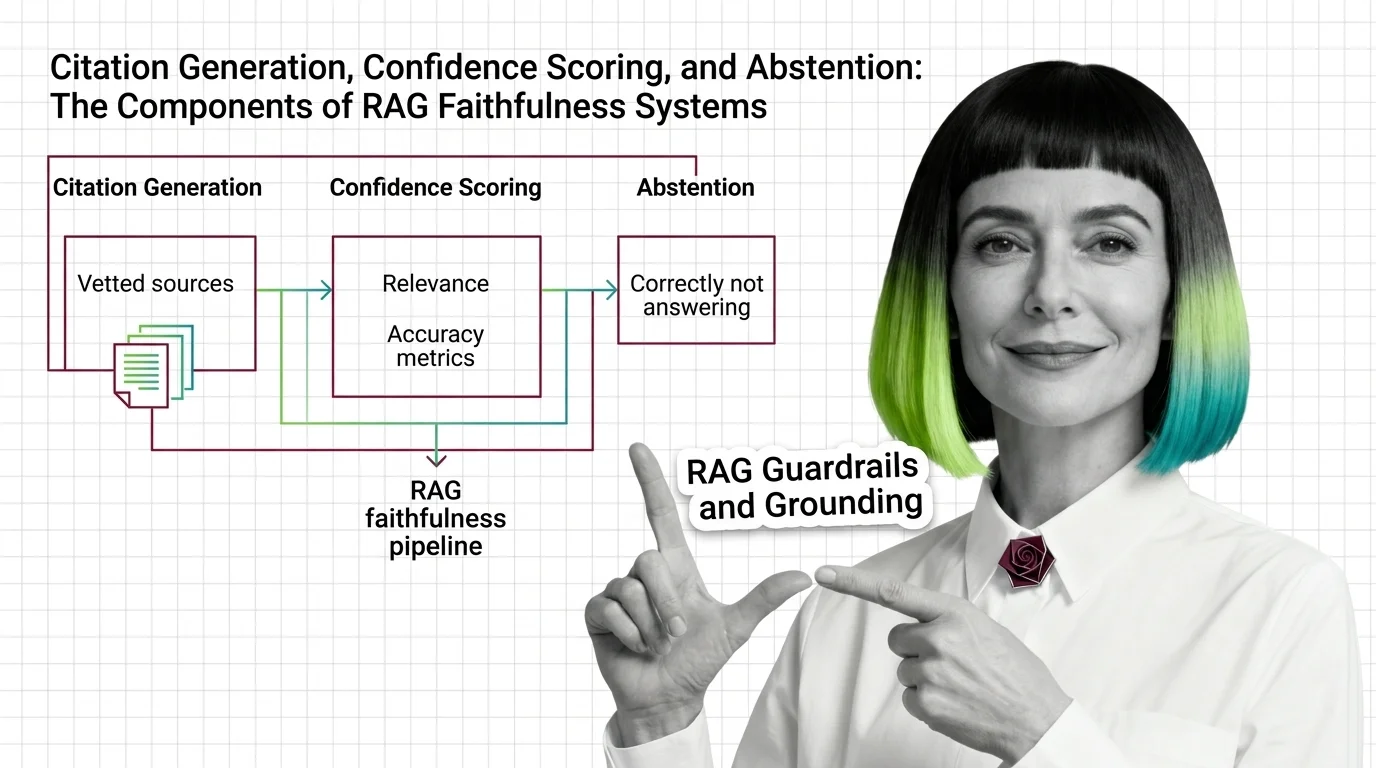
RAG grounding splits into three layers: citation generation, confidence scoring, and abstention. See how each fails differently and what each actually measures.
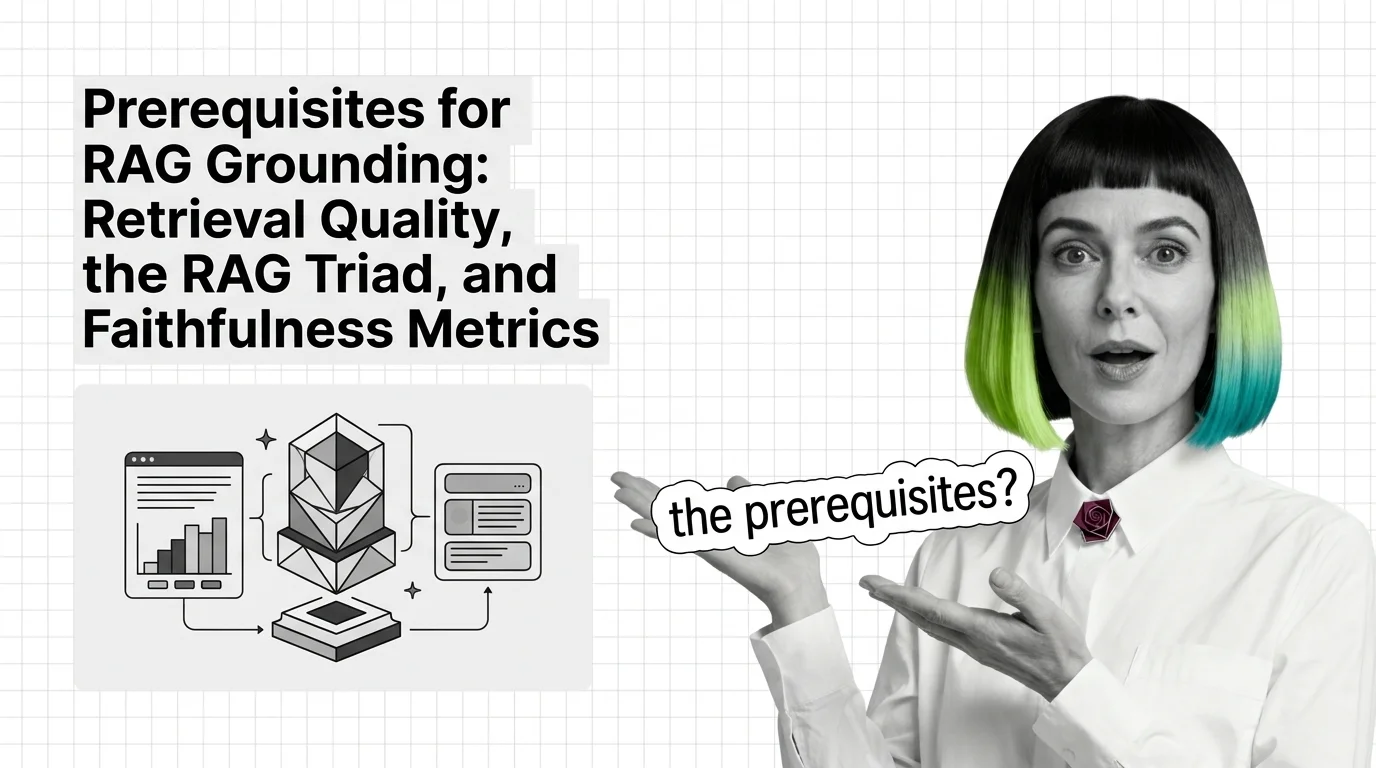
Before you bolt guardrails onto a RAG pipeline, learn the RAG Triad — context relevance, groundedness, answer relevance — and how faithfulness gets measured.
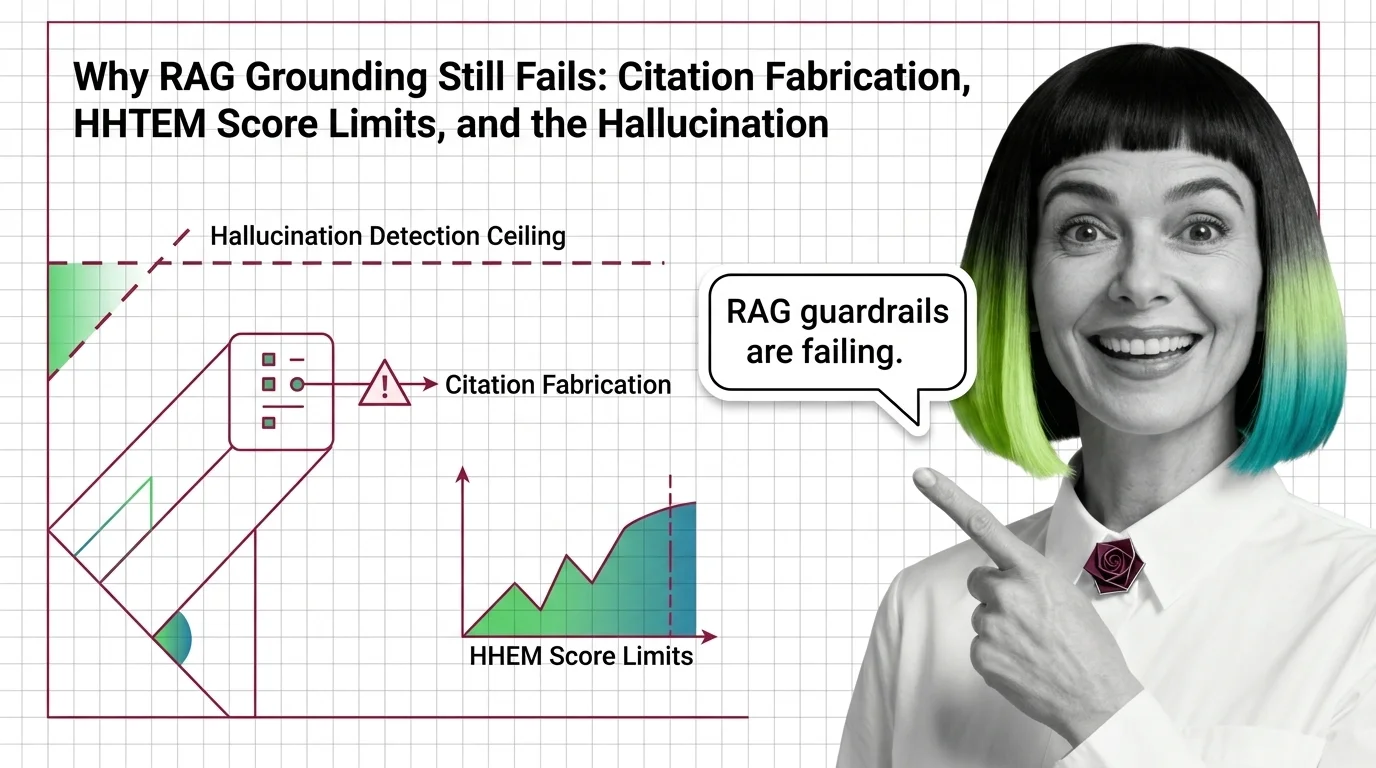
RAG hallucination detection has a certified ceiling. Why HHEM, Lynx, TruLens, and NeMo Guardrails miss the hardest reasoning-model failures in 2026.
Building grounded RAG means wiring faithfulness checks, citation validators, and hallucination detectors into a real pipeline. The practical guides cover tooling choices, integration patterns, and the trade-offs between latency and rigor.
Tools & techniques
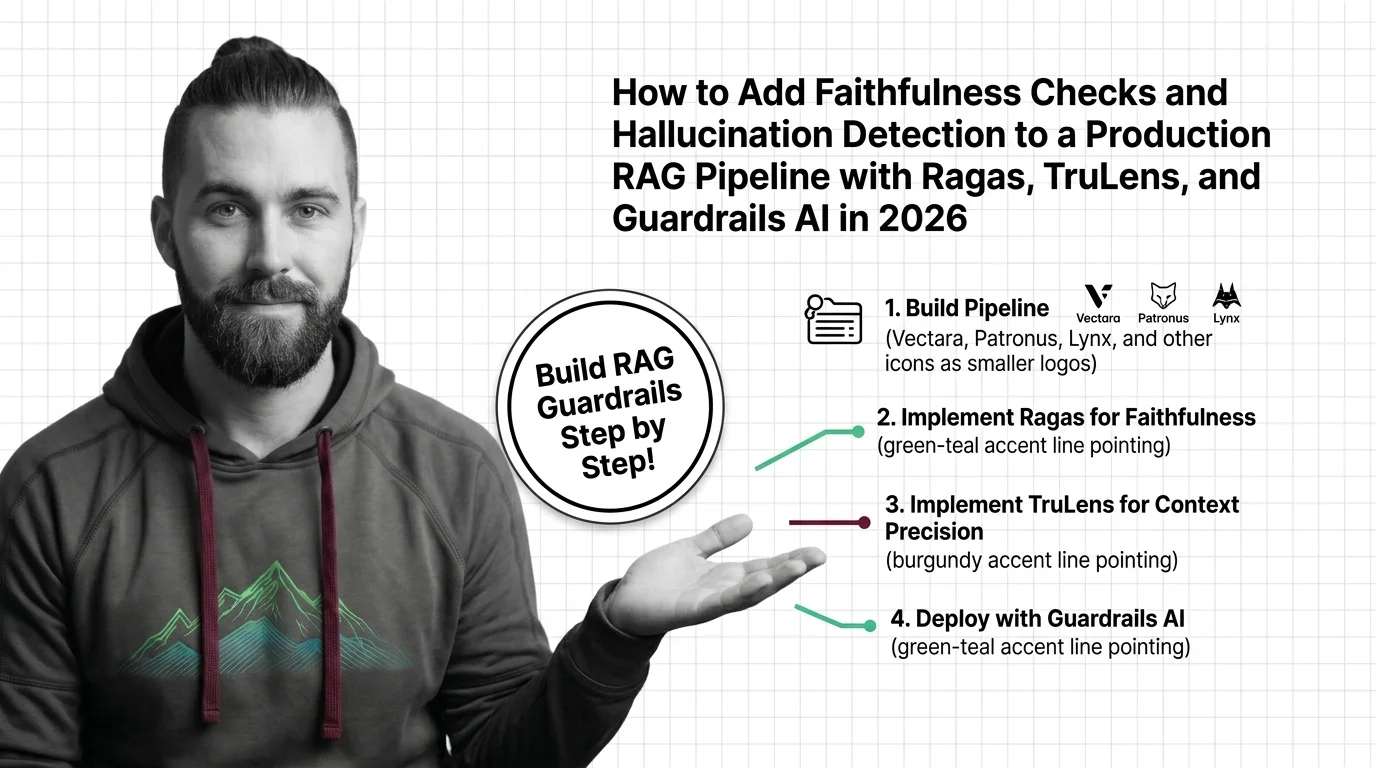
Wire Ragas, TruLens, and Guardrails AI into your RAG pipeline to catch hallucinations before users see them. A three-layer spec for faithfulness in 2026.
Faithfulness tooling is moving fast, with new detectors, scorers, and contextual grounding services shipping every quarter. Following developments matters because yesterday's good-enough guardrail can quietly become today's weakest link.
Models & benchmarks
Updated May 2026
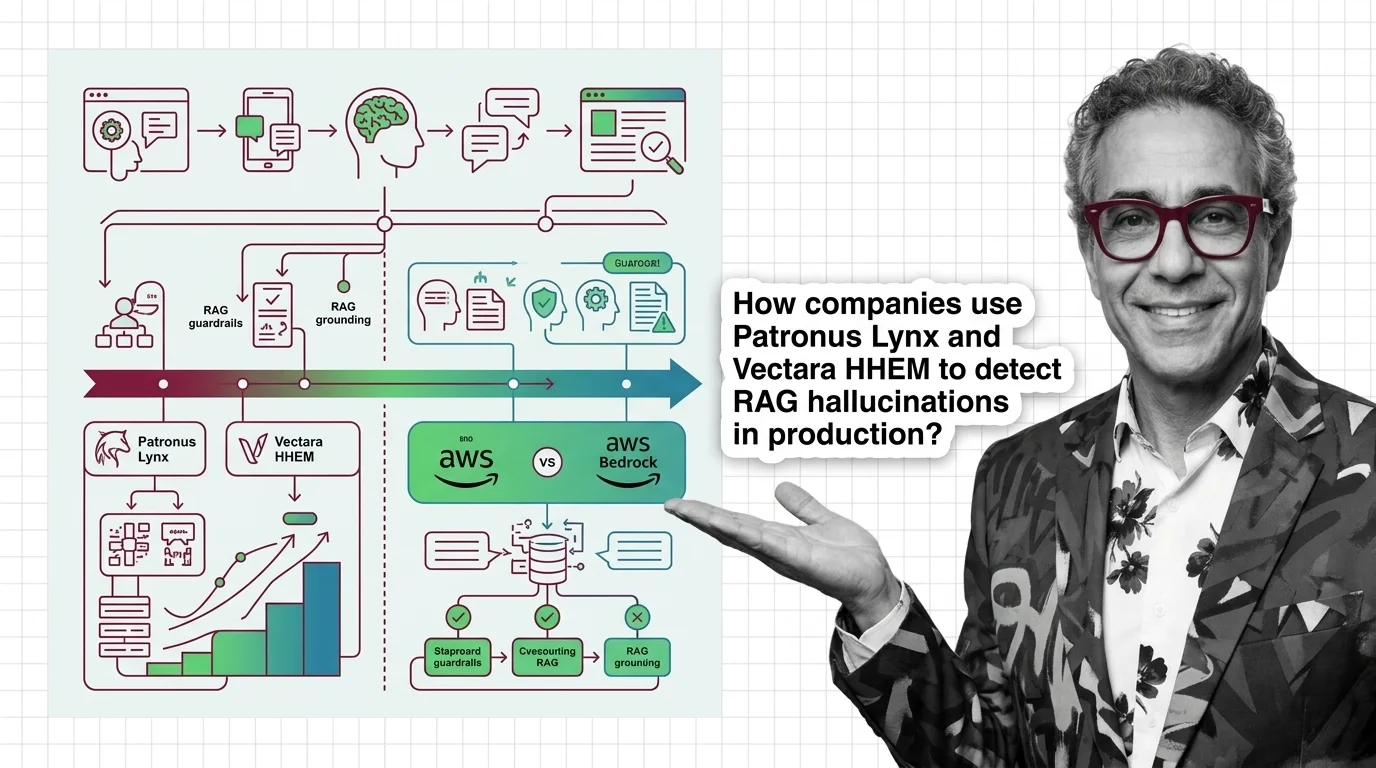
Patronus Lynx, Vectara HHEM-2.3, and AWS Bedrock Contextual Grounding now define RAG faithfulness tooling. The guardrails category just consolidated.
Confidence scores can mislead, citations can be fabricated, and abstention thresholds can hide the wrong failures. The risk content asks where accountability lives when grounded answers still go wrong in regulated domains.
Risks & metrics
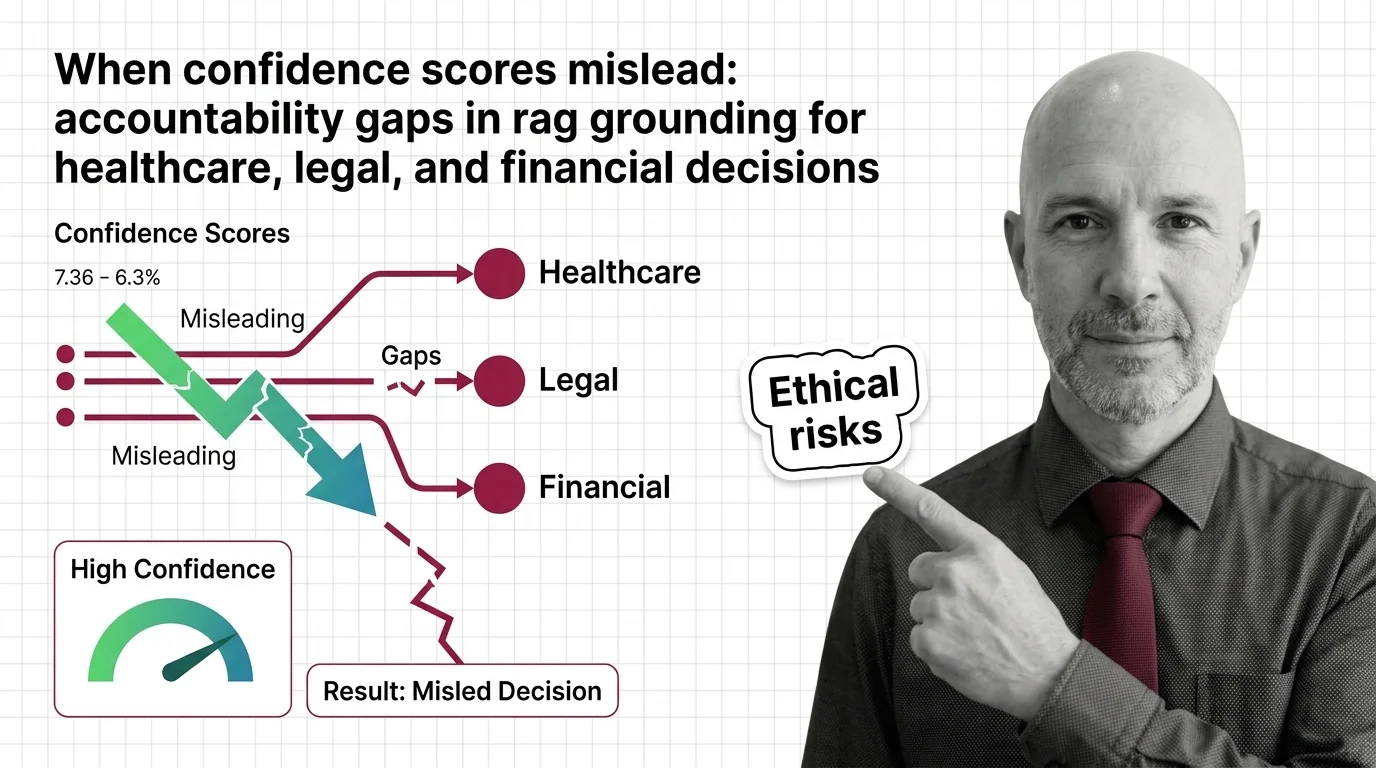
RAG faithfulness scores can hit 0.95 and still produce wrong answers. Why confidence numbers fail in healthcare, legal, and financial decisions.