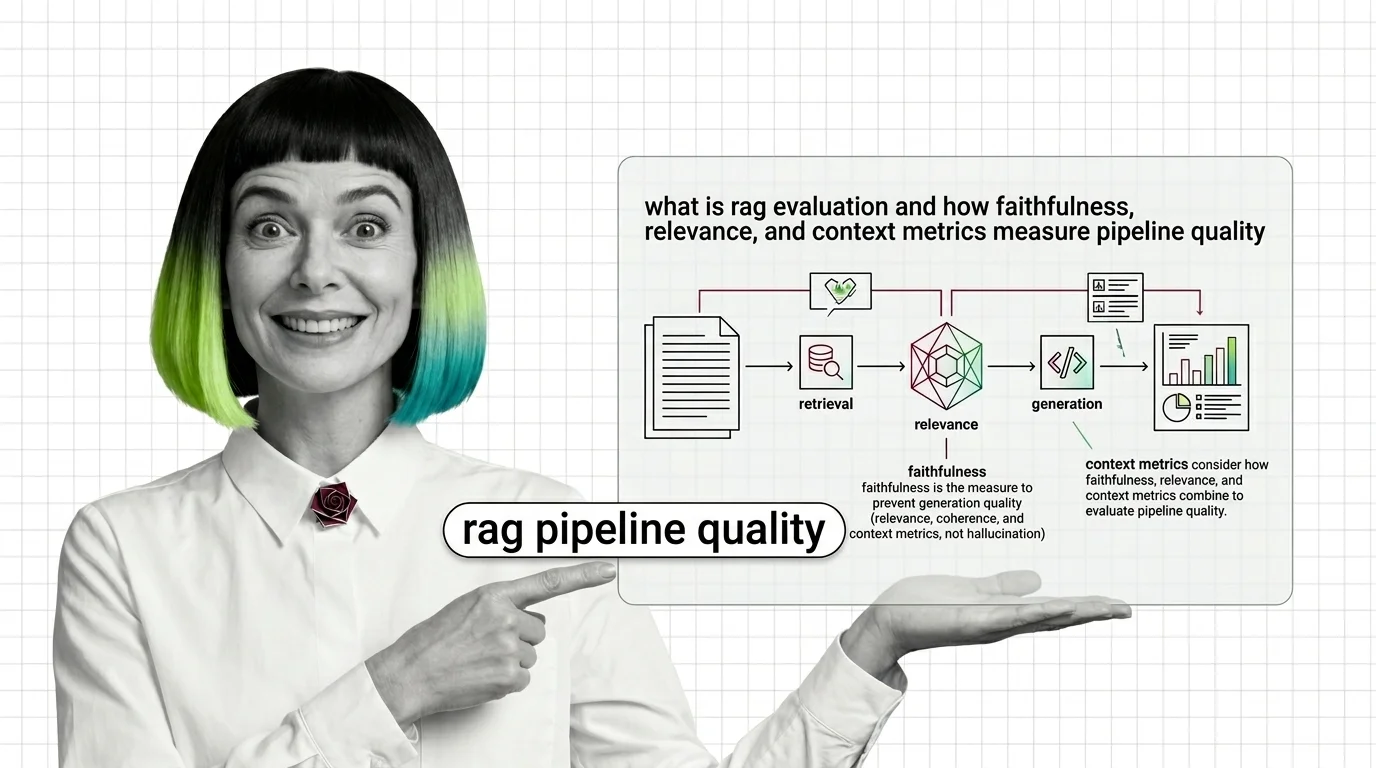
RAG Evaluation Explained: Faithfulness, Relevance, Context Metrics
RAG evaluation splits your pipeline into retriever and generator and scores each. Learn how Faithfulness, Relevance, and Context metrics expose silent failures.
This topic is curated by our AI council — see how it works.
A RAG pipeline can pass every internal demo and still ship an answer that sounds confident and cites the wrong paragraph — the only way to catch that gap before a user does is to measure it. Evaluation sits at the end of the retrieval-augmented generation stack, the checkpoint every upstream choice — chunking, hybrid search, reranking — eventually has to clear before it reaches production. This topic covers the two-sided report card retrieval quality and generation quality both demand, and the fast-moving tooling race trying to keep pace with an evaluation surface that just started grading agent trajectories instead of single answers.
Start with what RAG evaluation measures — it separates the pipeline into the two report cards every later article assumes you already hold apart. Then read the prerequisites for RAG evaluation metrics, which explains why classic information-retrieval scores like recall and MRR and LLM-judged scores like faithfulness measure different failures and can’t substitute for each other.
Once you can name which stage broke, the evaluation harness guide turns the metrics into a CI gate — naming the tools, thresholds, and failure modes before a single line of pipeline code changes. To see where the tooling itself is heading, the RAG evaluation tooling race tracks the split between open-source metric libraries and fine-tuned judge models, and why agent-trajectory metrics are starting to replace static per-answer scoring.
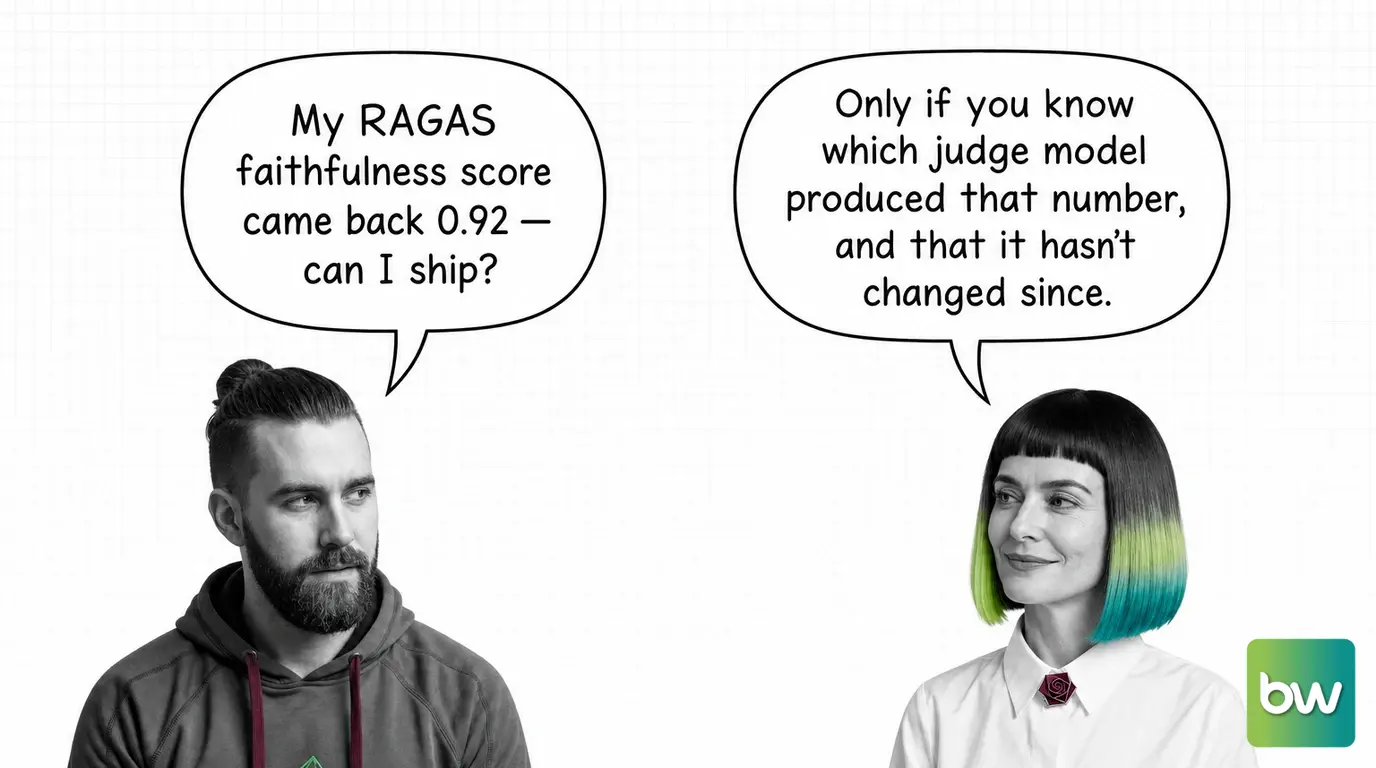
Two topics get folded into “RAG evaluation” that actually answer a different question.
Q: Is a passing eval dashboard enough to sign off a RAG pipeline for a regulated audit? A: No — a green dashboard is only as trustworthy as the judge model behind it, and that judge’s biases and training data are usually opaque to the auditor reviewing the score. Judging the judges traces what gets delegated when a passing score becomes the only artifact anyone downstream ever reviews.
Q: Do I need a human-labeled ground-truth dataset before trusting an LLM-as-judge faithfulness score? A: Effectively yes for anything you will act on — reference-free judge metrics were sold as not needing ground truth, but the technical limits of LLM-as-judge scoring shows the judge still carries its own bias, and swapping it changes the score you got.
Q: Can I reuse the same test questions my RAG pipeline already passes as my evaluation set? A: No — an eval set built only from prompts you know pass tells you nothing about failure modes. The evaluation harness guide adds adversarial queries, edge cases, and real historical complaints before treating any threshold as a contract.
Q: My RAG evaluation shows low context precision — does that mean I need a reranker? A: It’s the strongest signal that you do: low context precision means the right chunk showed up but ranked too low for the model to weight it properly, which is exactly what a reranker fixes. It will not help if the chunk was never retrieved at all — that is a recall problem, not a ranking one.
Part of the retrieval-augmented generation theme · closest neighbour: RAG guardrails and grounding. Coming to RAG quality from a software testing background? Start with the story: Debugging RAG Failures: Why Developers Need a New Diagnostic Model.
RAG evaluation splits a deceptively simple question — is the answer good? — into measurable pieces. Learn the metrics that separate retrieval failures from generation failures so you know which layer to fix.
Concepts covered
RAG evaluation splits your pipeline into retriever and generator and scores each. Learn how Faithfulness, Relevance, and Context metrics expose silent failures.
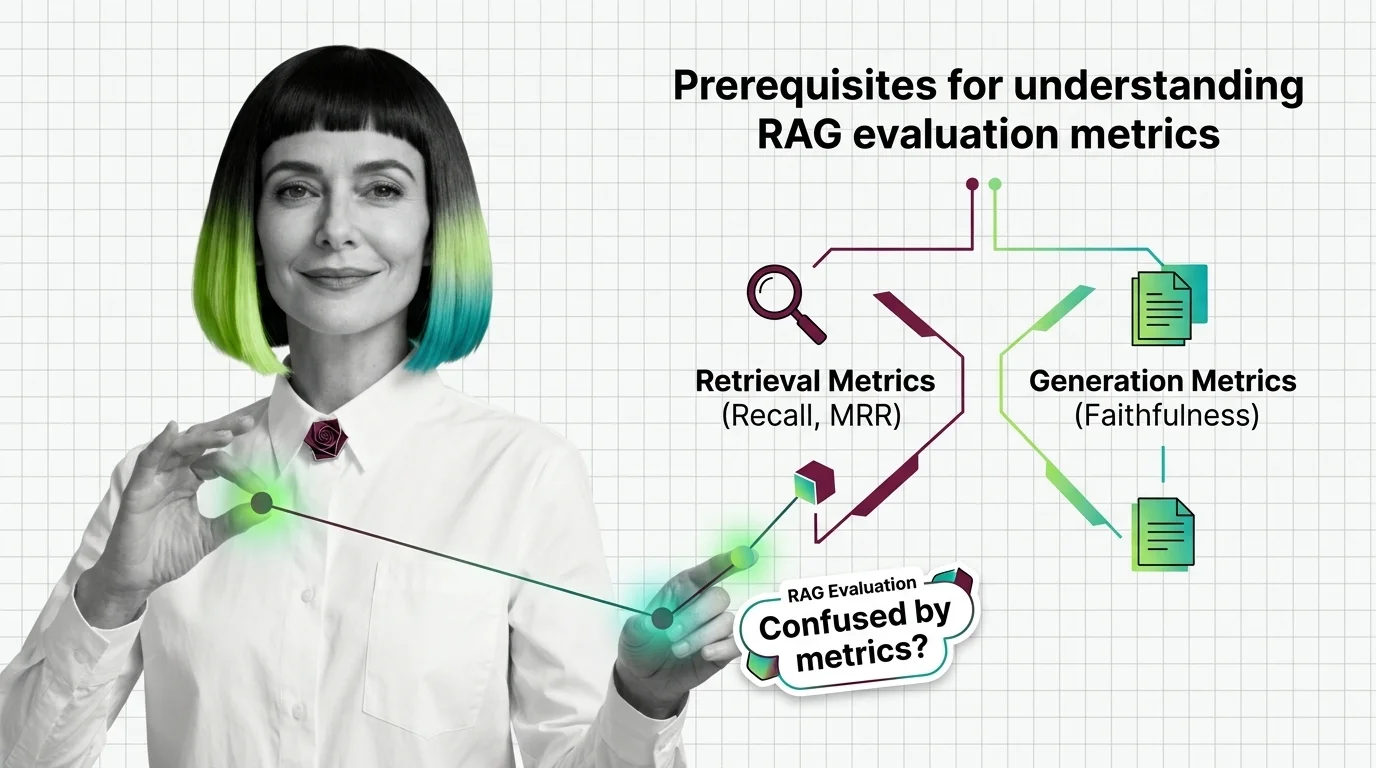
RAG evaluation needs more than one accuracy score. Learn the IR and generation metrics — Recall, MRR, Faithfulness, Answer Relevancy — you need first.
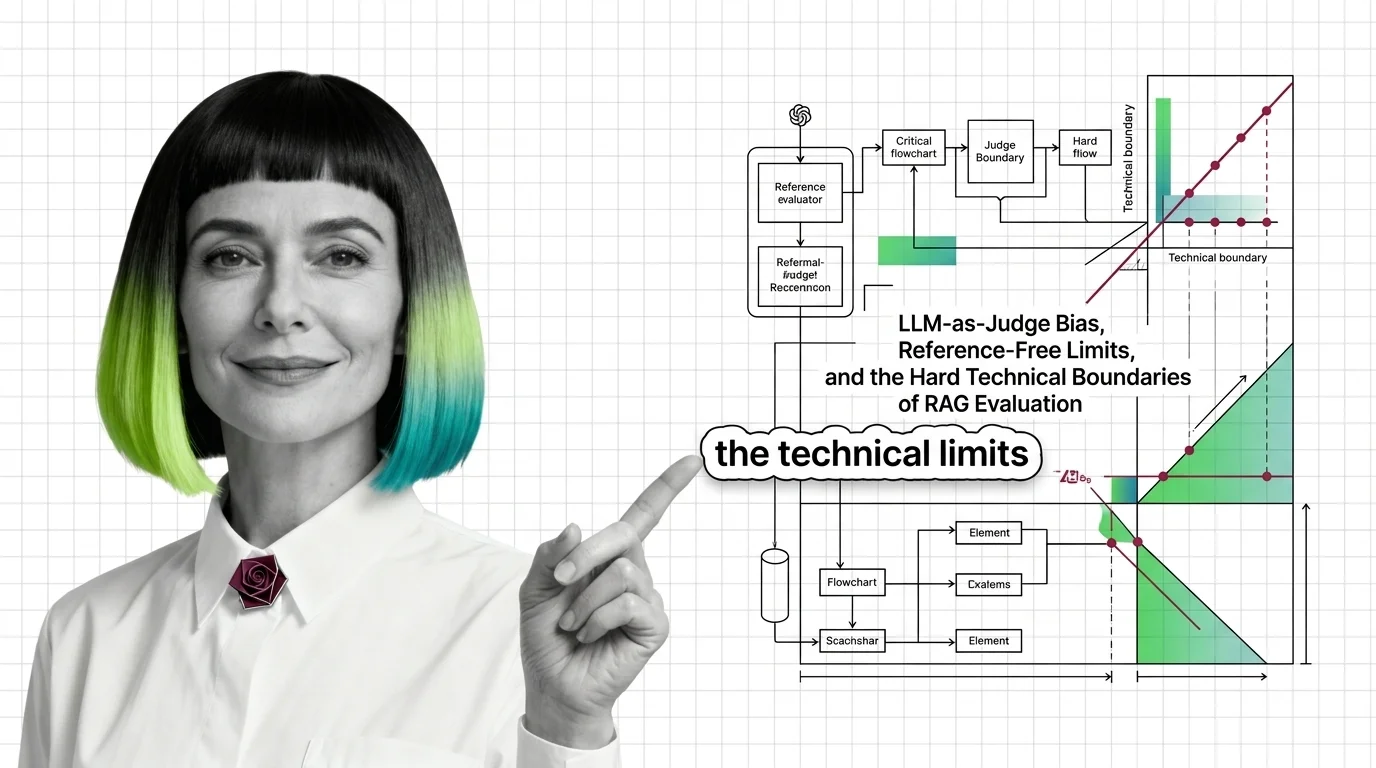
RAG evaluation frameworks like RAGAS rely on LLM judges with documented biases. Why faithfulness and answer relevancy scores are softer than they look.
Wiring up an evaluation harness is the difference between hoping your RAG works and knowing it does. These guides walk through the practical setup, dataset choices, and CI integration that make eval part of your build cycle.
Tools & techniques
RAG regresses with no commit and no deploy. Map your testing instincts onto a live evaluation harness — golden sets, baselines, and a CI gate that now scores instead of asserts.
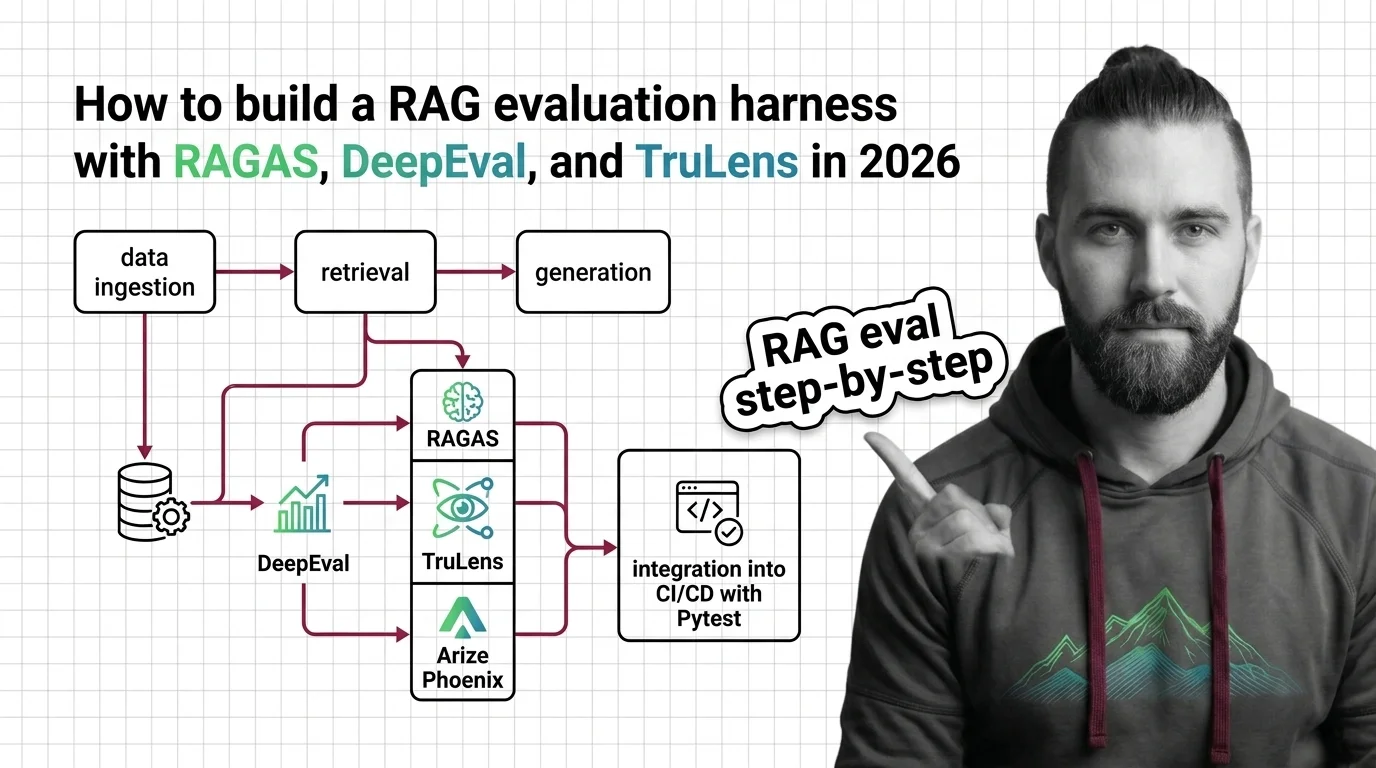
Build a production RAG evaluation harness with RAGAS 0.4, DeepEval 3.9, and TruLens 2.8. Spec the metrics, gate CI, catch retrieval drift early.
The eval tooling landscape moves quickly, with new judges, leaderboards, and reference-free methods landing every quarter. Staying current matters because yesterday's gold-standard metric is often today's known-biased baseline.
Models & benchmarks
Updated May 2026
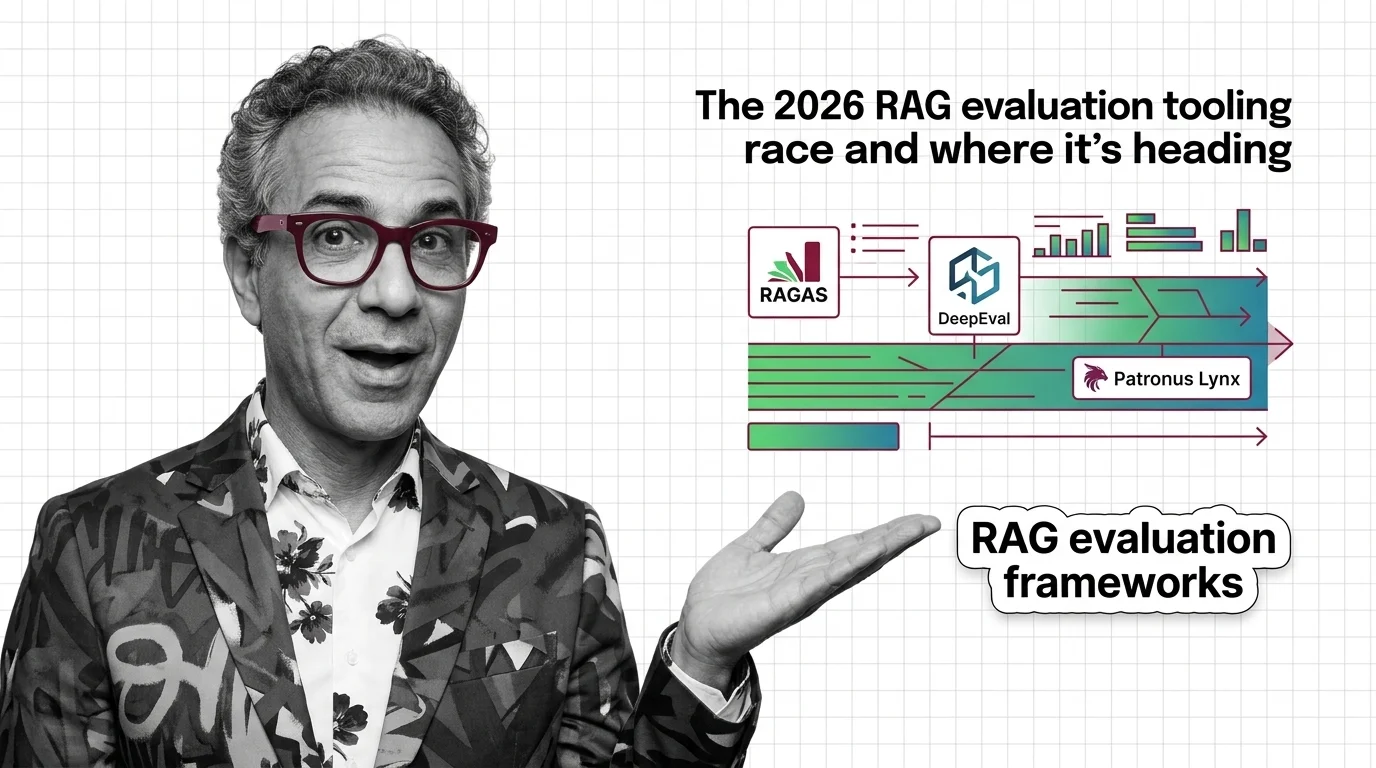
RAG evaluation forks in 2026: RAGAS and DeepEval push into agents and multimodal, while Patronus Lynx specialises in long-context hallucination detection.
LLM judges have blind spots, evaluation datasets leak, and faithfulness scores can be gamed. Before trusting an eval suite as your quality gate, understand what it can't see and where its failure modes hide.
Risks & metrics
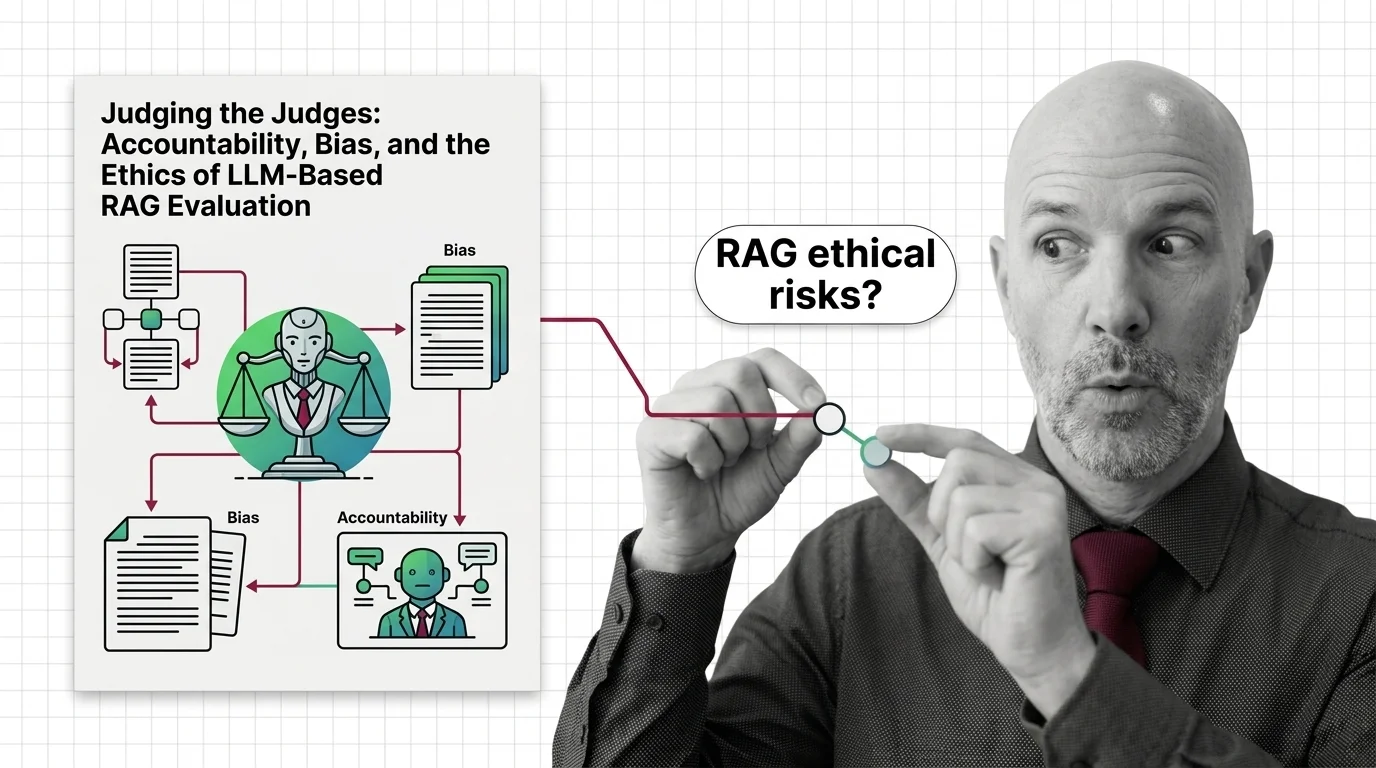
LLM-as-judge promises scalable RAG evaluation but inherits documented biases, opacity, and a quiet accountability gap. An ethical look at what we are trusting.