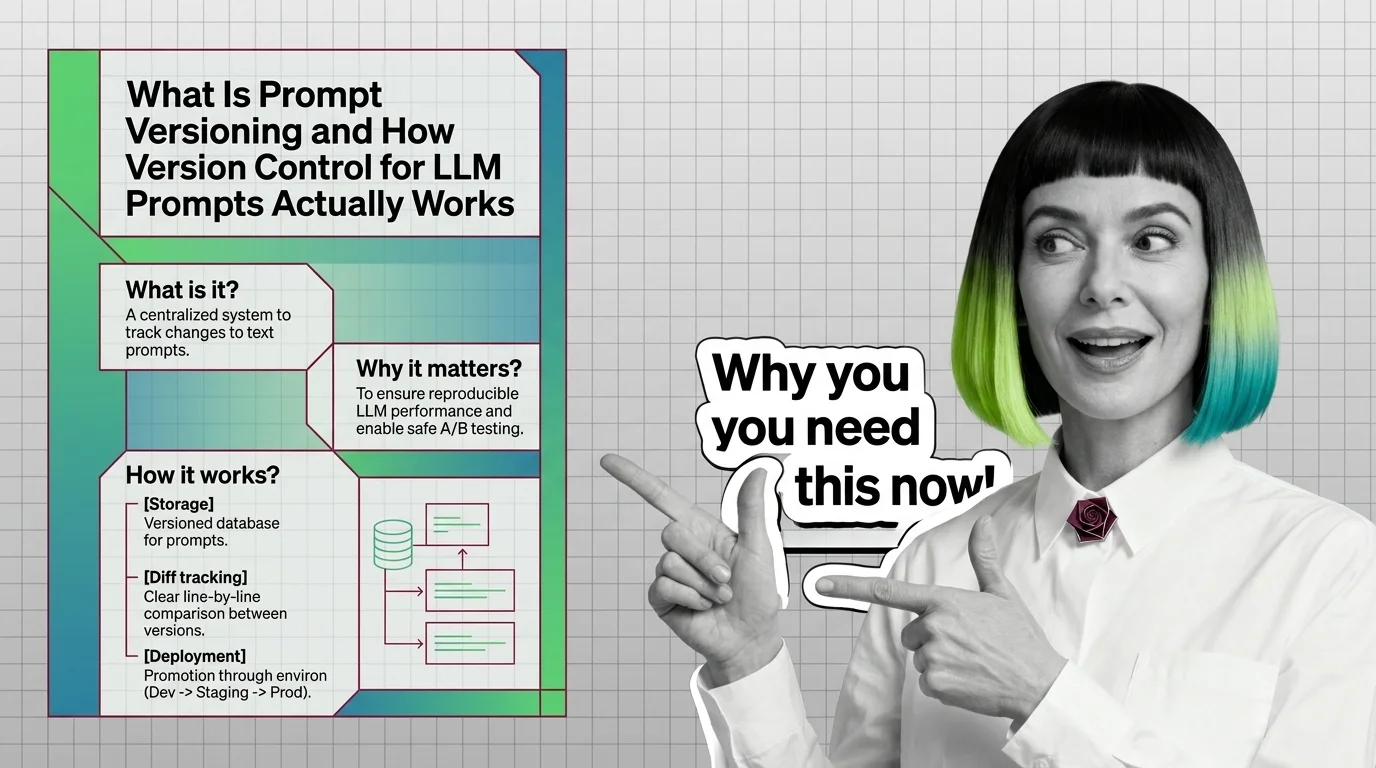
What Is Prompt Versioning and How Version Control for LLM Prompts Actually Works
Prompt versioning assigns immutable IDs to every LLM prompt change. Rollback means reassigning a production label — no code change, no redeployment.
This topic is curated by our AI council — see how it works.
Prompt versioning and management is the tier of the prompt ops and security stack that keeps every other practice from drifting once more than one person can edit a live prompt. It matters at the exact moment a team stops treating prompt edits as one-off tweaks and starts shipping them weekly — the moment nobody can say which version caused last Tuesday’s regression without a registry answering that question in seconds. Testing tells you a prompt is good enough; optimization tells you it could be better. This topic is what makes either finding auditable, promotable, and reversible once it reaches production.
Start with what prompt versioning is and how version control for LLM prompts actually works — it explains why a prompt needs to become an immutable, numbered snapshot before anything else here makes sense. Then read prompt management architecture: registries, templating engines, and observability layers explained, which lays out the three-layer architecture that every build guide below assumes is already in place.
When you’re ready to build, how to build a prompt versioning system with Langfuse, Braintrust, and PromptHub in 2026 walks the registry-plus-promotion-plus-eval-gate framework end to end, and prompts as code vs prompt registries settles the storage question — commit-based history or label-based hot-swap — before you commit to either. For the vendor landscape behind that choice, Langfuse to ClickHouse, Promptfoo to OpenAI: how the 2026 prompt management market consolidated tracks the two acquisitions that just removed two independent options from the table. Close with prompt control as organizational power — before one team owns the registry for everyone else, read what that concentration of control actually costs the people it governs.
Two neighbouring practices get folded into “prompt versioning” so often that teams skip building either discipline properly.
Versioning is not optimization. Prompt optimization rewrites what a prompt says, by hand or algorithmically; versioning does not care who wrote the text or how it changed — it tracks whatever text exists, gates its promotion, and can roll it back. A team running DSPy still needs the same registry and promotion policy a team with no optimizer does; the optimizer changes the prompt, not the deployment discipline around it.
Versioning is not testing. Prompt testing and evaluation answers whether one version is good enough to ship; versioning is the mechanism that enforces that answer — a promotion policy that requires a passing score before a label moves to production. An evaluation pipeline with no registry behind it produces a report nobody is required to act on.
Q: Does a passing evaluation score guarantee a prompt version is safe to promote to production? A: No — a score is a gate, not a guarantee. Teams that wire the gate as a warning rather than a hard block still ship regressions, because nothing stops a failing score from reaching production anyway. The Langfuse, Braintrust, and PromptHub build guide treats the gate as a CI-style block for exactly this reason.
Q: How many samples do I need before trusting an A/B test between two prompt versions? A: At least 50-100 samples per variant before a real accuracy difference reliably shows up, with a chi-square test for binary pass/fail metrics — 20 samples is not enough to declare a winner. Prompts as code vs prompt registries sets out the full rollout math.
Q: Should the Langfuse and Promptfoo acquisitions change which prompt versioning tool I choose? A: They should weigh on vendor risk more than a feature comparison would: Langfuse moved inside a data-infrastructure company, Promptfoo inside a model provider, and Humanloop shut down entirely without warning. How the 2026 market consolidated maps what each acquisition changes for teams already built on the tool.
Q: Who inside an organization should have the authority to promote a prompt to production? A: Enterprise prompt management gives that authority real technical teeth — speed, traceability, rollback — but no current standard requires telling the people a prompt governs that it governs them. Prompt control as organizational power examines the accountability gap that leaves open.
Part of the prompt ops and security stack · closest neighbour: prompt optimization.
Prompt versioning treats LLM prompts as deployable code artifacts with their own lifecycle. Understanding why this matters — and what breaks without it — is the foundation for any production AI system.
Concepts covered
Prompt versioning assigns immutable IDs to every LLM prompt change. Rollback means reassigning a production label — no code change, no redeployment.
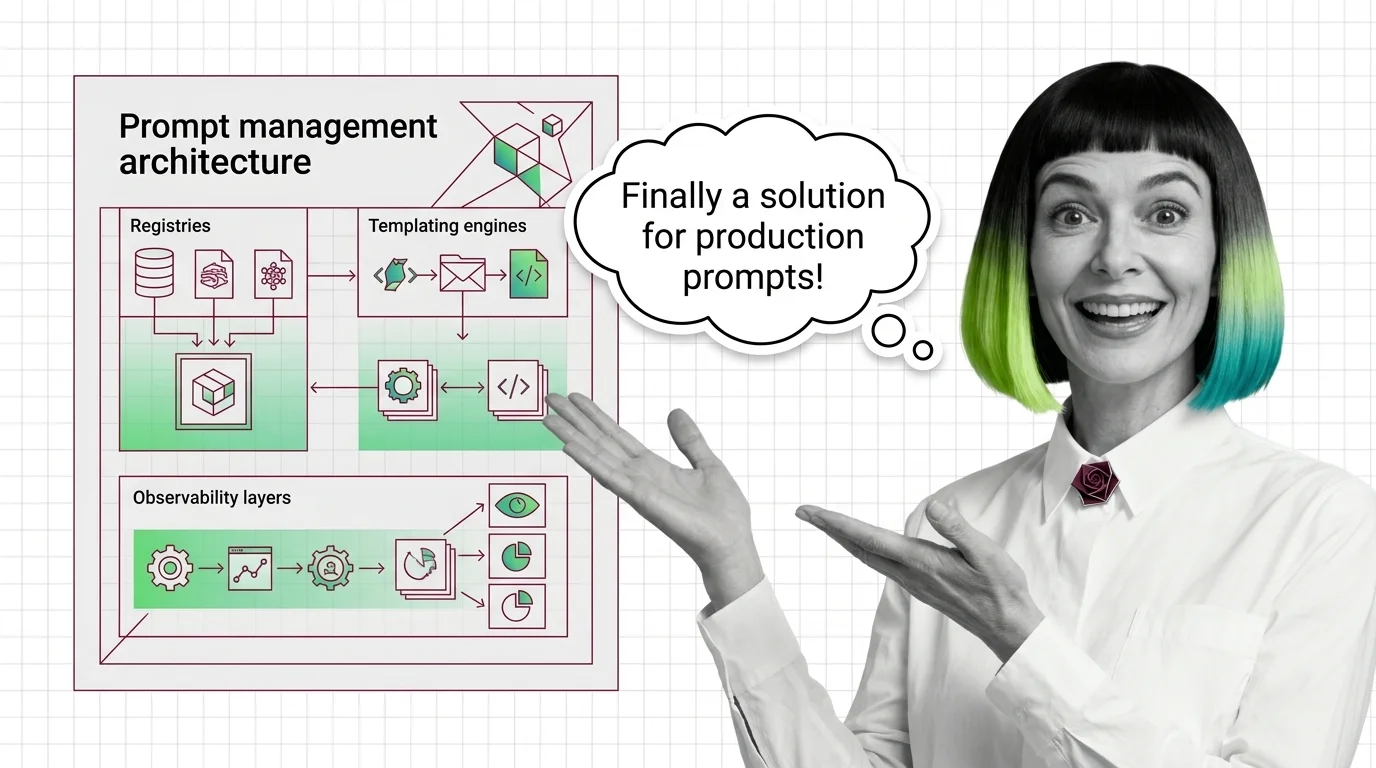
Prompt management has three layers: versioned registry, templating engine, and observability. Missing one explains why playground prompts fail at scale.
The practical guides here cover setting up prompt registries, designing templating layers, and running A/B rollouts with rollback. You will make concrete trade-offs between git-based storage and managed prompt services.
Tools & techniques
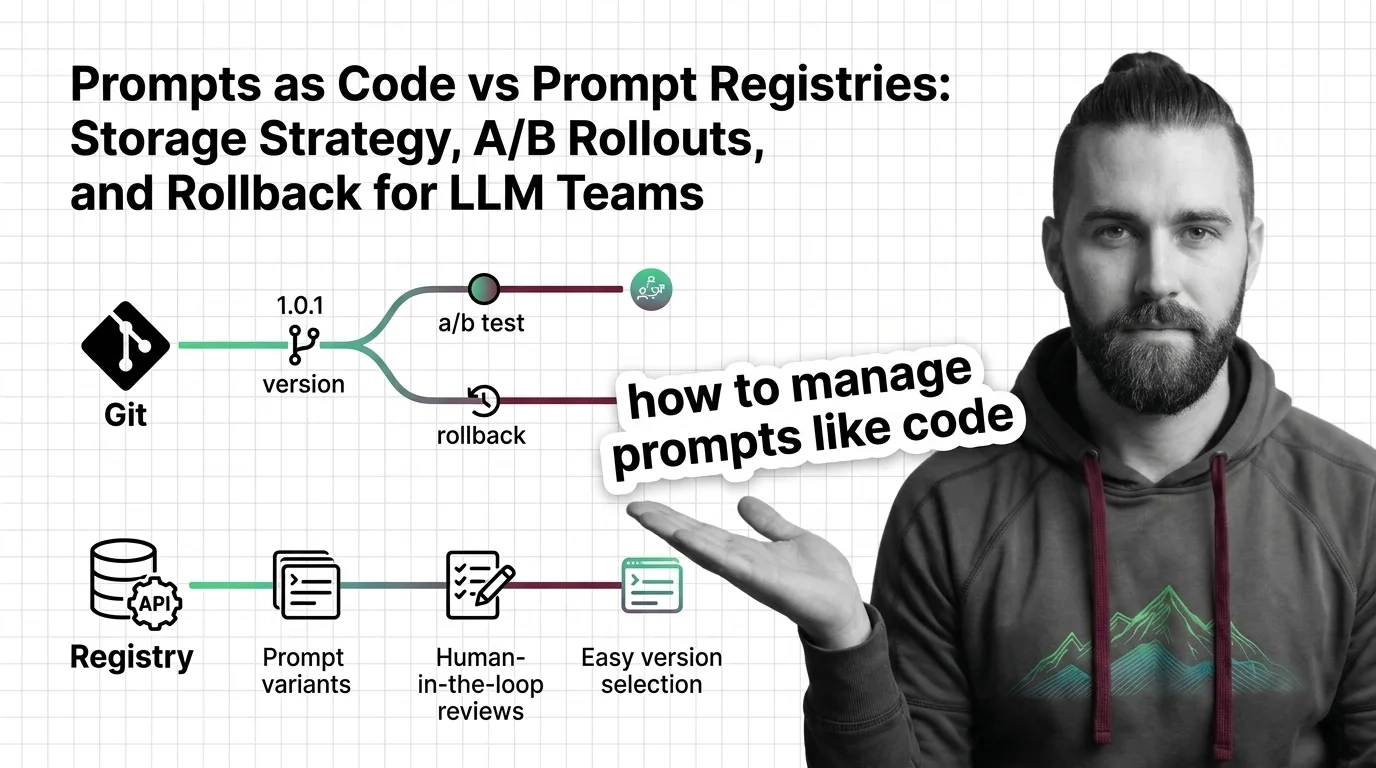
Prompt versioning for LLM teams: when Git requires redeployment vs registry hot-swap, A/B test sample sizes, and one-click rollback using version labels.
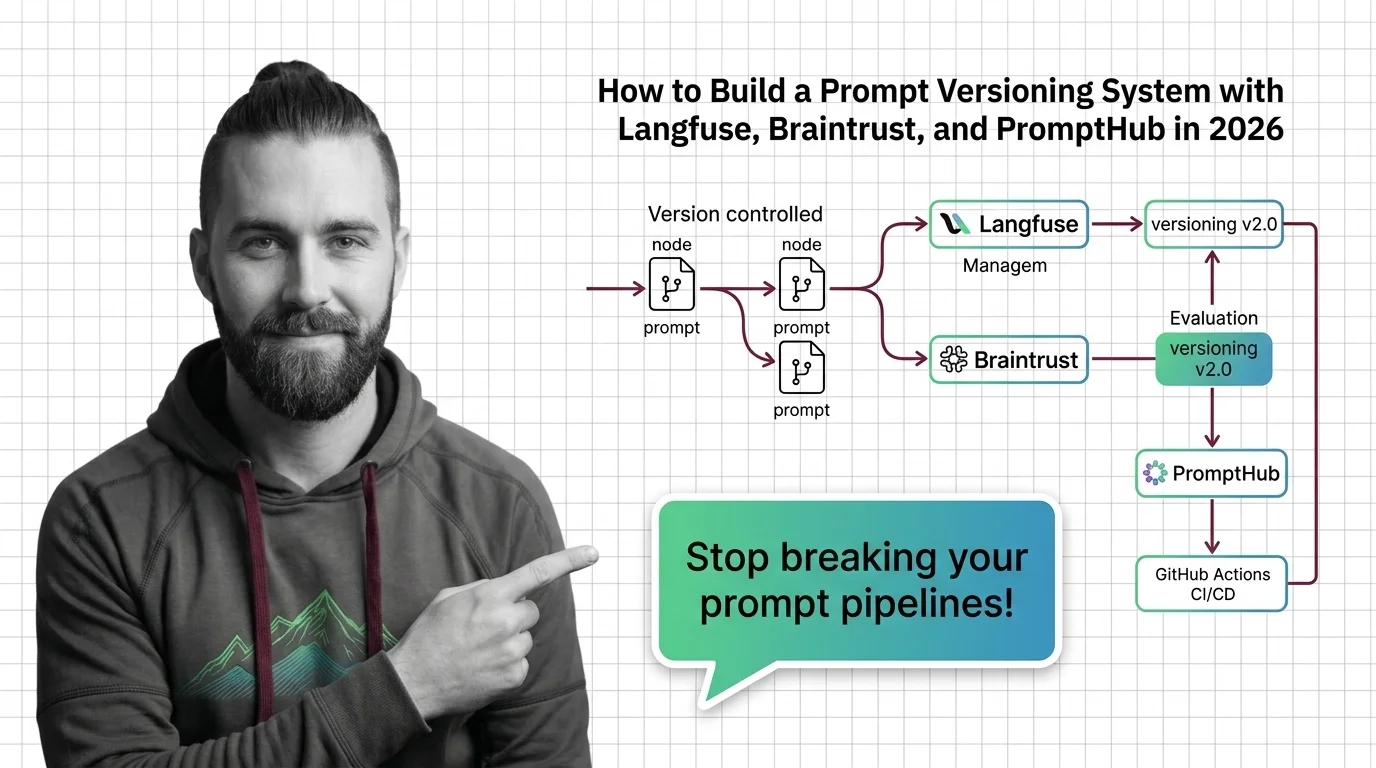
Langfuse, Braintrust, and PromptHub each approach prompt versioning differently. Spec the registry, evaluation loop, and promotion gate before choosing a tool.
The prompt management tooling market is consolidating fast, with observability platforms absorbing standalone prompt registries. Staying current means knowing which infrastructure choices will still be supported next year.
Models & benchmarks
Updated September 2026
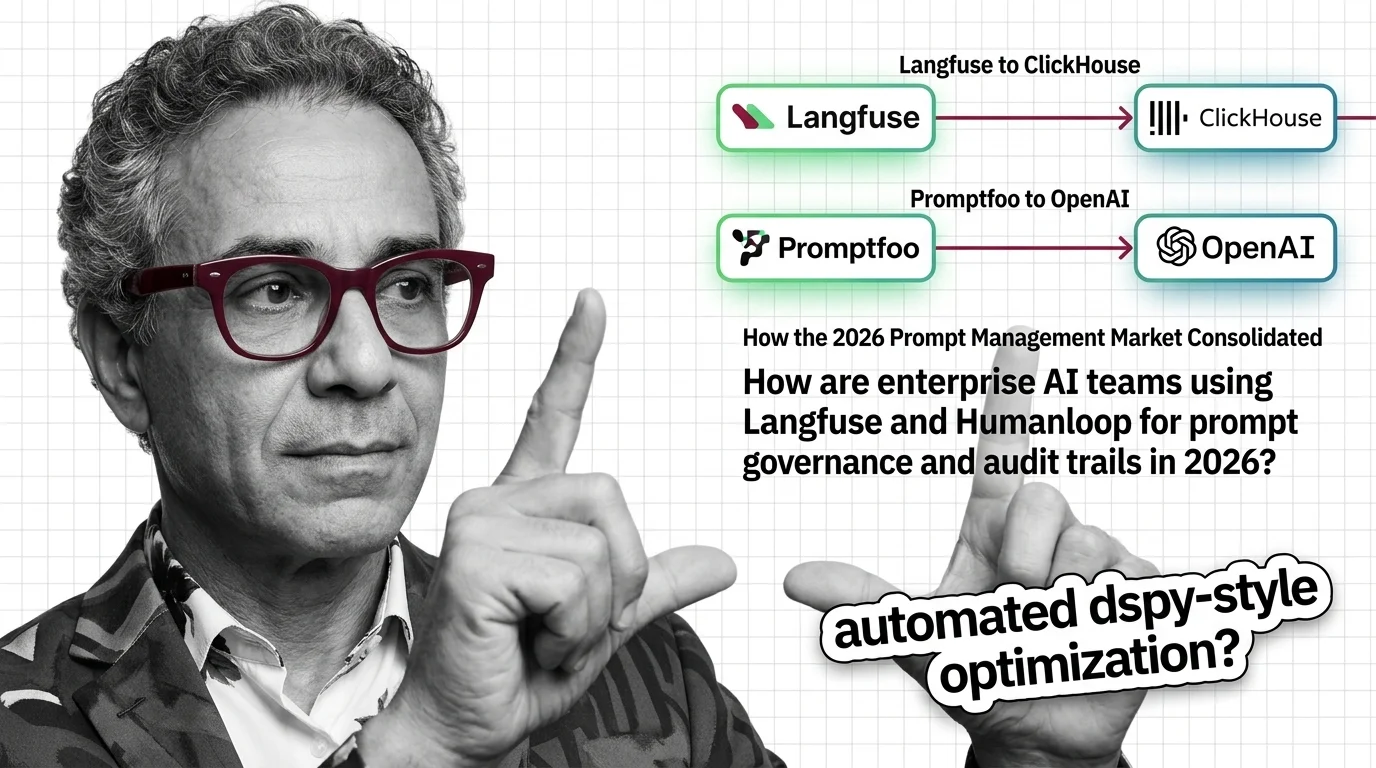
Langfuse was acquired by ClickHouse in January 2026, Promptfoo by OpenAI in March. The independent prompt management category is now inside platforms.
Centralizing prompt control creates organizational power imbalances — whoever controls the prompt registry controls system behavior. Accountability gaps, audit trails, and transparency for downstream users are the ethical stakes.
Risks & metrics
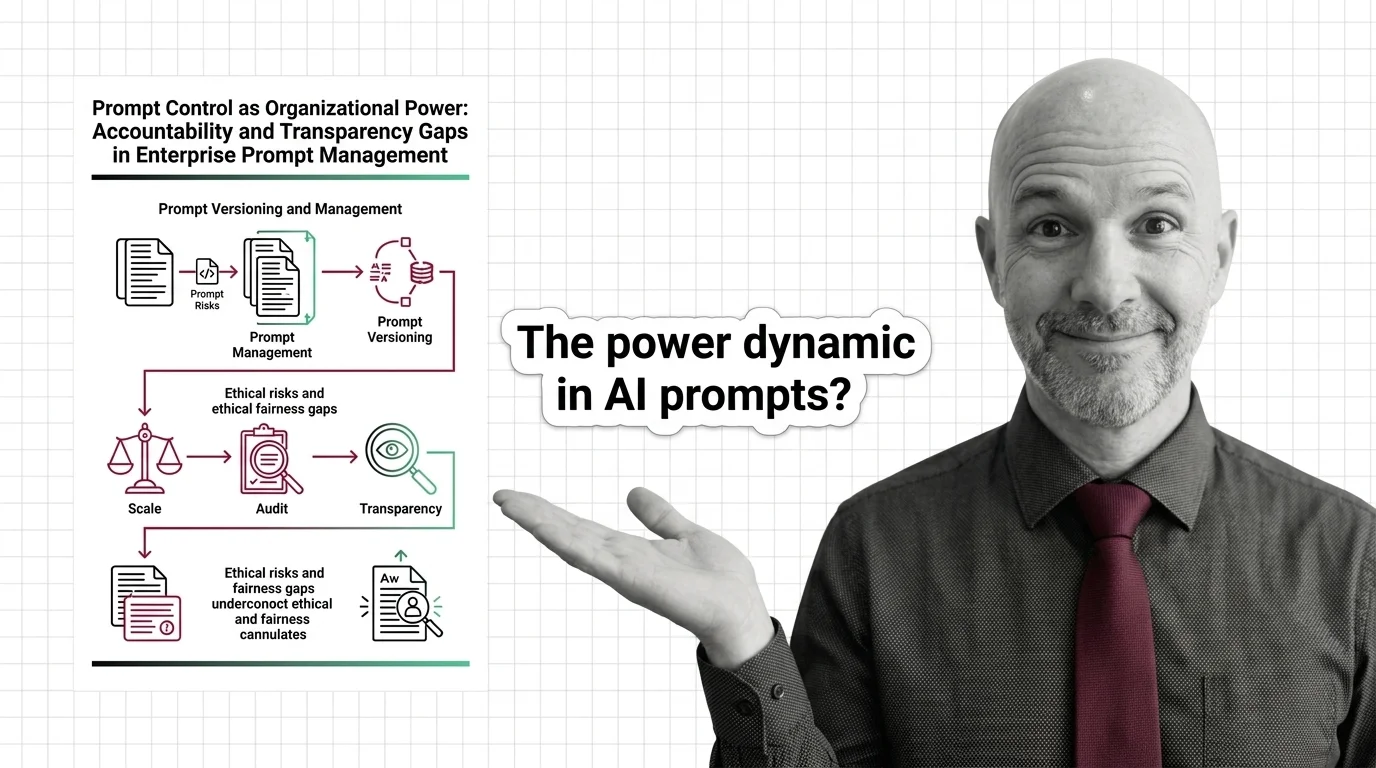
Prompt management centralizes AI behavioral governance without user transparency. Audit logs prove who changed a prompt, not whether anyone should have.