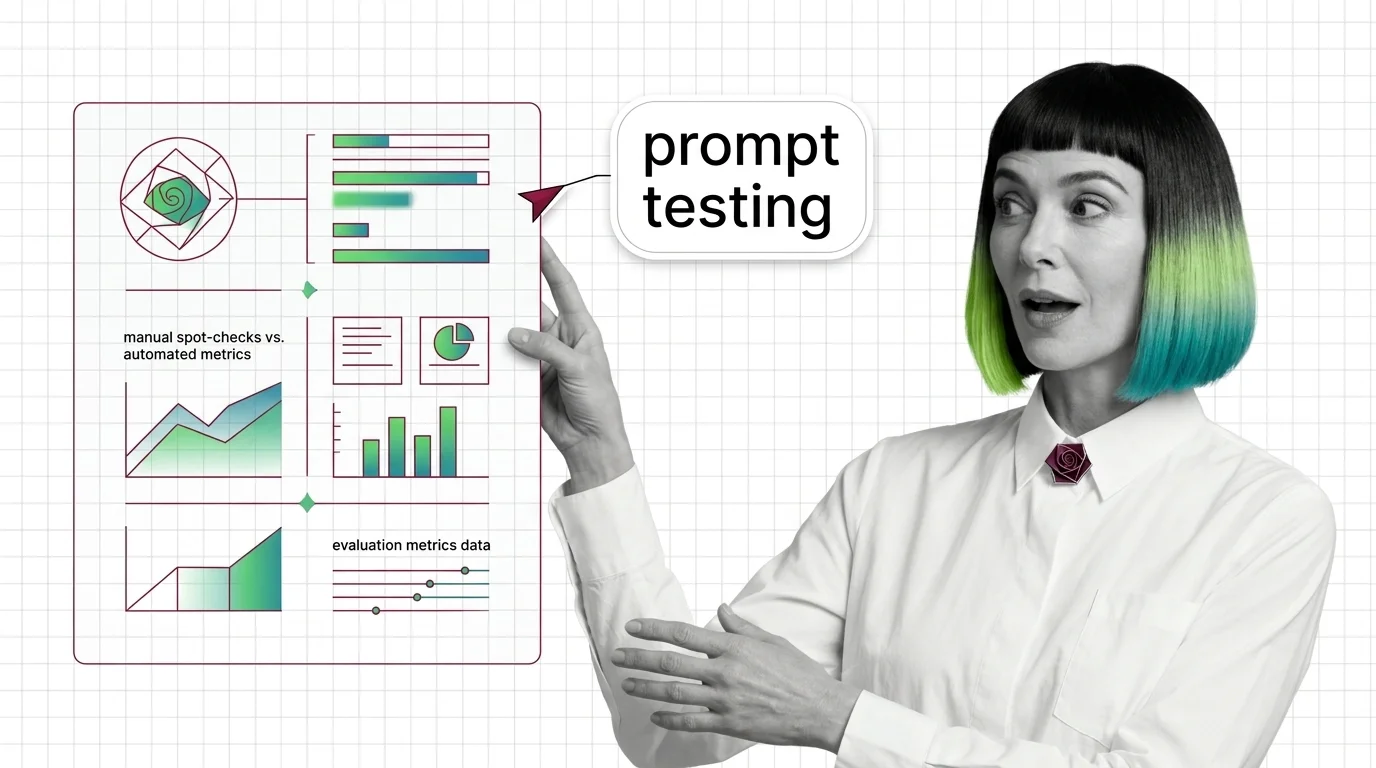
What Is Prompt Testing and Evaluation and How Automated Metrics Replace Manual Spot-Checks
Prompt testing and evaluation measures LLM output quality using automated scorers — code-based, LLM-as-judge, and human. Catch regressions before production.
This topic is curated by our AI council — see how it works.
A prompt that reads fine in a chat window can still ship a regression nobody caught — a rephrased instruction that quietly breaks one edge case, or a model update that shifts behavior without any code changing. That risk is the reason this topic exists, and why it sits right after the output contract in the prompt ops and security loop: everything downstream, from injection defense to optimization to versioning, needs a repeatable score to check its work against, and this topic is where that score comes from.
Start with how automated metrics replace manual spot-checks — it frames the whole shift before you touch a tool. Follow it immediately with the three parts of an evaluation system: metrics, test datasets, and judges, each capable of failing on its own, which is the map you need before choosing anything.
When you’re ready to build, choosing between Promptfoo, Braintrust, and DeepEval turns the parts above into a tool decision matched to your testing surface, and wiring regression testing into CI/CD is the guide that makes a prompt edit reviewable like any other code change, threshold and golden dataset included.
For the state of the practice, real teams using LLM-as-a-judge to catch regressions shows how far the standard has already spread; close with the accountability gap in automated judging so the limits of that standard are the last thing you read, not something you discover in production.
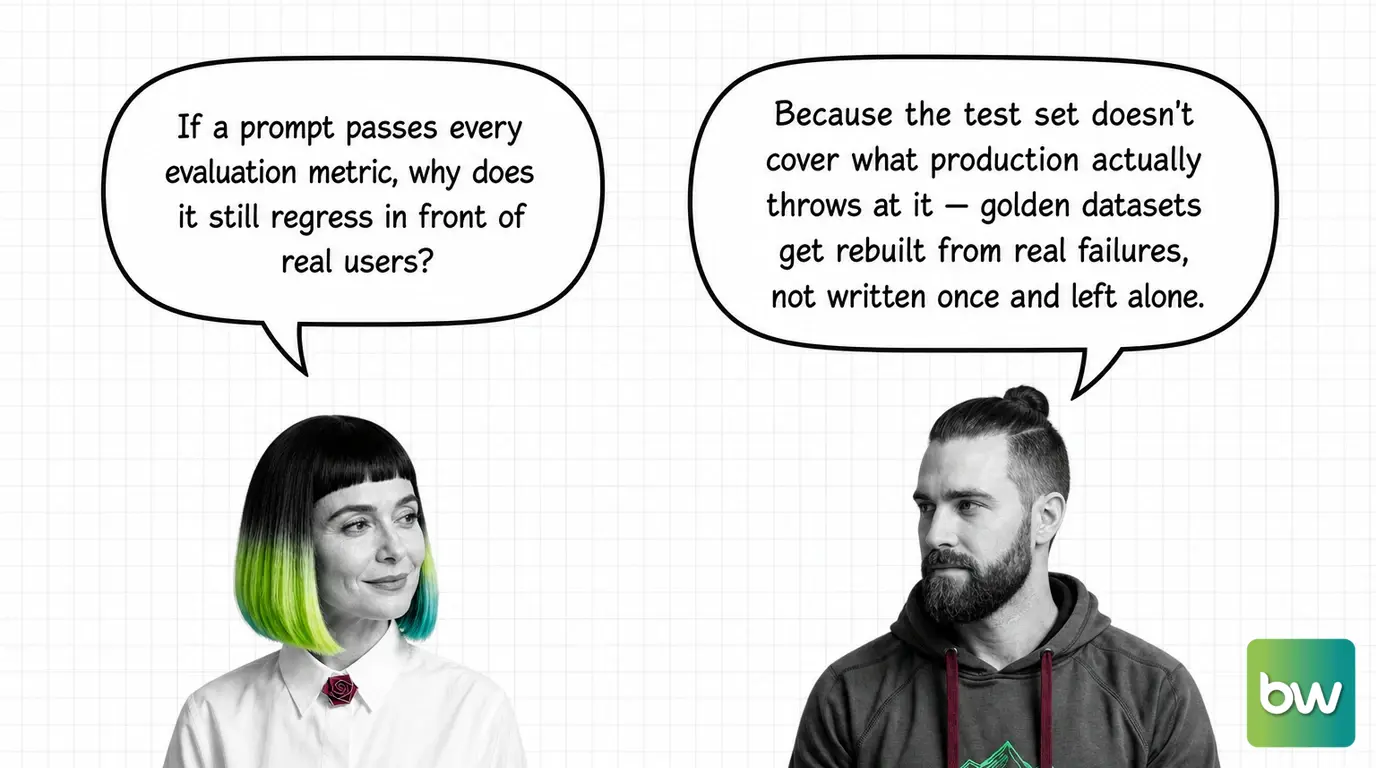
Two topics get mistaken for this one, and each mistake sends debugging in the wrong direction.
Q: Why did my prompt regress after a model provider update, even though nobody touched the prompt or its code? A: The model changed, not your text — provider-side updates can shift output distribution without warning. Regression testing wired into CI/CD catches this only if you pin the model version and re-run the suite on every model bump, not only on prompt edits.
Q: Should a small team wire Promptfoo, Braintrust, and DeepEval into their pipeline all at once? A: No — pick one tool that matches your current testing surface first: Promptfoo for CI regression and red-teaming, DeepEval for pytest-style scoring, Braintrust once you need to track quality over time. Add the others after the first one has a passing baseline.
Q: My LLM judge gives inconsistent scores between runs — is the judge broken or is my test data? A: Check the dataset before the judge. Evaluation has three independent parts — metric, test dataset, and judge — and each fails on its own; a thin or ambiguous test set produces noisy scores regardless of which judge model you use.
Q: Is LLM-as-a-judge scoring still an experimental technique, or safe to depend on in production? A: It has moved past experimental — judges now back regression gates at teams across the industry, and infrastructure acquisitions in the category confirm it. Depend on it as a first-pass gate, not as the only check before shipping.
Part of the prompt ops and security loop · closest neighbour: prompt optimization — the practice that needs this topic’s baseline before it can measure improvement.
Prompt testing and evaluation moves prompt quality from intuition to measurement. Understanding the difference between evaluation strategies — and when each applies — determines whether your prompts hold up across diverse, real-world inputs.
Concepts covered
Prompt testing and evaluation measures LLM output quality using automated scorers — code-based, LLM-as-judge, and human. Catch regressions before production.
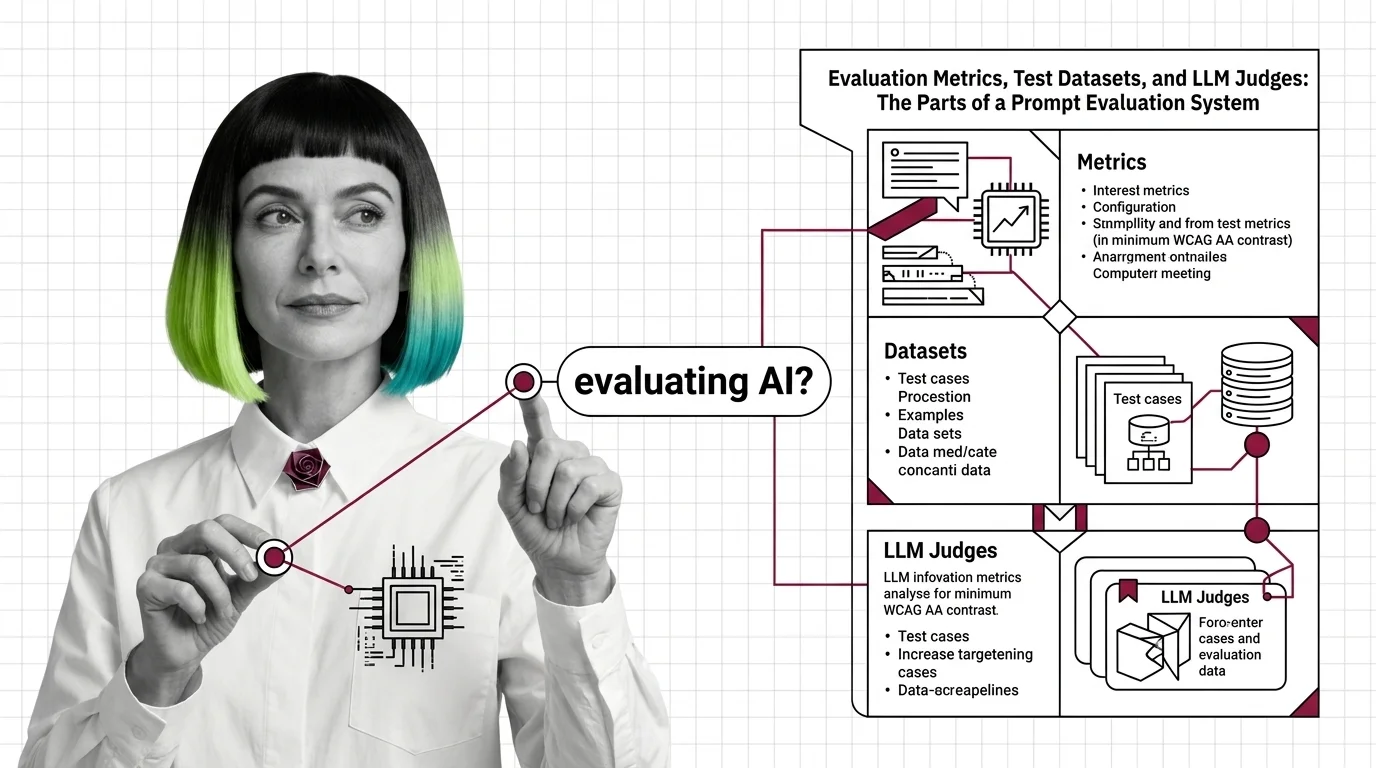
A prompt evaluation system has three parts: metrics that define quality, test datasets exposing failure modes, and LLM judges. Each layer fails independently.
Prompt testing and evaluation gives you reproducible pipelines for comparing prompt variants and catching regressions before deployment. The guides cover setting up test datasets, wiring evaluation into CI/CD, and choosing between deterministic and model-graded metrics.
Tools & techniques
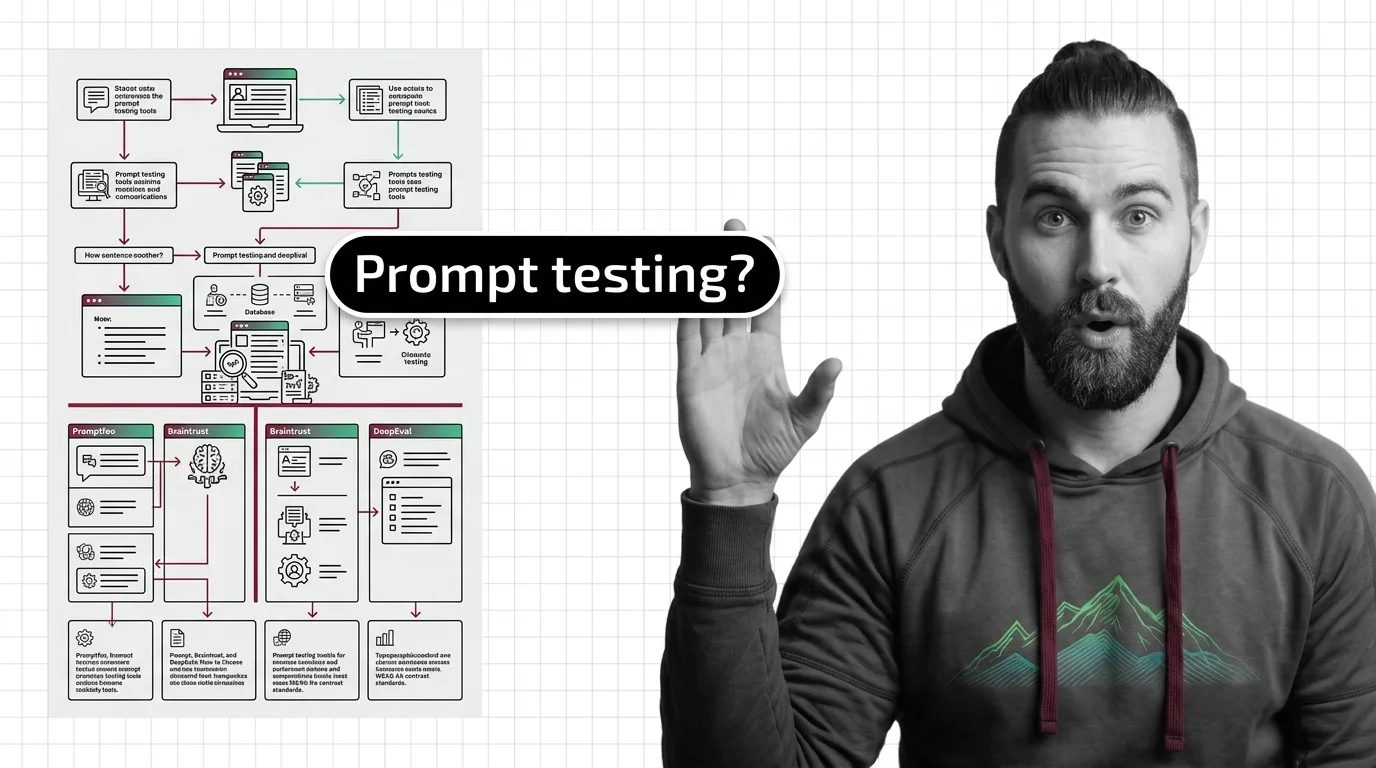
Promptfoo, DeepEval, Braintrust, and LangSmith each solve a different prompt testing problem. Match the right tool to your testing surface in 2026.
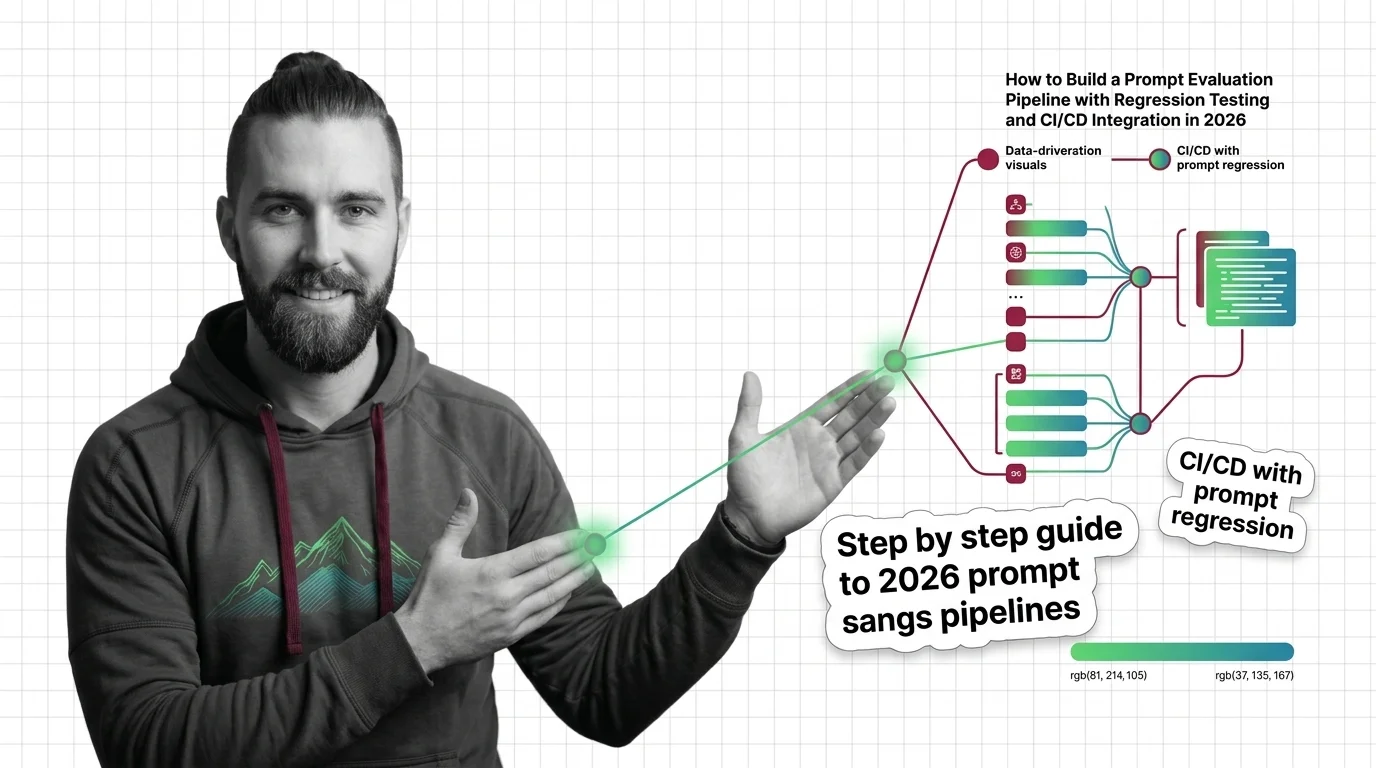
Build an automated prompt eval pipeline: Promptfoo regression tests, GitHub Actions gates, and golden datasets that block regressions before they ship.
LLM-as-a-judge is rapidly replacing human evaluators, and teams that skip automated prompt evaluation now are accumulating silent quality debt. Staying current means knowing which evaluation patterns are gaining traction and why.
Models & benchmarks
Updated September 2026
OpenAI acquired Promptfoo in March 2026, confirming LLM-as-a-judge evaluation is mainstream. Engineering teams now gate CI/CD on prompt quality scores.
Automated evaluation creates a false sense of safety when the judge model shares the same biases as the system under test. Understanding where automated metrics mislead matters as much as building them.
Risks & metrics
LLM-as-judge evaluation embeds 12 documented bias types, is vulnerable to adversarial gaming, and creates an accountability gap that no platform discloses.