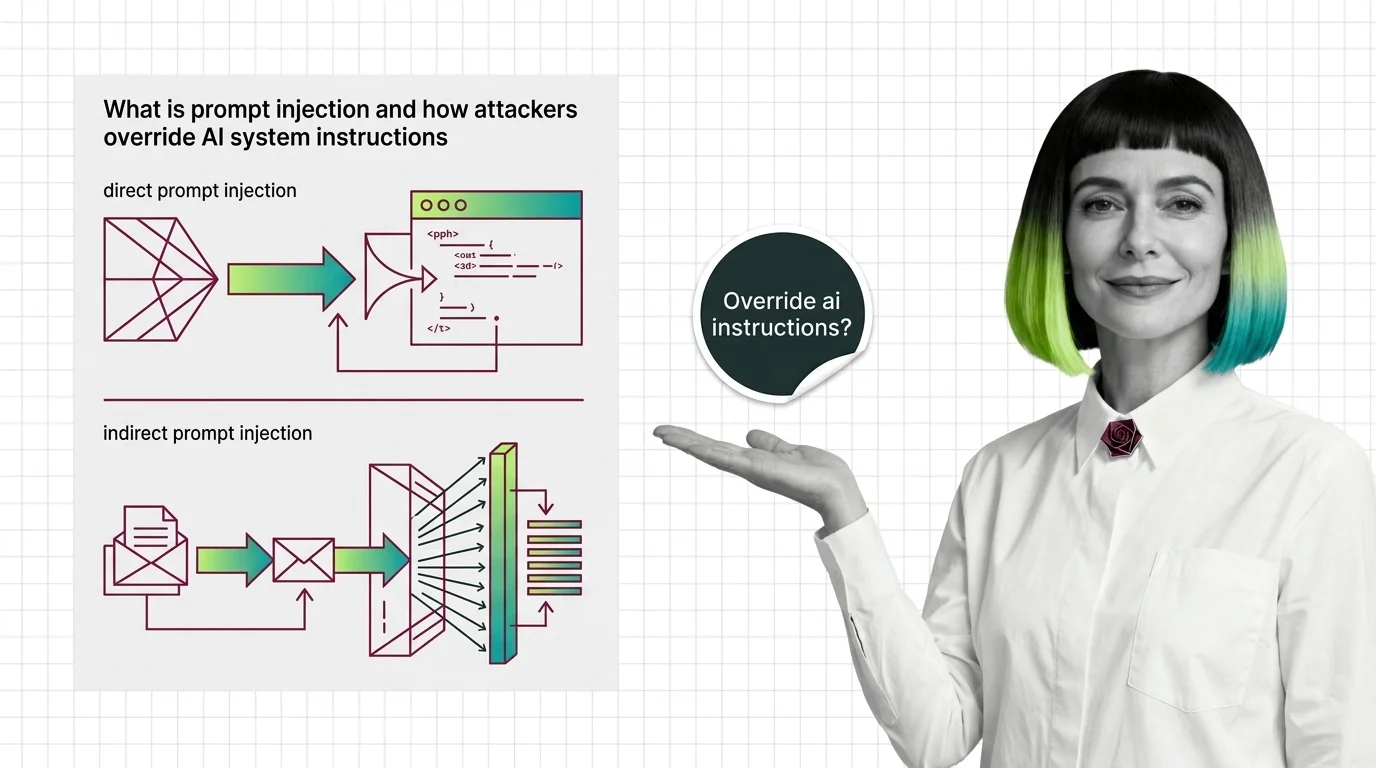
What Is Prompt Injection and How Attackers Override AI System Instructions
Prompt injection redirects AI systems via malicious instructions embedded in processed text. OWASP ranks it the top LLM risk in 2025.
This topic is curated by our AI council — see how it works.
Prompt injection is the question every other practice in prompt ops and security has to answer before it matters: no amount of testing, versioning, or tool-calling craft protects a system that a hostile string can redirect. For a developer shipping an agent that reads email, browses the web, or ingests customer documents, this is not optional hardening — the attack surface is any untrusted text the model will ever see. It has moved from a research curiosity to a documented production incident in under two years, and the defenses that hold up in 2026 look nothing like the input filters teams reached for first.
Start with how attackers override AI system instructions to see the attack from the outside — direct and indirect payloads, and why both work. Then read why LLMs cannot reliably separate instructions from data: it explains the trust-boundary problem the first article only shows the symptoms of, and why no single patch closes it for good.
When you are ready to build defenses, the PromptArmor, LLM Guard, and MELON guide lays out the layered architecture — input scanning, output scanning, privilege separation, red-teaming — that production teams actually ship. Prompt injection attacks in the wild shows what happens when that architecture is missing, tracing real breaches in AI copilots and email agents. Close with the ethics of prompt injection in AI agent systems — once an agent can act on its own, a successful injection stops being a bug report and becomes a question of who answers for what the agent did.
Two neighbouring practices get confused with injection defense, and each confusion sends a team’s effort in the wrong direction.
A passing eval suite is not a security clearance. Prompt testing and evaluation checks a prompt against a fixed set of known inputs; it proves nothing about a payload nobody wrote into that set. Catching an input nobody anticipated is what dedicated red-teaming — not the evaluation pipeline — is built for.
Prompt injection is also not tool use, though the two compound each other. Injection hijacks what a model is told to do; tool use is the surface that turns a successful hijack into a real action — sending an email, calling an API, moving a record. Treat them as separable failure points: one line of defense keeps the model listening to the right instructions, a second, independent one keeps whatever it decides to do inside a bounded set of privileges.
Q: Can I stop prompt injection just by telling the model, in the system prompt, to ignore any instructions found in user input? A: No — that instruction is just more text sharing the same channel the attacker’s payload uses. LLMs process system prompts and user data through one flat stream with no structural boundary between them, so a firmly worded system prompt raises the bar slightly but does not close the gap.
Q: Will my prompt evaluation suite catch a prompt injection attack before it ships? A: Not reliably. Prompt testing and evaluation checks a prompt against a fixed test set of known inputs, while a real attacker writes a payload nobody added to that set. The PromptArmor and LLM Guard defense guide calls for dedicated red-teaming with tools like Garak and PyRIT precisely because standard evaluation was never built to generate adversarial input.
Q: Why do prompt injection defenses that work in benchmarks still fail once an agent ships to production? A: Benchmark suites like AgentDojo test known attack patterns under controlled conditions; production traffic serves untrusted content assembled by real users and real websites, recombined in ways no benchmark enumerates. Real-world breaches in AI copilots and email agents confirm research-grade defenses already work at benchmark scale — the open gap is deployment, not detection.
Q: If I add a vendor’s built-in injection filter, does that remove my liability when it fails? A: No. The ethics of prompt injection in agent systems argues responsibility sits with the organization that deploys the AI, the same way an employer answers for an employee’s conduct — a vendor’s scanner reduces risk, it does not transfer accountability for what your system does when it fails.
Part of the prompt ops and security theme · closest neighbour: tool use in prompts.
Prompt injection exploits the inability of language models to reliably distinguish between instructions and data. Understanding this boundary problem reveals why even well-designed systems remain vulnerable to manipulation.
Concepts covered
Prompt injection redirects AI systems via malicious instructions embedded in processed text. OWASP ranks it the top LLM risk in 2025.
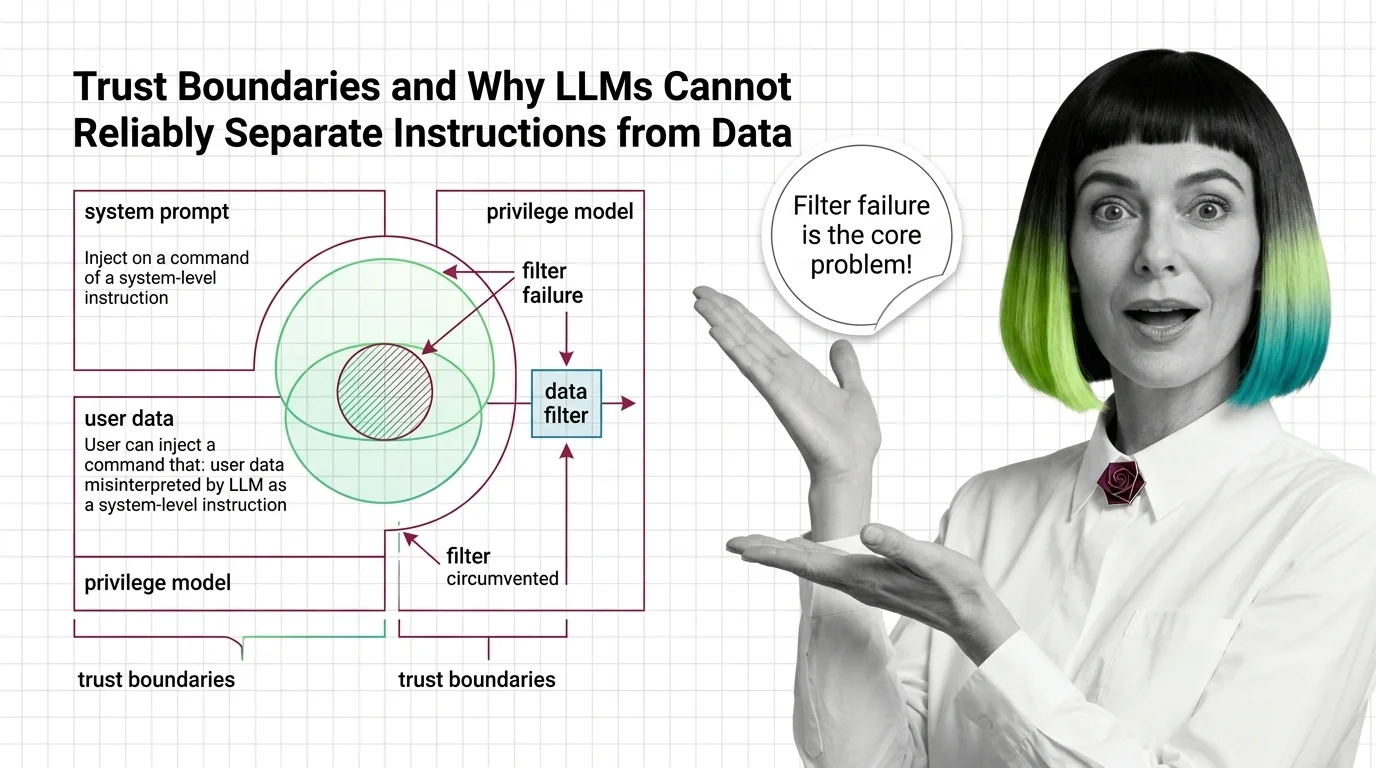
LLMs have no hardware boundary between instructions and data — both are tokens. Prompt injection, OWASP's #1 LLM risk, exploits this architectural fact.
These guides walk through deploying prompt injection defenses in production, from input sanitization patterns to layered trust architectures that limit what injected content can actually execute.
Tools & techniques
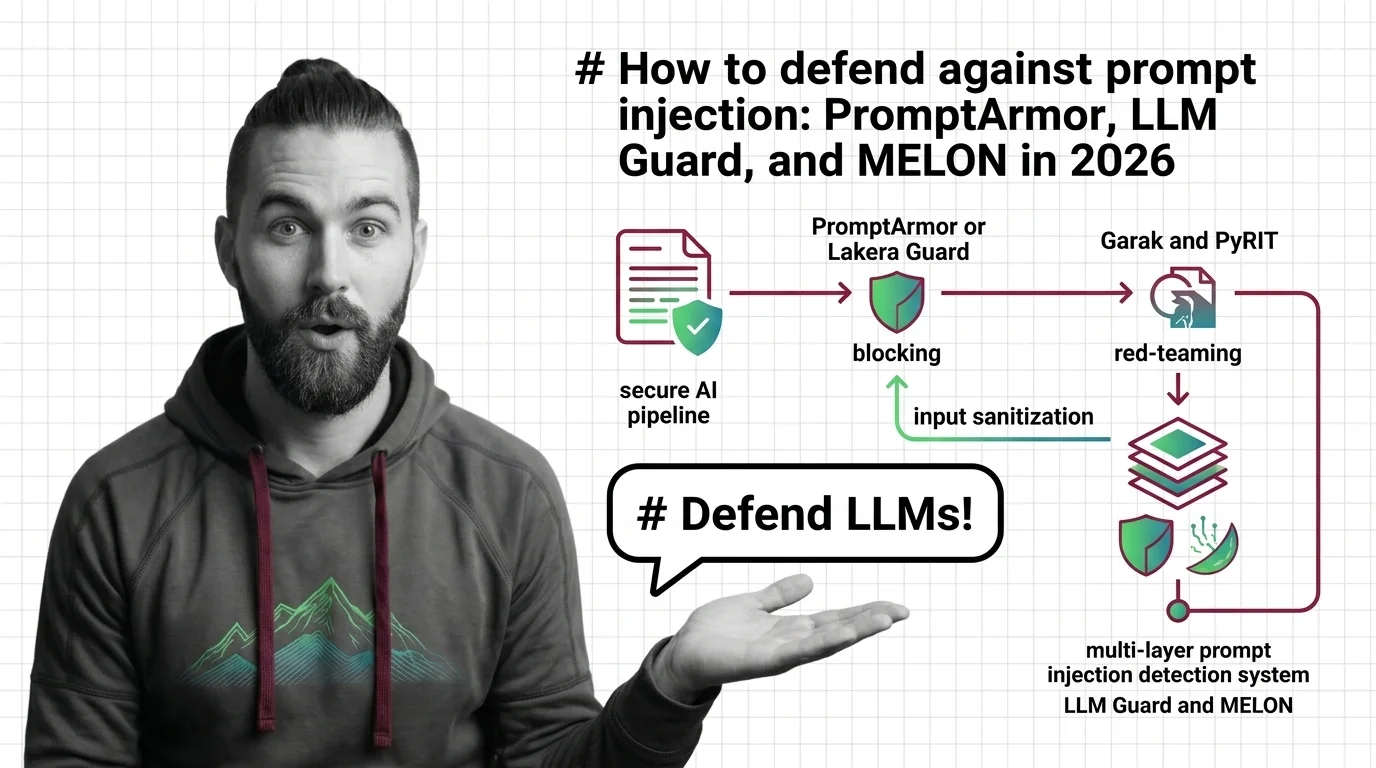
Prompt injection is OWASP LLM01:2025. Layer PromptArmor (91.7% F1), Lakera Guard, and LLM Guard to block attacks in AI agents with privilege separation.
Prompt injection is actively exploited in AI copilots and autonomous agents, making it one of the fastest-evolving security concerns in production AI. New attack surfaces emerge with each new agentic deployment pattern.
Models & benchmarks
Updated September 2026
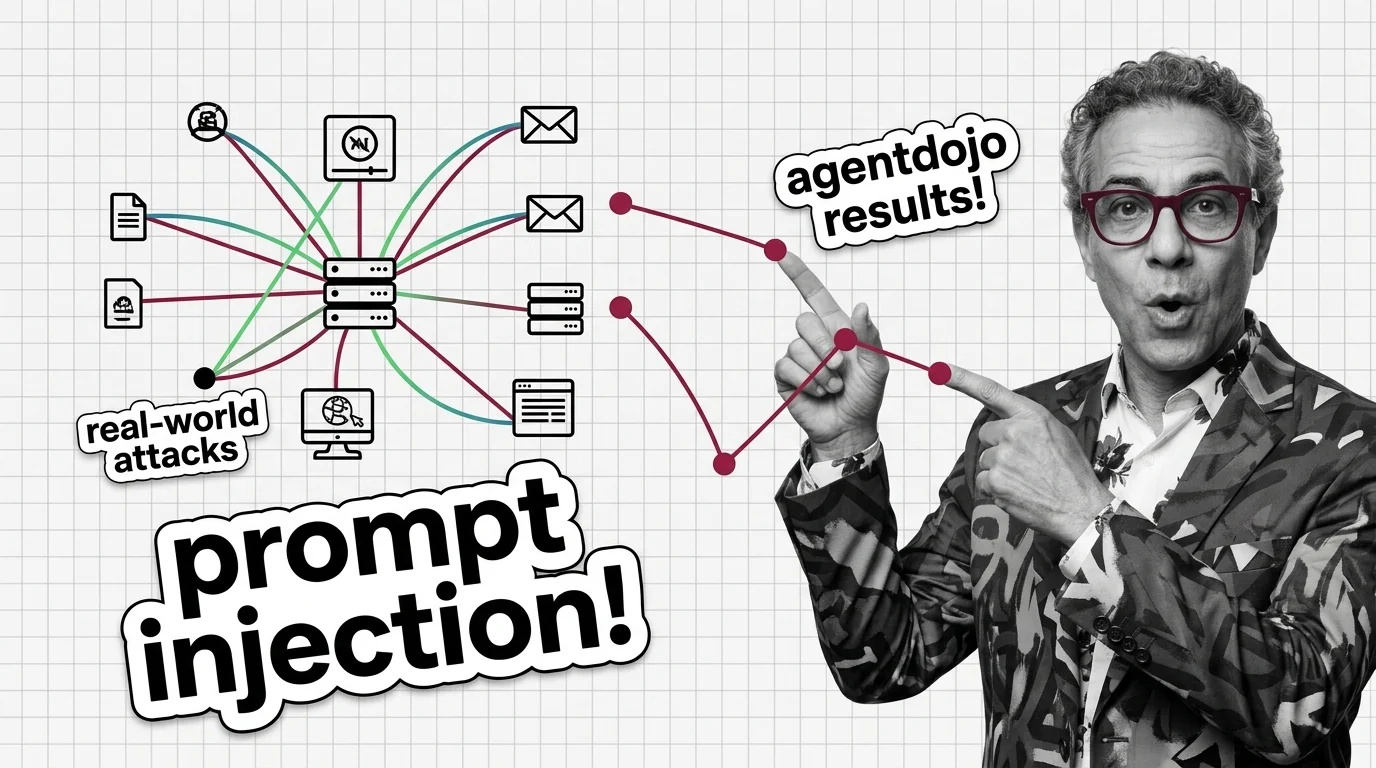
Prompt injection hit production in 2024-2025. EchoLeak exposed Copilot zero-click; Slack AI leaked API keys. Defenses now cut attack success below 1%.
When AI agents act autonomously — sending emails, executing code, browsing the web — a single successful injection can escalate far beyond the conversation. Governance frameworks and transparency about injection risks are still catching up to deployment reality.
Risks & metrics
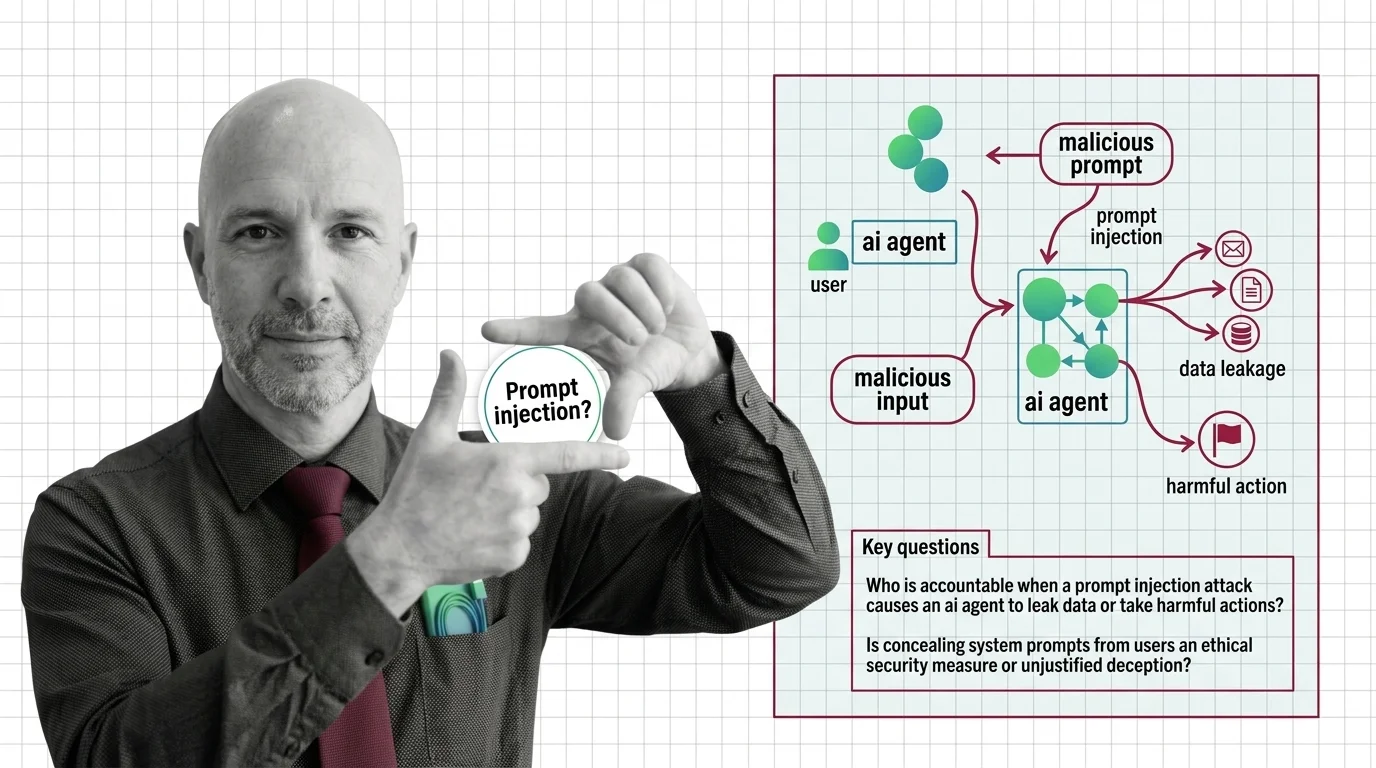
When AI agents leak data via prompt injection, legal accountability genuinely fragments — and system prompts hide the behavioral rules users live under.