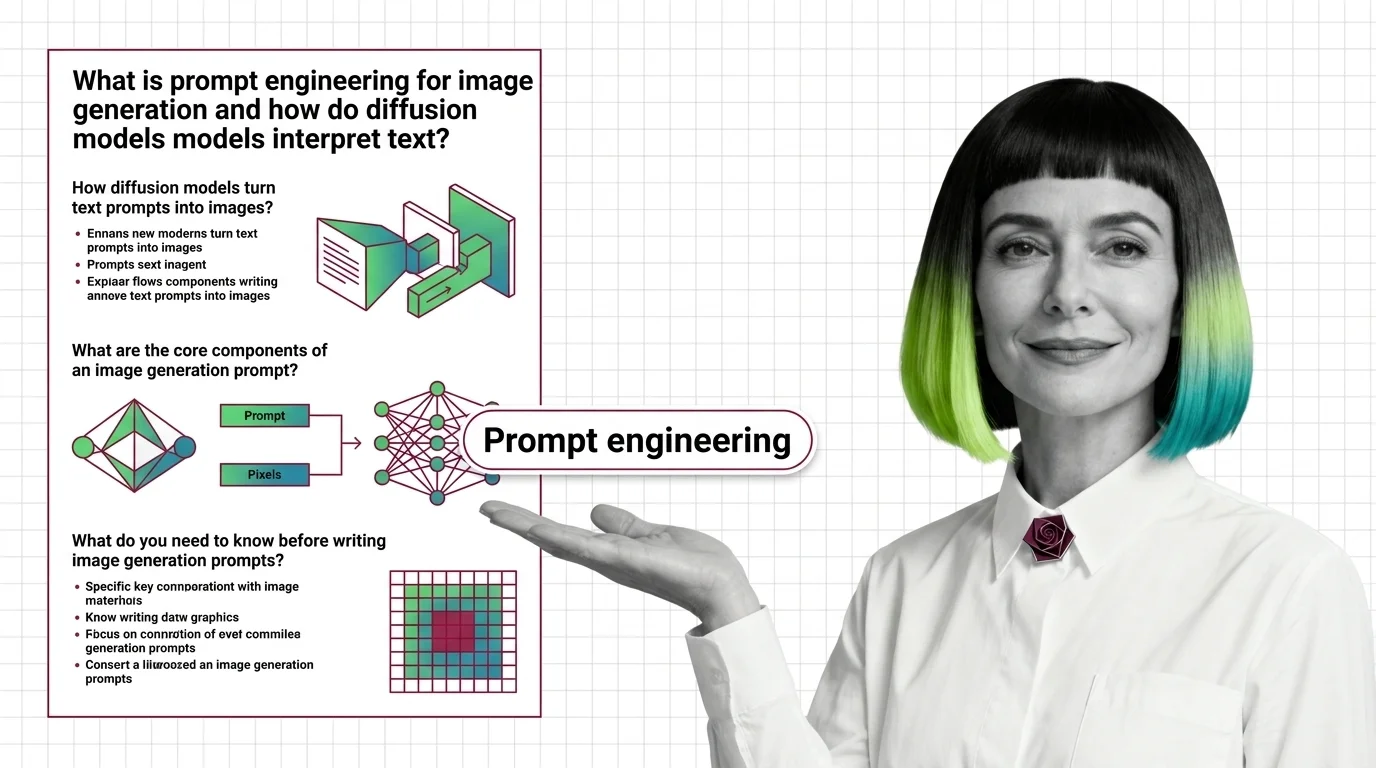
Prompt Engineering for Image Generation: How Diffusion Models Read Text
Image prompts steer probability, not pixels. Learn how diffusion models, cross-attention, and CFG turn text into images on SD, FLUX, and Midjourney.
This topic is curated by our AI council — see how it works.
Writing a prompt that works is a different skill from understanding the diffusion model it steers, and it is the interface layer every other part of the AI image generation and editing stack has to pass through before a single pixel renders. The same string of words carries different rules depending on whether the target is Midjourney’s parameter flags, Flux’s conversational prose, or GPT Image’s instruction-following — a habit trained on one model routinely breaks on the next. Because output is sampled rather than computed, the craft splits into separate, learnable disciplines: writing the words, controlling reproducibility, and knowing which grammar the target model actually speaks.
Start with what prompt engineering for image generation is and how diffusion models interpret text — it establishes that a prompt shapes a probability distribution the model already holds, not an instruction the model obeys literally, which is the assumption every later decision leans on. Read the hard technical limits of negative prompts, weight syntax, and seed reproducibility in the same sitting: it draws the boundary around what a prompt can actually guarantee, and where a fixed seed stops producing a fixed result.
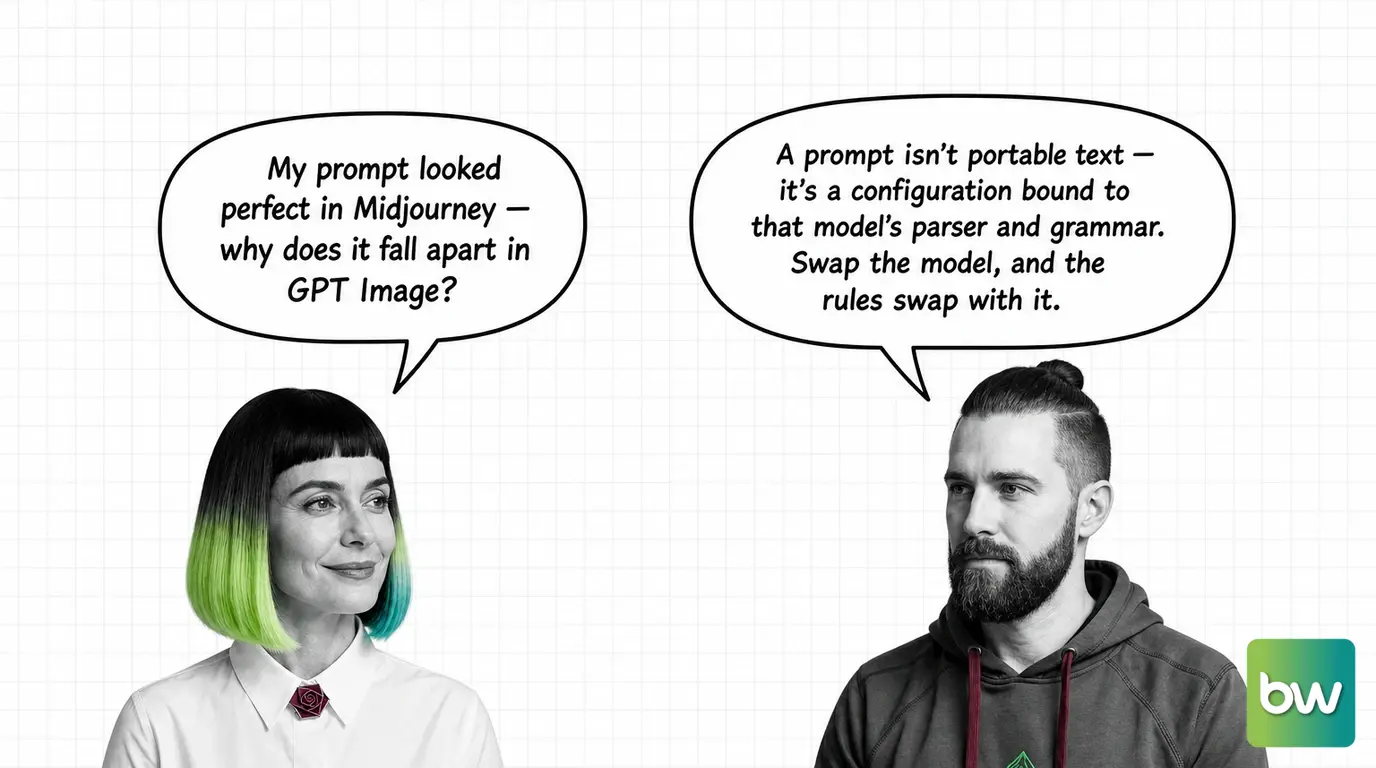
Once the mechanism is settled, the model-specific prompt grammar guide is the practical translation layer — it maps Midjourney’s parameter flags, Flux’s word-order rules, and GPT Image’s conversational syntax, so a prompt that works in one tool stops silently failing in another. The reproducible prompt-testing pipeline guide turns that translation into something a team can ship: pin the seed, the provider version, and an assertion suite instead of eyeballing thumbnails on a matrix view. For the market forces behind why none of this travels for free, the five-model reproducibility study and the PromptPerfect shutdown tracks why third-party portability tools are dying out in favor of first-party optimizers. Close with the ethics of reference prompts and artist-name tokens — if a prompt borrows a living artist’s name or visual signature, read this before it ships in client work, not after.
Two disciplines get folded into “prompt engineering” that are not the same skill.
Q: Should I build one prompt library and reuse it across every image model? A: No — treat prompts as model-locked artifacts, not portable code. The five-model reproducibility study found prompt behavior does not travel between architectures, which is also why third-party portability tools are shutting down rather than fixing the gap.
Q: Why does weight syntax like (cinematic:1.4) work in Stable Diffusion but not in Flux? A: Flux’s text encoder does not parse that parenthetical-weight convention at all — the model-specific grammar guide shows the fix is moving emphasis into word choice and sentence structure instead of a numeric weight token.
Q: How do I know a prompt will keep working before I ship it? A: Treat it like code, not a demo: pin the seed, the provider version, and an assertion suite, then gate on measurable similarity rather than eyeballing thumbnails. The reproducible testing pipeline guide walks the setup.
Q: Is it legal or ethical to prompt “in the style of” a specific living artist? A: It is contested, not settled — artists whose names became prompt shorthand have publicly objected, and the practice sits ahead of the law that would resolve it. The ethics of reference prompts and artist-name tokens examines what that token actually encodes.
Part of the AI image generation and editing theme · closest neighbour: diffusion models. Coming to this from a software background? Start with the story: AI Image Stacks for Developers: What Maps and What Breaks.
Diffusion models do not read prompts as instructions — they map tokens to dense vectors that steer denoising. Understanding this mechanism explains why small wording changes can shift composition, style, and detail in surprising ways.
Concepts covered
Image prompts steer probability, not pixels. Learn how diffusion models, cross-attention, and CFG turn text into images on SD, FLUX, and Midjourney.
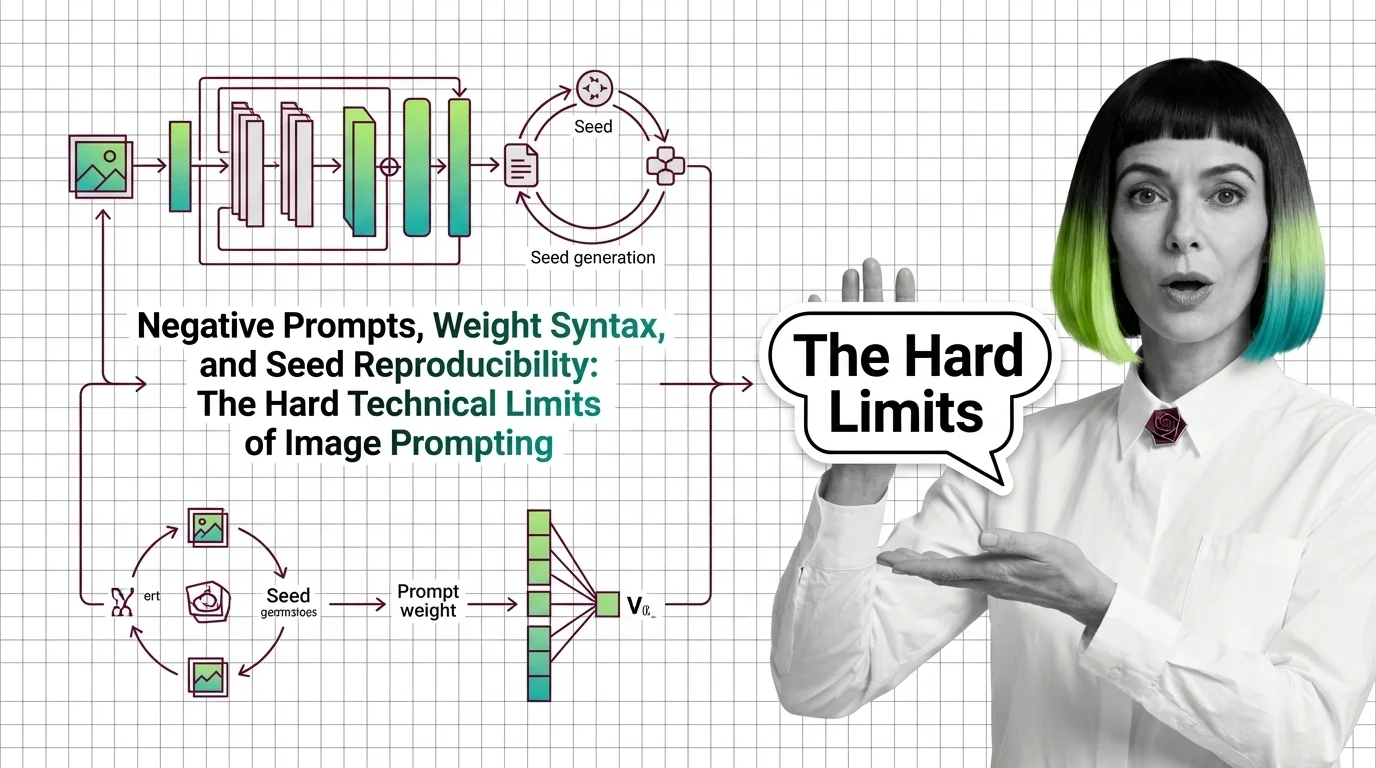
Negative prompts and weight syntax aren't universal — and seed reproducibility breaks across model versions. Inside the math of image prompting in 2026.
Build a prompt-testing workflow you can trust: lock seeds, version your prompts, and benchmark across models so you can ship images that stay on-brief without rerunning generations a dozen times.
Tools & techniques
Wrapping an image-generation or editing model behind a service means inheriting a contract you can't diff, can't version, and can't price per call.
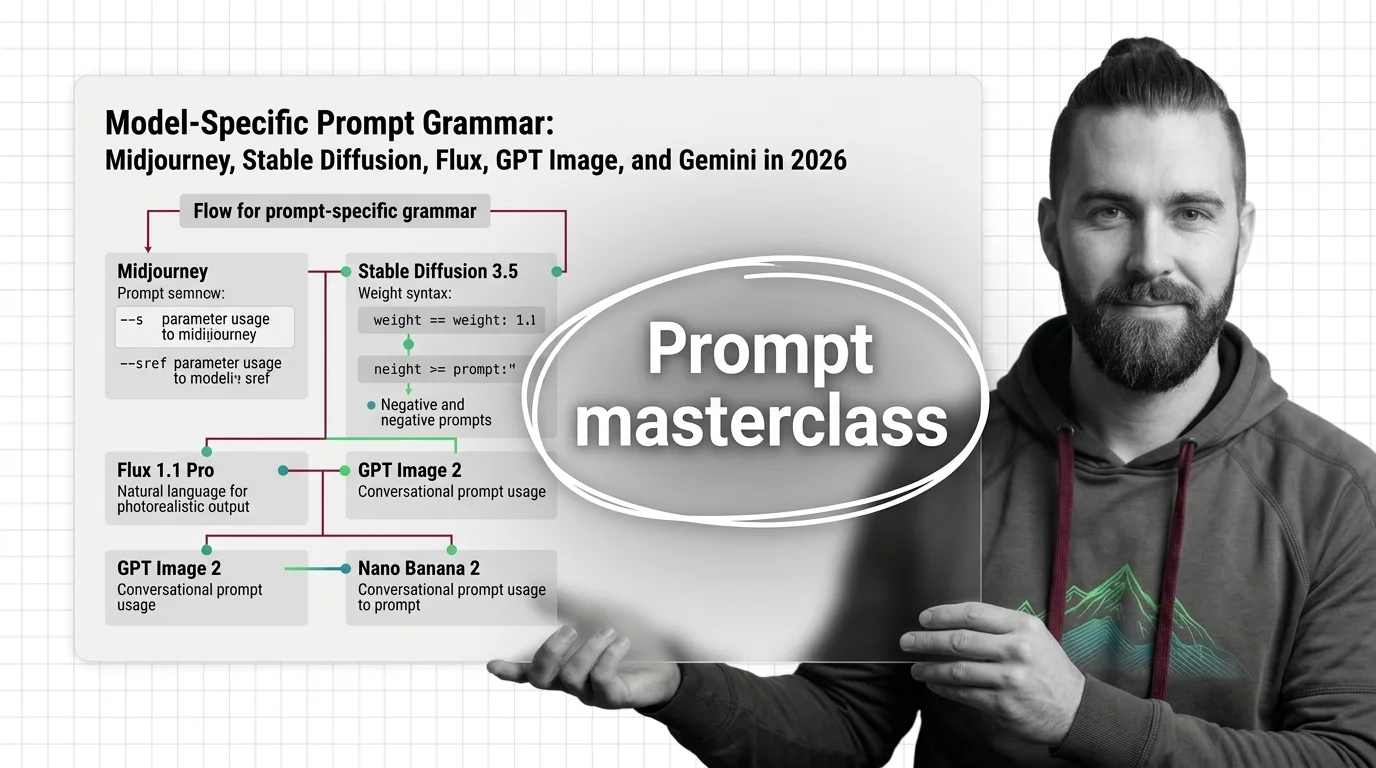
Image models speak different prompt languages. Master Midjourney parameters, SD weights, Flux JSON, and natural-language prompts for GPT Image and Gemini.
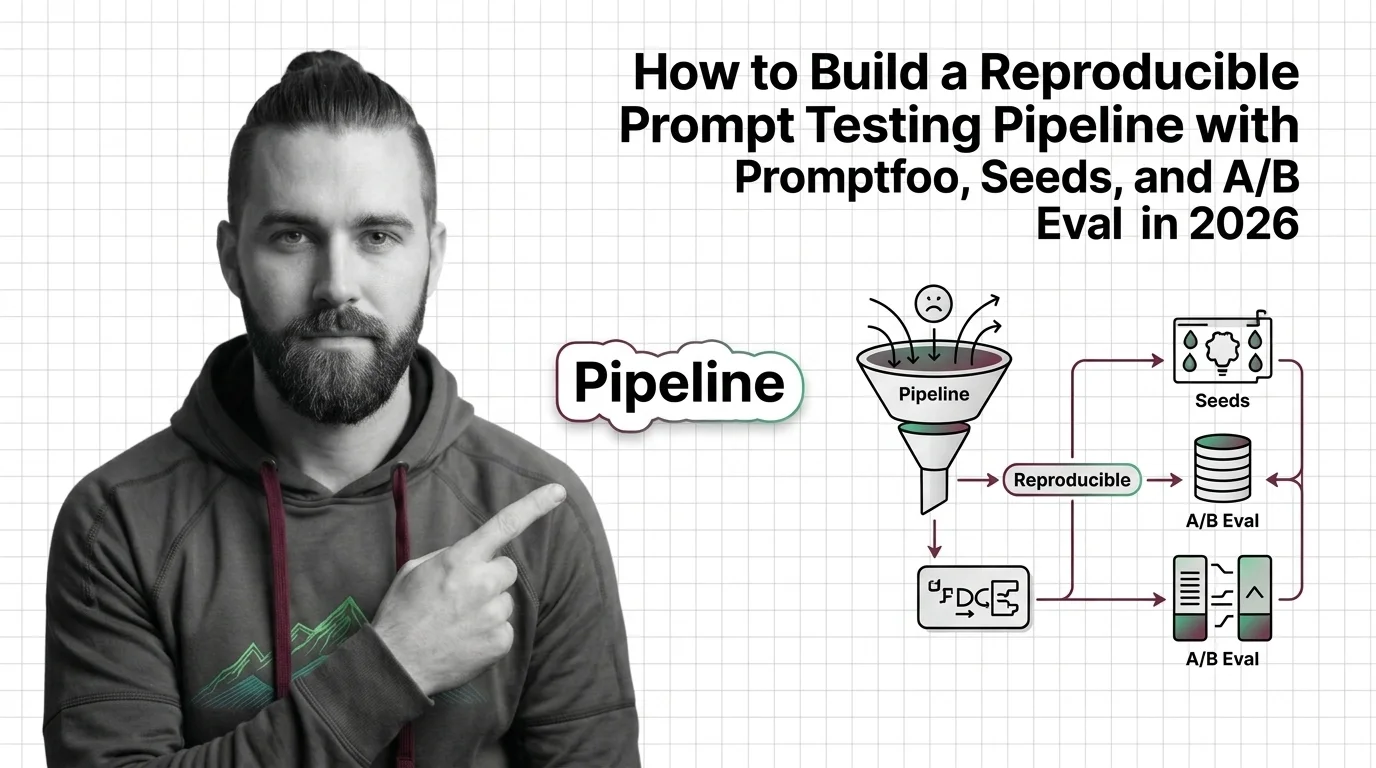
Build a reproducible image-prompt testing pipeline in 2026 with Promptfoo, seeds, and A/B eval. Spec what 'reproducible' means before any matrix view runs.
Prompt grammars are diverging, not converging — every new model release rewrites best practices, and the tools that promised to abstract this away keep shutting down. Staying current means tracking which techniques actually transfer.
Models & benchmarks
Updated April 2026
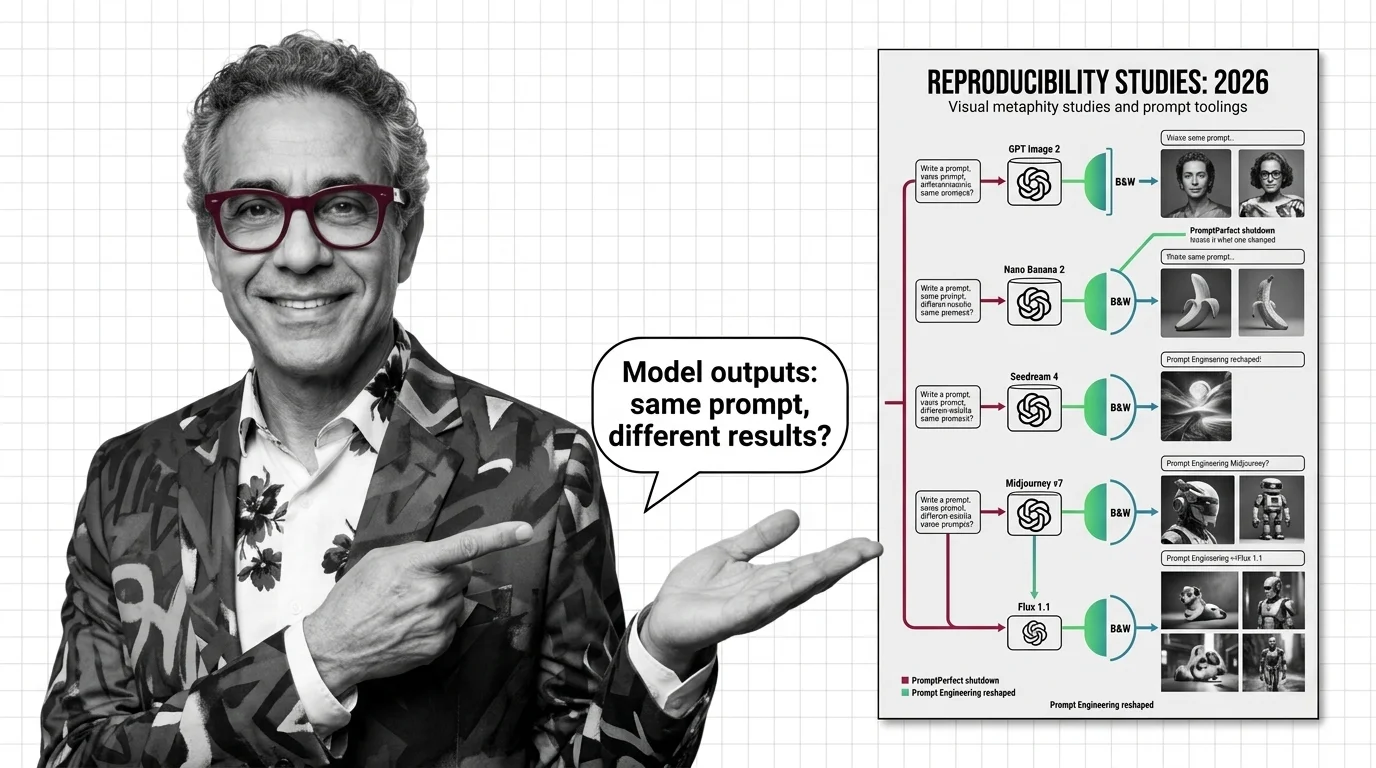
Image prompts no longer transfer between models. PromptPerfect's shutdown and OpenAI's text-only optimizer reveal the new prompt-tooling map for 2026.
Prompts can pull copyrighted styles, named artists, and trademarked aesthetics into outputs without intent. Before deploying image generation in client work, consider what your prompts borrow and how attribution and consent should shape your prompting practice.
Risks & metrics
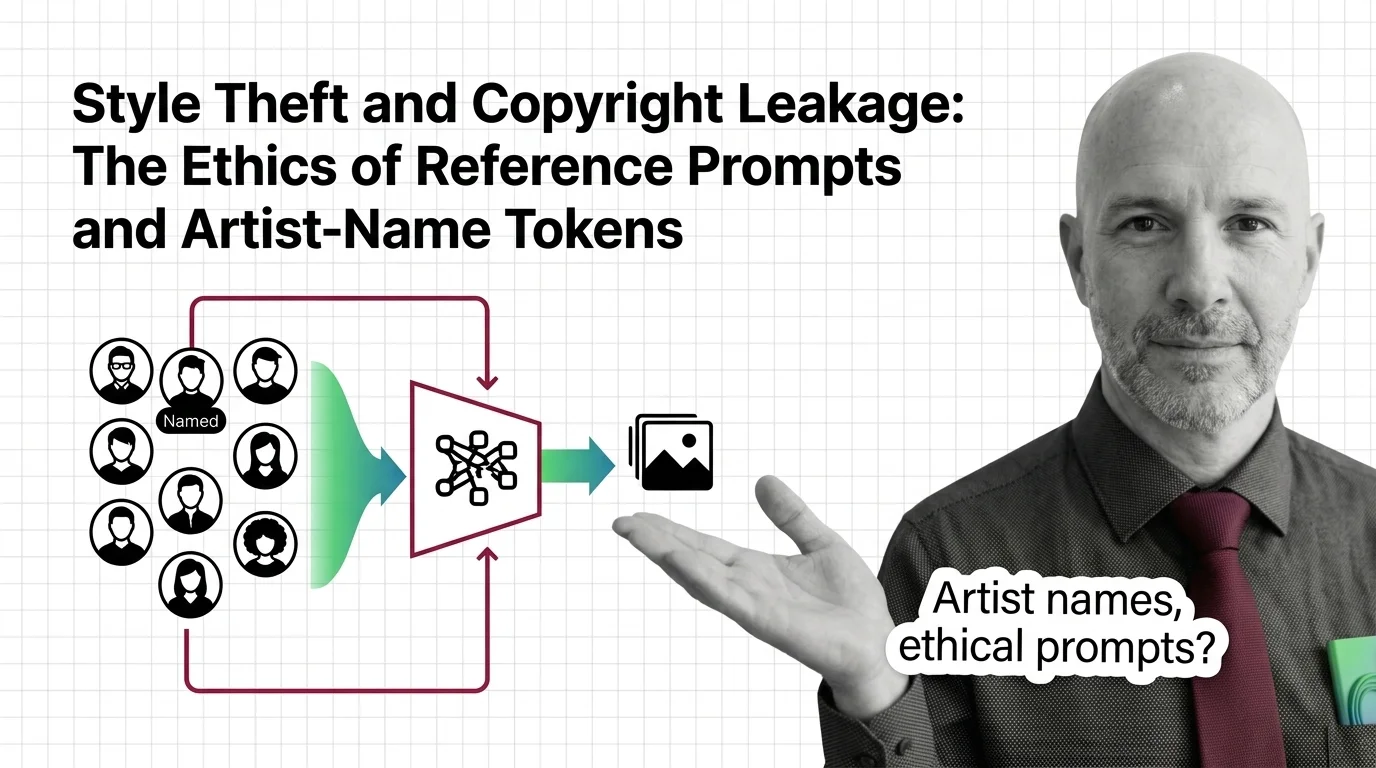
When you prompt 'in the style of Greg Rutkowski,' is it tribute or appropriation? An ethical look at artist-name tokens and the studio-style loophole.