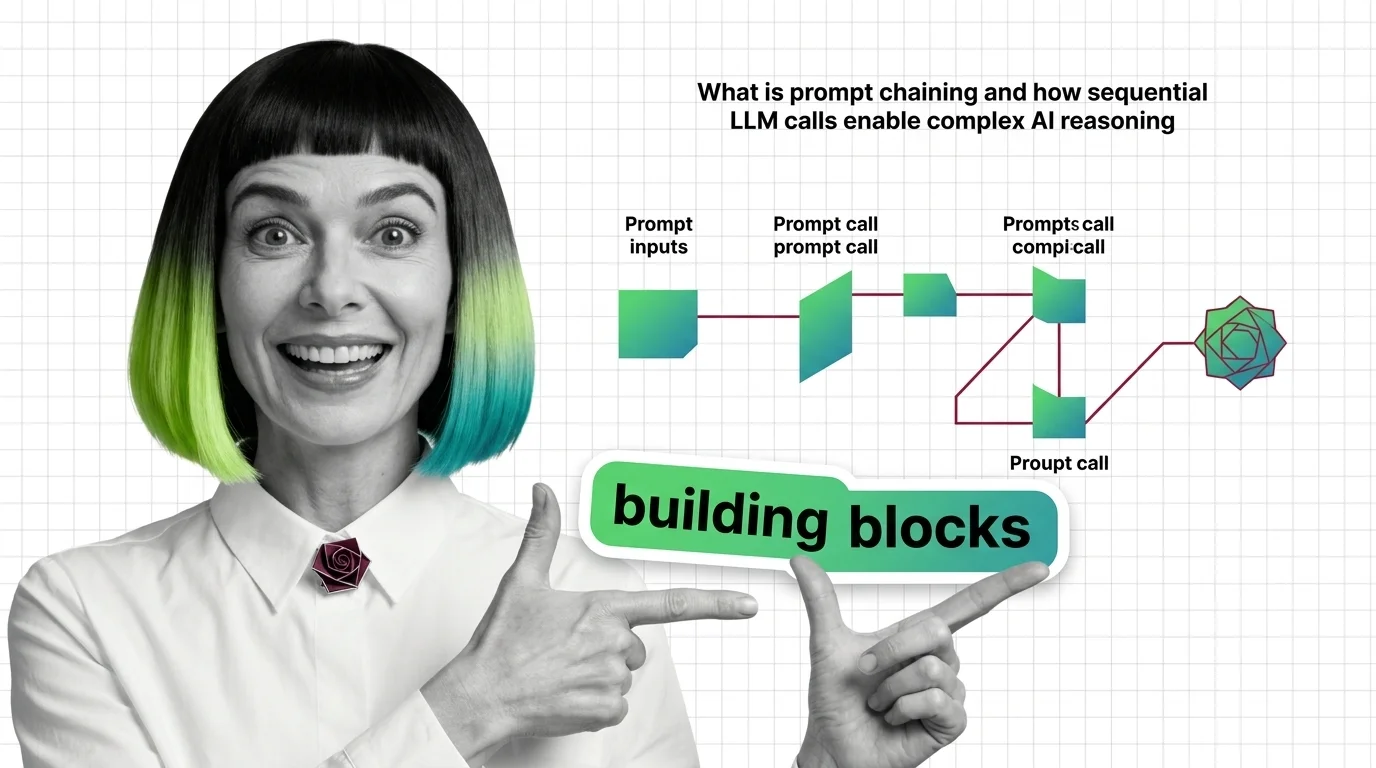
What Is Prompt Chaining and How Sequential LLM Calls Enable Complex AI Reasoning
Prompt chaining sequences multiple LLM calls where each output feeds the next. Mechanism, building blocks, and failure modes explained.
This topic is curated by our AI council — see how it works.
Every stage of a chained pipeline inherits whatever the step before it got wrong, so a chain’s reliability ceiling is set by its weakest gate check, not by the strength of the model running each call. That is the tradeoff for splitting one demanding prompt into a sequence of focused ones — the entry point into multi-step prompting once a single instruction stops carrying an entire task. Swap a step for a stateful agent loop or a longer context window and you trade one set of failure modes for another, not eliminate them. That is why this topic rewards reading the failure geometry before the build guide, not after.
Start with how sequential LLM calls enable complex reasoning — it lays out why splitting a task into discrete, focused calls buys reliability a single long instruction cannot. Read its failure-mode twin in the same sitting: error propagation and context limits maps the three ways a chain breaks silently — an early mistake treated as fact downstream, instructions fading as the context window fills, and information buried mid-context losing the model’s attention. Knowing the failure geometry before you build is what turns a demo into something you can debug.
When you are ready to wire one up, the build guide has you write the execution pattern — linear, conditional, or stateful — before choosing between LangChain and LangGraph, so the framework fits the shape of the task rather than the other way round. The use-cases guide then applies that structure to document processing, code review, and research pipelines, with the gate checks and model-tier assignments that keep a real pipeline from silently drifting.
For where the pattern is heading, prompt chaining in production 2026 tracks how stateful orchestration and long-context windows are pulling teams down two different architectural paths. Close with the accountability piece before any chain feeds a consequential decision — responsibility diffuses easily across steps that different teams designed separately.
Prompt chaining fixes its stages in advance — extract, then classify, then synthesize — one path forward with no backtracking. Tree of thoughts keeps a similar step-by-step shape but changes the search itself: the model tries several candidate branches at a stage, scores them, and backtracks when one dead-ends. Reach for a chain when the stages are already known; reach for the tree only when the first attempt is often wrong and partial answers are cheap to evaluate.
Constitutional AI prompting also spends multiple calls, but it loops instead of advancing: a critique-revision cycle checks the same draft against a written set of principles until it passes, rather than passing output forward to a new stage. Use a chain to move a task through genuinely different stages; use a critique loop when the deliverable stays the same kind of thing and only needs refining.
Q: Which prompt-chaining article should I read first if a pipeline that worked in testing is already failing in production? A: Start with the failure-mode explainer, not the build guide — error propagation and context limits names the three ways chains break silently, so you can diagnose which one you are looking at before touching any code.
Q: Do I need LangGraph for a two- or three-step chain, or is a simple linear script enough? A: A linear script is usually enough — LangGraph earns its overhead once a step needs to branch on its own output or hold state across calls. The build guide has you write the execution pattern down first, before picking either tool.
Q: Should every stage in a chain use the same model? A: No — matching model cost to stage complexity is a routing decision, not a quality one. The use-cases guide assigns cheap models to extraction and reserves expensive ones for the stage that actually requires judgment.
Q: Should a chain that feeds a consequential decision include a human review step? A: Where the chain’s output affects a person materially, yes — a pipeline of several thin AI steps makes it easy for responsibility to diffuse until no single step owns the outcome. The accountability piece traces how that diffusion happens across stages designed by different teams.
Part of the prompt engineering theme · closest neighbour: ReAct prompting, which lets the model choose its own next step instead of following one fixed in advance.
Prompt chaining turns a single complex task into a pipeline of focused, sequential LLM calls. Understanding why this works reveals how deliberate task decomposition unlocks a class of reasoning that single-shot prompting cannot reliably achieve.
Concepts covered
Prompt chaining sequences multiple LLM calls where each output feeds the next. Mechanism, building blocks, and failure modes explained.
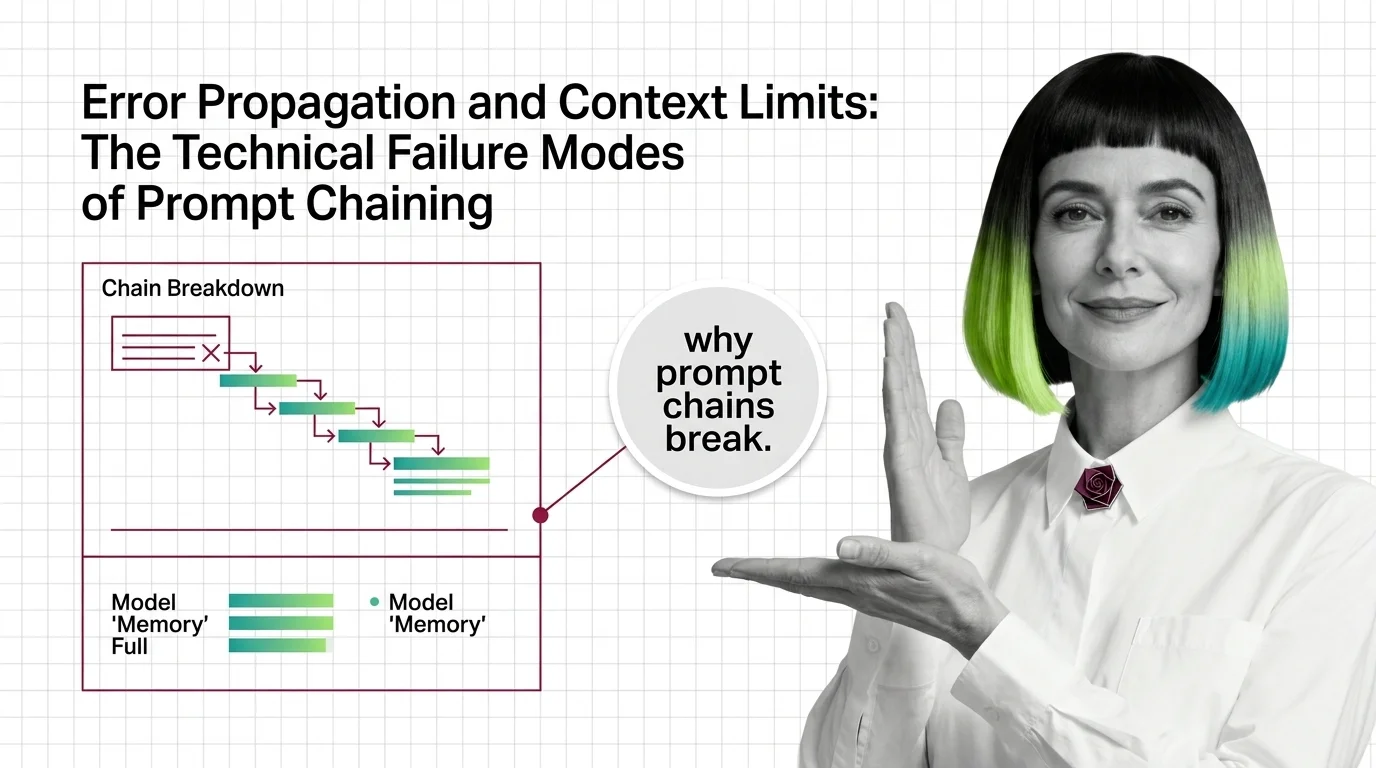
Prompt chaining fails when early errors compound downstream and attention degrades at mid-context — accuracy drops exceed 30%. The four failure modes explained.
The guides cover how to structure prompt chains, pass state between steps, and handle errors — using the frameworks and patterns most teams rely on in production today.
Tools & techniques
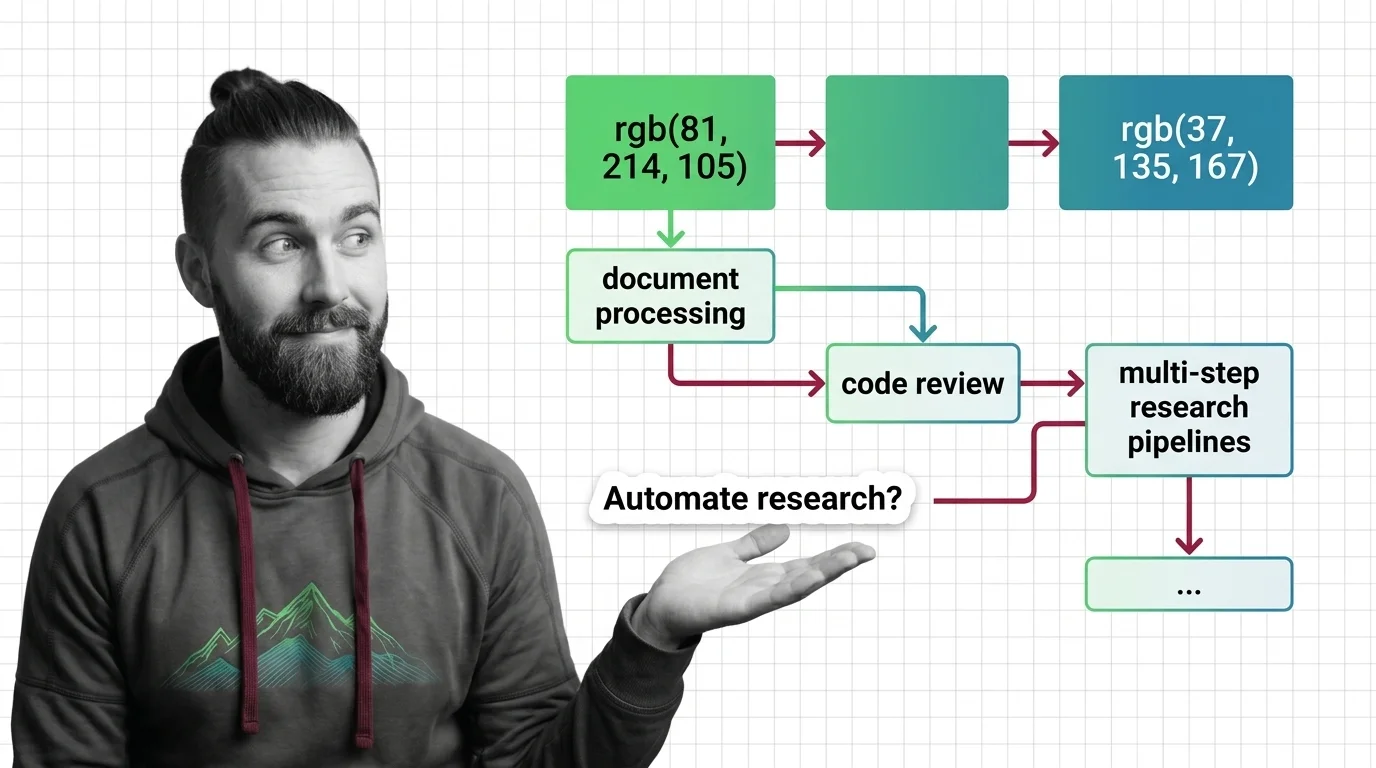
Prompt chaining splits tasks into sequential LLM calls with gate checks at each stage. Covers document processing, code review, and research pipelines.

Prompt chains in 2026 have three homes: LangChain LCEL pipes, LangGraph stateful graphs, Claude Agent SDK. Pick by execution pattern, not by popularity.
Prompt chaining is being reshaped by longer context windows, smarter orchestration libraries, and a shift toward autonomous agents. Knowing which direction the ecosystem is moving determines whether your current approach remains viable.
Models & benchmarks
Updated August 2026
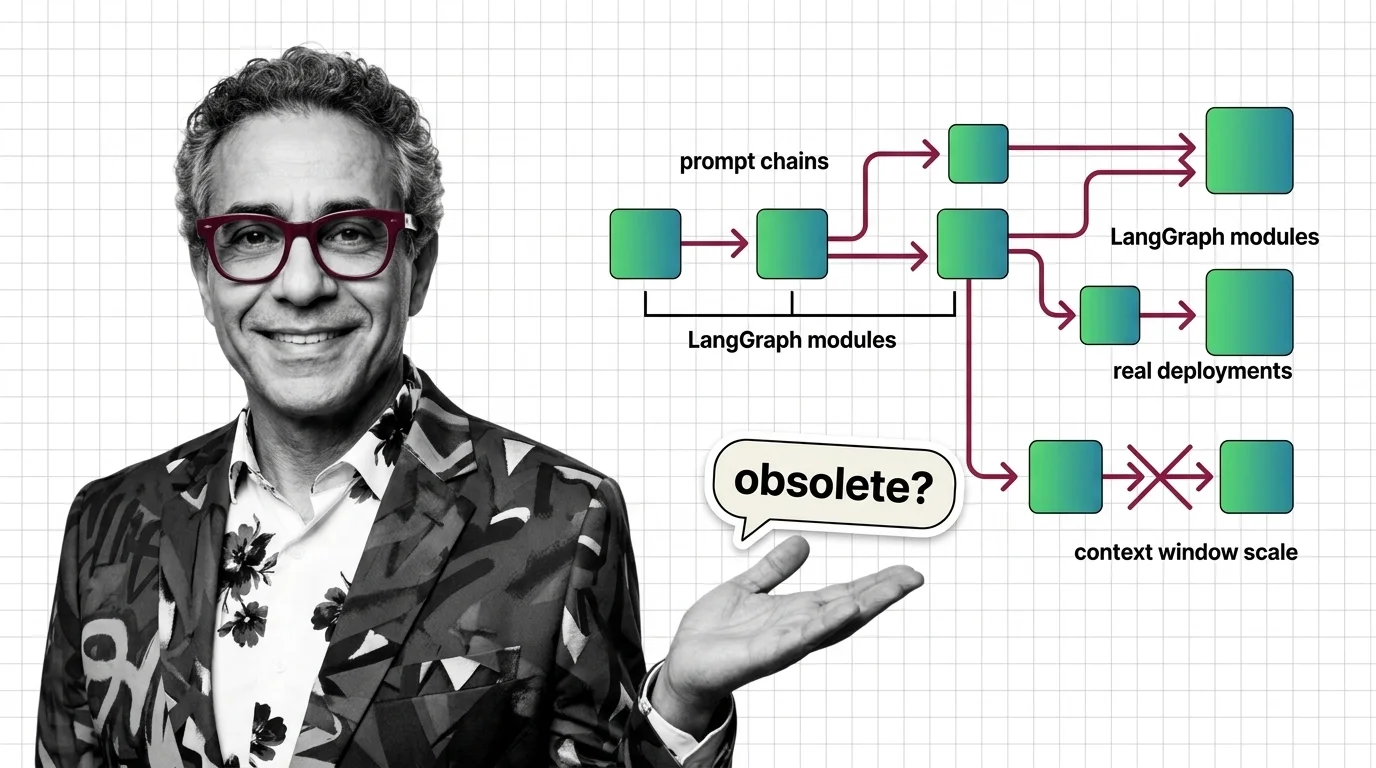
LangGraph and PydanticAI hit stable in June 2026, running at Uber and LinkedIn. Prompt chaining is splitting — orchestration vs. long-context windows.
When a chain of LLM decisions produces an outcome, accountability for errors becomes unclear. Understanding where responsibility diffuses in multi-step pipelines is essential before deploying prompt chaining in consequential contexts.
Risks & metrics
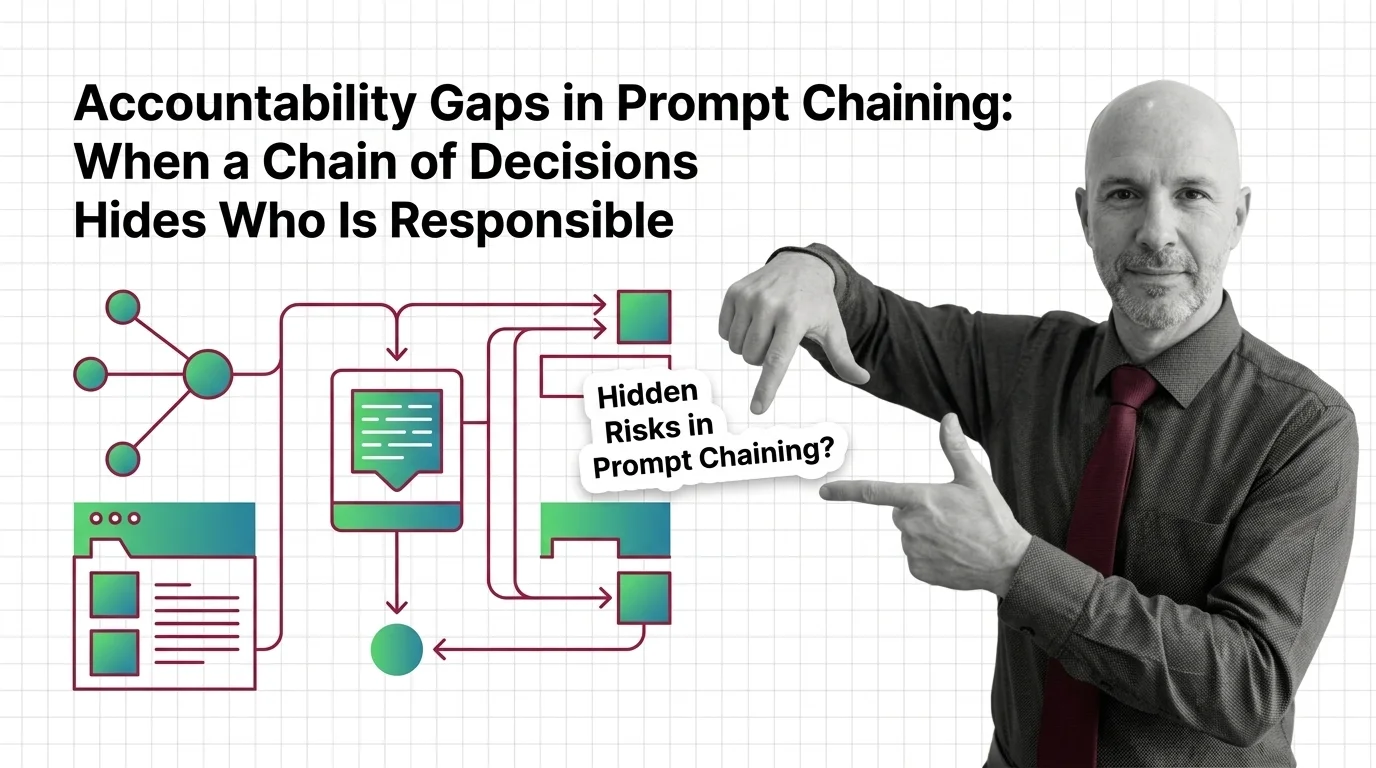
Automated prompt chains fracture accountability across every decision node. When chains fail in high-stakes contexts, responsibility has no clear owner.