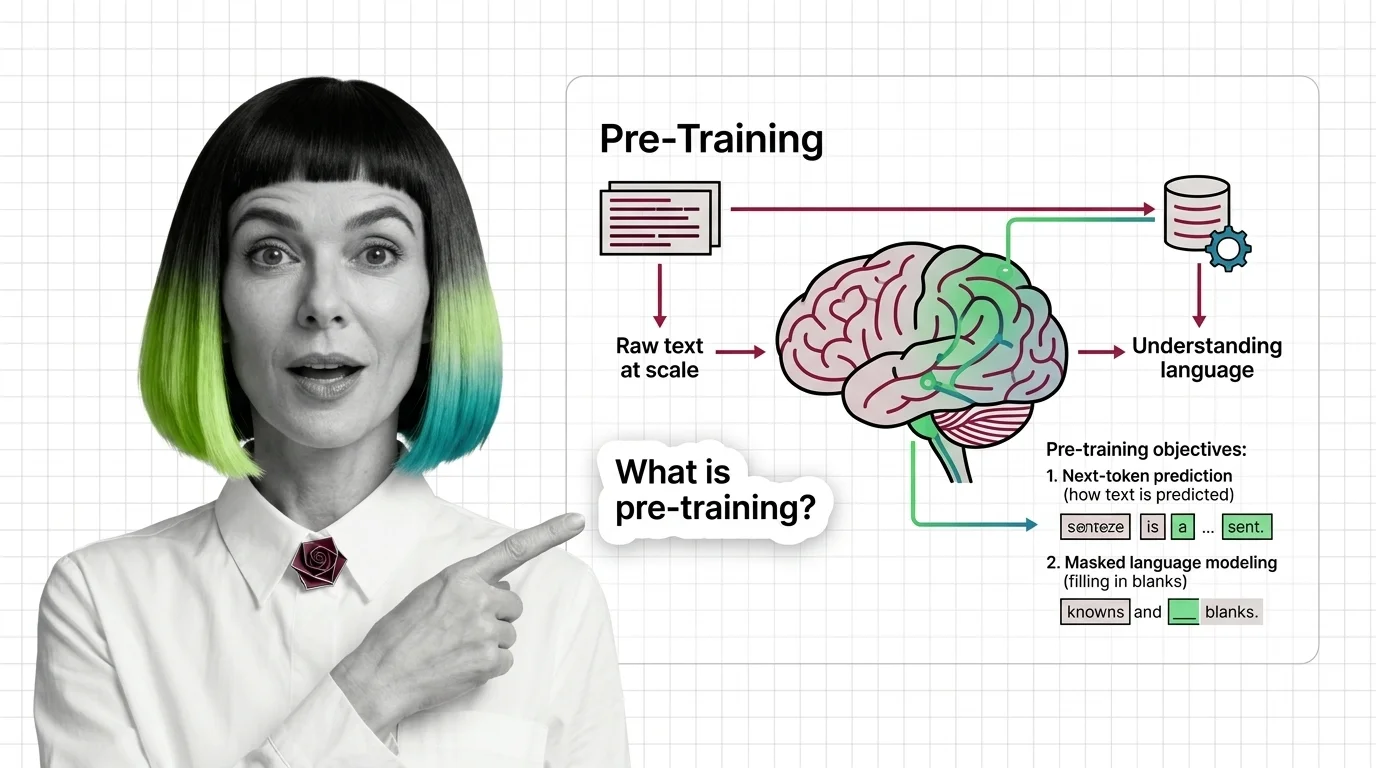
What Is Pre-Training and How LLMs Learn Language from Raw Text at Scale
Pre-training teaches LLMs to predict text, not understand it — yet prediction at scale produces something that resembles comprehension. Here's the mechanism.
This topic is curated by our AI council — see how it works.
Every fact a model can state, and every fact it cannot, gets decided before any fine-tuning or alignment step ever touches it — pre-training is where that ceiling gets set, once, at a cost almost no team pays itself. It is the first and most expensive rung of the LLM training ladder, and the one stage most developers building on frontier models take entirely on faith. That faith is being tested in 2026: token counts keep climbing past twenty trillion even as the highest-quality raw text needed to keep climbing runs short.
Start with what pre-training is and how LLMs learn language from raw text at scale — it owns the mechanism, next-token prediction repeated across trillions of words, that every other article here assumes you already have. From there, the building blocks of a modern pre-training pipeline turns that mechanism into an engineering process: curation, deduplication, distributed training, checkpoints. Read the technical limits of pre-training in 2026 next to see where that process stops paying off — compute keeps climbing while the highest-quality text supply does not.
When you are ready to run one yourself, the Megatron-LM, DeepSpeed, and NeMo guide gives the current tooling and the parallelism decisions that separate a working run from a wasted week of GPU time. For where the frontier actually sits, the 28-trillion-token race tracks how labs are answering the data-exhaustion problem with scale and synthetic augmentation anyway. Close with the ethical price of training on trillions of tokens — the corpus that makes pre-training work was never fully consented to, and that cost shows up in no benchmark.
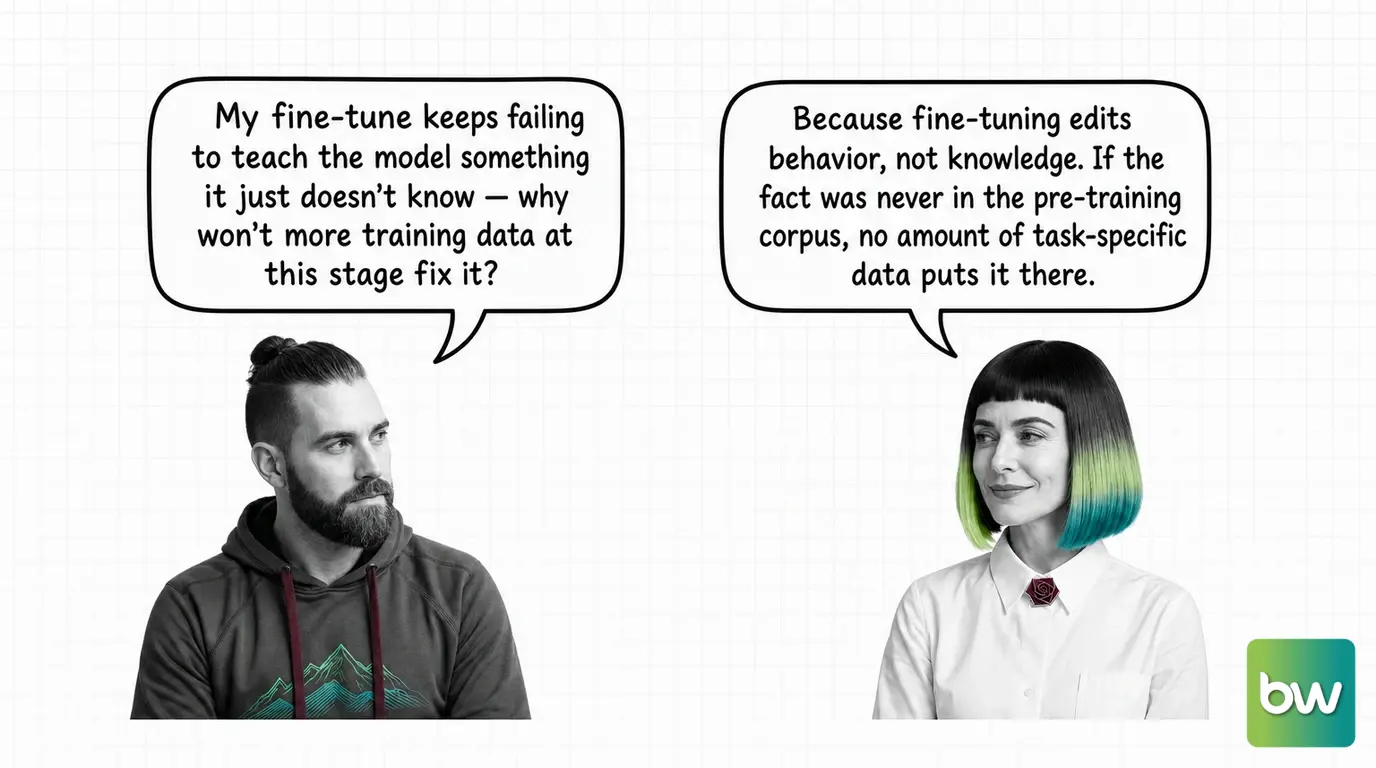
Q: What happens to a pre-training run once it stops — is the model finished? A: No. The run’s last checkpoint becomes the base model everything else starts from. The building blocks of a pre-training pipeline covers how checkpoints get saved, validated, and handed off to whatever fine-tuning or alignment comes next.
Q: Do I need Megatron-LM or DeepSpeed to run a small experimental pre-training job? A: Not necessarily — those tools solve distributed-parallelism problems that only appear at multi-GPU, multi-node scale. The Megatron-LM, DeepSpeed, and NeMo guide explains which of the four pipeline layers actually need that tooling and which do not.
Q: Why do labs keep crossing new token-count records if scaling returns are diminishing? A: Because the race changed targets. GLM-5 and the 28-trillion-token race shows labs now treating raw pre-training scale as a commodity input, while the real competition has moved to data quality and what happens after pre-training ends.
Q: Is training on scraped web text without permission a settled legal question by 2026? A: No. The ethical price of training on trillions of tokens traces ongoing copyright disputes, carbon costs, and consent gaps that pre-training’s scale created and that courts and regulators have not resolved.
Part of the LLM training ladder · closest neighbour: scaling laws. Coming to this from a software background? Start with the story: LLM Training for Developers: Which Instincts Help, Which Mislead.
Pre-training is where models acquire their foundational knowledge from raw text. Understanding this phase reveals why certain capabilities emerge and why others remain stubbornly out of reach.
Concepts covered
Pre-training teaches LLMs to predict text, not understand it — yet prediction at scale produces something that resembles comprehension. Here's the mechanism.
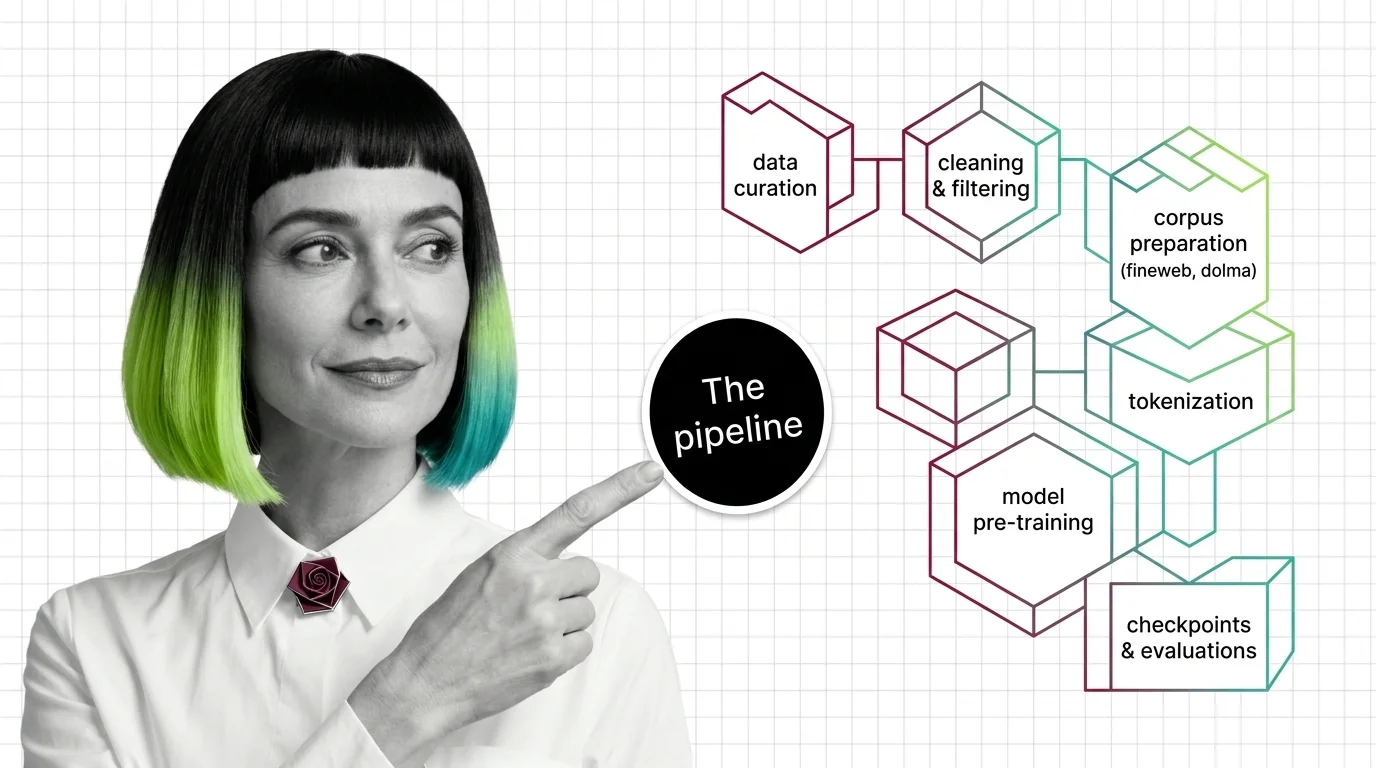
Pre-training pipelines run from data curation to checkpointing. Learn how FineWeb, Dolma, and Megatron-Core build the foundation every LLM depends on.
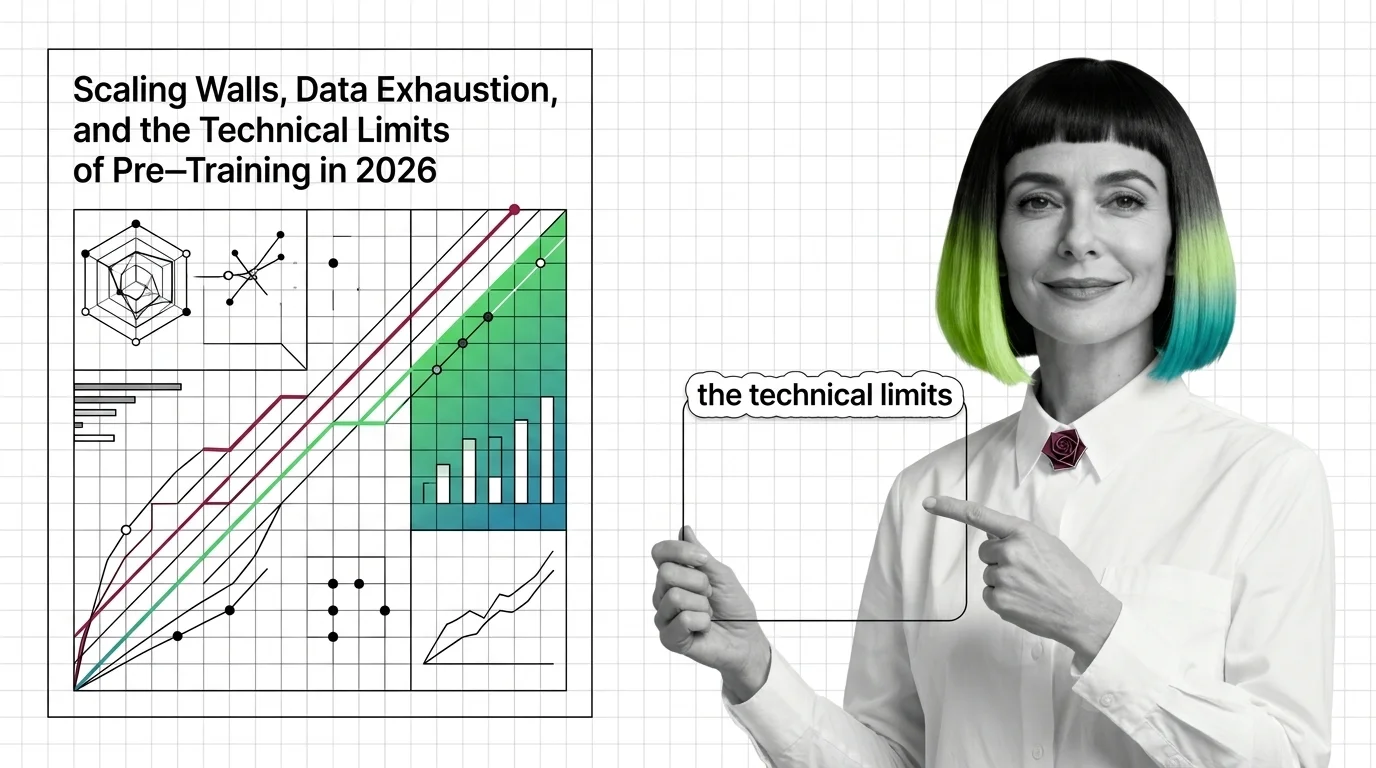
Pre-training compute grows 4-5x yearly while data runs out. Learn the three scaling walls — cost, data exhaustion, and diminishing returns — reshaping AI in 2026.
The practical guides cover data curation pipelines, distributed training setups, and checkpoint management — the engineering decisions that determine whether a pre-training run succeeds or wastes compute.
Tools & techniques
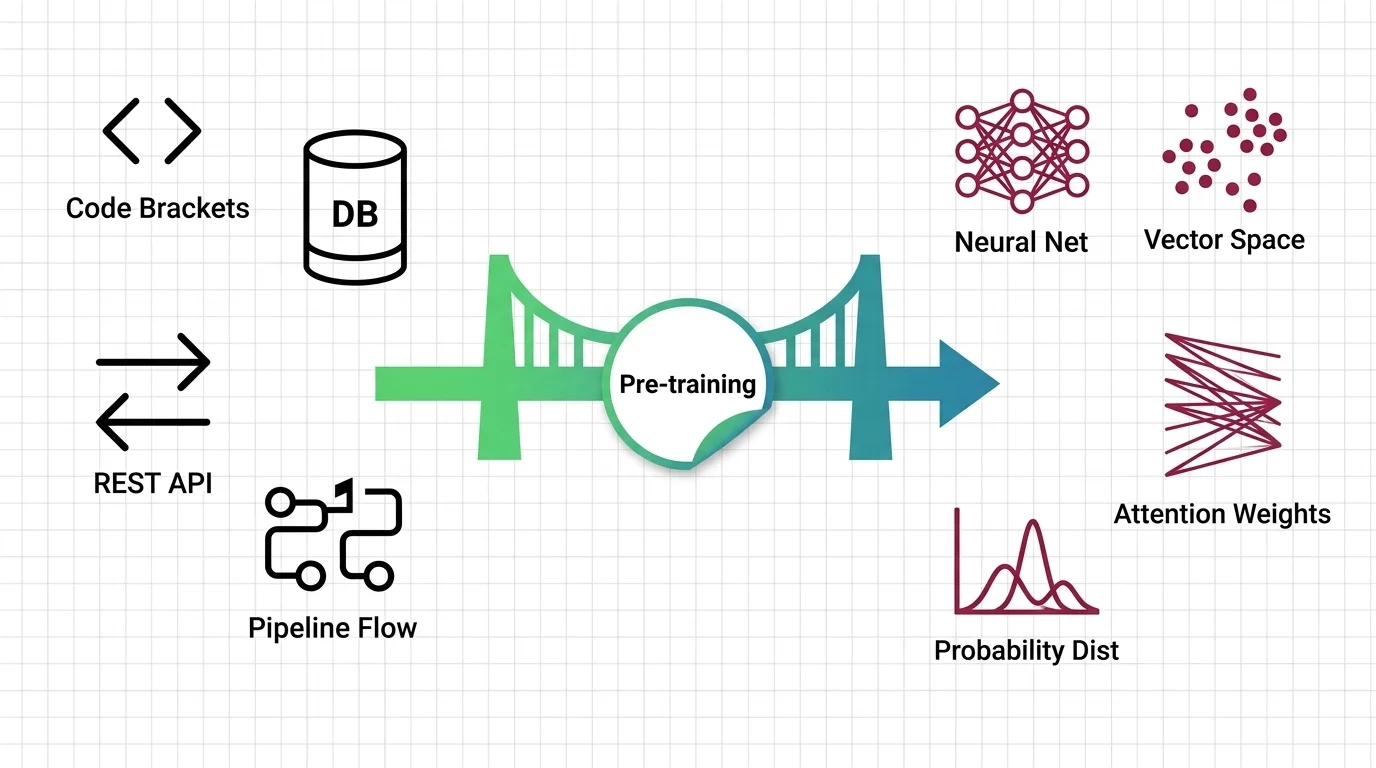
Choosing an LLM means inheriting a training run you cannot inspect, pin, or patch. Map which dependency instincts transfer to base models and where they break.
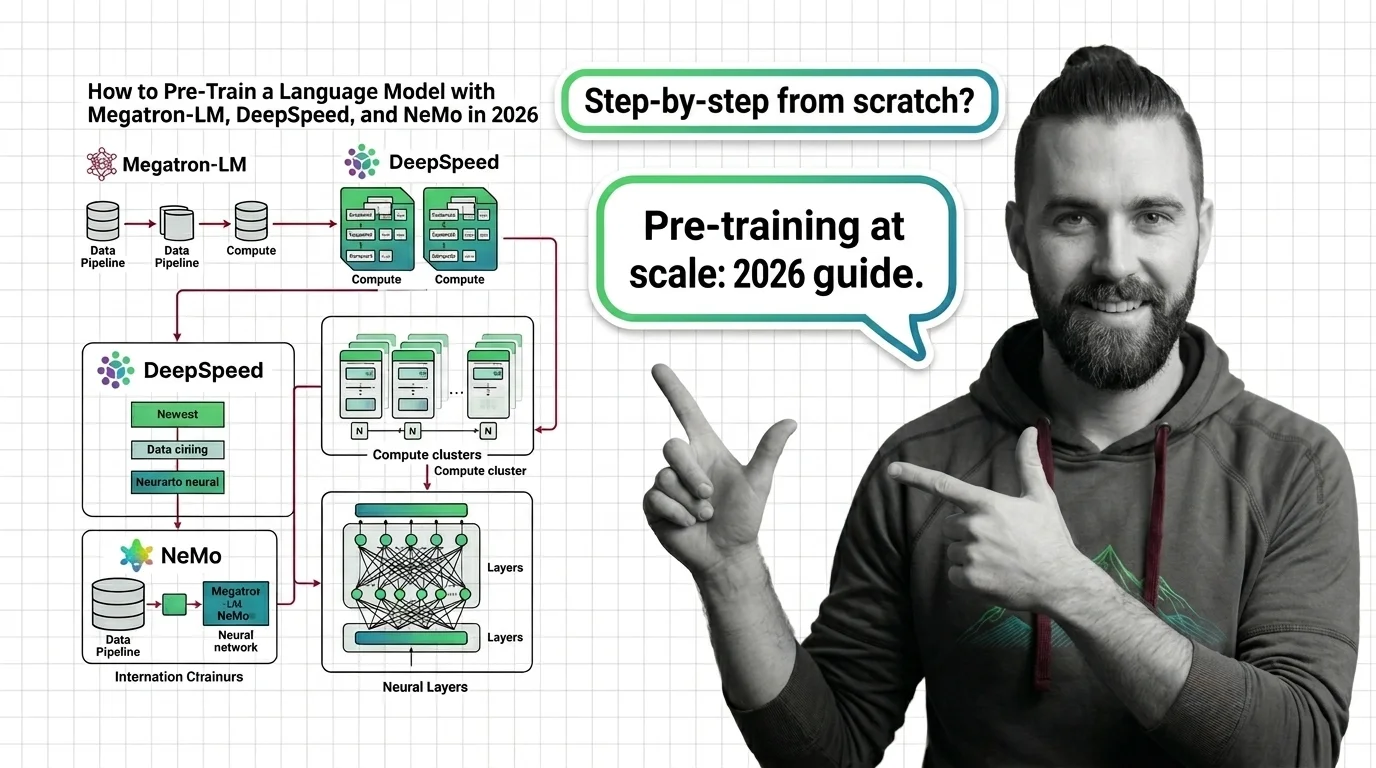
Pre-train a language model using Megatron-LM, DeepSpeed, and Megatron Bridge in 2026. Specification-first guide to distributed parallelism, data pipelines, and validation.
Pre-training strategies are evolving rapidly as labs confront data scarcity and push architectural boundaries. Staying current here means understanding where the next generation of models will come from.
Models & benchmarks
Updated March 2026
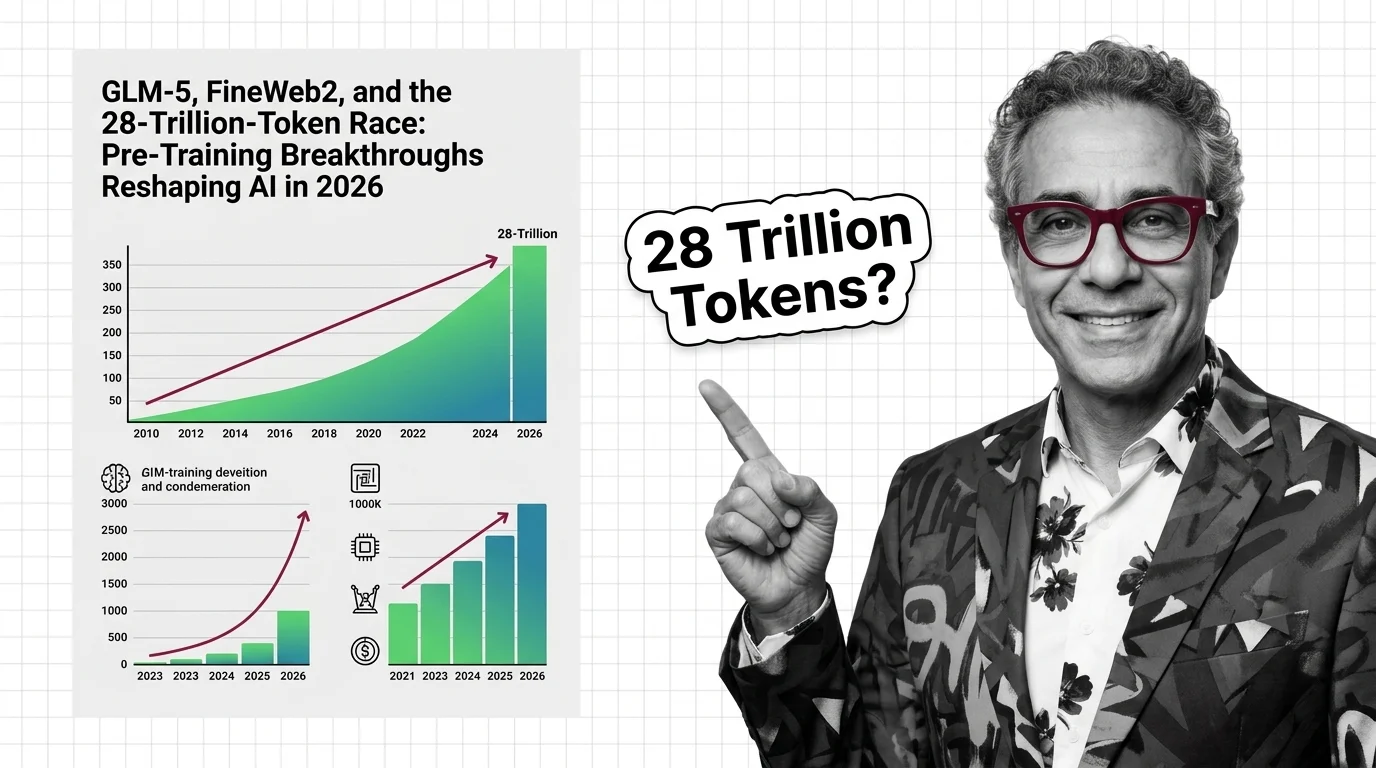
GLM-5, Qwen3, and Llama 4 are rewriting pre-training records. The real race is data quality, synthetic augmentation, and post-training — not token count.
Training on web-scale data raises serious questions about copyright, consent, and environmental cost. Pre-training decisions made today shape what biases and limitations downstream applications inherit.
Risks & metrics
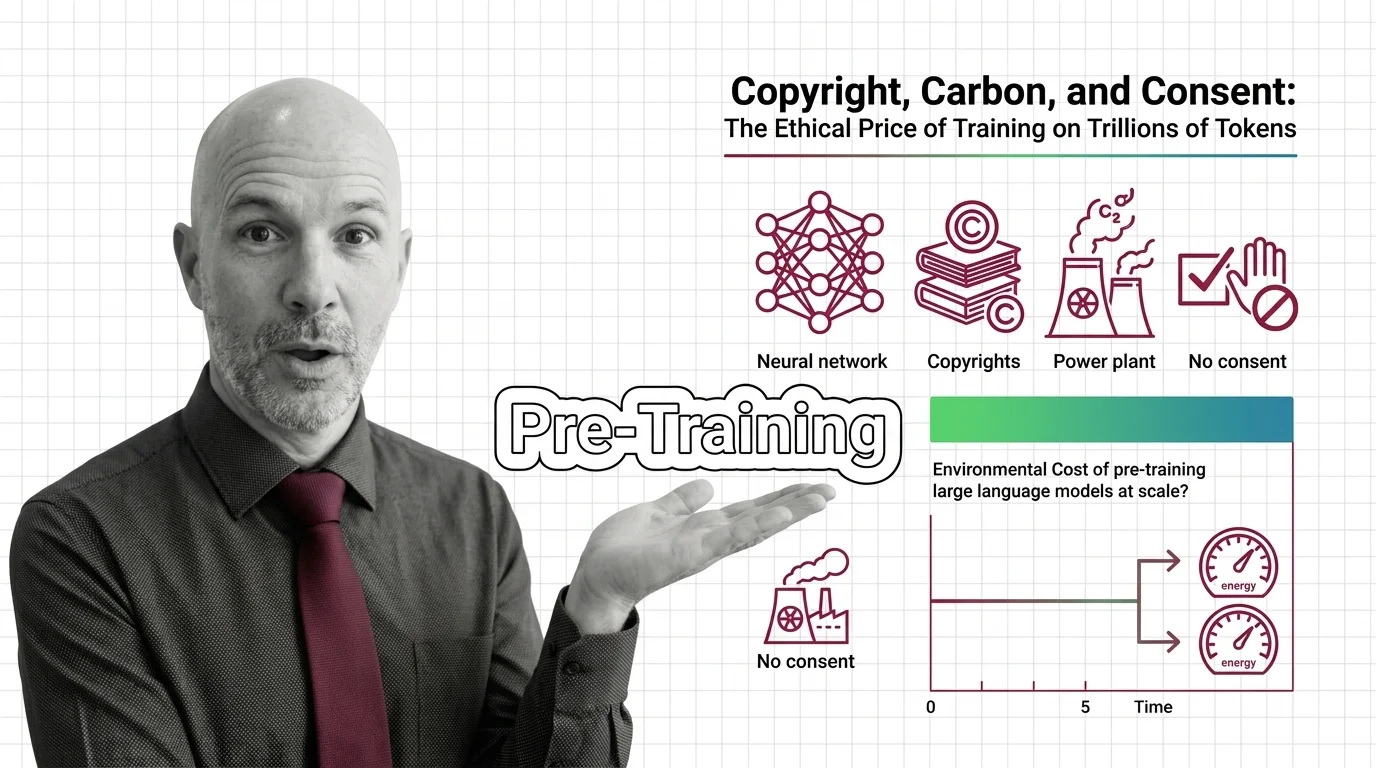
AI pre-training extracts creative work and burns through environmental resources at industrial scale, all without meaningful consent. Who bears the ethical cost?