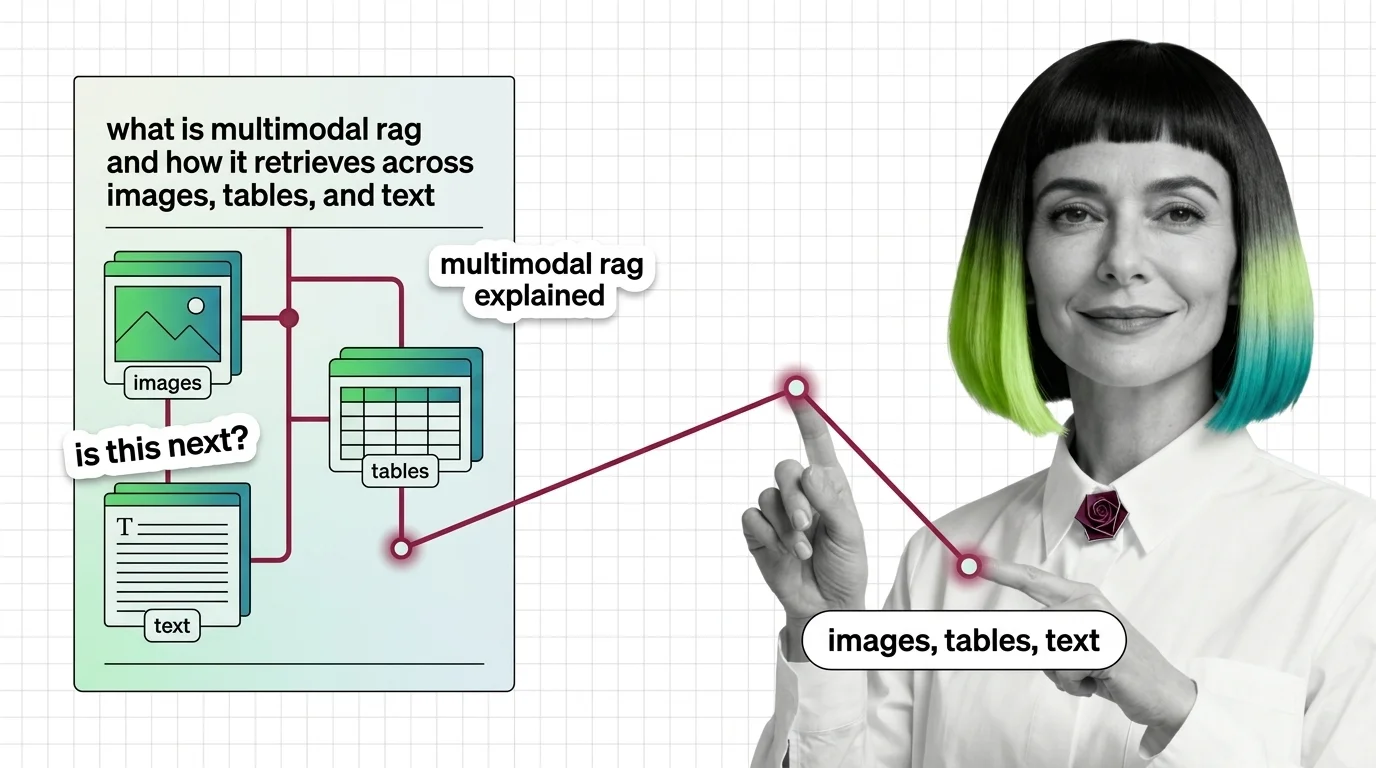
What Is Multimodal RAG and How It Retrieves Across Images, Tables, and Text
Multimodal RAG isn't text RAG with images bolted on. Learn how unified embeddings, text summaries, and vision-first retrieval handle images, tables, and text.
This topic is curated by our AI council — see how it works.
Most retrieval pipelines still assume the answer lives in a sentence, but a growing share of enterprise knowledge lives in a scanned invoice table, a slide’s bar chart, or a diagram no OCR pass ever transcribes cleanly. Multimodal RAG is the tier of the knowledge retrieval systems theme built for exactly that case — it retrieves the page itself rather than a lossy text version of it. Get the modality wrong and the system rarely throws an error; it just quietly answers from a caption while the chart it should have read sits unindexed.
Start with what multimodal RAG is and how it retrieves across images, tables, and text for the core idea — evidence gathered across modalities, handed to a vision-capable model for synthesis. Follow immediately with the prerequisites, from vision-language models to cross-modal alignment: it names the vision-language encoders and the parsing vocabulary that need to be in place before the architecture earns its name.
Once the mechanism is settled, the ColPali, Jina v4, and RAGFlow build guide turns it into a working stack — the separable contracts (page embeddings, text embeddings, orchestration) that keep teams from bolting one model onto every job. The 2026 multimodal RAG stack race tracks which of those contracts the market actually settled on, open-source versus hosted. Close with when multimodal RAG misreads the document — read it before the system ships into anything where a wrong page becomes a wrong decision.
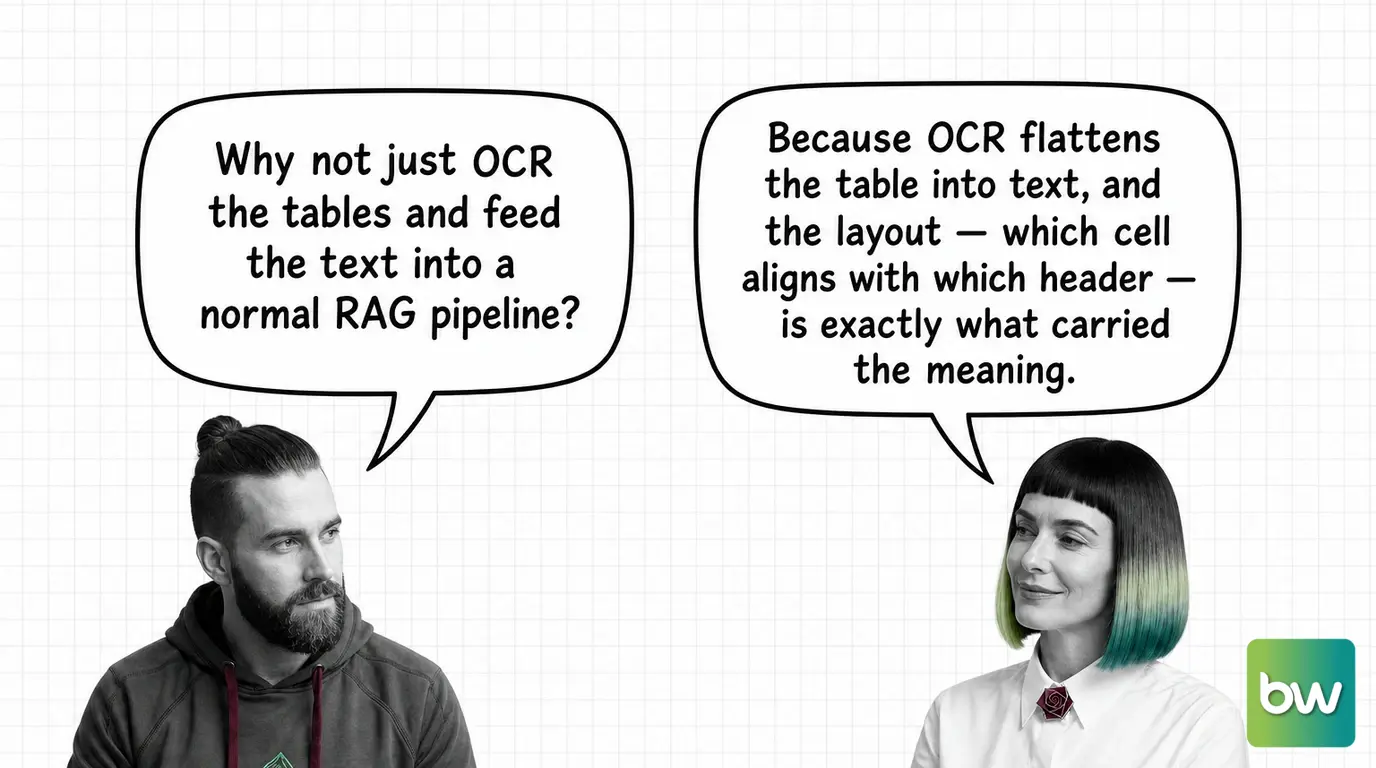
Teams building their first multimodal system usually confuse it with one of two neighbours, or quietly collapse it into a third.
Q: Do I need separate embedding models for page images and text in multimodal RAG? A: Yes — treating one model as a universal encoder is a documented failure mode. Use a late-interaction model like the ColPali family only for page-as-image retrieval, and route plain text through a general embedder like Jina v4; the build guide specs both contracts separately.
Q: Should I choose a hosted multimodal embedding API or an open-source model? A: It depends on which stack your team can actually run: open-source late-interaction models give more control and lower per-token cost, while hosted single-vector APIs trade that for less operational overhead. The 2026 stack race maps both paths rather than naming one winner.
Q: Who is accountable when a multimodal RAG system retrieves the wrong page and the answer is wrong? A: The deployment, not the model — the system chose which of many candidate pages to trust, and the discarded pages are rarely reviewed. The accountability risks of visual retrieval traces what that delegation costs once the answer becomes the action.
Q: Does multimodal RAG need a completely different infrastructure stack than text-only RAG? A: Less than it looks — the parsing vocabulary and much of the retrieval plumbing carry over; what’s new is the vision-language encoder layer that aligns pixels and words in one space. The prerequisites guide maps exactly what has to be added.
Part of the knowledge retrieval systems theme · closest neighbour: document parsing and extraction. Coming to retrieval from a software background? Start with the story: Knowledge Retrieval for Engineers: What Transfers, What Breaks.
Multimodal RAG breaks the text-only assumption baked into most retrieval systems. Understanding how vision-language embeddings align pixels and words in one space is the foundation for everything that follows.
Concepts covered
Multimodal RAG isn't text RAG with images bolted on. Learn how unified embeddings, text summaries, and vision-first retrieval handle images, tables, and text.
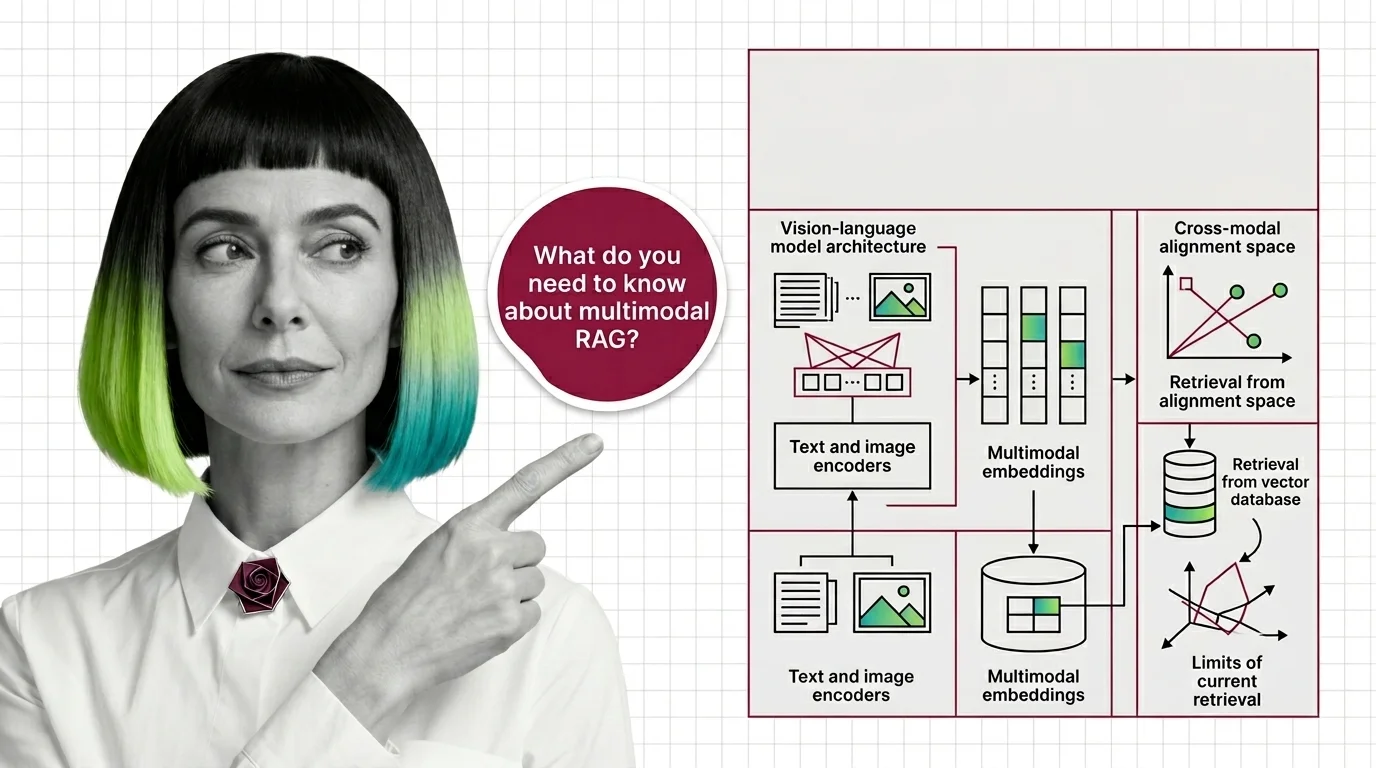
Before multimodal RAG works, you need vision-language models, shared embeddings, and a theory of cross-modal retrieval. Here's the prerequisite stack.
Building a multimodal pipeline means choosing an embedding model, a retriever, and a generator that can all speak the same modal language. The trade-offs between page-level and patch-level approaches shape the entire system.
Tools & techniques
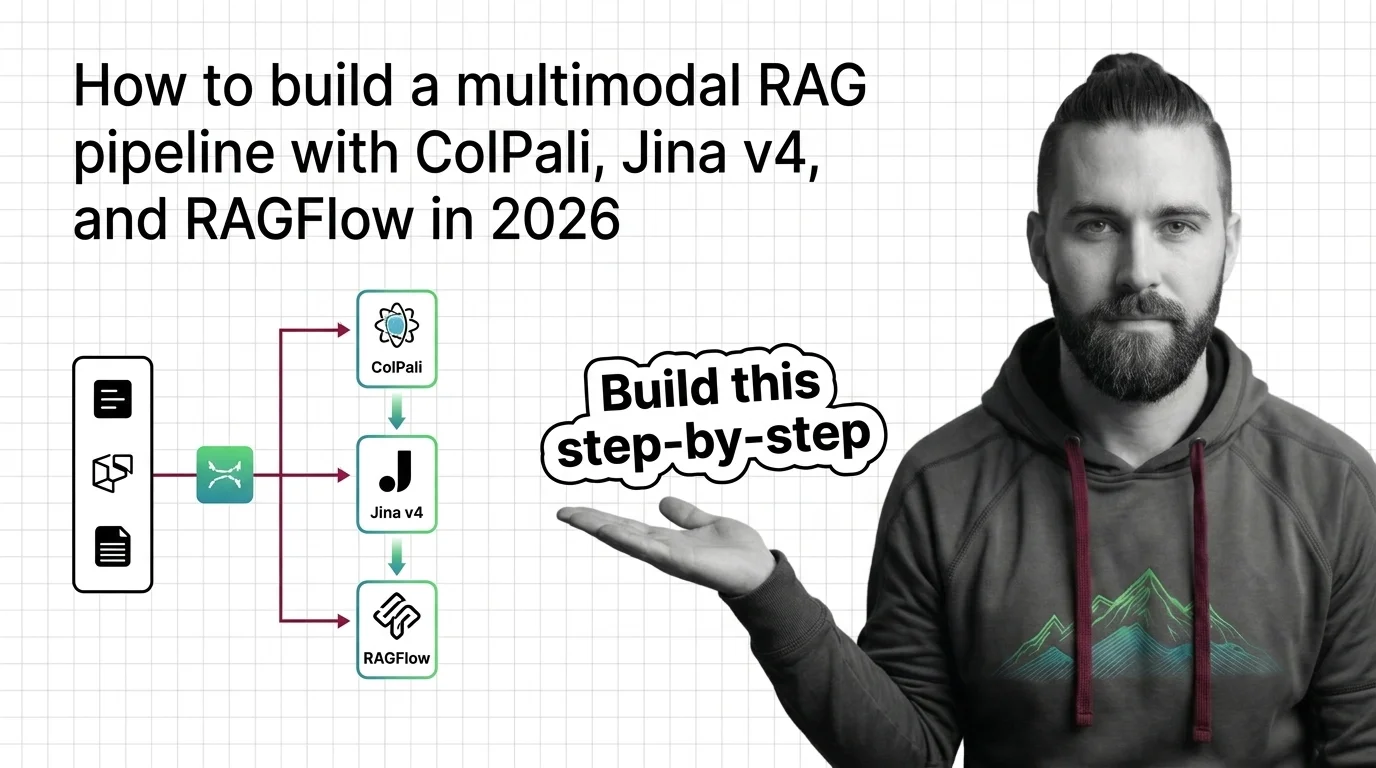
Multimodal RAG turns PDF pages, charts, and screenshots into searchable knowledge. Spec a 2026 stack with ColPali, Jina v4, and RAGFlow.
The multimodal embedding stack is moving fast, with new vision-language retrievers reshaping what counts as state of the art. Following the shifts helps you avoid locking into an architecture that ages out in months.
Models & benchmarks
Updated May 2026
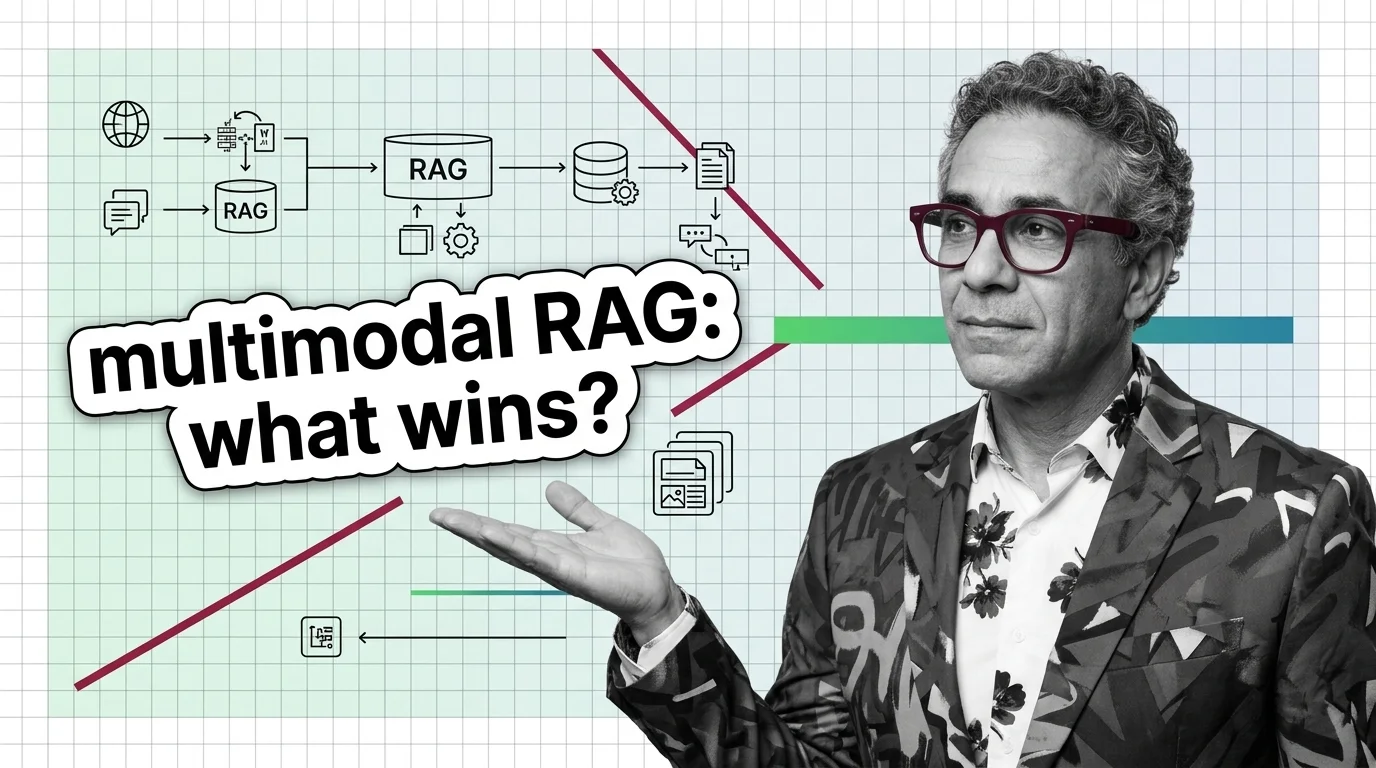
ColPali, Jina v4, and Cohere Embed v4 reshaped multimodal RAG in under a year. Here's how the embedding layer split — and which stack fits your team.
When a system retrieves the wrong chart or misreads a scanned table, the downstream answer inherits that error invisibly. Visual retrieval introduces new failure modes that text-only evaluation will not catch.
Risks & metrics
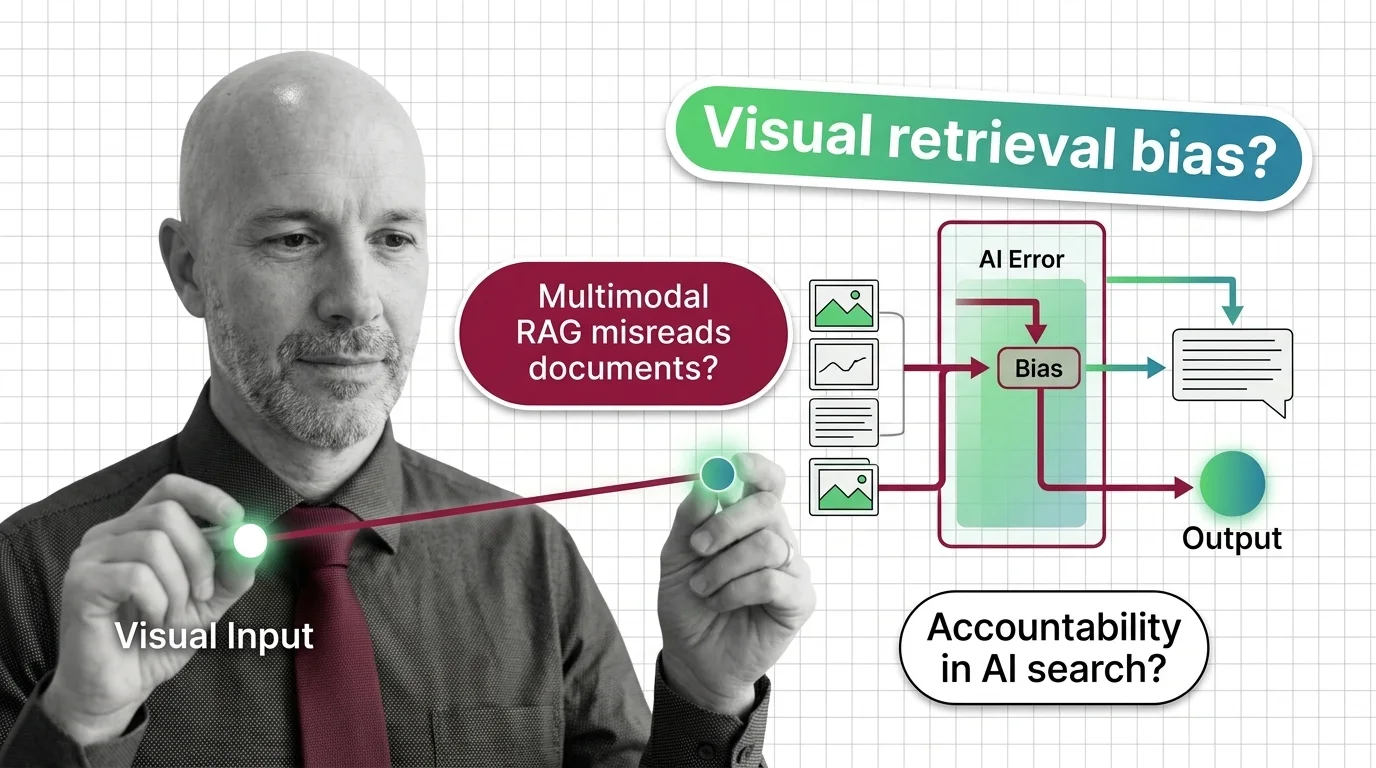
Multimodal RAG decides what counts as relevant before a human reads the page. When the retriever misreads, who is accountable for the answer?