Every other technique in the prompt engineering theme assumes the input is text. Multimodal prompting is where that assumption breaks: a vision encoder or audio pipeline now sits between your words and the model’s reasoning, and providers draw the line between what a model can natively read and what it cannot in different places. For a developer wiring screenshots, scanned documents, or audio into a real pipeline, that boundary is concrete — a prompt tuned against one model’s modality contract can silently misfire on another’s, and the failure looks like bad wording when it is really an architecture mismatch.
Each model draws its own modality boundary — GPT-5.5 takes text and images only, Qwen3-VL also parses documents and video frames — so a prompt built for one provider does not transfer as-is to another.
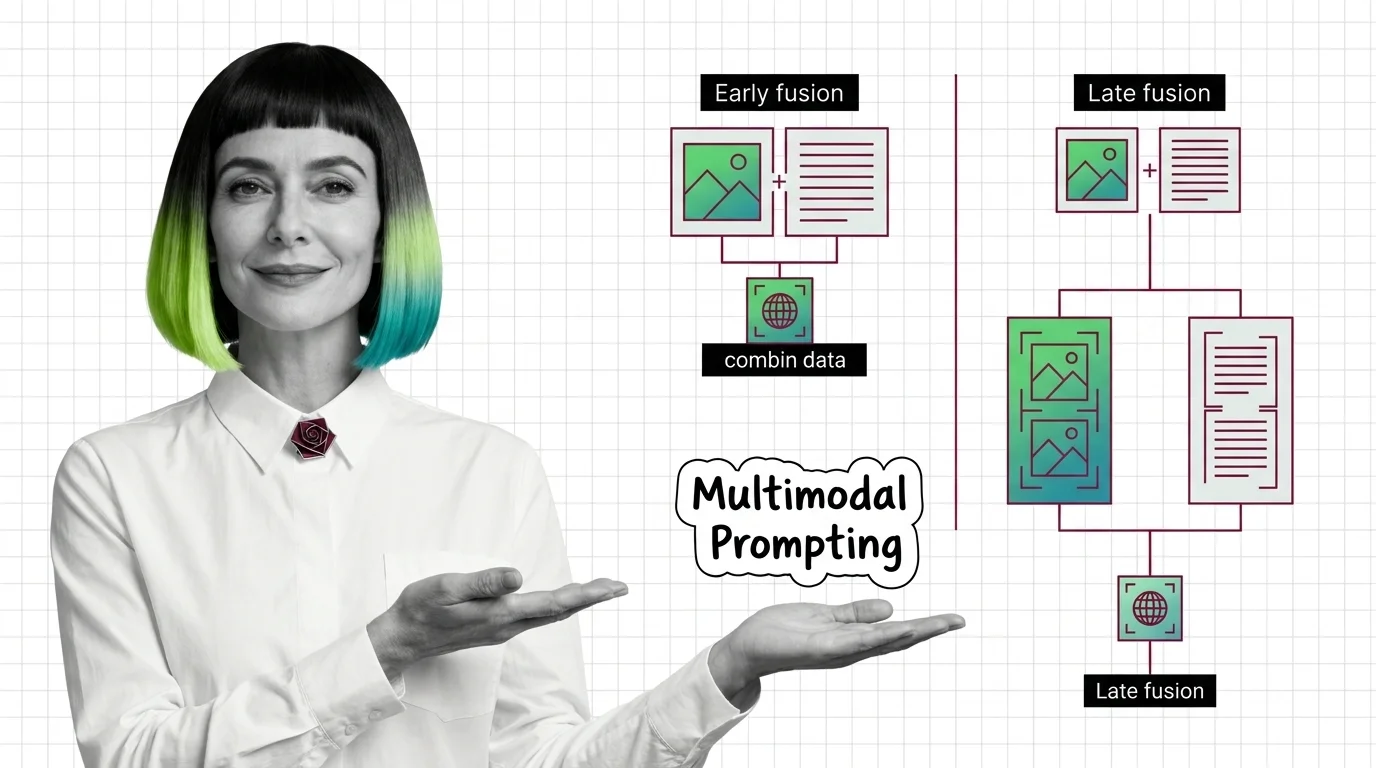
Fusion architecture decides your prompt’s shape before a word is written: whether the model reasons over image and text together from the start, or only combines separate outputs at the end, changes where grounding instructions belong.
Multimodal benchmarks saturated near 81-83% on MMMU-Pro in April 2026 — the competition that matters now is architecture scope (deep vision vs. native audio and video), not another point of accuracy.
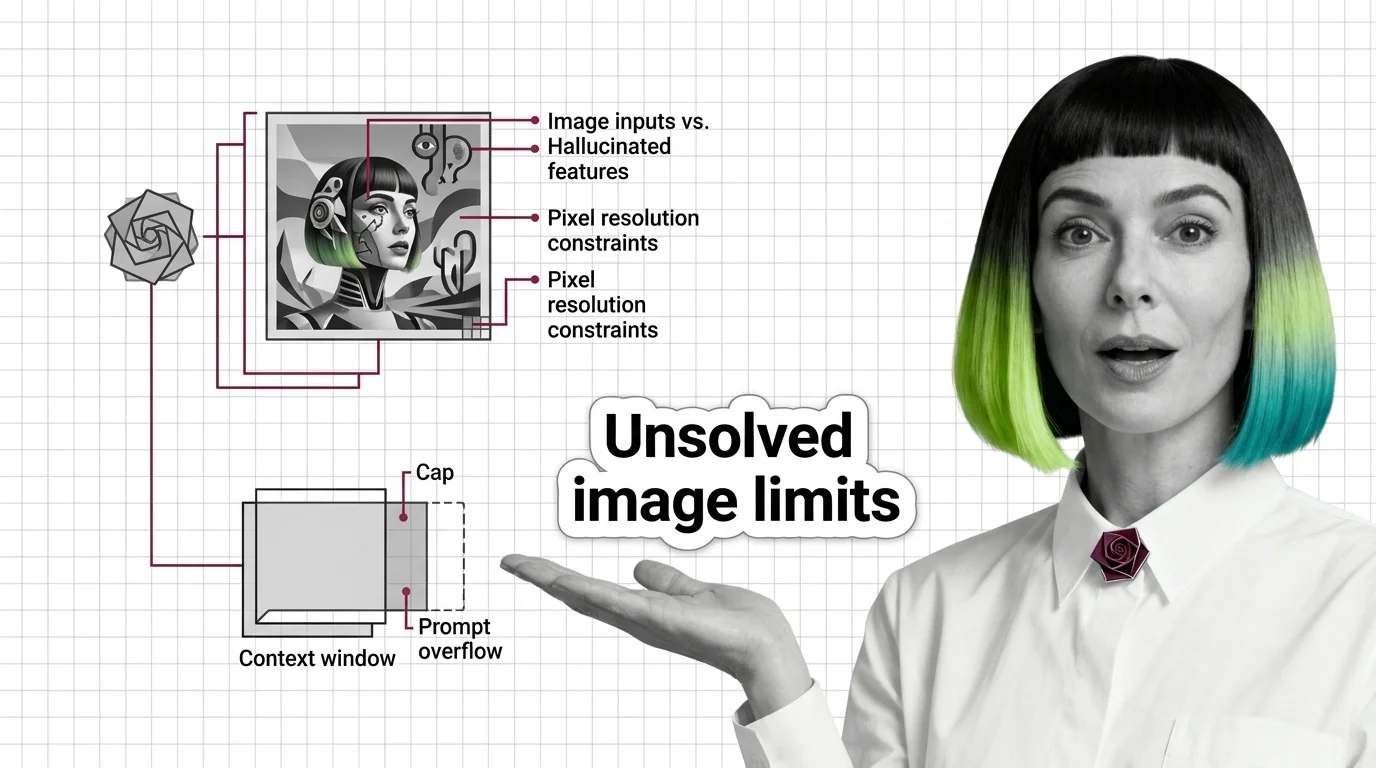
Visual failures run in two directions, missing what is there and inventing what is not, and both trace back to the same root: the model predicts plausible language, not verified pixels.
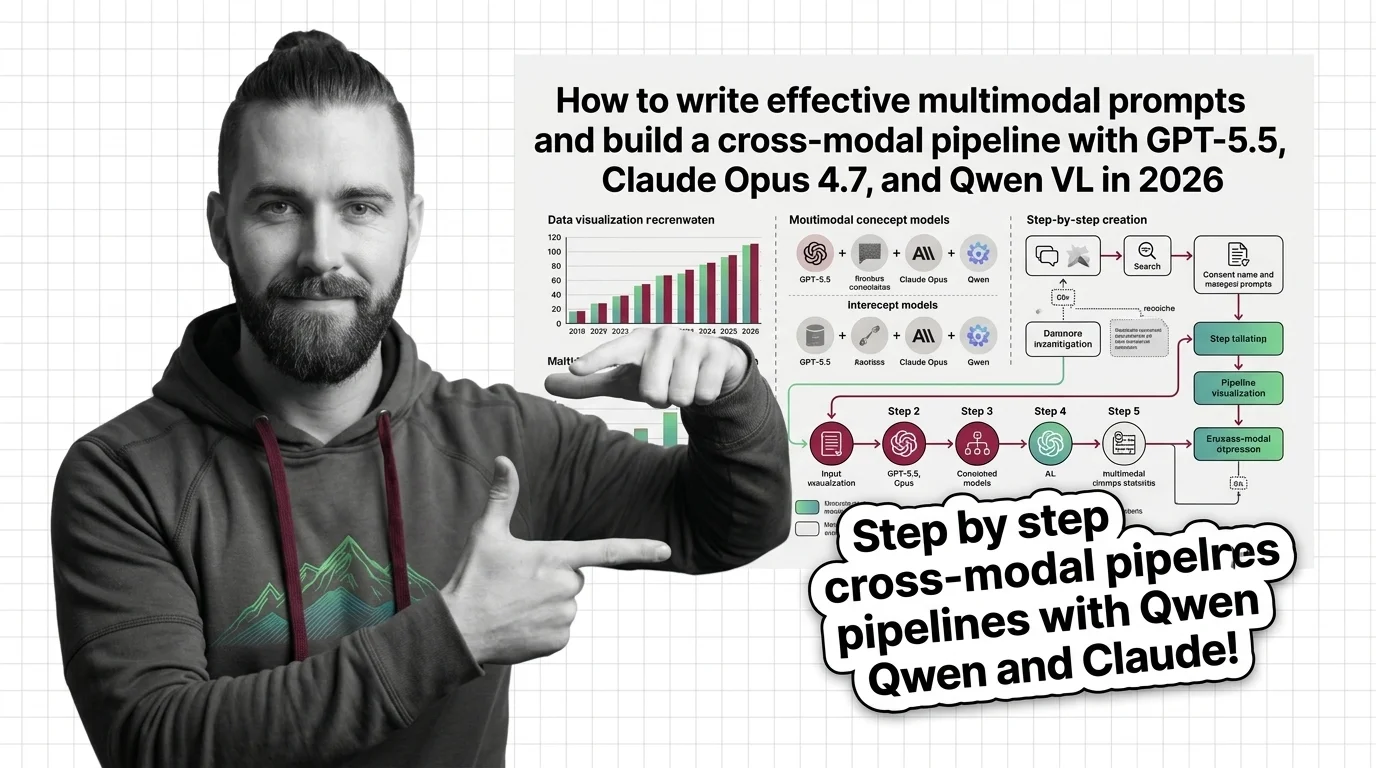
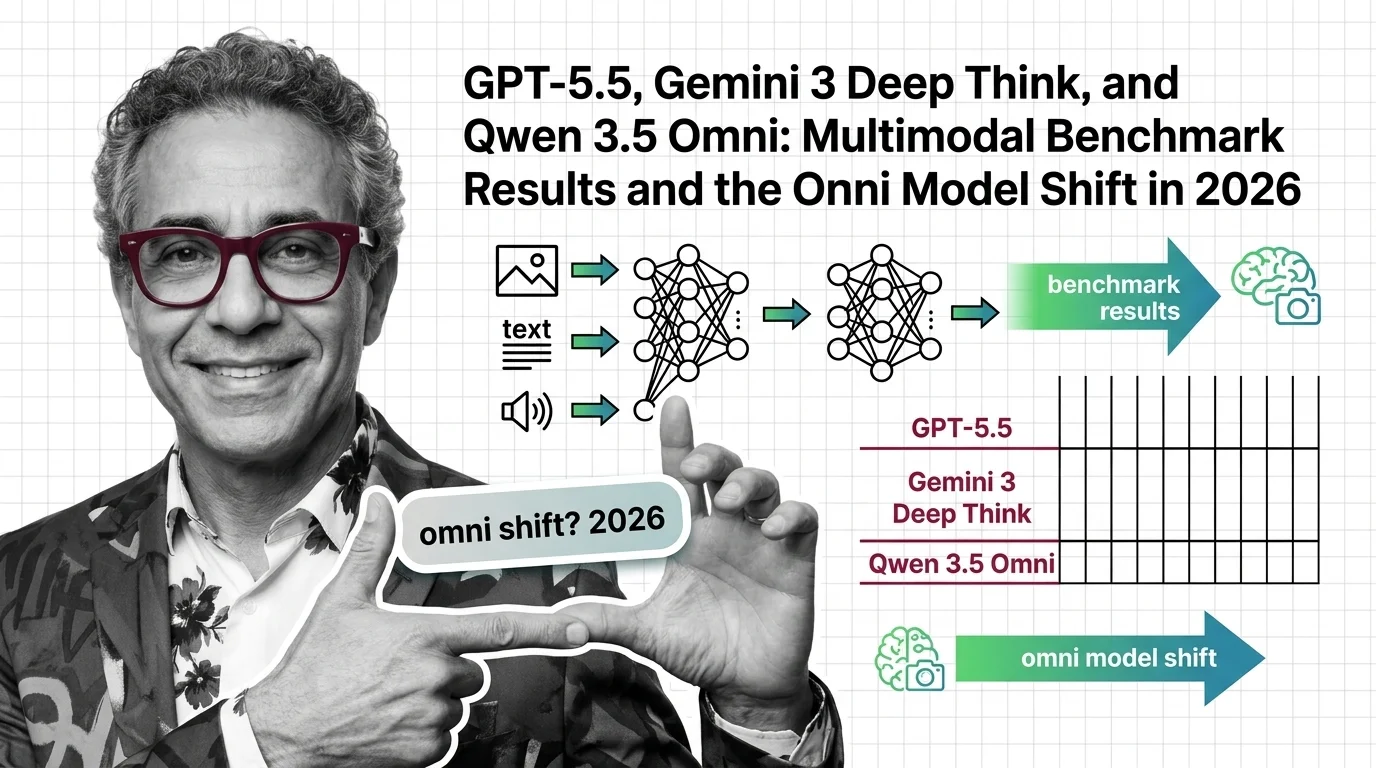
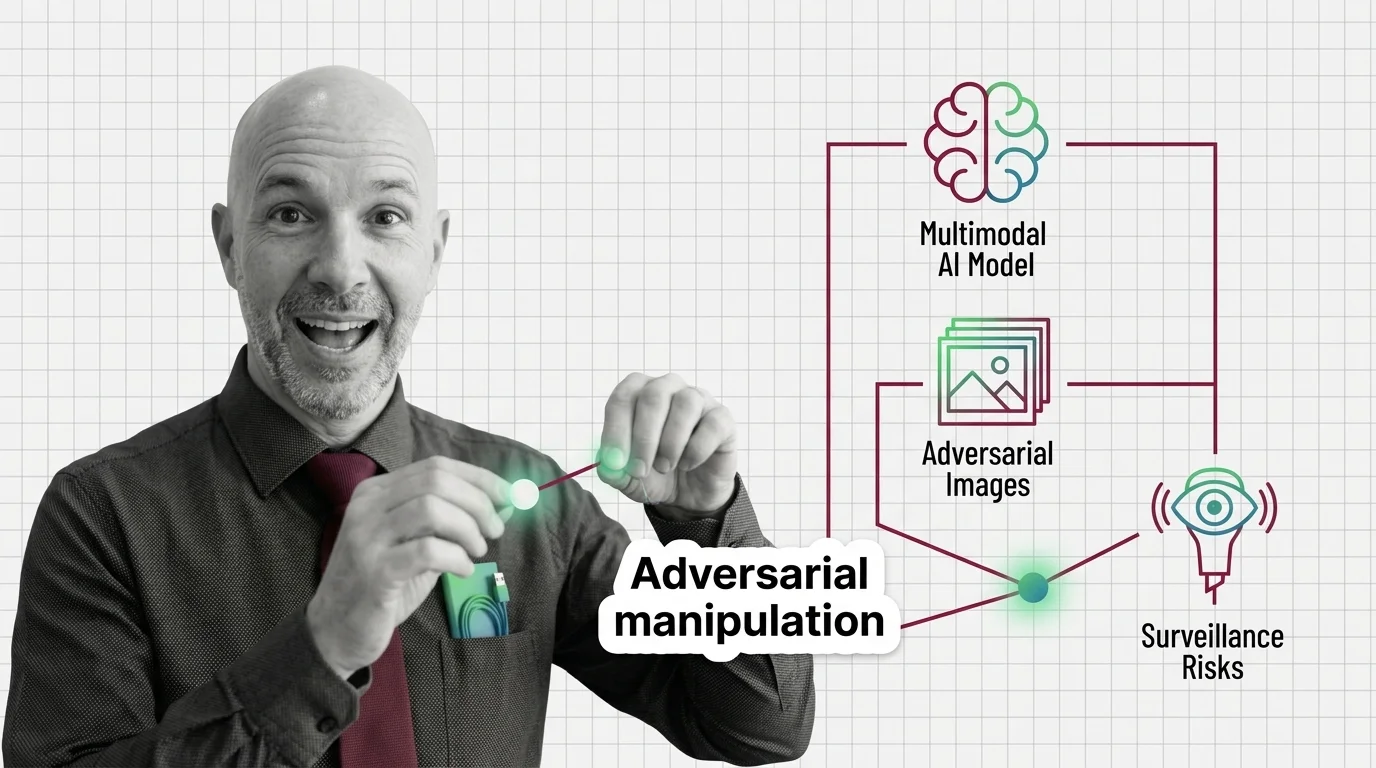
Once the mechanism and the limits are clear, the cross-modal pipeline guide turns them into a per-model build spec — input type, grounding rules, output schema, one system prompt per modality contract, not one for all of them. For the market context behind which model to build against, the 2026 omni-model benchmark shift tracks how GPT-5.5’s deep-vision bet compares with Gemini 3 Deep Think and Qwen 3.5 Omni’s wider native bet. Close with the surveillance risks embedded in multimodal prompting before any pipeline accepts third-party images — the safety layer built for text was not built to read what a picture is instructing the model to do.
A hallucinating vision model is rarely a prompting problem in disguise.
How multimodal prompting differs from multi-turn, domain-specific, and role prompting
Three neighbouring techniques get folded into multimodal prompting by name association alone, and each mix-up sends the fix in the wrong direction.
Not multi-turn prompt design. “Multi” here means channels, not exchanges — a single-turn multimodal prompt can carry an image, audio, and text at once, while a multi-turn conversation replays history across turns of plain text. The axes combine, but neither fixes the other’s failure mode.
Not a substitute for domain-specific prompting. Getting an image into the model’s reasoning is a modality problem; getting a clinically or legally usable answer out of it is a vocabulary and constraint problem. A medical-image prompt without domain framing still returns a generic description of a photo.
Not fixed by role prompting. Assigning a persona changes tone, not perception — a “radiologist” role does not make a vision encoder resolve a lesion it was never trained to see. Perception failures are architecture-level; persona is a text-layer lever.
Common questions about multimodal prompting
Q: Why does a multimodal prompt that works on GPT-5.5 fail once you point it at Qwen3-VL?
A: Because “multimodal” is not one shared input contract — GPT-5.5 takes text and images only, while Qwen3-VL also parses documents and video frames, so a prompt and file format built for one provider misfires on the other. The cross-modal pipeline guide treats every model swap as a new contract, not a copy-paste change.
Q: Do I need to worry about visual hallucination if my pipeline only reads scanned documents, not photos?
A: Yes — the model predicting plausible language instead of verifying pixels produces missed line items and invented fields on scans just as readily as misdescribed photos. The unsolved technical limits piece maps both failure directions before you trust the output.
Q: Should I reach for domain-specific prompting or multimodal prompting first when building a medical-image tool?
A: Both, in sequence — multimodal prompting gets the image into the model’s reasoning at all; domain-specific prompting then supplies the clinical vocabulary and constraint framing that decide whether the output is usable rather than a generic photo description.
Q: Is the 2026 omni-model shift a reason to rebuild an existing multimodal pipeline?
A: Only if you are hitting a ceiling the current model cannot clear — architecture scope, not accuracy, now separates providers, since benchmarks saturated near 81-83% on MMMU-Pro. The 2026 benchmark roundup maps which architecture bet fits which use case before you migrate anything.
Q: Do deepfake and surveillance risks matter for an internal tool, not a consumer product?
A: Yes, whenever the image channel accepts uploads from users or third parties — the safety apparatus built for text cannot evaluate instructions hidden inside a picture, so an internal tool ingesting photos or scans inherits the same blind spot. The adversarial images piece explains why the visual channel bypasses text-based safeguards.
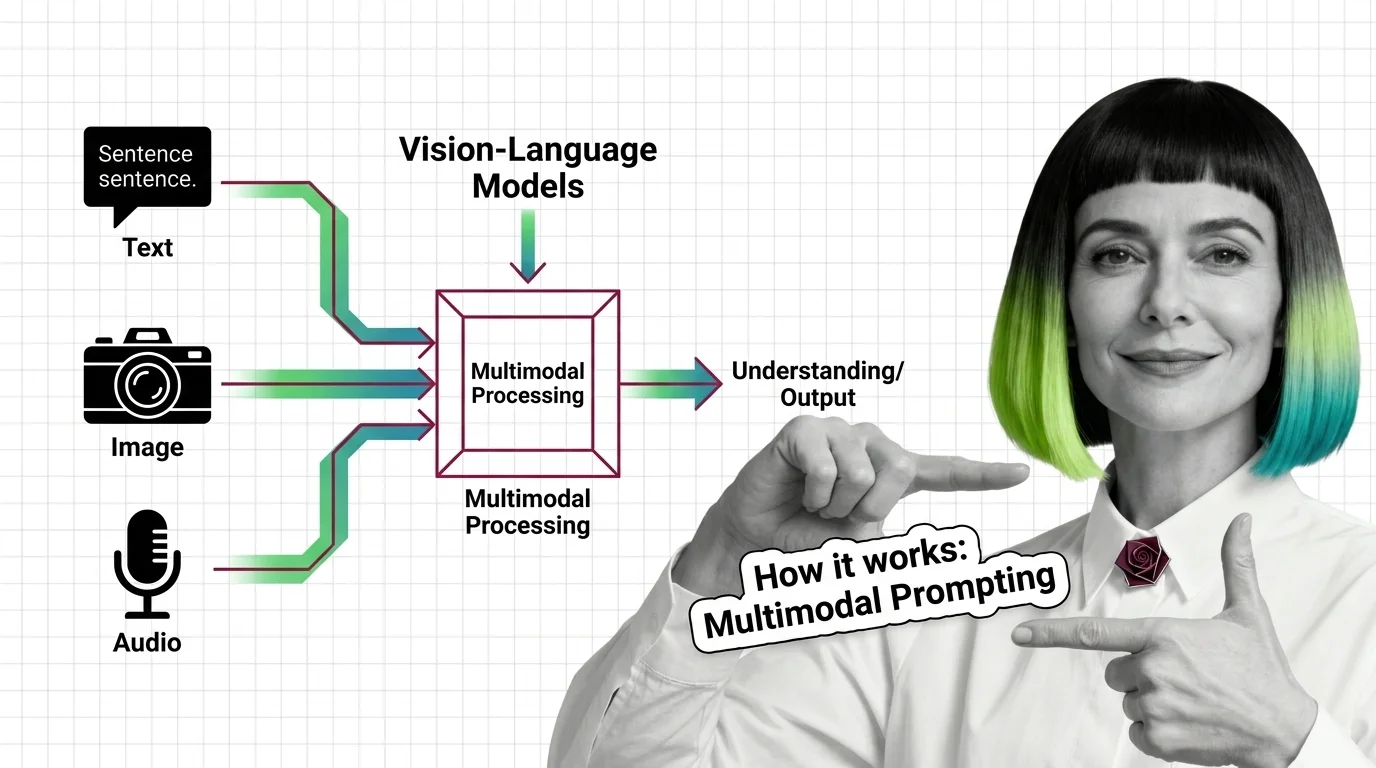
Multimodal prompting treats images, audio, and text as first-class inputs — but models don't perceive them the way humans do. Understanding how different modalities get encoded changes how you write effective cross-modal instructions.
Multimodal prompting sends images or audio alongside text in one query. A VLM encodes each image as patch tokens, then attends to vision and text jointly.
Early fusion processes image and text tokens from layer one; late fusion merges at output only. Architecture determines what multimodal prompts can achieve.
2
Build with Multimodal Prompting
The guides here walk you through structuring multimodal prompts for real pipelines — from choosing the right image resolution to chaining visual and text reasoning steps without hallucination bleed.
Multimodal prompts fail when they lack modality contracts. Build GPT-5.5 and Qwen3-VL pipelines with extraction specs for images, documents, and charts.
3
What's Changing in 2026
The multimodal model landscape is moving fast — omni models that handle text, image, and audio in a single pass are reshaping what prompt engineers can assume about model capabilities.
Benchmark saturation hit multimodal AI in April 2026. GPT-5.5 leads chart reasoning; Gemini 3 tops overall; Qwen3.5-Omni is the first open omni model.
4
Risks and Considerations
Multimodal inputs open new attack surfaces: adversarial images, deepfake inputs, and privacy risks from visual data processed without user awareness. Know the risks before you ship.