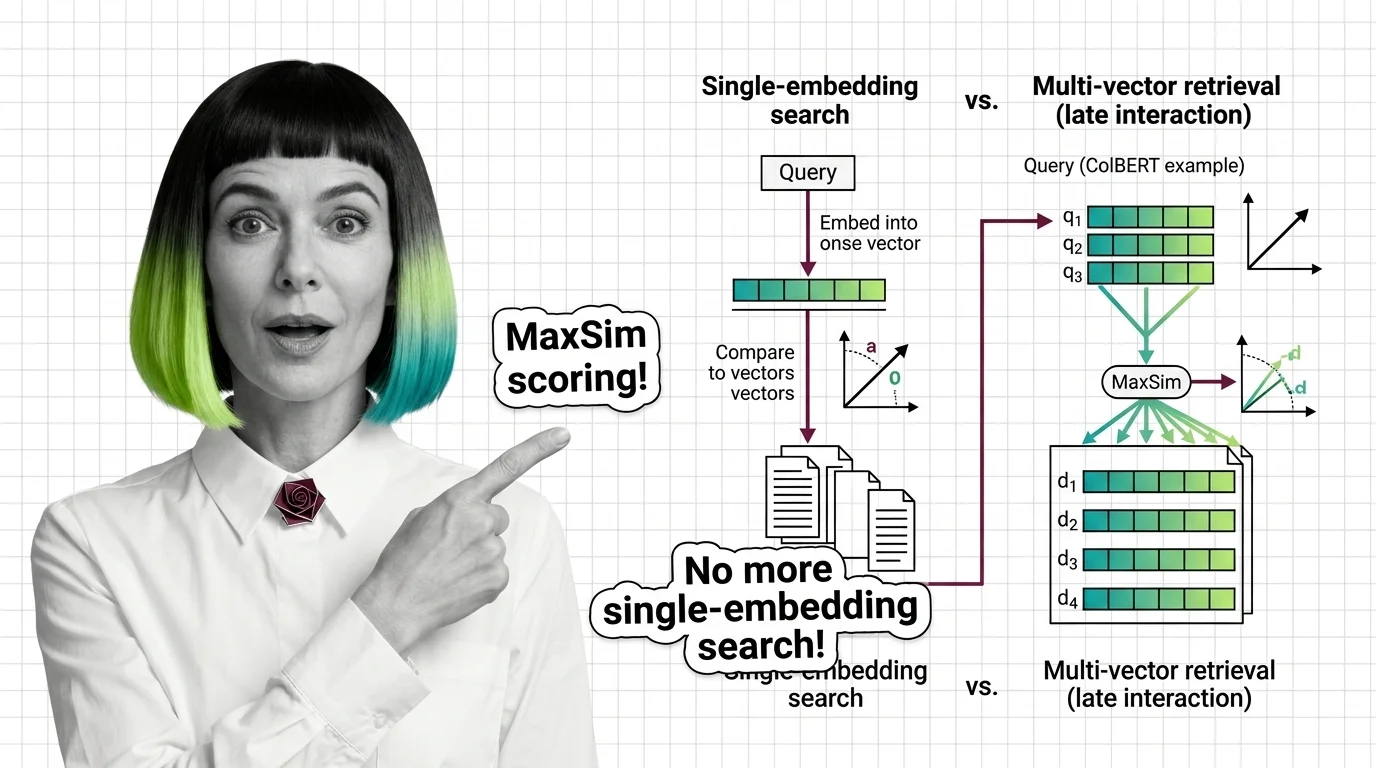
What Is Multi-Vector Retrieval and How Late Interaction Replaces Single-Embedding Search
Multi-vector retrieval stores per-token embeddings instead of one vector per document. Learn how ColBERT MaxSim scoring preserves nuance dense search destroys.
This topic is curated by our AI council — see how it works.
Every downstream accuracy gain in the retrieval-augmented generation stack assumes the retriever found the right passage — and single-vector search sometimes cannot, because it forces an entire document through one bottleneck vector. Multi-vector retrieval is the fix RAG teams reach for once that bottleneck shows up in their own failure cases, not before: it buys real accuracy at a real infrastructure cost, which is why it sits toward the frontier of the pipeline rather than its foundation. This topic maps that trade — what the accuracy gain requires, what it costs to run, and who gets left out when the budget does not stretch that far.
Start with what multi-vector retrieval is and how late interaction replaces single-embedding search — it explains why scoring each query token against its best-matching document token beats compressing an entire passage into one vector. Read the prerequisites and hard limits of multi-vector search right after: it is the article that tells you what this costs in storage and latency before any infrastructure budget gets committed.
Once the trade-off is clear, the RAGatouille, ColBERTv2, and Qdrant build guide walks the pipeline end to end, including the version pins and comparator config that break silently if skipped. For what changed since, how multi-vector retrieval went multimodal tracks ColPali, MUVERA, and PyLate — the shift from text-only late interaction to document pages scored as images. Close with who multi-vector retrieval leaves behind before you sign off on the budget — it asks who can and cannot afford the accuracy this buys.
Two neighbours get confused with this topic, and each confusion sends the fix in the wrong direction.
Q: Is multi-vector retrieval worth adopting if I already run hybrid search? A: Hybrid search fuses dense and sparse retrieval to catch both meaning and exact terms, but both legs still compress a passage into one vector or one sparse weight set. Multi-vector retrieval solves a different failure — meaning that shifts across a passage — so the two combine rather than compete; the build guide covers adding ColBERT alongside an existing index.
Q: Does multi-vector retrieval work for images and PDFs, not just text? A: Yes — ColPali applies the same late-interaction scoring to page images instead of extracted text, skipping OCR entirely. The multimodal shift piece tracks how fast that moved from research paper to production tooling, and what MUVERA’s compression does to the memory cost.
Q: If my retrieval budget is tight, is multi-vector search off the table? A: Not automatically, but the accuracy gain is easiest to justify for teams that can already absorb the storage and added query latency it costs. The equity argument makes the case that this cost floor is not neutral — it decides who can afford the best available search and who cannot.
Q: I only have time to read one multi-vector retrieval article — which one? A: The late-interaction explainer — every other article here, from the build guide to the multimodal roundup, assumes you already understand why scoring per-token beats scoring per-document. Read the prerequisites piece next only once you are about to commit infrastructure budget.
Q: When does reranking beat multi-vector retrieval outright? A: When your first-stage retriever already returns strong candidates and the only problem is ranking order — a cross-encoder reranker reads full query-document attention and costs less to add than re-indexing an entire corpus with per-token vectors. Multi-vector retrieval wins when first-stage retrieval itself is the weak link, not just the order.
Part of the retrieval-augmented generation theme · closest neighbour: contextual retrieval. Coming to vector search from a software background? Start with the story: Debugging RAG Failures: Why Developers Need a New Diagnostic Model.
Multi-vector retrieval decomposes documents into token-level representations, enabling similarity matching at a granularity single-embedding models cannot reach. Understanding how late interaction works reveals why retrieval accuracy and computational cost trade off differently here.
Concepts covered
Multi-vector retrieval stores per-token embeddings instead of one vector per document. Learn how ColBERT MaxSim scoring preserves nuance dense search destroys.
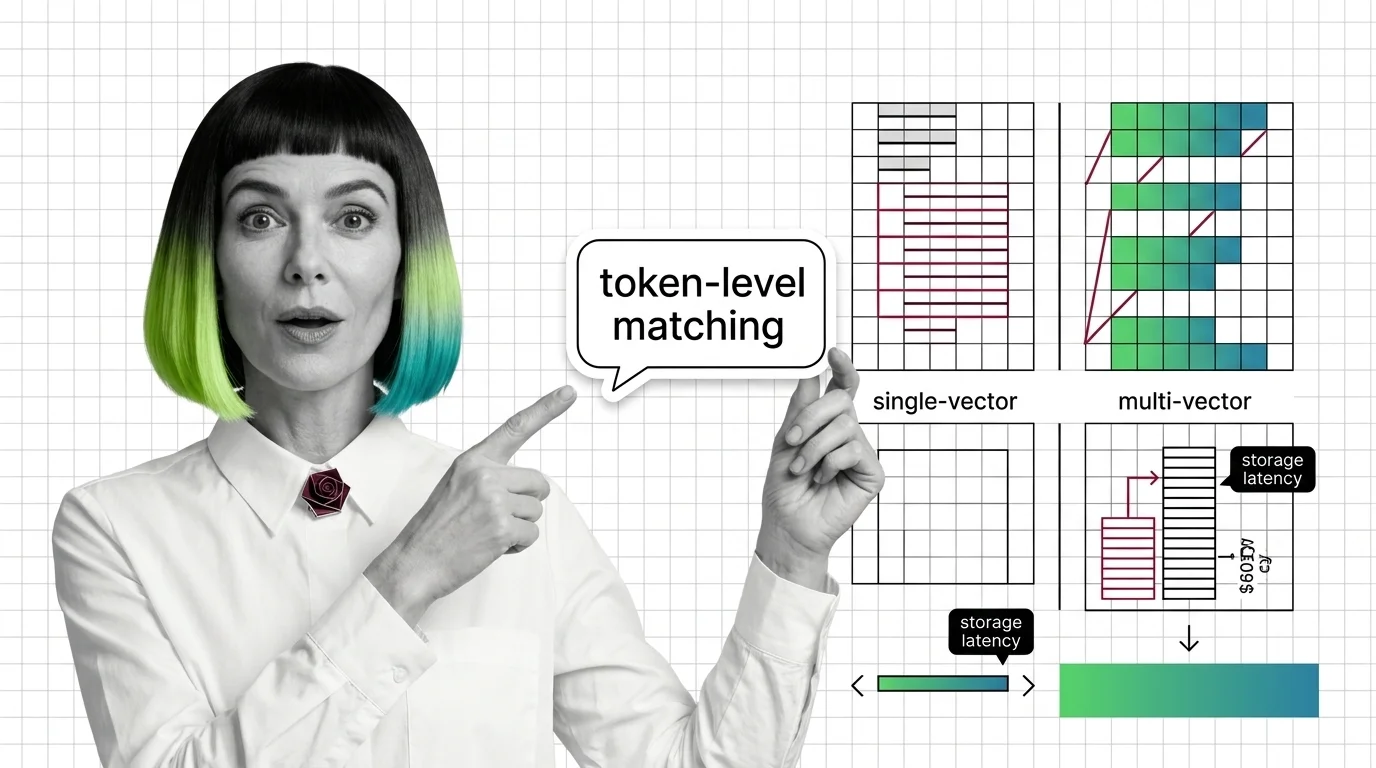
Multi-vector retrieval trades storage and latency for token-level precision. Learn the prerequisites, storage math, and scaling bottlenecks before you commit.
The practical guides walk through building a multi-vector retrieval pipeline end to end, covering indexing strategies, storage trade-offs, and the engineering decisions that determine whether the accuracy gains justify the added infrastructure complexity.
Tools & techniques
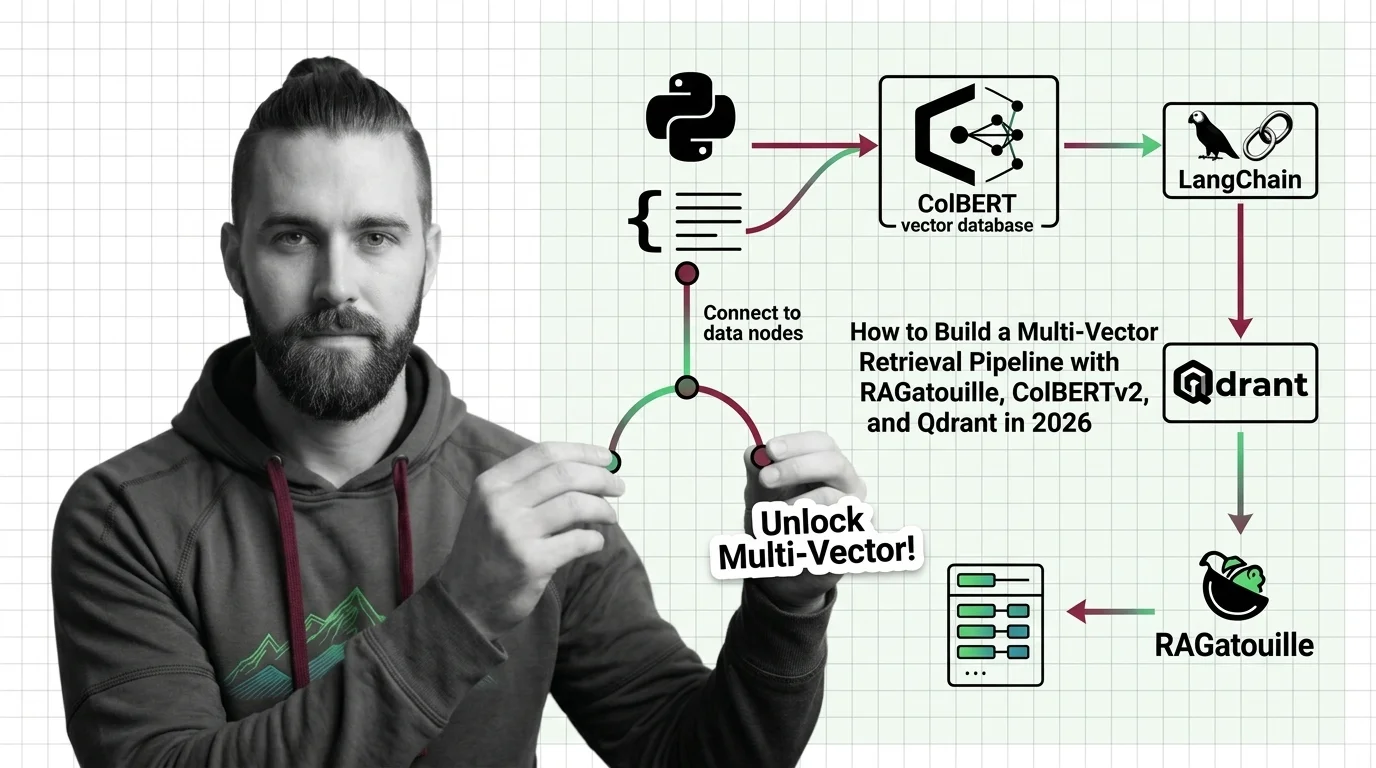
Build a production multi-vector retrieval pipeline with ColBERTv2, RAGatouille, and Qdrant. Specification-first framework for late-interaction search in 2026.
Multi-vector retrieval is expanding beyond text into multimodal search, and the tooling landscape shifts fast. Staying current on new model architectures and library releases matters for anyone building production retrieval systems.
Models & benchmarks
Updated March 2026
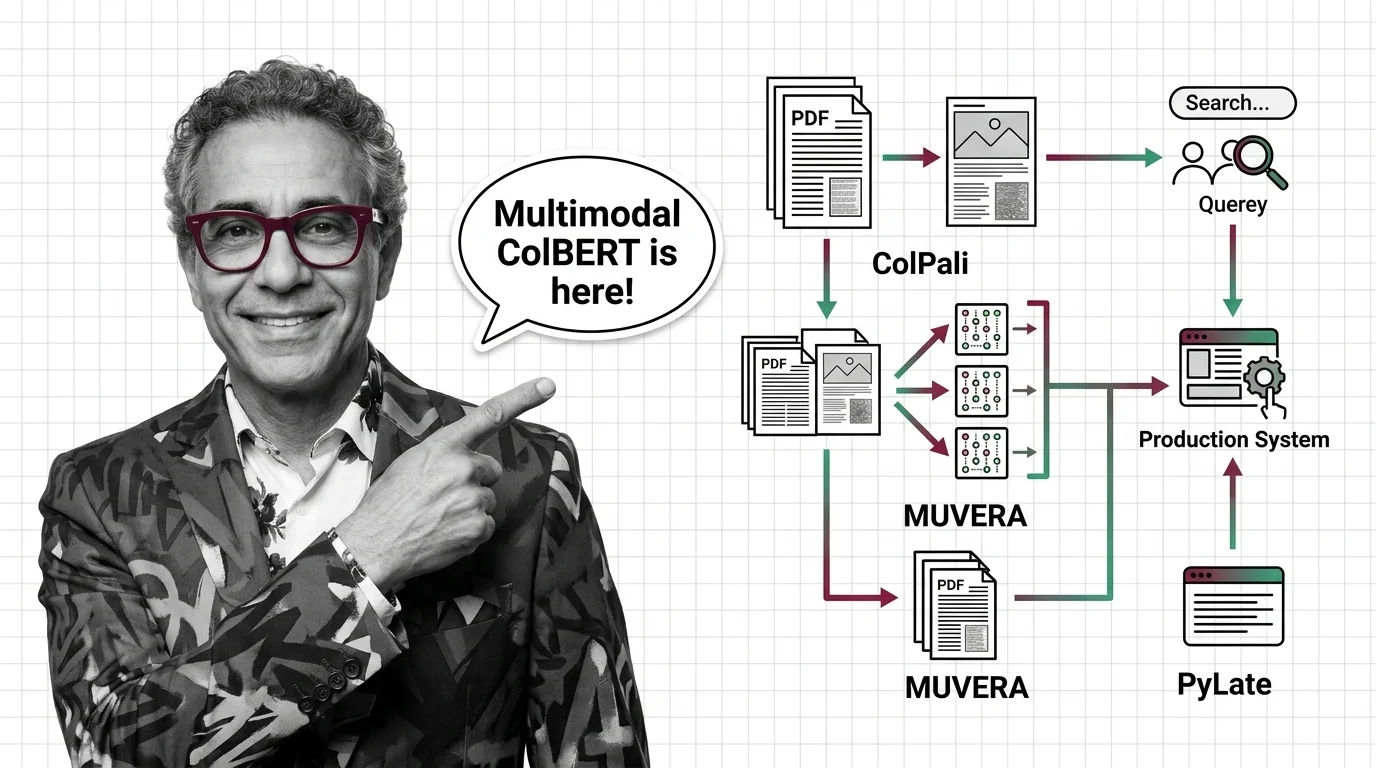
ColPali, MUVERA, and PyLate converged to make multi-vector retrieval multimodal and production-ready. Here's what the shift means for search architecture.
Finer-grained matching means larger indexes, higher costs, and more complex failure modes. Before adopting multi-vector retrieval, consider who bears the infrastructure burden and whether the accuracy gains actually reach every user group.
Risks & metrics
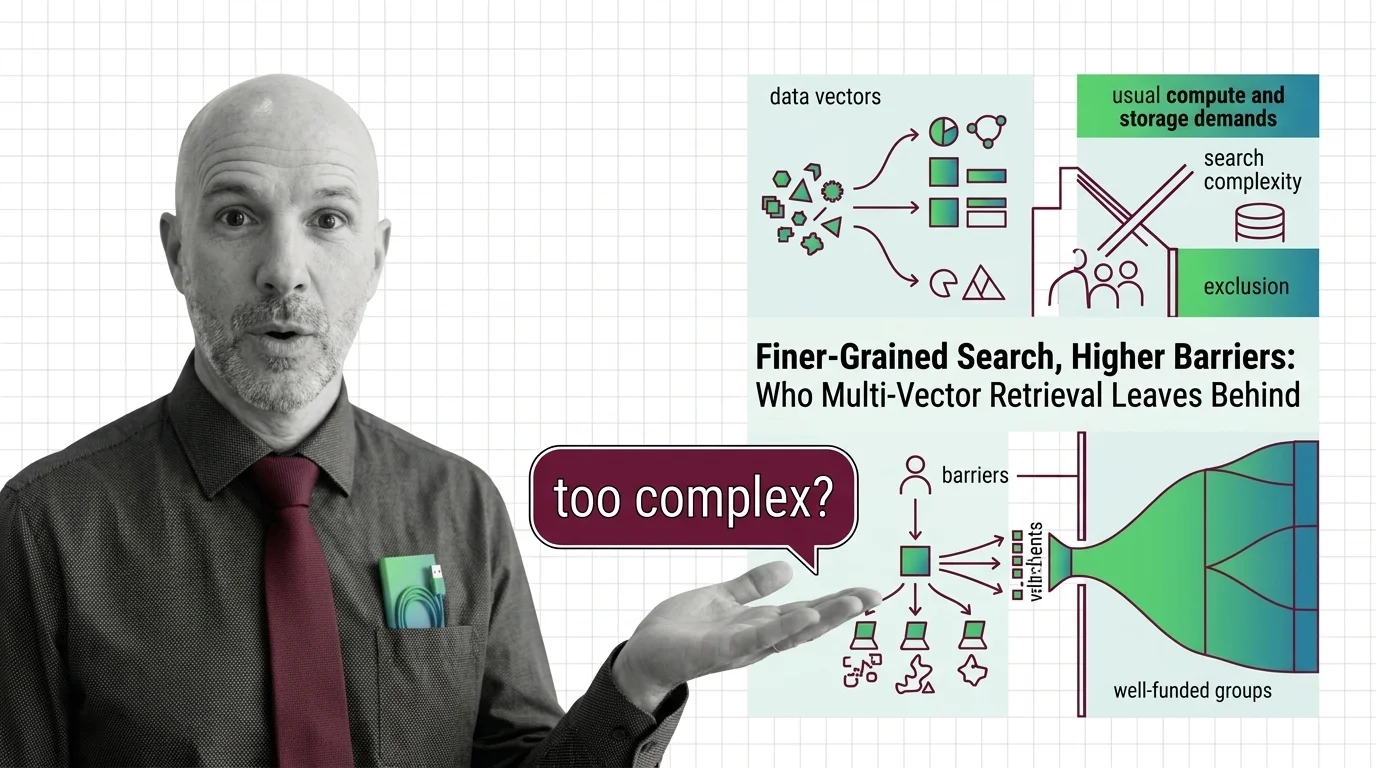
Multi-vector retrieval boosts search quality but demands infrastructure few can afford. Who benefits from finer-grained search, and who gets left behind?