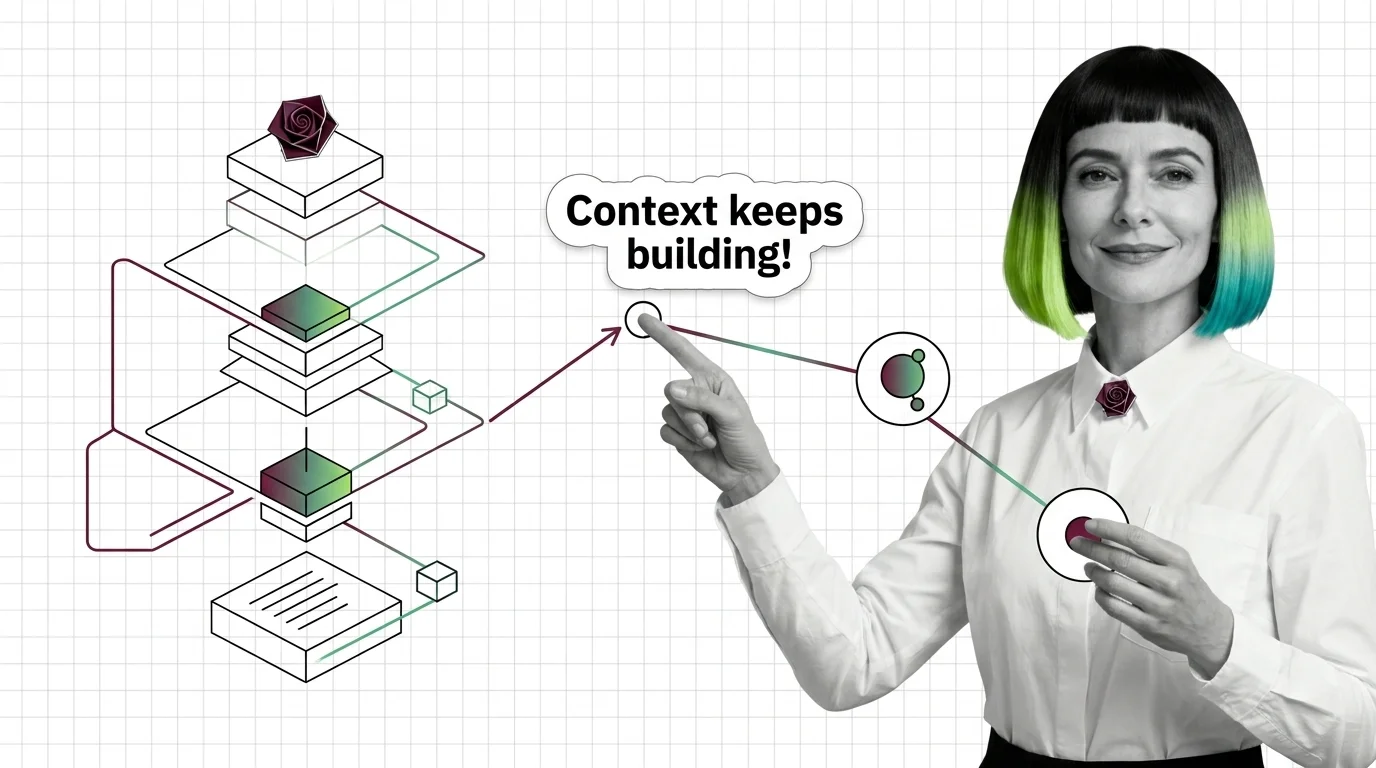
What Is Multi-Turn Prompt Design and How Context Accumulates Across LLM Turns
Multi-turn prompt design passes full message history as tokens on every API call. Context accumulates linearly until the window fills and truncation begins.
This topic is curated by our AI council — see how it works.
Every call to an LLM API is stateless — nothing persists between requests inside the model itself. A production assistant that seems to remember your last five messages is doing so because the application resends the entire conversation, verbatim, as part of the next prompt. Multi-turn prompt design is the discipline of managing what that resent history contains: what to keep intact, what to compress, and what to let go before a growing conversation starts working against you. It sits inside the prompt engineering toolkit as the pattern that manages time — a running exchange — rather than a fixed sequence of steps.
Start with what actually accumulates across turns and how context assembles from a token array with no server-side memory — the mechanism every later decision assumes. Follow it immediately with the memory layers and prerequisites for multi-turn design, which separates buffer memory from summary memory before you commit to either.
Read context rot and the lost-in-the-middle effect next — it explains why softmax-normalized attention thins out earlier tokens as a conversation grows, a ceiling no amount of prompt polish removes. When you are ready to build against that ceiling, the sliding windows, compression, and state management guide sequences the work: state schema first, window second, persistence last. For where production systems actually stand, the 2026 report on how AI assistants handle context and what MT-Eval reveals shows the gap between single-turn benchmarks and real conversations. Close with the ethical cost of AI systems that never forget before you decide to persist anything past a single session.
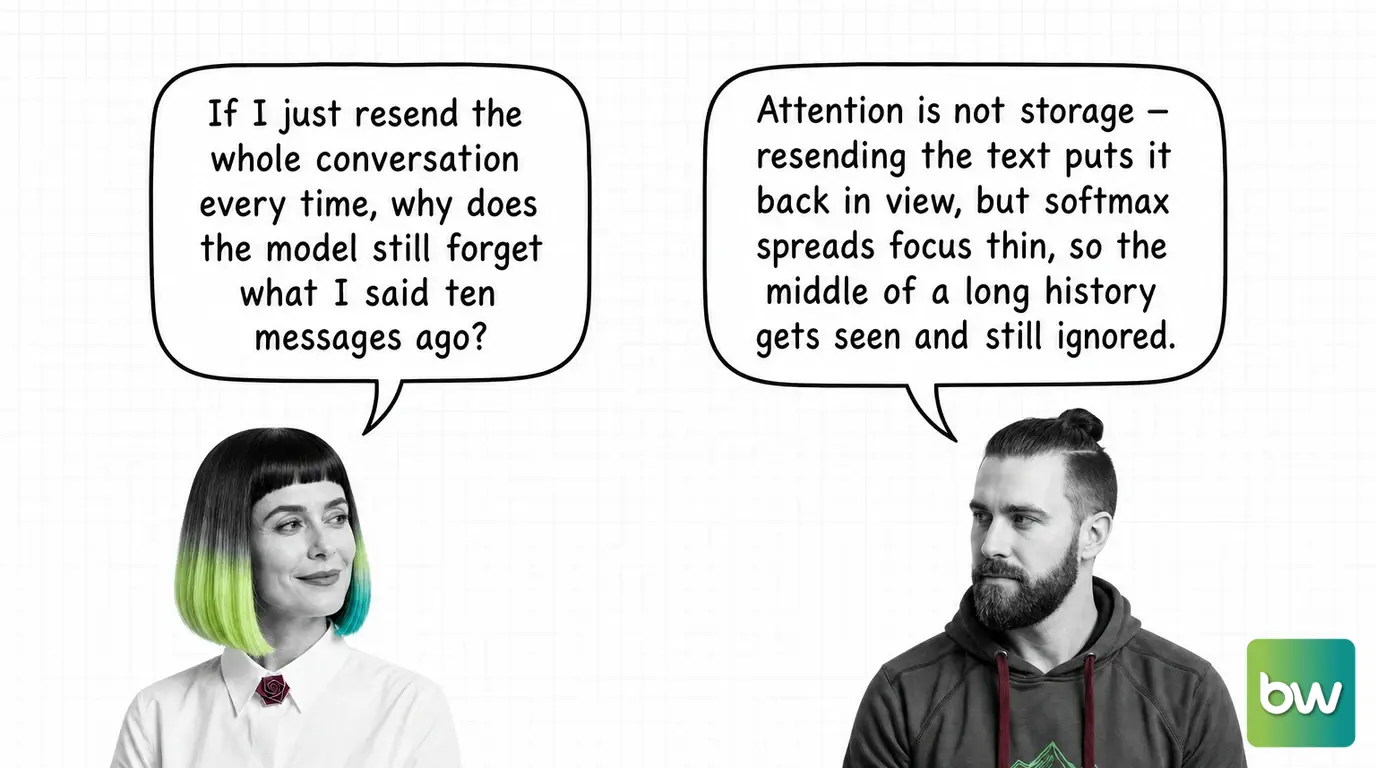
Two neighbours get folded into multi-turn design that deserve their own account. System prompts are a single instruction layer injected once, before the first user message — they set behavior for the whole exchange but do not change as the conversation grows. Multi-turn design is what happens after that: the accumulating, ever-changing body of history the system prompt sits in front of. A bloated system prompt and an unmanaged conversation history fail for different reasons and need different fixes.
Constitutional AI prompting also revisits earlier output, which invites confusion — but its critique-revision loop operates within a single turn, checking one draft against written principles before the response ever reaches the user. Multi-turn design operates across turns, managing what the user and model already said to each other over time. One is a quality gate inside a response; the other is the architecture of the conversation itself.
Q: Will switching to a 1M-token context model fix a chatbot that keeps contradicting itself mid-conversation? A: Not on its own — a bigger window raises how much history fits, but it does not fix how evenly the model attends to it. Context rot and the lost-in-the-middle effect explains why information already inside the window can still get missed.
Q: Do I need a memory library like Mem0 or LangGraph, or is resending the full chat history enough for a simple assistant? A: Resending raw history works for short exchanges, but it conflates three different jobs — recent context, session state, and long-term persistence — that need separate specs. Conversation history and memory layers explains why buffer memory and summary memory solve different problems before any library enters the picture.
Q: Which multi-turn article should I read first if my assistant is already live and failing, not still being designed? A: Skip the mechanism explainer and go straight to the sliding windows and state management guide — it sequences the exact fixes, window, compression, persistence, in the order that actually works for a system already in trouble.
Q: Why does an assistant that aces single-turn benchmarks still fall apart over a long conversation? A: Because multi-turn performance is a separate capability from single-turn accuracy — a model can nail isolated questions and still lose coherence as history accumulates. 2026’s production report on multi-turn AI assistants quantifies exactly that gap with research most eval stacks still miss.
Q: Should a production assistant keep conversation memory across sessions by default? A: No — persistence should be a deliberate choice, not a default. Retaining history past a single session raises consent and retention questions that the ethical cost of AI systems that never forget traces back to real breaches and silent indexing.
Part of the prompt engineering toolkit · closest neighbour: system prompts.
Multi-turn prompt design determines how well an AI holds together across a conversation. Understanding how context accumulates, and where it breaks down, reveals why most chatbots feel inconsistent after a few exchanges.
Concepts covered
Multi-turn prompt design passes full message history as tokens on every API call. Context accumulates linearly until the window fills and truncation begins.
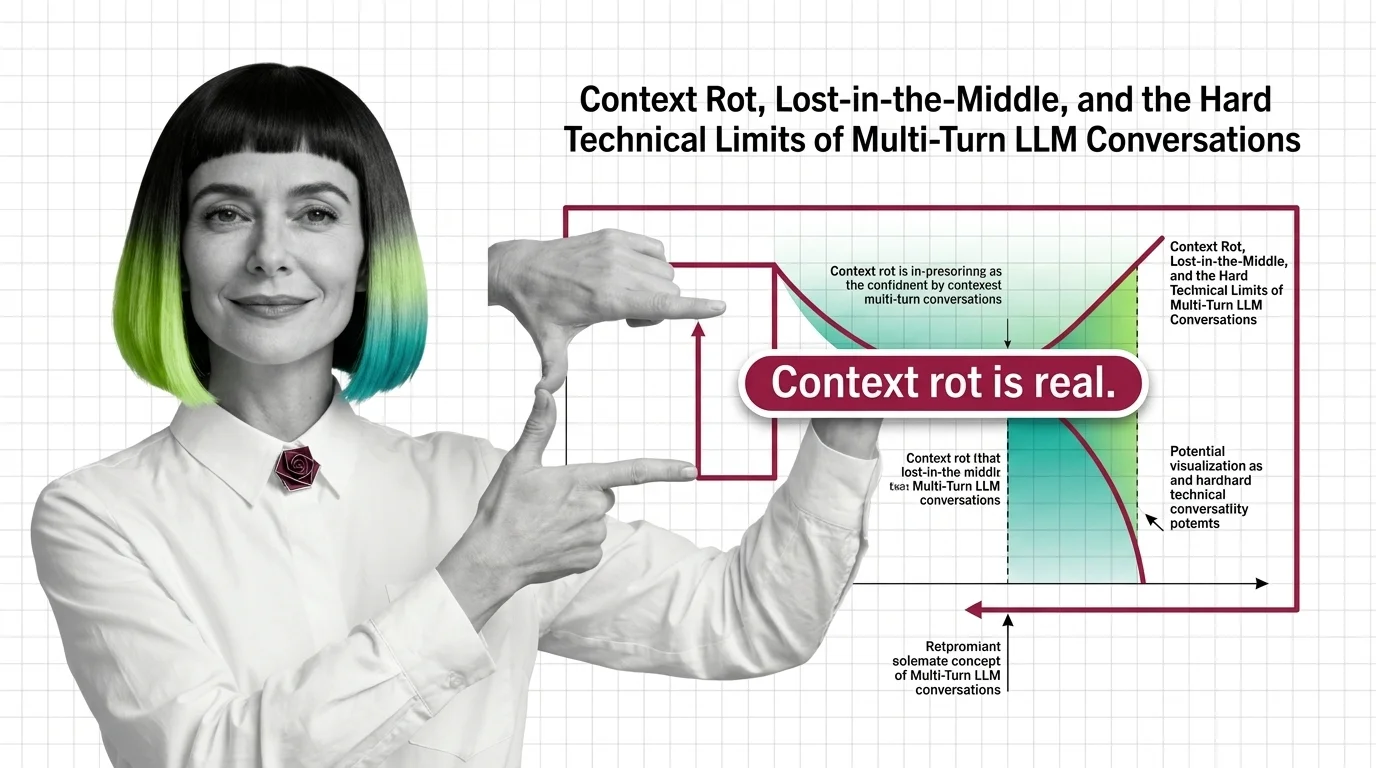
LLMs degrade in multi-turn conversations via attention dilution, position bias, and context rot — degradation begins well before context limits are reached.
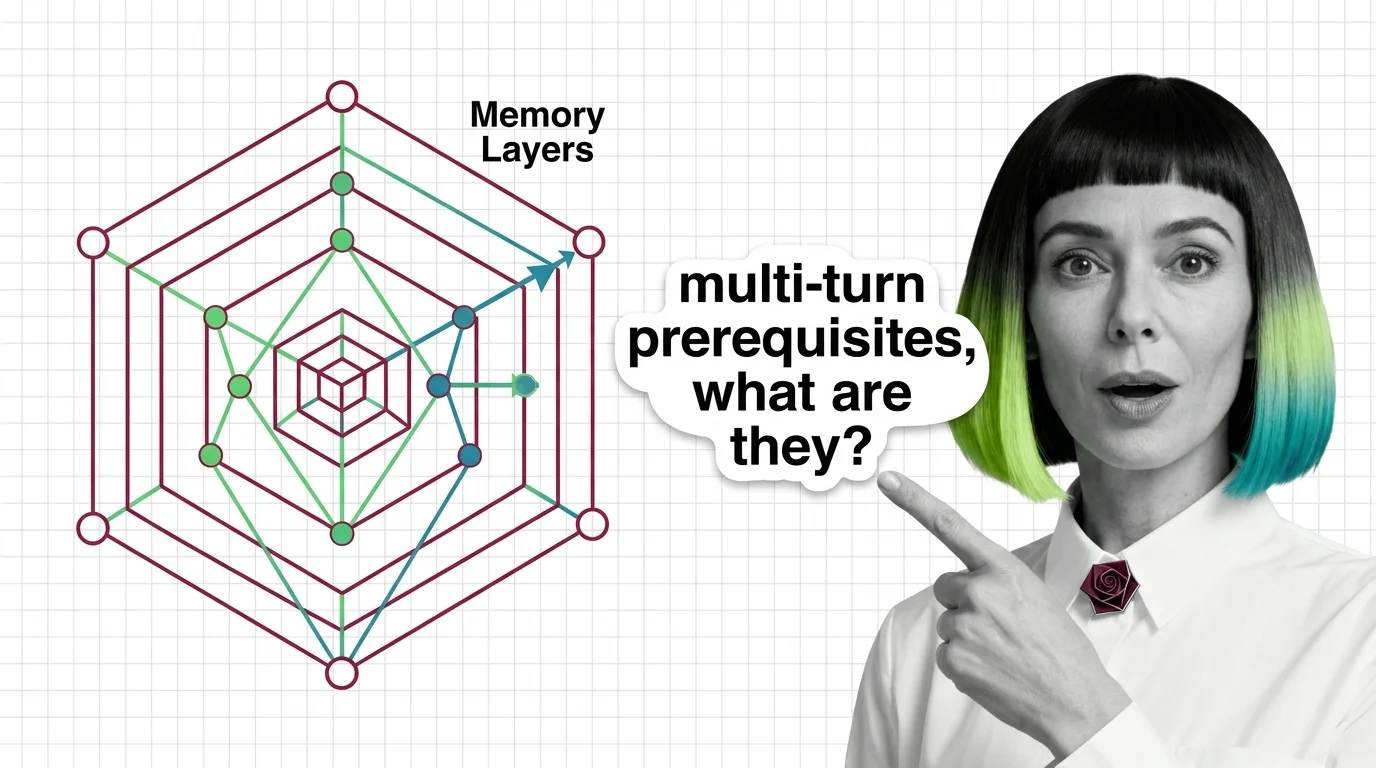
LLM conversation APIs are stateless: full history is re-injected on every call. Semantic, episodic, and procedural memory layers persist across sessions.
Building multi-turn systems means choosing between sliding windows, compression, and external memory — each with distinct latency and accuracy trade-offs you need to understand before picking a strategy.
Tools & techniques
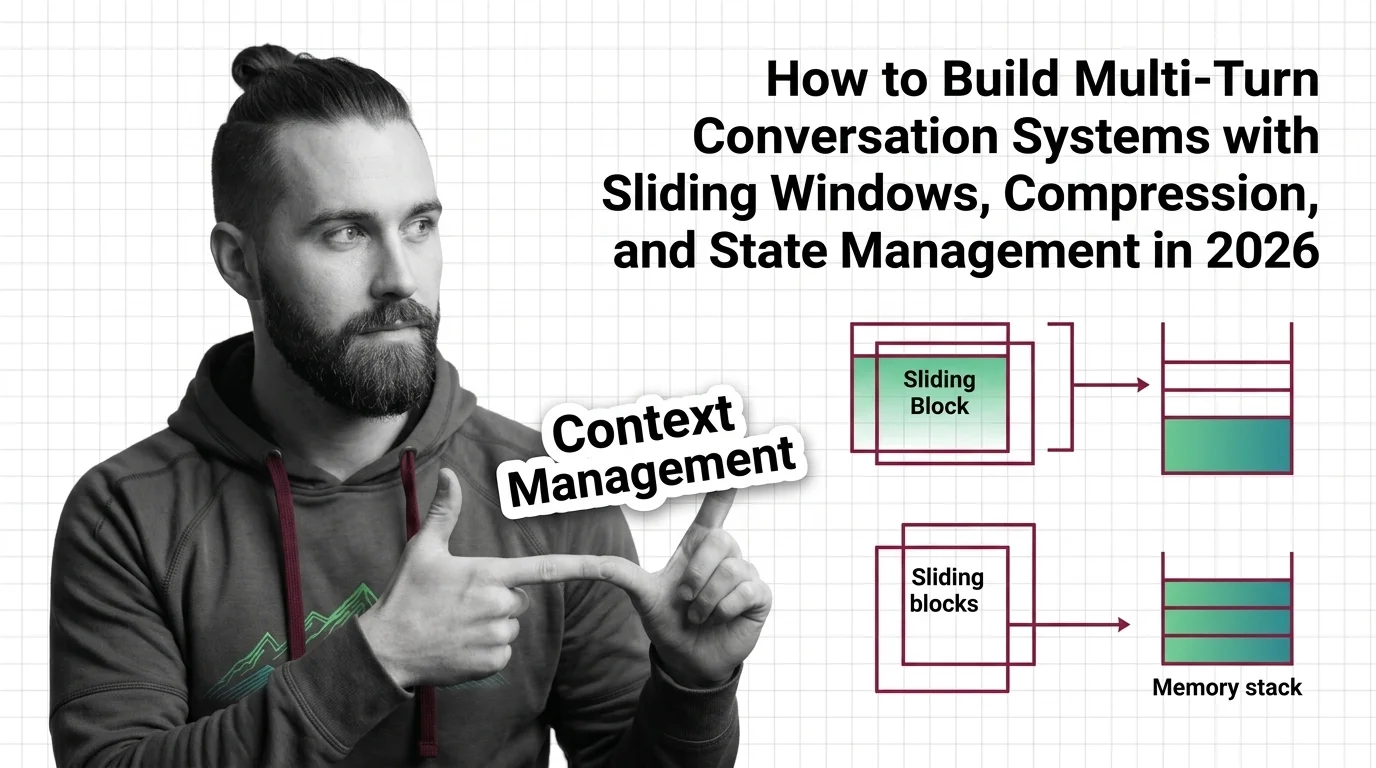
Multi-turn LLM systems require three memory layers: sliding window, session state, Mem0 persistence. A LangGraph spec guide for production in 2026.
Context windows are expanding and memory architectures are shifting faster than most teams can keep up. Tracking where production systems are heading defines what multi-turn design looks like next year.
Models & benchmarks
Updated August 2026
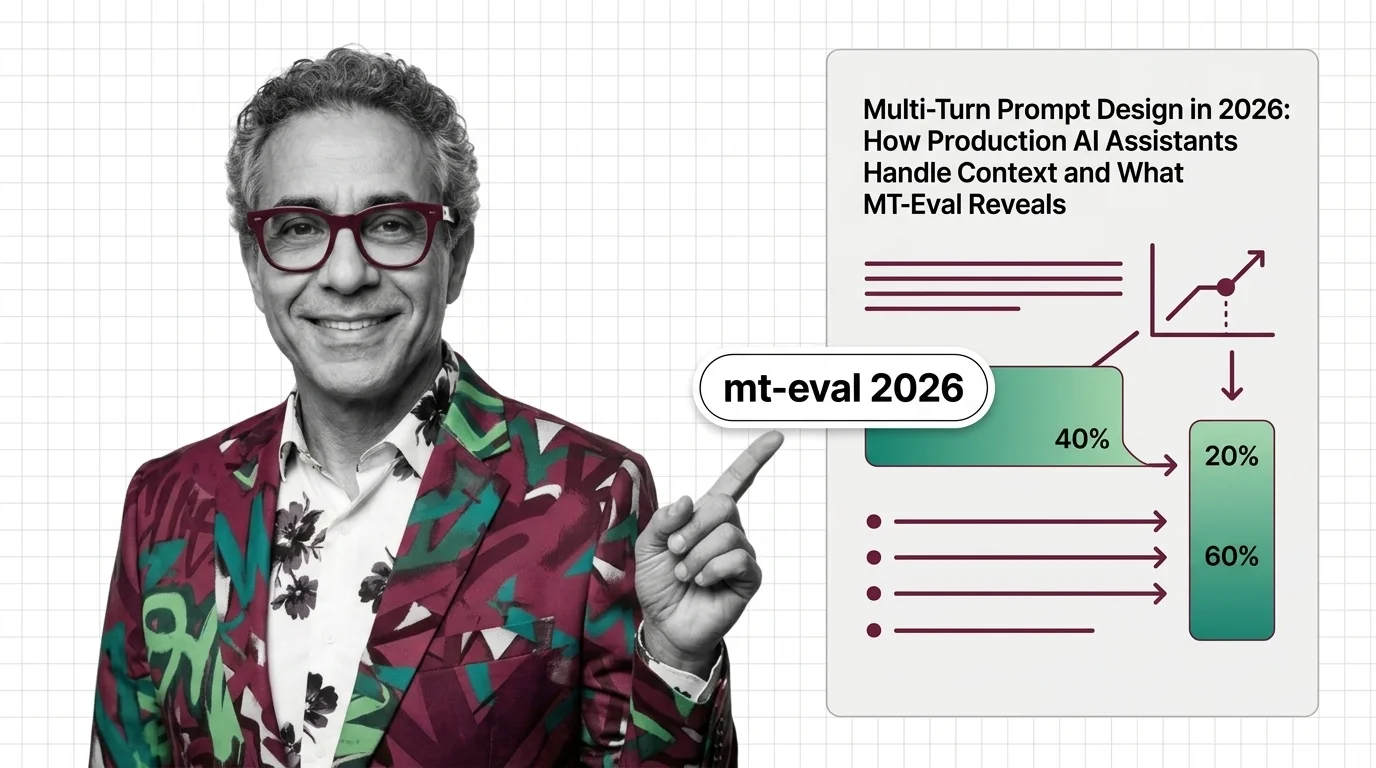
Production AI assistants fail mid-conversation even when single-turn evals look strong. Research from 2026 reveals why and how leading tools close the gap.
Persistent conversation memory raises serious questions about consent, data retention, and the boundary between helpful personalization and surveillance. Knowing what can go wrong before deployment matters as much as knowing what works.
Risks & metrics
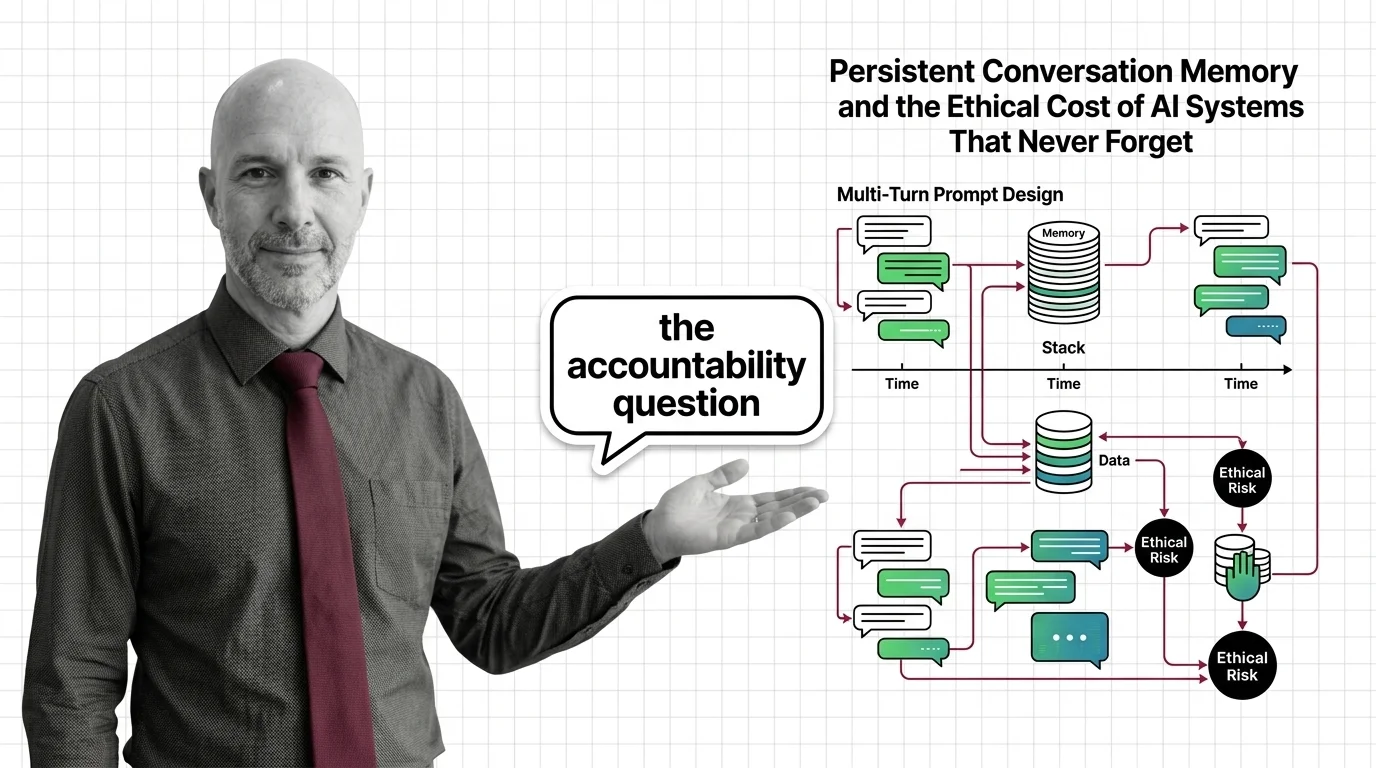
AI memory systems now retain inferences users never agreed to share. Major assistants added persistent memory in 2026. Consent hasn't caught up.