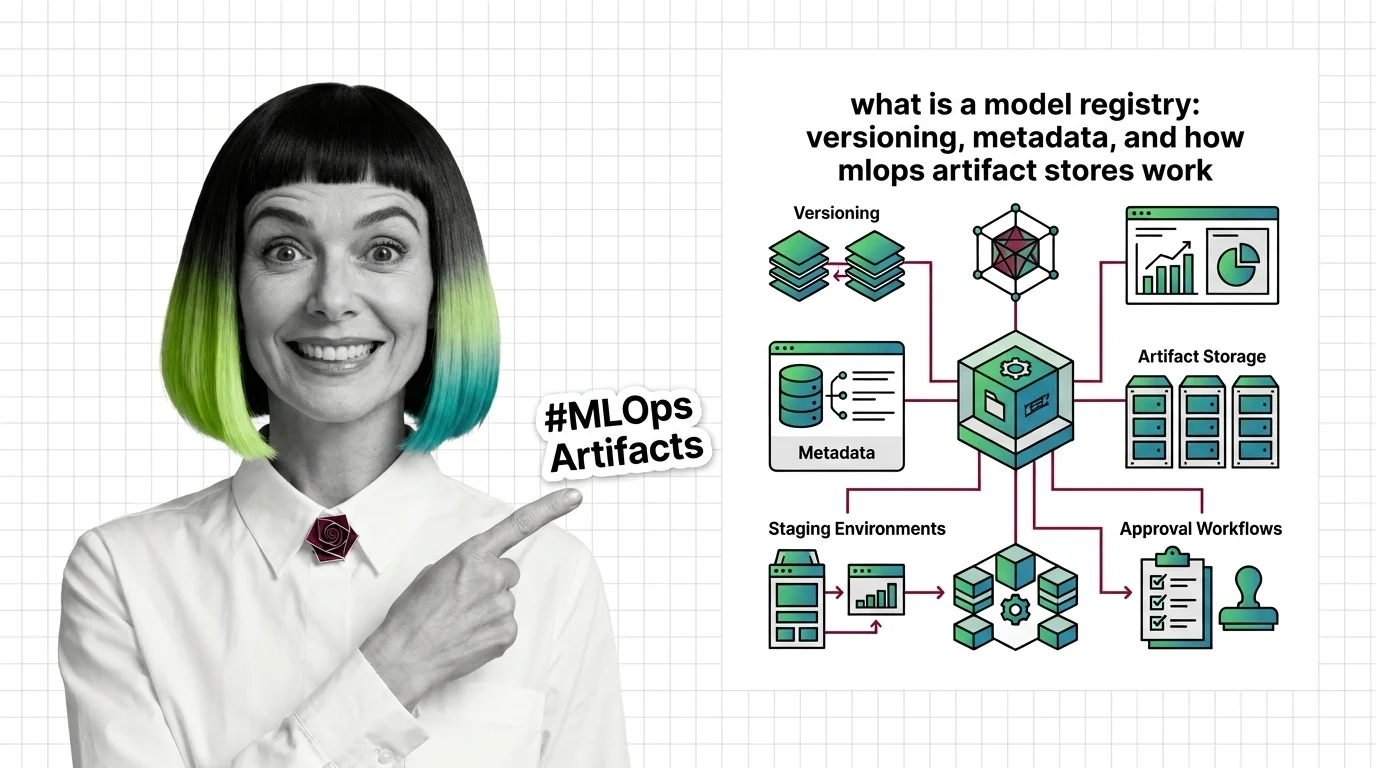
What Is a Model Registry: Versioning, Metadata, and How MLOps Artifact Stores Work
A model registry tracks ML model versions, weights, and deployment configs. MLflow 3 replaced fixed stages with named aliases such as champion.
This topic is curated by our AI council — see how it works.
Every rollback, every audit, and every “which model is actually live” question in production traces back to the same place: the model registry that recorded the version, the weights, and the promotion history behind whatever is currently serving traffic. It is the quietest layer of the LLMOps stack — nothing visibly breaks when it’s missing, until the day a rollback needs a target or an audit trail comes up empty. This topic covers what that record has to hold, where it snaps once dozens of teams promote hundreds of models, and which tool fits a stack now shifting from scikit-learn-era artifacts toward LLM weights.
Start with what a model registry actually stores and how MLOps artifact stores work — it lays out the pieces every other article here assumes you already recognize: artifact storage, metadata, staging environments, approval workflows. Read version sprawl, schema drift, and the engineering limits of a registry at enterprise scale next — the honest companion piece: a registry tells you which version exists, not whether that version still matches what your code sends it, and the gap only shows up once hundreds of models cross multiple teams.
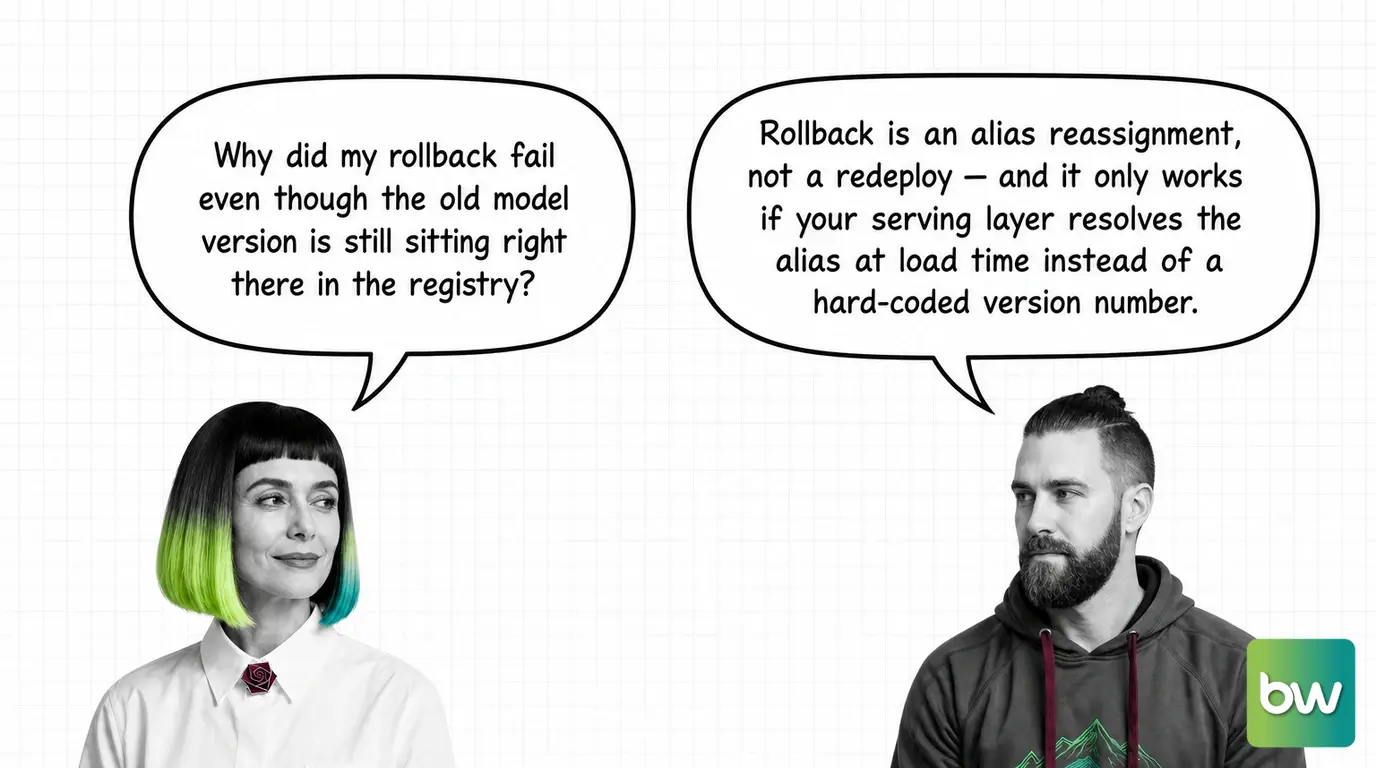
Once the concepts hold, setting up a registry with MLflow and DVC is the build guide — aliases instead of deprecated stages, rollback as an alias reassignment rather than a redeploy. If you’re choosing a tool rather than following one recipe, the MLflow vs W&B vs SageMaker vs DVC comparison narrows the decision to two variables: team size and cloud commitment. For where the category is heading, the 2026 shift toward LLM weight management and multi-cloud catalogs explains why classical registries are splitting from LLM-native ones. Close with the accountability gap in automated model promotion — the governance question a registry’s audit trail cannot answer by itself.
Registry vs. experiment tracking. Experiment tracking records what happened during training — parameters, metrics, which run produced which weights. The registry is the downstream system of record: it takes one of those runs and gives it a stable, deployable identity with staging and approval workflow attached. Skipping straight to a registry without experiment tracking upstream leaves you registering artifacts you can’t explain.
Registry vs. model routing. These answer different questions at different times. The registry decides which artifact version is authorized to exist and be promoted; routing decides which model answers this particular request, right now, by cost or latency. A registry with perfect version control still needs a routing layer in front of it — the two are sequential, not substitutable.
Classical registry vs. LLM-native weight manager. A registry built for scikit-learn-era pickle files and small parameter sets assumes artifacts you can diff and store cheaply. LLM weights run to gigabytes or terabytes, span multiple clouds, and need OCI-compliant storage the old Staging → Production model was never built to hold — which is why the category is actively splitting rather than just adding features.
Q: Do small ML teams need a dedicated model registry, or does a versioned folder of files cover it? A: A folder holds until more than one person deploys, or someone asks which version served last month’s predictions — at that point the coordination problem is exactly what version sprawl at enterprise scale describes, just starting smaller. Team size and cloud commitment decide when the switch is worth it.
Q: Should model promotion be triggered by a registry webhook or by a CI/CD git tag? A: Pick one trigger per environment and document it — mixing an MLflow webhook with a DVC git tag creates a race where either mechanism can promote a model independently, and nobody can say which one actually fired. The MLflow-and-DVC setup guide validates each trigger layer separately before wiring them together.
Q: Does a registry’s audit trail prove a model deployment was properly reviewed? A: No — the audit trail records what was deployed and when, not whether a human judged it fit to ship. An automated pipeline can clear every evaluation threshold and promote a model with no named person signing off, which is the governance gap automated model promotion examines.
Q: Will my existing model registry work once I start deploying LLMs instead of scikit-learn models? A: Probably not without changes — classical registries assume small, diffable artifacts, while LLM weights run to terabytes across multiple clouds. The 2026 shift toward LLM weight management covers the OCI-compliant storage and alias-based promotion now displacing the old model.
Part of the LLMOps stack · closest neighbour: model routing.
A model registry is the often-overlooked bridge between training and production: it enforces that every deployed model is traceable to a specific, versioned artifact — not just an ad-hoc file or a vague runtime tag.
Concepts covered
A model registry tracks ML model versions, weights, and deployment configs. MLflow 3 replaced fixed stages with named aliases such as champion.
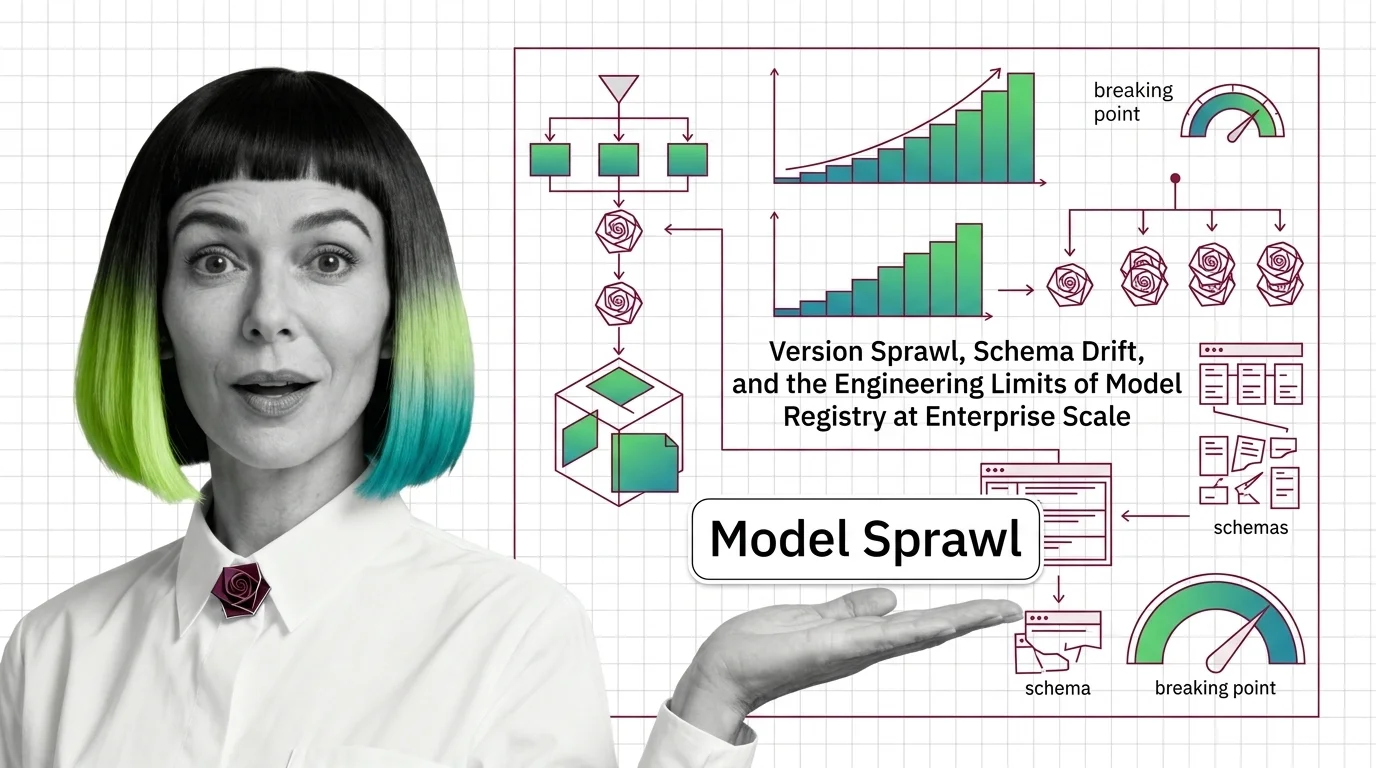
A model registry tracks versions. It does not enforce input contracts, cross-team isolation, or output schema. At scale, those gaps compound.
The guides here cover registry integration end to end: registering and staging model artifacts, configuring promotion gates, enforcing lifecycle policies, and wiring rollback into your deployment pipeline.
Tools & techniques
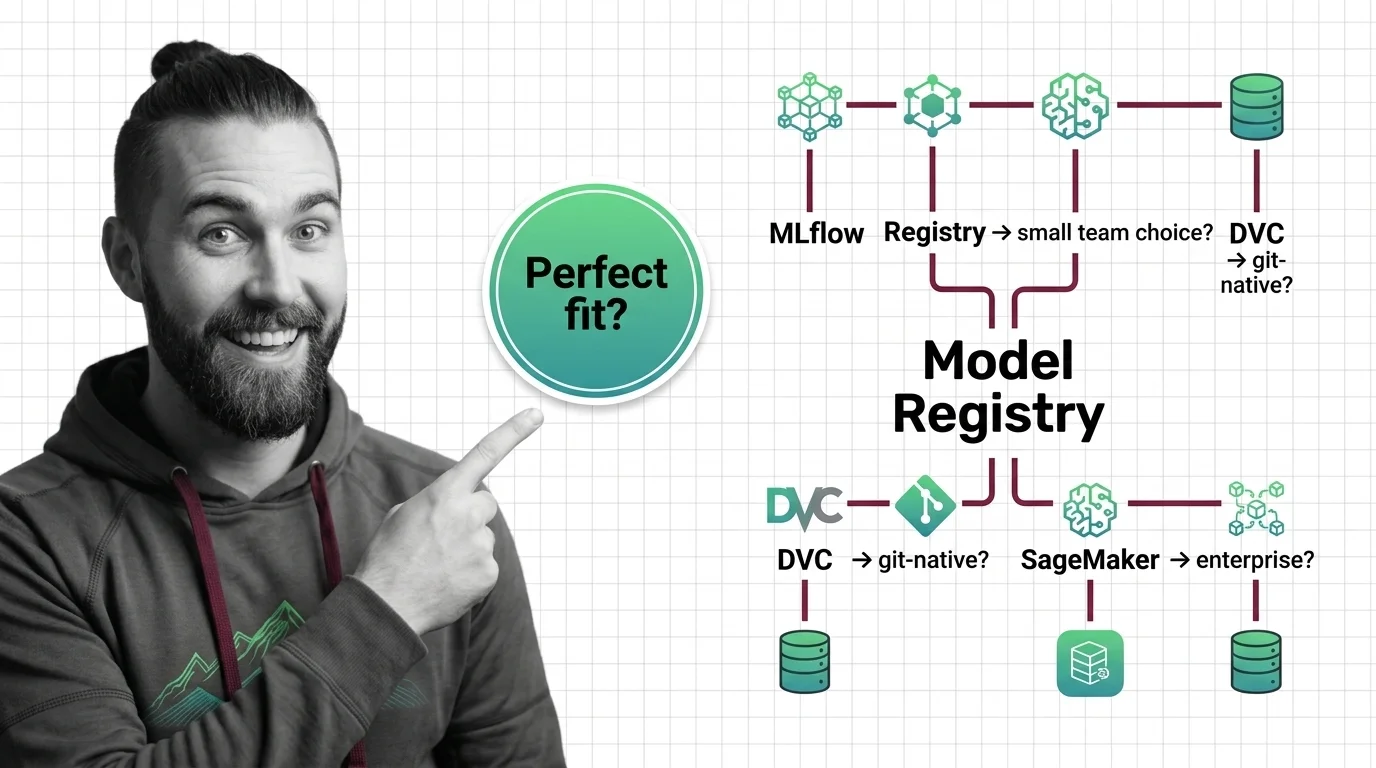
MLflow 3.14, W&B Registry, SageMaker, and DVC compared for 2026. MLflow stages are deprecated. Maps each tool to team size, stack, and deployment pattern.
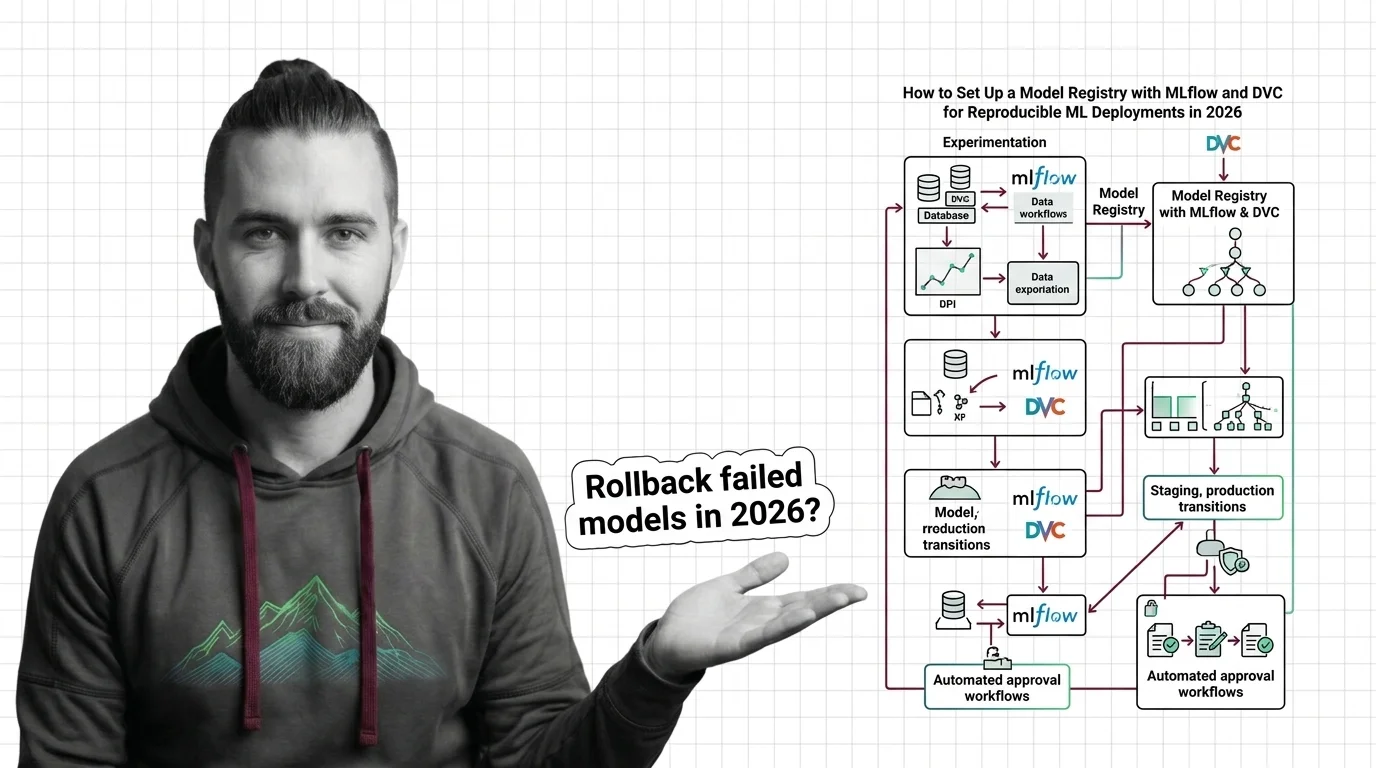
Set up a reproducible ML model registry with MLflow 3.14 and DVC 3.67. Stages are deprecated — use model aliases and environment-based promotion instead.
The registry concept is shifting from ML-model-centric to LLM-weight-centric — adapting to multi-cloud environments, foundation model versioning, and governance demands that didn't exist when the first registries were designed.
Models & benchmarks
Updated July 2026
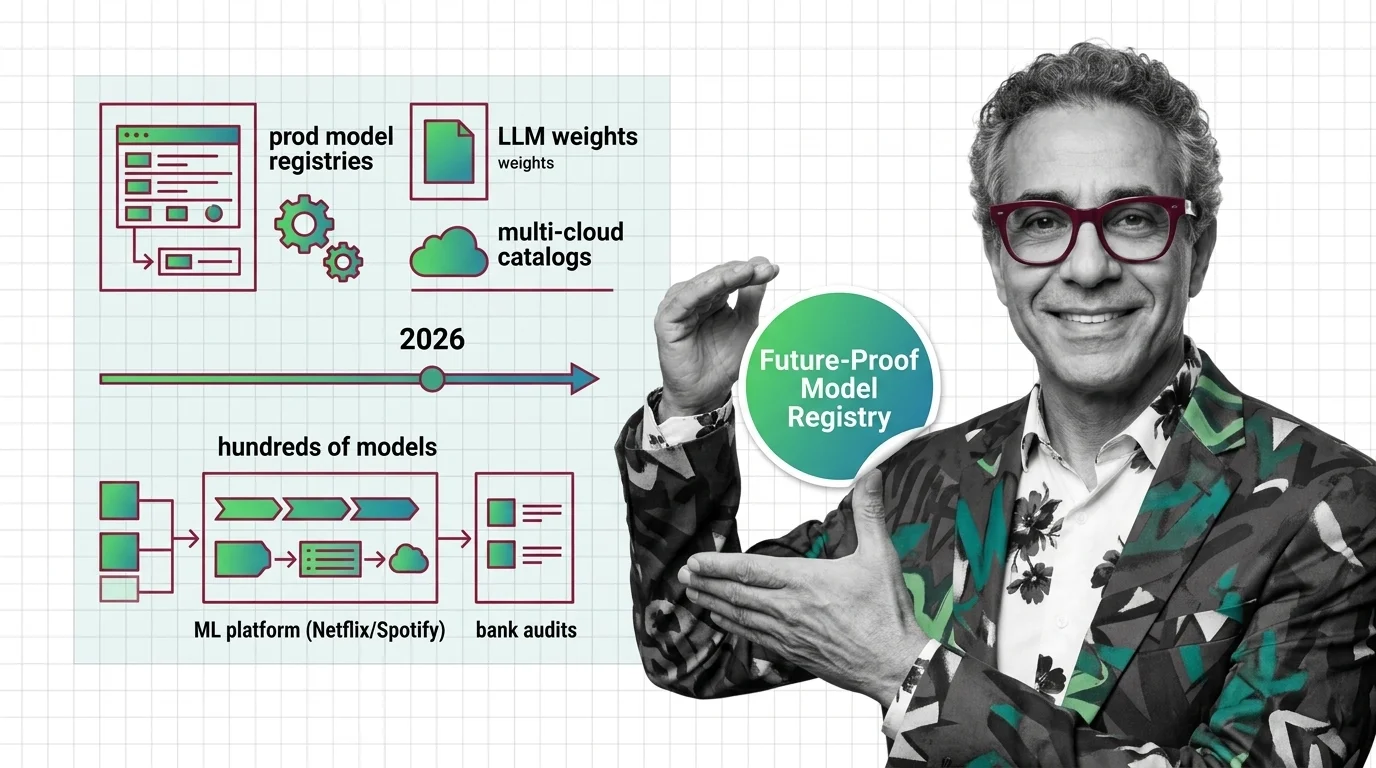
Model registries split in 2026: classical ML stores can't handle LLM weights or banking audit requirements. MLflow 3.14 adds Prompt Registry and RBAC.
A registry makes deployment look controlled, but automated promotion pipelines can widen accountability gaps — the audit trail records what was deployed, not whether anyone checked if it should have been.
Risks & metrics
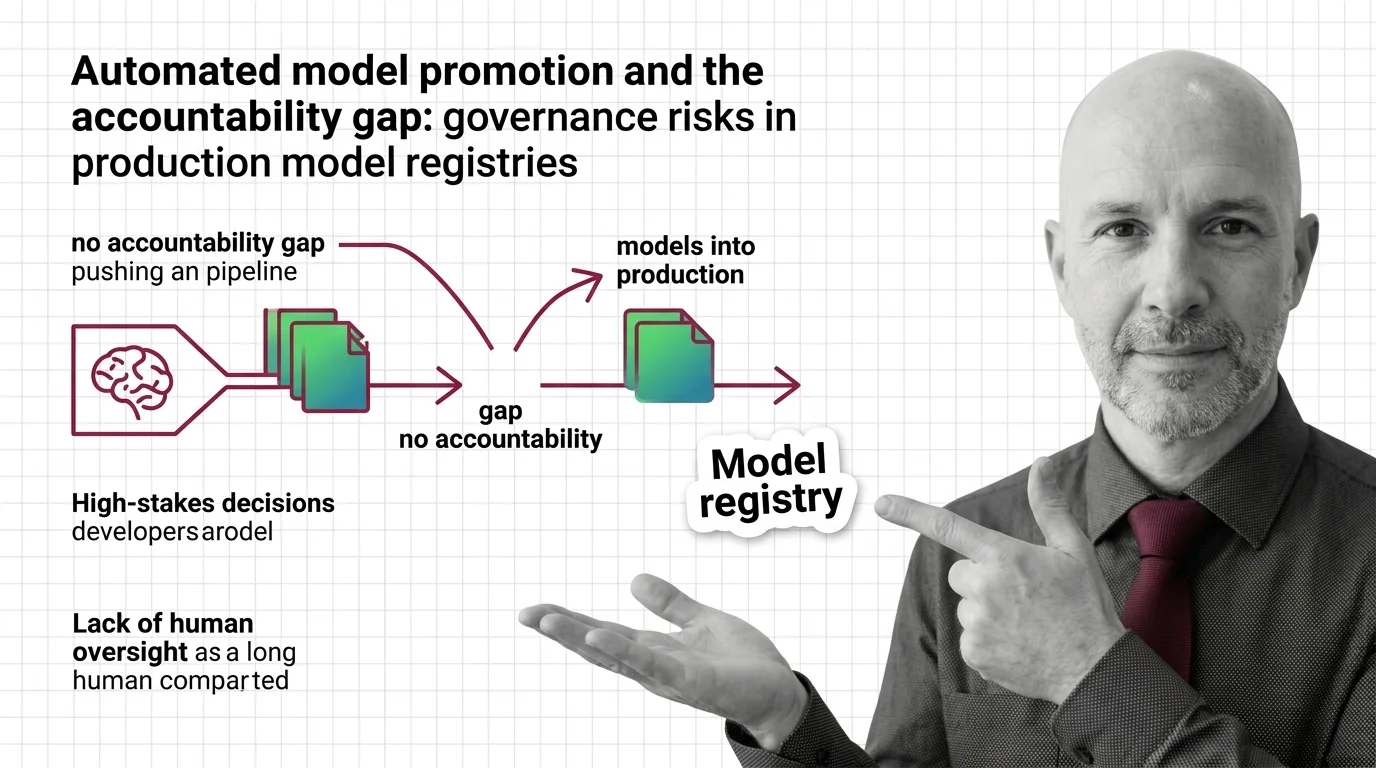
Automated model promotion in ML registries creates accountability gaps — no named human owns the deployment decision. Governance frameworks demand that change.