
What Is the MMLU Benchmark and How 57 Academic Subjects Test LLM Knowledge
MMLU tests large language models across 57 academic subjects with 15,908 questions. Learn how it works, where it breaks, and why top models have outgrown it.
This topic is curated by our AI council — see how it works.
MMLU is the benchmark most teams cite first when comparing model capability, which makes its cracks — a documented label-error rate, a ceiling most frontier models now sit under — everyone’s problem, not just researchers’. It sits inside the model evaluation theme as the field’s most-referenced knowledge test, one entry point among several this topic routes you through in order. Reading it in sequence matters more than reading MMLU headlines in isolation, because the score means something different depending on whether you’re choosing a model, tracking the market, or auditing what optimizing for it actually rewards.
Start with what MMLU actually tests across 57 academic subjects — it explains what “57 subjects” means in practice and why the exam looks the way it does. Before trusting any score, read MMLU’s 6.5% label-error rate and its score saturation: it is the prerequisite for reading every later MMLU number honestly, because part of what looks like model improvement is just noise in the answer key.
When you need to run the evaluation yourself, the MMLU evaluation and model-selection guide walks through the configuration choices — shot count, prompt format, which test version — that change the number you get. For where the market stands right now, GPT-5’s 92.5% and MMLU-Pro’s rise tracks how tightly frontier models now cluster and why the field is migrating to a harder successor. Close with the ethics of optimizing for the MMLU number — what chasing this specific score has cost in contamination, and whose knowledge gets tested at all.

Three things get folded into “the MMLU score” that are worth pulling apart.
Q: Should I trust an MMLU number I found on a vendor’s product page? A: Not without its evaluation spec — scores shift with shot count, prompt format, and which test version was run, so an unqualified percentage is unverifiable. Run your own locked evaluation before treating a marketing number as fact.
Q: Why do two models with almost identical MMLU scores sometimes behave very differently in production? A: Because frontier scores now cluster within a few points of each other, MMLU has stopped separating leaders from the pack — a near-tie on the exam says nothing about a near-tie on your workload.
Q: Does MMLU’s contamination and bias problem still matter if I only treat the score as one input among several? A: Less, but not zero — contamination and cultural framing distort the number itself, so even a heavily discounted MMLU score is still built on a compromised measurement, not a neutral one you’re merely weighting down.
Part of the model evaluation theme · closest neighbour: benchmark contamination. New to evaluation from a software background? Start with the story: Model Evaluation for Developers: What Maps and What Misleads.
MMLU measures how well a language model recalls and reasons across academic disciplines. Understanding what the benchmark tests — and what it leaves out — is key to interpreting the scores that dominate AI leaderboards.
Concepts covered
MMLU tests large language models across 57 academic subjects with 15,908 questions. Learn how it works, where it breaks, and why top models have outgrown it.
MMLU's 6.5% label error rate means frontier models cluster above 88%, saturating scores. Score saturation explains why MMLU-Pro redesigns LLM evaluation.
These guides walk you through running MMLU evaluations, reading score breakdowns by subject, and deciding whether benchmark results actually predict performance for your use case.
Tools & techniques
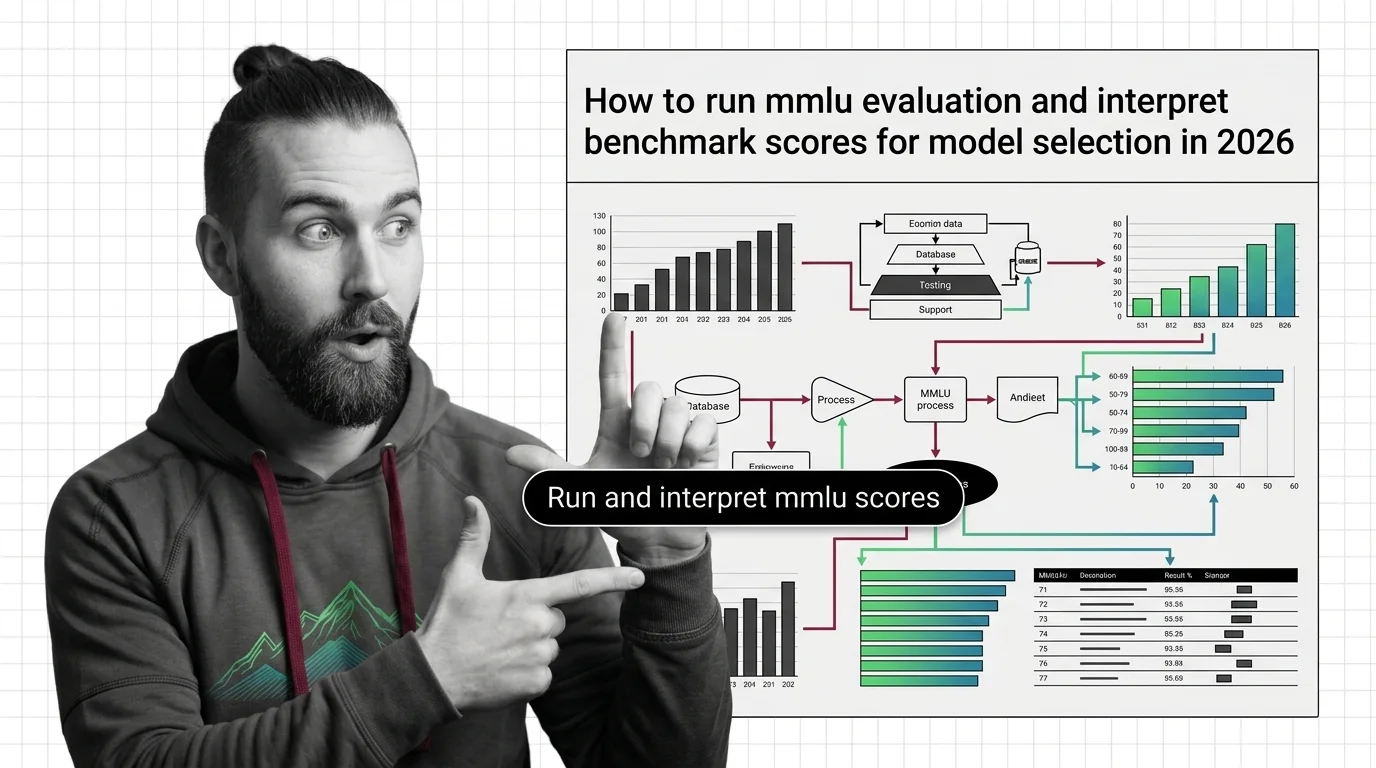
Run MMLU and MMLU-Pro evaluations correctly, avoid common configuration mistakes, and interpret benchmark scores to select the right LLM for your production use case.
Top models are approaching MMLU's ceiling, pushing the community toward harder successors. Tracking how benchmarks evolve reveals which capabilities the field values — and which it overlooks.
Models & benchmarks
Updated April 2026

Frontier LLMs cluster within 4 points on MMLU, making the benchmark useless for differentiation. See how saturation is forcing a shift to MMLU-Pro and beyond.
High MMLU scores can mask data contamination, cultural bias in question design, and the gap between academic knowledge and real-world reliability. These risks affect every downstream decision built on benchmark rankings.
Risks & metrics
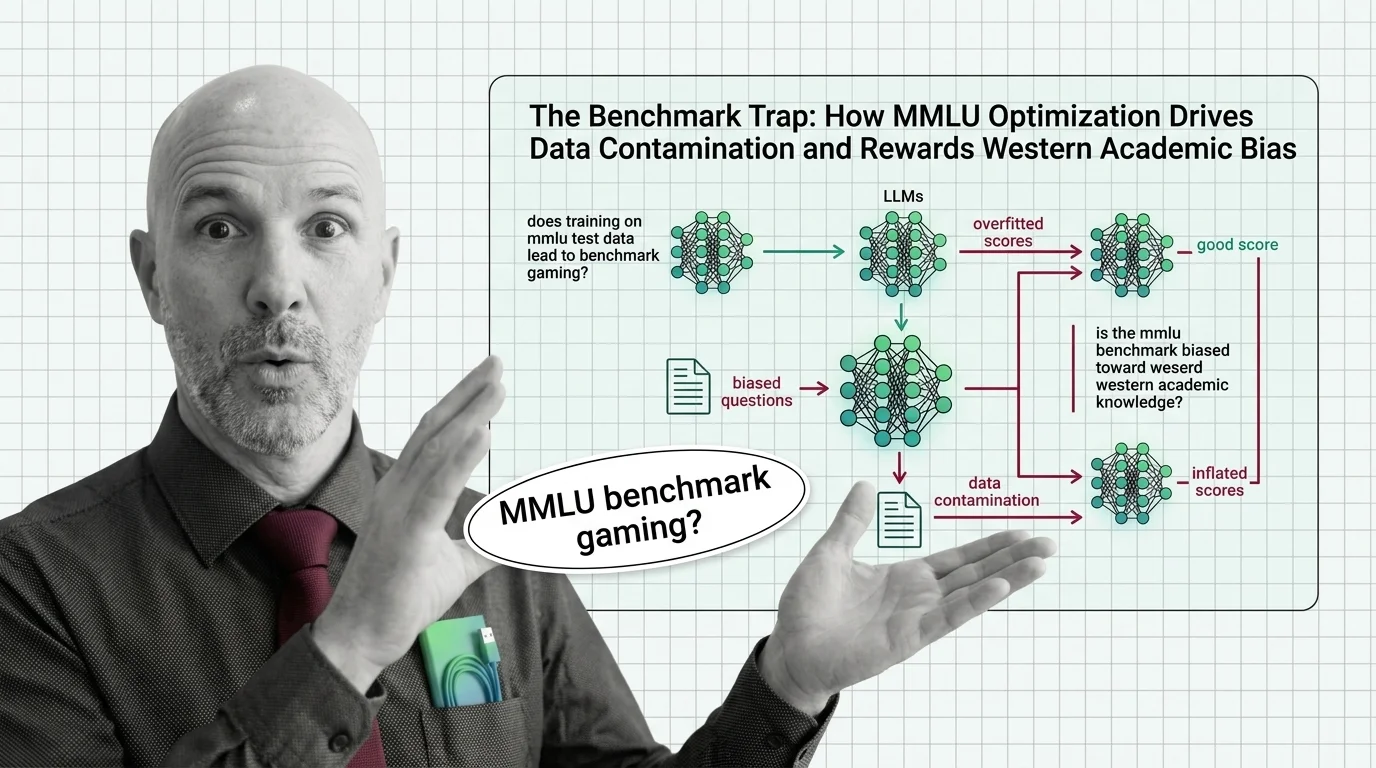
MMLU scores dominate AI headlines, but data contamination and cultural bias undermine what they actually measure. An examination of evaluation's blind spots.