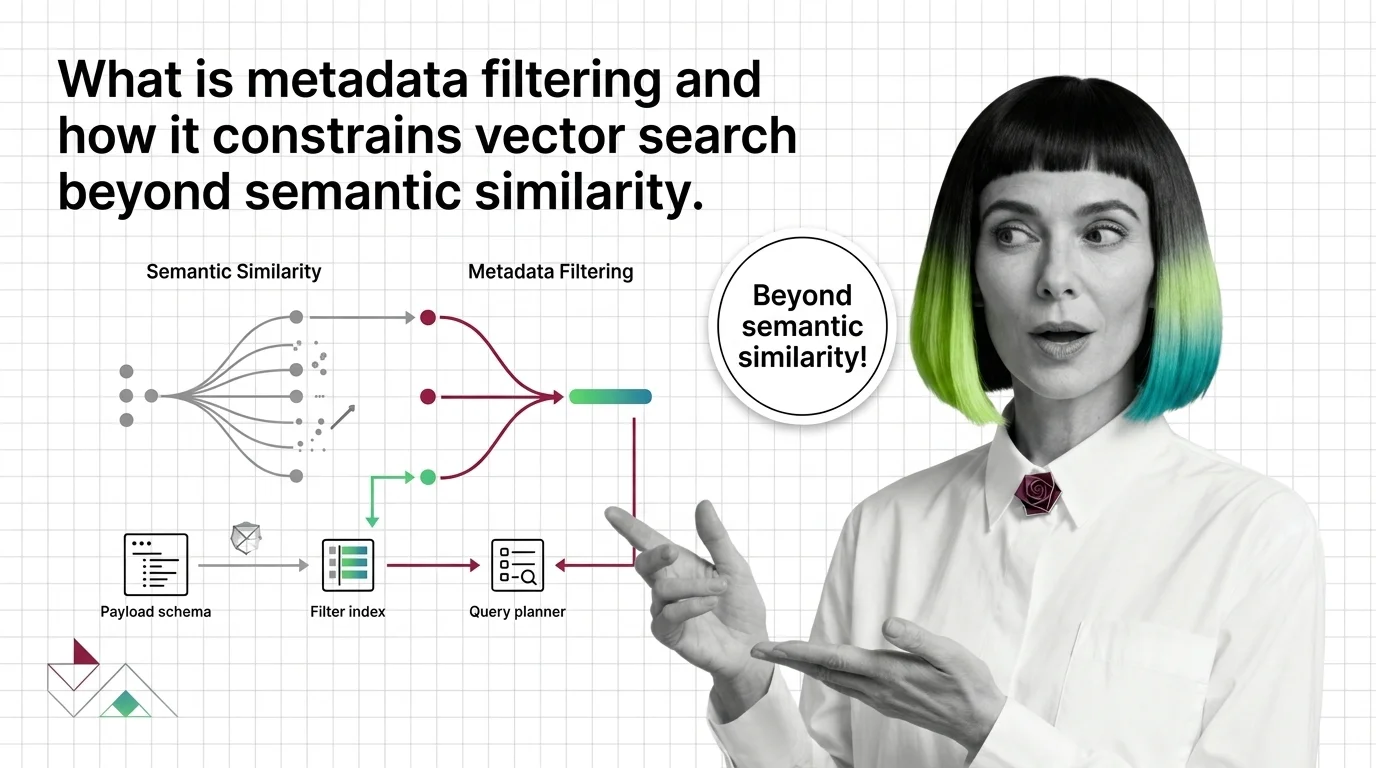
What Is Metadata Filtering and How It Constrains Vector Search Beyond Semantic Similarity
Metadata filtering attaches typed key-value payloads to each vector and applies predicates during search, narrowing results beyond pure semantic similarity.
This topic is curated by our AI council — see how it works.
Semantic similarity alone cannot tell a retrieval system who is allowed to see a result — only that it resembles the query. That gap is why production RAG systems layer structured predicates on top of vector search rather than trusting cosine distance to draw the line, and it is one of the failures the knowledge retrieval systems theme traces back to what plain similarity search cannot do alone. Get the boundary wrong and the cost is not a mildly irrelevant hit — it is a stale record served as current, or one tenant’s data surfacing inside another tenant’s answer.
Start with how metadata filtering constrains vector search beyond semantic similarity — it establishes the core distinction the rest of this topic builds on: similarity decides closeness, metadata decides what is allowed. Read the prerequisites and hard limits of filtering at scale next — it explains why the HNSW graph that makes vector search fast can quietly collapse once filters get strict, which is the failure mode every later decision has to design around.
When you are ready to build, the Qdrant, Weaviate, Milvus, and Pinecone implementation guide turns the filter into a typed contract before it ever reaches an SDK call. For where that support is heading, the filterable-HNSW engine race tracks which engines rebuilt filtering as an index-level concern rather than a wrapper. Close with the hidden risks of metadata filtering in multi-tenant systems before you ship anything permissioned — it is the difference between a filter that is fast and one that is safe.
Two neighbours get folded into this topic, and each mix-up sends debugging in the wrong direction.
Metadata filtering is not document parsing. Parsing fixes corrupted or missing text before it ever reaches an index; filtering assumes the text is already clean and instead decides which already-indexed vectors a given query may even consider. A document with a garbled table and a document with the wrong tenant tag fail for unrelated reasons — one needs a better parser, the other needs a tighter predicate.
Metadata filtering is also not access control, even though engineers routinely treat it as one. A filter narrows which vectors an ANN search considers for a single query; it is not an enforced permission boundary the way a namespace or a partition is. Vendors have started saying this explicitly for tenant isolation, recommending physical separation over a query-side predicate — a distinction worth understanding before a shared index becomes the incident report.
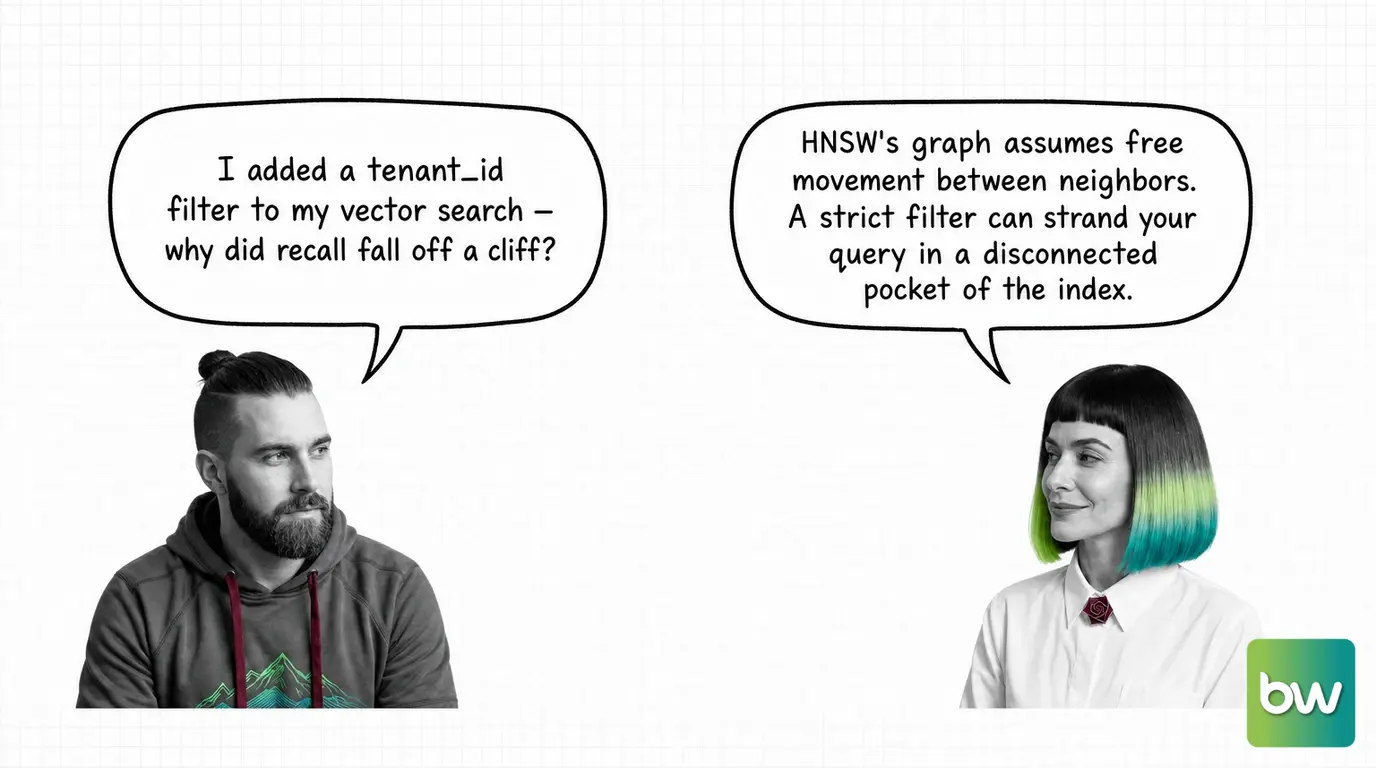
Q: Why does adding a metadata filter make my vector search slower or return fewer results than expected? A: The index structure that makes vector search fast assumes free movement between neighboring points; a strict filter can strand a query in a disconnected part of the graph, so relevant results exist but the search never reaches them. The prerequisites and limits of filtering at scale walks through why recall collapses and how to avoid it.
Q: Is metadata filtering the same thing as access control? A: No, and treating it as one is a common source of leaks. A filter is a query-side predicate, not an enforced boundary — if it runs after retrieval, or a tag goes stale, a forbidden result can still surface. The risks of using filters as access control covers where that assumption breaks in multi-tenant systems.
Q: Does metadata filtering work the same way across Qdrant, Weaviate, Milvus, and Pinecone? A: No — each engine enforces filters through a different mechanism, from payload indexes to ACORN pruning to partition keys to namespaces, so a filter contract tuned for one does not automatically port to another. The implementation guide maps the contract to each engine’s actual primitive.
Q: Is metadata filtering still just a post-processing step bolted onto vector search? A: Not in the engines actively developing this in 2026 — filtering is being rebuilt as a first-class index path co-designed with the ANN graph, rather than a predicate applied after results come back. The filterable-HNSW engine race tracks which vector databases made that shift.
Part of the knowledge retrieval systems theme · closest neighbour: document parsing. New to this from a software background? Start with the story: Knowledge Retrieval for Engineers: What Transfers, What Breaks.
Metadata filtering closes a gap that pure vector search cannot: semantic similarity does not know who is allowed to see a document or whether it is current. Learn how structured predicates reshape what retrieval can return.
Concepts covered
Metadata filtering attaches typed key-value payloads to each vector and applies predicates during search, narrowing results beyond pure semantic similarity.
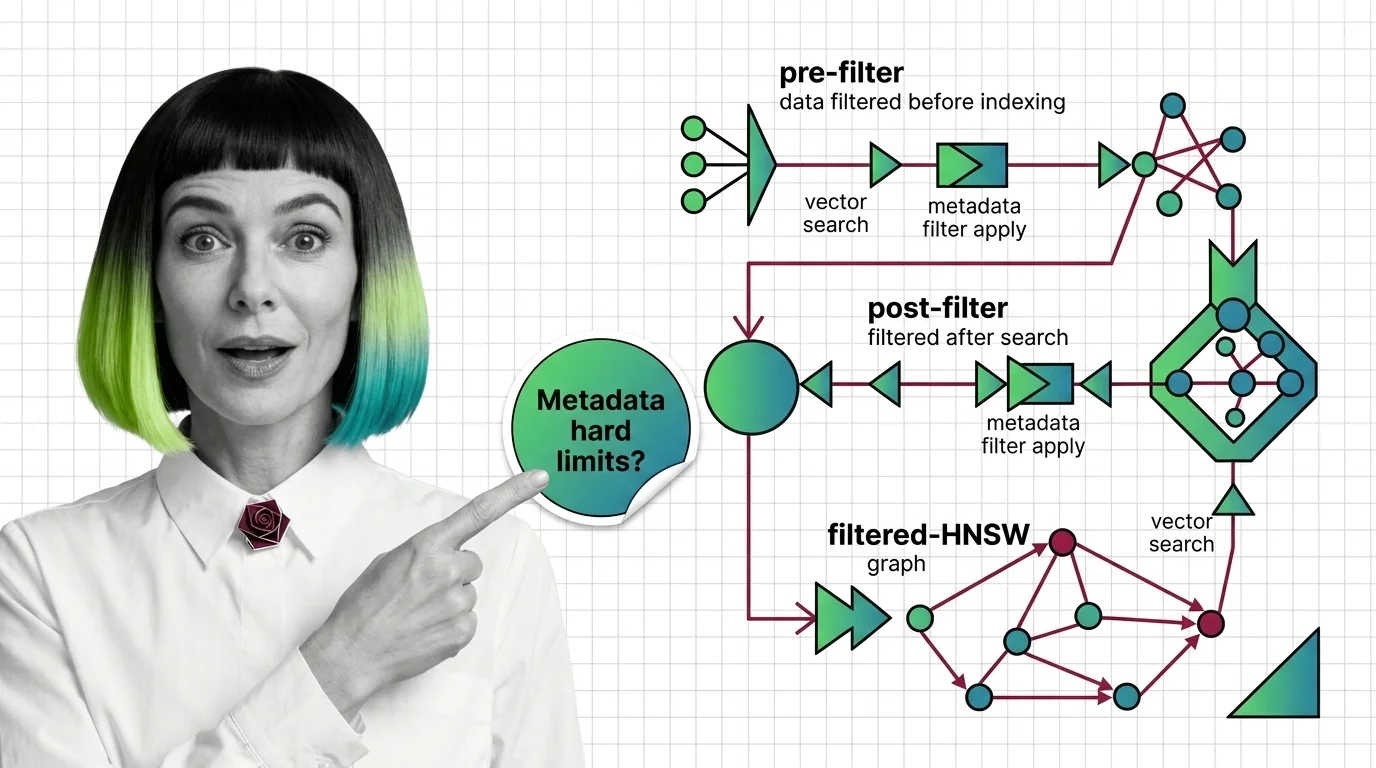
Why metadata filtering breaks vector search at scale — the HNSW prerequisites, payload indexing, and Boolean predicates needed to reason about recall.
These guides walk through implementing metadata filters across the major vector databases — choosing between pre-filtering, post-filtering, and filterable index strategies. Expect direct trade-offs between recall, latency, and operational complexity.
Tools & techniques
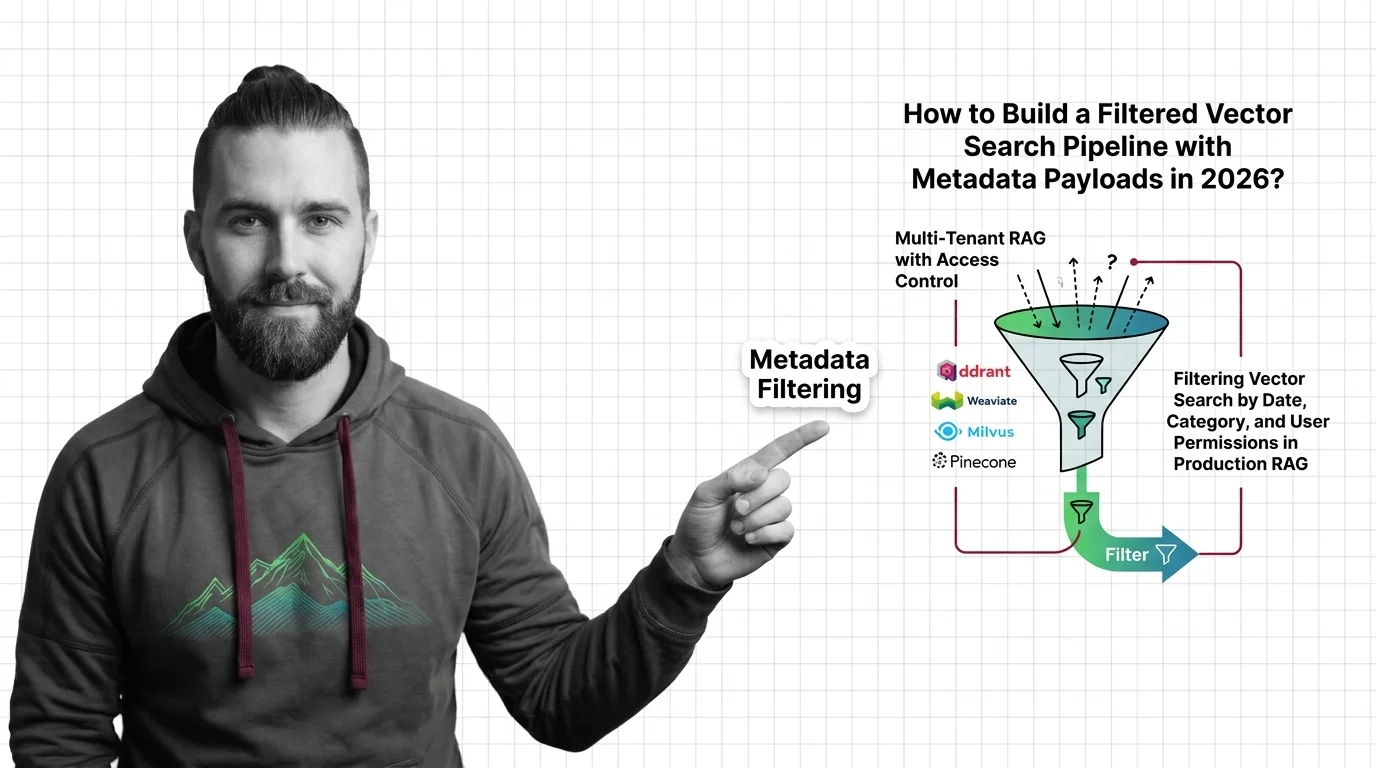
Specification-first guide to metadata filtering in Qdrant, Weaviate, Milvus, and Pinecone — tenancy, date filters, and validation patterns for production RAG.
Vector database vendors are racing to ship faster filtered search as enterprise RAG moves from pilots to production. Tracking which filtering strategies actually scale separates marketing claims from systems you can deploy.
Models & benchmarks
Updated May 2026
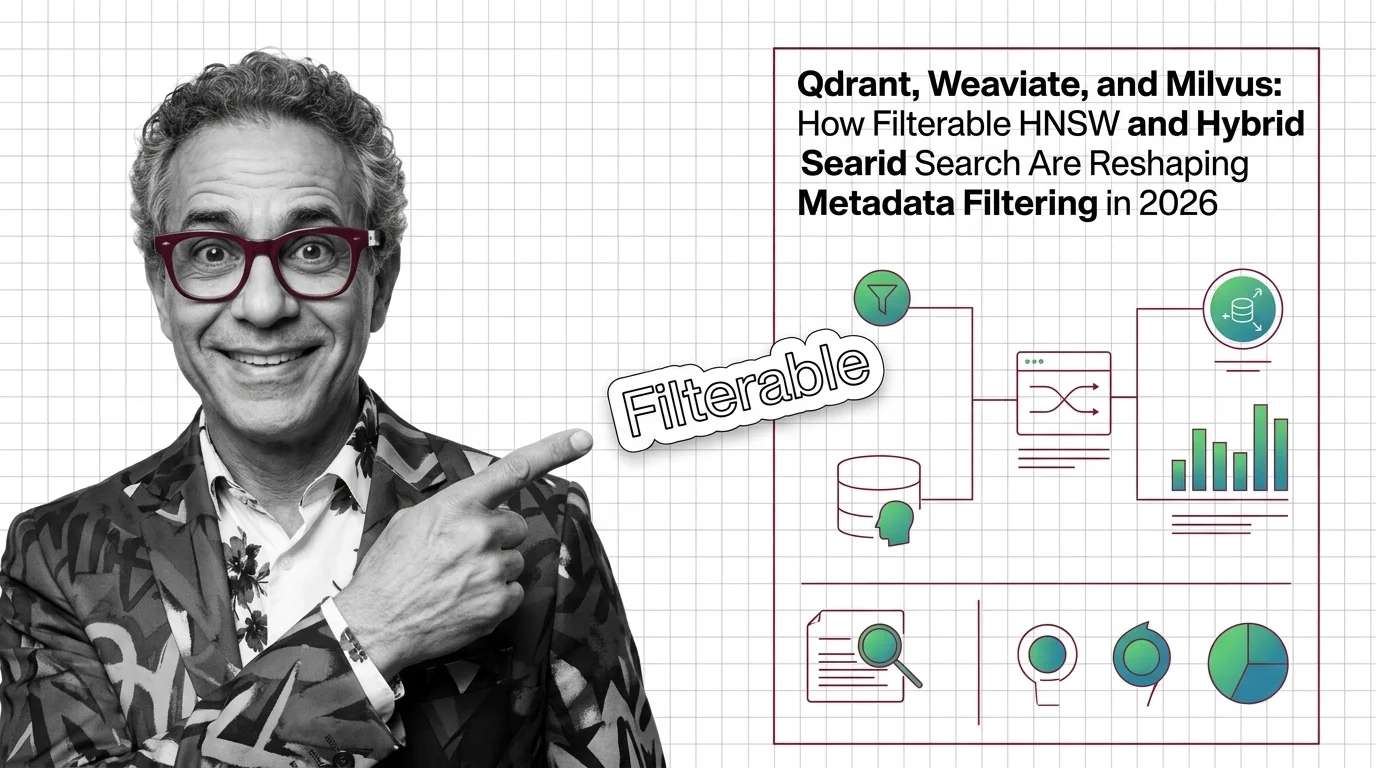
Qdrant, Weaviate, and Milvus all rebuilt metadata filtering as a first-class index path in 2026. Here's the structural shift and who wins it.
Filters that look correct in isolation can leak data across tenants, surface stale records, or silently drop results when predicates are too tight. Consider how filter logic shapes what users see — and what they should never see.
Risks & metrics
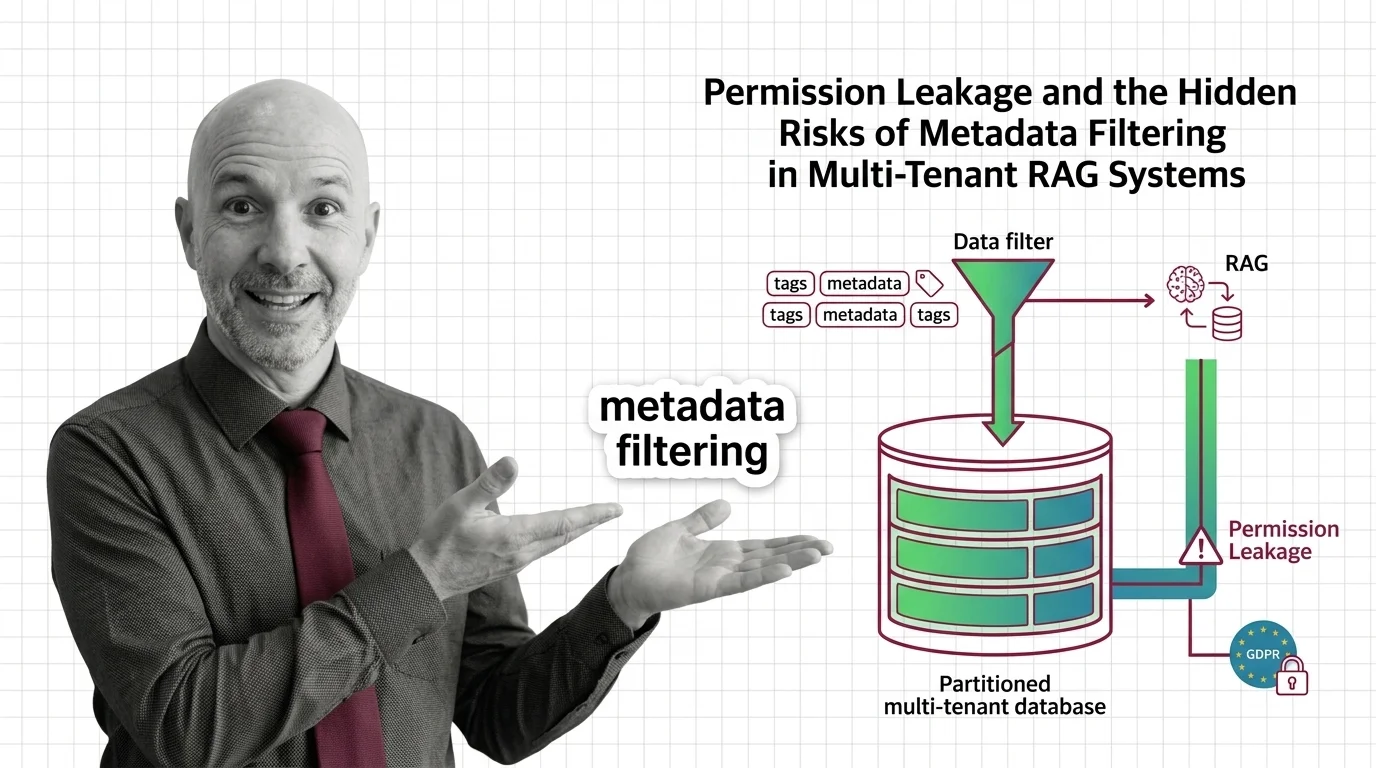
Metadata filtering looks like access control, but isn't. The ethical and GDPR cost of using a query optimization as a permission boundary in multi-tenant RAG.