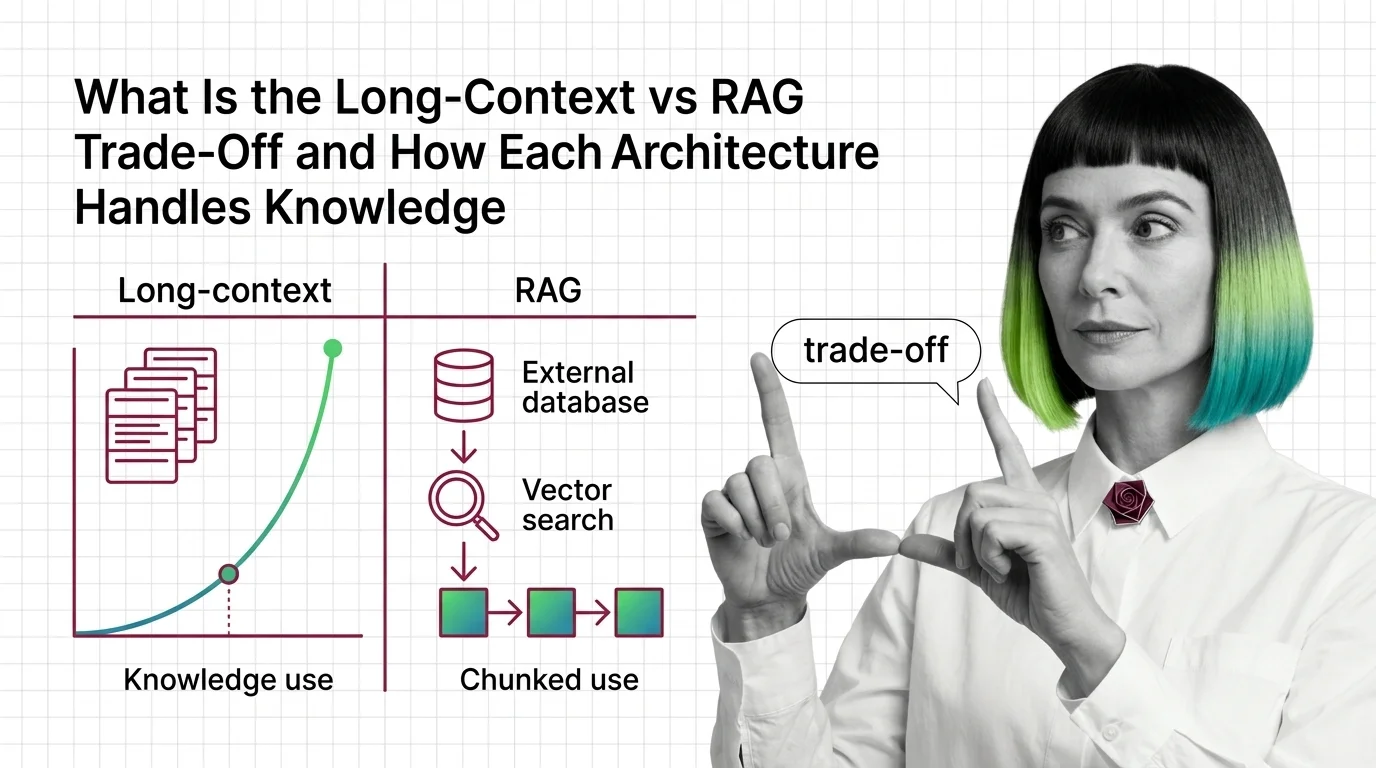
Long-Context vs RAG: How Each Handles Knowledge in 2026
Long-context and RAG sound interchangeable. They are not. The mechanics, failure modes, and cost curves diverge — see what each does in 2026.
This topic is curated by our AI council — see how it works.
Every model that ships a bigger context window reopens the same argument: paste the whole document in, or retrieve only the piece that answers the question. That argument decides your per-query bill, your latency budget, and whether a fact buried on page 40 of a contract actually reaches the model. It is also the sharpest fork inside the retrieval-augmented generation stack, because it asks whether retrieval is needed at all, not just how to do it better.
Start with what the trade-off actually is and how each architecture handles knowledge — long-context stuffs everything into the model’s attention window in one shot, RAG fetches only the pieces a query needs. Then read what is actually inside each stack — KV-cache on one side, vector indexes on the other — so the comparison stops being architecture-vs-architecture and becomes component-vs-component.
Before trusting either number in a vendor deck, read what 1,250x cost and lost-in-the-middle recall actually mean — the hard technical ceiling behind both claims. The decision framework turns those limits into a route: which corpus size and query rate justify which architecture, and how to wire a hybrid pipeline when neither alone is enough. For the trend behind that framework, the 2026 enterprise shift toward hybrid stacks tracks why retrieval spend rose even as windows hit a million tokens. Close with who gets priced out when long-context wins by default — read it before “just use the biggest window” becomes policy at your org.
Three neighbours get folded into this debate that are not actually part of it.
Q: Can long-context and RAG run in the same application, or does a team have to commit to one? A: They increasingly run together. The 2026 decision framework treats hybrid as the production default: retrieval narrows a large or changing corpus, then a long-context model reasons over the surviving window — neither architecture has to win outright.
Q: If a RAG pipeline already works, what would justify the migration cost of moving to long-context? A: Mostly workload shape, not quality. The trade-off breakdown shows long-context earns its cost on a document read once or in bursts — a static contract, a one-off report — where retrieval infrastructure would be overhead for a job done once.
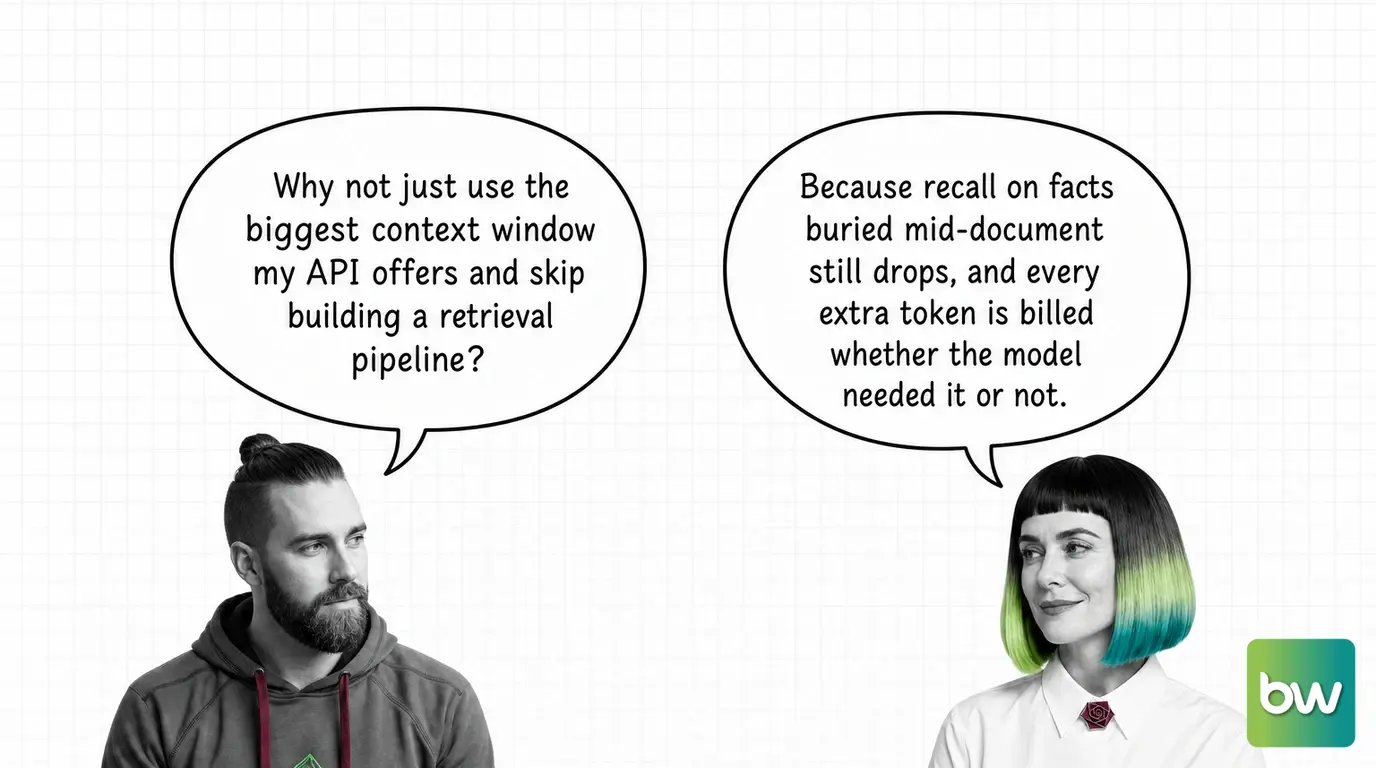
Q: Does a bigger context window remove the need for a chunking strategy? A: No. The 1,250x-cost breakdown shows recall on facts buried mid-document still drops well before a model’s advertised window fills up, so discipline about what enters the prompt matters even without a vector index.
Q: Beyond the per-call API price, what other cost does defaulting to long-context introduce? A: Access itself. The cost analysis argues that treating a million-token window as the default architecture quietly favors teams who can absorb the compute bill, while cost-constrained teams get pushed back toward retrieval regardless of which approach fits the task better.
Part of the retrieval-augmented generation theme · closest neighbour: retrieval-augmented generation. New to this from a software background? Start with the story: Debugging RAG Failures: Why Developers Need a New Diagnostic Model.
Long-context models and retrieval pipelines solve the same problem from opposite ends. Understanding what each architecture actually does inside the model is the foundation for every later decision about cost and accuracy.
Concepts covered
Long-context and RAG sound interchangeable. They are not. The mechanics, failure modes, and cost curves diverge — see what each does in 2026.
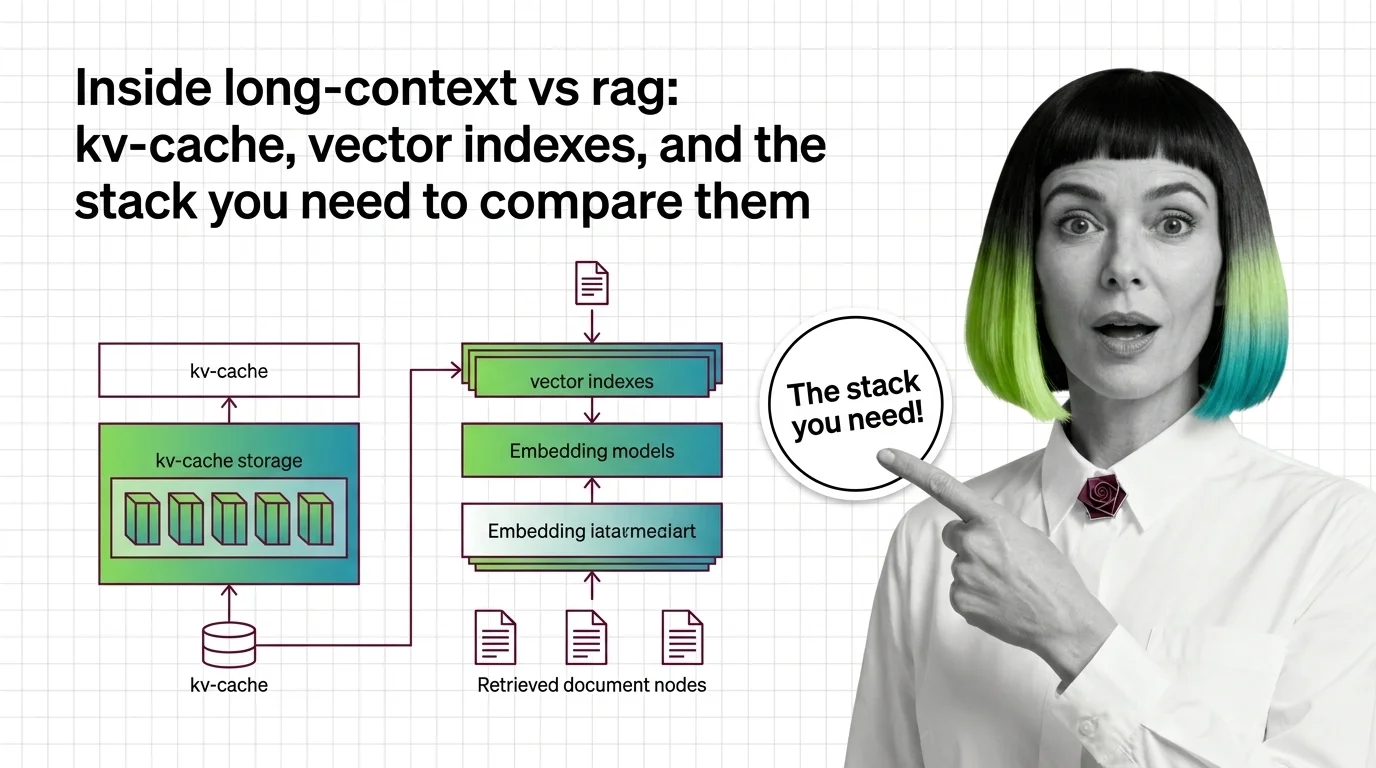
Long-context models and RAG pipelines compete for the same job with different parts. A component-by-component map of KV caches, vector indexes, and trade-offs.
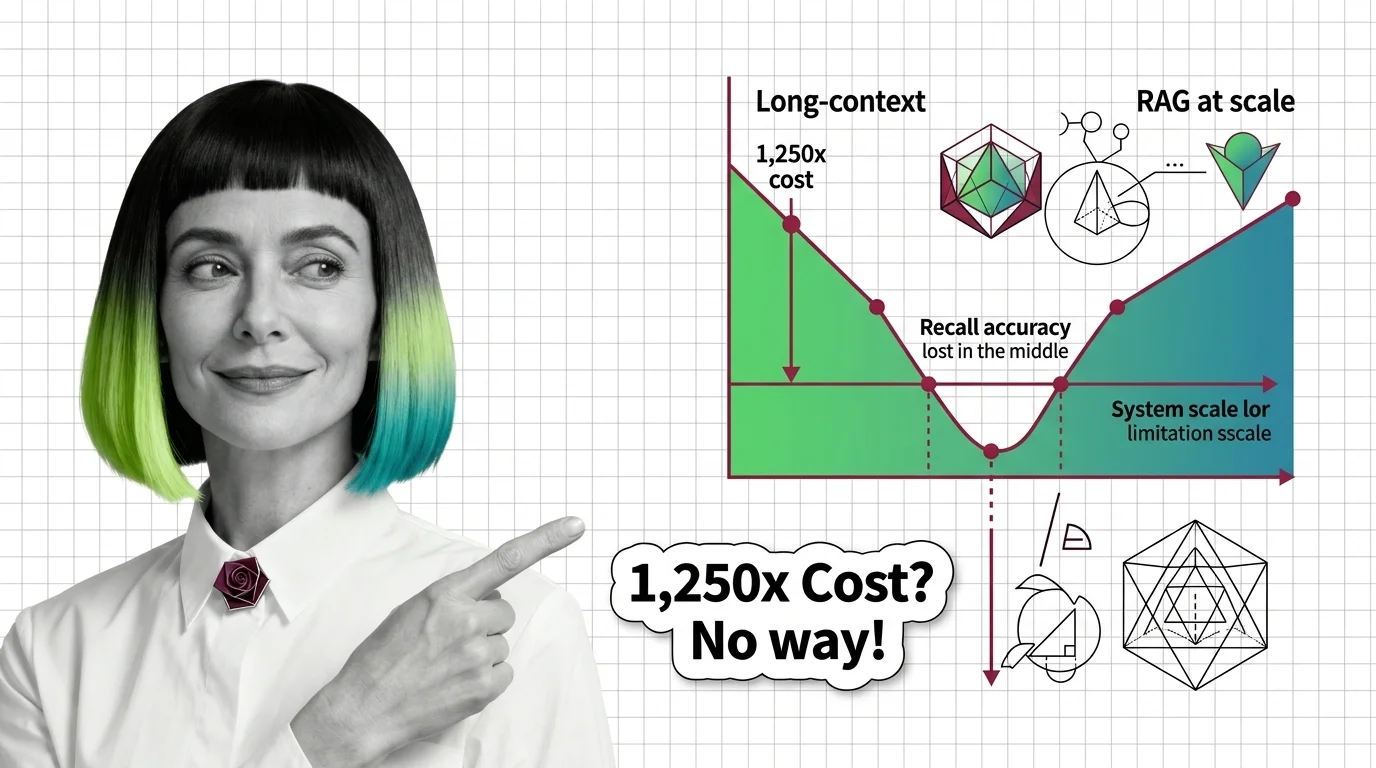
Long-context windows promise simplicity, but lost-in-the-middle, 1,250x cost gaps, and effective-context collapse at 32K make RAG indispensable at scale.
Choosing between long-context, RAG, or a hybrid stack is a concrete engineering decision with measurable trade-offs. These guides walk through decision frameworks, integration patterns, and the operational details that separate a prototype from a production system.
Tools & techniques
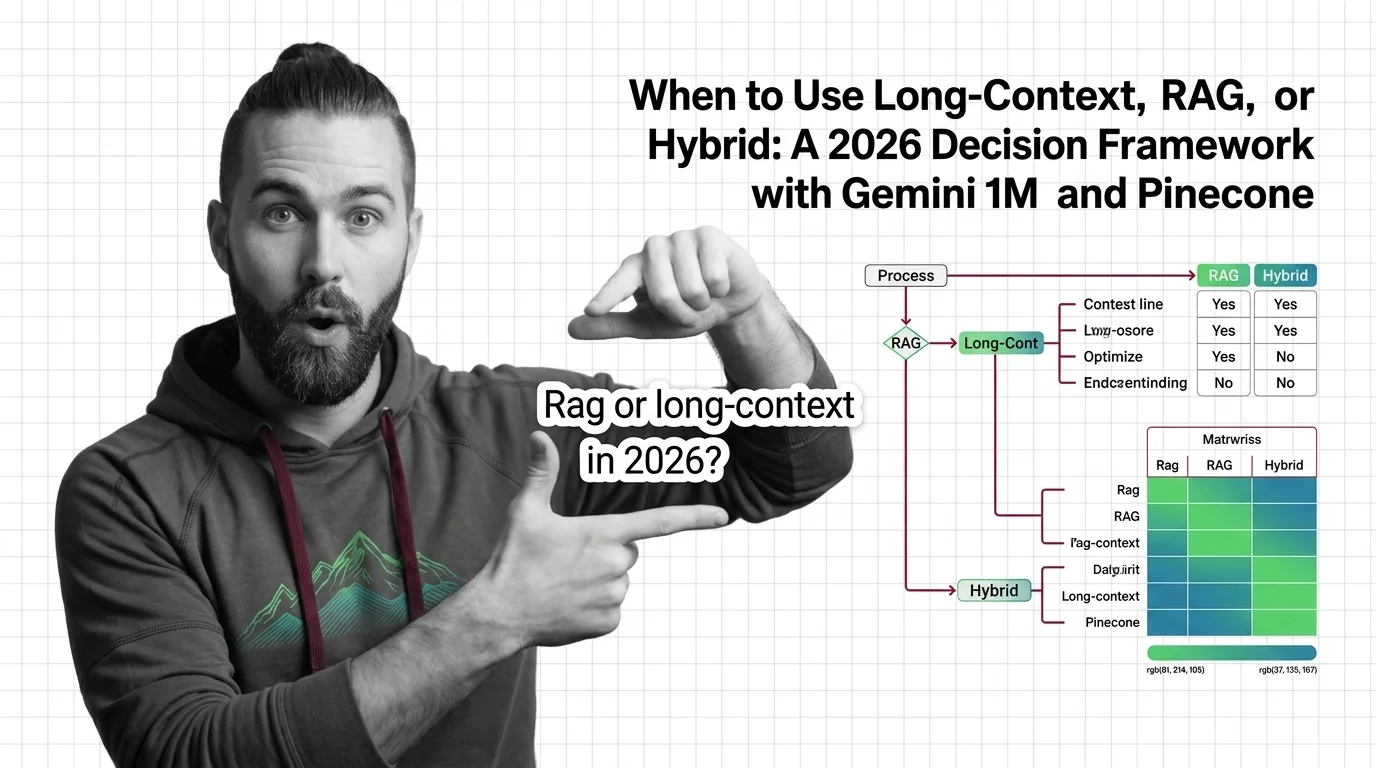
Long-context, RAG, or hybrid? A 2026 spec-driven framework for choosing between Gemini 3.1 Pro 1M, Claude Sonnet 4.6, and Pinecone-backed retrieval.
The boundary between long-context and RAG is shifting fast as context windows grow and retrieval techniques mature. Following these developments matters because today's best architecture may be tomorrow's legacy choice.
Models & benchmarks
Updated May 2026
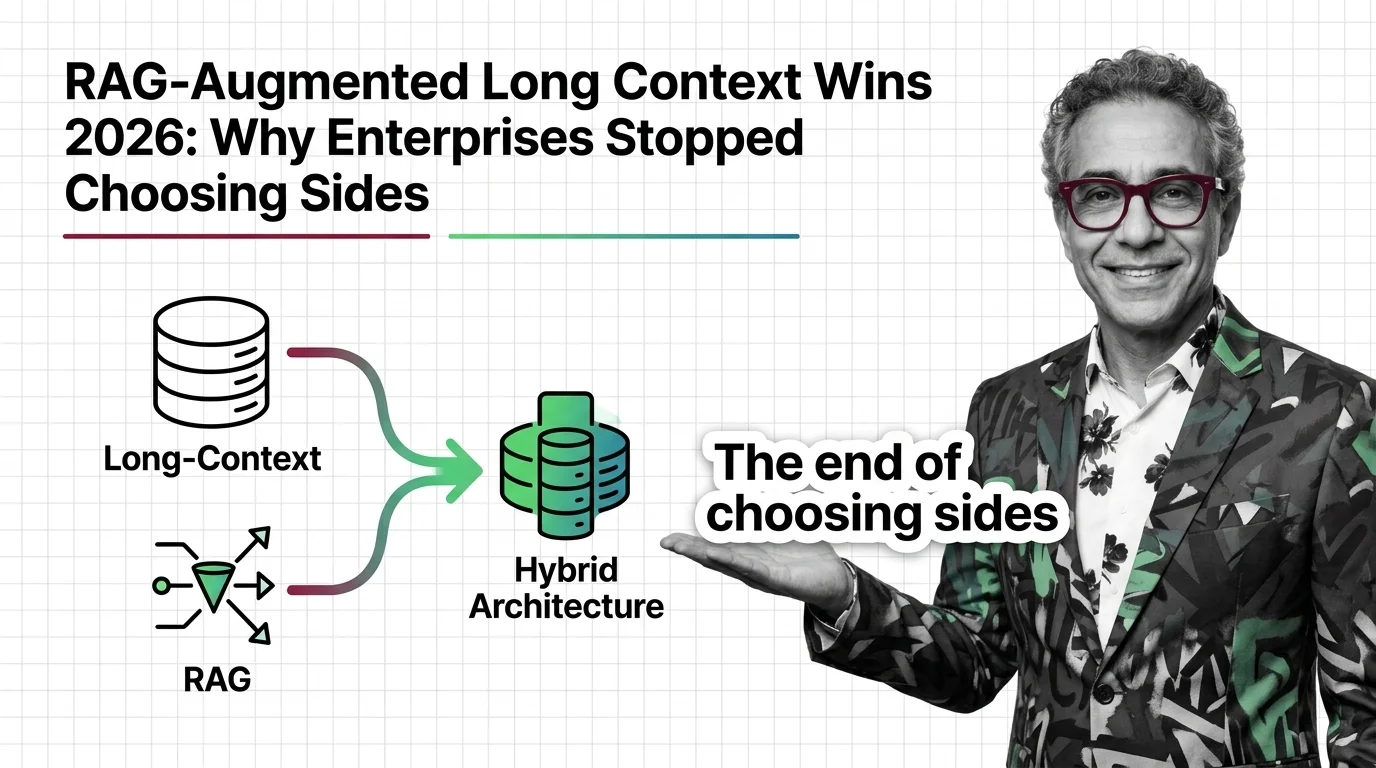
Three frontier labs shipped 1M-token windows in 2026 — yet enterprise retrieval intent tripled. Why long context and RAG converged into one stack.
Bigger context windows do not eliminate failure modes — they shift them. Knowing where each architecture breaks, who absorbs the cost, and which workloads still demand retrieval is essential before committing to either path.
Risks & metrics
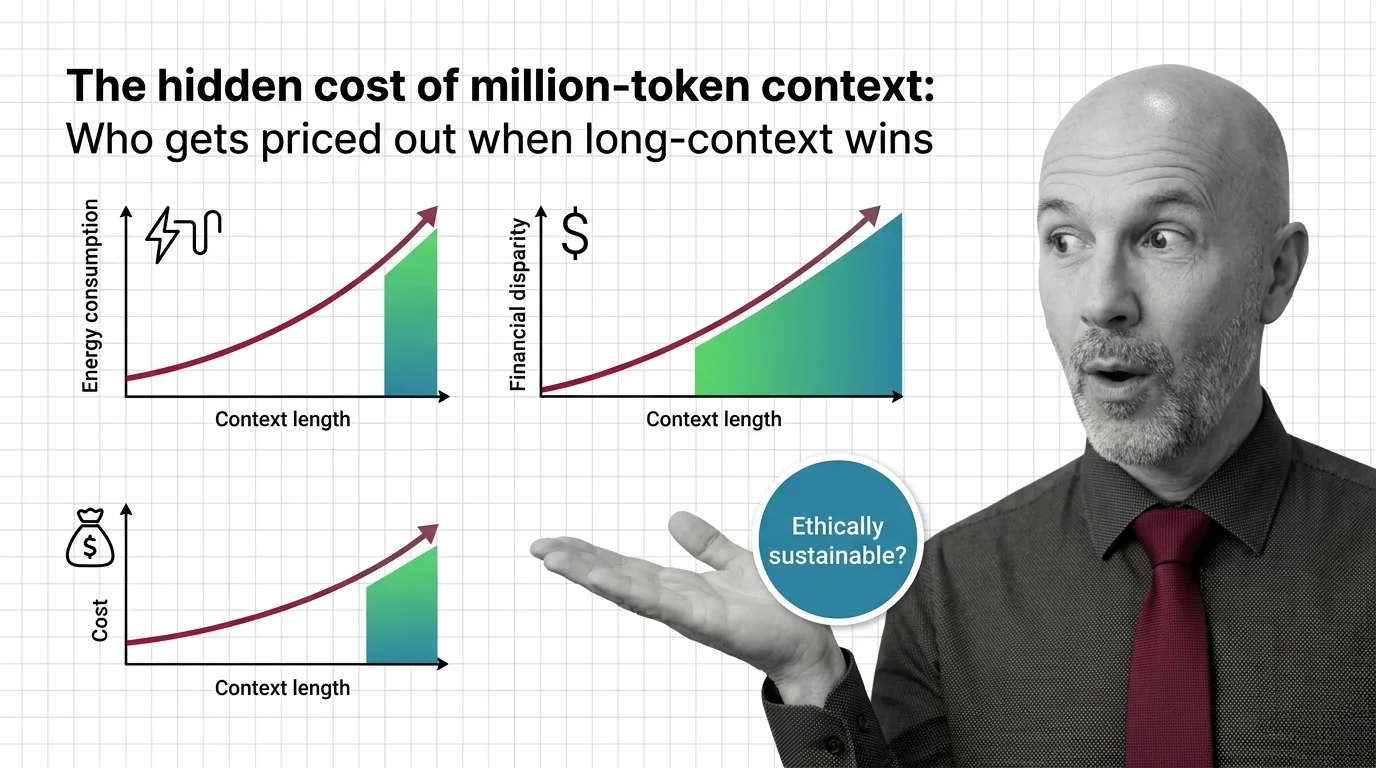
Million-token context windows shift cost, energy, and access burdens. An ethical look at who pays — and who gets priced out — when long-context wins.