Every production LLM call already generates the exact data a compliance review will ask for — the prompt, the response, the token count, the timestamp — the only open question is whether anyone captured it in a form that survives the request. That gap sits one layer past the traces the LLMOps production stack already collects for real-time debugging: logging and auditing is the layer that has to answer for what happened after the incident, the invoice, or the audit request has already landed. Get the schema wrong at the start and a team ends up storing either too little to reconstruct a decision or too much raw user data to store safely — and in a regulated environment that second failure is exposure, not a config mistake.
Specify the logging schema — what every span must capture — before writing any instrumentation code; retrofitting PII redaction after a feature ships means rebuilding the pipeline.
LLM observability has become compliance infrastructure: enterprise security teams now require full agent session traces before signing off on a deployment, not just latency dashboards.
At production volume you cannot log every raw prompt — selective capture with privacy filters and structured retention is the only approach that keeps both debugging value and compliance intact.
OpenTelemetry’s GenAI semantic conventions are still experimental, so pin the schema version you build on — the attribute names you rely on today can still change.
The logging and auditing reading path: schema first, accountability last
Tracing debugs behavior in real time; auditing has to survive being read months later.
How logging and auditing differs from cost tracking and the model registry
Two neighbours get folded into logging and auditing, and each folding hides a different job.
Logging and auditing is not LLM cost management. Both draw on the same token counts and latency numbers a logging pipeline captures, but cost management aggregates that data into budgets, forecasts, and routing decisions, while auditing keeps the individual record intact so a specific call can be reconstructed later. Build the schema for the record first — a cost dashboard can always be computed from it, but a discarded log can never be un-discarded.
Logging and auditing is not the model registry, either, even though both get called “the audit trail.” The registry is the system of record for which model artifact and version is actually deployed; logging is the system of record for what that deployed model actually did on a given request. A registry entry answers “which model was live”; a log entry answers “what did it say, to whom, and what did it cost.” Teams that keep only one of the two cannot answer both questions when an incident review asks.
Common questions about LLM logging and auditing
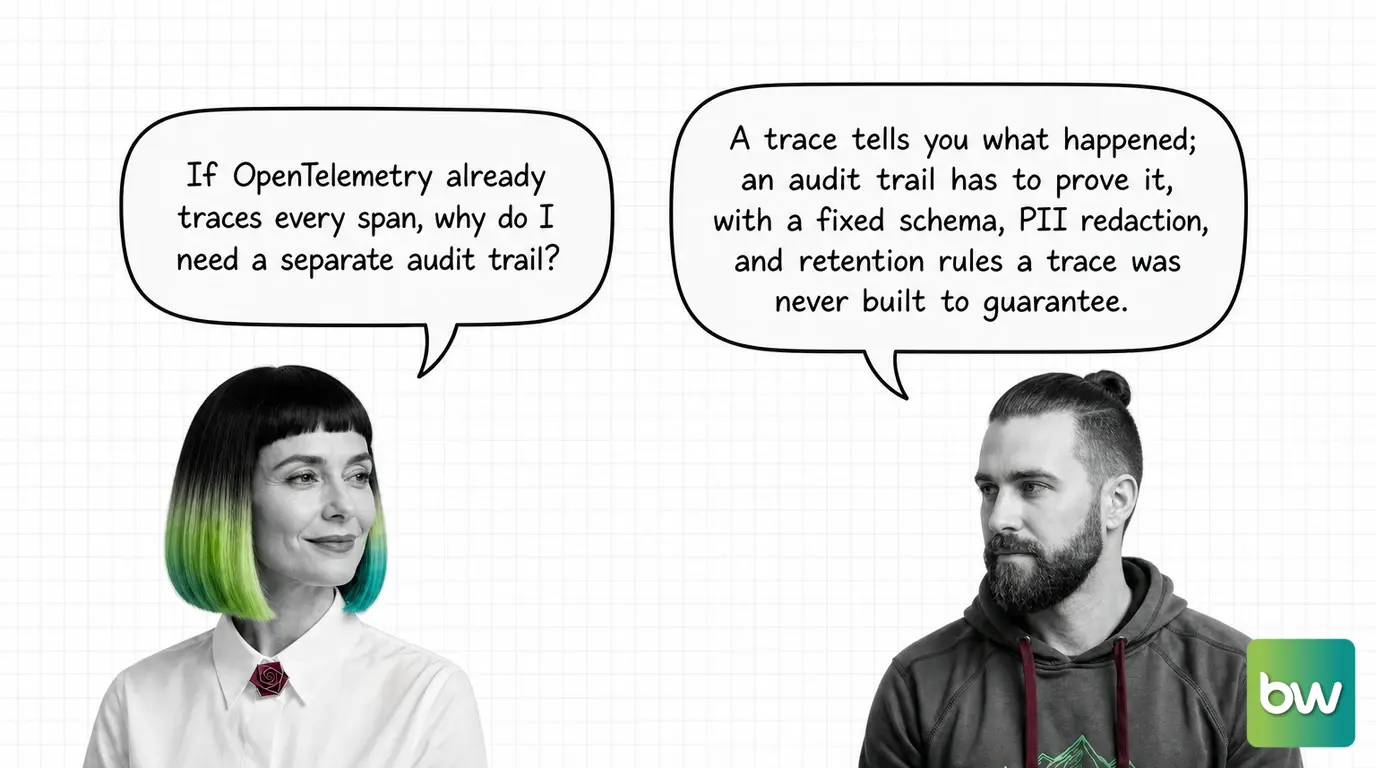
Q: Do I still need a dedicated audit trail if I already have OpenTelemetry tracing in place?
A: Tracing and auditing overlap in the data they capture but not in what they guarantee. A trace is built for real-time debugging and can drop or sample spans; an audit trail needs a fixed schema, retention policy, and PII handling a trace was never designed to hold, which is why the pipeline guide treats the schema as a separate contract.
Q: Should PII redaction happen before a prompt is logged, or after?
A: Before — redacting after storage means the raw, unmasked version already exists somewhere. The technical limits of logging at production scale covers why selective capture with privacy filters has to sit in front of storage, not behind it.
Q: Why are enterprise security teams suddenly asking for full session traces, not just LLM call logs?
A: Because agentic systems make tool calls and multi-step decisions that a single LLM call log does not show. How LangSmith, AgentOps, and Arize Phoenix turned observability into compliance infrastructure covers why a security sign-off now expects the whole agent session, not one endpoint.
Q: Who actually benefits from an LLM audit trail — the company or the people whose prompts it records?
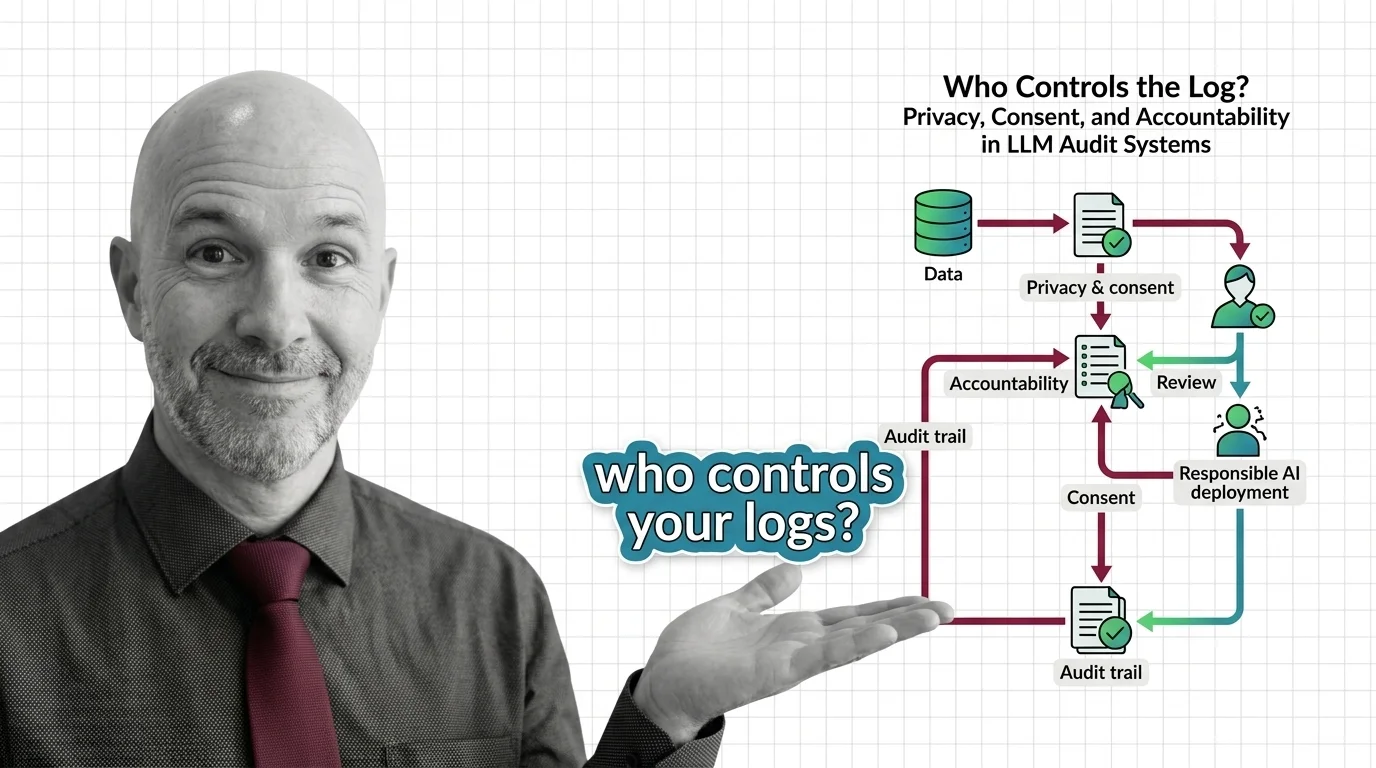
A: Both, and unevenly — the log protects the organization from an unanswerable incident review, but the same record can surface exactly what someone asked, to whoever has access to read it. Who controls the log traces that asymmetry directly.
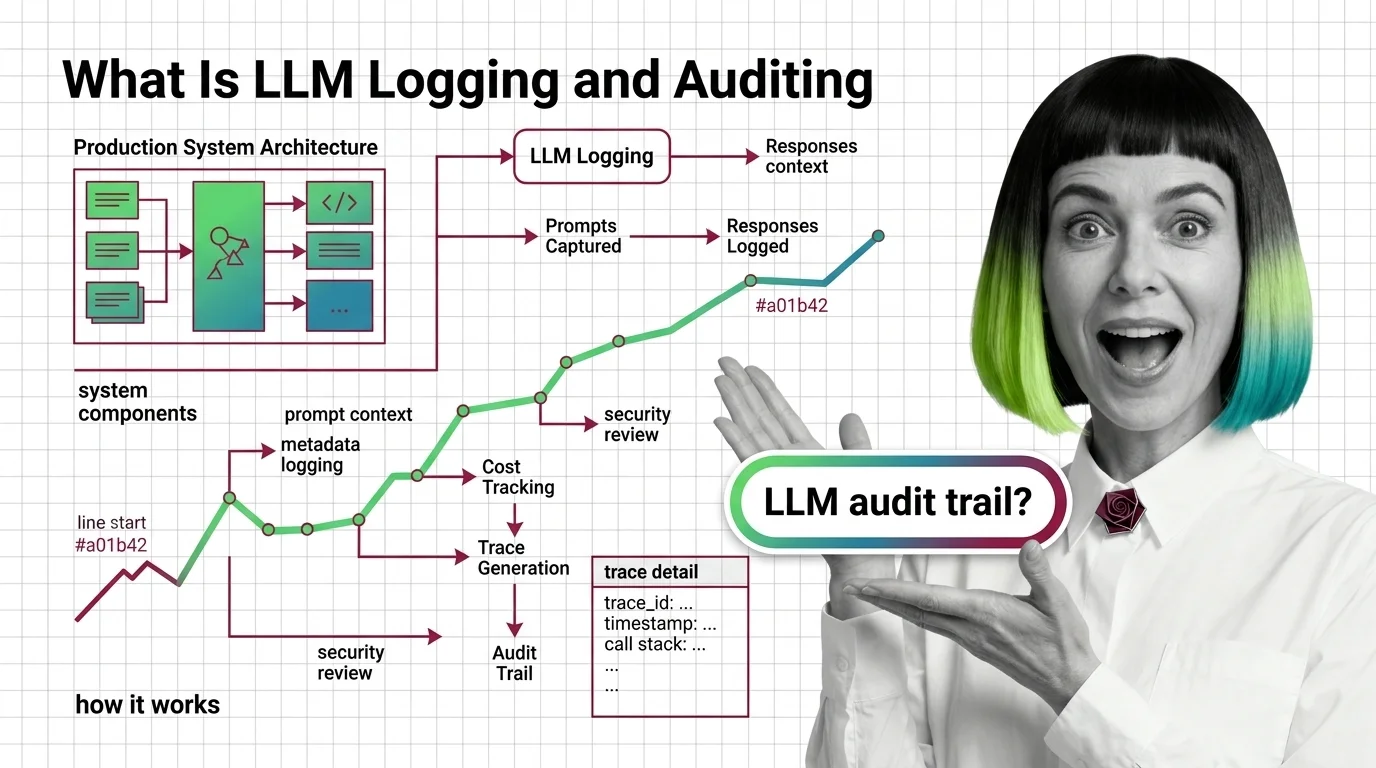
LLM logging captures every prompt, response, and token event flowing through a production system — the raw material for debugging, compliance, and cost attribution. The schema you design upfront determines whether that data becomes insight or noise.
LLM logging captures prompts, tokens, latency, and costs per call. OTel GenAI trace hierarchies let teams reconstruct what a production system did — and why.
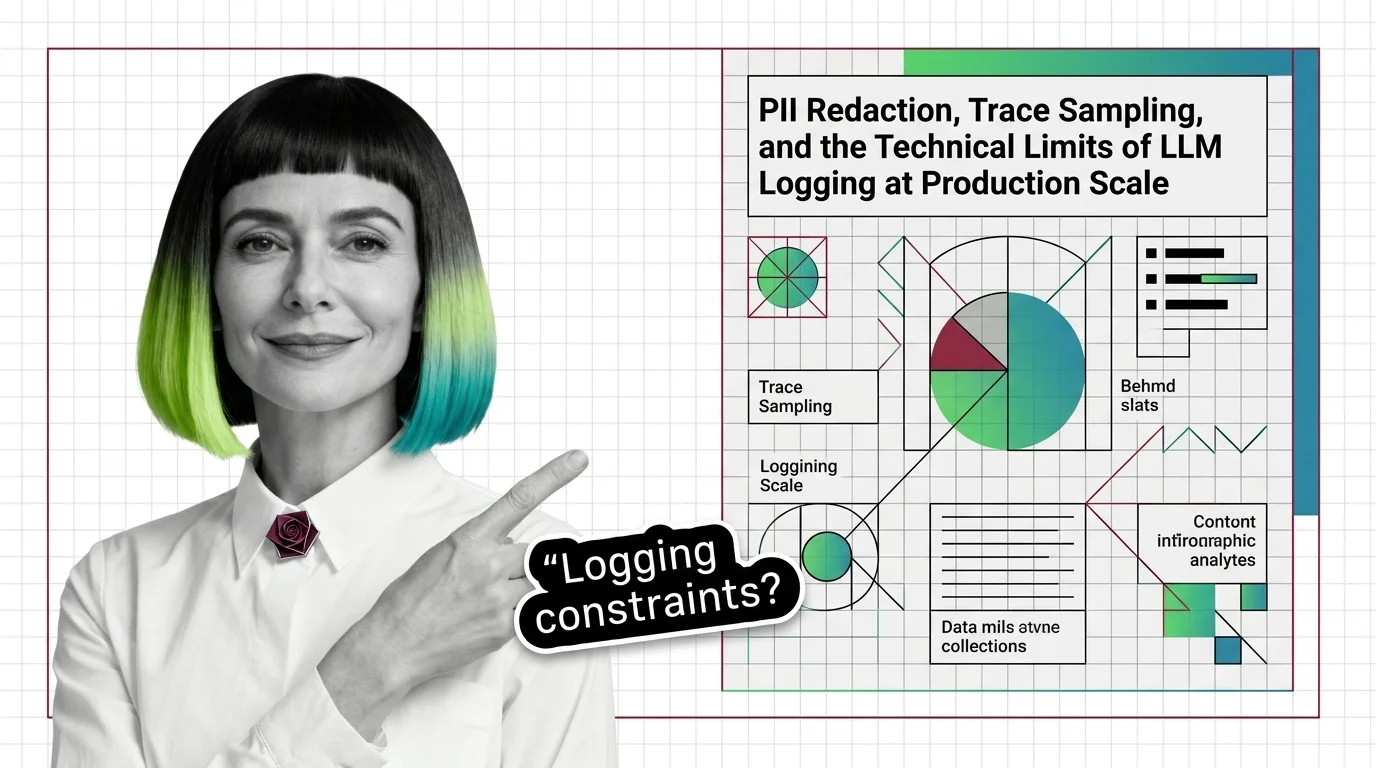
LLM logging at scale pits capture fidelity against PII risk and cost. Tail sampling, PII redaction, and immutable audit logs are the tradeoffs teams navigate.
2
Build with LLM Logging and Auditing
These guides cover building a logging pipeline that handles PII redaction, trace sampling, and cost attribution without choking throughput. You will wire observability tools into a working stack and navigate the completeness-versus-performance trade-off.
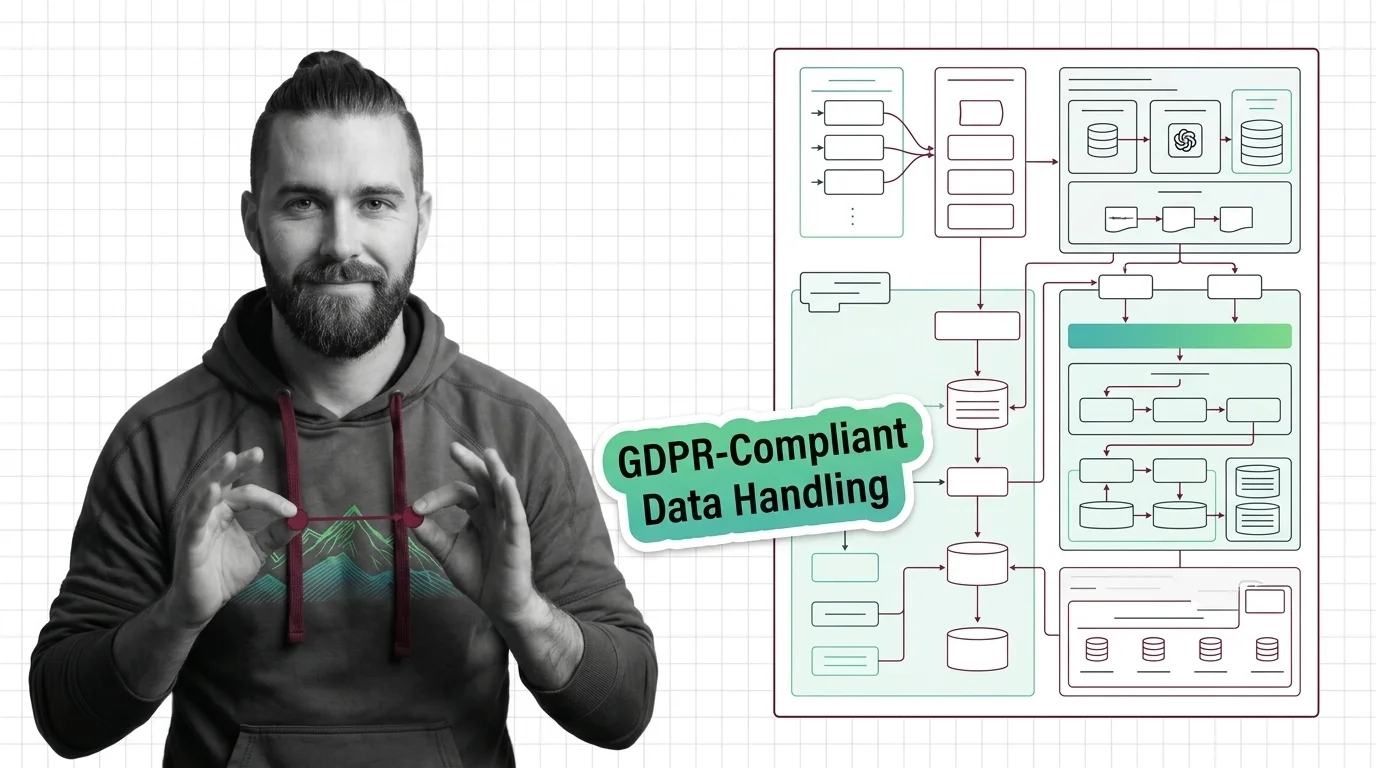
Structured LLM logging in 2026: architect a pipeline with Langfuse v3, MLflow 3.14, and OTel gen_ai.* that covers cost attribution and GDPR compliance.
3
What's Changing in 2026
Observability tooling for LLM systems is maturing fast, with specialized platforms emerging that unify tracing, evaluation, and cost dashboards in one layer. Missing these shifts means building custom infrastructure that off-the-shelf tools already solve better.
LangSmith, AgentOps, and Arize Phoenix lead LLM logging in 2026. OTel GenAI conventions are pushing all three toward unified compliance-grade agent tracing.
4
Risks and Considerations
Every logged prompt is a potential privacy exposure — capturing user input without consent or proper PII redaction creates compliance liabilities that grow with log volume. Audit systems without access controls can surface sensitive interactions to unintended audiences.
LLM audit logs are behavioral records, not telemetry. GDPR employee consent for monitoring is invalid under EDPB — who the log serves is a design choice.