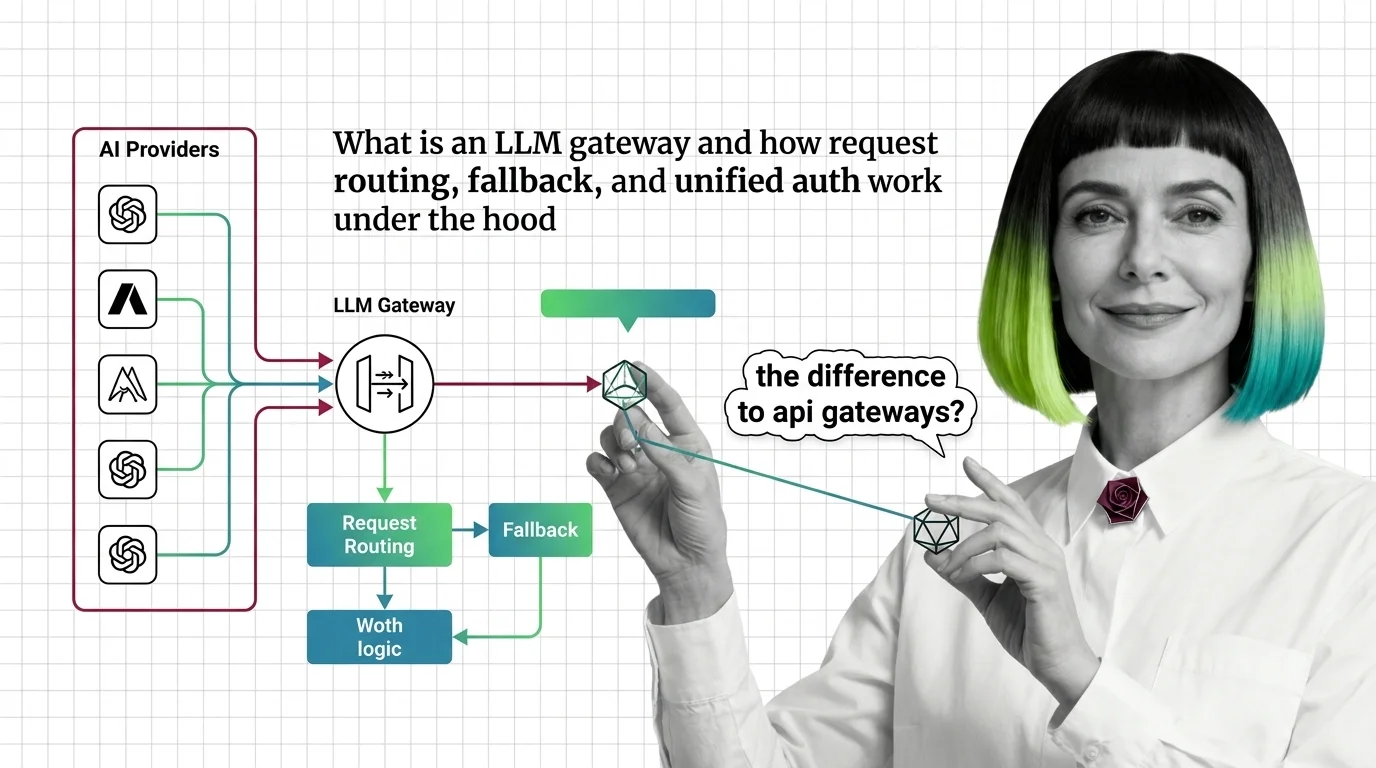
What Is an LLM Gateway and How Request Routing, Fallback, and Unified Auth Work Under the Hood
LLM gateway: middleware routing app requests across AI providers, with fallback, unified auth, and token tracking. Semantic caching cuts costs 20–40%.
This topic is curated by our AI council — see how it works.
Every model call your application makes already passes through some kind of proxy — the only question is whether your team built it on purpose or backed into it during the first outage. Once a second provider, a third internal service, or the first agent that fires dozens of calls per task shows up, ad-hoc client code turns into unmanaged API keys and retry loops nobody owns. The LLM Gateway is where the LLMOps stack puts a name on that sprawl and gives it one place to live — the control point most of the other production concerns in the theme assume is already in place.
Start with how request routing, fallback, and unified auth work under the hood — it is the definition this pillar deliberately skips, and every later decision assumes you already have this picture. Follow it immediately with the four architecture components — rate limiting, virtual keys, semantic caching, and observability: together the two explainers give you the full shape of what a gateway actually does to each request.
Before you commit to running one, read the counterweight: gateway latency, single points of failure, and the hard engineering limits of proxy architecture prices the overhead in milliseconds and names the failure modes the vendor pages leave out. Once you’ve accepted that trade-off, the LiteLLM/Portkey deployment guide turns the architecture into a working config with fallback chains you can actually run. For where the category is moving, FloTorch, Bifrost, and OpenRouter’s 2026 push into agentic routing and edge caching shows the market fragmenting into specialized tiers. Close with the harder question the roadmap doesn’t answer: vendor lock-in, data sovereignty, and the ethics of routing all AI traffic through a single chokepoint.
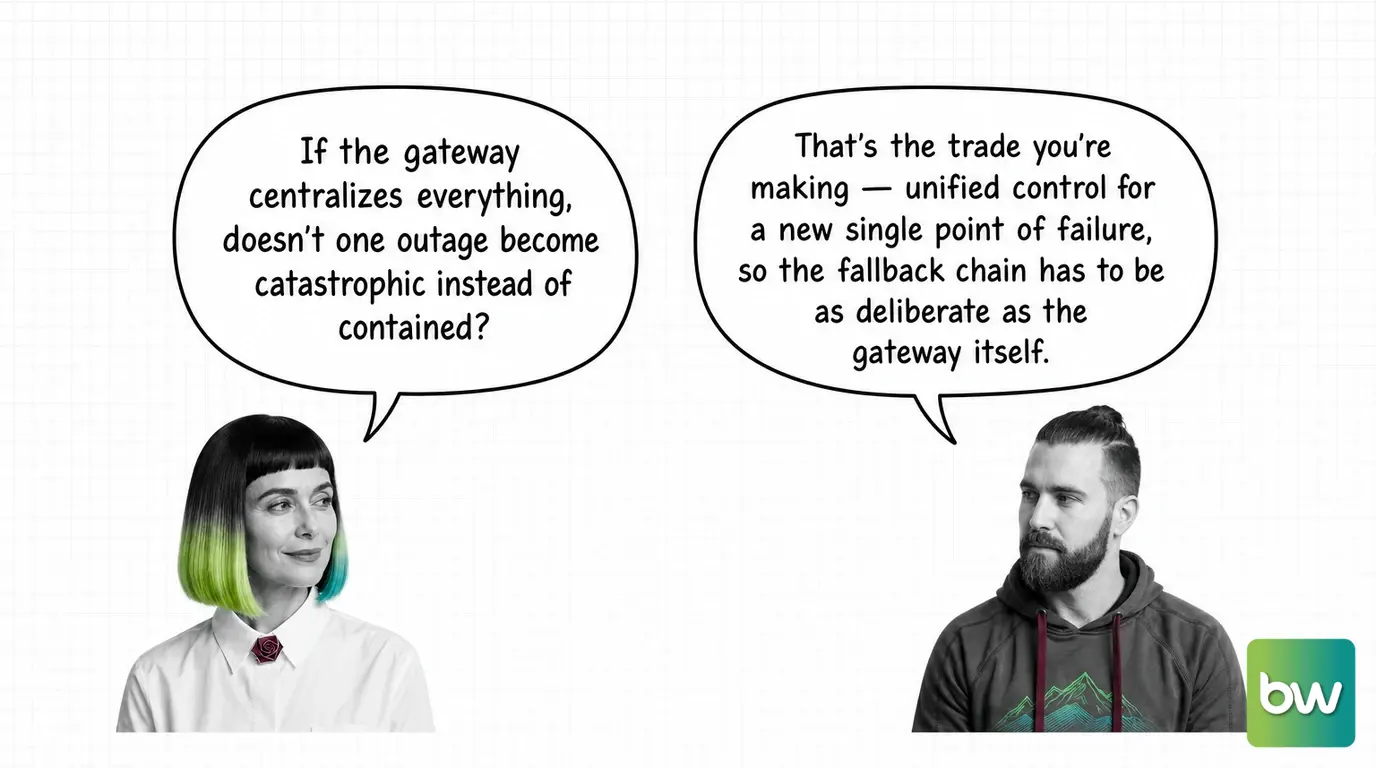
Three neighbours get folded into “the gateway,” and each mix-up sends a design decision in the wrong direction.
Q: Do I need an LLM gateway if my app only calls one model provider today? A: Less urgently than a multi-provider team, but not never — the architecture guide shows that virtual keys, rate limiting, and unified logging pay off the moment more than one internal team shares that single provider, well before you ever add a second one.
Q: Does putting a gateway in front of my AI traffic reduce vendor lock-in, or just relocate it? A: It relocates it. You stop depending on one model provider’s SDK, but you now depend on the gateway’s own routing rules, config format, and uptime — the lock-in and data sovereignty analysis argues the chokepoint just moved, it didn’t disappear.
Q: What happens to my requests if the gateway itself goes down? A: Whatever your fallback chain specifies — which is why the deployment guide treats the fallback chain as a first-class config object: a gateway with no fallback path of its own is a new single point of failure, not a fix for the old one.
Q: Why are LLM gateways adding native agent-routing features in 2026? A: Concurrent, multi-step agent calls hit a proxy differently than single request-response chat traffic does — the 2026 market roundup shows gateways adding agentic routing and edge caching specifically because older proxy patterns weren’t built for that load shape.
Part of the LLMOps & Production theme · closest neighbour: model routing.
An LLM Gateway decouples your application from individual model providers by adding a uniform proxy layer. What makes it non-obvious is how much production complexity — auth, failover, cost tracking — it centralizes in one place.
Concepts covered
LLM gateway: middleware routing app requests across AI providers, with fallback, unified auth, and token tracking. Semantic caching cuts costs 20–40%.
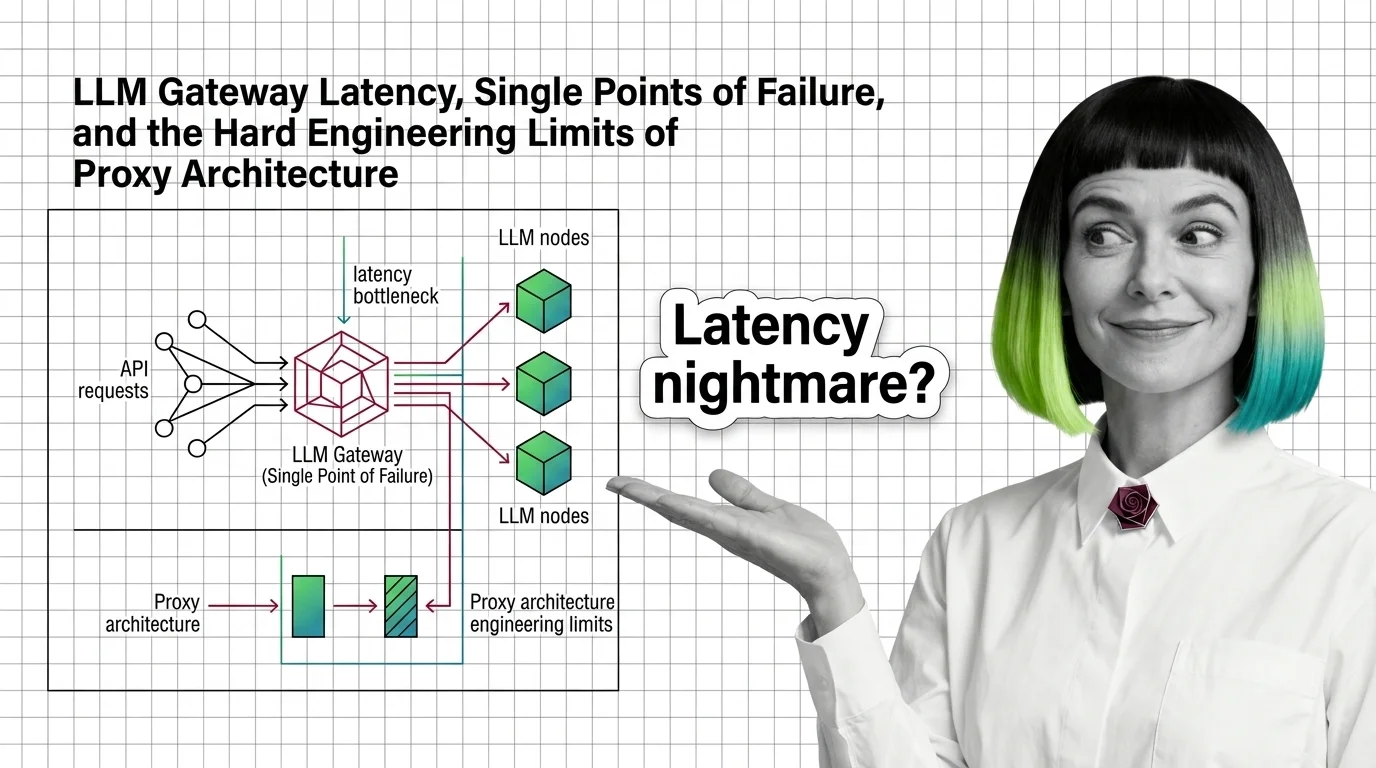
LLM gateways add 2–240ms overhead. Latency is rarely the bottleneck — single points of failure and security vulnerabilities are the real engineering tradeoffs.
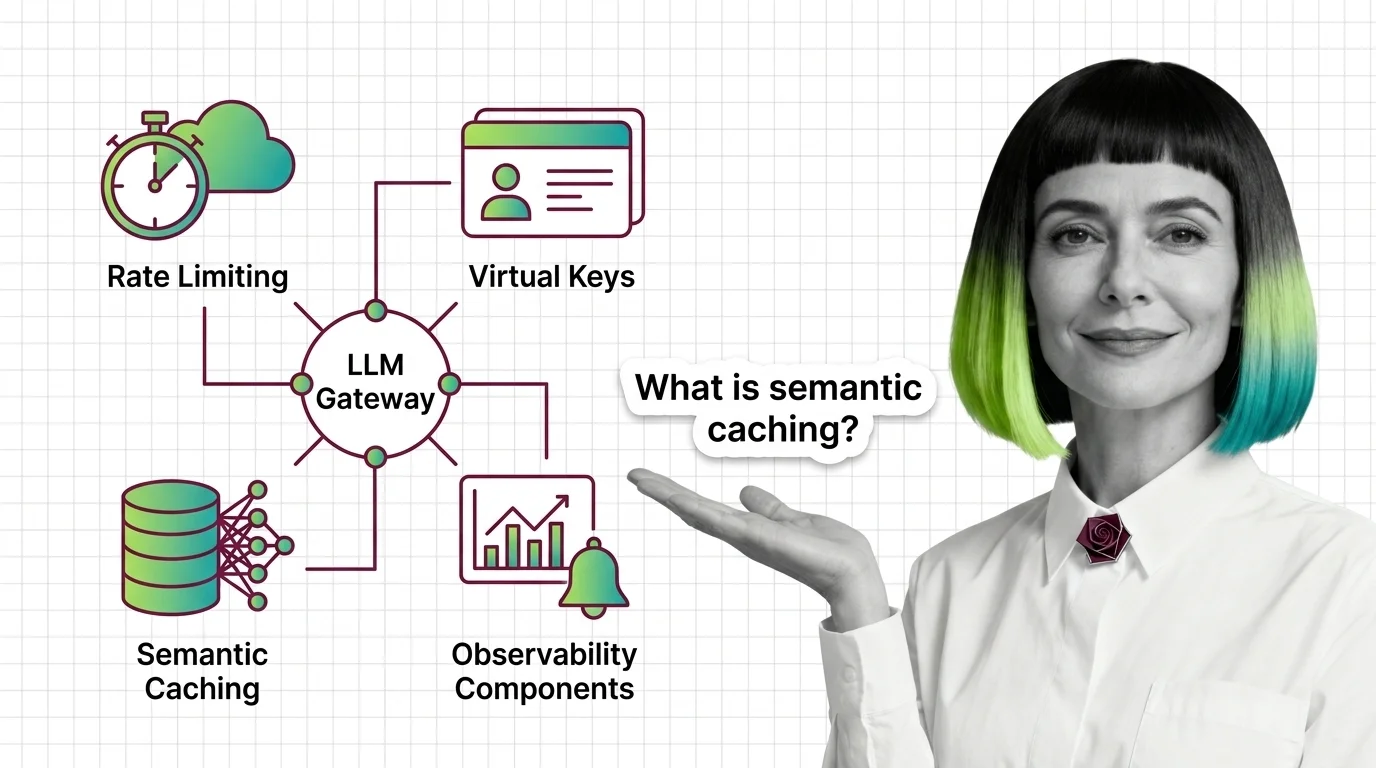
LLM gateways govern AI traffic via four components: rate limiting (RPM/TPM/budget), scoped virtual keys, semantic caching, and per-request observability.
Guides here cover deploying an open-source gateway with fallback chains, configuring virtual keys for team isolation, and benchmarking the latency overhead a proxy adds to your requests.
Tools & techniques
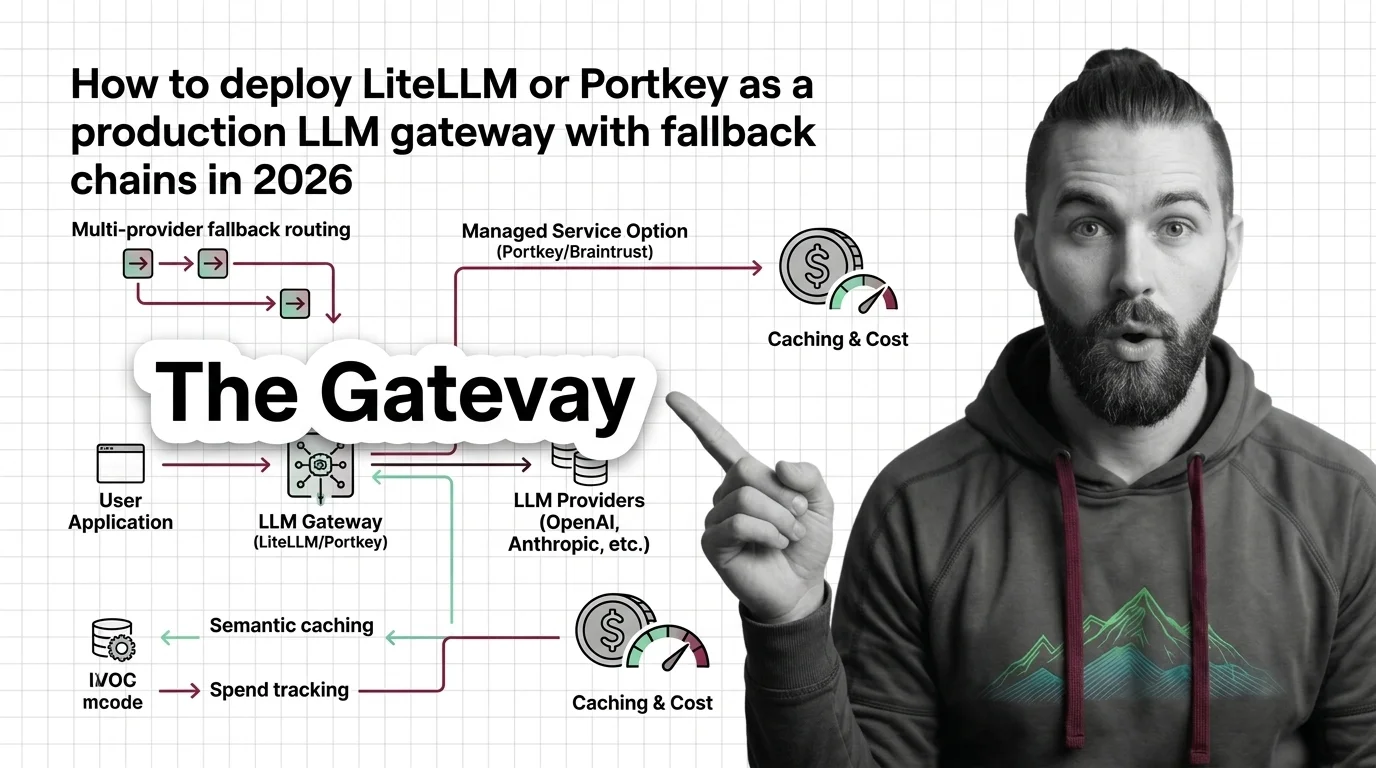
LiteLLM (MIT) and Portkey (Apache 2.0) are the top LLM gateways in 2026. Learn fallback routing, semantic caching, and the self-host vs managed decision.
The gateway space is shifting fast as agentic architectures and edge inference change routing requirements. Staying current means knowing which tools are converging on standardized APIs and which are locking you in.
Models & benchmarks
Updated July 2026
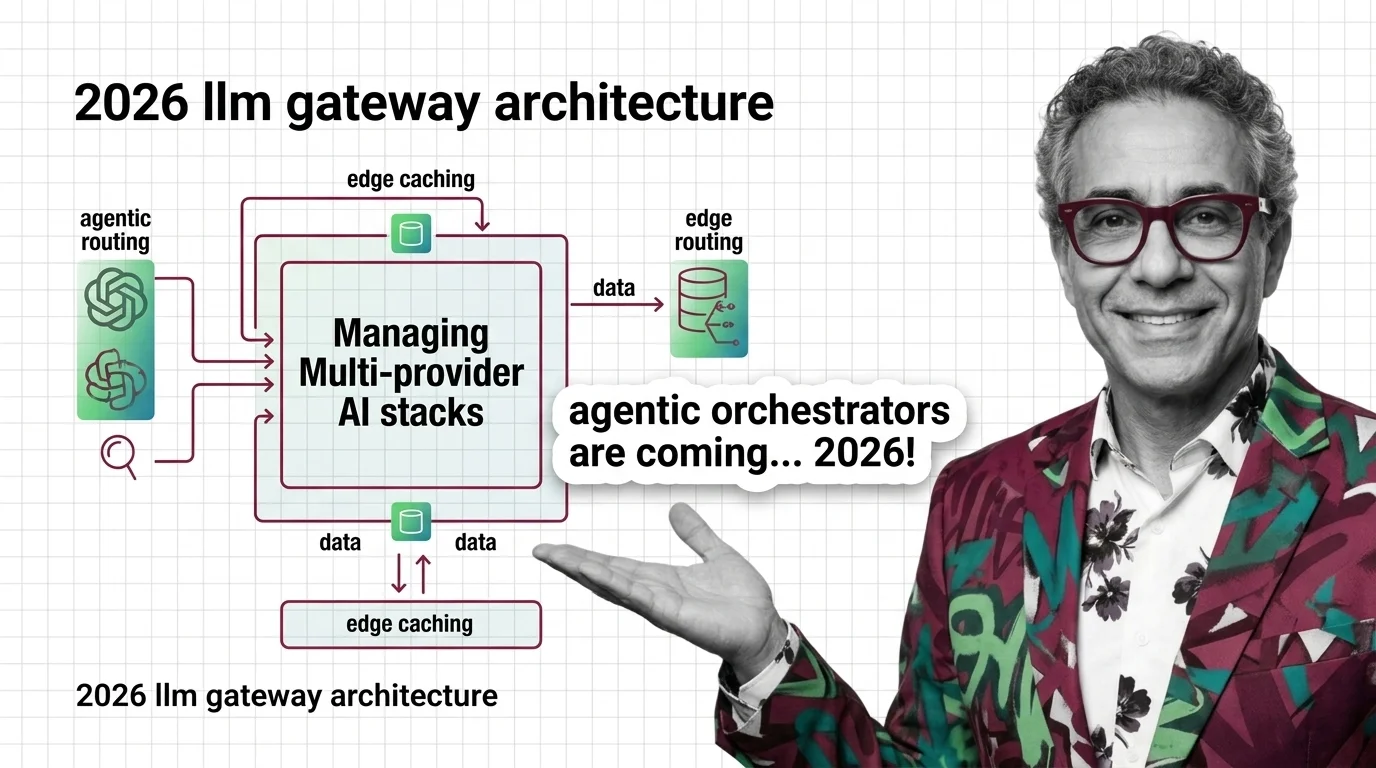
LLM gateways split in 2026. Bifrost: 11µs overhead. OpenRouter: 400+ models. MCP routing is the new baseline for production agentic stacks.
Routing all AI traffic through a single chokepoint creates a concentrated point of failure and a data access risk. Understand the vendor relationship and data residency implications before centralizing.
Risks & metrics
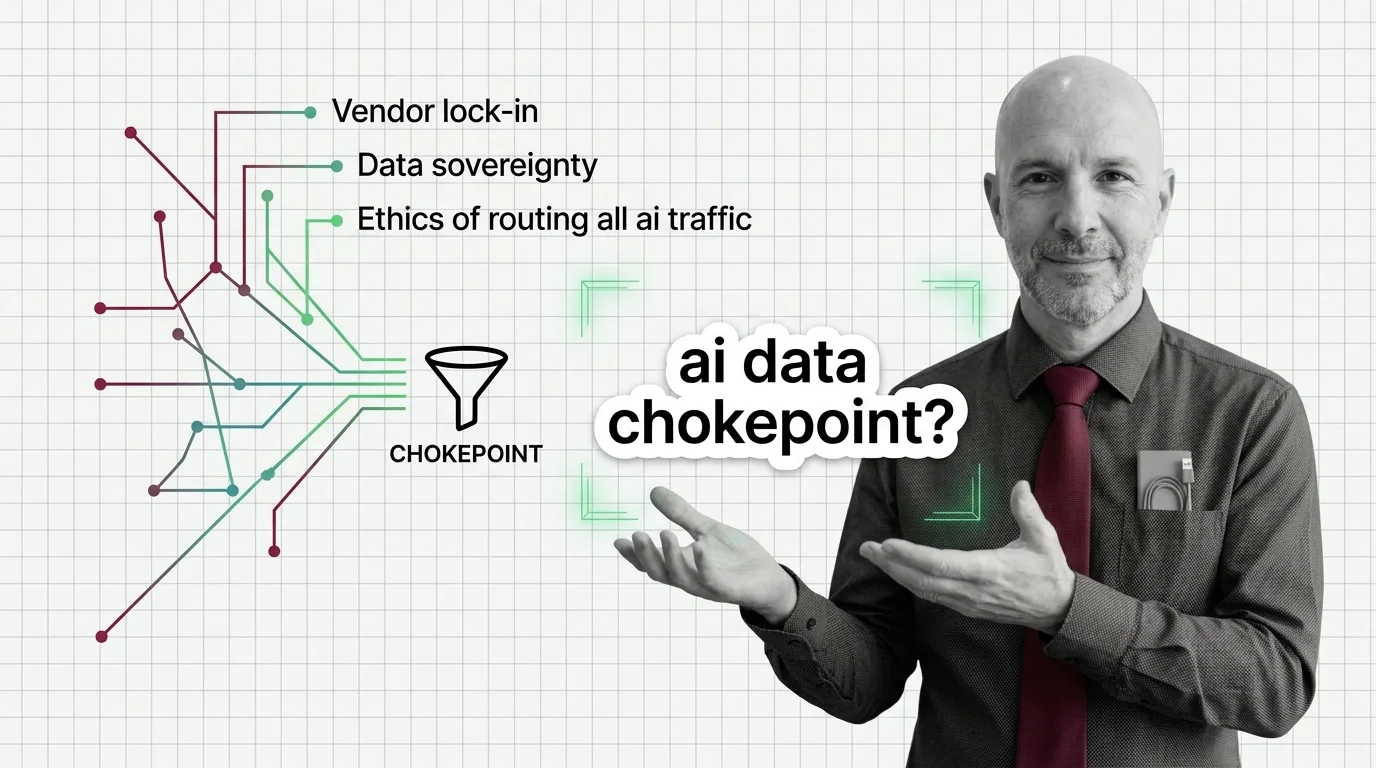
Two major LLM gateways were acquired in 2026. When all AI traffic flows through a third party, data sovereignty, liability, and supply chain risk follow.