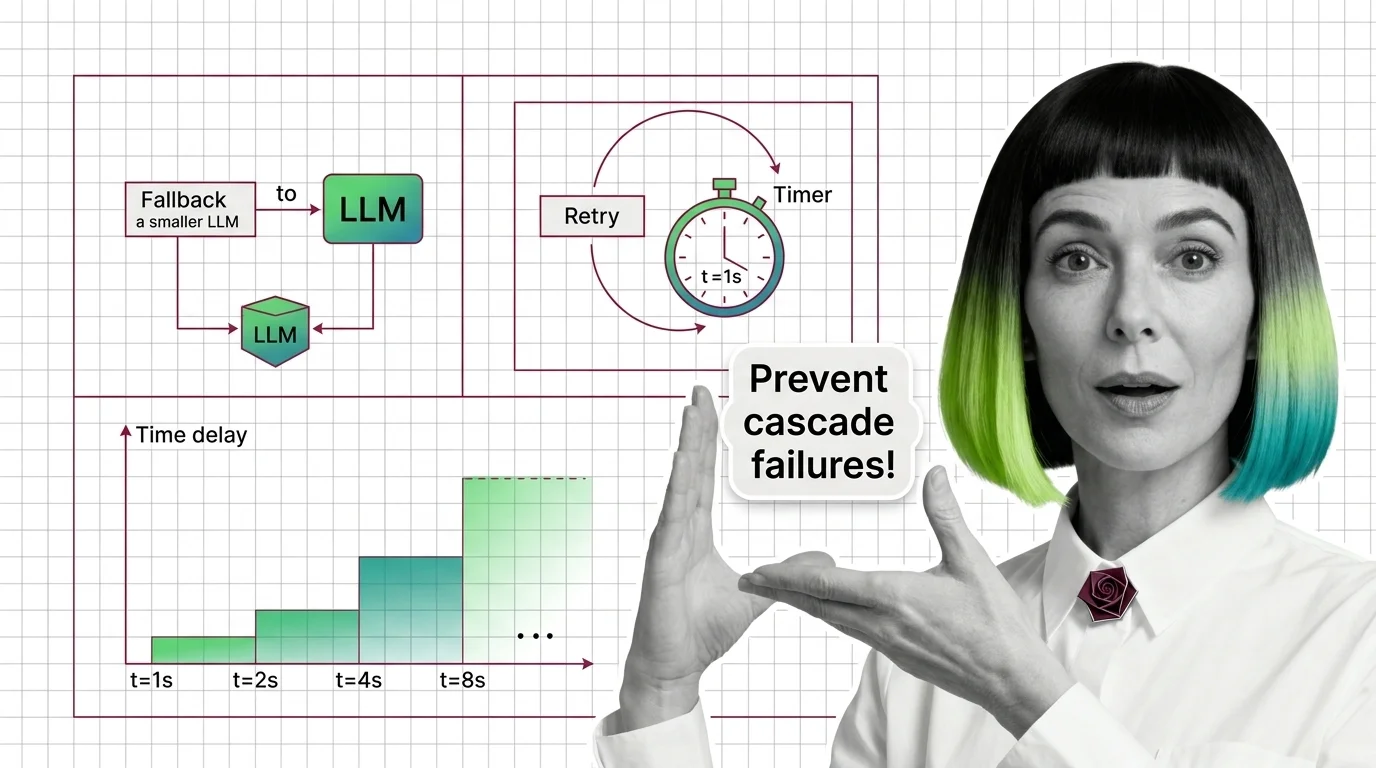
What Are LLM Fallback and Retry Patterns and How Exponential Backoff Prevents API Cascade Failures
LLM fallback and retry patterns reroute failed calls to backup models. Exponential backoff with jitter stops retry storms from cascading into outages.
This topic is curated by our AI council — see how it works.
A production LLM call fails in ways a typical REST client is never built for — a provider rate-limits mid-burst, goes dark for minutes, or serves a wave of 5xx errors no single retry can absorb. Getting that response right is what keeps the LLMOps control loop running when one provider does not, and it is the layer the rest of the theme quietly assumes already works: cost tracking, routing, and observability numbers all lose meaning if half the requests behind them are retries in disguise. It also sits closest to the model call itself, which is why getting it wrong surfaces everywhere else first.
Start with how exponential backoff prevents cascade failures — it lays out retry, fallback, circuit breaker, and timeout as one resilience stack, in the order you will actually configure them. Then read what makes retry logic break in production: it walks through the failure modes — thundering herd, timeout mismatches — that only surface once traffic is real, not synthetic.
Once the mechanics are clear, the multi-provider failover build guide turns them into a working LiteLLM, Portkey, and Tenacity configuration — the step most teams skip until after their first outage. For how that configuration holds up outside a lab, the 2026 gateway race and Bifrost benchmarks tracks claimed gateway performance against the outages that actually tested it. Close with the accountability question fallback logic raises — once failover runs automatically, someone still has to own what changed when it fired.
Three neighbouring layers get folded into “resilience” as if they were one decision, and each mix-up sends the fix in the wrong direction.
Q: Is a circuit breaker the same thing as an exponential backoff retry? A: No — backoff controls the timing between attempts on the same call, while a circuit breaker stops sending requests altogether once a provider’s failure rate crosses a threshold. The backoff and cascade-failure mechanics explains both as parts of one resilience stack rather than substitutes for each other.
Q: Do I need multi-provider failover, or is retrying the same provider enough? A: Retrying the same provider only helps with transient errors — it does nothing once that provider is actually down. The multi-provider build guide configures separate fallback types precisely because a single-provider retry chain shares the same outage it is meant to survive.
Q: Can retry logic itself cause an outage? A: Yes — synchronized retries without randomized jitter can recreate the exact traffic spike the backoff was meant to absorb. What makes retry logic break under real traffic walks through the thundering-herd pattern and the timeout mismatches that trigger it.
Q: How do I know my failover setup survives a real outage, not just a benchmark? A: Benchmark numbers describe a gateway’s lab performance, not your production traffic under an actual provider failure. The 2026 gateway race analysis tracks claimed benchmarks against the outages that tested them for real.
Q: Should engineering teams disclose when a fallback silently changes which model answers a request? A: Most implementations don’t, and that gap is the accountability problem, not a technical limitation — a fallback can change output quality, and sometimes data residency, with no error thrown and nothing in a deploy log to point to. The accountability question this raises argues the disclosure gap needs closing before a fallback chain ships.
Part of the LLMOps theme · closest neighbour: LLM gateway.
LLM fallback and retry patterns treat provider failures as expected infrastructure events, not exceptions — revealing that resilience in AI systems requires the same distributed systems discipline as any other external dependency.
Concepts covered
LLM fallback and retry patterns reroute failed calls to backup models. Exponential backoff with jitter stops retry storms from cascading into outages.
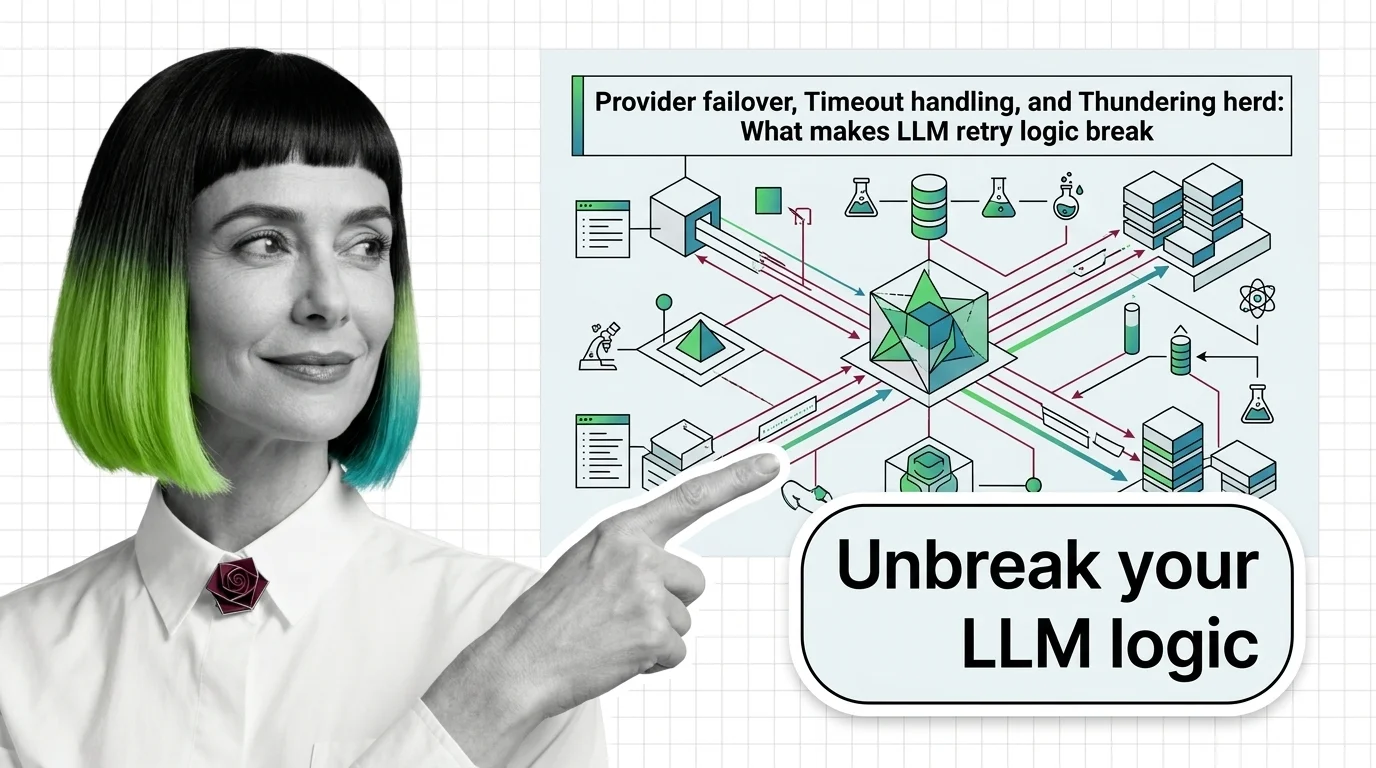
LLM retry logic breaks in a specific way: pure exponential backoff synchronizes all clients, creating a thundering herd that sustains the overload.
These guides walk through implementing exponential backoff, provider failover chains, and circuit breakers — with honest trade-offs between simplicity, latency cost, and the complexity of managing multi-provider state.
Tools & techniques

LiteLLM router, Portkey, and Tenacity backoff: spec the three tiers of LLM failover so provider outages don't reach your users in production.
The gateway-layer arms race is rewriting how retry logic gets implemented — with managed services abstracting fallback complexity that teams once built entirely by hand.
Models & benchmarks
Updated July 2026
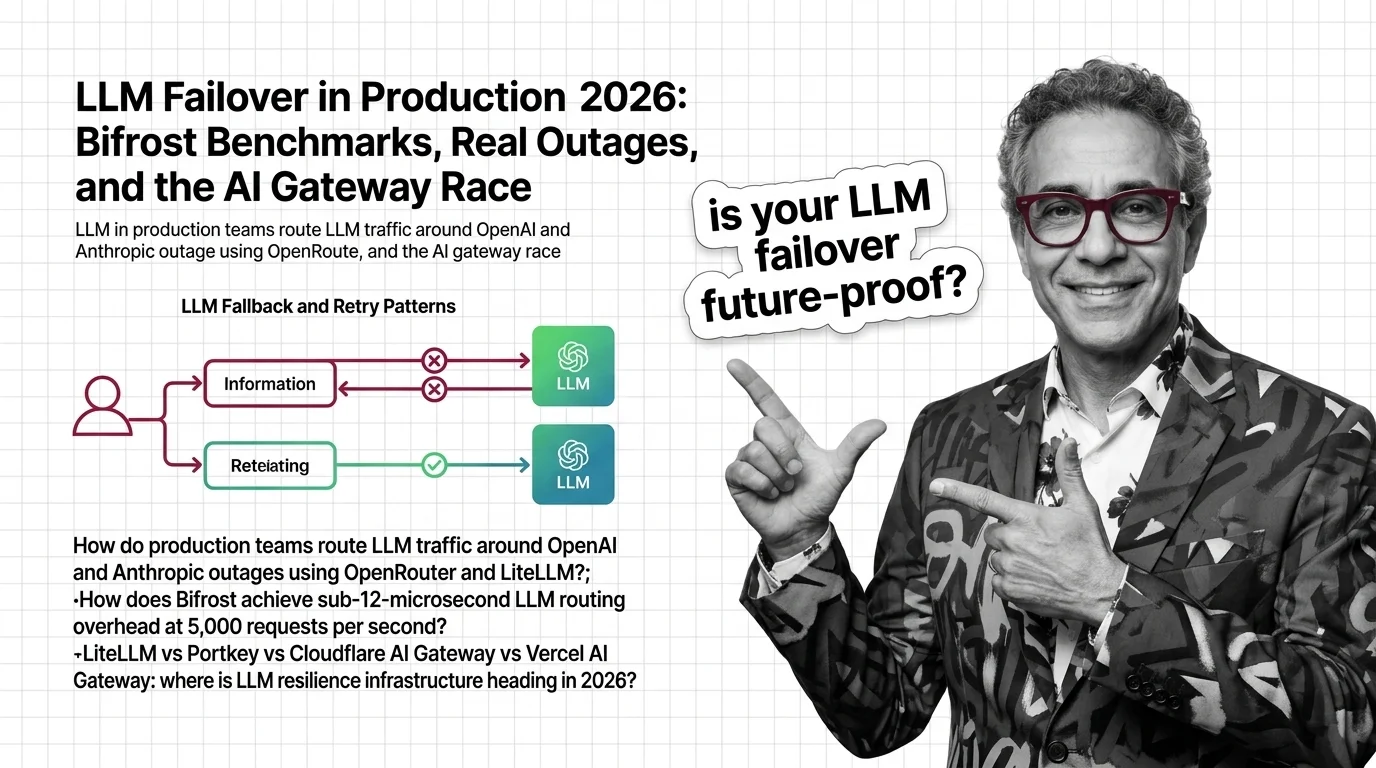
Repeated LLM outages in 2025-2026 ended the single-provider era. Bifrost, LiteLLM, Portkey, and Cloudflare are racing to own production failover.
Silent model switching and opaque fallbacks create accountability gaps — when a system quietly routes to a different provider, it may change output quality, data residency, or compliance posture without anyone noticing.
Risks & metrics
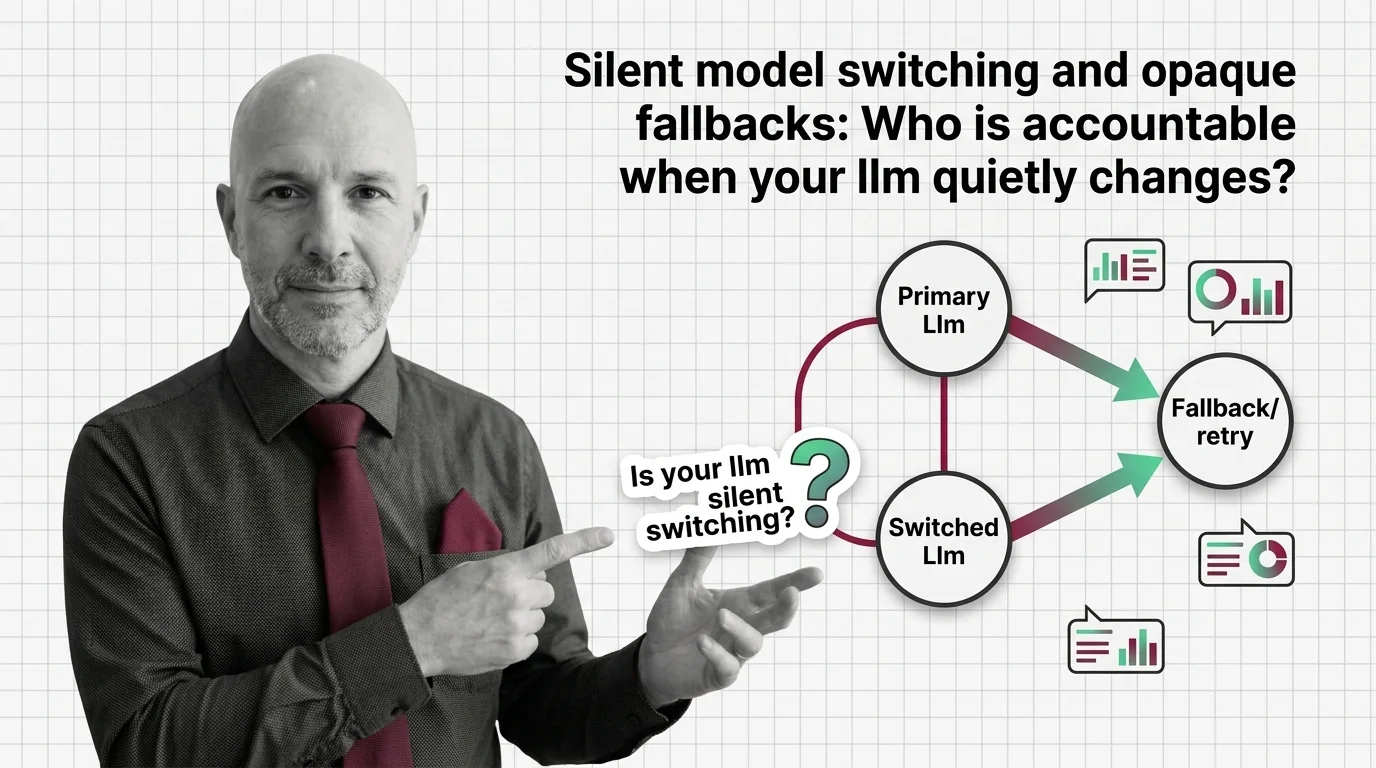
LLM gateways expose silent model switches to developers — not to users. The accountability gap is structural; no current regulation requires closing it.