What Is LLM Cost Management and How Token-Based Pricing Scales in Production
LLM cost management controls token-based API costs at production scale. Output tokens cost 2–6× more than input; doubling context quadruples attention compute.
This topic is curated by our AI council — see how it works.
Every dollar an LLM feature spends is decided away from the model call itself — which tier answered, whether the prompt hit a warm cache, whether the job could wait for a batch discount. Ignore those decisions and a feature that works cleanly in the demo returns an unpredictable invoice at scale, which is why cost control sits alongside routing and resilience as one of the core layers of the LLMOps stack. This topic maps the levers a team actually has, in the order they pay off.
Start with how token-based pricing scales as usage grows — it frames cost as a scaling problem rather than a one-time model choice, and is the article this pillar defers the definition to. Read the context-window, KV-cache, and pricing prerequisites next: it explains why output tokens cost several times more than input and how the KV cache turns repeated context into a discount, the mechanism every later lever depends on.
Once those foundations are in place, the practical guide to cutting API costs with routing, caching, and batch APIs turns the concepts into a working configuration, and the decision framework for tiering versus caching tells you which lever to reach for first when traffic is mixed. For what changed most recently, the roundup of real production cost wins on Azure AI Studio and the OpenAI Batch API tracks which levers are already paying off at scale. Before rolling any of it out broadly, the case for treating cost-cutting as an ethical decision is worth reading — cheaper is not free when the difference shows up as degraded output for someone else.
Three neighbouring topics get credited with cost control that is really a side effect of what they do.
Cost management is not model routing. Model routing is the mechanism — it inspects a request and sends it to the model tier that request deserves. Cost management is the discipline deciding which tiers exist, what belongs in each, and whether caching or batching would save more than routing alone; routing only executes one branch of that decision.
Cost management is not context window management. Context window management decides what content fits inside a request so answers stay coherent within a model’s limits. Its techniques, like compression and summarization, reduce cost as a side effect, but the goal is fit and coherence, not the invoice — cost management asks whether the request should have run at that price at all.
Cost management is not LLM observability. Observability tells you what a request cost after it ran. Cost management decides, before the call, which model, cache, and batch window it should use. Skip observability and you cannot tell which lever is working; skip cost management and observability just narrates an unchanged bill.
Q: Is LLM cost management just about switching to a cheaper model? A: No — token pricing scales with several independent variables: which model answers, how much context gets re-billed on every call, and whether the job can wait for a batch discount. Treating it as a single switch misses most of the available savings. The token-based pricing explainer frames cost as a production variable, not a one-time choice.
Q: Why does an LLM bill spike even when request volume stays flat? A: Usually the context, not the model — a growing conversation history or an uncached system prompt re-bills the same tokens on every call, and output tokens already cost several times more than input tokens per call. The context-window and KV-cache prerequisites explains why that asymmetry compounds.
Q: Can prompt caching and batch APIs be combined for bigger savings than either alone? A: Yes — a cached system prompt already costs a fraction of the base input price, and routing the same call through a batch endpoint when it can tolerate a delay stacks a further discount on top, pushing combined savings well past what either lever delivers alone. The cost-cutting guide walks through which calls qualify for each.
Q: What is the simplest sign that a team’s LLM cost-cutting has gone too far? A: Complaints or quality drop-off that shows up with real users before it shows up in automated evals — a cheaper model can pass a benchmark suite while failing edge cases the eval set never covered. The ethics of LLM cost cutting examines who ends up absorbing that gap.
Part of the LLMOps stack · closest neighbour: the LLM gateway.
LLM Cost Management is counterintuitive: the most expensive tokens are often in the context window, not the completion. Understanding how billing accumulates across model tiers, caching layers, and batch calls shapes every architectural decision.
Concepts covered
LLM cost management controls token-based API costs at production scale. Output tokens cost 2–6× more than input; doubling context quadruples attention compute.

LLM API cost optimization requires understanding KV cache mechanics, input/output token asymmetry, and prompt caching discounts — not just switching models.
These guides walk through model routing, prompt caching, and batch API configurations — the three levers with the highest return on engineering time when controlling LLM spend at scale.
Tools & techniques

LLM cost management uses two levers: model tiering and prompt caching. Route to cheaper models for simple tasks; cache shared prefixes when they repeat.
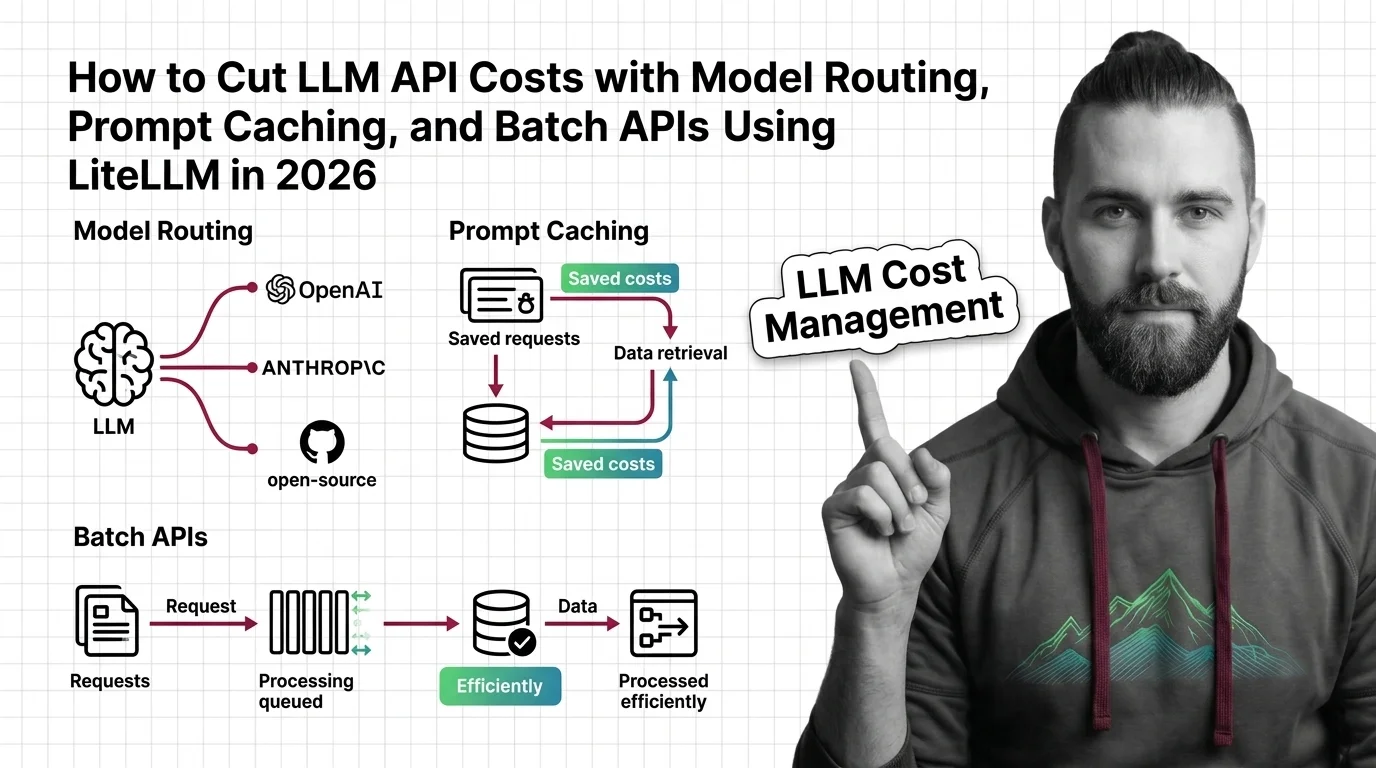
Three levers cut LLM API bills in 2026: model routing via LiteLLM, batch APIs at 50% discount, and prompt caching with 90% savings on repeated context.
Model pricing shifts constantly — new tiers, distilled models, and provider credits change which cost strategy wins. Staying current here prevents a last-quarter architecture from becoming a next-quarter budget problem.
Models & benchmarks
Updated July 2026
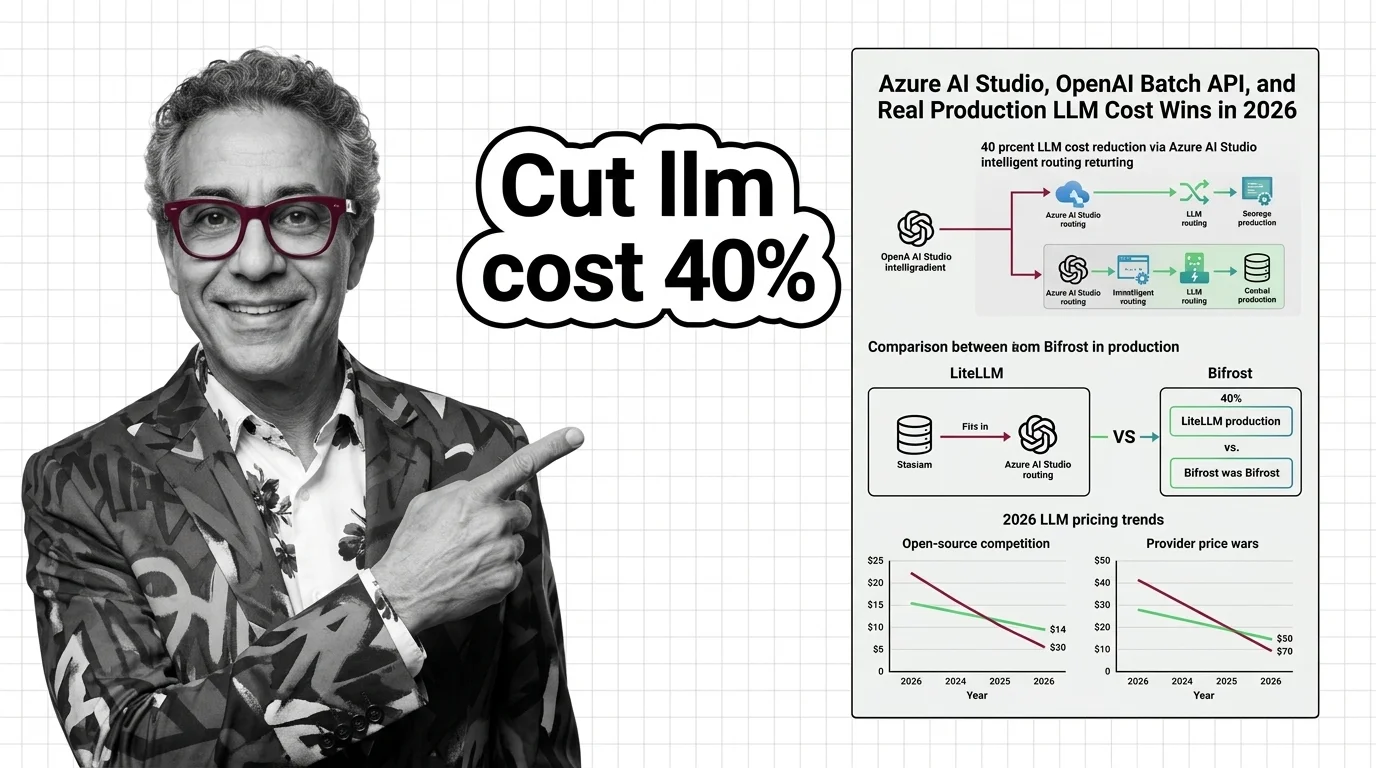
Azure AI Foundry Model Router spans 28 models. OpenAI Batch API offers 50% off. DeepSeek V3.2 at $0.28/1M is rewriting enterprise LLM cost calculus.
Aggressive cost-cutting creates hidden tradeoffs: cheaper models may degrade quality in ways users notice before engineers do, and shared caches can leak sensitive data between sessions.
Risks & metrics
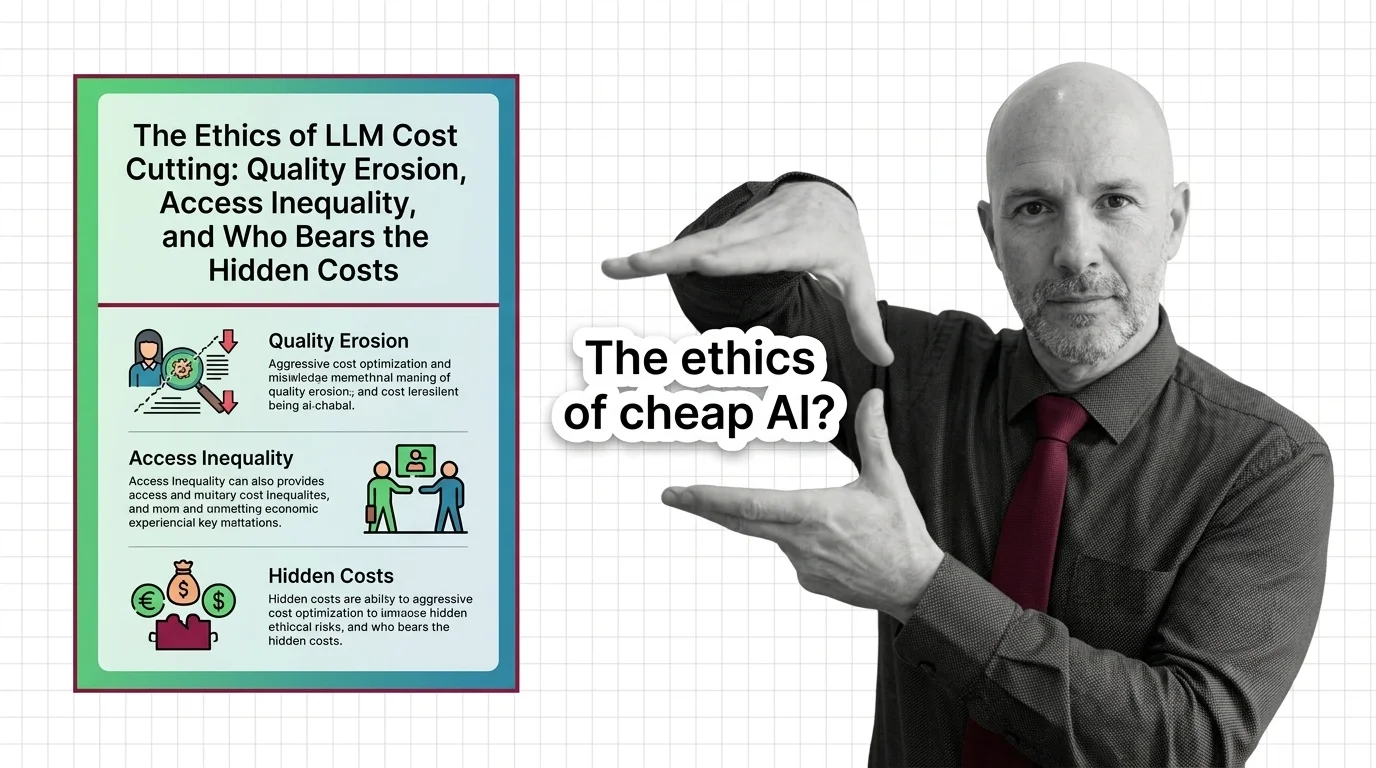
LLM cost cuts route lower-budget users to weaker models — and emerging research links model tiering to measurable access inequality and bias amplification.