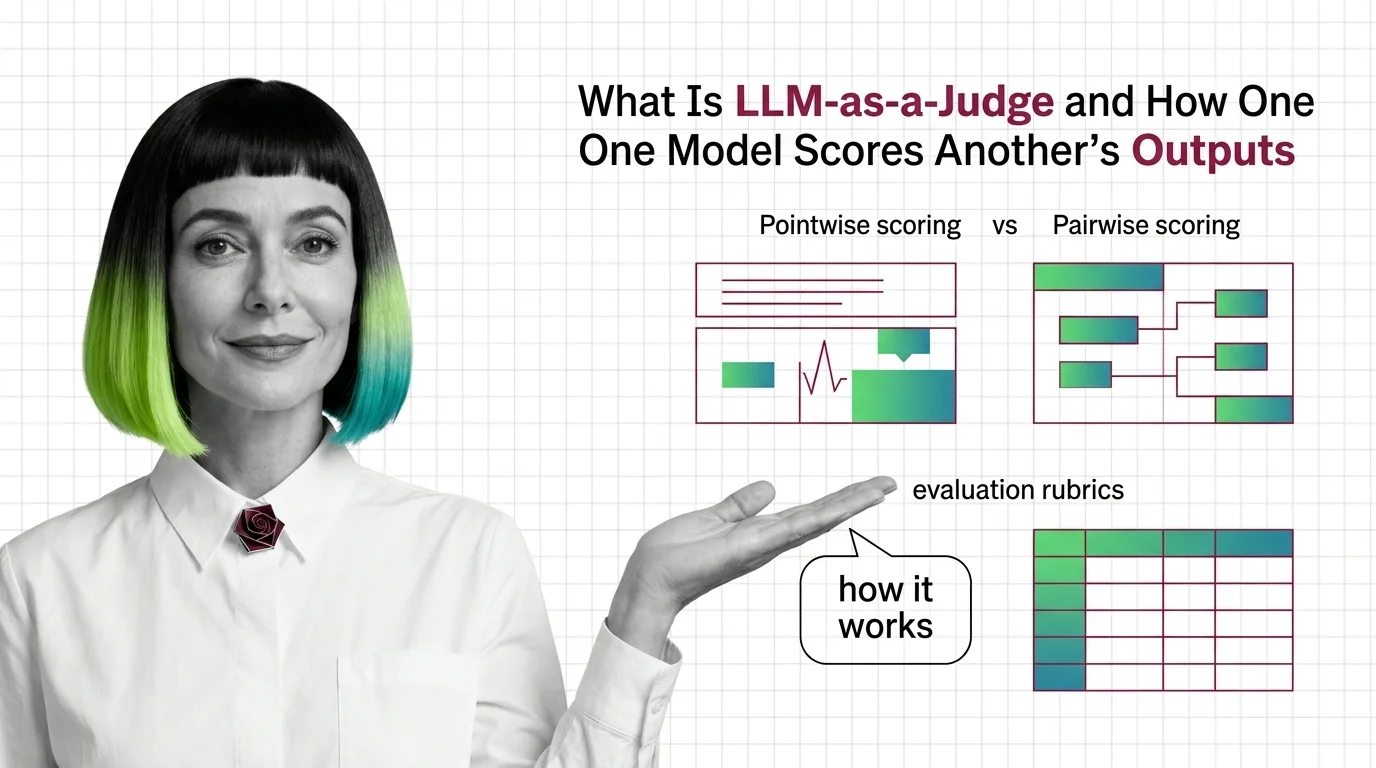
What Is LLM-as-a-Judge and How One Model Scores Another's Outputs
LLM-as-a-judge uses one model to grade another's output via pointwise, pairwise, or rubric scoring. Fast, but prone to position and self-preference bias.
This topic is curated by our AI council — see how it works.
Every CI pipeline and release gate that swaps a human reviewer for a model grader inherits whatever blind spot that grader carries — and unlike a tired or distracted human rater, a judge model’s blind spot produces a confident number and stays silent about it. That is the trade behind the model evaluation stack’s newest scaling method: it is cheap enough to run on every output a team ships, which is exactly why its failure modes matter more than a slower method’s would. This topic rewards reading in order — what the judge actually measures, what has to exist before its score means anything, and where the whole approach quietly breaks.
Start with what LLM-as-a-judge actually does — it draws the line between pointwise scoring, pairwise comparison, and rubric-based grading that every later decision assumes. Read the prerequisites for a trustworthy judge next: a rubric, ground-truth examples, and a human baseline are not optional extras — they are what makes a judge’s score mean anything at all. Then the technical limits of LLM-as-a-judge covers the failure modes those safeguards exist to catch, position bias and self-preference chief among them.
When you are ready to build one, the eval-building guide for DeepEval, Braintrust, and Atla Selene turns the rubric and calibration steps into a working pipeline. For where the judge-model market itself is heading, the 2026 judge-model roundup tracks how dedicated graders like Atla Selene and Prometheus 2 are displacing ad-hoc GPT-4 grading. Close with who judges the judge — the accountability question every team hands off the moment it gives a model a grading role.
Three neighbours get folded into “automated grading” when each is, in fact, a different instrument answering a different question.
Q: Why did my LLM judge give inconsistent scores when I only changed the order of the two answers it compared? A: Position bias — judges frequently favor whichever answer appears first (occasionally second) in the prompt, independent of quality. The technical limits of LLM-as-a-judge documents how often the verdict flips on order alone and why pairwise setups need randomized positions or an averaged second pass.
Q: Should I use a frontier model or a dedicated judge model like Atla Selene to grade my outputs? A: It depends on volume and nuance: a frontier model handles nuanced, low-volume calls better, while a dedicated judge such as Atla Selene or Prometheus 2 costs far less at high volume and was purpose-built for grading. The 2026 judge-model landscape tracks how that trade-off is shifting as dedicated judges mature.
Q: Do I still need a rubric if I am just asking a judge model to rate an answer from one to ten? A: Yes — an unanchored one-to-ten prompt produces inflated, drifting scores because the model has no fixed definition of what a six versus an eight means. The build guide shows how to anchor each score level and require reasoning before the number, which is what keeps scores stable across runs.
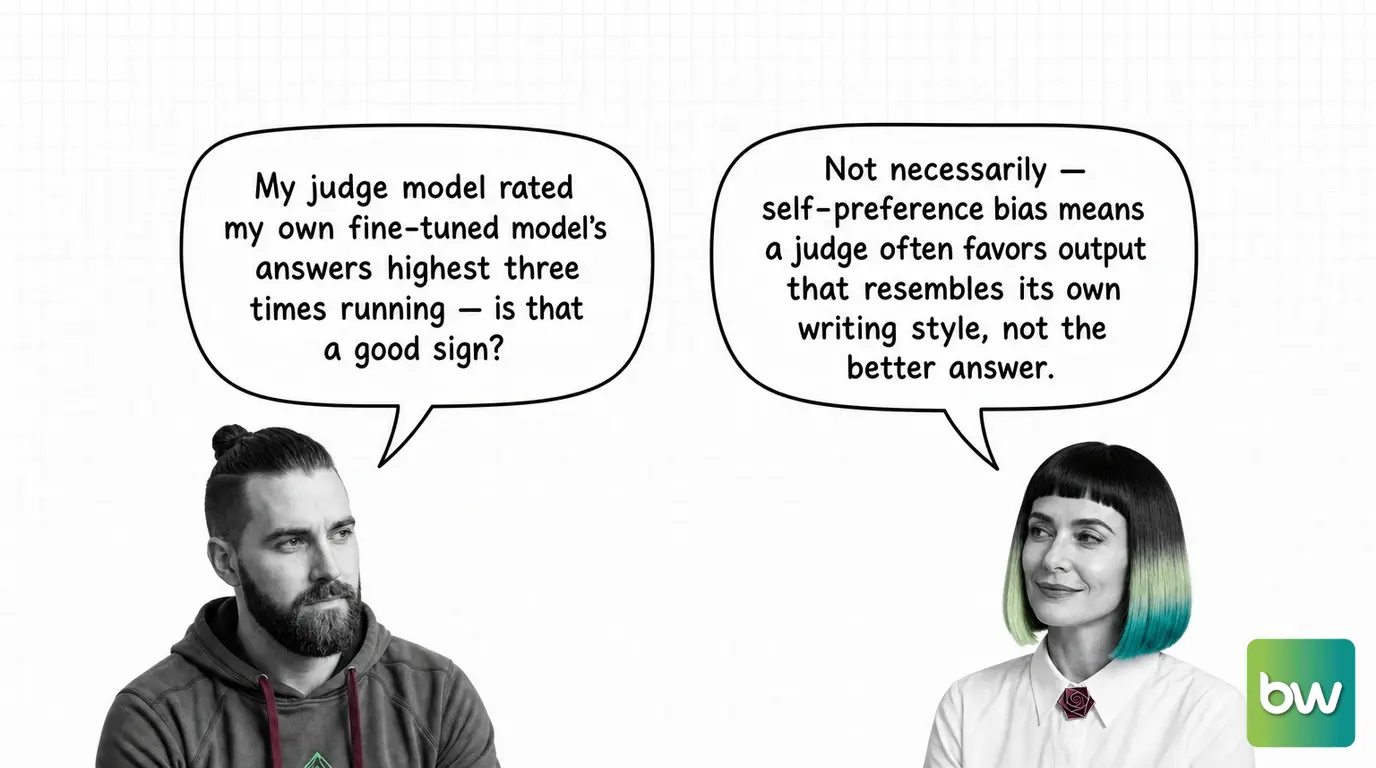
Q: If a judge model rates its own model family’s outputs highest, does that prove the model actually performs better? A: No — that pattern describes self-preference bias, where a judge favors output resembling its own writing style or reasoning pattern, independent of actual quality. Who judges the judge? traces a controlled study where a model graded label-stripped answers and still promoted its own work.
Part of the model evaluation theme · closest neighbour: human evaluation for AI. New to grading models with models? Start with the story: Model Evaluation for Developers: What Maps and What Misleads.
Start here to learn what LLM-as-a-Judge actually means: how a model can grade another model's answers, what that grading rests on, and where the technique quietly breaks down.
Concepts covered
LLM-as-a-judge uses one model to grade another's output via pointwise, pairwise, or rubric scoring. Fast, but prone to position and self-preference bias.
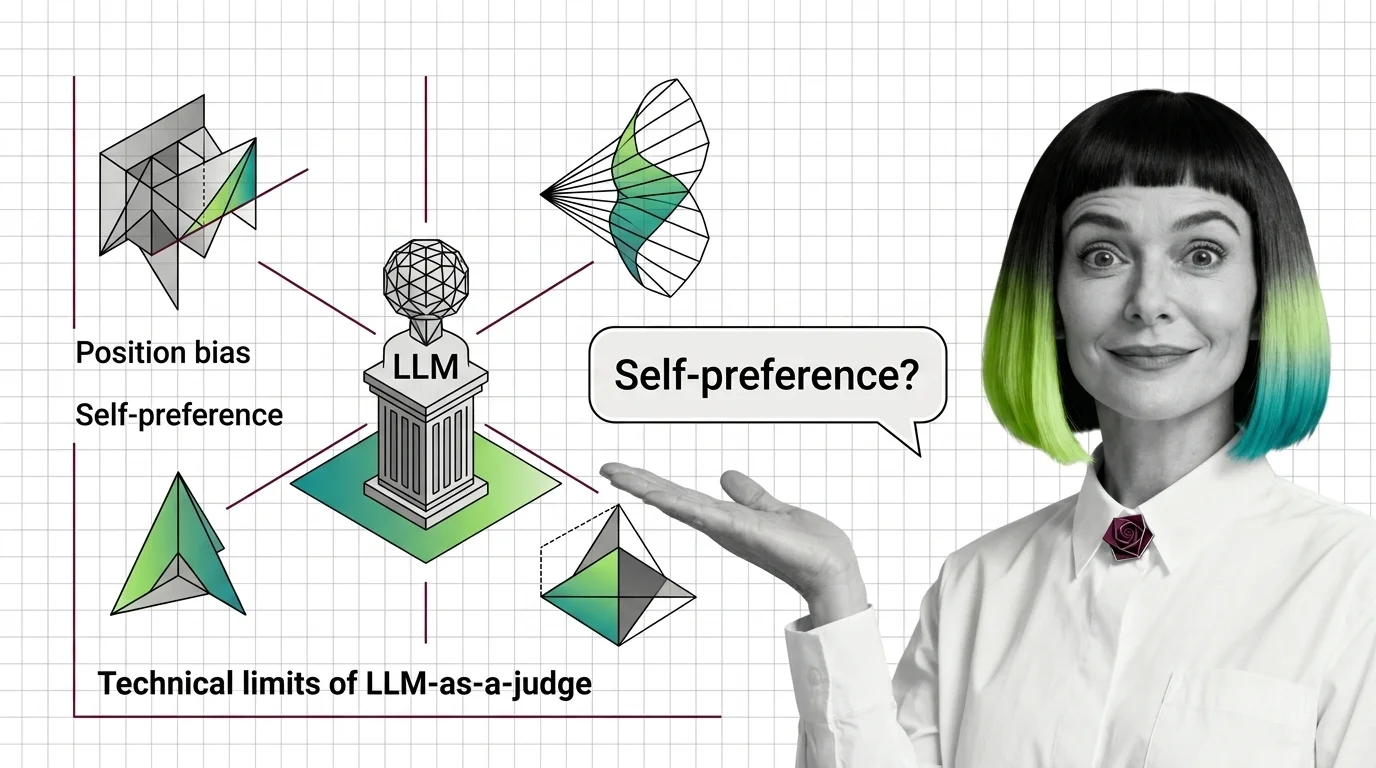
LLM-as-a-judge shows systematic position bias and self-preference: GPT-4 flips its verdict on ~35% of pairs when answer order is swapped.
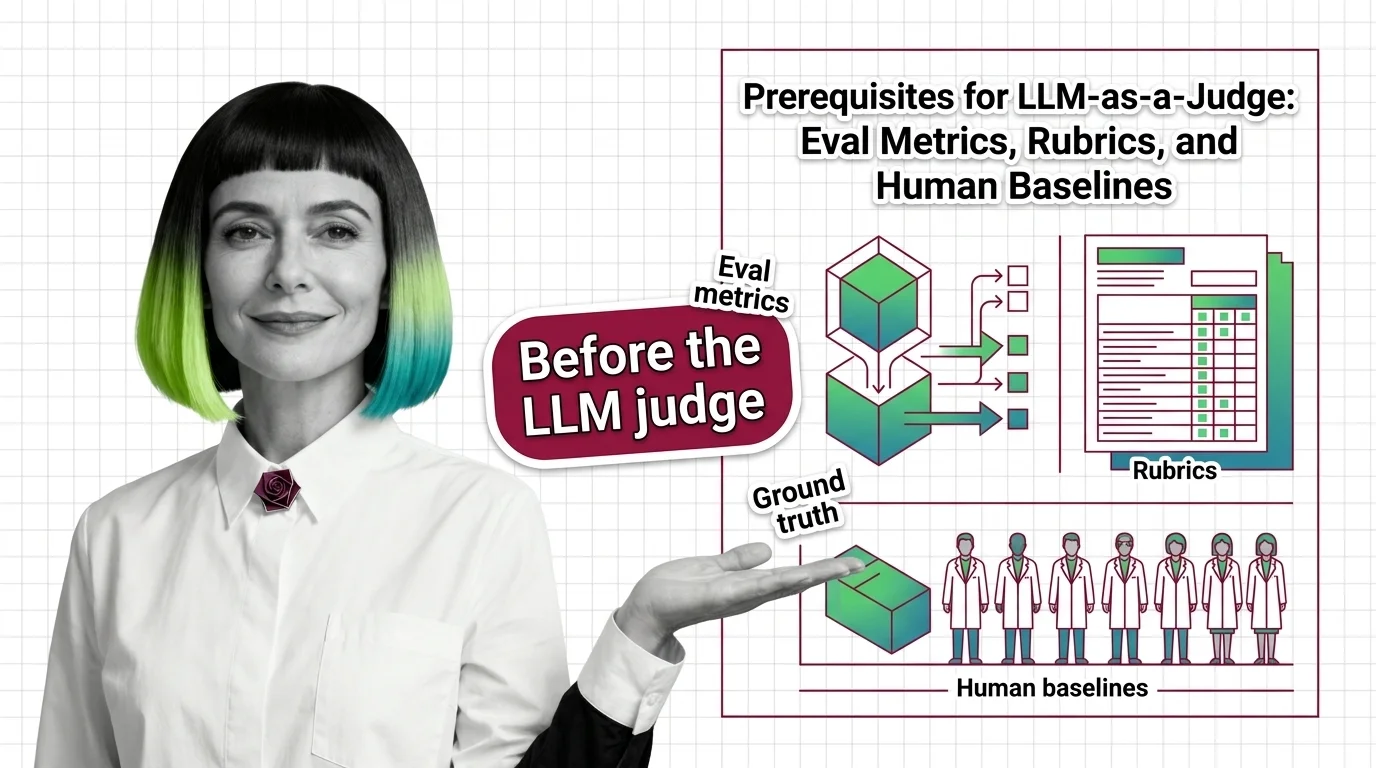
An LLM-as-a-judge is only as reliable as its scaffolding: ground-truth labels, rubrics, and a human baseline. GPT-4 judges hit 80%+ agreement on MT-Bench.
These guides walk through wiring up an LLM judge of your own: choosing metrics, writing rubrics the model can follow, and deciding which trade-offs you can live with when speed matters more than a perfect score.
Tools & techniques

An LLM-as-a-judge eval scores model outputs against a rubric, not exact-match strings. DeepEval, Braintrust, and Atla Selene make it production-grade.
Judge models are moving fast, and the gap between a homegrown evaluator and a purpose-built one keeps shifting. Following these developments tells you when to trust automated scoring and when to keep a human in the loop.
Models & benchmarks
Updated June 2026
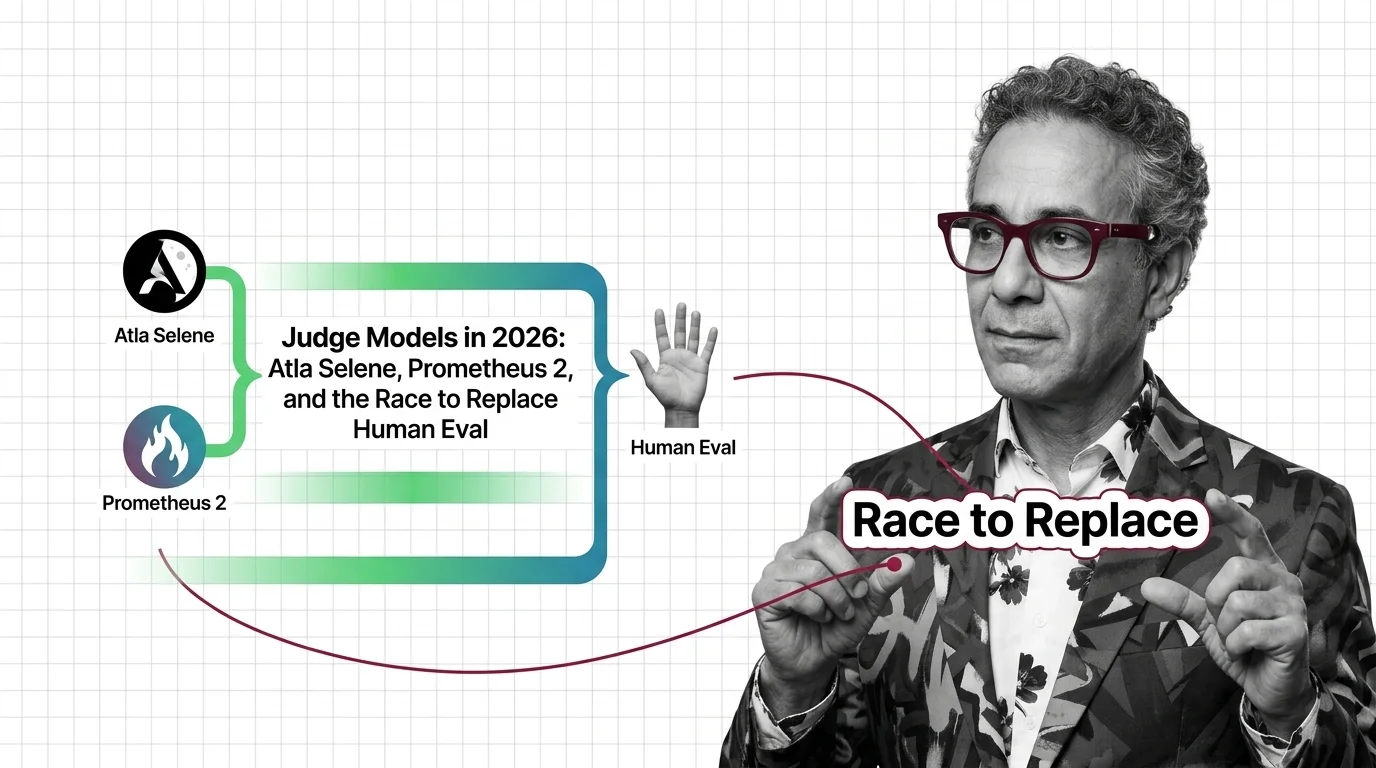
Dedicated judge models like Atla Selene and Prometheus 2 grade LLM outputs at scale. In 2026, production teams pair them with human eval, not replace it.
Before you let an AI grade other AIs, consider what can go wrong: judges inherit their own biases, can favor answers that resemble their own, and may hand you confident scores that hide real failures.
Risks & metrics

LLM judges show measurable self-preference bias, favoring text that resembles their own output. Without human accountability, it passes as objectivity.