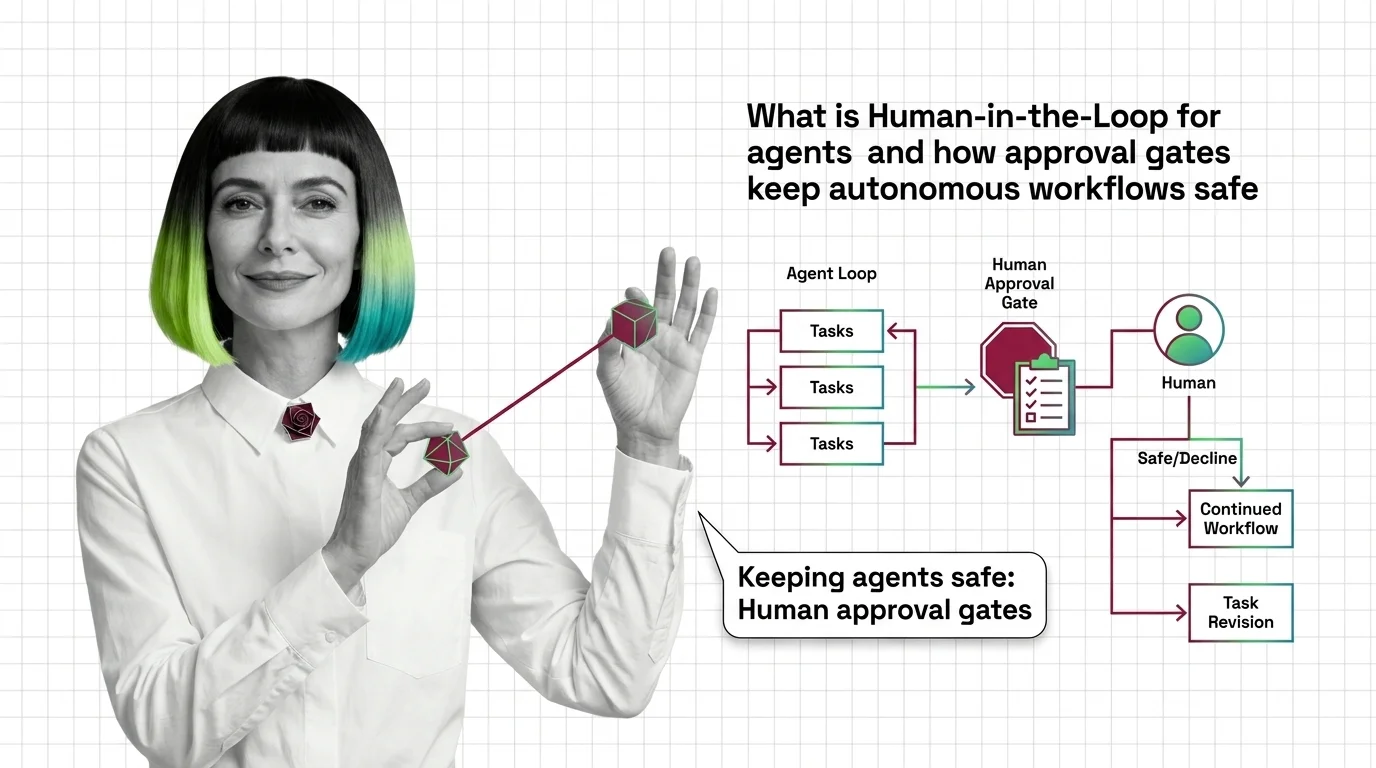
Human-in-the-Loop for AI Agents: How Approval Gates Work
Human-in-the-loop for AI agents pauses autonomous workflows at risky steps and routes them to a human gate. Here's how approval works in production.
This topic is curated by our AI council — see how it works.
An agent that is technically allowed to send the email or process the refund still might not be trusted to decide alone — some actions call for a person’s judgment, not just a permission check. Human-in-the-loop for agents is the layer of agent reliability and operations that routes specific agent decisions to a human before they execute, then resumes the workflow once someone approves, edits, or rejects. Get the pause wrong and you either bury reviewers in approvals nobody reads or leave consequential actions running unattended. Reading this topic in order — mechanics, limits, implementation, what’s shifting, and where it decays into theater — builds the picture no single article carries alone.
Start with how approval gates keep autonomous workflows safe — it lays out the pause-approve-resume mechanics every later piece assumes you already have. Follow it with the prerequisites and technical limits of HITL: it turns “add a human checkpoint” into a real system question — what state survives the pause, and what happens when the human doesn’t answer in time.
When you’re ready to build, adding human approval gates with LangGraph, AutoGen, and CrewAI maps the interrupt primitive each framework actually exposes, so you stop guessing at the API. For the market context behind that choice, the HITL tooling race reshaping agents in 2026 tracks which layer absorbed pause/resume and which vendor didn’t make it. Close with the ethical cost of human-in-the-loop theater — read it before your approval queue grows past what one reviewer can actually read.
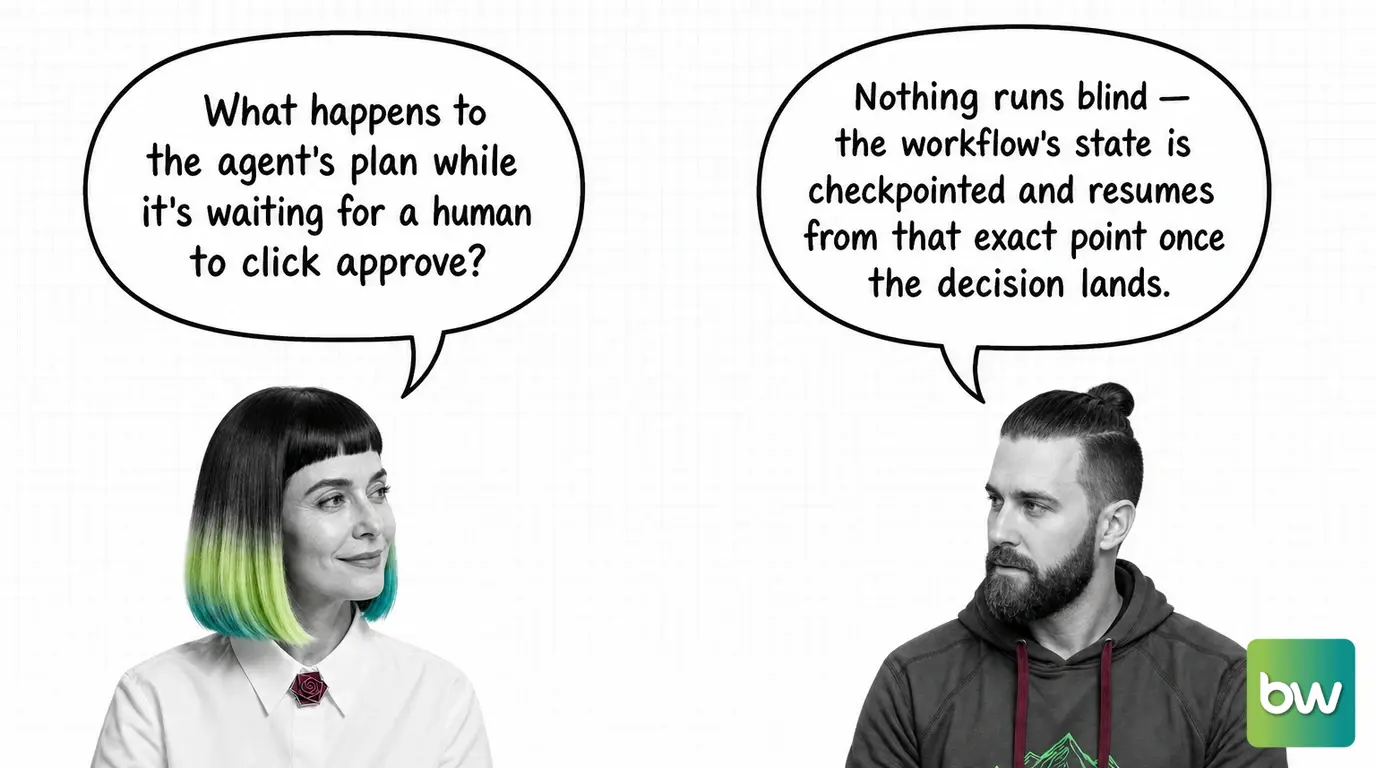
Two neighbours get folded into “human oversight” that actually do different jobs.
Q: Which framework has the strongest native support for pausing an agent for human approval? A: LangGraph and Temporal built pause/resume into their orchestration layer during the 2026 shake-up, while dedicated review tooling like Humanloop did not survive the split. The HITL tooling race covers which layer to pick for durability versus audit review.
Q: How do I stop an approval gate from turning into a rubber-stamp click? A: Scope the gate to genuinely consequential actions and cap how many decisions one reviewer sees per hour — volume, not intent, is what breaks judgment. The ethical cost of human-in-the-loop theater traces how well-designed gates still decay under load.
Q: What happens if the assigned reviewer never responds to a pending approval? A: Without an explicit escalation policy, the workflow either stalls indefinitely or a poorly designed fallback lets it proceed unapproved. The prerequisites and technical limits of HITL works through timeout and reassignment design before you wire the first interrupt.
Q: Does adding a human approval step slow an agent’s throughput too much to be worth it? A: Only if the gate blocks the whole workflow instead of just the risky node — approval gates are state-machine pauses scoped to specific actions, not a blanket freeze. Adding human approval gates with LangGraph, AutoGen, and CrewAI shows how to gate a single tool call without stalling the rest.
Q: Is a chatbot’s “are you sure?” confirmation the same as human-in-the-loop for agents? A: No — a confirmation dialog checks the user’s own request; HITL for agents pauses an autonomous decision the agent made on its own, for a person who is not the one who triggered it, to review. How approval gates keep autonomous workflows safe draws that mechanics line precisely.
Part of agent reliability and operations · closest neighbour: agent guardrails. New to this from a software background? Start with the story: Agent Reliability for Engineers: What SRE Habits Map and Break.
Human-in-the-loop is less about slowing agents down and more about choosing which decisions belong to a person. Start here to see how approval gates, interrupts, and escalation policies fit into agent architectures.
Concepts covered
Human-in-the-loop for AI agents pauses autonomous workflows at risky steps and routes them to a human gate. Here's how approval works in production.
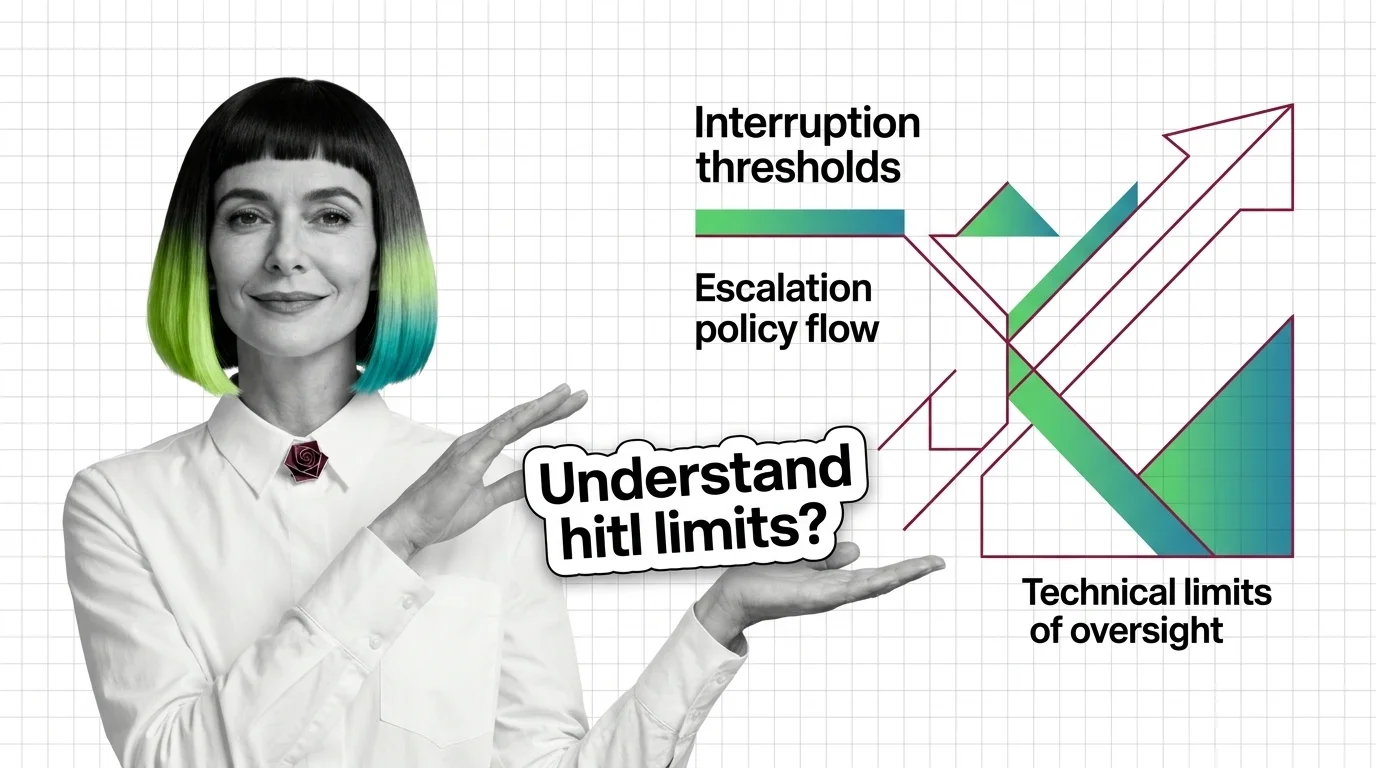
HITL for agents is easy to start and hard to scale. Learn the prerequisites — durable state, idempotency, escalation — and where vigilance breaks.
Adding HITL to an agent means picking the right interrupt mechanism, designing the approval UI, and handling resume state cleanly. The build guides walk through doing this with the major orchestration frameworks.
Tools & techniques
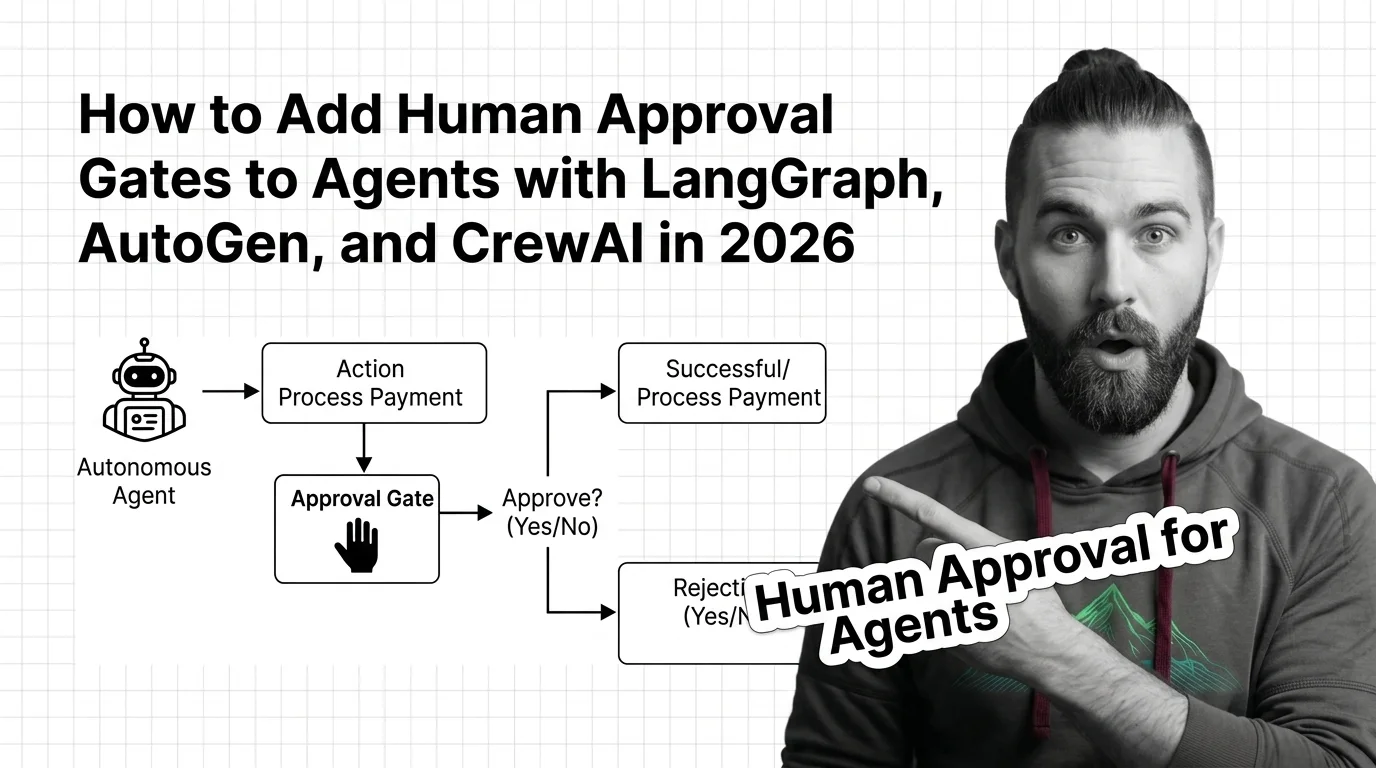
Stop your agent from sending the wrong email or paying the wrong invoice. Spec-first guide to human approval gates in LangGraph, AutoGen, and CrewAI.
Frameworks are racing to make pause-and-resume native rather than bolted on, and dedicated HITL platforms are emerging. Following this shift matters because it changes how teams ship agents to production.
Models & benchmarks
Updated May 2026
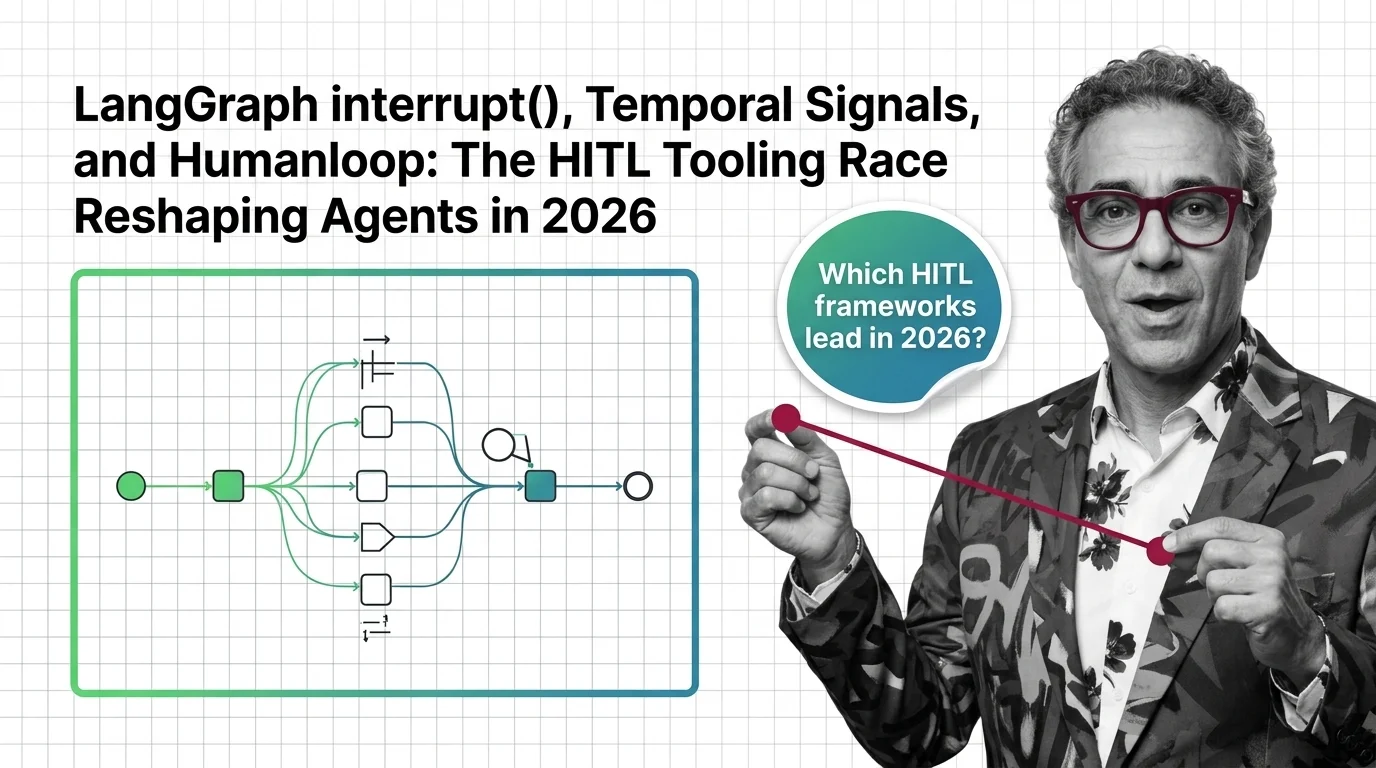
LangGraph's interrupt() and Temporal Signals are setting the bar for human-in-the-loop agents in 2026. Humanloop sunset. Here's where HITL tooling is heading.
Approval gates only work if the human actually reads what they sign off on. The risk pieces look at rubber-stamping, escalation fatigue, and the accountability gaps that hide inside HITL theater.
Risks & metrics
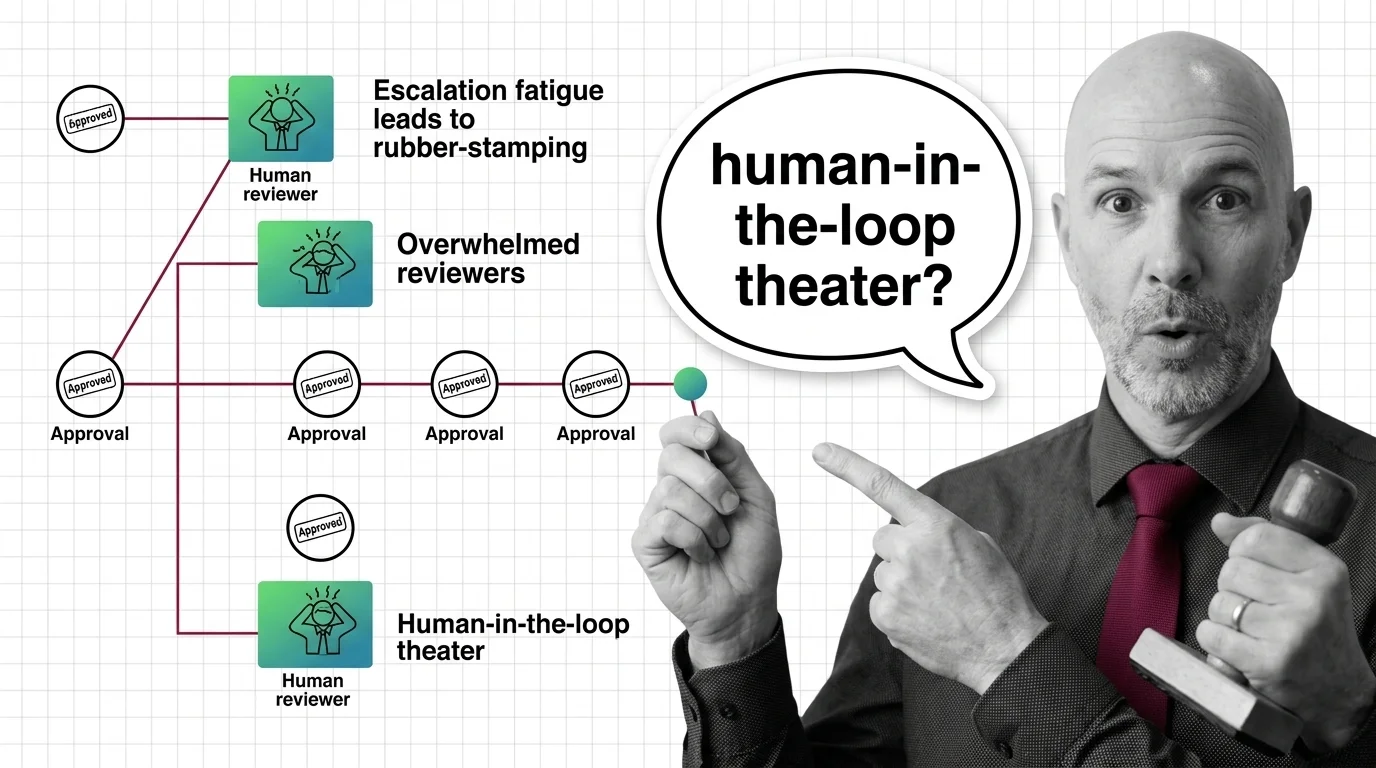
Human-in-the-loop oversight collapses when reviewers face approval volume they cannot meet. The ethical cost lands on the human, not the system designer.