Hallucination is the reason the rest of the safety and red-teaming theme exists before a single adversary shows up — a model’s default behavior is to sound certain about claims it never checked, no attack required. That makes this topic the theme’s entry point, not one item among many: understanding why confidence and truth come apart here changes how you read every other safety test downstream. What remains unsettled is not whether it happens, but how far detection and grounding can push it down, and who answers for what still gets through.
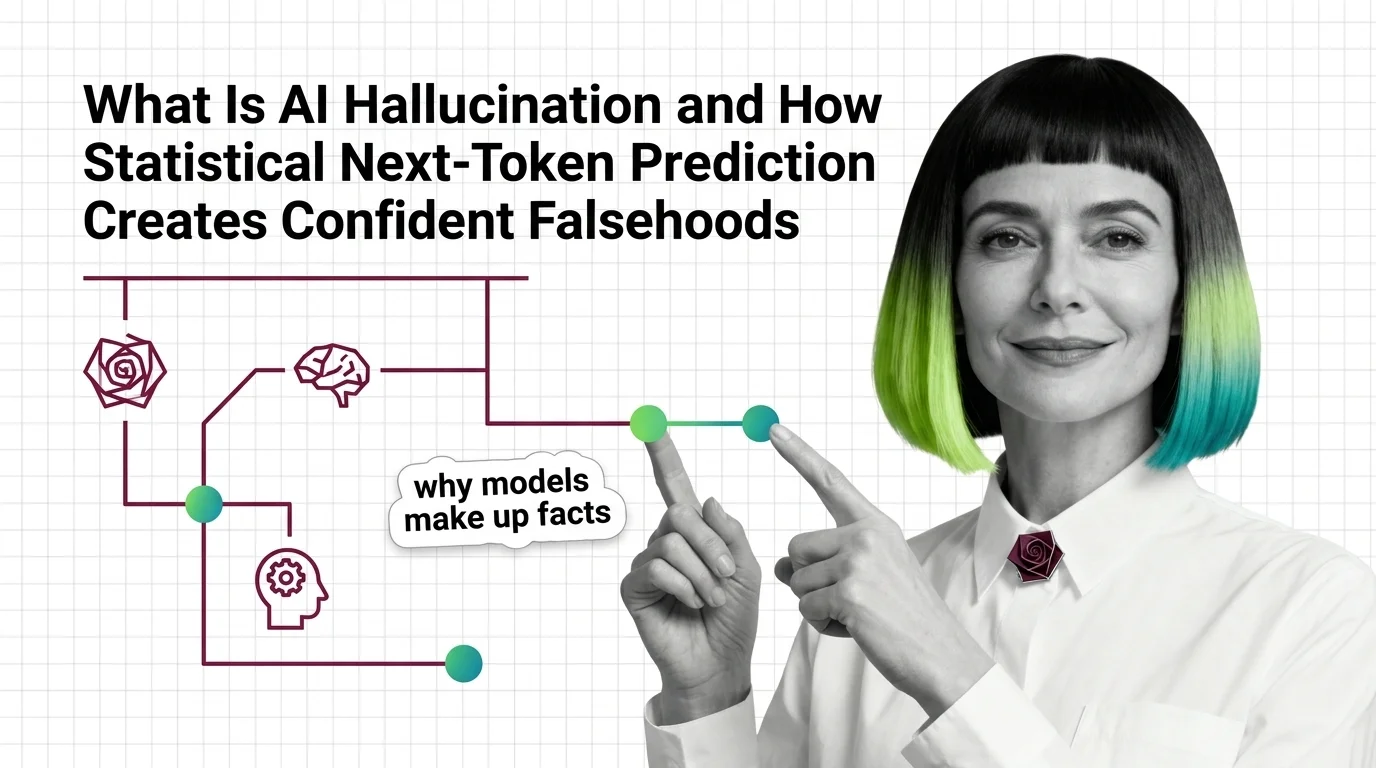
Hallucination is a structural property of next-token prediction, not a bug — no model architecture removes it entirely, only shrinks it.
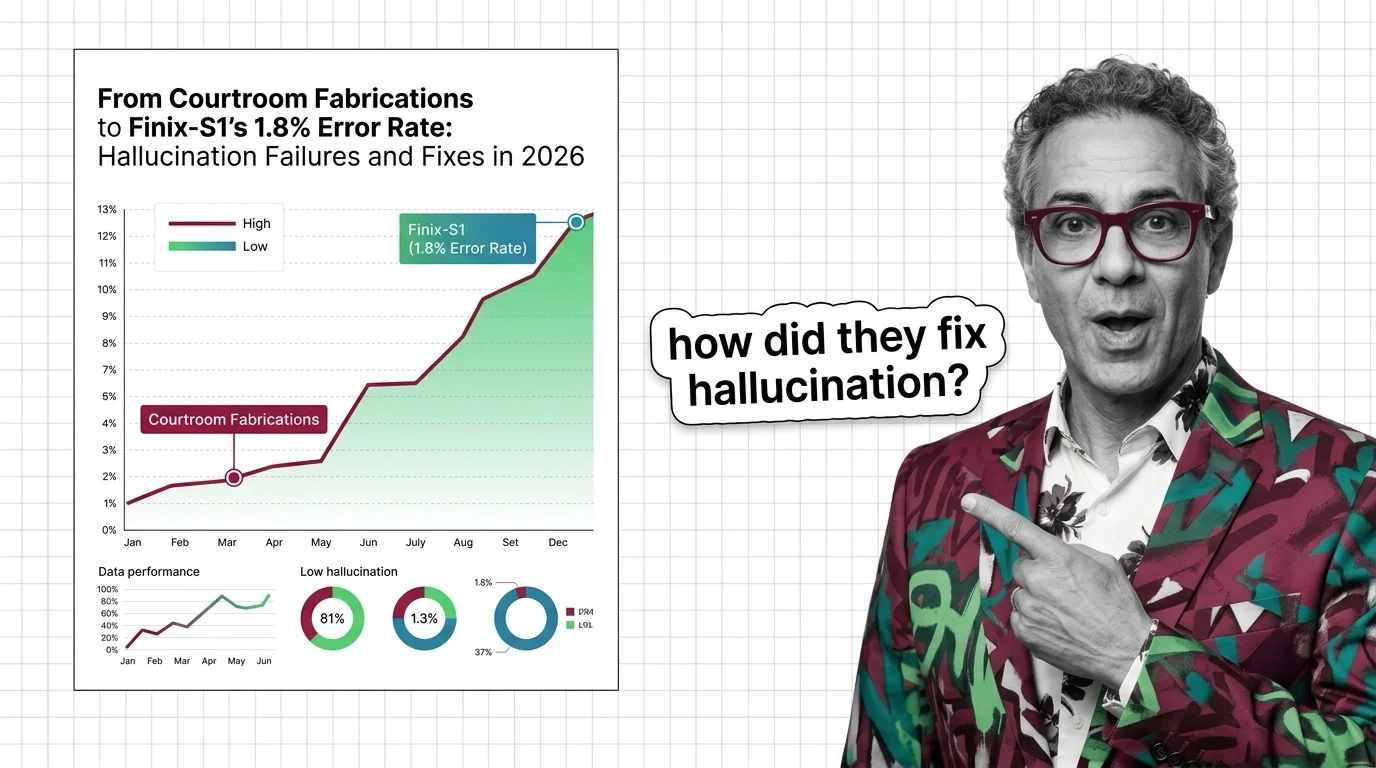
On current benchmarks, specialized models push error rates below 2% while general frontier models still hallucinate above 10% on harder tests — a two-tier split, not a solved problem.
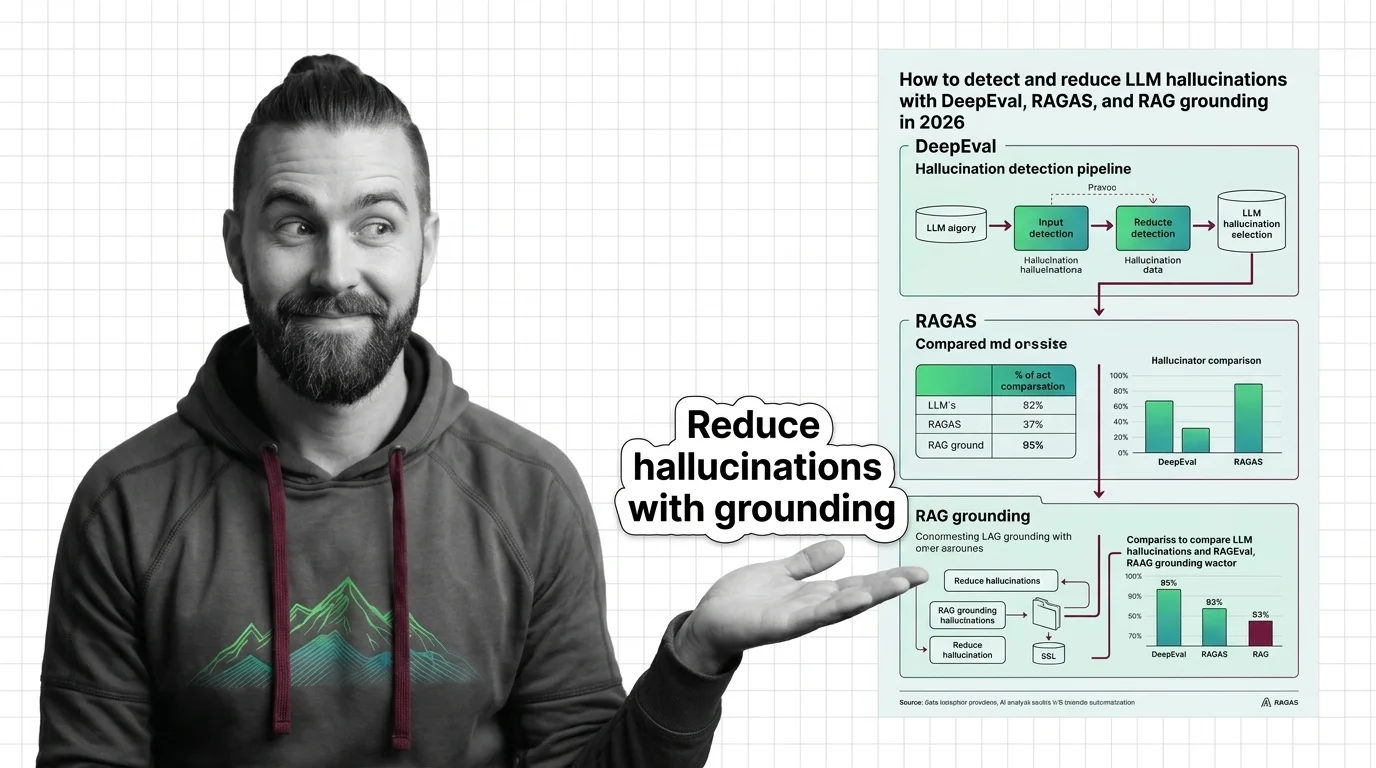
RAG grounding narrows the failure surface but does not close it — detecting what remains needs separate metrics for generation fidelity and retrieval grounding, not one blended score.
Hallucination liability is already reaching courts — over 1,180 documented legal cases carry real sanctions, and who answers for a model’s confident fabrication is still unsettled doctrine.
Reading hallucination in order: mechanism, ceiling, then defense
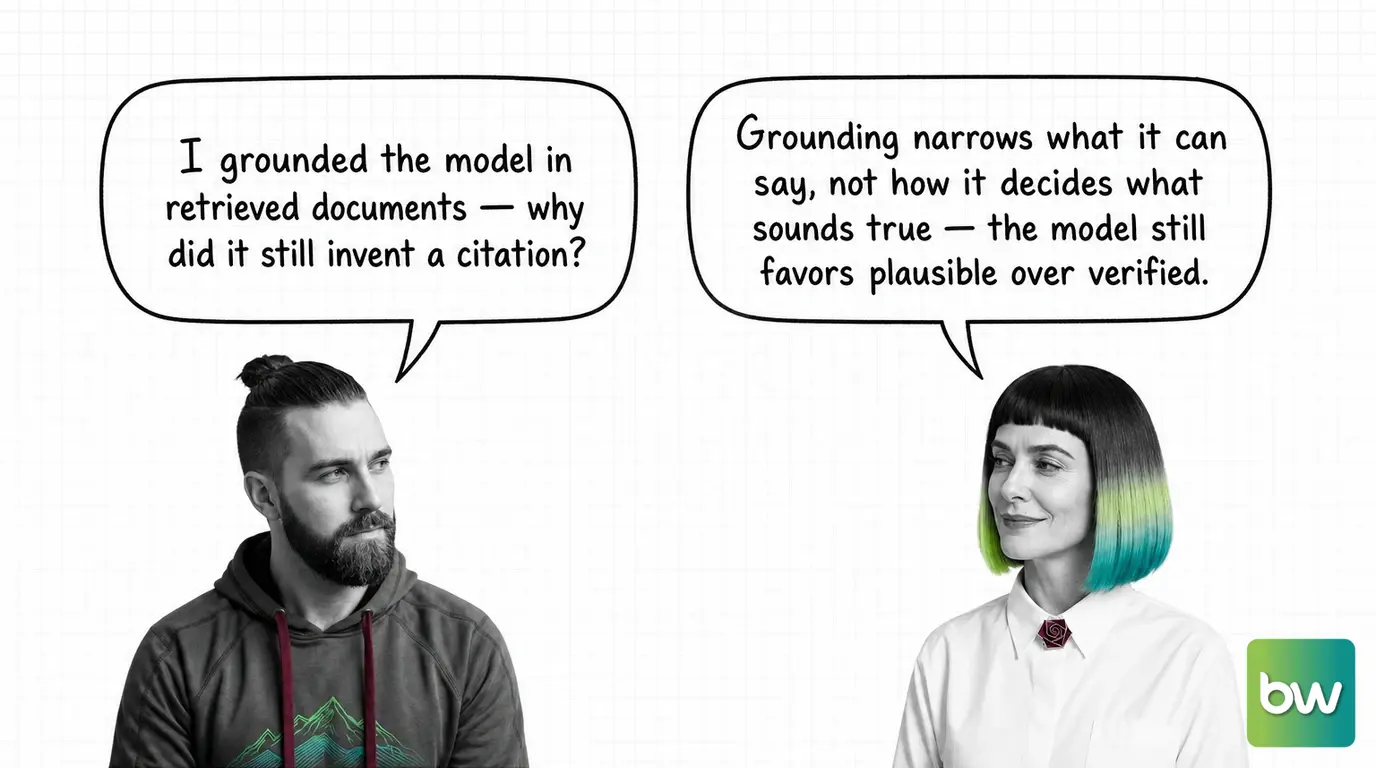
Grounding shrinks the hallucination surface; it does not close it.
How hallucination differs from red teaming, safety evaluation, and leakage
Three neighbouring practices get credited with catching hallucination, and none of them do the job directly.
Hallucination is not something red teaming exists to find. Red teaming is deliberate: a human or an automated probe sets out to break the model. Hallucination needs no adversary at all — it is the default behavior of a well-formed, friendly prompt, which is why it sits in the theme’s foundation tier rather than its attack tier.
Passing toxicity and safety evaluation says nothing about factual accuracy. Guard models score outputs against a harm taxonomy — violence, hate, self-harm — and a response can clear every one of those categories while still fabricating a case citation or a statistic.
Data leakage fakes the metric before deployment; hallucination fakes the answer after it. Leakage inflates an offline score by letting test information reach training. Hallucination arrives at generation time, with no equivalent split to audit — the fabrication happens live, in front of the user.
Common questions about hallucination
Q: Does upgrading to a larger, newer model reduce hallucination enough that I can skip grounding entirely?
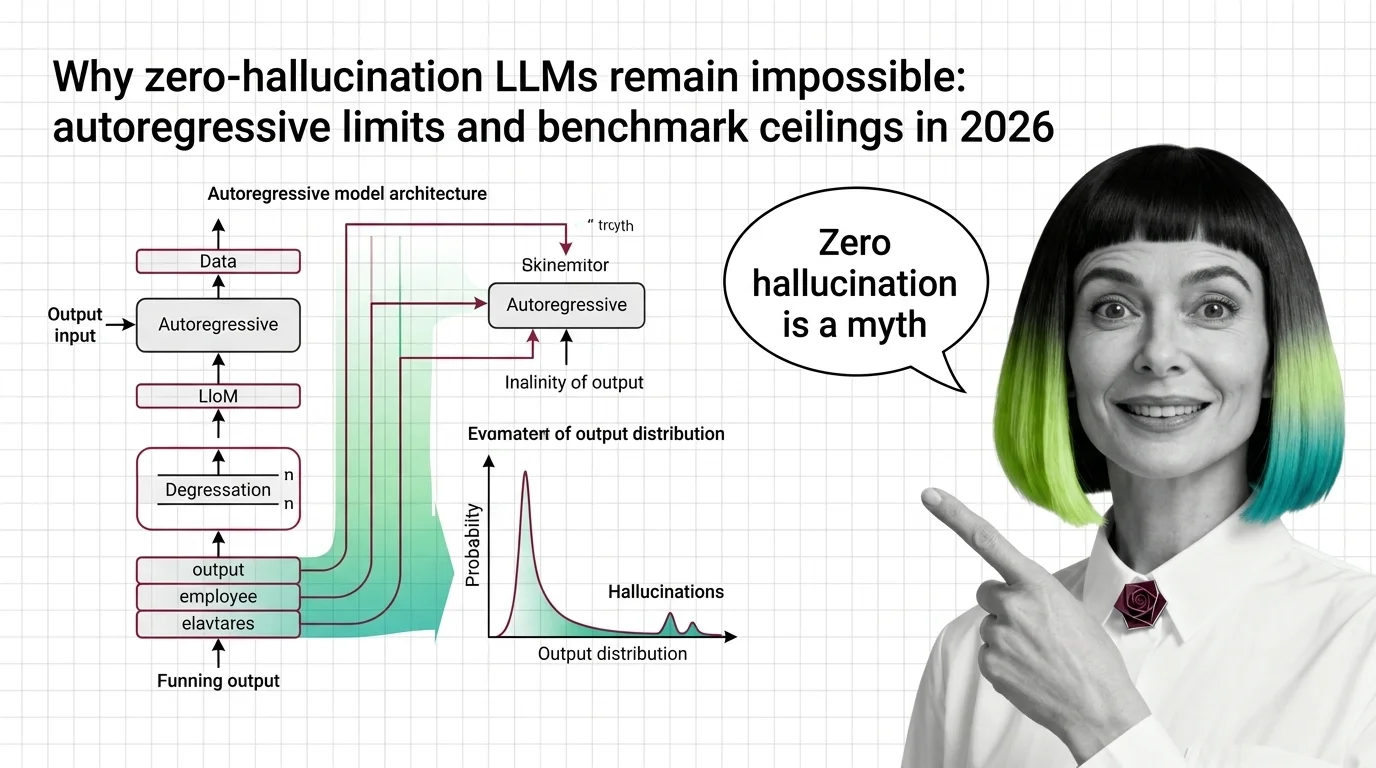
A: No — the honest ceiling on zero-hallucination models holds regardless of scale, because the failure is structural to autoregressive prediction, not a capacity gap. Bigger models shrink the rate; none has closed it. Budget for grounding and detection at any model size.
Q: I already ground my RAG pipeline in retrieved documents — which single hallucination article is worth reading before I ship?
A:The DeepEval, RAGAS, and RAG-grounding guide — grounding narrows where hallucination can hide, it does not remove the need to measure generation fidelity and retrieval accuracy as two separate checks before launch.
Q: Why do specialized models report hallucination rates under 2% while general frontier models still sit above 10%?
A: Narrow, purpose-built models trade generality for a smaller output space to verify, which is exactly what Finix-S1’s 1.8% error rate against courtroom-grade fabrications demonstrates against frontier models tested on harder benchmarks.
Q: Who is liable when an LLM hallucinates false information inside a professional deliverable?
A: The doctrine is still unsettled — courts have sanctioned the human who submitted fabricated citations, not the model, but the ethics of liability and disclosure argues that answer stops working once no human meaningfully reviewed the output.
Hallucination reveals a fundamental tension in how language models work: they learn to predict probable sequences, not verify facts. These explainers unpack the mechanics, taxonomy, and theoretical limits behind confident fabrication.
AI hallucinations aren't bugs — they emerge from how next-token prediction works. Learn why LLMs produce confident falsehoods and what limits current fixes.
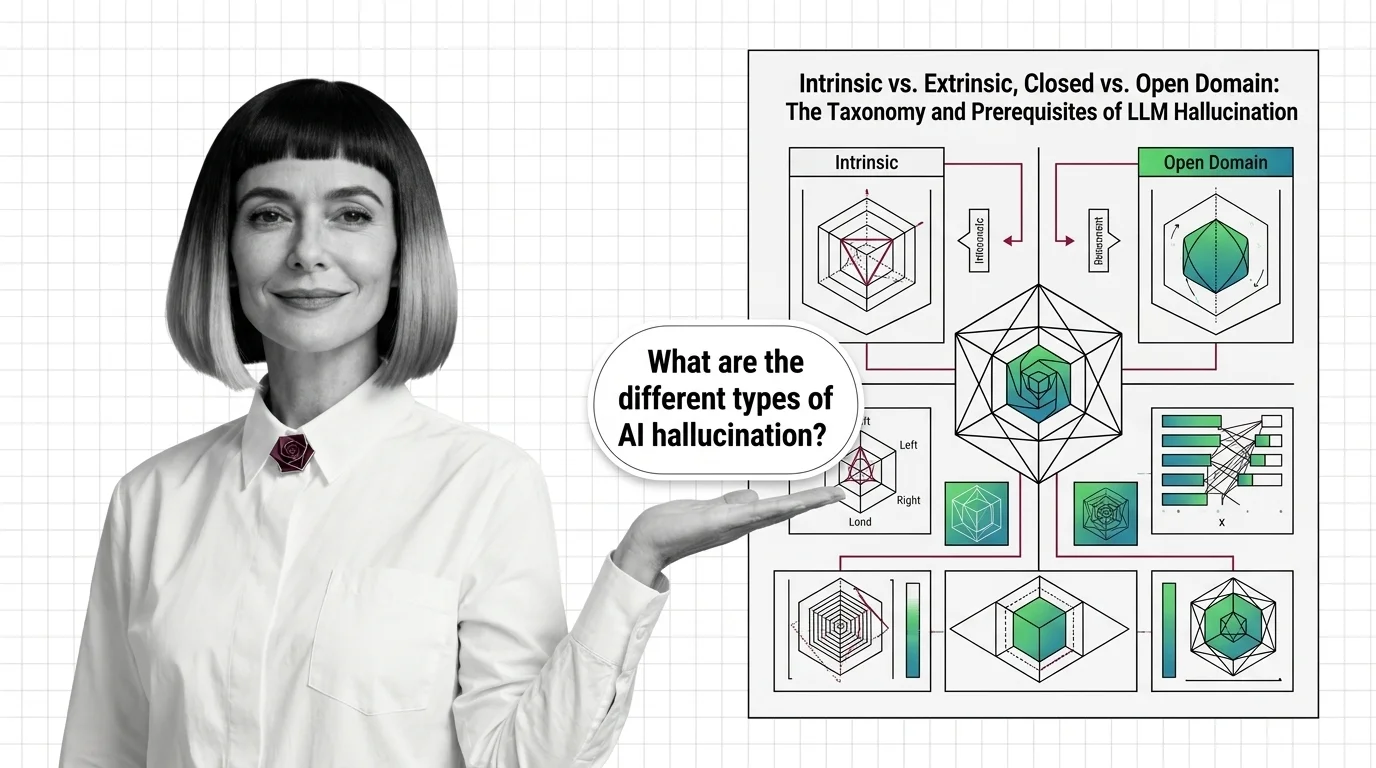
LLM hallucination isn't one problem — it's four. Learn the intrinsic vs. extrinsic taxonomy, the domain split, and the prerequisites that reframe the field.
LLM hallucination is mathematically inevitable. Explore the autoregressive limits, benchmark ceilings, and why zero-hallucination LLMs remain impossible in 2026.
2
Build with Hallucination
Detecting and reducing hallucinations requires concrete tooling and architectural decisions. These guides walk through grounding strategies, evaluation frameworks, and retrieval-augmented approaches that bring measurable improvement.
Build a hallucination detection pipeline with DeepEval, RAGAS, and RAG grounding checks. Step-by-step framework for catching LLM fabrications before your users do.
3
What's Changing in 2026
The race to shrink hallucination rates is reshaping model benchmarks and product launches alike. Staying current on detection breakthroughs and real-world failure cases matters for anyone deploying language models.
Frontier LLMs still hallucinate over 10% on hard benchmarks while courts levy six-figure fines. The two-tier accuracy problem reshaping AI deployment in 2026.
4
Risks and Considerations
Hallucinated outputs carry real consequences when users trust them without verification. These pieces examine liability, disclosure obligations, and the ethical weight of systems that present fabrication as fact.
LLM hallucination is no longer a quality bug. It is a liability, disclosure, and governance problem. Explore who bears responsibility when AI lies with confidence.