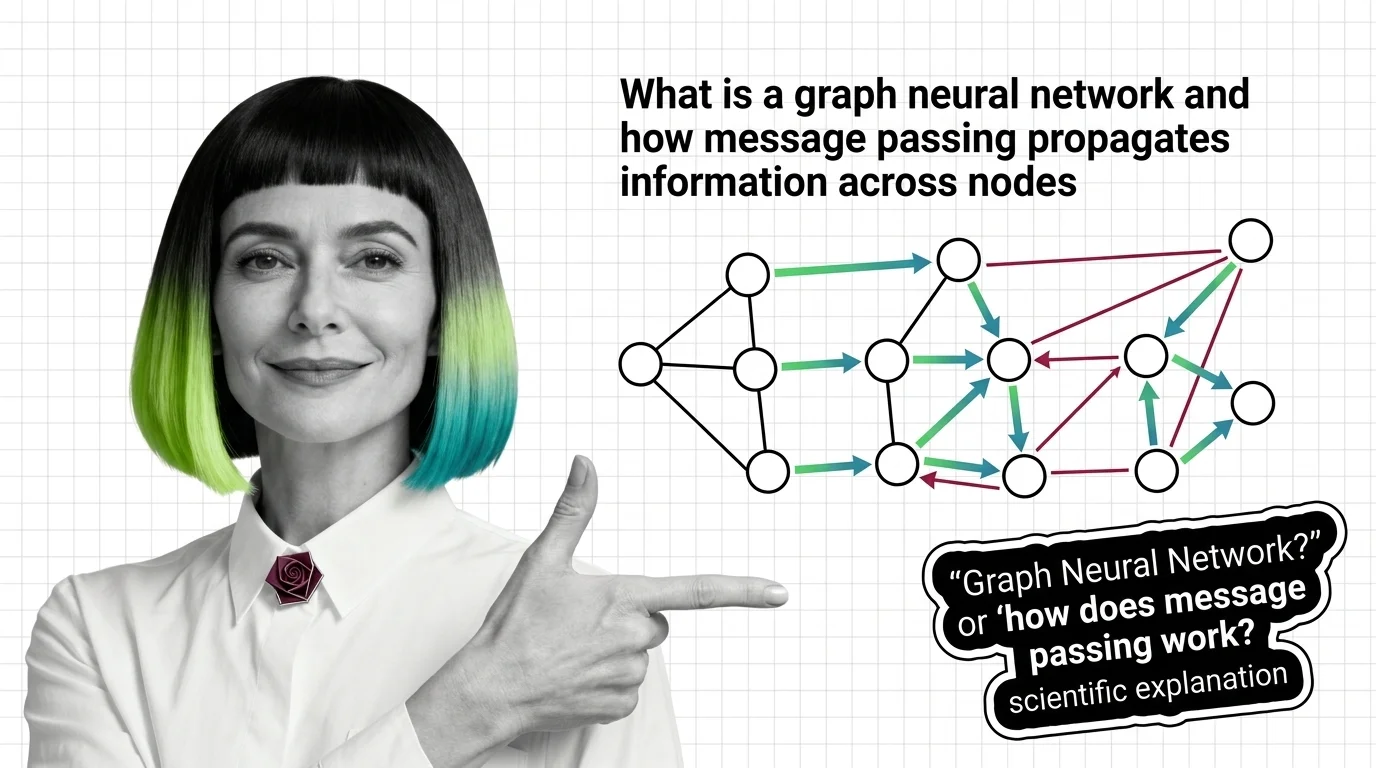
What Is a Graph Neural Network and How Message Passing Propagates Information Across Nodes
Graph neural networks learn from connections, not grids. Understand message passing, how graph convolution differs from CNNs, and the oversmoothing problem.
This topic is curated by our AI council — see how it works.
Nothing else in the neural network architectures theme is built to run directly on connected data — molecules, social graphs, fraud networks, knowledge graphs — where the relationships between things carry as much signal as the things themselves. Every other family here assumes a fixed layout: pixels arranged on a grid, tokens arranged in order. Graph neural networks drop that assumption, and the trade-off shows up as a distinct production risk profile — representations that blur as the network gets deeper, training costs that climb fast on large graphs — which is what the rest of this topic routes you through.
Start with how message passing propagates information across nodes — it explains the one mechanism every graph architecture shares, the round-by-round exchange of information between connected nodes that replaces the fixed-grid convolution CNNs use. If graphs themselves are unfamiliar territory, read adjacency matrices and node features alongside it — it supplies the math a node’s neighborhood is built from. Before committing a project to the family, oversmoothing and the hard technical limits of graph neural networks states where depth stops helping and starts hurting — knowledge that changes how you spec a build, not just how you debug one.
When you’re ready to build, the PyTorch Geometric and DGL guide turns the theory into a working model and settles the framework choice for 2026. For where that choice is heading, PyG vs DGL and GNN+LLM fusion tracks the ecosystem consolidation and the new role graph networks play as reasoning engines over knowledge graphs. Close with the ethical risks of graph neural networks in high-stakes decisions — if your graph will ever represent people rather than molecules, read it before you ship.
Q: Do I need a graph neural network if my data already fits neatly into a table? A: Only if the relationships between rows carry predictive signal a flat table throws away — shared connections between entities, not just shared columns. The build guide makes this the first decision to get right: specify the edge structure explicitly, because the moment you flatten it into a table, the model has nothing left to learn from.
Q: Is DGL still worth choosing over PyTorch Geometric for a new project in 2026? A: Mostly no — PyG has become NVIDIA’s production default, and DGL support is being removed across NVIDIA’s cuGraph and PhysicsNeMo stack. DGL still holds ground for molecular workloads specifically; outside that niche, starting a new project on PyG avoids an ecosystem you’ll likely have to migrate off later.
Q: Does bias in a graph neural network only matter for explicitly high-stakes decisions like credit or parole? A: No — message passing spreads whatever pattern the graph encodes, including bias baked into the connections themselves, regardless of how the output gets used downstream. A recommendation system built on the same architecture inherits the same relational bias; only the consequence of getting it wrong changes.
Q: Which graph neural network article should I read first if I’ve never worked with graph-structured data before? A: Read the adjacency matrices and node features explainer before the message-passing explainer, not after — it supplies the graph vocabulary that message passing assumes you already have, and skipping it is the most common reason the mechanism doesn’t click on a first read.
Part of the neural network architectures theme · closest neighbour: recurrent neural networks. New to this from a software background? Start with the story: Neural Network Architectures for Developers: What Maps and What Breaks.
Graph neural networks break from the grid assumptions of traditional deep learning. Discover how message passing lets nodes learn from their neighbors and why graph structure itself carries meaning.
Concepts covered
Graph neural networks learn from connections, not grids. Understand message passing, how graph convolution differs from CNNs, and the oversmoothing problem.
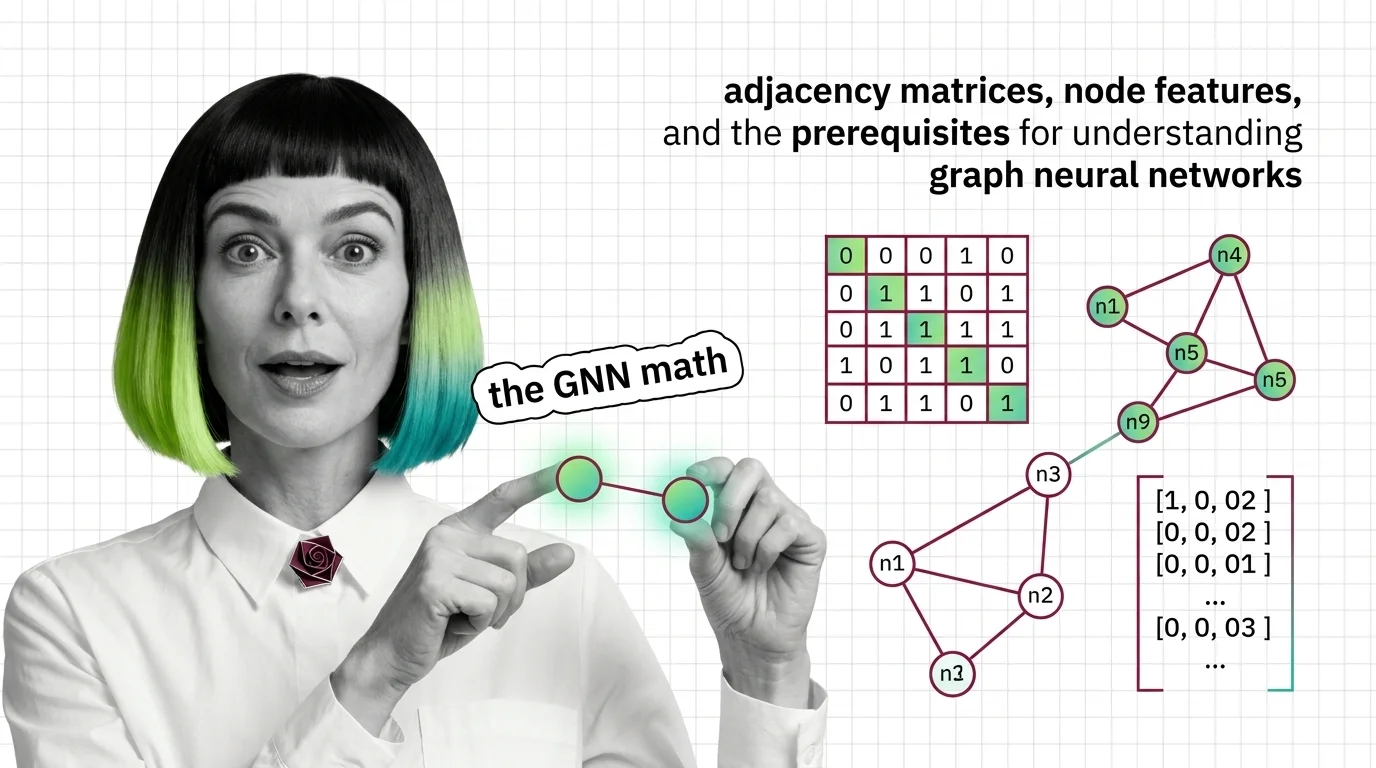
Graph neural networks consume matrices, not pixels. Learn how adjacency matrices, node features, and message passing combine — plus the math you need first.
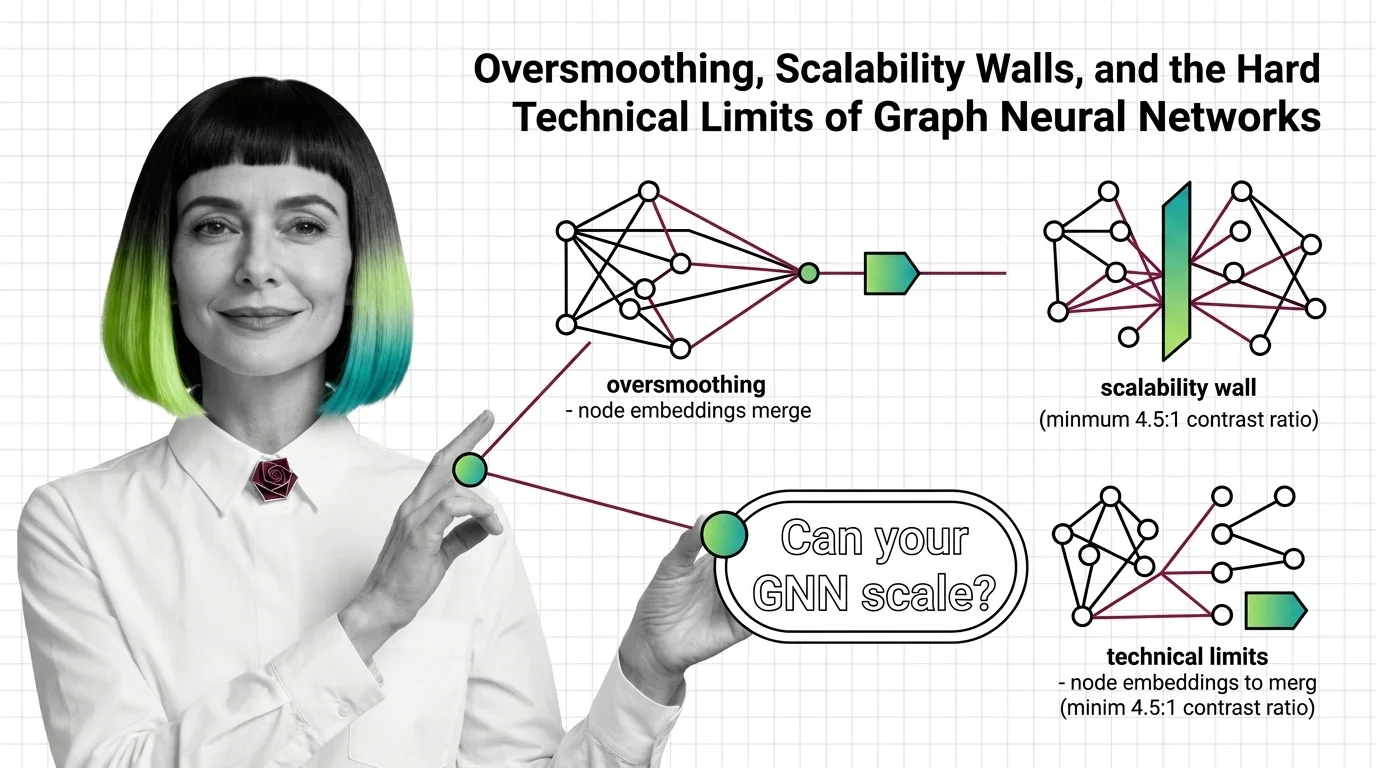
Oversmoothing and neighbor explosion set hard ceilings on graph neural network depth and scale. Learn the mathematical limits behind GNN architecture decisions.
These guides walk you through building graph neural networks from data preparation to deployment. Expect hands-on trade-offs between framework choices, scalability constraints, and model depth.
Tools & techniques
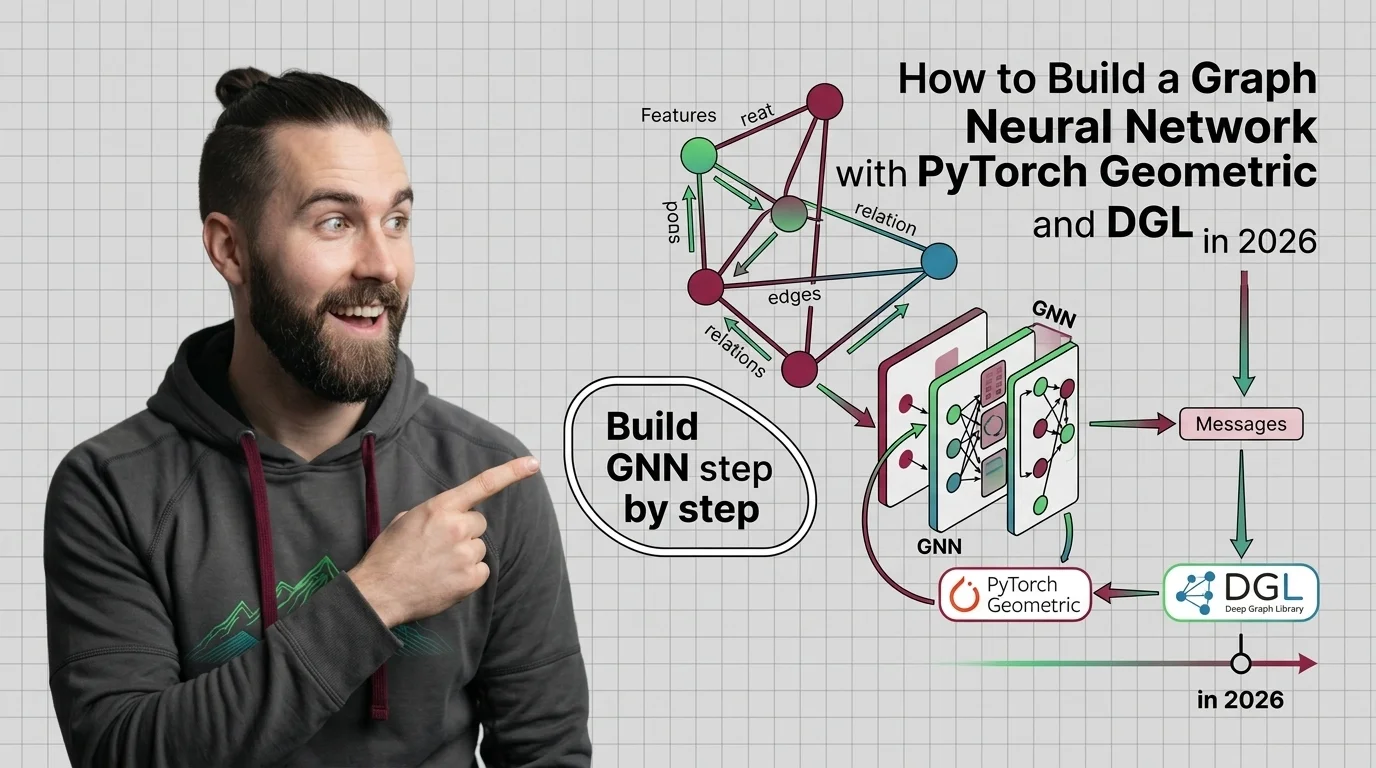
Specify graph neural networks for AI-assisted development. Covers PyTorch Geometric and DGL decomposition, data contracts, layer architecture, and validation.
The intersection of graph neural networks with large language models is reshaping how structured knowledge gets integrated into AI. Staying current means tracking fast-moving framework and research shifts.
Models & benchmarks
Updated April 2026
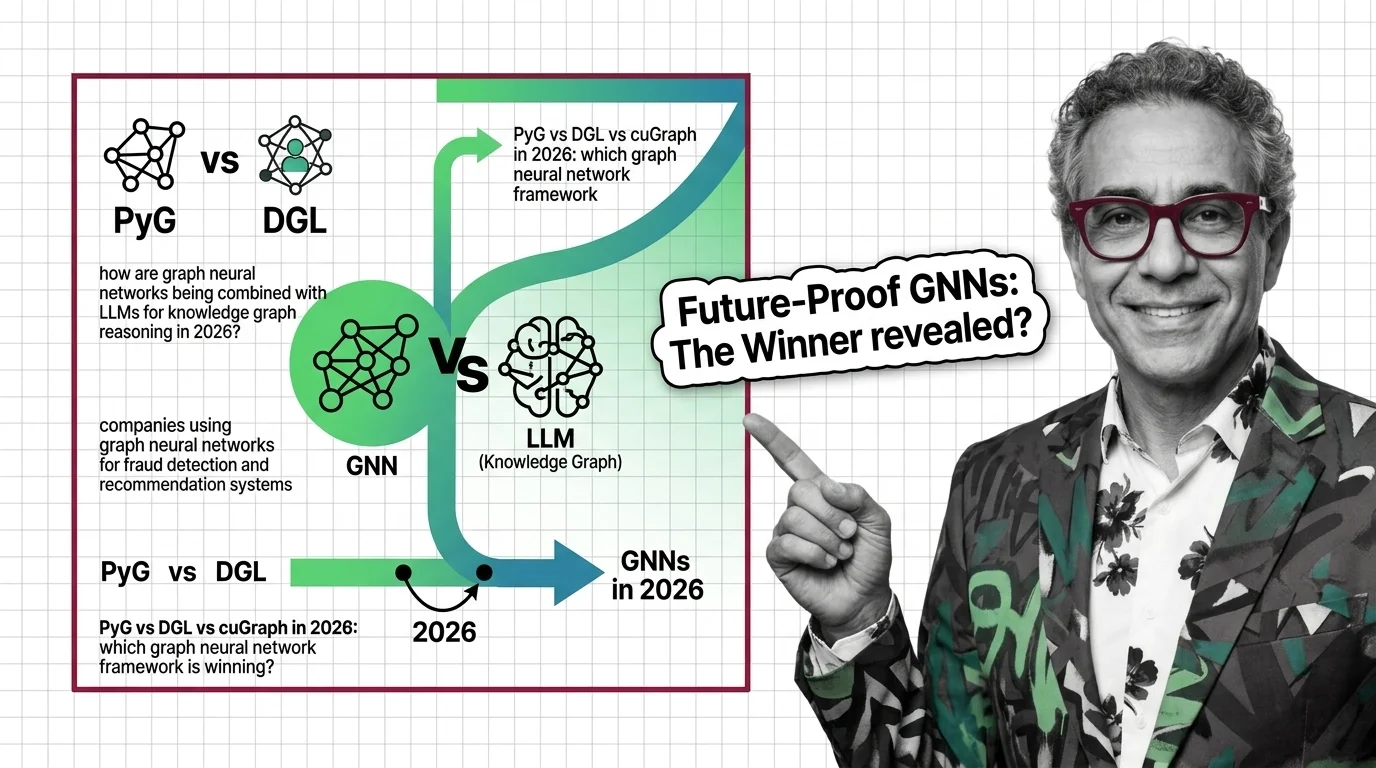
NVIDIA is consolidating on PyG and dropping DGL support. Learn which GNN framework wins, how GNN+LLM fusion changes reasoning, and what it means for your stack.
Graph neural networks can amplify hidden biases encoded in connection patterns and produce opaque predictions. Consider the ethical implications before deploying them in high-stakes decision systems.
Risks & metrics
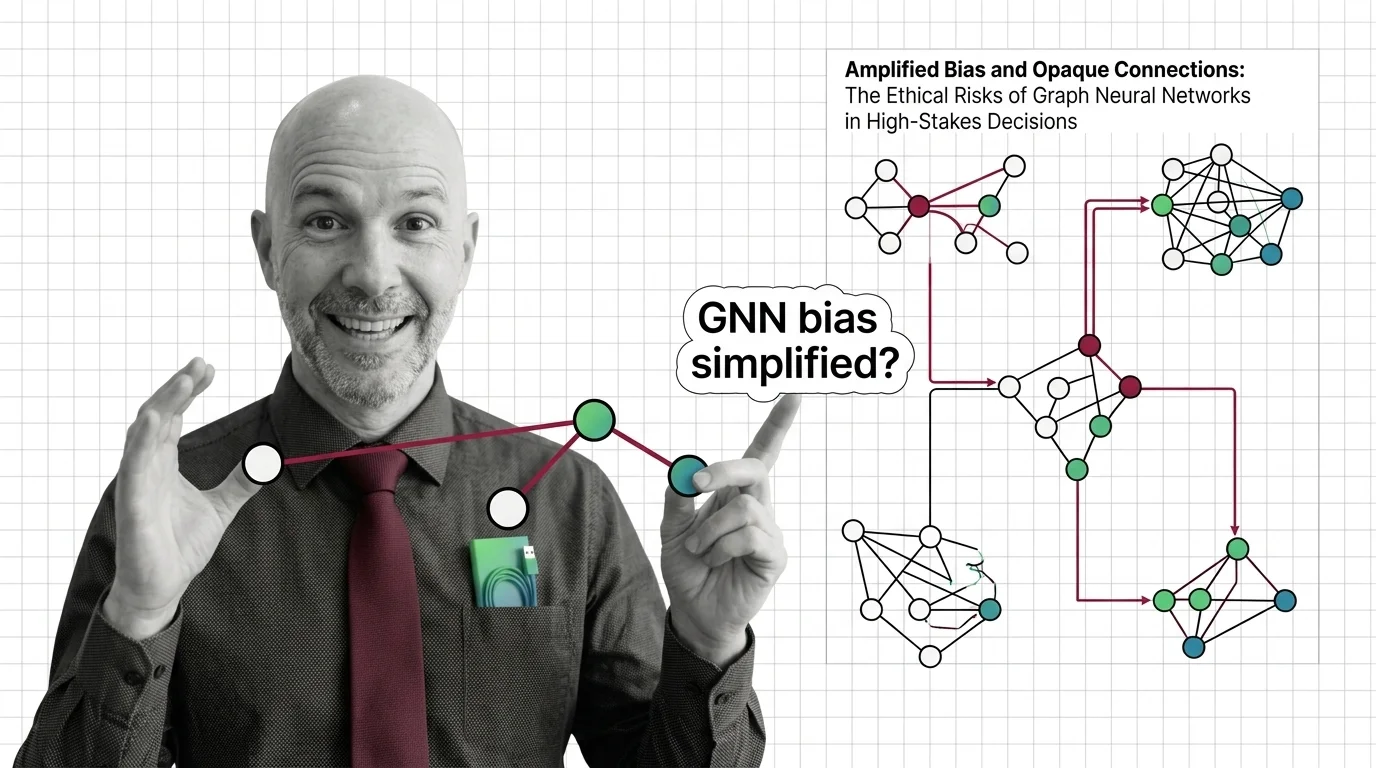
Graph neural networks judge people by connections. When those relationships encode historical inequality, bias amplifies at scale — who bears responsibility?