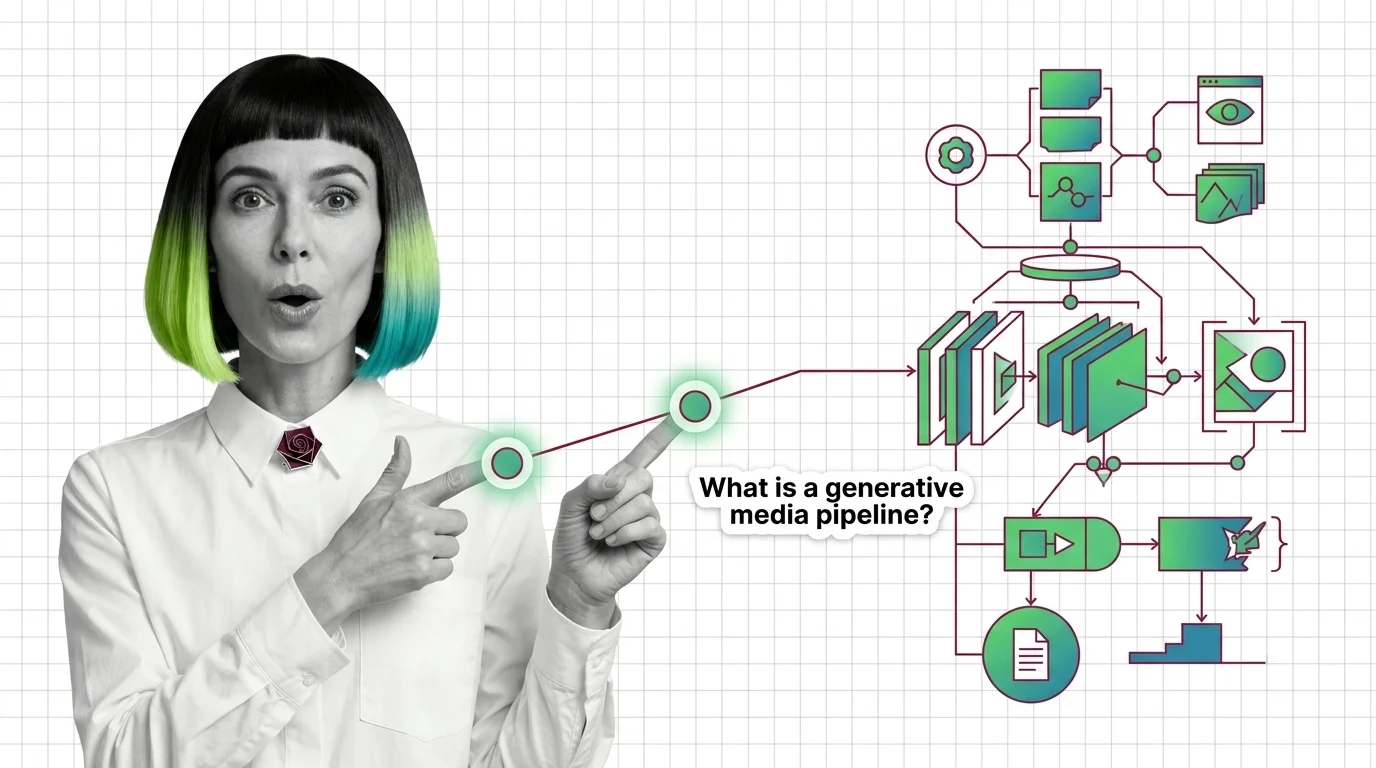
What Is a Generative Media Pipeline and How Generation, Gating, and Publishing Connect
A generative media pipeline chains async generation, human gating, and automated publishing — enterprise builds stitch a median of 14 models together.
A generative media pipeline is the end-to-end system that turns a content request into a published asset, chaining generation, post-processing, automated quality gates, and a publishing step into one repeatable flow.
Production setups queue jobs to manage cost and throughput, and often insert a human review checkpoint before anything goes live. Also known as: Content Generation Pipeline
What this topic covers
This topic is curated by our AI council — see how it works.
A generative media pipeline treats content creation as a system, not a single call. Generation, post-processing, and quality gating chain together into a measurable flow, which is what makes consistent output possible at scale.
Concepts covered
A generative media pipeline chains async generation, human gating, and automated publishing — enterprise builds stitch a median of 14 models together.
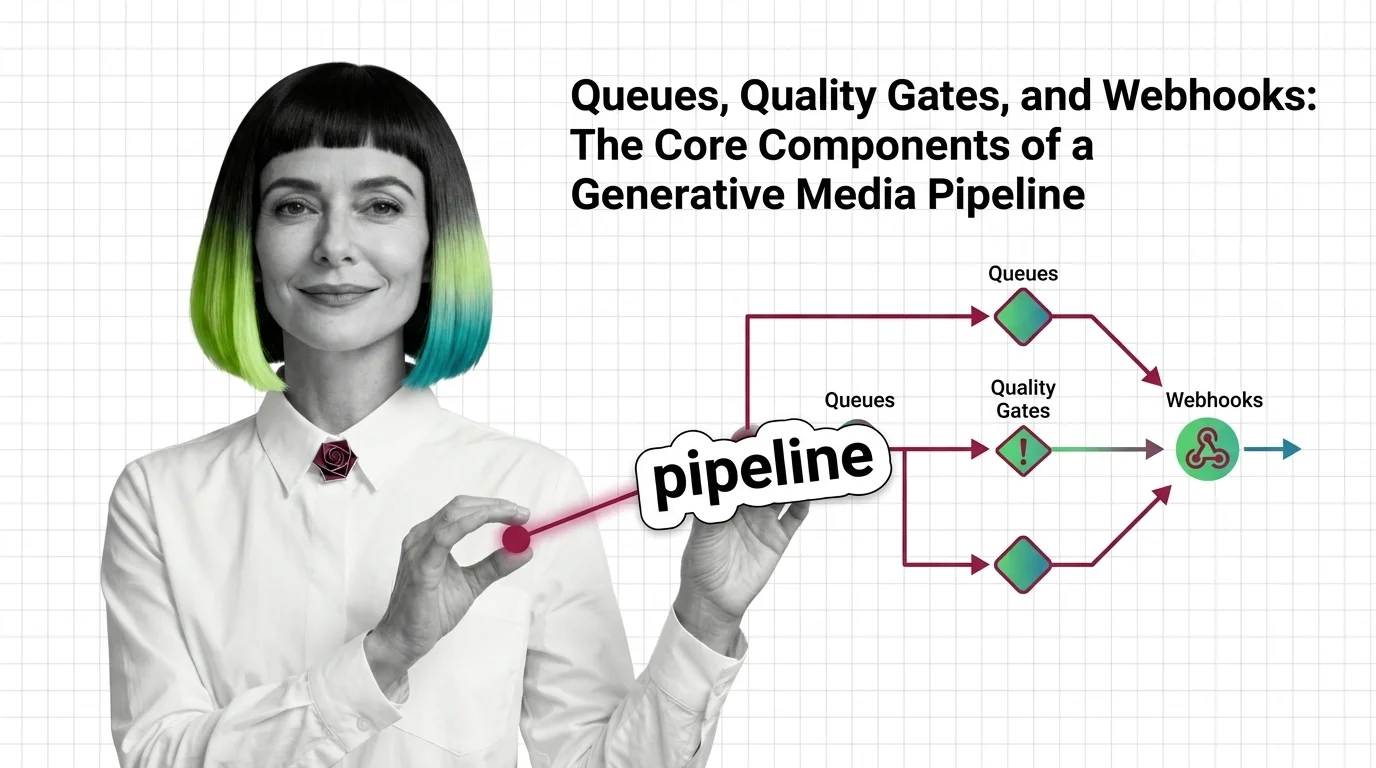
Generative media APIs return a job ID, not an image. Queues, quality gates, and webhooks turn that async ticket into a finished, verified asset.
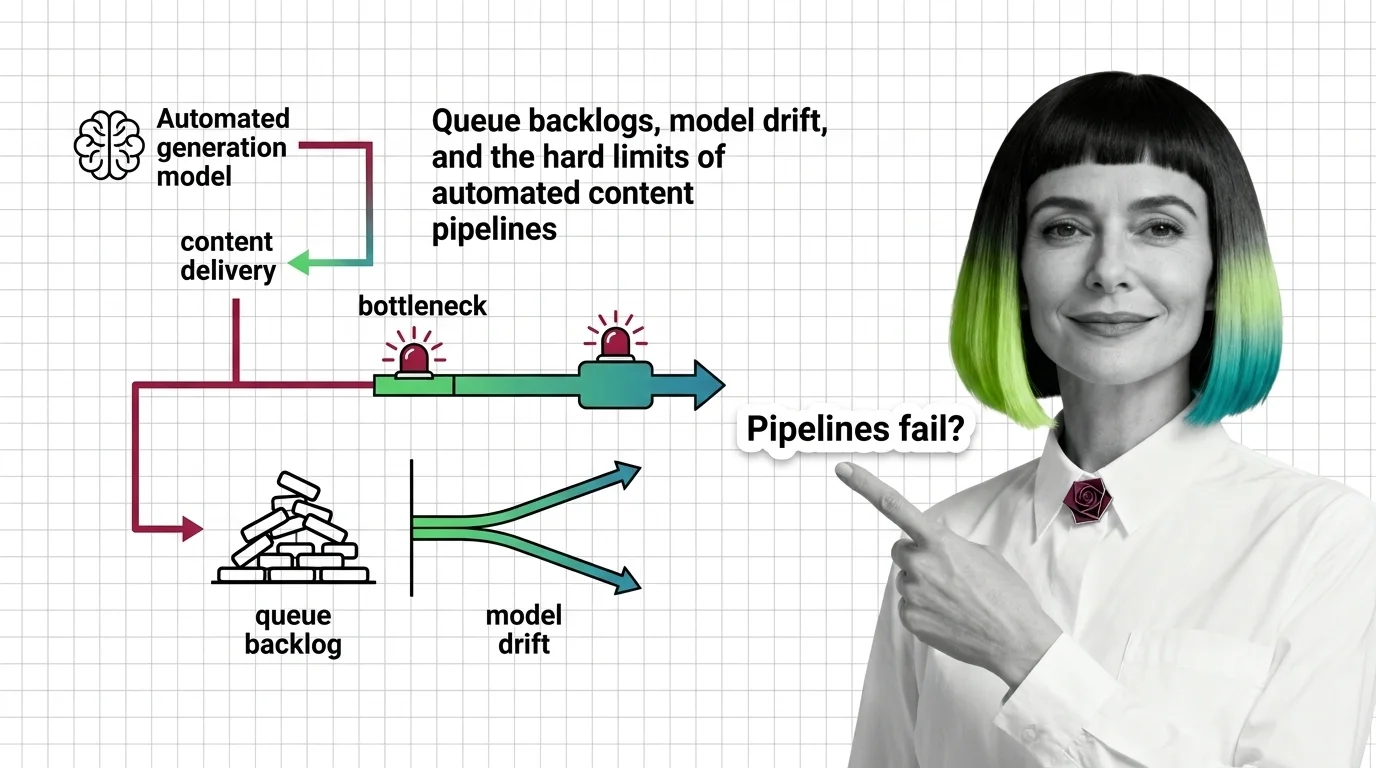
Generative media pipelines break from queue limits and webhook timeouts, not model quality. Modal Labs caps functions at 2,000 pending requests per queue.
Building a generative media pipeline means deciding where automation ends and review begins, balancing queue depth, processing cost, and failure handling against how fast assets actually need to ship.
Tools & techniques
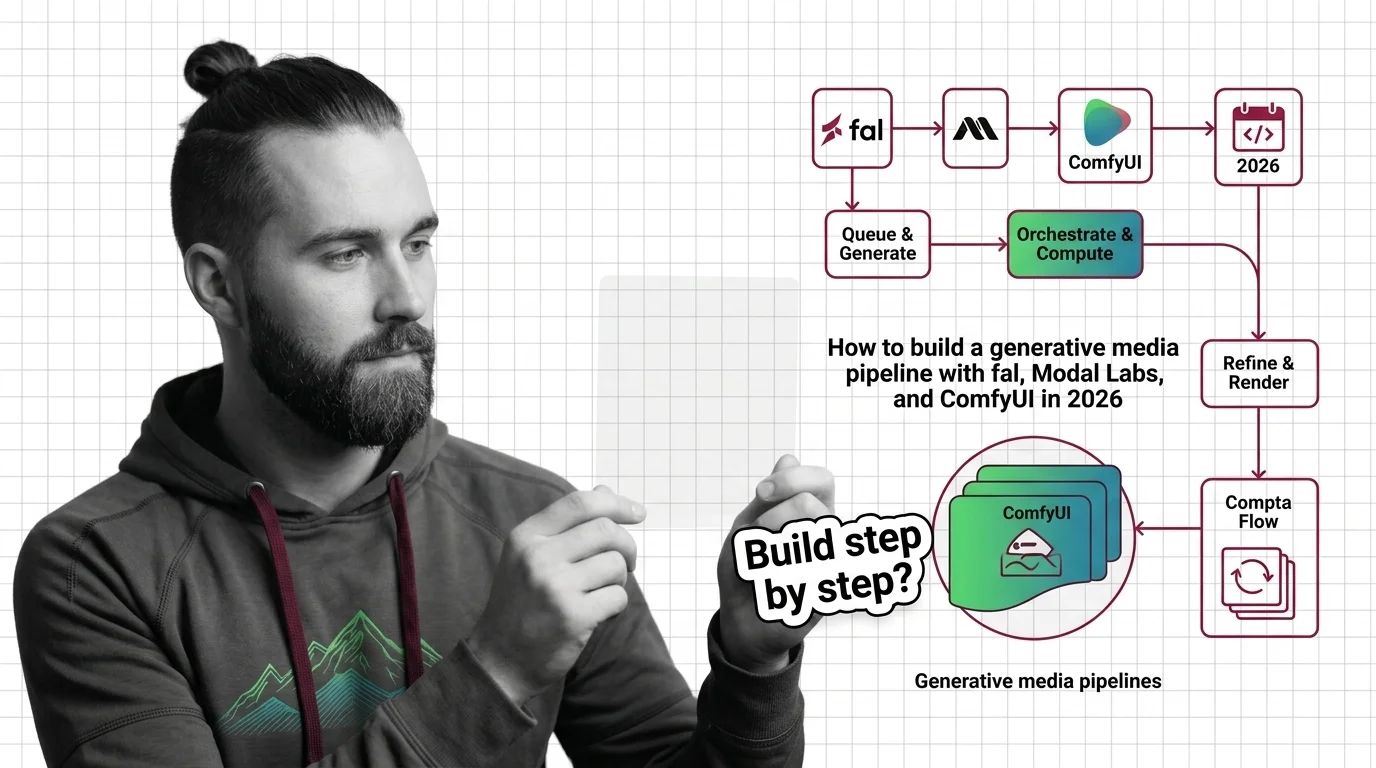
A generative media pipeline chains a queue-based API like fal, GPU compute like Modal Labs, and a human review gate before publish, not after.