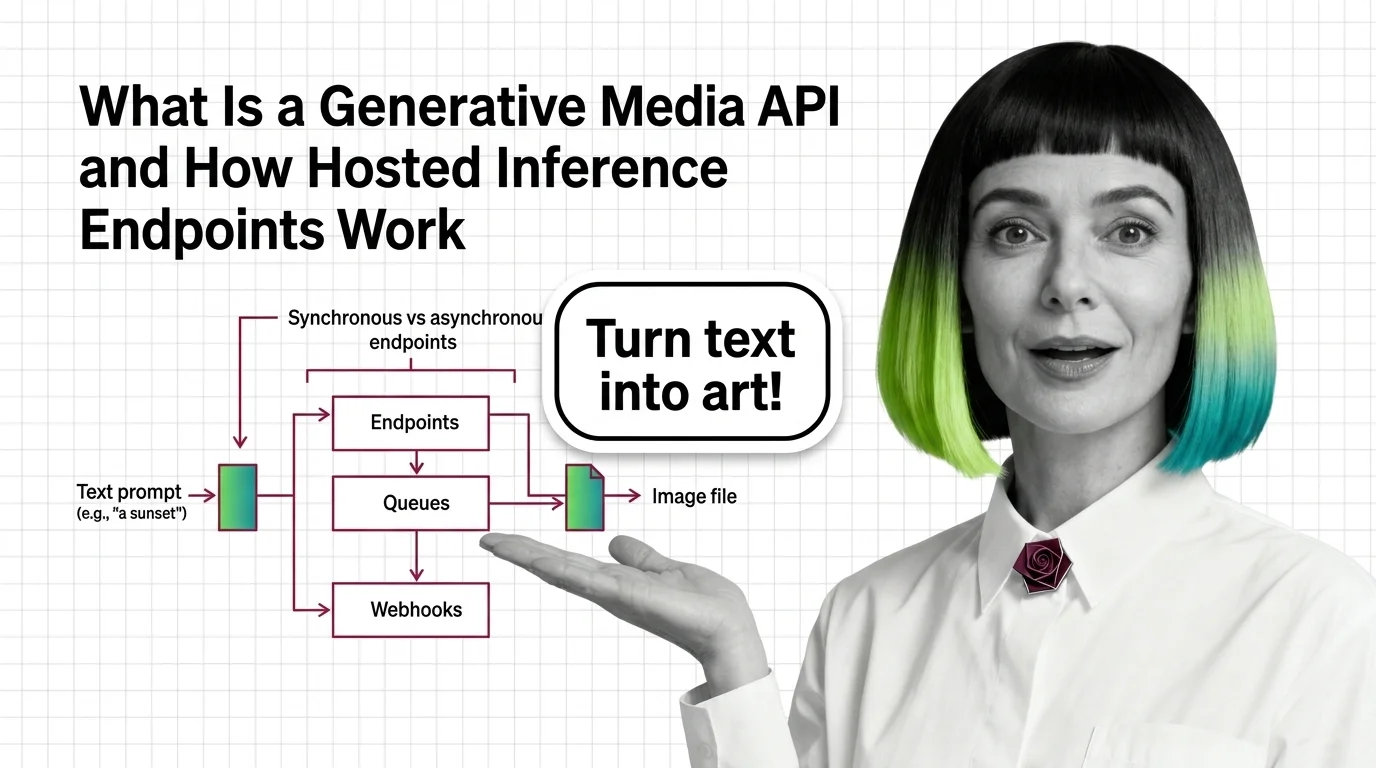
What Is a Generative Media API and How Hosted Inference Endpoints Work
A generative media API turns a text prompt into an image, video, or audio file via hosted inference endpoints, async queues, and webhook callbacks.
A generative media API is a hosted endpoint that turns a text prompt into an image, video, or audio clip without running any model infrastructure yourself.
Providers like Replicate, fal.ai, Stability API, and OpenAI's Images API expose this over HTTP, each with its own pricing, latency, and rate limits. Production teams often abstract multiple providers behind one interface to avoid lock-in. Also known as: Generation API
What this topic covers
This topic is curated by our AI council — see how it works.
A generative media API turns a model checkpoint into a billable HTTP endpoint — understanding it means seeing how pricing, latency, and rate limits emerge from infrastructure choices most users never see.
Concepts covered
A generative media API turns a text prompt into an image, video, or audio file via hosted inference endpoints, async queues, and webhook callbacks.
Generative media APIs run as async job queues, not REST calls. fal.ai cold starts take 10-90 seconds; Replicate caps creation requests at 600/minute.