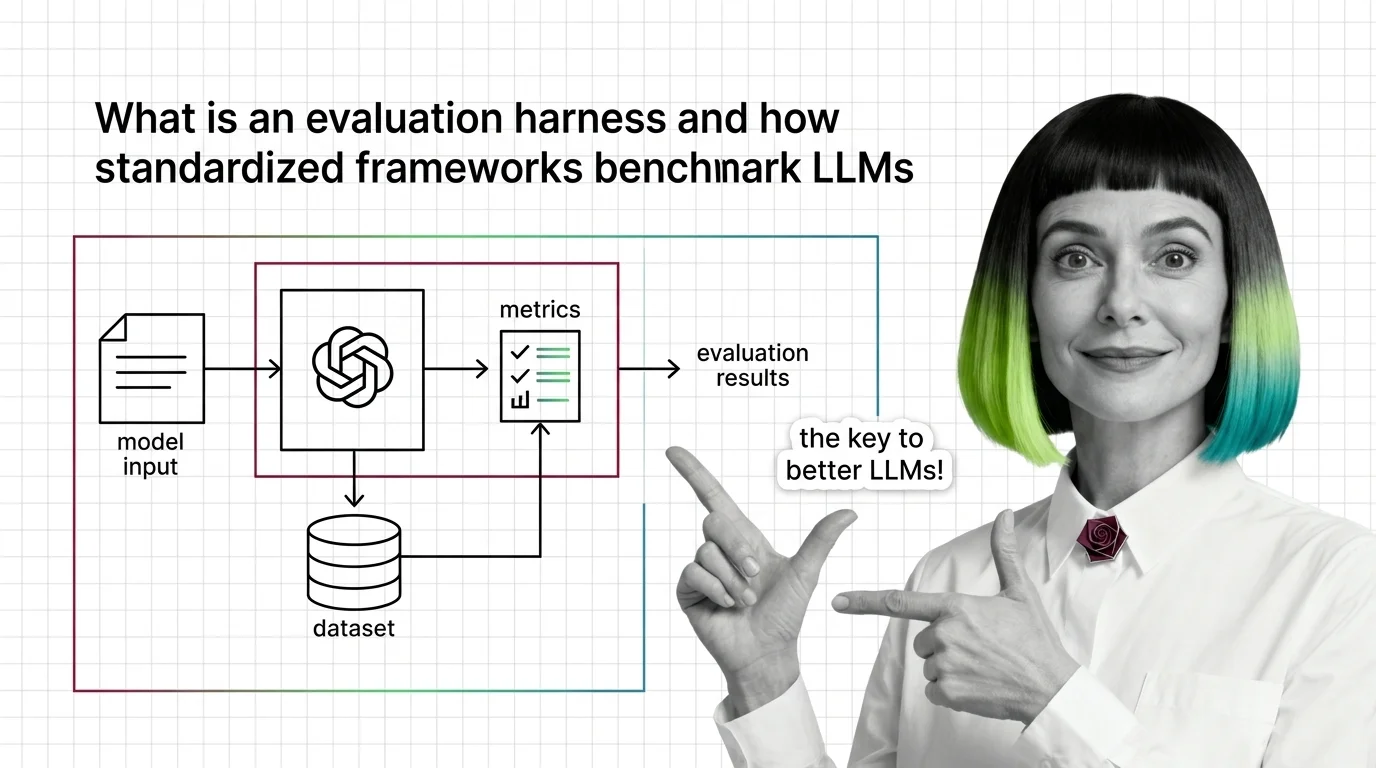
What Is an Evaluation Harness and How Standardized Frameworks Benchmark LLMs
Evaluation harnesses standardize LLM benchmarking by fixing prompts, scoring, and conditions. Learn how the pipeline works and why reproducible scores matter.
This topic is curated by our AI council — see how it works.
Two labs can run the exact same benchmark and publish incompatible numbers — not because the model changed, but because the machinery that ran the test did: different prompt templates, different answer parsing, different contamination checks. That machinery is what the rest of model evaluation leans on the moment a benchmark claim has to survive being reproduced by someone else’s setup. Get it wrong, or skip auditing it, and every downstream decision — model selection, procurement, a leaderboard rank — inherits a number nobody can actually defend.
Start with what an evaluation harness is and how standardized frameworks benchmark LLMs — it draws the line between a benchmark dataset and the machinery that runs it, a distinction every later decision assumes you already hold. Before configuring anything, work through the prerequisites for understanding evaluation harness internals: perplexity, few-shot prompting, and tokenization are the vocabulary every harness setting is written in, and skipping them turns configuration into guesswork.
Once the internals make sense, benchmark contamination, score divergence, and the technical limits of evaluation harnesses shows why the same model can post different numbers under different harnesses, and why that divergence is itself diagnostic rather than noise. When you are ready to run one yourself, the hands-on harness guide walks lm-evaluation-harness, HELM, and OpenCompass from install to a first comparison table. For where the tooling is heading, the open-source evaluation race reshaping LLM benchmarking maps how safety mandates, enterprise testing, and academic benchmarking are pulling harness adoption in three directions at once. Close with who decides what gets measured — the accountability question none of those frameworks answers on their own.
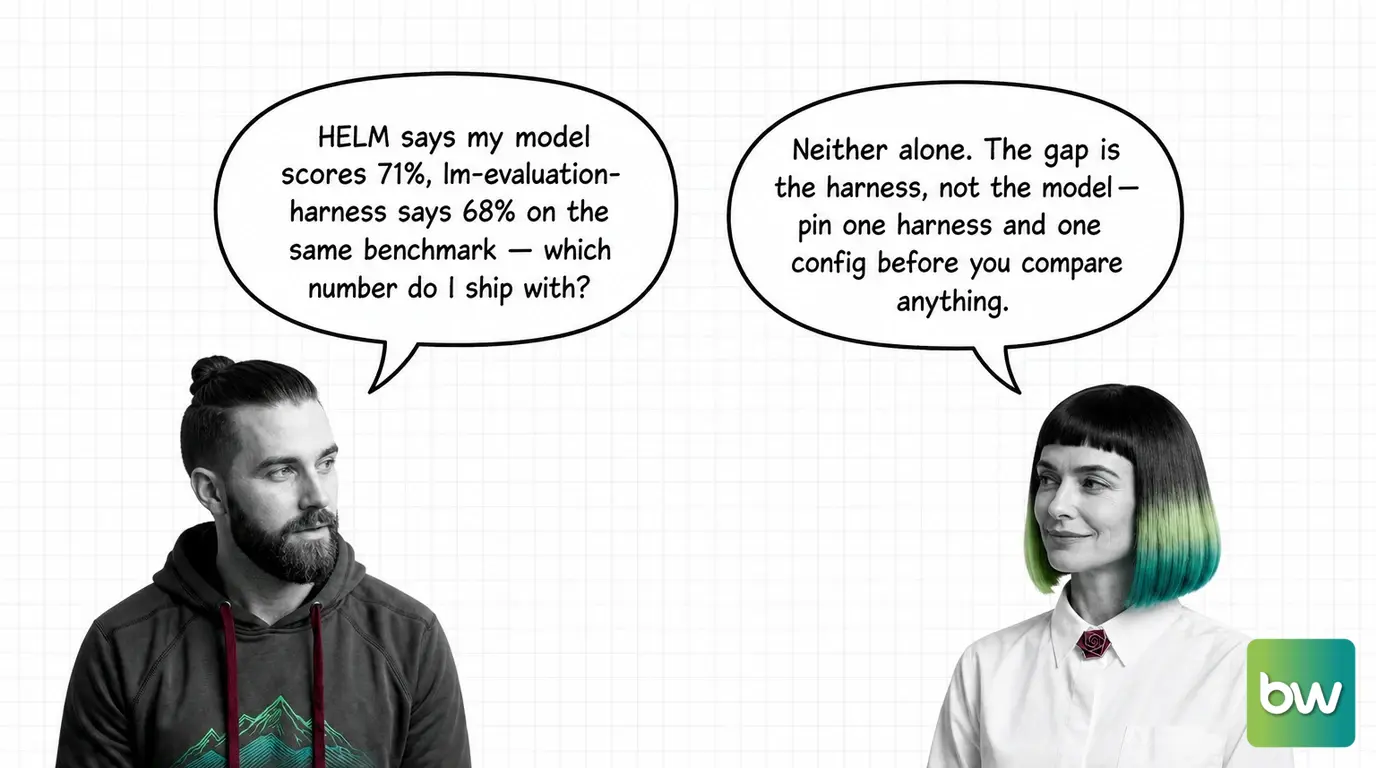
An evaluation harness scores against a fixed answer key — multiple-choice options, exact-match strings, code tests that pass or fail. LLM-as-a-judge instead hands an open-ended answer to another model and asks for a rubric-based rating. Swap one for the other and you inherit a different failure mode: the harness is exposed to contamination and prompt-format sensitivity, a judge model to position bias and self-preference for its own family’s outputs.
The harness also is not the contamination check. It runs the test and reports a number; benchmark contamination is the separate question of whether that number can be trusted at all. A harness has no built-in way to know its questions leaked into a model’s training data — that audit is a distinct step layered on top, not a setting inside the harness configuration.
Q: I just need to run a benchmark, not master the internals — where should I start? A: The hands-on harness guide is built for exactly that: it treats lm-evaluation-harness, HELM, and OpenCompass as tools solving different problems and gets you to a first comparison table without requiring the internals first.
Q: Do I need a harness if I am only testing one model for one internal use case? A: A harness earns its keep on comparability — same questions, same scoring, same conditions across models. Testing a single model in isolation still benefits from that reproducibility discipline, but the payoff grows the moment you compare a second model or a later checkpoint.
Q: My harness score looks solid — do I still need a separate contamination check? A: Yes. Score divergence across harnesses is one of the signals contamination leaves behind, but a single clean-looking run on one harness cannot rule it out on its own.
Q: Does the evaluation harness I adopt lock my team into one part of the evaluation ecosystem? A: Increasingly, yes. Evaluation tooling has split into three lanes — government safety mandates, enterprise CI/CD, and academic benchmarking — each built around a different dominant framework, so an early choice is harder to reverse later than it looks.
Q: Does a widely used evaluation harness guarantee the benchmarks it runs are fair? A: No. The accountability gap in standardized evaluation is about who designs the benchmarks a harness runs, not the harness itself — reproducible execution says nothing about whether the underlying test was ever open to scrutiny.
Part of the model evaluation theme · closest neighbour: benchmark contamination. New to evaluation from a software background? Start with the story: Model Evaluation for Developers: What Maps and What Misleads.
Evaluation harnesses turn subjective model impressions into quantifiable evidence. Understanding how these frameworks standardize testing reveals both the power and the hidden assumptions behind every leaderboard score.
Concepts covered
Evaluation harnesses standardize LLM benchmarking by fixing prompts, scoring, and conditions. Learn how the pipeline works and why reproducible scores matter.
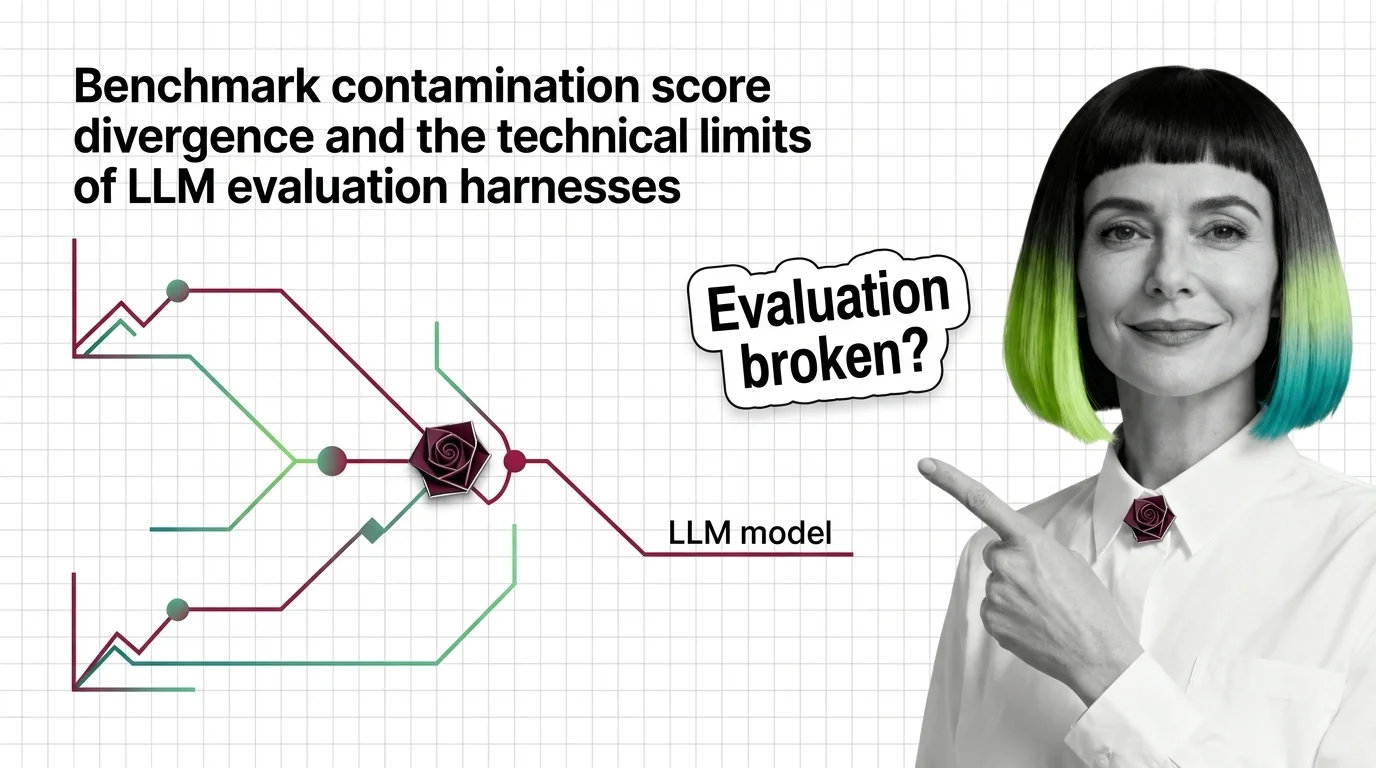
Same model, same benchmark, different scores. Understand why evaluation harnesses diverge and how benchmark contamination undermines LLM leaderboard trust.
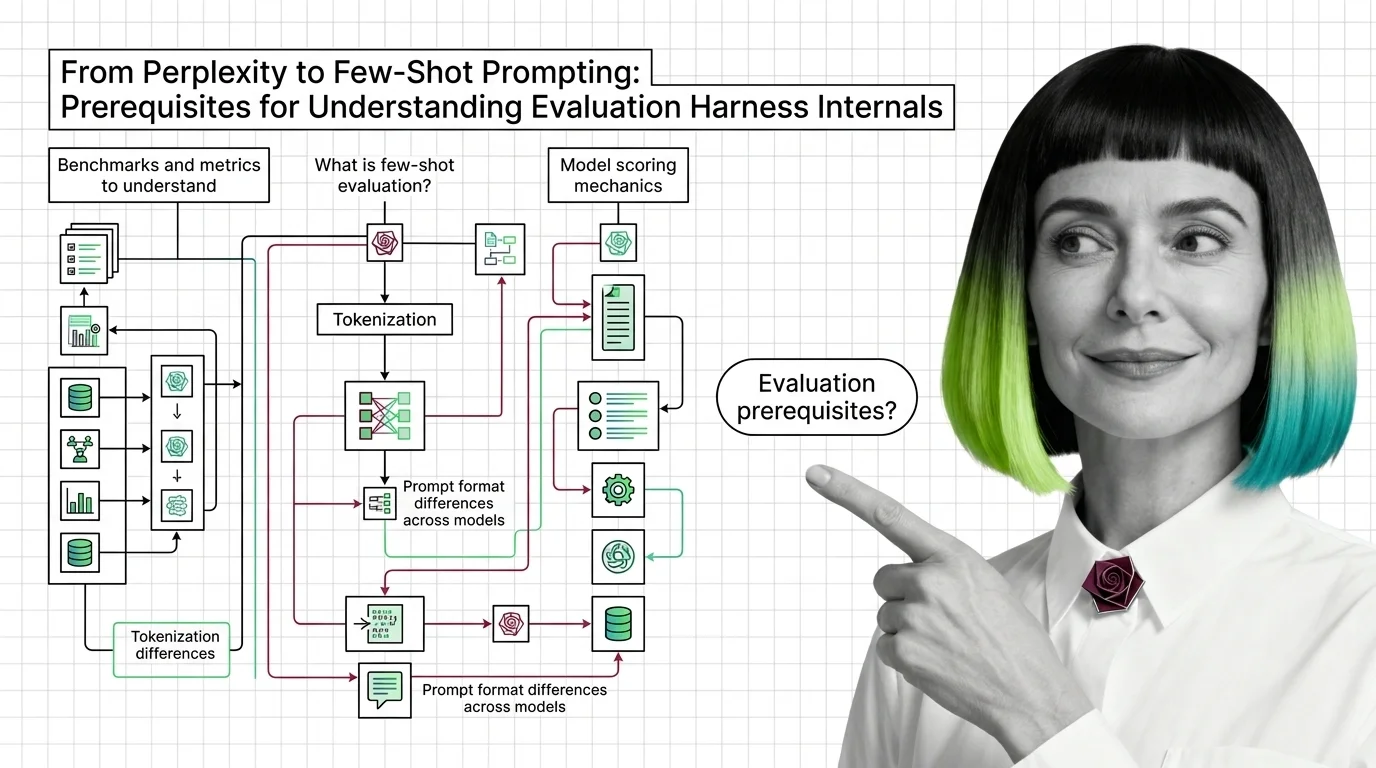
Evaluation harness scores depend on perplexity, few-shot prompting, and tokenization most teams skip. Learn the prerequisites behind meaningful benchmarks.
These guides walk through setting up harnesses, configuring benchmark suites, and interpreting results so you can make informed model selection decisions for real workloads.
Tools & techniques
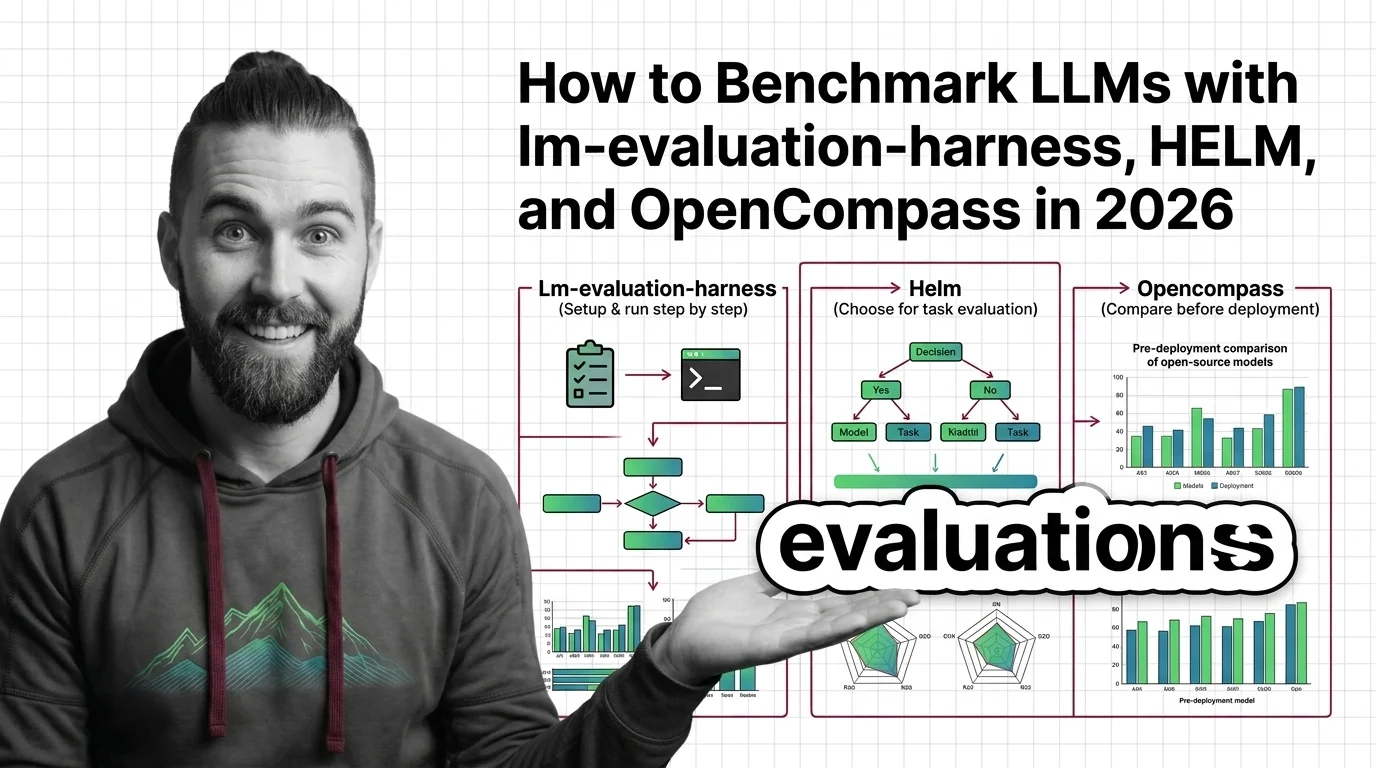
Choose the right LLM evaluation harness — lm-evaluation-harness, HELM, or OpenCompass — with a spec-first workflow for reliable model benchmarking in 2026.
The evaluation landscape is shifting fast as new open-source harnesses challenge established frameworks. Staying current means knowing which tools set the standard for credible benchmarking.
Models & benchmarks
Updated April 2026
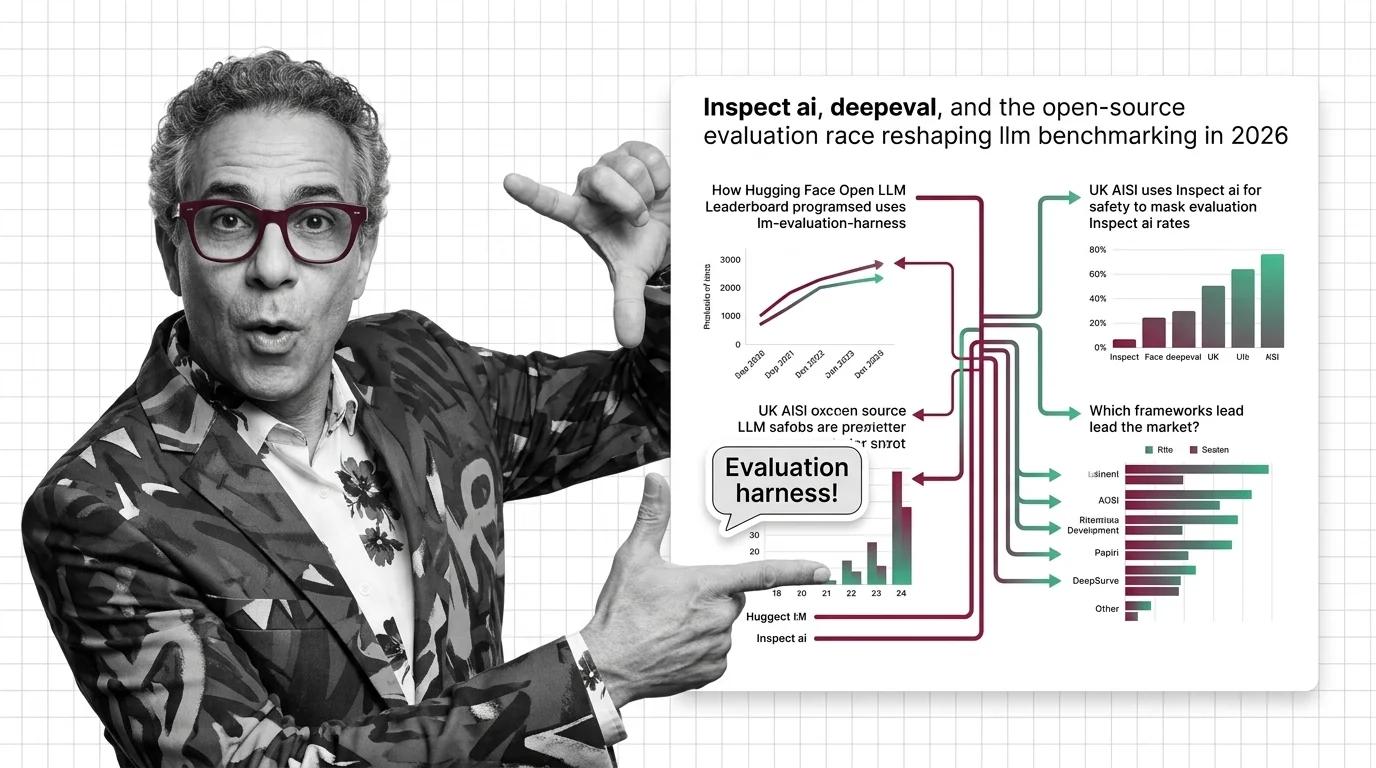
LLM evaluation has split into three lanes: government safety, enterprise CI/CD, and academic benchmarks. Here's who leads each and what it means for your stack.
Standardized evaluation can create false confidence when benchmark selection is narrow or contamination goes undetected. Consider who chooses the tests and what they leave unmeasured.
Risks & metrics
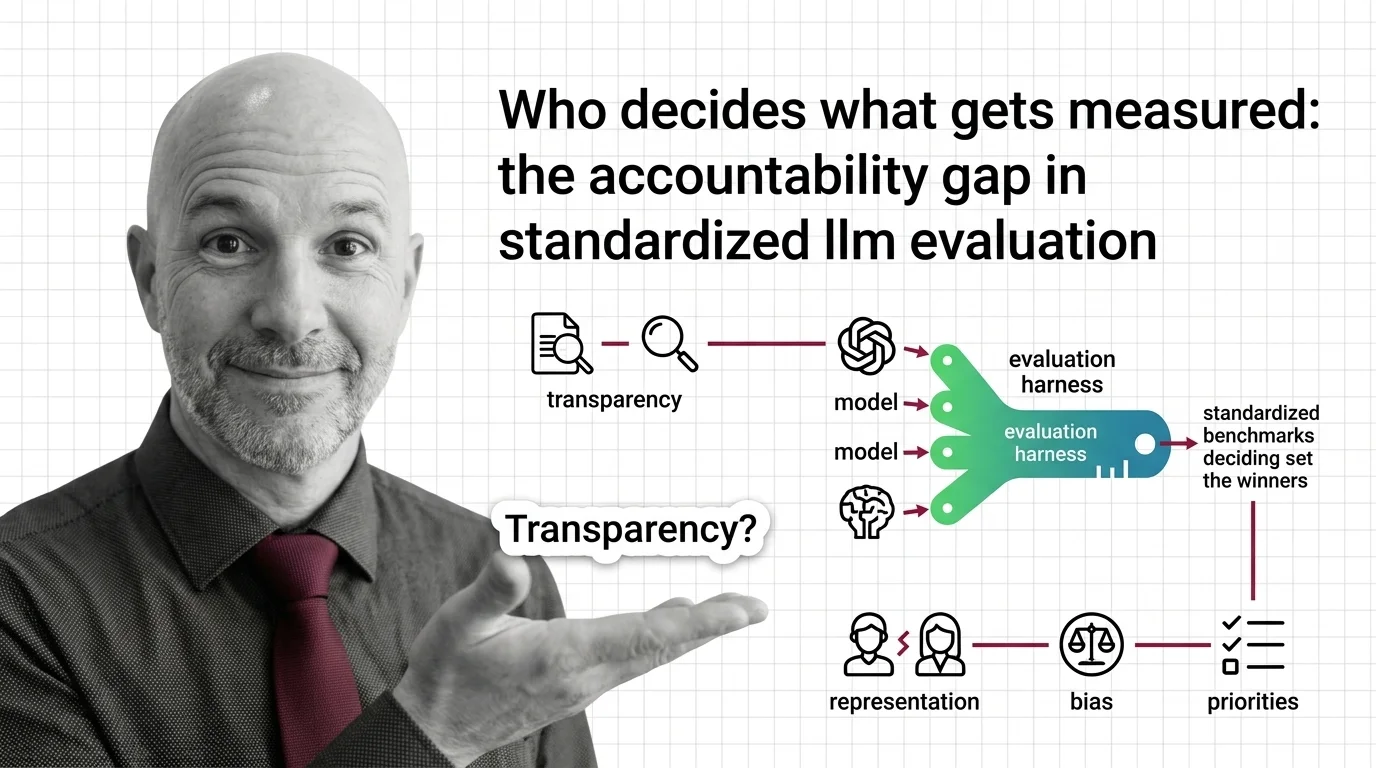
Standardized LLM evaluation harnesses shape which AI models succeed, yet their design choices go unaudited. Explore the accountability gap in benchmark governance.