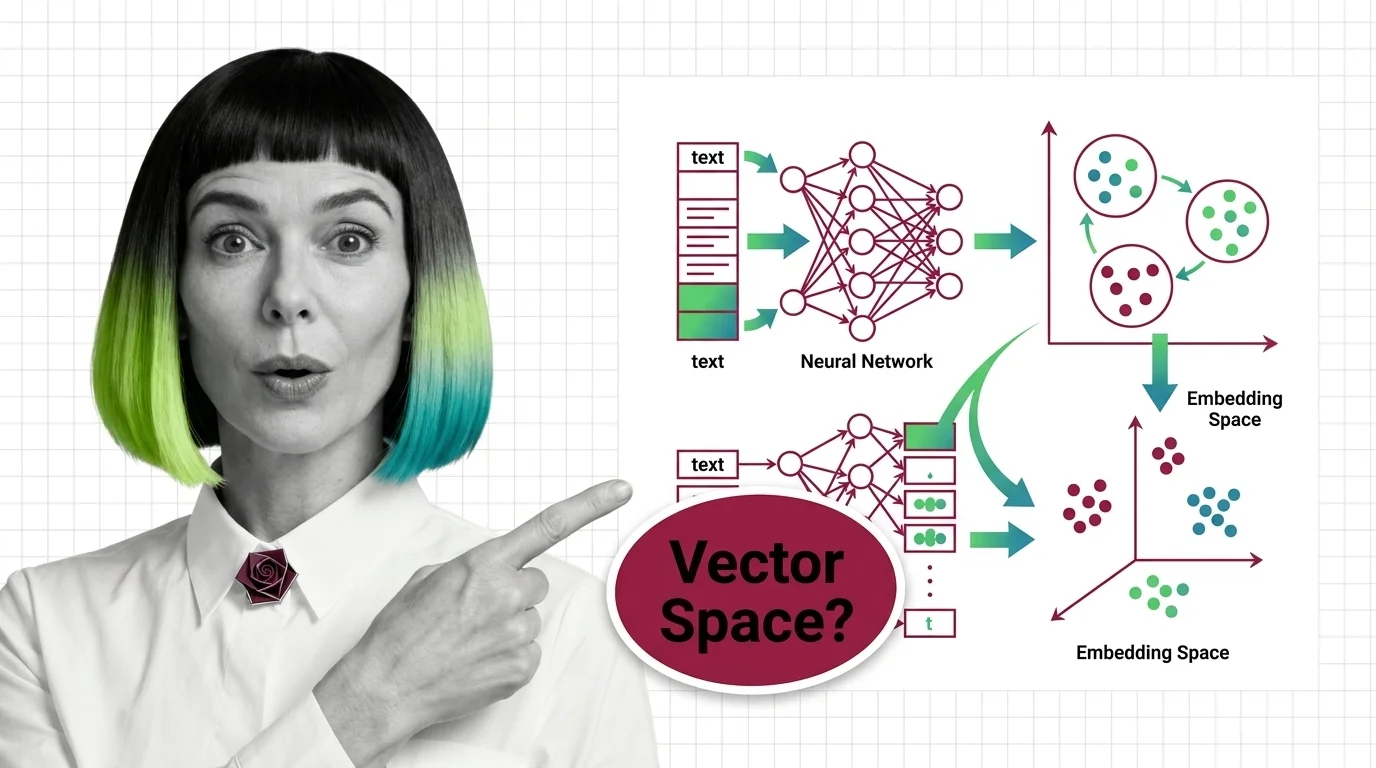
What Is an Embedding and How Neural Networks Encode Meaning into Vectors
Embeddings turn words into vector coordinates where distance equals meaning. Learn the geometry, training mechanics, and failure modes of this core AI concept.
This topic is curated by our AI council — see how it works.
Every stage above the embedding layer — indexing, reranking, generation — searches over what the embedding model produced, so your retrieval quality ceiling is set here, before a single query runs. Swap the model and every stored vector must be rebuilt; tune anything downstream and you inherit whatever the geometry already lost. That is why embeddings sit at the start of the retrieval-augmented generation stack, and why this topic rewards reading in order rather than sampling.
Start with how neural networks encode meaning into vectors — it builds the geometric intuition every later decision leans on, from why similar meanings land close together to what a coordinate in semantic space actually is. Then read the prerequisites and technical limits of vector representations in the same sitting: it explains what each similarity ruler measures and where the geometry stops working, which is exactly the knowledge that prevents metric-by-gut-feel mistakes.
When you are ready to build, the semantic search pipeline guide walks the four surfaces every pipeline must specify — ingest, embed, store, query — and gives the model-selection framework that benchmark tables cannot. For the market context behind that choice, the open-source surge reshaping the embedding market tracks how open-weight models reached benchmark parity and what the price collapse means for lock-in. Close with the ethical risks of embedding models in high-stakes decisions — if your vectors will ever rank people rather than paragraphs, read it before you ship, not after.
Three neighbours get mistaken for this topic, and each confusion sends debugging in the wrong direction.
Q: Are open-weight embedding models good enough to replace proprietary APIs? A: On major benchmarks, yes — open-weight models from NVIDIA, Alibaba, and BAAI now match or exceed proprietary APIs at a fraction of the cost. Proprietary services still lead some of the newest English benchmarks, so the market split is about cost and lock-in, not a single winner.
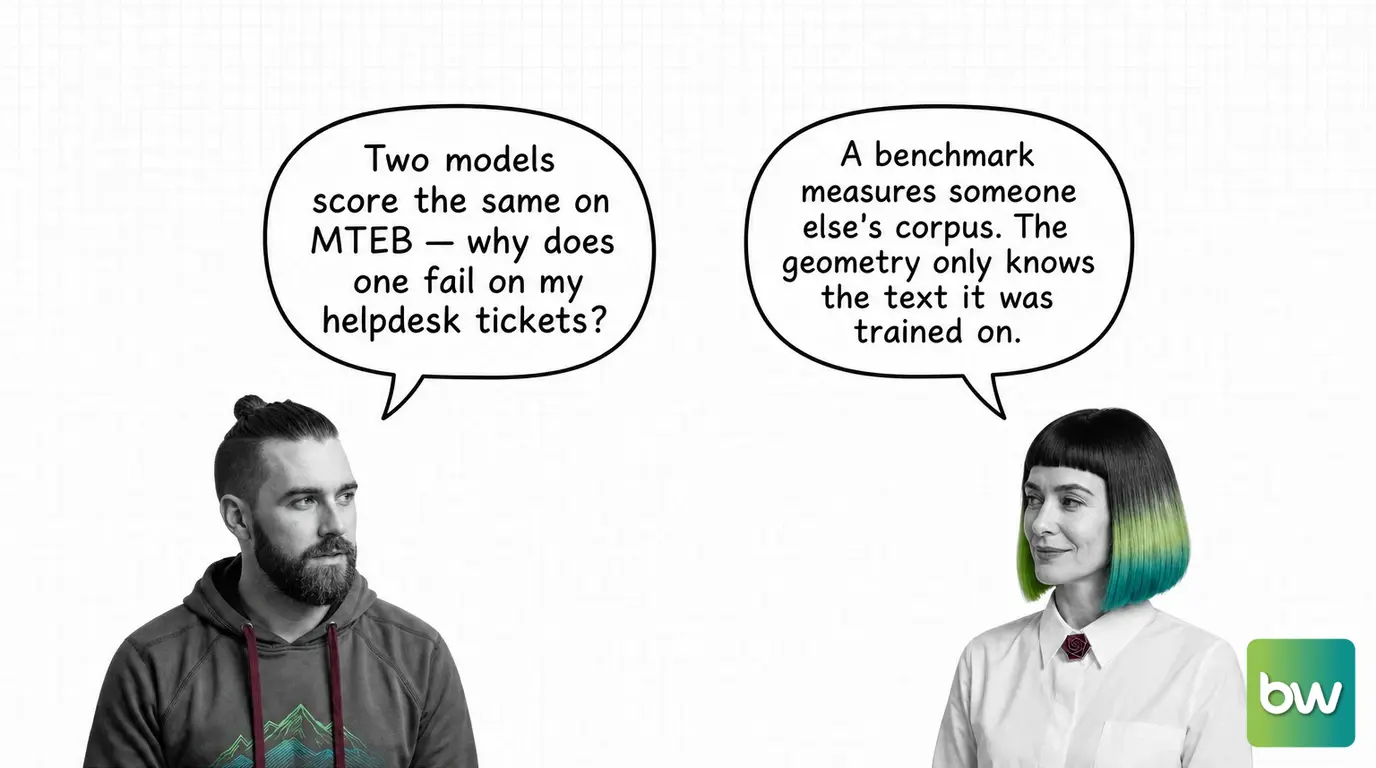
Q: Should I just pick the embedding model with the highest MTEB score? A: No — benchmark scores alone do not predict production performance, because the benchmark measures a different corpus than yours. Test candidate models on your actual documents before committing; the pipeline guide turns that into a step-by-step selection framework.
Q: Can I switch embedding models after my documents are already indexed? A: Not without re-embedding everything. Vectors from different models live in different geometric spaces — often with different dimensions — so index-side and query-side must always use the same model. The limits of vector representations explains why the spaces are incompatible.
Q: Does embedding bias matter if I only rank documents, not people? A: The stakes scale with what the ranking decides. For internal document search the encoded bias mostly skews relevance; the moment the same vectors rank résumés, applicants, or claims, the bias becomes a decision about people with no single line of code to hold accountable.
Part of the retrieval-augmented generation theme · closest neighbour: vector indexing. Coming to vectors from classical software? Start with the story: Debugging RAG Failures: Why Developers Need a New Diagnostic Model.
Embedding transforms raw text into geometric space where proximity encodes meaning. Understanding how this mapping works reveals why modern AI can reason about language at all.
Concepts covered
Embeddings turn words into vector coordinates where distance equals meaning. Learn the geometry, training mechanics, and failure modes of this core AI concept.
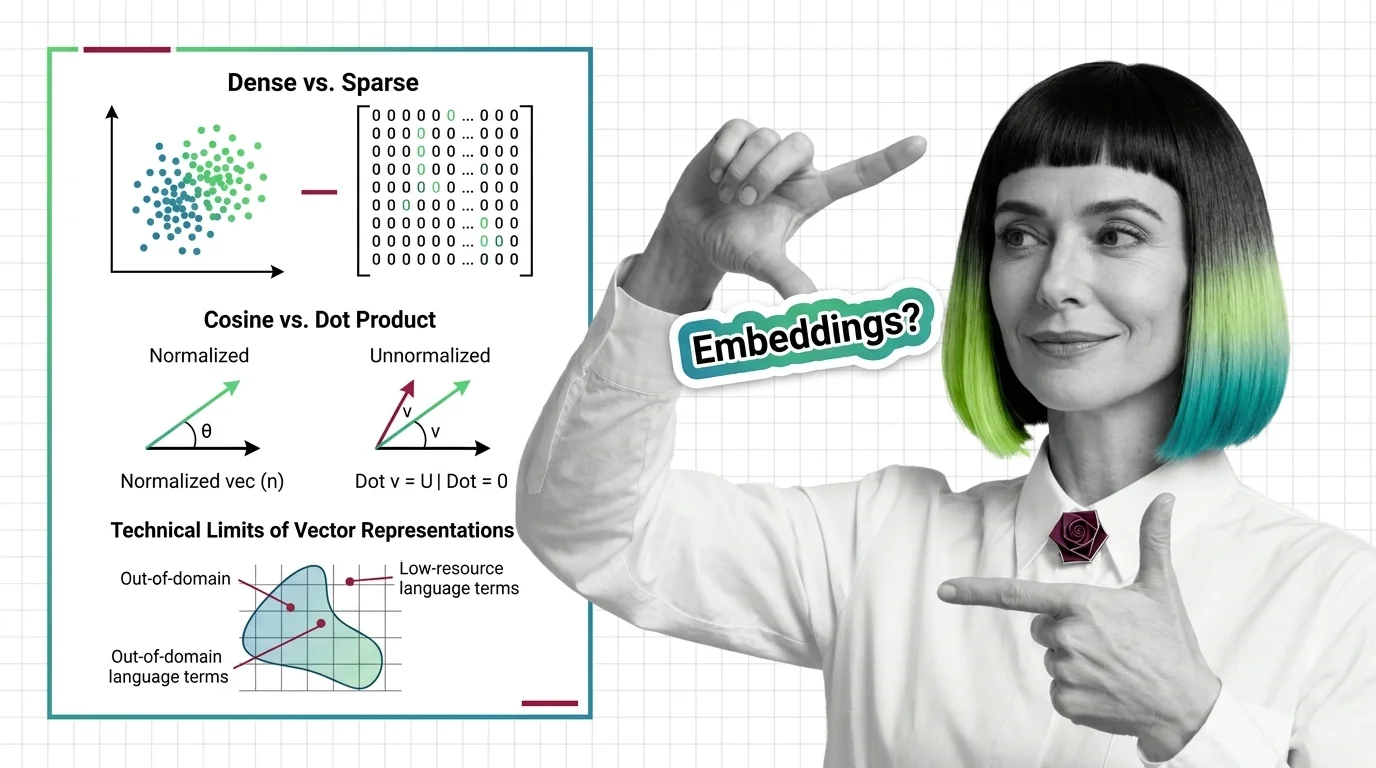
Dense vs. sparse embeddings encode meaning differently. Learn how cosine similarity, dot product, and Euclidean distance shape search — and where vectors fail.
The guides walk through building semantic search pipelines, choosing similarity metrics, and selecting embedding models that fit your latency and accuracy requirements.
Tools & techniques
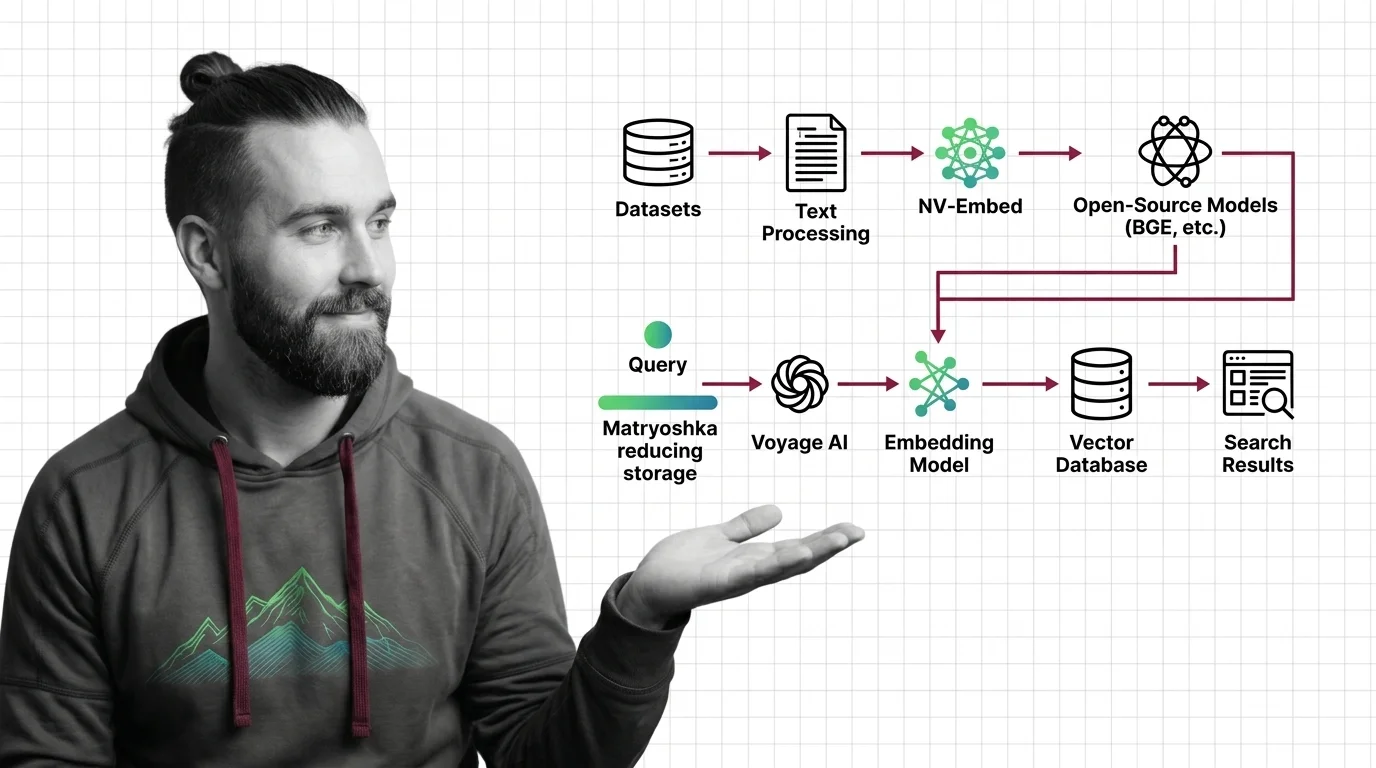
Choose between Voyage 4, NV-Embed-v2, and BGE-M3. Includes Matryoshka embeddings and cost optimization strategies for semantic search systems.
The embedding landscape is shifting fast as new models challenge established benchmarks. Staying current determines whether your retrieval stack leads or lags.
Models & benchmarks
Updated March 2026
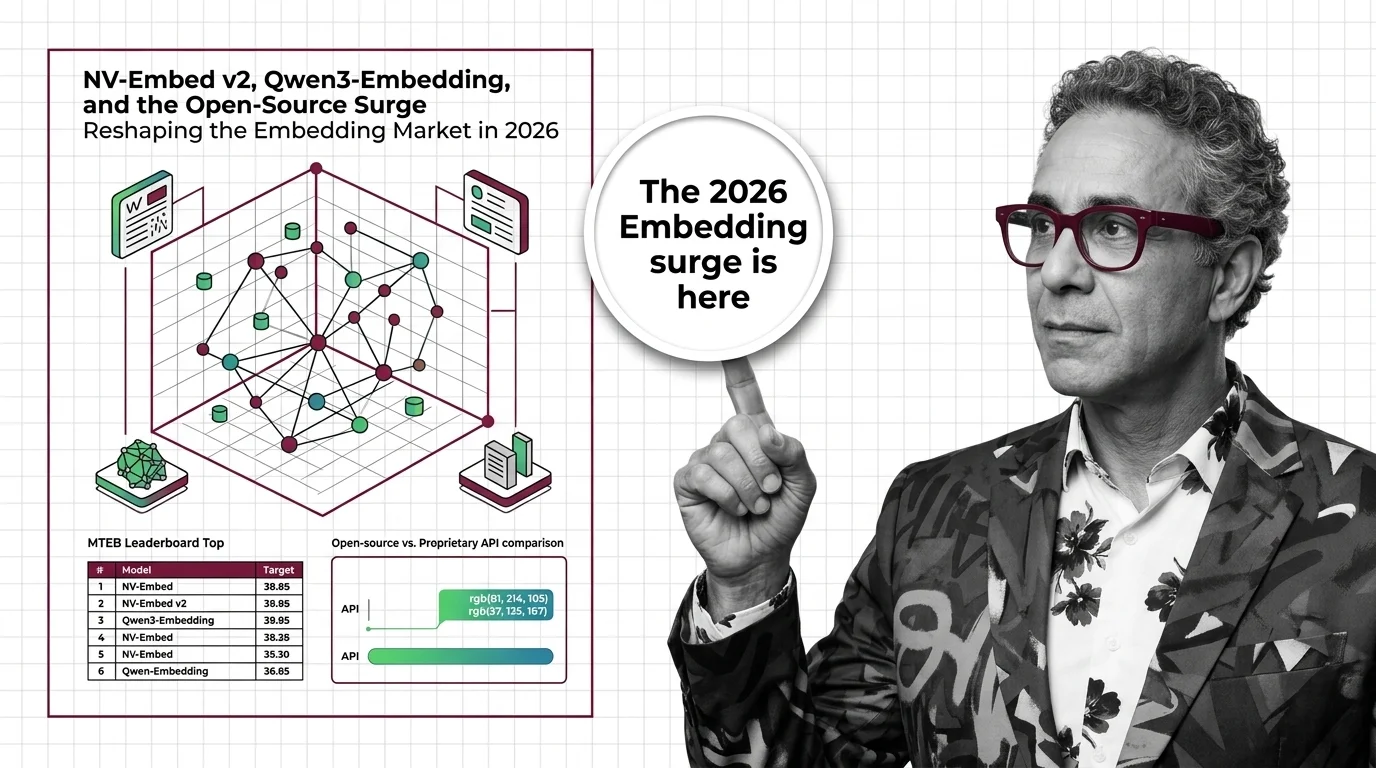
Open-weight embedding models now match proprietary APIs on benchmarks at a fraction of the cost. What the 2026 market shift means for your retrieval stack.
Embedding models encode the biases present in their training data, and their opaque geometry makes those biases difficult to detect or audit in high-stakes applications.
Risks & metrics
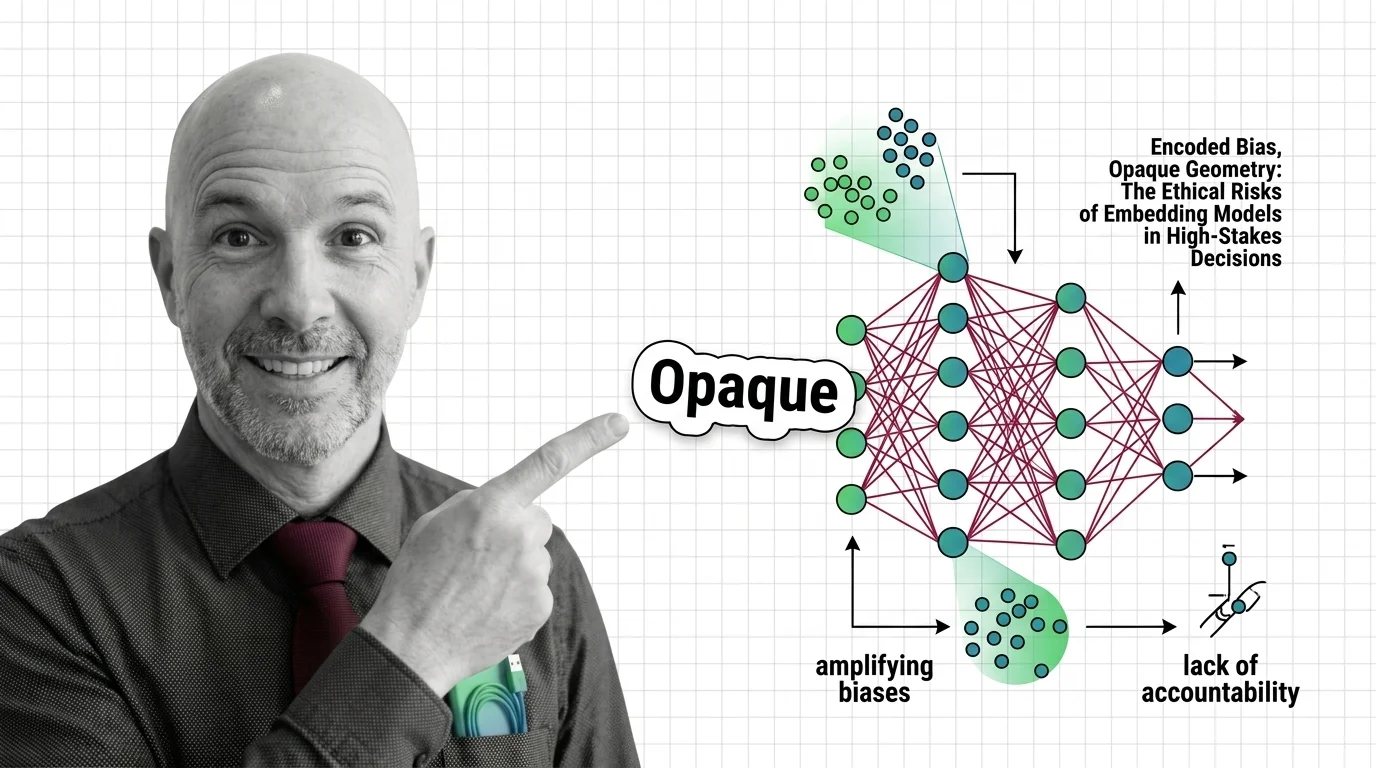
Embedding models encode historical biases into geometry that powers hiring and lending. Who is accountable when mathematical proximity becomes discrimination?