Domain-specific prompting is where prompt engineering’s foundations — instructions, roles, constraints — get tested against a field that does not forgive vague language: a contract clause, a diagnosis, a line of production code. It sits at the far end of the prompt engineering ladder, the point where general techniques a developer already knows stop being enough on their own and need field vocabulary, jurisdiction context, and an output contract layered on top. Get it right and a legal or clinical tool produces something a specialist would sign off on; get it wrong in the same field, and the fluency that impresses a demo audience becomes the reason nobody can trace where a bad decision came from.
Domain-specific prompting layers field vocabulary, role, and constraint framing on top of general prompting — it changes behavior, not competence, so it cannot manufacture expertise the model was never trained with.
Below roughly a thousand requests a day on a narrow, stable task, prompting plus retrieval beats fine-tuning on iteration speed; above that threshold, fine-tuning starts winning on cost per request.
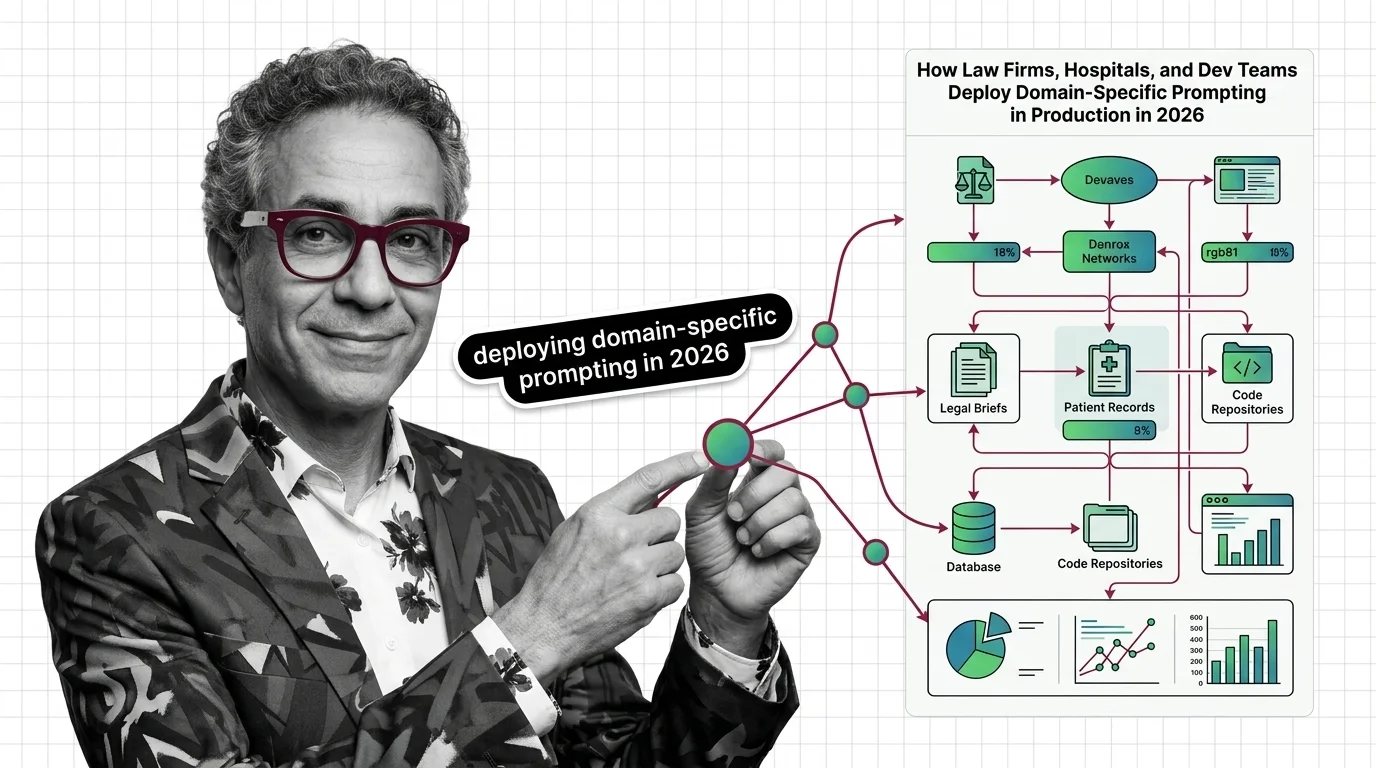
Legal, healthcare, and software development all reached production-scale domain-specific prompting in the same quarter of 2026 — a structural pattern, not sector-specific noise.
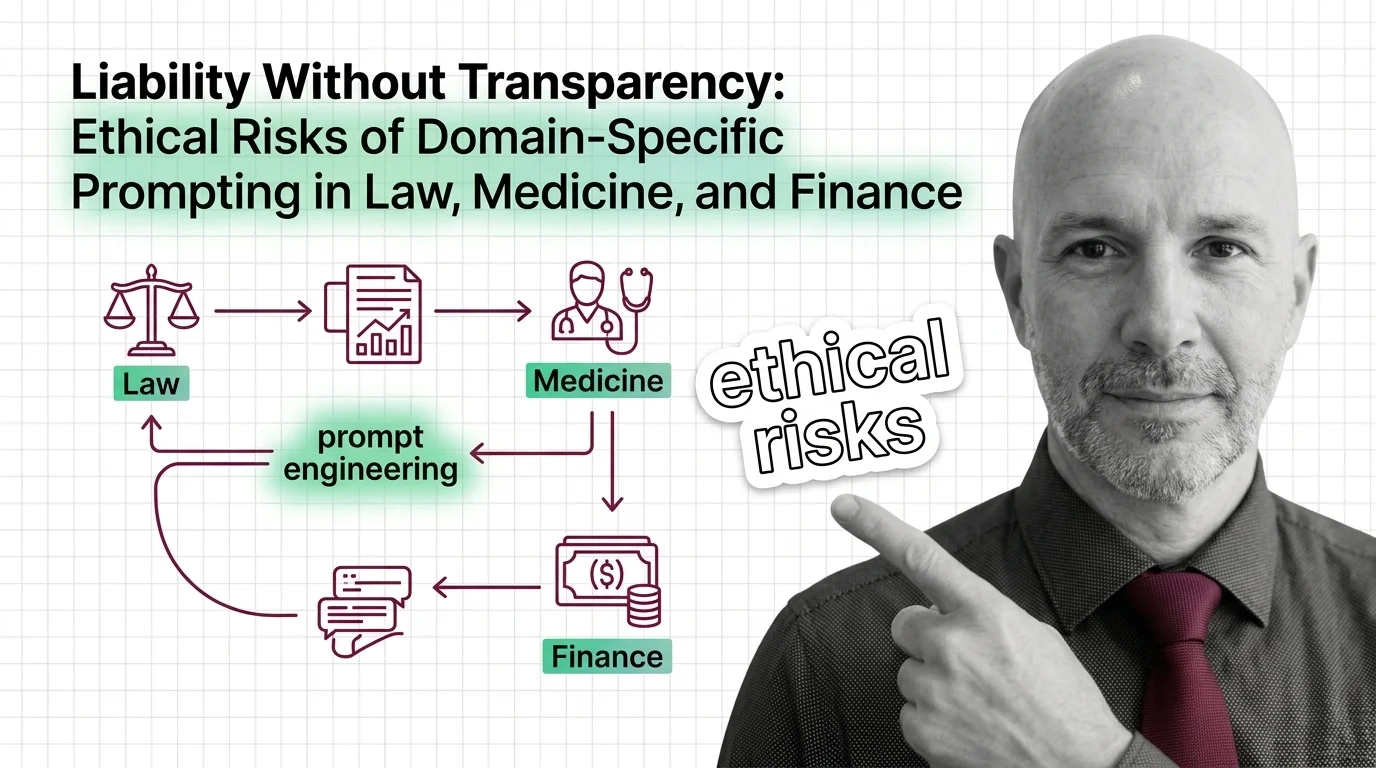
An undocumented, proprietary domain prompt is not only a technical risk but an accountability gap: over 700 court cases already involve AI-generated content with no visibility into what the system was actually told to do.
The domain-specific prompting reading path: from mechanism to mandate
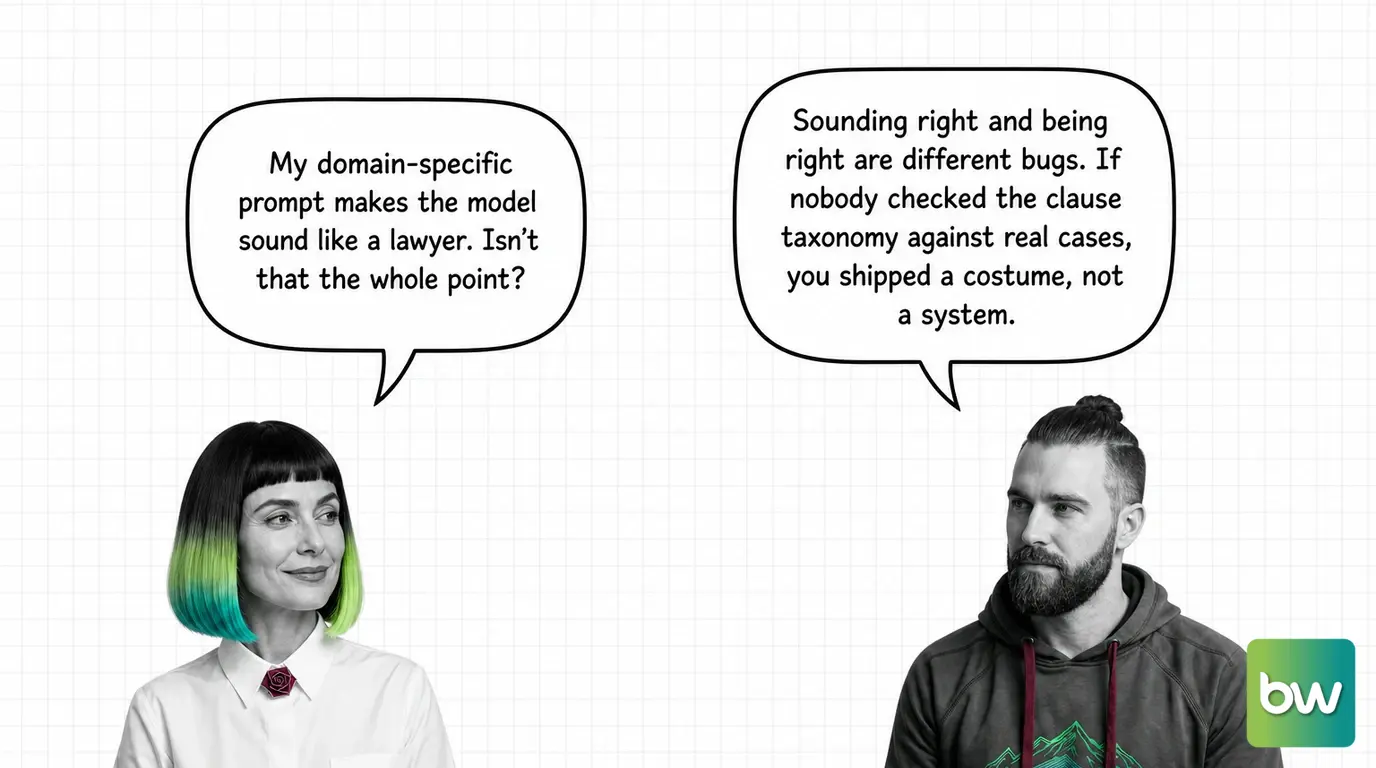
Confidence is not correctness — evaluate before you trust the output.
How domain-specific prompting differs from role prompting, system prompts, and fine-tuning
Three things get confused with this topic, and conflating any of them wastes engineering time.
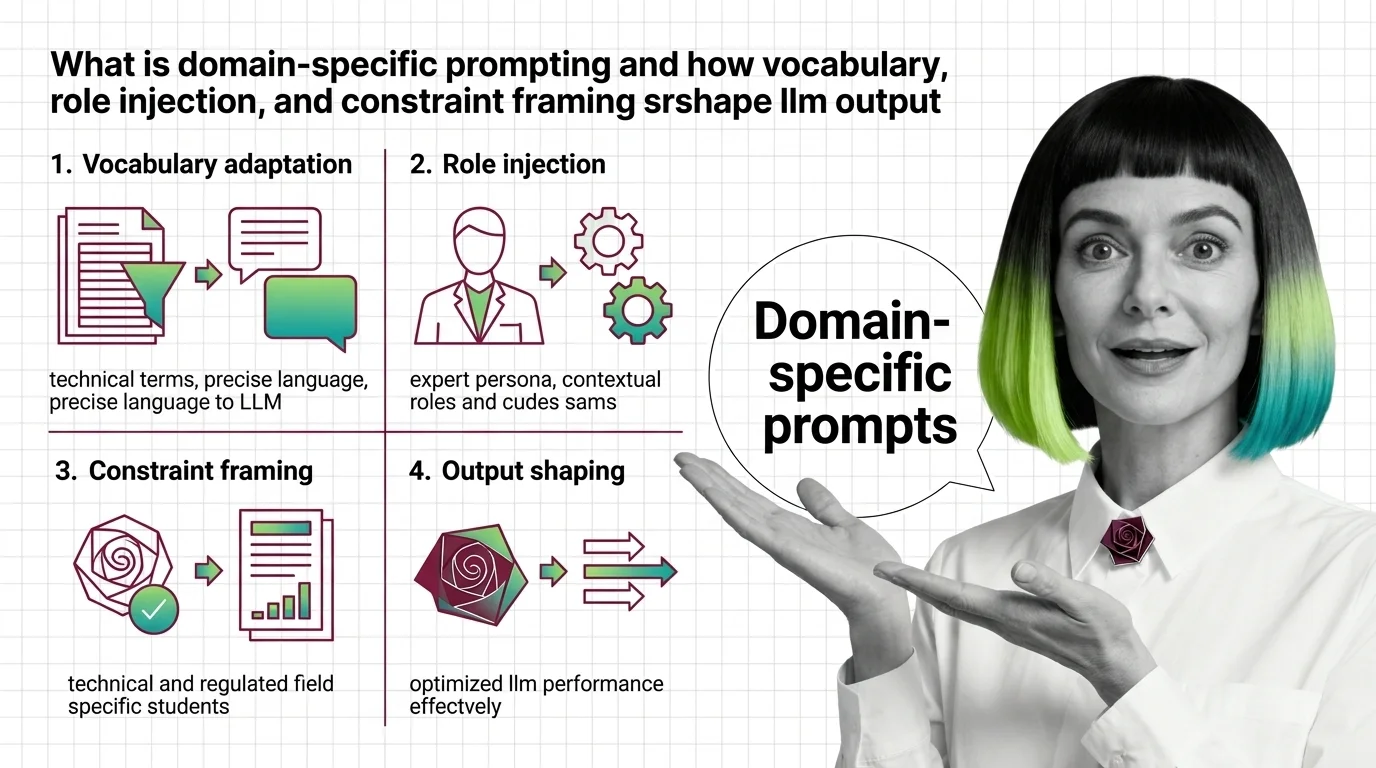
It is not the same as role prompting. A role is one line — “act as a corporate attorney.” Domain-specific prompting is the fuller architecture around that line: field vocabulary, jurisdiction or specialty context, and an output contract shaped like a clause taxonomy or risk tier. The role is one ingredient, not the technique.
It is not a system prompt placement problem you solve once. The system prompt is where instructions live; domain-specific prompting is what those instructions say once a field enters the room. The same system prompt slot can carry generic or domain-tuned content — the difference is the content, not the slot, and it stays a live decision as the field’s rules change.
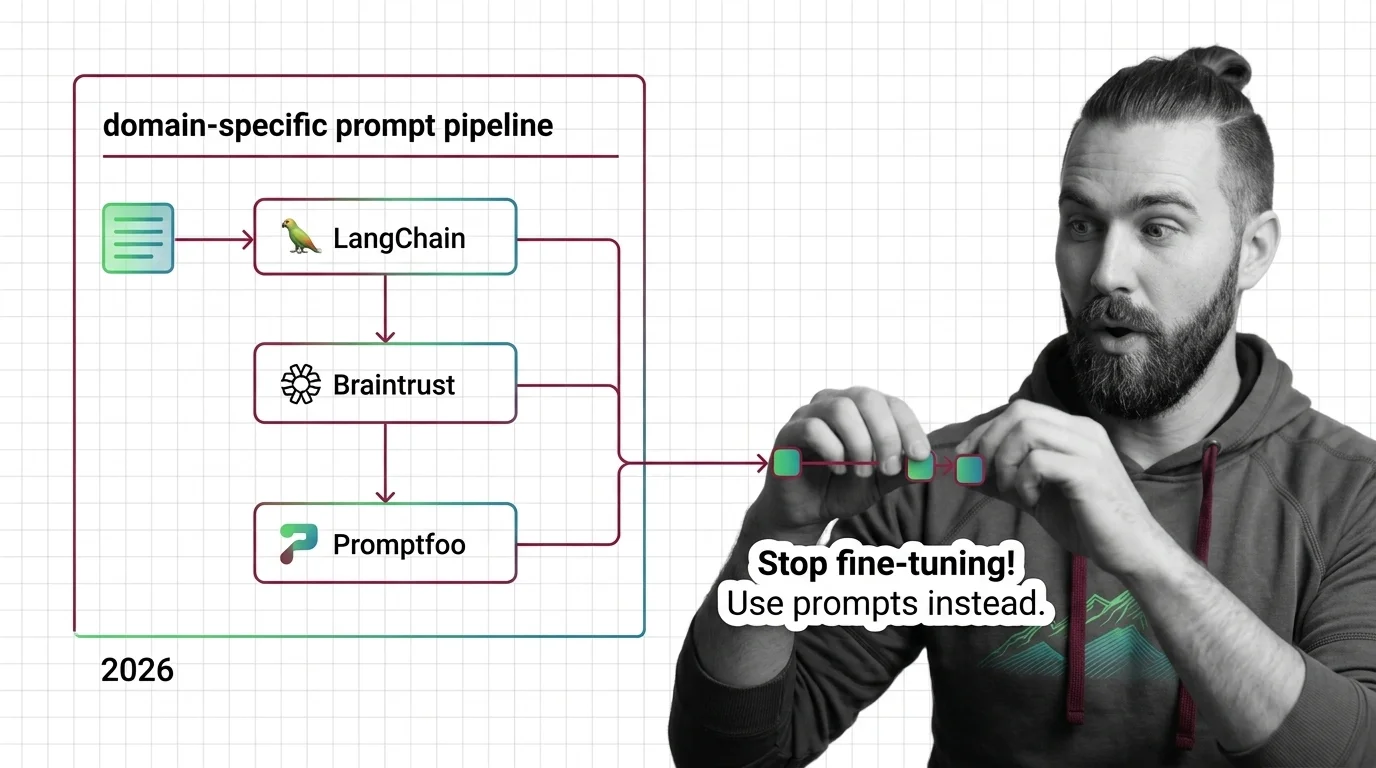
It is not a standing alternative to fine-tuning at every volume. Below roughly a thousand requests a day on a narrow, stable task, prompting plus retrieval iterates faster than a fine-tuned model; above that threshold, with a scope that stays fixed, fine-tuning starts winning on cost per request. Domain-specific prompting is the default until volume forces the trade.
Common questions about domain-specific prompting
Q: Is domain-specific prompting only useful for regulated fields like law and medicine?
A: No — production deployments show law, healthcare, and software development all reaching production scale in the same quarter of 2026. The pattern is about any field with its own vocabulary and correctness rules, not regulation specifically.
Q: Do I need a different domain-specific prompt for every jurisdiction inside the same field, like separate legal jurisdictions?
A: Yes — jurisdiction is one of the context layers the applied patterns guide injects alongside role and document type, because the model cannot infer which jurisdiction’s rules apply from the document alone.
Q: How do I know a domain-specific prompt is actually production-ready, not just passing spot checks?
A: Spot checks catch the obvious failures, not the systematic ones. The evaluation pipeline guide treats readiness as a written rubric scored automatically, with regression tests that catch drift the next model update introduces.
Q: Does using domain-specific prompting protect a legal or medical AI tool from liability if something goes wrong?
A: No — the technique shapes output, not accountability. The liability risks analysis traces cases where a proprietary, undocumented prompt left no one able to say what the system had actually been told to do.
Q: Why does a domain-specific prompt that works for straightforward code tasks need extra safeguards for legal or medical ones?
A: Because the cost of being confidently wrong scales with the decision. The prerequisites and hard limits explain why configured behavior and real competence stay separate regardless of field — code review just tolerates that gap better than a diagnosis does.
Domain-specific prompting treats specialized vocabulary and compliance logic as first-class inputs — not optional context. The way a legal term or medical classification constrains model reasoning is structurally different from generic open-ended prompting.
Domain-specific prompting adapts LLM output per field via vocabulary, role, and constraints — no retraining. Prompt wording alone shifts accuracy by 30+ points.
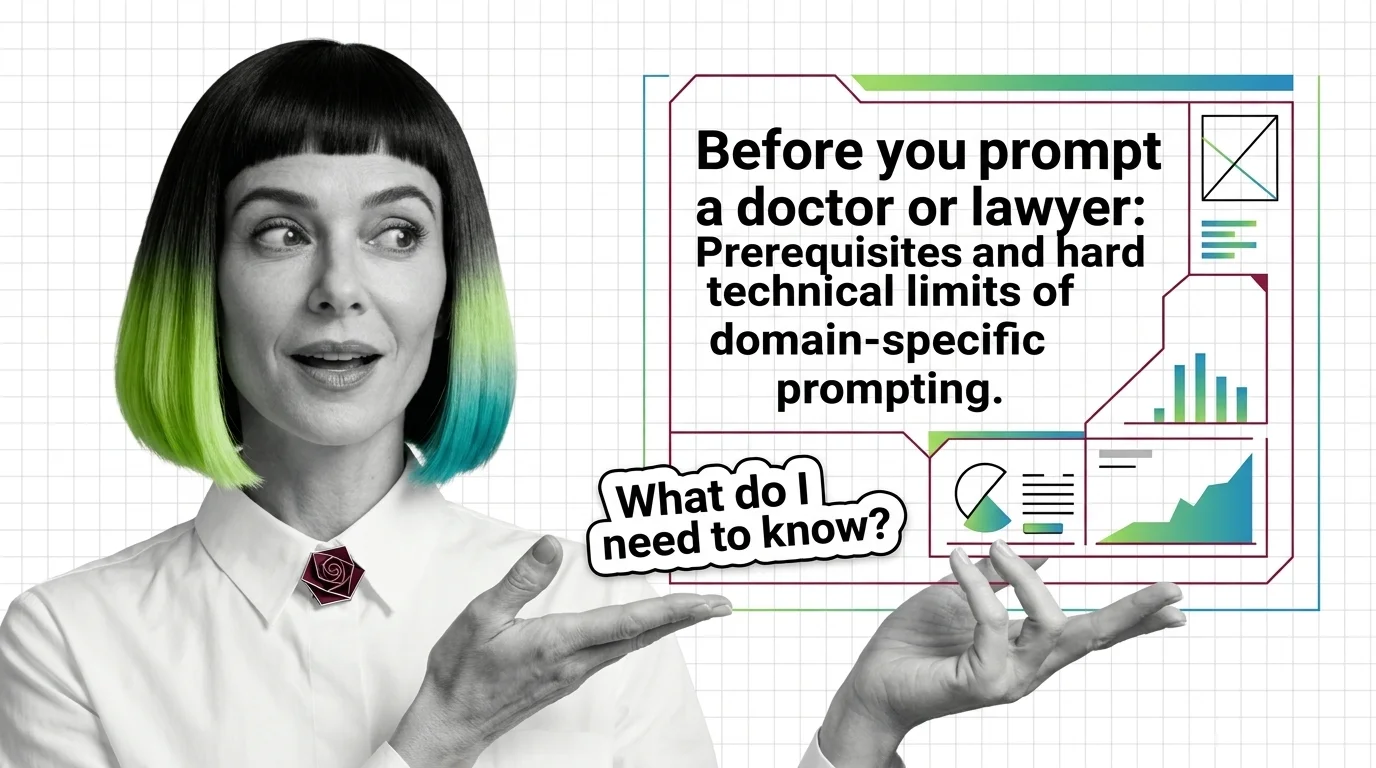
Domain-specific prompting shapes LLM behavior, not what it knows. Medical-specialized LLMs still hallucinate in up to 49% of queries, per Kim et al. 2025.
2
Build with Domain-Specific Prompting
These guides walk you through structuring domain-specific prompts for production — choosing the right injection patterns, testing compliance framing, and debugging when field-expert vocabulary produces unexpected model behavior.
Domain-specific prompting adapts LLMs for legal, medical, and code AI. Few-shot context and role-priming match fine-tuned specialists — without training.
3
What's Changing in 2026
The boundary between generic LLM output and credible domain-expert output is narrowing fast — field-specific deployment in legal, medical, and financial AI is setting new expectations for what domain-specific prompting must deliver.
Domain-specific prompting is production-grade in 2026. Harvey AI processes 200K+ legal queries daily; GitHub Copilot shipped org-level custom instructions.
4
Risks and Considerations
Domain-specific prompting in regulated fields carries real liability: a prompt that injects the wrong compliance frame, silences uncertainty, or lacks a clear audit trail can turn a helpful output into a harmful one.