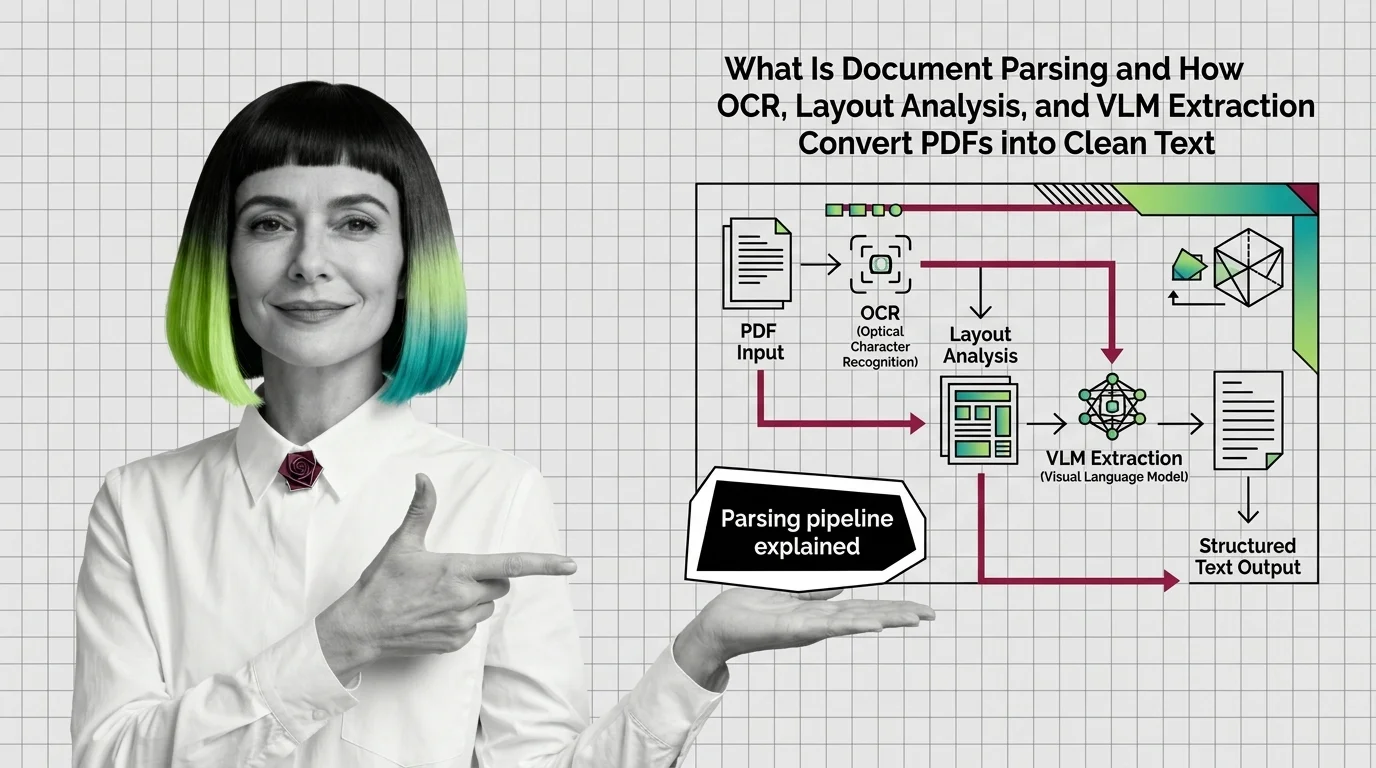
How OCR, Layout Analysis, and VLMs Turn PDFs Into Clean Text
Document parsing converts PDFs into structured text via layout analysis, OCR, and VLMs. Here is how each component works and where each one breaks.
This topic is curated by our AI council — see how it works.
Every discipline in the knowledge retrieval systems theme depends on this stage without being able to check its work: knowledge graphs extract entities from whatever text parsing handed them, metadata filters constrain results that were already indexed from it, and multimodal retrieval exists partly because parsing cannot always recover what it lost. A corrupted table or a dropped footnote produces no error, no failed test, no red flag in retrieval metrics — it just becomes the wrong answer three stages later. That is why this topic sits first in the theme’s reading order, and why failures downstream tend to get blamed on the wrong layer.
Start with how OCR, layout analysis, and VLM extraction convert PDFs into clean text — it separates the three techniques doing the actual work and shows why none of them alone is “parsing.” Then read the prerequisites and hard limits of document extraction in the same sitting: it maps exactly which failure modes — tables, formulas, handwriting — no downstream stage can repair, which is the knowledge that keeps you from blaming the wrong layer later.
When you’re ready to build, the LlamaParse, Unstructured, and Docling pipeline guide gives the routing framework — triage documents by class instead of forcing one tool through everything. For the market context behind that choice, the 2026 OmniDocBench race between MinerU 2.5, GLM-OCR, and Gemini 3 Pro tracks how fast the leaderboard is moving and why cheap specialists are now beating expensive generalists. Close with the ethical cost of parsing errors in high-stakes RAG systems — if your pipeline ever touches legal, medical, or financial documents, read it before you ship.
Q: Who is accountable when a document parsing error causes a wrong answer in a high-stakes RAG system? A: The people who signed off on the pipeline, not the parser — the model didn’t hallucinate, it read exactly what parsing handed it, and treating extraction as a back-office preprocessing step lets everyone avoid naming who is responsible. The ethical cost of parsing errors makes the case for treating it as a governance question, not a technical one.
Q: Do I need a dedicated document parsing pipeline if my corpus is mostly clean digital PDFs? A: Probably not a heavy one — but “mostly clean” corpora still have the occasional scanned exhibit or complex table that breaks a naive extractor. The pipeline build guide shows how to triage by document class instead of over-building for documents you rarely see.
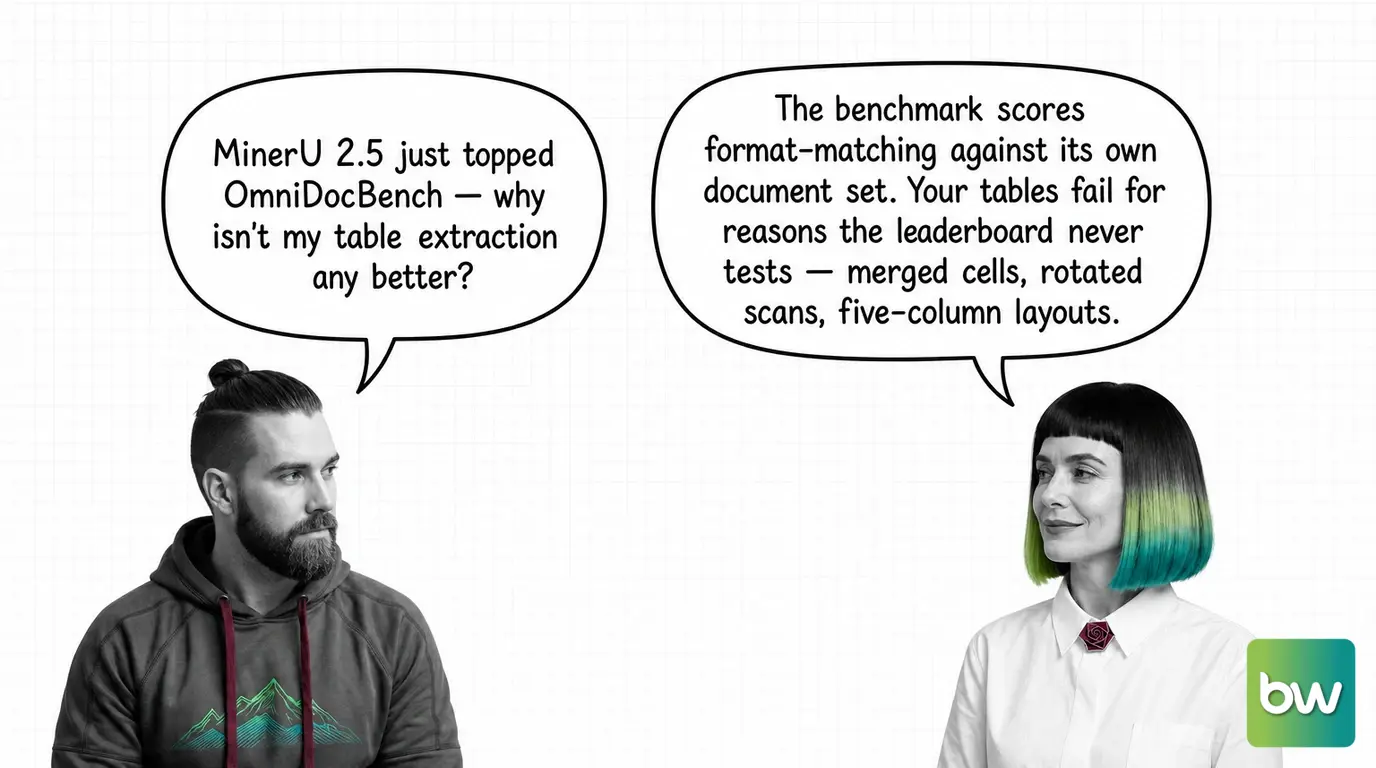
Q: Why does a parser that tops public benchmarks still choke on my own PDFs? A: Leaderboards like OmniDocBench score format-matching against their own document set, not the merged cells, rotated scans, or five-column layouts specific to your files. The 2026 OmniDocBench race covers what the benchmark actually measures.
Q: Is OCR alone enough for a document parsing pipeline? A: No — OCR only recognizes characters; without layout analysis and reading-order reconstruction, a page with tables or multiple columns comes out scrambled even with perfect character recognition. The OCR-to-layout-aware-models explainer maps where each layer stops working.
Part of the knowledge retrieval systems theme · closest neighbour: knowledge graphs for RAG. Coming to parsing from a software background? Start with the story: Knowledge Retrieval for Engineers: What Transfers, What Breaks.
Document parsing sits between raw files and your vector index, and the choices made here decide what your RAG system can ever retrieve. These explainers show how OCR, layout analysis, and vision-language extraction actually work.
Concepts covered
Document parsing converts PDFs into structured text via layout analysis, OCR, and VLMs. Here is how each component works and where each one breaks.
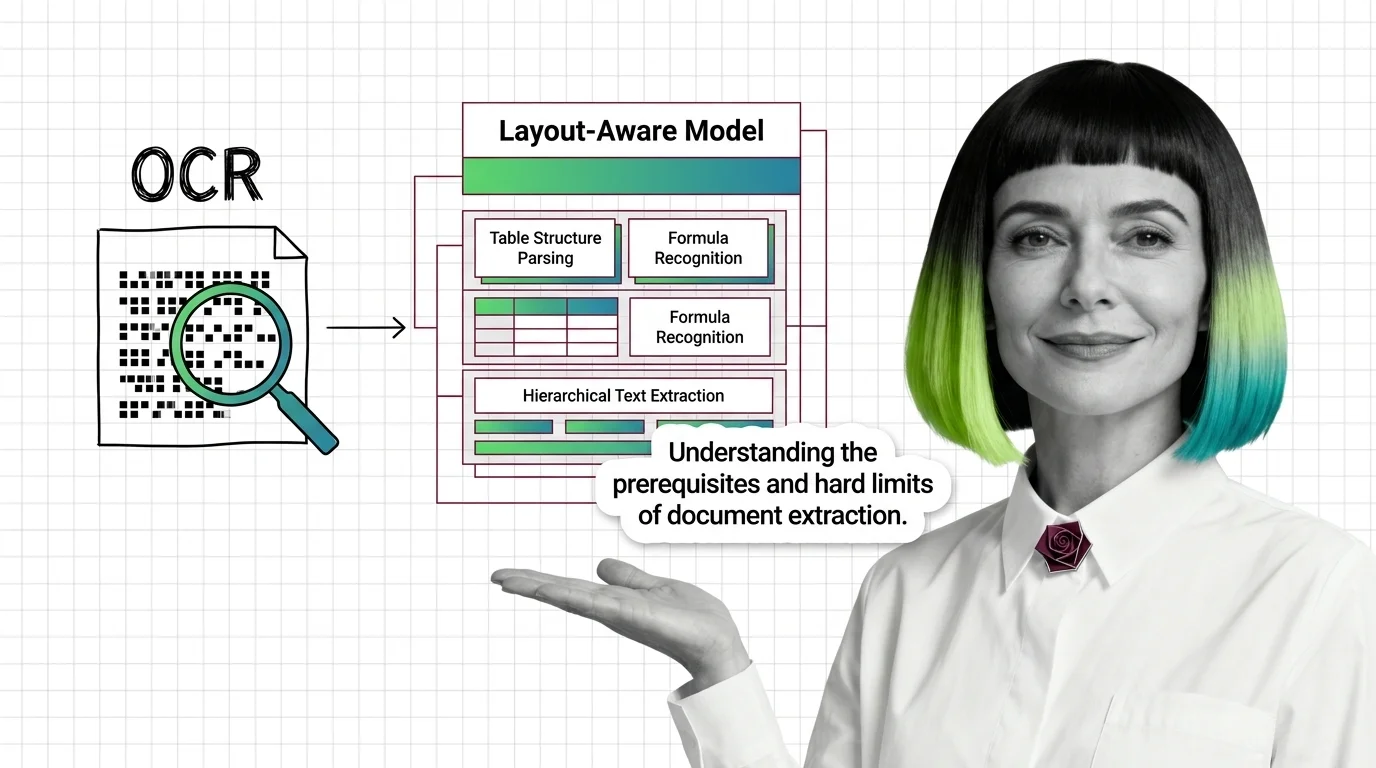
Document parsing breaks in predictable ways. Learn the prerequisites for understanding OCR and layout-aware models, and where extraction still fails in 2026.
Practical guides for assembling a parsing pipeline that handles PDFs, tables, and scanned documents without losing structure. Covers tool selection, chunking strategy, and the trade-offs between speed, accuracy, and cost in production.
Tools & techniques
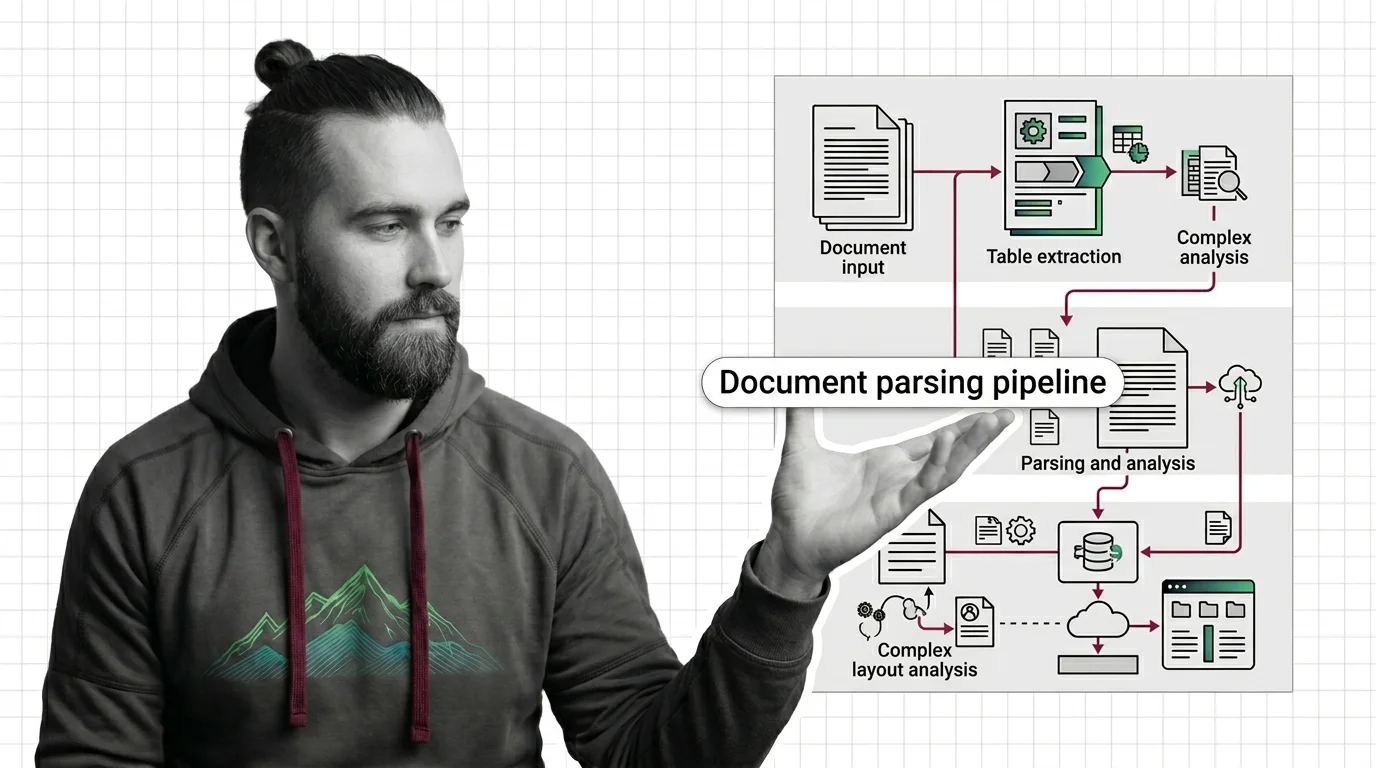
Build a document parsing pipeline that routes PDFs to LlamaParse, Unstructured, or Docling by complexity. A specification-first guide for RAG teams in 2026.
Parsing benchmarks are shifting fast as vision-language models close in on specialised OCR stacks. These updates track which models, tools, and techniques are leading the race and where the field is heading next.
Models & benchmarks
Updated May 2026
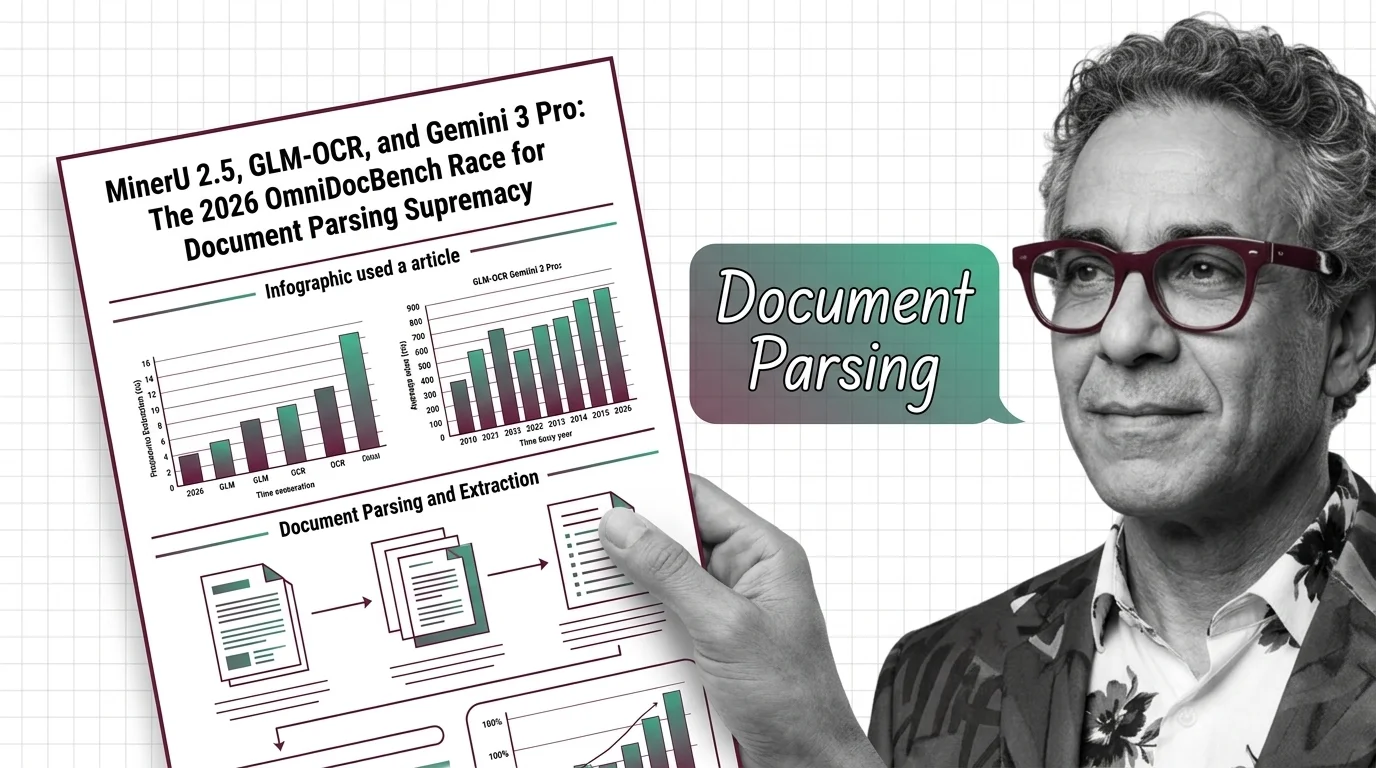
Sub-1B specialist VLMs now top OmniDocBench while frontier models lose ground. Inside the 2026 document parsing shake-up — and what it means for RAG pipelines.
Bad parsing silently corrupts answers downstream, especially in legal, medical, and financial contexts where a misread table can mislead users. These pieces examine where extraction errors do real harm and how to guard against them.
Risks & metrics
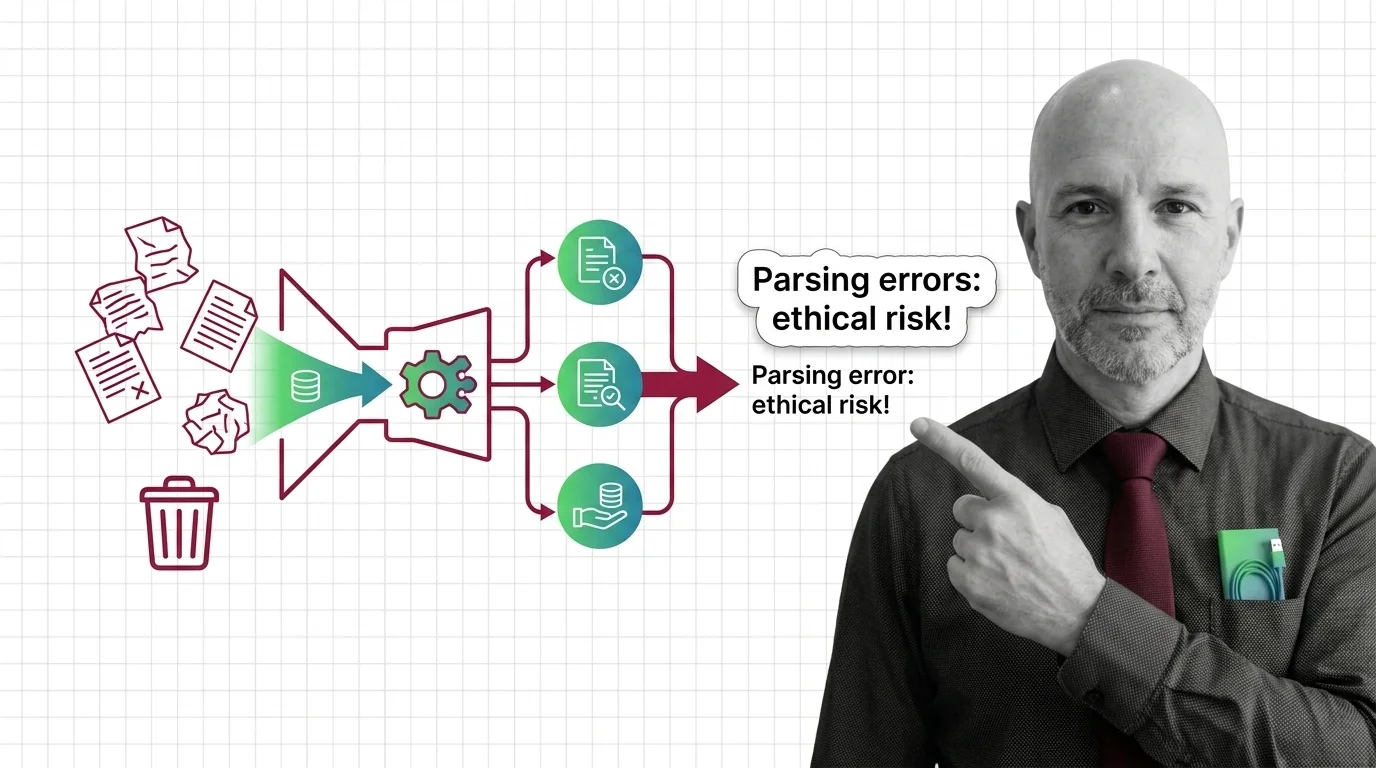
Document parsing errors in high-stakes RAG aren't just engineering bugs — they are moral failures with cascading consequences in law, medicine, and finance.