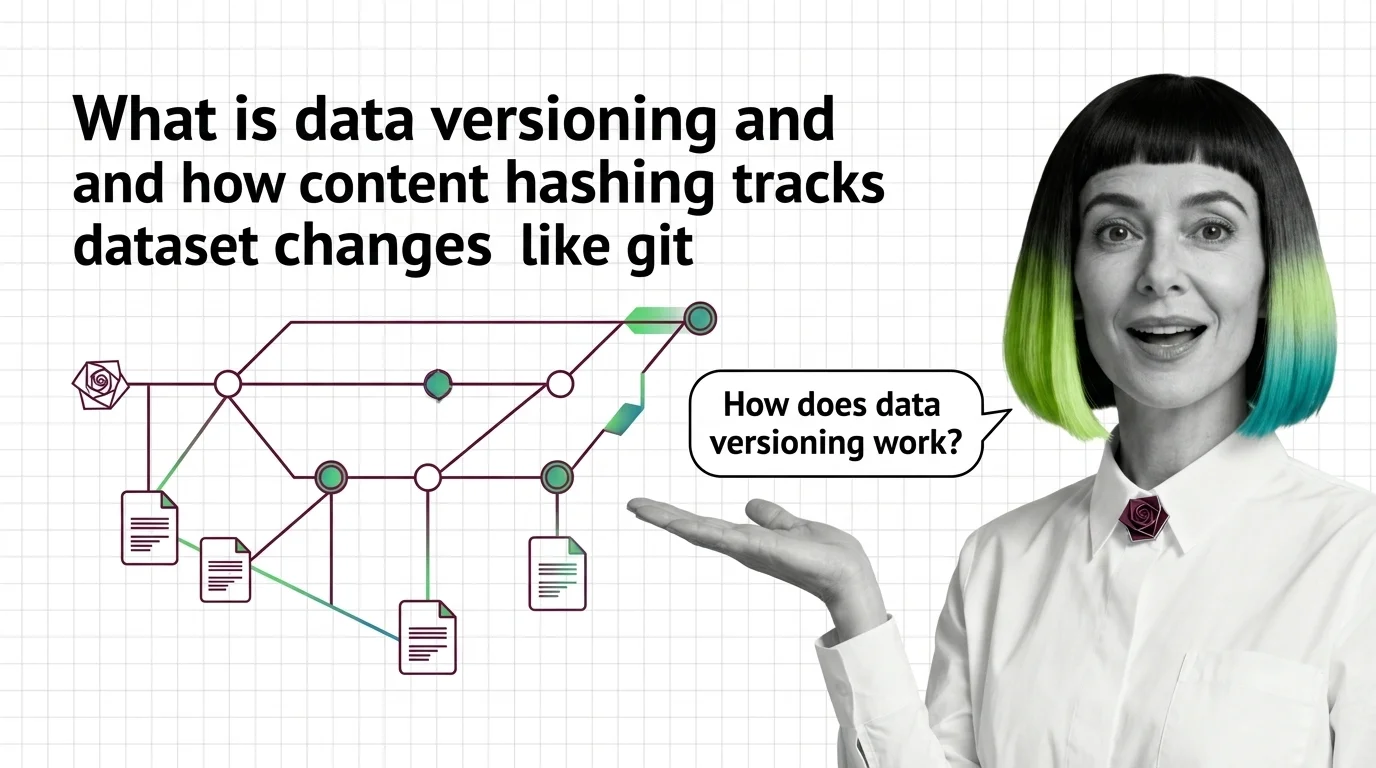
What Is Data Versioning and How Content Hashing Tracks Dataset Changes Like Git
Data versioning tracks dataset changes by content hash, not filename. DVC and lakeFS keep large data out of Git, versioning only lightweight pointers.
This topic is curated by our AI council — see how it works.
A model’s reported accuracy is only as trustworthy as the exact dataset that produced it, and datasets change constantly — a corrected label, a re-scraped batch, a dropped duplicate — without anyone recording what shifted. Inside safety and red teaming, that gap is the forensic backbone the rest of the theme assumes exists: an incident review or a poisoning investigation can only answer which data trained a given model if something already recorded that pairing in advance. Skip this layer and the risk does not disappear — only the ability to ever prove what happened does.
Start with how content hashing tracks dataset changes like Git — it owns the mechanism the rest of this topic assumes: a fingerprint standing in for the file, so a pointer moves through your repository while the bytes stay elsewhere. From there, the core components of a data versioning system names the three moving parts — hashing, storage backend, lineage — and answers the question teams skip past: how much Git knowledge you actually need before touching DVC or lakeFS.
Read the scaling limits of data versioning next, before committing to a design: it is the honest account of where the Git analogy breaks down once datasets reach binary, petabyte scale. Only then does the DVC and lakeFS setup guide make its two-layer split make sense — file-level reproducibility versus data-lake state, and why treating them as one problem is the mistake most setups make.
For the market context behind that guide, the lakeFS–DVC acquisition and lakehouse convergence explains why the two tools you just wired together now belong to the same company, and what that consolidation means for which tool survives. Close with the ethics of versioning every dataset — reproducibility and the right to be forgotten pull in opposite directions, and that tension is worth sitting with before you version a dataset containing anyone’s personal data.
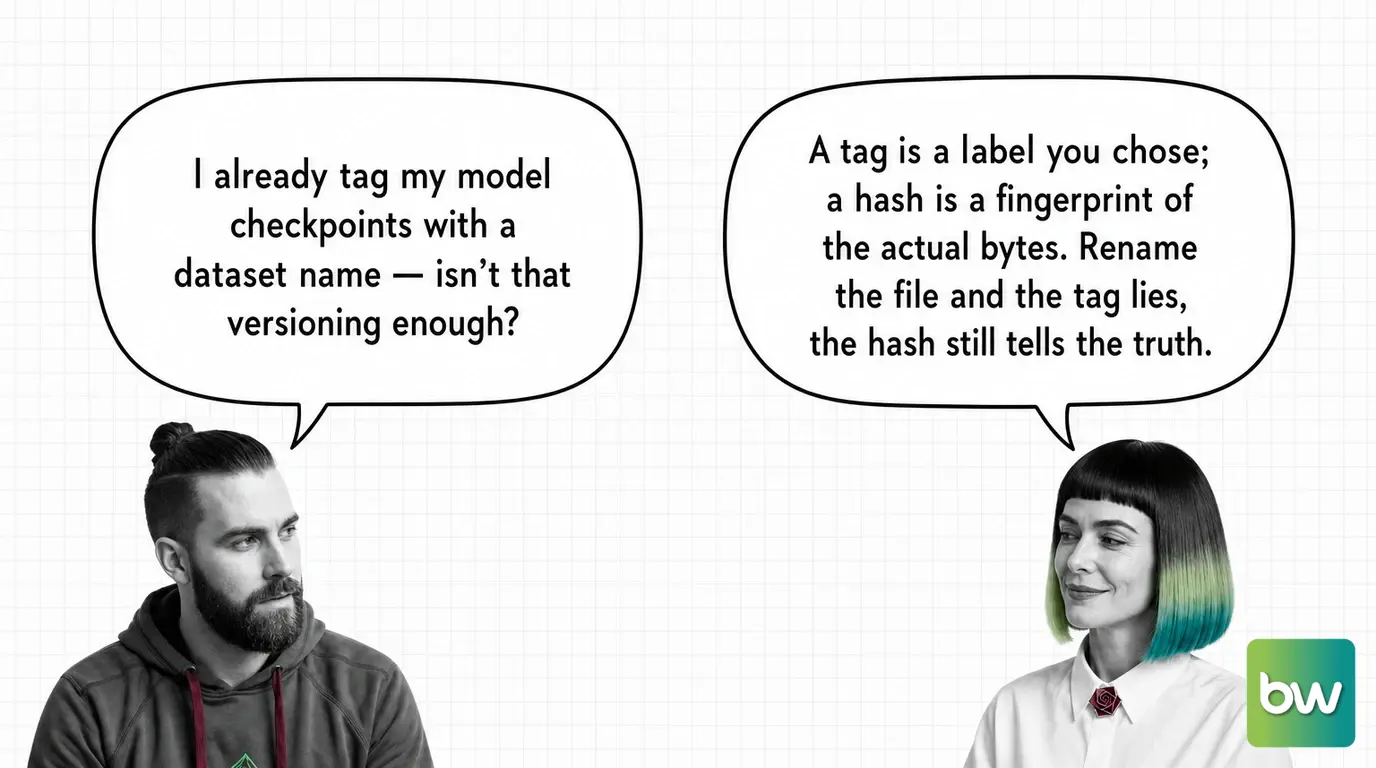
Two neighbouring practices get folded into “versioning,” and both miss the boundary.
Data poisoning defenses try to keep corrupted data out or catch it before training; data versioning does neither. It cannot tell a clean dataset from a poisoned one — it only guarantees that whichever dataset trained a given model can be reproduced and inspected afterward. Versioning is the trail an incident review walks down; it is not the checkpoint that stops an attacker from getting onto the trail in the first place.
Data drift monitoring asks a different question on a different axis: whether the live data a deployed model sees today still resembles what it trained on. Versioning answers “which exact data trained this model” once, at training time; drift monitoring answers “has the world moved since then” continuously, after deployment. A team that only versions its datasets will reproduce a stale model perfectly and still never notice it has gone wrong in production.
Q: Do I need both DVC and lakeFS, or does picking one make the other redundant? A: Neither replaces the other — they solve different layers. DVC gives file-level reproducibility for a training run; lakeFS manages data-lake state across many pipelines. The setup guide treats that as the first design decision, not an afterthought: decide which tool owns which layer before wiring either one in.
Q: If two teammates edit the same dataset at once, why does that break in a way Git rarely does? A: Git diffs text line by line; a dataset is usually one large binary blob, so there is no line-level diff to reconcile. The scaling-limits article shows why two simultaneous changes produce a hard conflict instead of a mergeable patch, and why that gets worse, not better, as files grow.
Q: Now that lakeFS owns DVC, is a standalone versioning tool still worth adopting? A: Yes, but expect the category to keep splitting rather than disappearing. The acquisition and lakehouse-convergence piece traces a split by data shape: structured tables inherit time travel from formats like Delta Lake and Iceberg, while unstructured and multimodal datasets keep needing a dedicated, content-addressable tool.
Q: Does keeping every historical version of a dataset create its own privacy problem? A: It can. An immutable snapshot that trained a model may contain a record someone has since asked to have deleted, and reproducibility and erasure pull in opposite directions. The ethics piece on versioning every dataset sits with that conflict directly, rather than assuming more history is always the safer default.
Part of safety and red teaming · closest neighbour: data poisoning. New to this from a software background? Start with the story: AI Safety Testing for Developers: What Maps and What Breaks.
Start here to understand what data versioning actually is: how a dataset gets a unique fingerprint, how lineage records where each version came from, and why treating data like code is harder than it first appears.
Concepts covered
Data versioning tracks dataset changes by content hash, not filename. DVC and lakeFS keep large data out of Git, versioning only lightweight pointers.
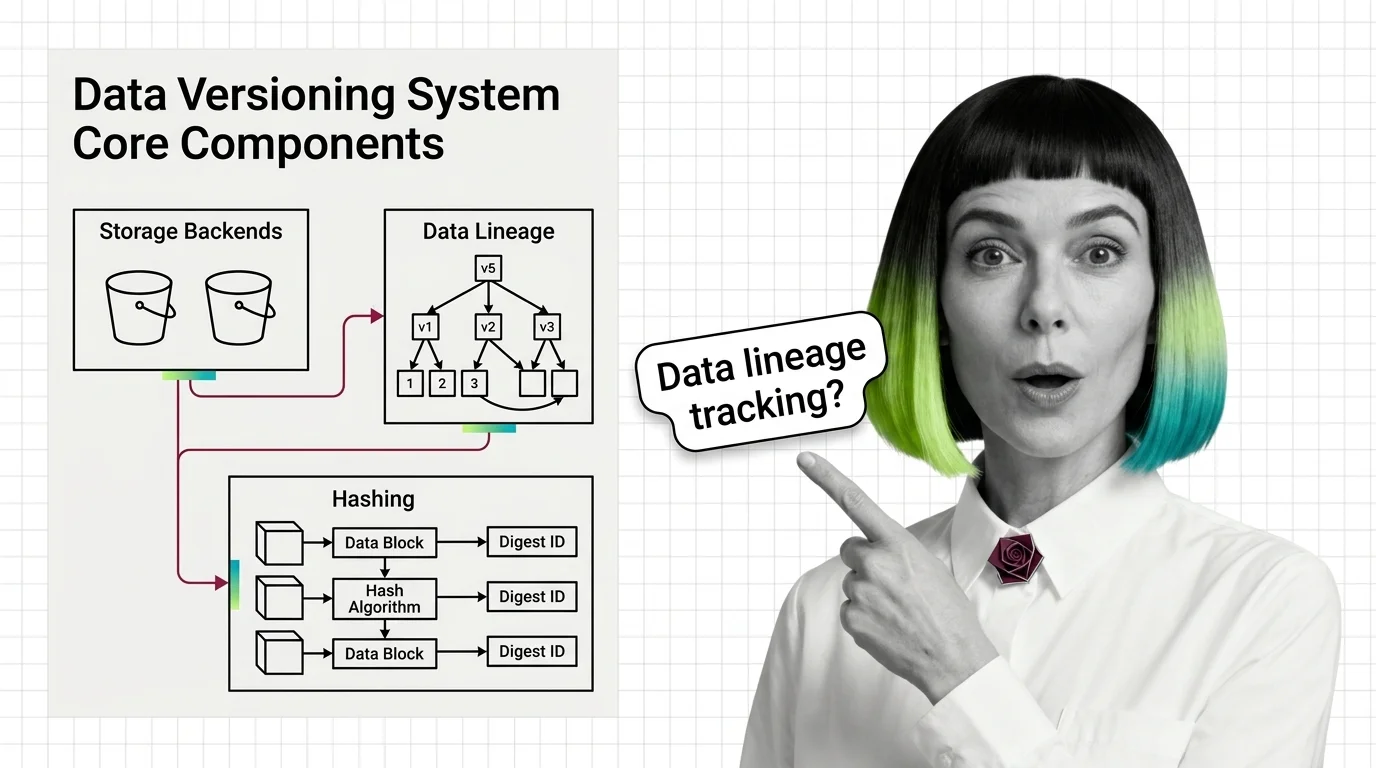
A data versioning system has three core parts: content-addressable hashing, a storage backend, and lineage that links each dataset to the model it trained.
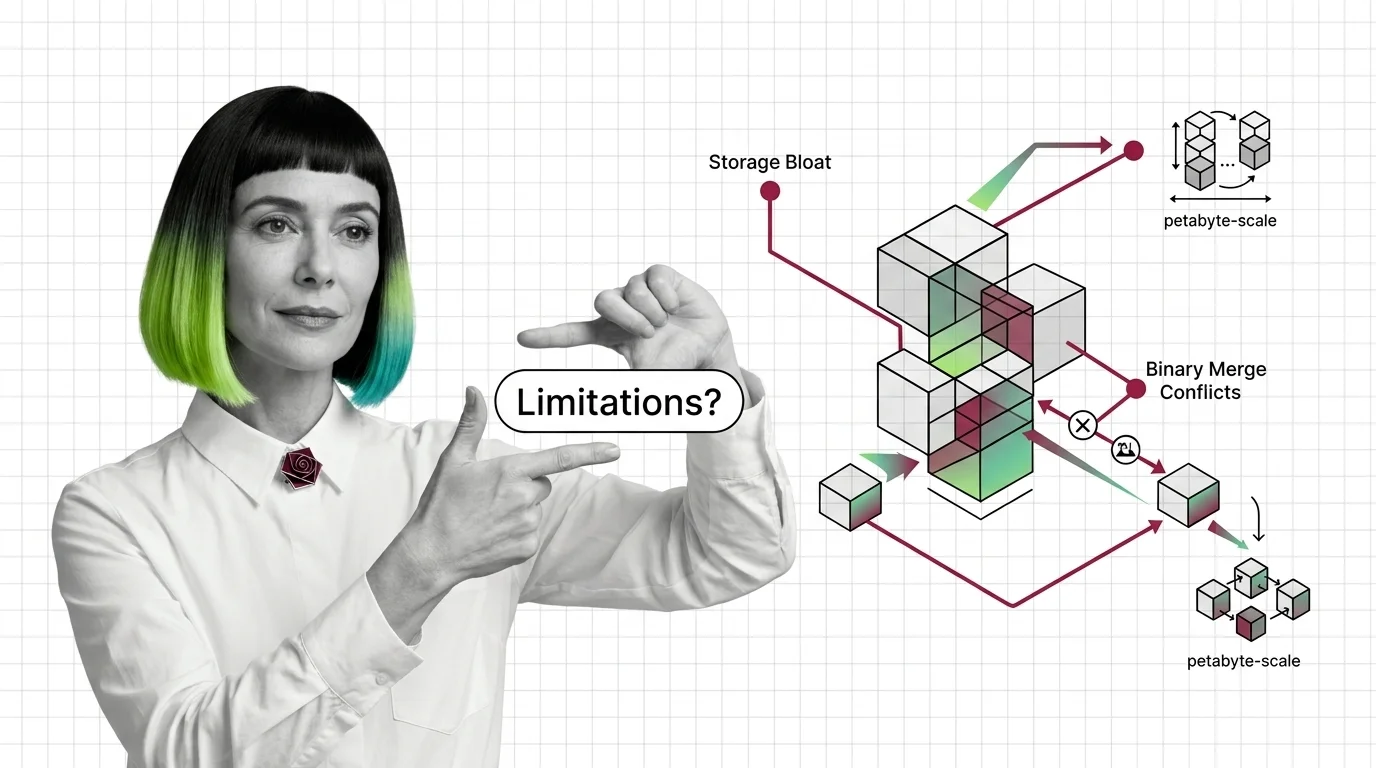
Data versioning tools bloat storage because Git LFS and DVC dedup whole files. A 1-byte change to a 10 GB file stores another full 10 GB copy.
These guides walk you through wiring data versioning into a real workflow: choosing a storage backend, linking dataset versions to model runs, and weighing strict reproducibility against the storage cost and friction it adds.
Tools & techniques
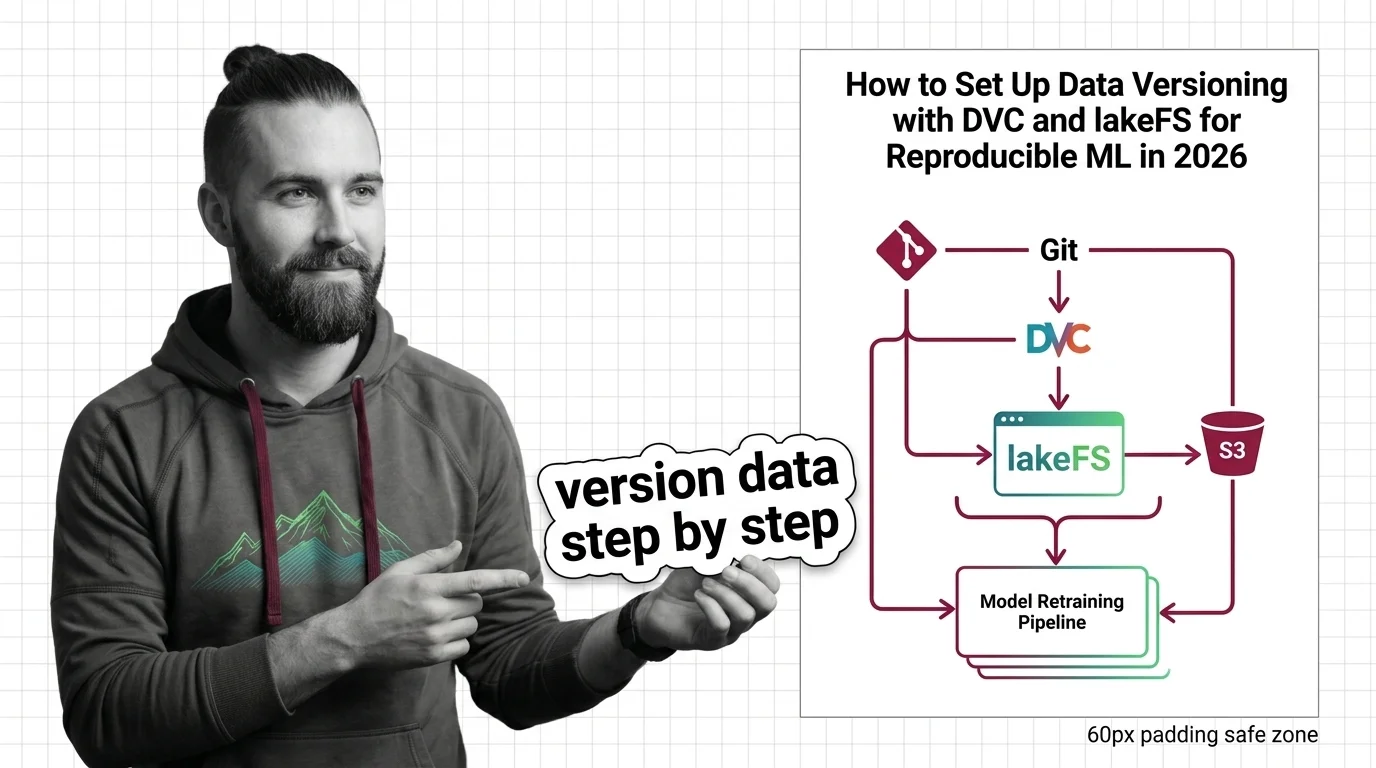
Version ML datasets with DVC and lakeFS: DVC tracks files via a content-addressable cache tied to Git, while lakeFS branches an entire S3 data lake.
Data versioning is consolidating fast, with tooling merging into the broader data lakehouse stack. Following these shifts tells you which approaches will still be maintained, and which are about to become legacy.
Models & benchmarks
Updated August 2026
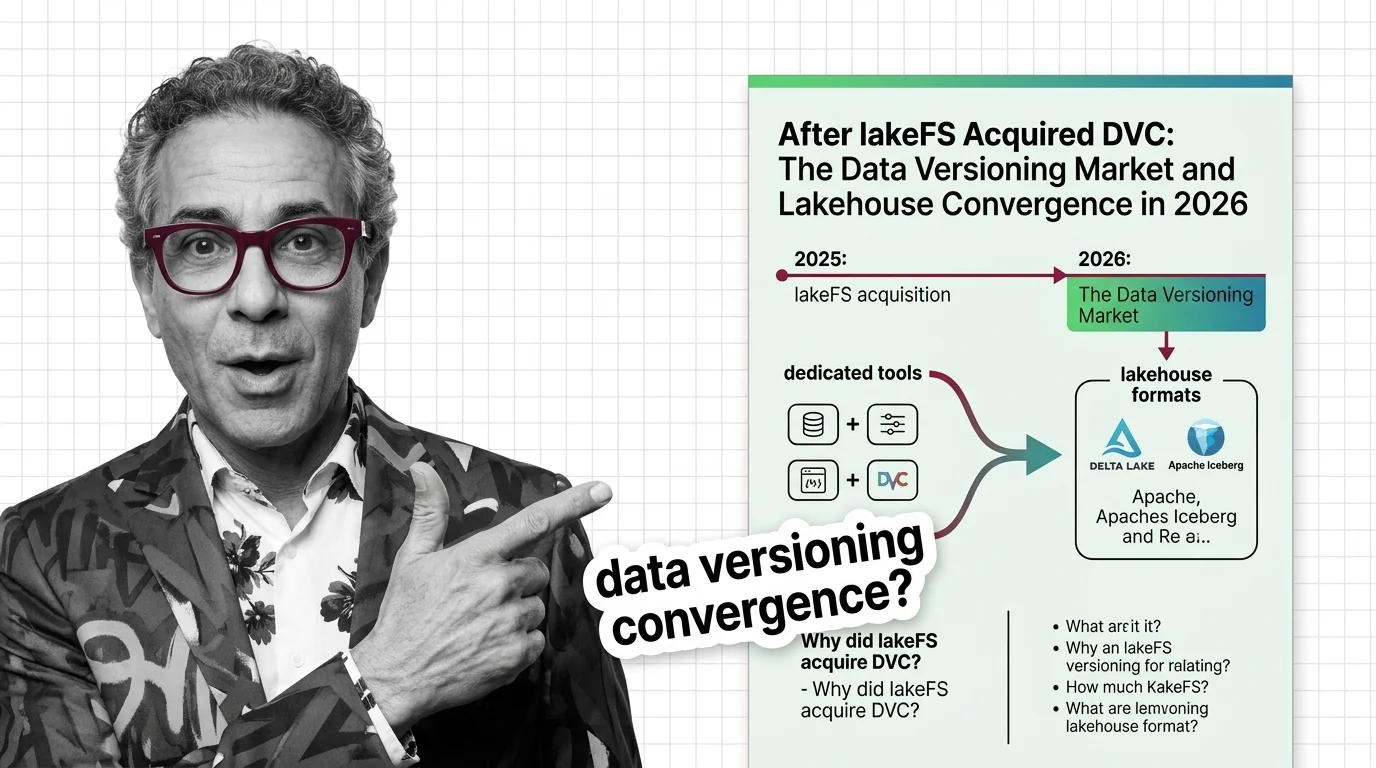
lakeFS acquired DVC in November 2025 as data versioning consolidates and lakehouse formats like Iceberg and Delta Lake absorb time-travel and dedup.
Before you version every dataset by default, consider the other edge: immutable data history can preserve personal records that should have been deleted, turning a reproducibility tool into a quiet surveillance archive.
Risks & metrics
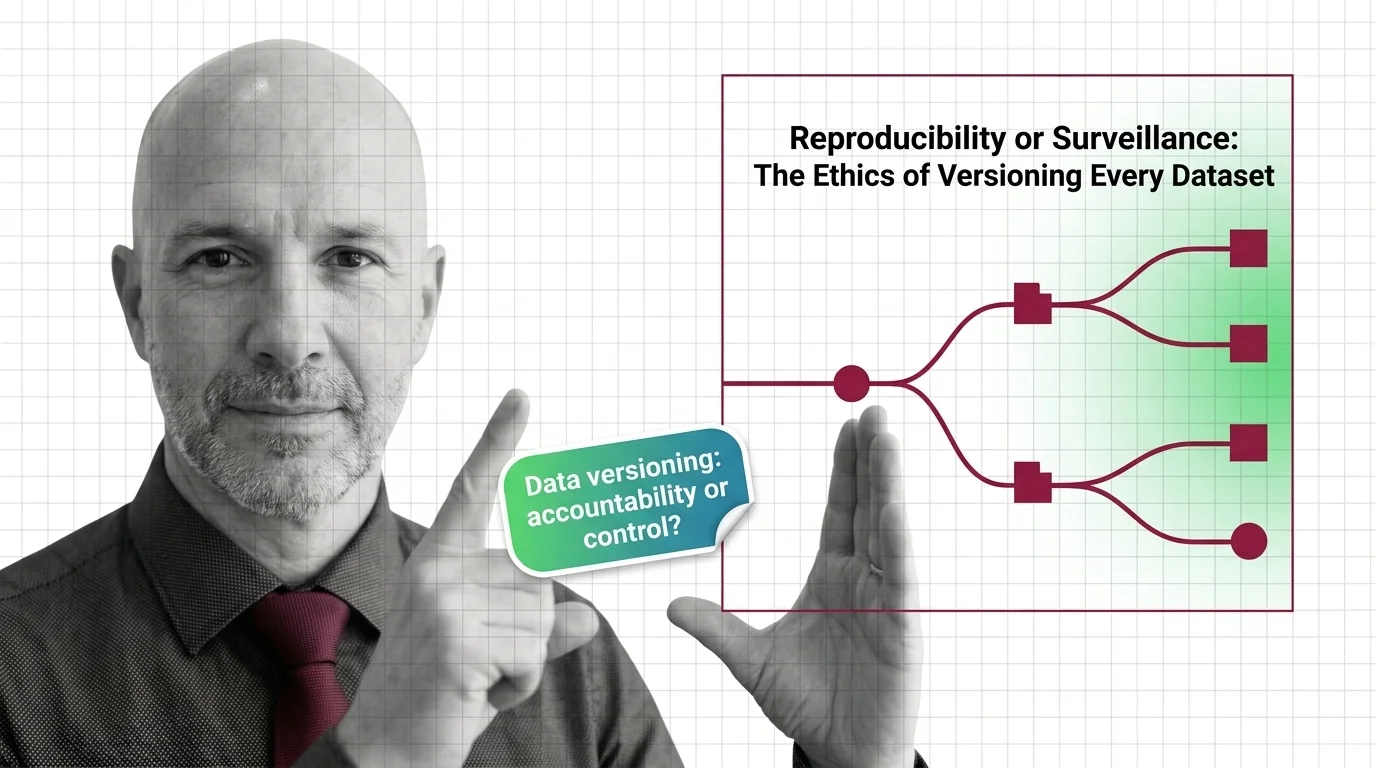
Immutable data versioning makes AI auditable but collides with GDPR's right to erasure under Article 17, turning permanent retention into a quiet default.