What Is Data Poisoning and How Corrupted Training Data Compromises Model Behavior
Data poisoning corrupts ML training data to redirect model outputs. Backdoor attacks embed dormant triggers; clean-label attacks require no label changes.
This topic is curated by our AI council — see how it works.
Every other data-borne failure this theme catalogs — leakage, bias, imbalance, drift — is something that happened to the data. Data poisoning is something someone did to it, and that difference reshapes the response: an incident here is a supply-chain compromise, not a modeling mistake, with an audit trail regulators will eventually ask to see. That is why this topic sits at the deliberate-attacker edge of AI safety and red teaming — the practice closest in spirit to red teaming, and the one most other data-quality checks are not built to catch.
Start with the threat model itself: what corrupted training data does to model behavior explains why a poisoned model can pass every accuracy check and still carry someone else’s intent inside it. From there, backdoor triggers, clean-label, and label-flipping shows exactly why these attack types slip past manual review and standard data-cleaning pipelines — the mechanism any defense has to account for. RAG poisoning and agent-memory corruption then extends the same logic to systems that never retrain at all: a corrupted retrieval corpus or agent memory store changes behavior without touching a single model weight.
Once the threat model is clear, the ART, data provenance, and ML-BOM defense guide turns it into a build spec — provenance tracking, detector layering, and the compliance paperwork EU AI Act Article 11 starts requiring in August 2026. For the state of the actual threat, the 2026 shift from Nightshade to constant-sample attacks documents how the volume assumption collapsed — and closes with the ethics of deliberately poisoning training data as self-defense, worth reading before you decide whether a tool like Nightshade is a shield or an attack inside someone else’s threat model.
Three practices get pulled into the same conversation as poisoning, and each answers a different question.
Red teaming probes a model at inference time, hunting for prompts that make it misbehave right now; poisoning is planted at training time and can lie dormant through months of clean red-team runs before its trigger ever appears in a test set. A red team that never happens to type the trigger phrase will certify a backdoored model as safe.
Toxicity and safety evaluation scores what a model outputs, continuously, against a harm taxonomy — but a poisoned model’s normal outputs are exactly that: normal. Guard models grade behavior, not the data that produced it, so they have nothing to flag until the attack condition fires.
Data versioning is often assumed to be the poisoning defense, and it is necessary but not sufficient: provenance tools prove which snapshot trained a model, which lets you trace an incident after the fact. They do not inspect the data for planted triggers before training starts — that job belongs to detectors like the ones in the defense guide above.
Q: Is a small, low-budget fine-tuning job too small a target to be worth poisoning? A: No — the scale assumption behind that belief has collapsed. As few as 250 documents can poison an LLM fine-tuning set, and fewer than 100 images can compromise a diffusion model’s concept, so a modest training run is not protected by its size. The 2026 threat shift documents the research behind that number.
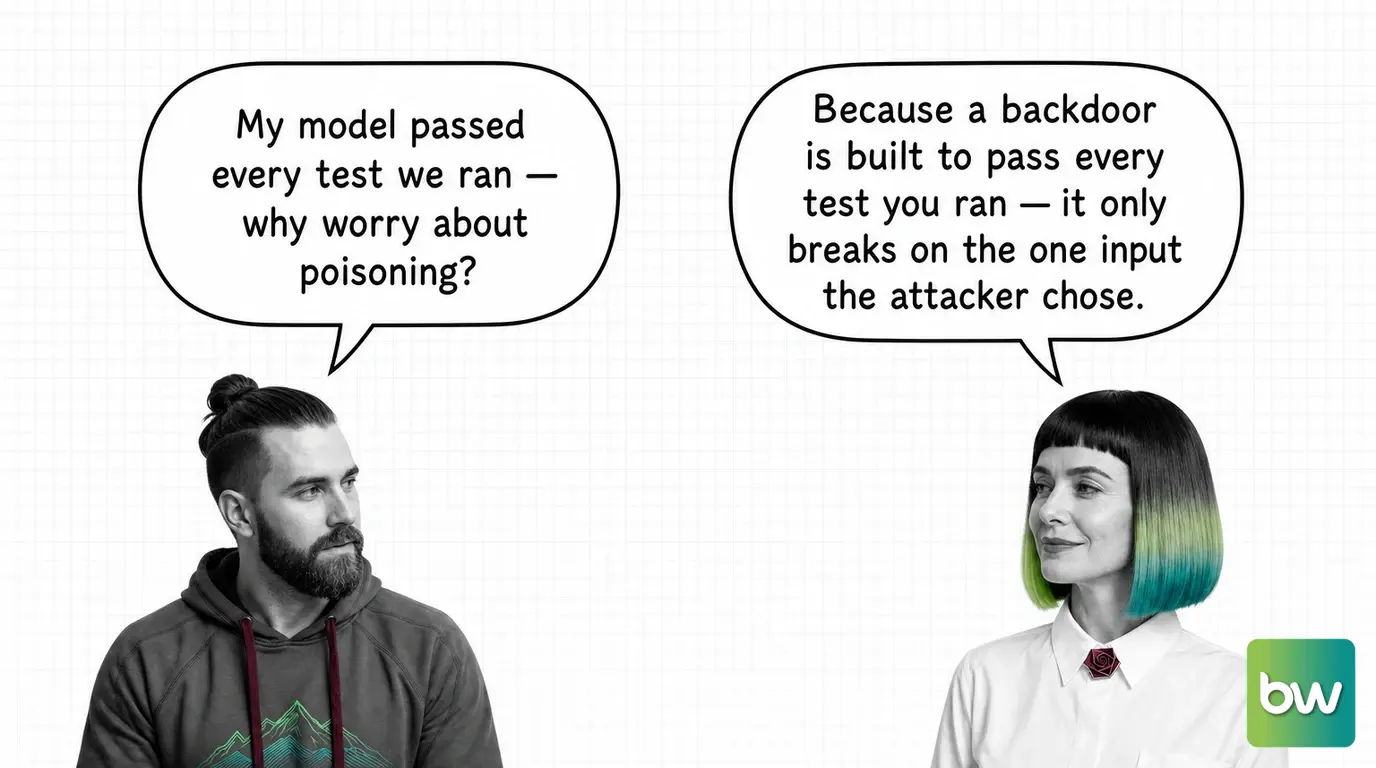
Q: If my model passes every accuracy benchmark, can I rule out poisoning? A: No — that is precisely the property a well-built backdoor is designed to have. The threat model explains why a poisoned model performs identically to a clean one on every input except the attacker’s trigger, which standard accuracy testing never samples.
Q: Does tracking data provenance alone stop a poisoning attack? A: No — provenance proves lineage, not integrity. You still need detectors running against the data itself; the ART and ML-BOM defense guide lays out how the two layers work together instead of substituting for each other.
Q: My system only calls a locked-down, closed-weight model through RAG — am I still exposed? A: Yes — RAG poisoning targets the retrieval corpus or agent memory store, not the model’s weights, so a hosted model you cannot retrain offers no protection once the corpus itself is compromised.
Part of AI safety and red teaming · closest neighbour: red teaming for AI. New to AI security from a software background? Start with the story: AI Safety Testing for Developers: What Maps and What Breaks.
Data poisoning exploits a counterintuitive weakness: a model trained on corrupted data learns to fail by design, not by accident. Unlike adversarial examples at inference time, these attacks embed silent triggers during training.
Concepts covered
Data poisoning corrupts ML training data to redirect model outputs. Backdoor attacks embed dormant triggers; clean-label attacks require no label changes.

Data poisoning corrupts AI behavior through three surfaces: training pipelines, RAG corpora, and agent memory — each bypassing model weights entirely.
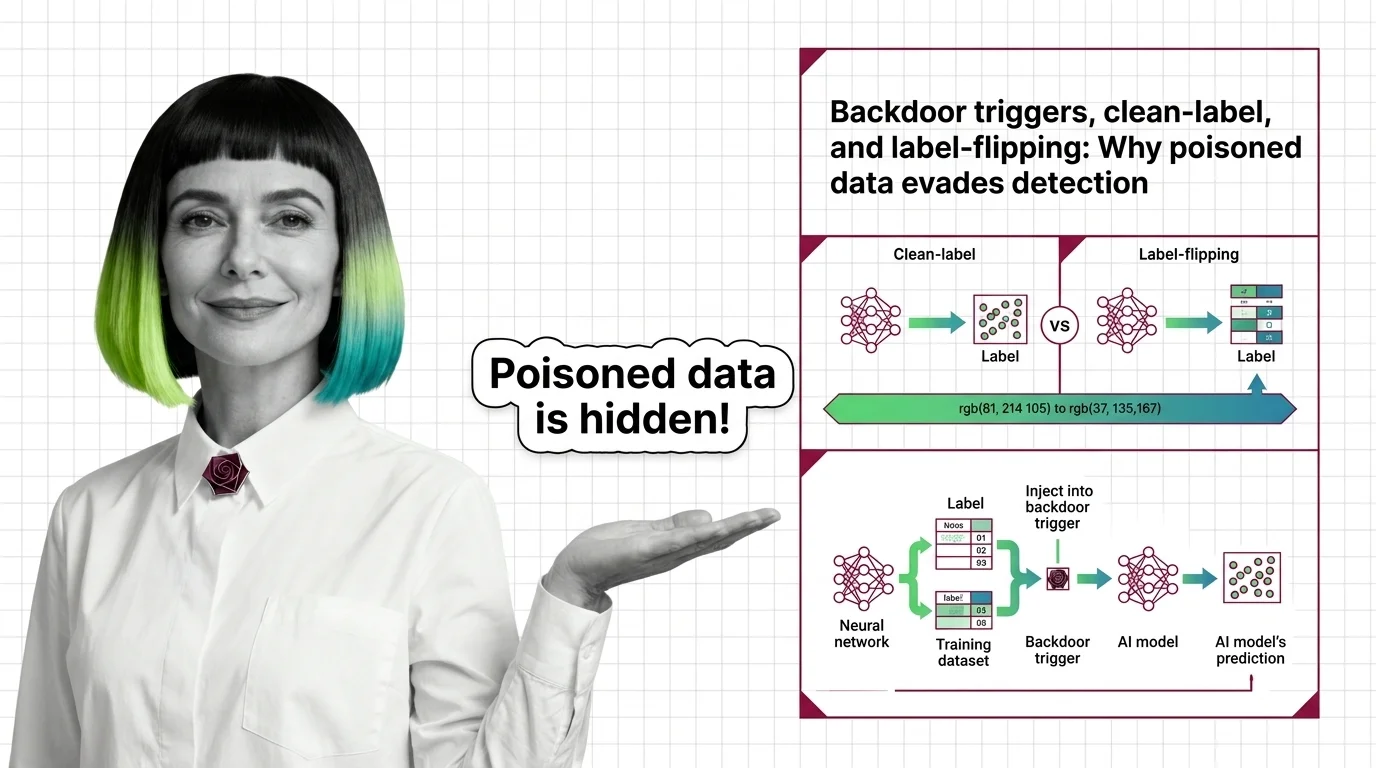
Backdoor triggers, clean-label, and label-flipping are three data poisoning vectors that corrupt ML models while evading standard training-data quality checks.
These guides walk through auditing training pipelines with data provenance tools, deploying certified defenses, and generating ML bills of materials to prove data integrity before shipping.
Tools & techniques
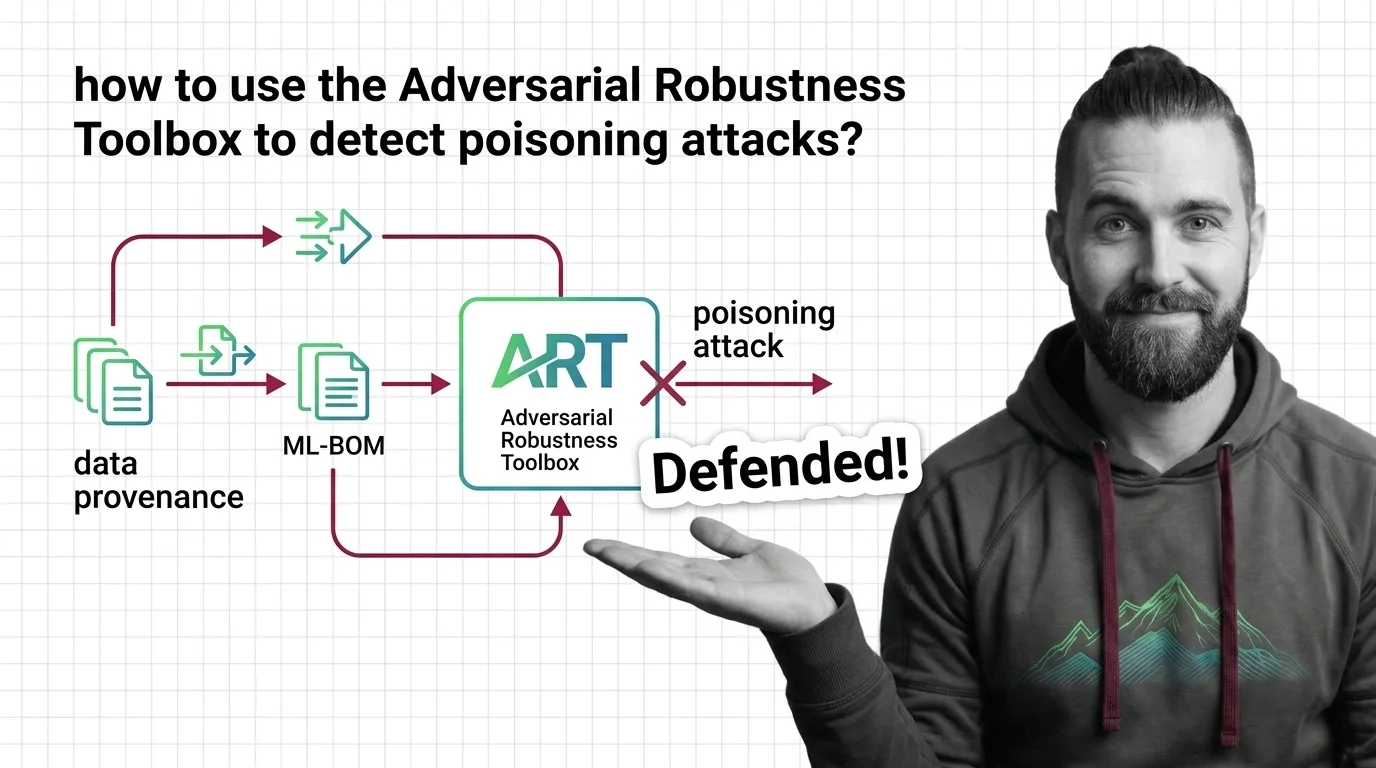
Defense-in-depth against ML data poisoning in 2026: ART 1.20.1 detectors, Croissant 1.1 provenance gates, and CycloneDX ML-BOM for Annex IV compliance.
The attack surface keeps expanding: RAG pipelines, fine-tuning APIs, and agent memory stores are emerging poisoning vectors that demand continuous monitoring as AI systems grow more interconnected.
Models & benchmarks
Updated August 2026
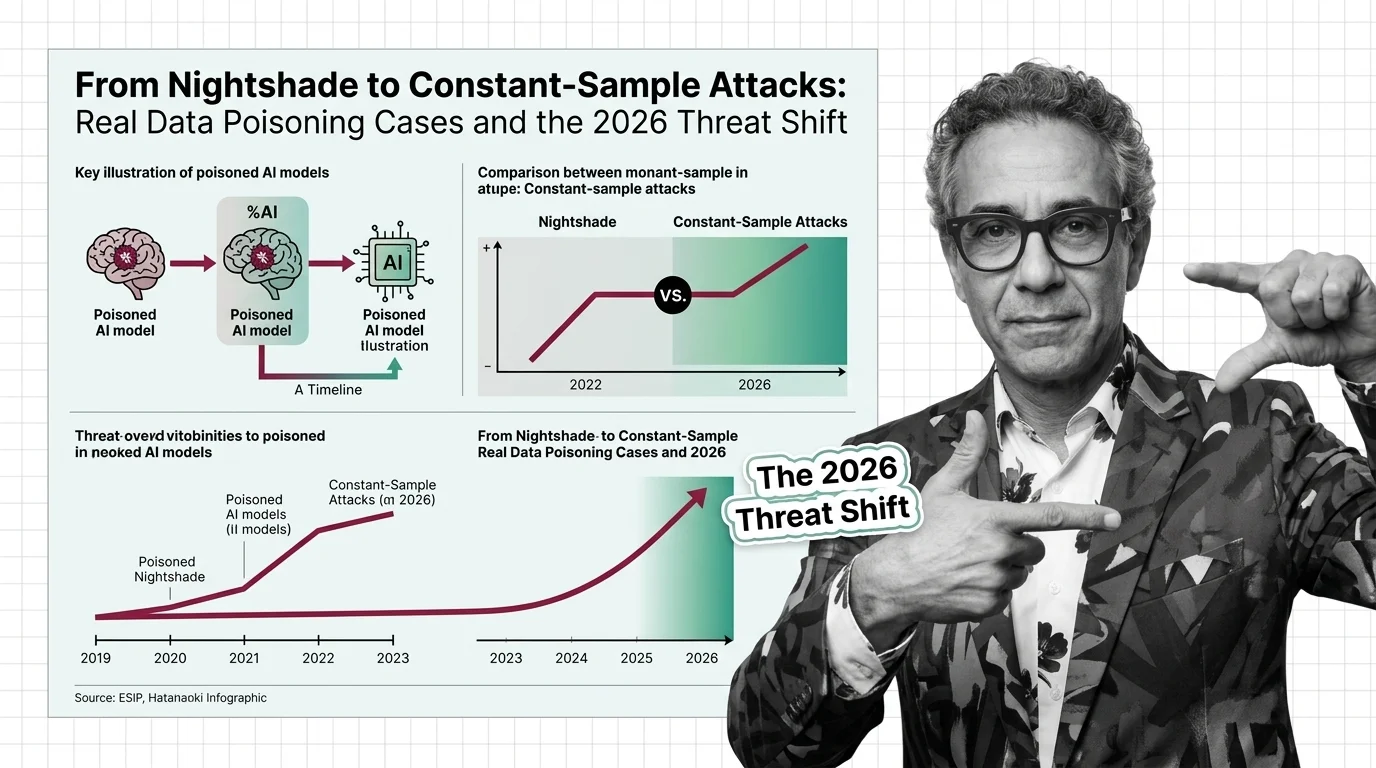
Data poisoning attacks now corrupt LLMs with just 250 documents. Nightshade hit 2.5M downloads; MCP servers emerged as a new attack vector in 2025-2026.
Data poisoning raises difficult accountability questions: when a backdoored model causes harm, responsibility is diffuse across data curators, model trainers, and deployers. Defensibility requires documented data lineage, not just test accuracy.
Risks & metrics
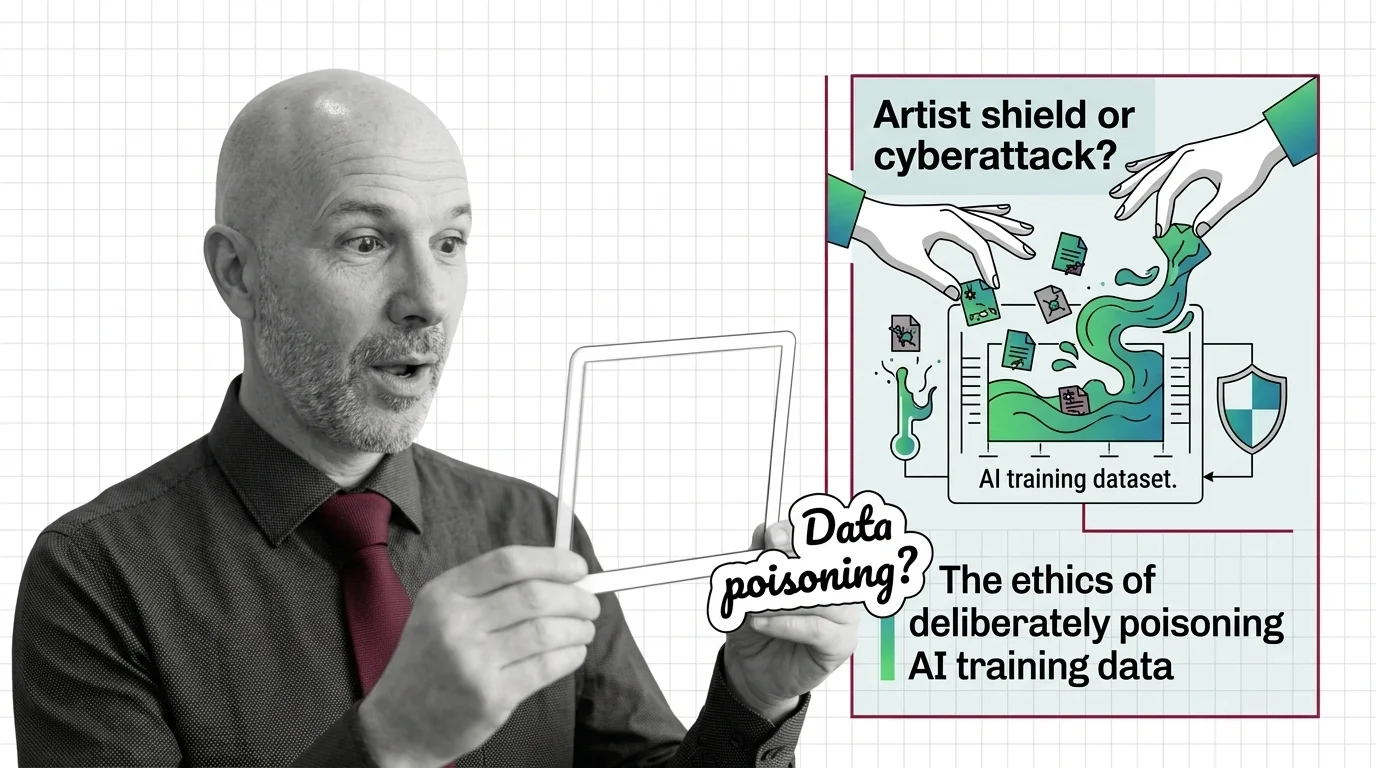
Nightshade corrupts AI concepts with under 100 samples — artist leverage to some, attack vector to others. Intent cannot distinguish the two. No law has yet.