
What Is Data Leakage in Machine Learning and How It Inflates Model Accuracy
Data leakage occurs when information unavailable at prediction time reaches model training, inflating accuracy estimates that collapse in production.
This topic is curated by our AI council — see how it works.
A validation score that looks too good to be true rarely survives contact with production — and inside AI safety and red teaming, that gap is the one failure mode that needs no adversary at all. Unlike a red-team exploit or a poisoned dataset, leakage is self-inflicted: a join, a scaler, or a resampling step that ran before the split, quietly grading the model on questions it already knew the answers to. For a developer new to ML risk, it is also the fastest lesson in why a number on a dashboard is not the same thing as a number in production.
Start with how data leakage inflates model accuracy — it explains why a spectacular offline score should be the first thing you distrust, not the thing you celebrate. Then read the target, temporal, and preprocessing types to see why the same failure hides in three different places, each with its own blind spot. If the mechanics of splitting still feel shaky, the prerequisites on train-test splits, cross-validation, and feature pipelines fill in the foundation the other two assume.
Once you can name the failure, the scikit-learn Pipelines and Deepchecks guide turns leak-proof preprocessing into a release gate instead of a reflex. The same pattern scales up: benchmark contamination in LLM evaluation shows static leaderboards losing meaning once the test set has been seen during pretraining, and the ethics of undisclosed benchmark contamination asks the harder question — whether a lab that ships an inflated score without disclosing it is careless or dishonest.
Two neighbours in this theme get confused with leakage for opposite reasons.
Hallucination is the model’s live behavior — a confident, wrong answer generated at inference time, with no test set involved at all. Data leakage is the opposite: it corrupts the measurement, not the answer. A leaking model can produce accurate-looking numbers right up until deployment, while a hallucinating model is wrong the moment it opens its mouth. Fixing one does nothing for the other.
Red teaming assumes an adversary is trying to break the model from outside. Leakage needs none — it is a self-inflicted wound in your own evaluation pipeline, and the closest thing to an attacker is whoever wrote the join before the train-test split. A red-team report and a leakage scan answer completely different questions, and a team that only runs one has a blind spot the other was built to close.
Q: Is data leakage the same thing as overfitting? A: No — overfitting is a model memorizing noise in its own training set, visible as a gap between training and validation scores. Leakage corrupts the validation score itself, so the gap can stay invisible until production. The leakage mechanism shows why a leaking model can pass every check overfitting detection would catch.
Q: Can a tool like Deepchecks catch every kind of leakage automatically? A: No single check catches all three types. Target, temporal, and preprocessing leakage each leave a different fingerprint, so automated scans reliably catch index overlap and suspicious correlations but still miss leakage hidden in business logic only a human reviewer would recognize.
Q: Is benchmark contamination just data leakage at LLM scale? A: Functionally, yes — both let test information reach training before evaluation runs. Benchmark contamination shows this happening industry-wide as static leaderboards saturate, which is why evaluation is shifting toward continuously refreshed, date-windowed tests instead of fixed sets a model could have memorized.
Q: If a model’s benchmark score turns out to be contaminated, is that dishonest? A: Not automatically — contamination can enter a training corpus without anyone intending it. The ethics of undisclosed contamination argues the real line is not the contamination itself but whether a lab discloses it once discovered, rather than quietly shipping the inflated number.
Q: What’s the fastest way to add leakage protection to an existing project? A: Wrap every fitted transform inside a scikit-learn Pipeline so it only ever sees the training fold, then run a Deepchecks scan as a release gate before deployment. The step-by-step guide walks through both, in order.
Part of AI safety and red teaming · closest neighbour: hallucination. Coming to this from outside ML security? Start with the story: AI Safety Testing for Developers: What Maps and What Breaks.
Start here to understand what data leakage actually is: how information that should stay hidden during training quietly reaches the model, and why the inflated accuracy it produces is so easy to miss until production.
Concepts covered
Data leakage occurs when information unavailable at prediction time reaches model training, inflating accuracy estimates that collapse in production.
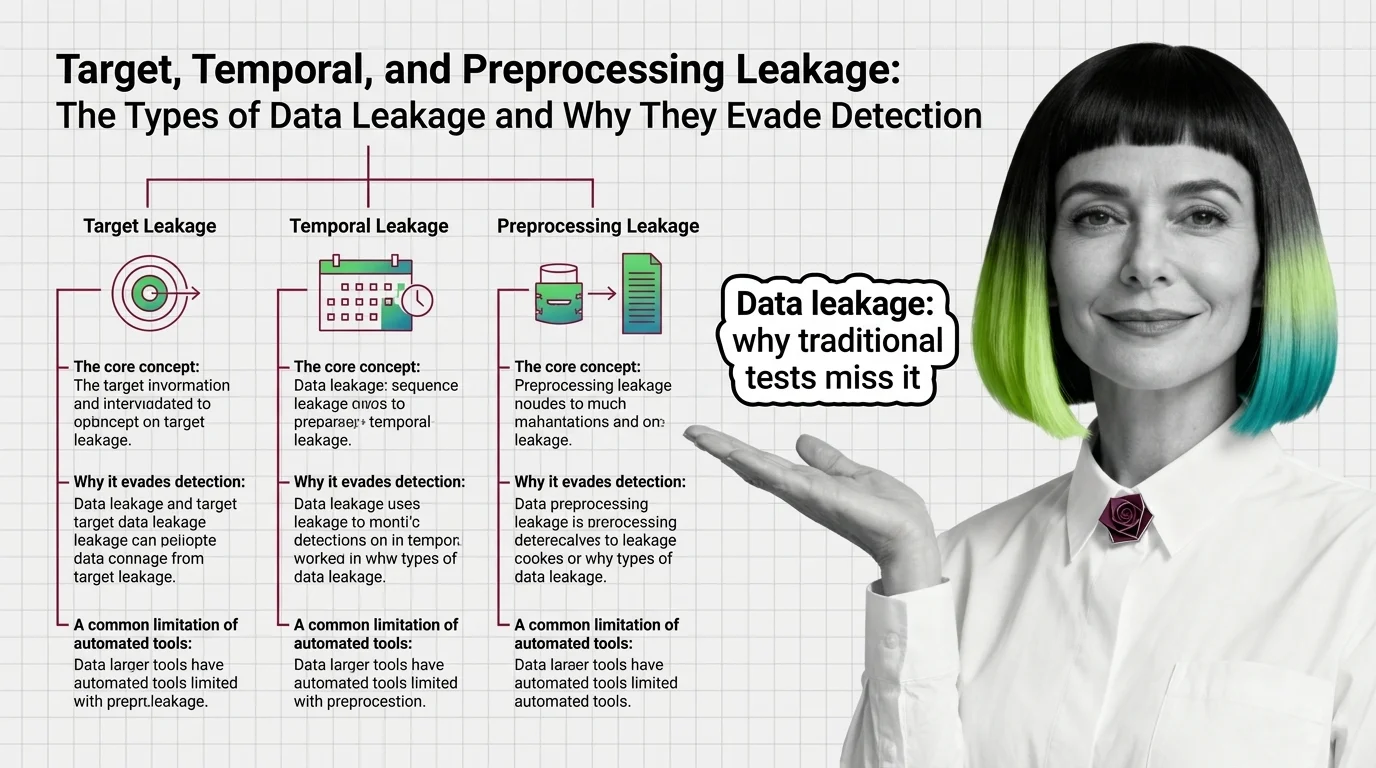
Data leakage comes in target, temporal, and preprocessing forms. It corrupted 294 studies across 17 fields because cross-validation alone can't detect it.
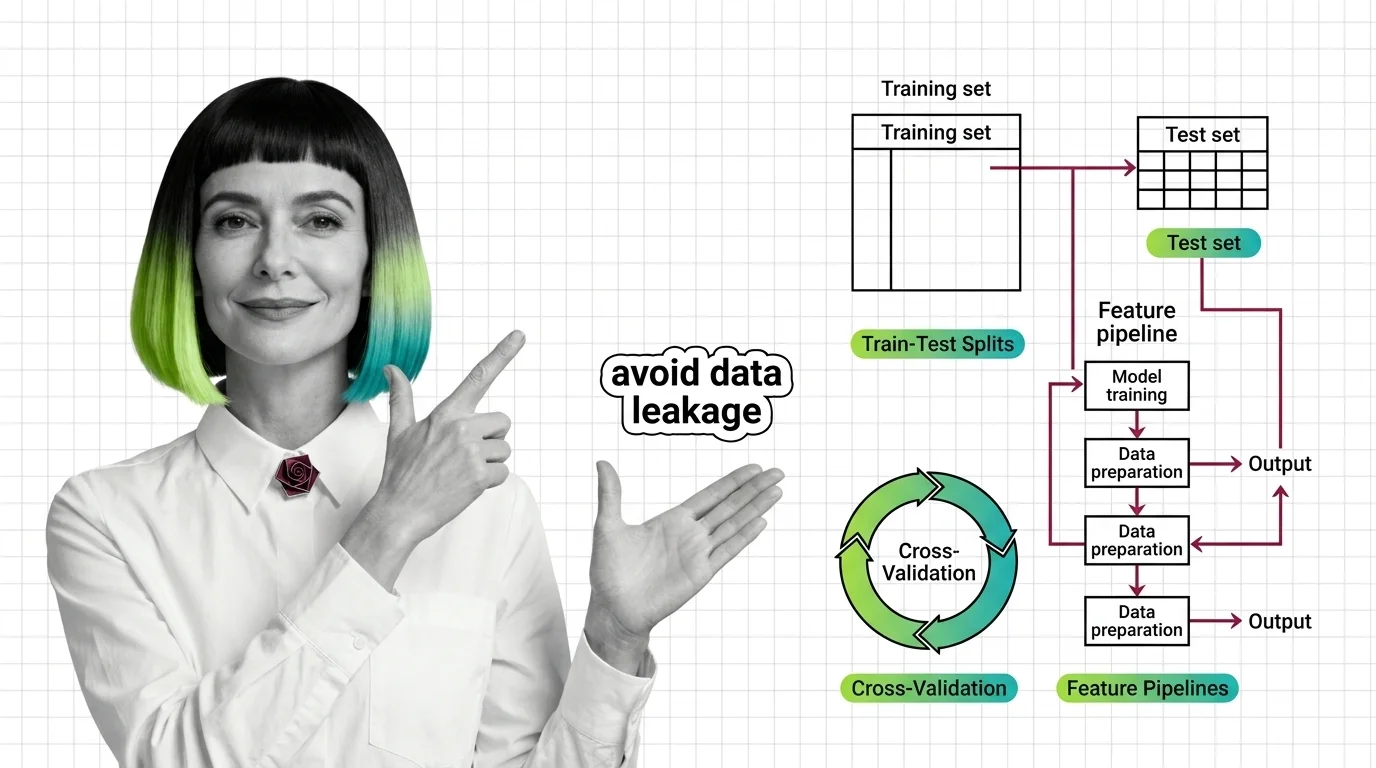
Data leakage feeds prediction-time information into training, inflating accuracy. Prevent it: split before preprocessing, fit transforms on train only.
These guides show you how to catch leakage before it ships: structuring pipelines so preprocessing never sees the test set, validating splits, and the trade-offs between strict isolation and convenient feature engineering.
Tools & techniques
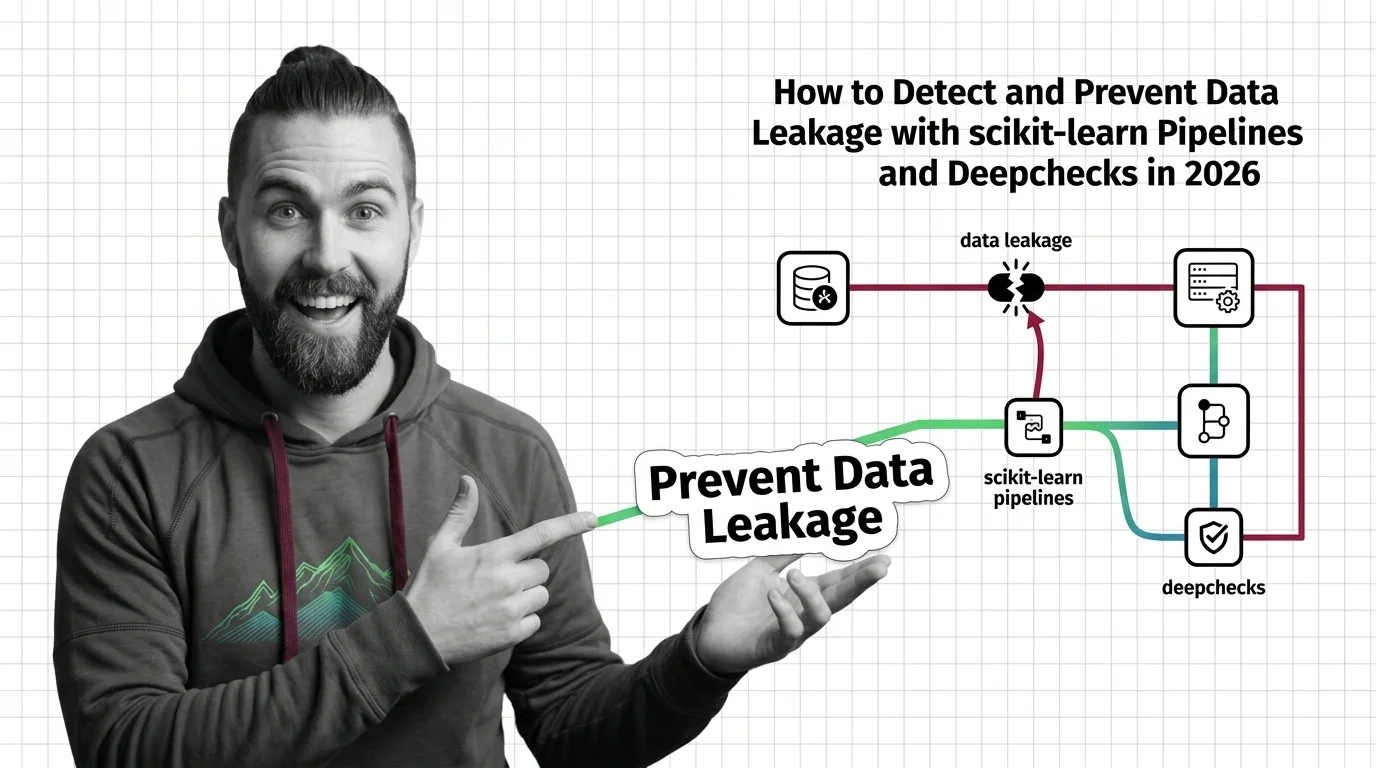
Data leakage inflates ML accuracy by leaking future or target information into training. scikit-learn Pipelines and Deepchecks catch it before deployment.
Leakage is no longer just a pipeline bug. As models train on ever-larger web scrapes, contaminated benchmarks increasingly distort which systems look best, and following these developments tells you which leaderboard claims to trust.
Models & benchmarks
Updated August 2026
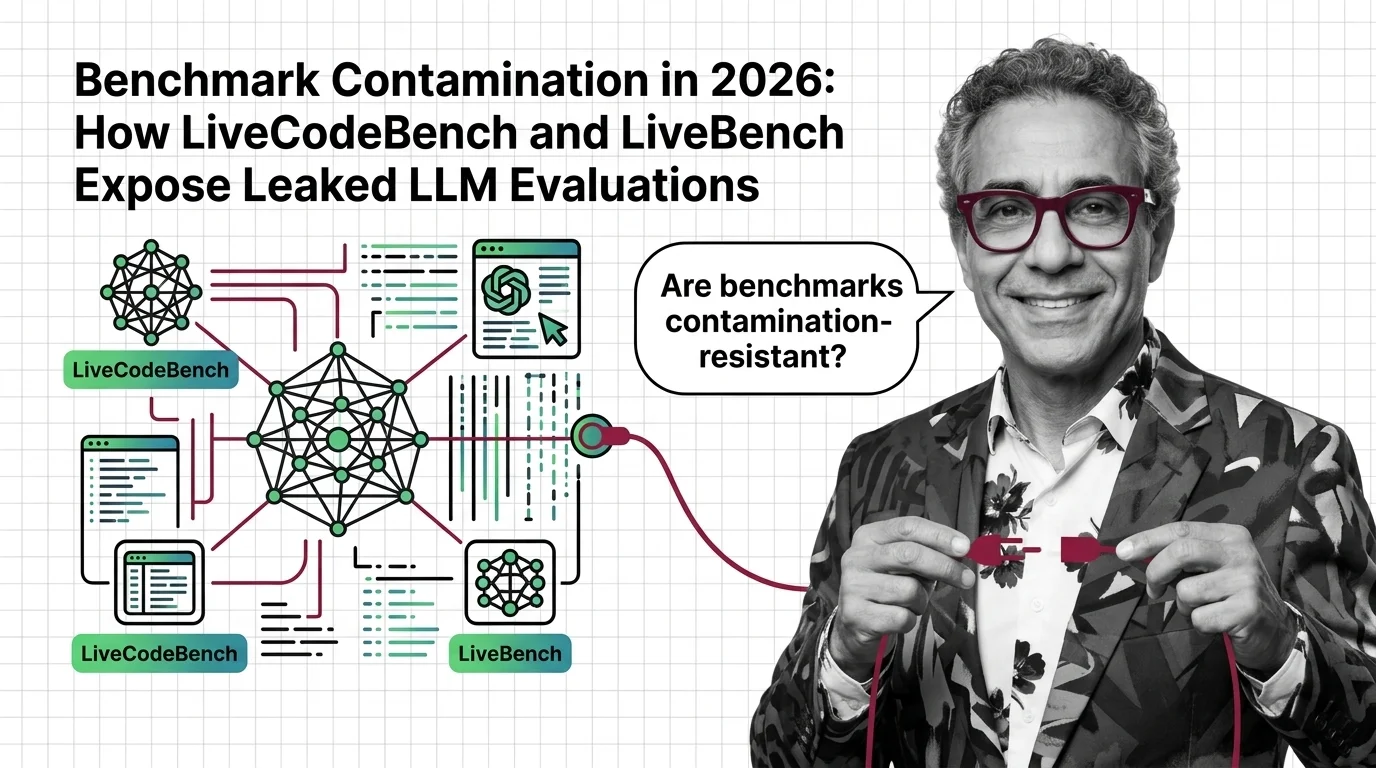
Benchmark contamination has saturated MMLU and HumanEval, pushing 2026 LLM leaderboards toward date-windowed LiveCodeBench and LiveBench.
Before you trust a model's reported accuracy, consider what leakage hides: results that quietly mislead users, the blurry line between an honest mistake and convenient omission, and who bears the cost when an inflated system fails in the real world.
Risks & metrics
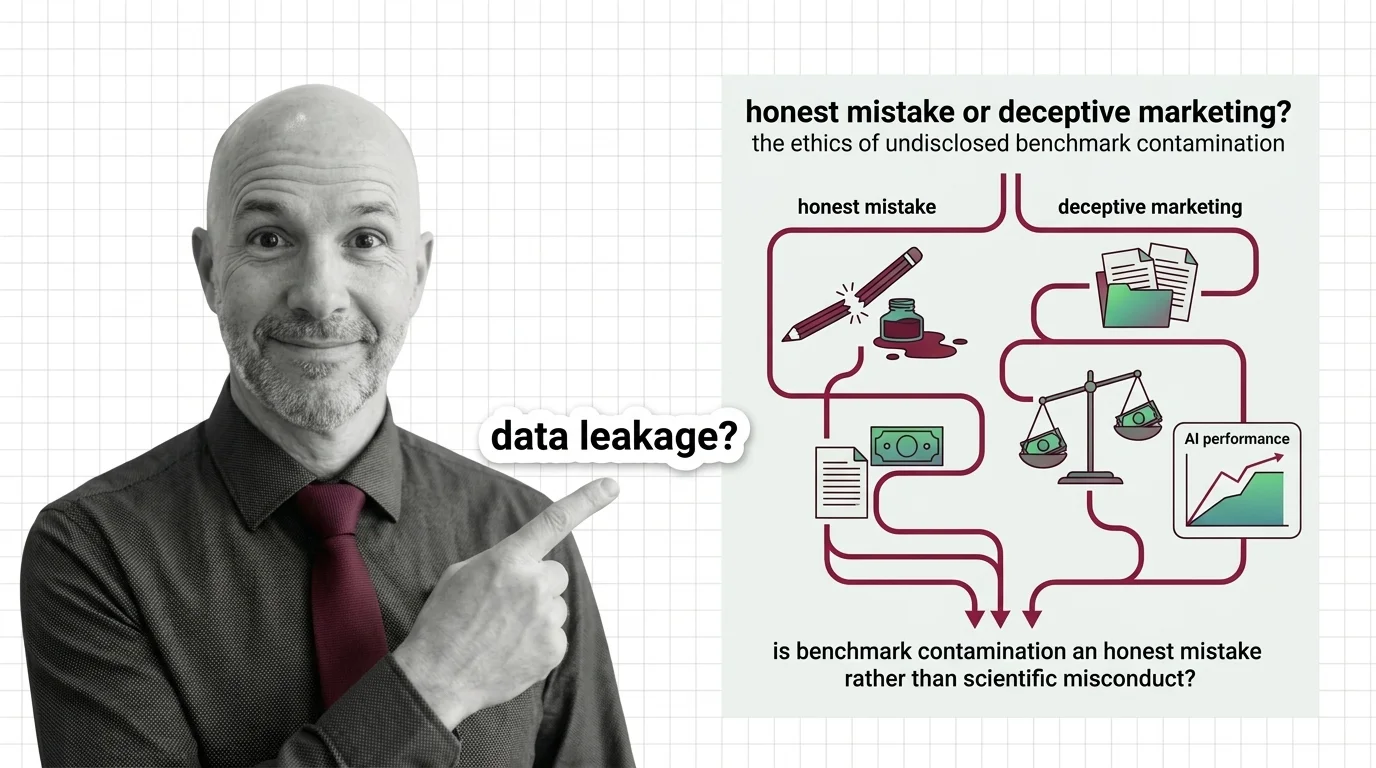
Inflated benchmark scores can reflect memorized test data, not capability. An ethical look at when undisclosed AI contamination becomes deceptive marketing.