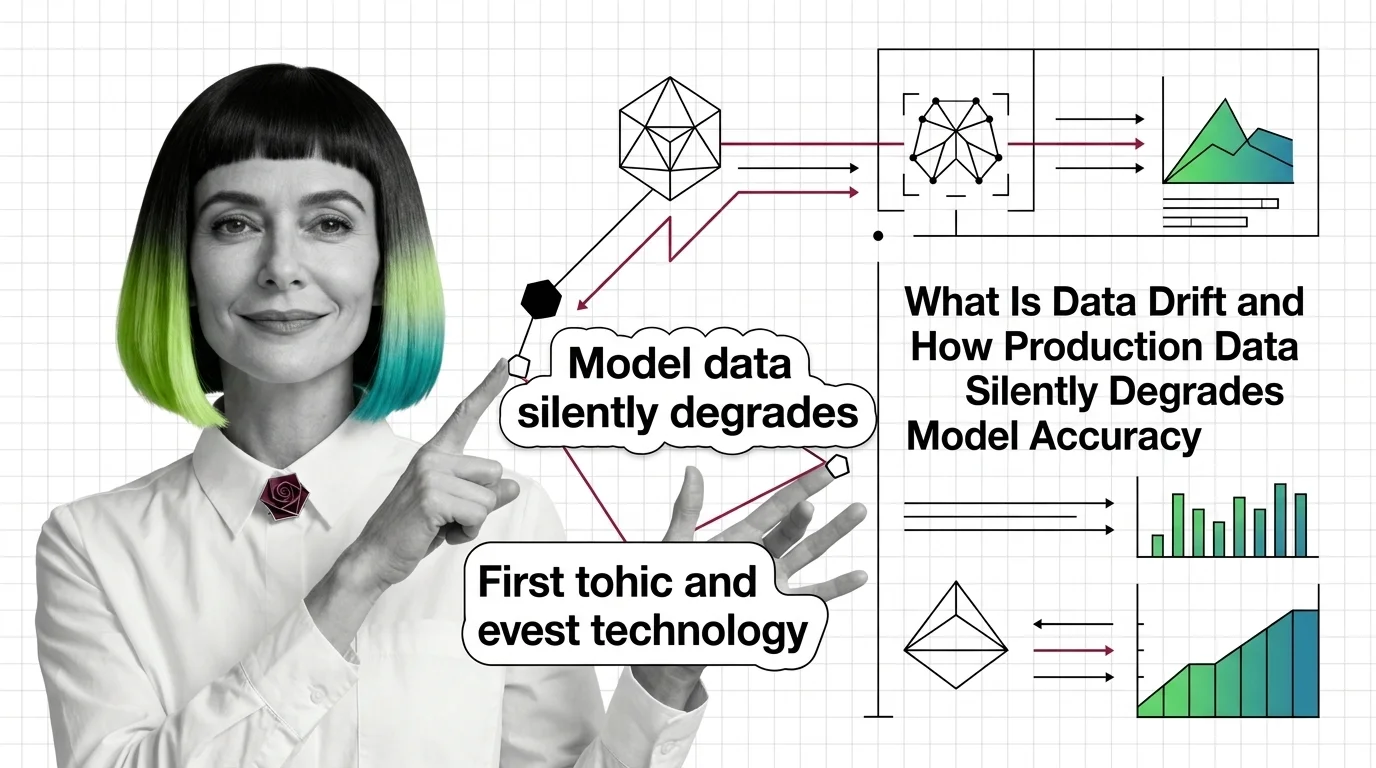
What Is Data Drift and How Production Data Silently Degrades Model Accuracy
Data drift is when production input distributions diverge from training data, degrading model accuracy even though the model's weights never change.
This topic is curated by our AI council — see how it works.
A model’s code never changes after deployment, but the data flowing into it does — and inside the safety and red-teaming theme, that quiet mismatch is the failure mode that arrives latest and announces itself least. There is no crash, no stack trace, no failed test: just a decision quality that keeps eroding until a customer complaint or a compliance review finally asks why. This topic is less about accepting that drift happens and more about learning which of its forms you are actually looking at, because the fix — a monitor tweak, a retrain, or nothing at all — depends entirely on the answer.
Start with how production data silently degrades model accuracy to get the mechanism: nothing about the model’s code changes, only the world it now sees. From there, covariate shift, concept drift, and label drift breaks the single word “drift” into three statistically distinct failures, each with its own test — read it before you pick a detection library, or you’ll instrument for the wrong shift. Before you trust any of those tests, false positives, delayed labels, and the technical limits of detection is the honest caveat: alerts fire on harmless shifts and stay silent on some that matter, so a monitor is a leading indicator, not a verdict.
When you’re ready to build, the Evidently, NannyML, and Alibi Detect pipeline guide turns that caveat into a working spec — a reference-window policy, per-feature tests, and a performance estimator paired with the drift signal. For where the tooling itself is heading, how ML monitoring converged on unified drift detection tracks the vendors folding tabular drift and LLM observability into one console. Close with the ethical cost of undetected data drift — the harder question of who answers for the harm a silent decay caused before anyone built a monitor to catch it.
Two habits get mistaken for drift monitoring, and both leave a team blind to the actual failure.
Drift detection is not data versioning. Data versioning gives you a reproducible record of which snapshot trained which model — essential for an audit, useless as an early warning. A team can hash and store every dataset perfectly and still have no idea that the data arriving in production today no longer resembles any of those snapshots.
A drift alert is not a verdict that the model degraded. A statistical test on production inputs can fire because a genuinely new segment of users showed up, not because the model started predicting worse — which is why a reference-window policy and a label-free performance estimate have to sit alongside the raw distribution test, not replace it.
Watching for drift is not the same discipline as retraining on a fixed calendar. A quarterly retrain will miss a shift that hits in week two, and a sensitive detector will flag a hundred harmless months before the one that matters. The detector’s job is to tell you when to look, not to replace the decision of whether to act.
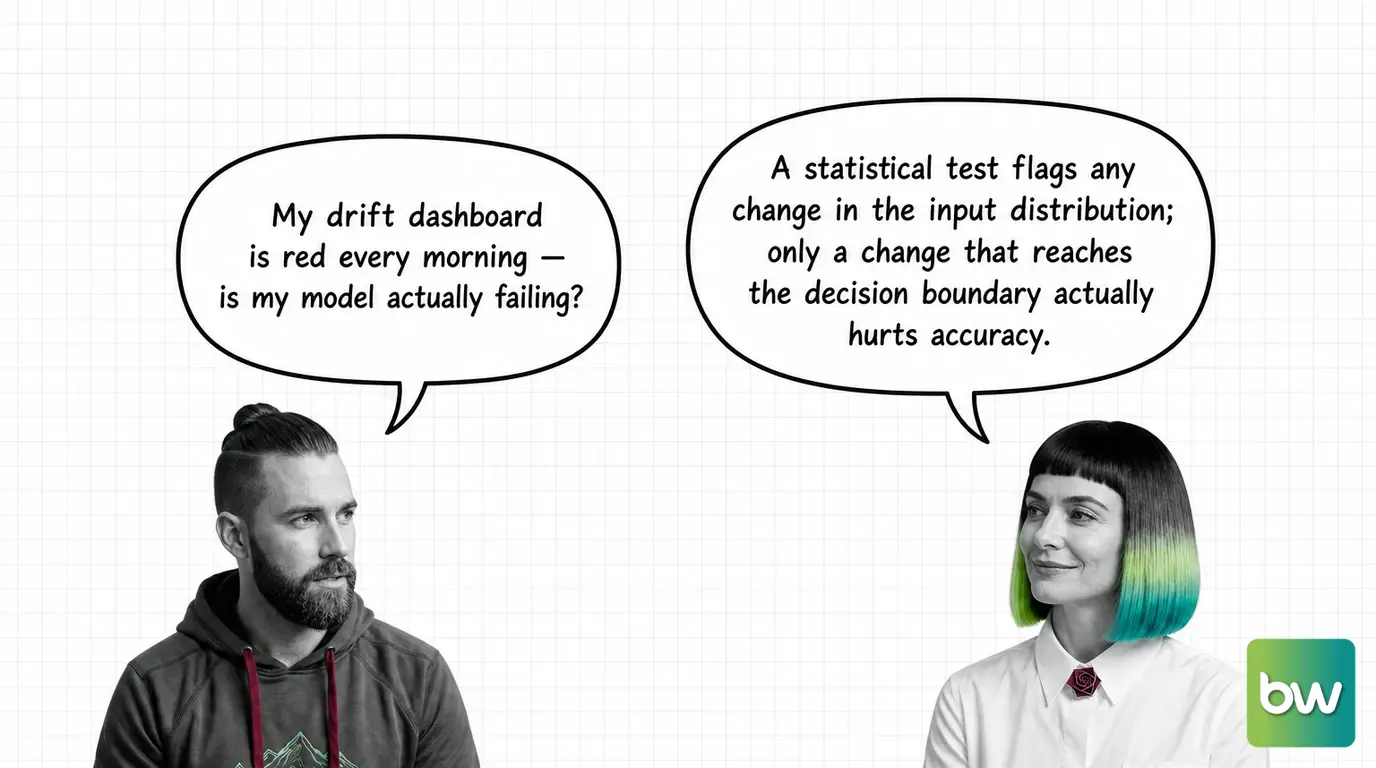
Q: Does a drift alert always mean the model needs to be retrained? A: No — a monitor flags any change in the input distribution, but only some of those changes ever reach the model’s decision boundary. Treat drift as a leading indicator that something changed, then pair it with a label-free performance estimate before committing to a retrain; the monitoring pipeline guide builds that pairing in.
Q: I already version every training dataset — do I still need drift monitoring? A: Yes. Data versioning tells you exactly which snapshot trained a given model, which matters for reproducibility and audits, but it says nothing about whether today’s production data still resembles that snapshot — that’s the separate, ongoing question drift detection answers.
Q: Is the roundup on Evidently, Arize, and Fiddler worth reading once I’ve already picked a monitoring tool? A: Yes, if that tool only watches tabular models — the consolidation piece tracks vendors folding LLM observability into the same console, so teams running both model types no longer need two separate dashboards to maintain.
Q: Our drift monitor stayed quiet, but production accuracy still dropped — what did we miss? A: Detection tests do not catch every damaging shift, and some real degradation shows up before ground-truth labels ever arrive to confirm it. The technical limits of drift detection explains which failures a distribution test structurally cannot see.
Q: If no alert ever fires, does undetected drift become anyone’s responsibility? A: That is the harder question the tooling alone cannot answer. The ethics of undetected data drift argues that silent decay in credit, health, or hiring decisions still causes real harm — even when no alarm was ever built to catch it.
Part of the safety and red-teaming theme · closest neighbour: data versioning. Coming to monitoring from a software background? Start with the story: AI Safety Testing for Developers: What Maps and What Breaks.
Start here to understand what data drift actually is: how the statistical distribution of live inputs slowly parts ways with the training data, and why a model can keep running flawlessly while its predictions quietly lose touch with reality.
Concepts covered
Data drift is when production input distributions diverge from training data, degrading model accuracy even though the model's weights never change.
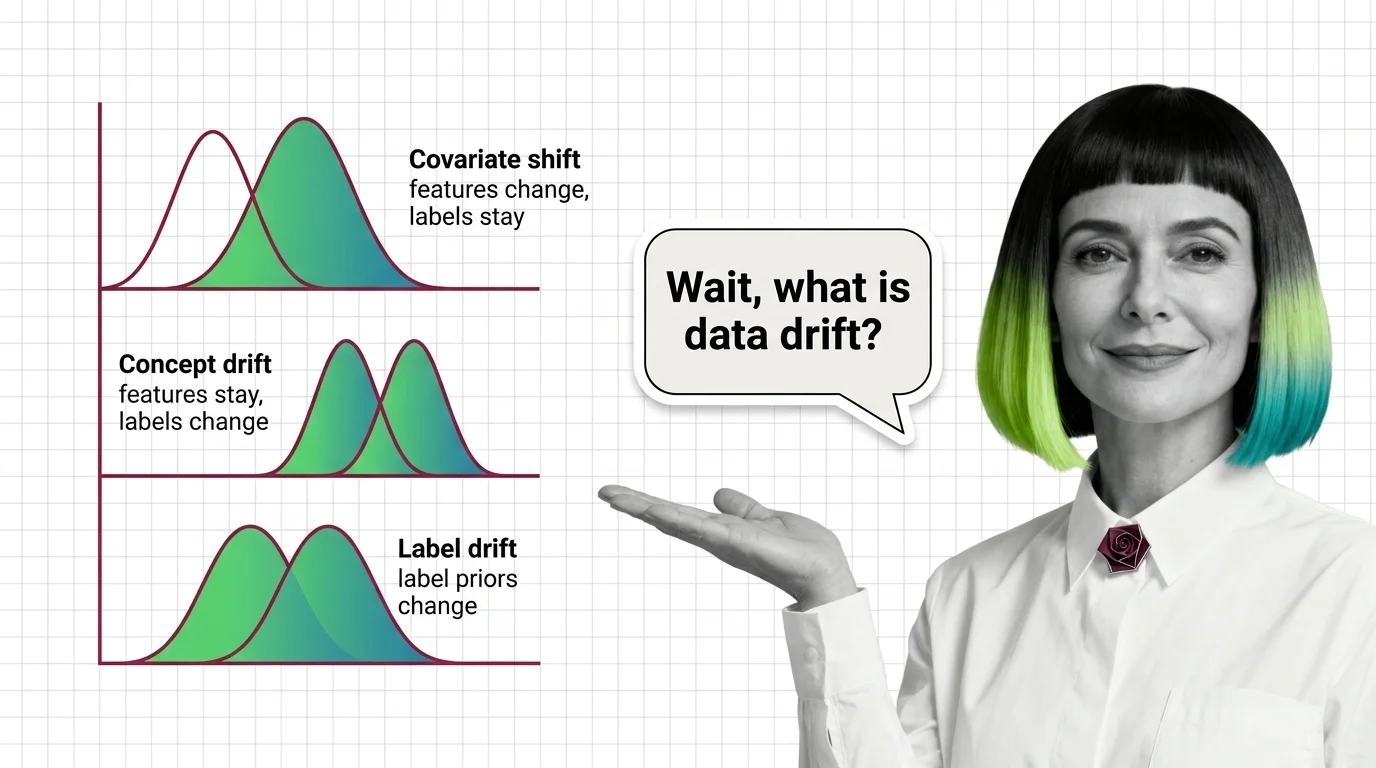
Data drift splits into three types: covariate shift P(X), concept drift P(Y|X), and label drift P(Y). KS tests and PSI catch each before accuracy drops.
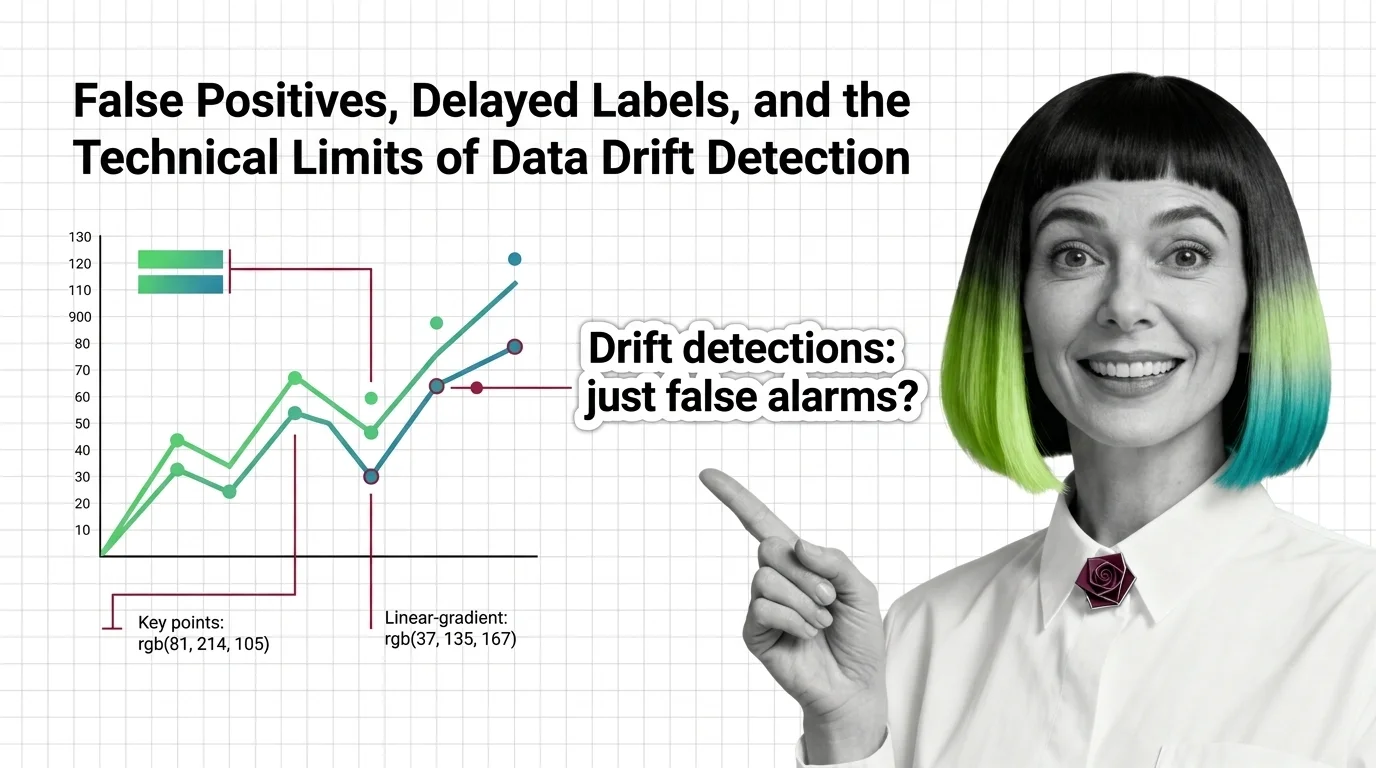
Data drift detection produces false alarms because statistical tests over-fire on large samples, while performance loss can hide behind delayed labels.
These guides show you how to catch drift before users do: instrumenting a monitoring pipeline, choosing detection thresholds that fire on real shifts rather than noise, and deciding when a drift signal should actually trigger a retrain.
Tools & techniques
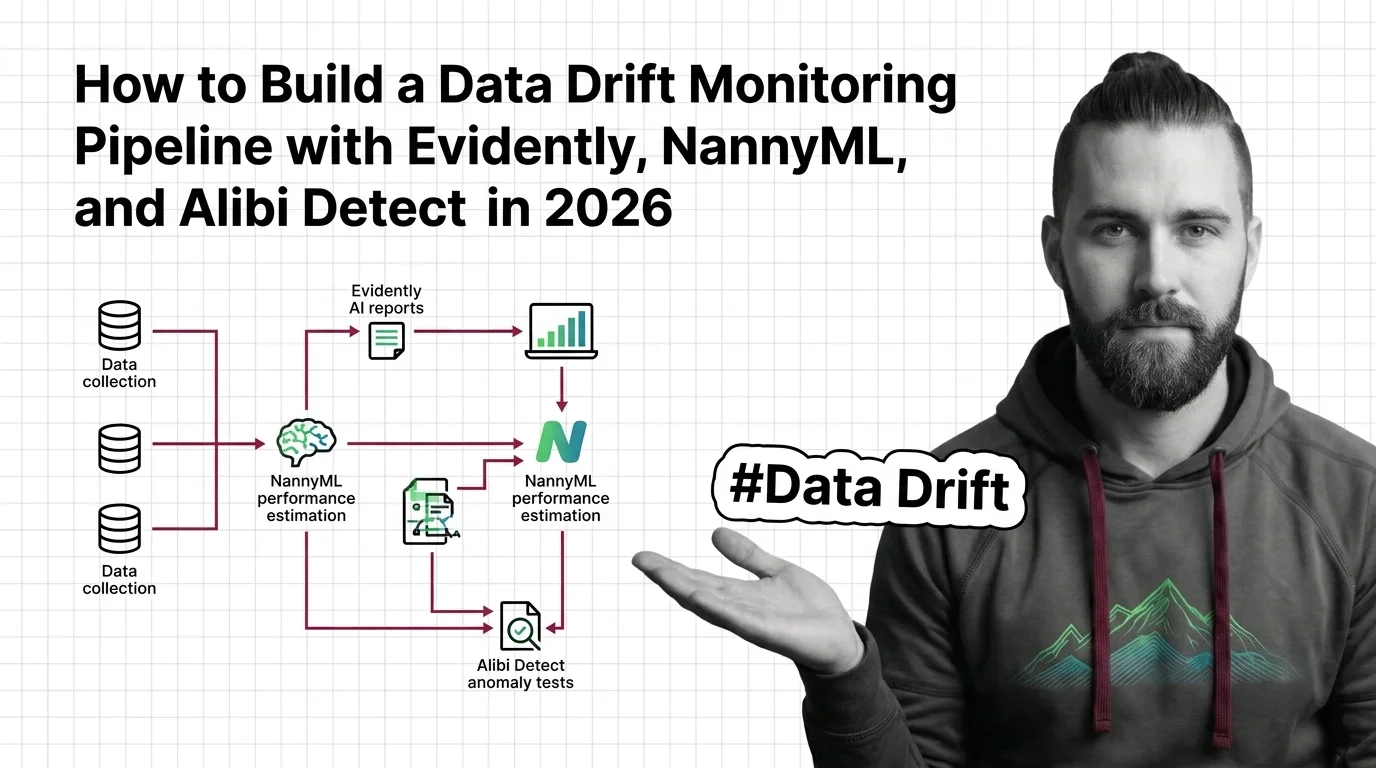
A data drift monitoring pipeline pairs Evidently's drift tests with NannyML's label-free performance estimates to catch model decay before accuracy drops.
Drift monitoring is consolidating fast, with separate observability tools merging detection, alerting, and root-cause analysis into single platforms. Following these shifts tells you which approaches to production monitoring are settling into durable, standard practice.
Models & benchmarks
Updated August 2026
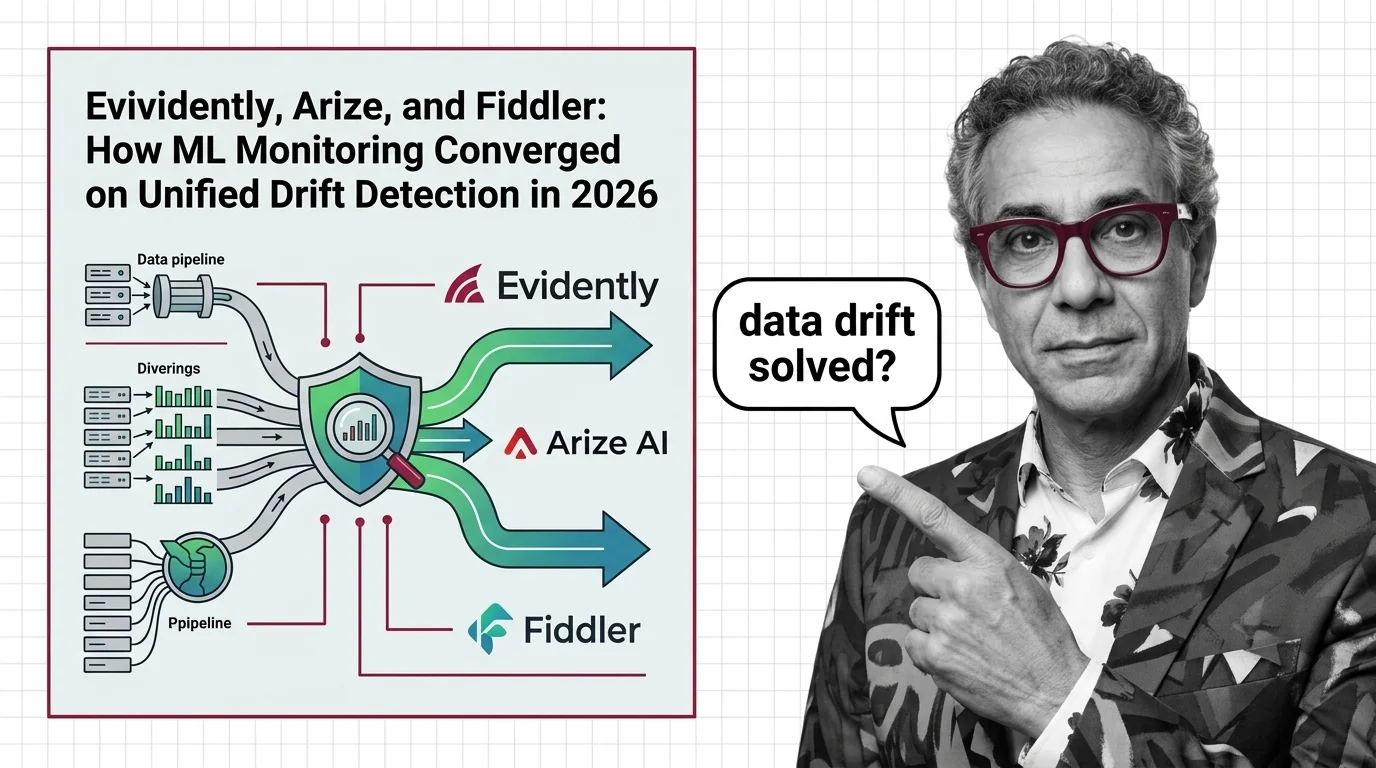
ML monitoring vendors Evidently, Arize, and Fiddler now ship tabular drift detection and LLM observability in one platform, ending the dedicated-tool era.
Before you trust a deployed model, consider what drift hides: a system that fails silently, degrading decisions about credit, health, or hiring long before anyone notices, and a real question of who is accountable when no alarm ever sounds.
Risks & metrics
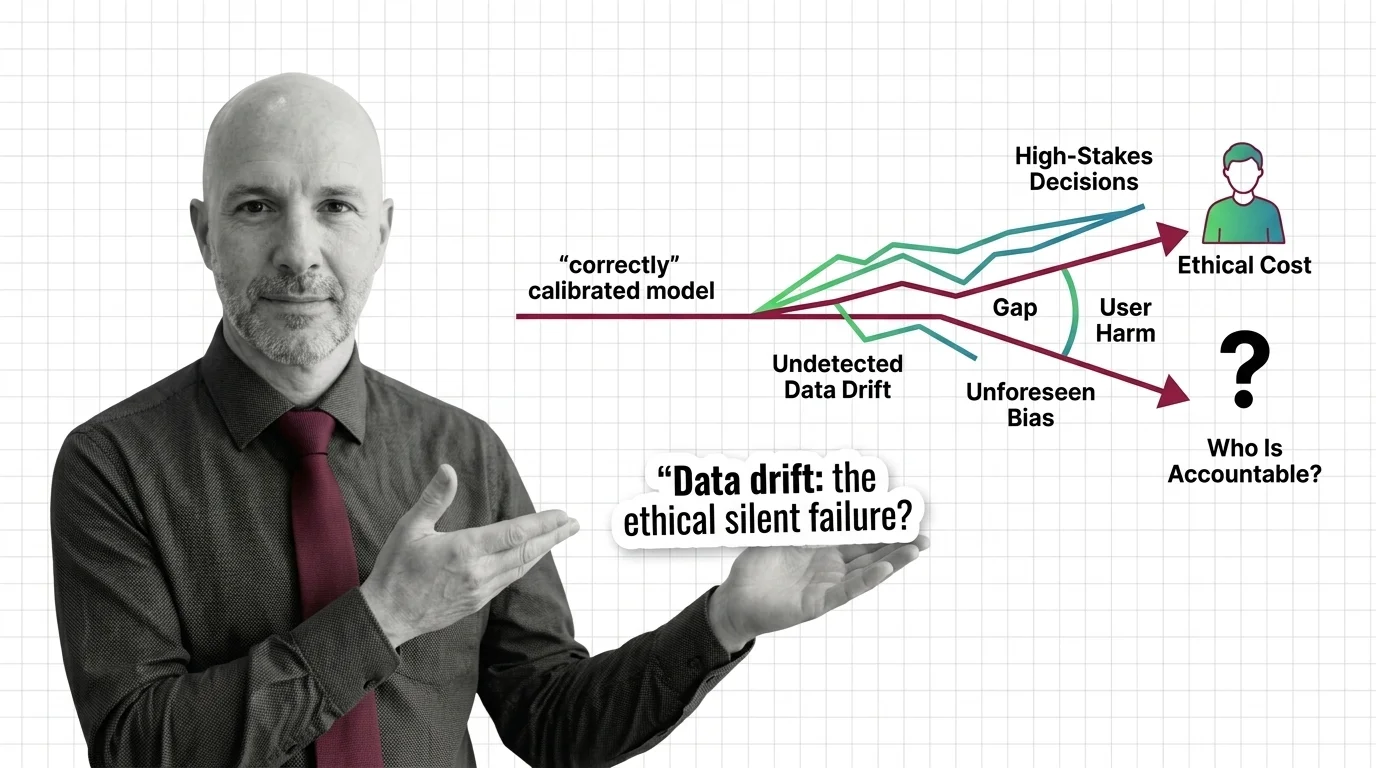
Undetected data drift makes models fail silently, emitting confident wrong predictions. When harm follows, no single party is clearly accountable.