Every self-critique loop asks a language model to grade its own homework — constitutional AI prompting is the pattern that makes that grading systematic rather than incidental. Instead of routing every draft past a human reviewer, the model checks its own output against a written set of principles and revises before the answer ships, which is why it sits among the reasoning frameworks in the prompt engineering theme that let a model act on more than one internal step. The catch most teams discover late: the loop is only as reliable as the principles it was handed, and who wrote them.
A critique-revision loop only replaces human review if the principle set is genuinely testable — a schema of {id, statement, violation_example, revision_guidance} works, a paragraph of good intentions does not.
Before you touch the pattern, understand self-refine, self-consistency, and prompt chaining — constitutional AI prompting adapts a training-time technique into a runtime loop built on top of them.
In production, pin the tooling version you build on; the pipeline this theme documents locks DSPy at 3.2.1 because the newer beta breaks the adapter code most critique loops depend on.
The loop only ever proves an output matches the stated principles — it says nothing about who wrote them, or whether they are the right ones.
The constitutional AI prompting reading path: mechanism first, control question last
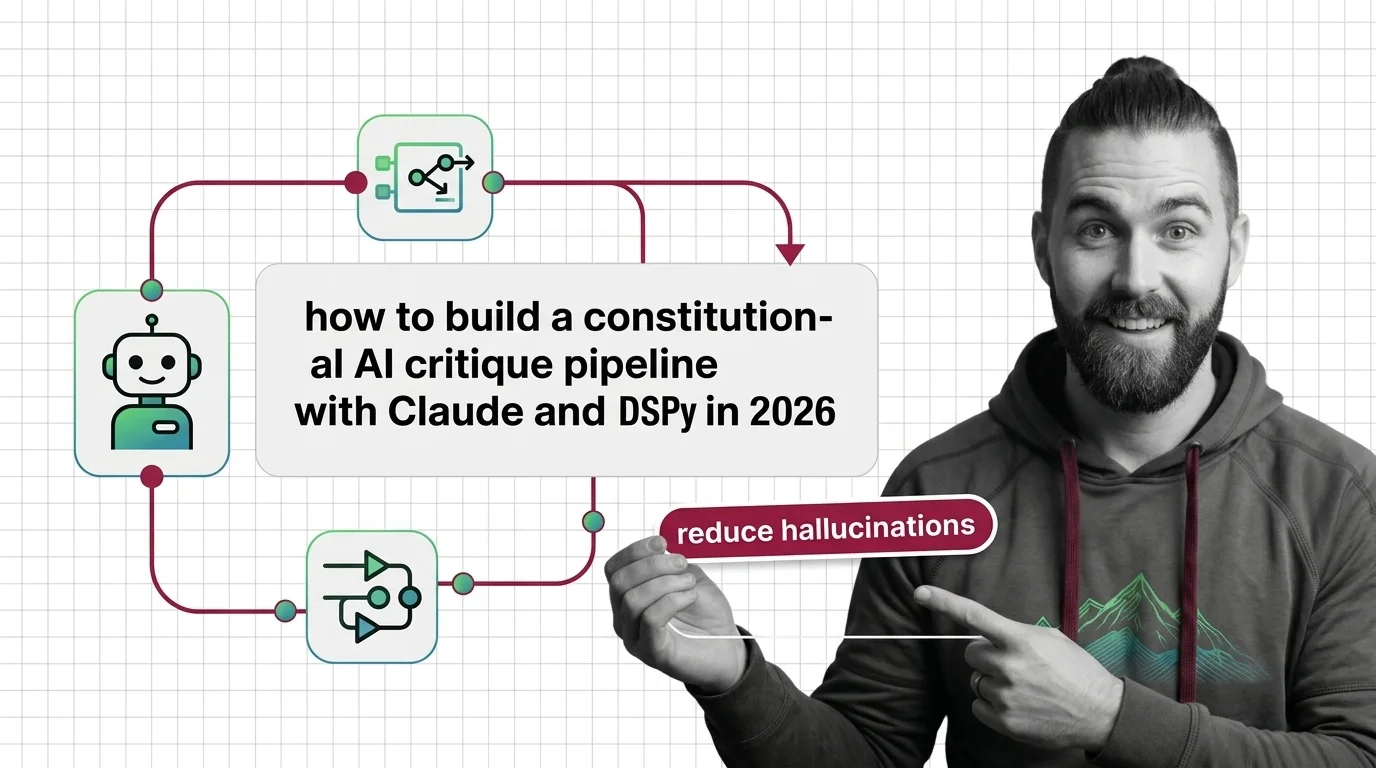
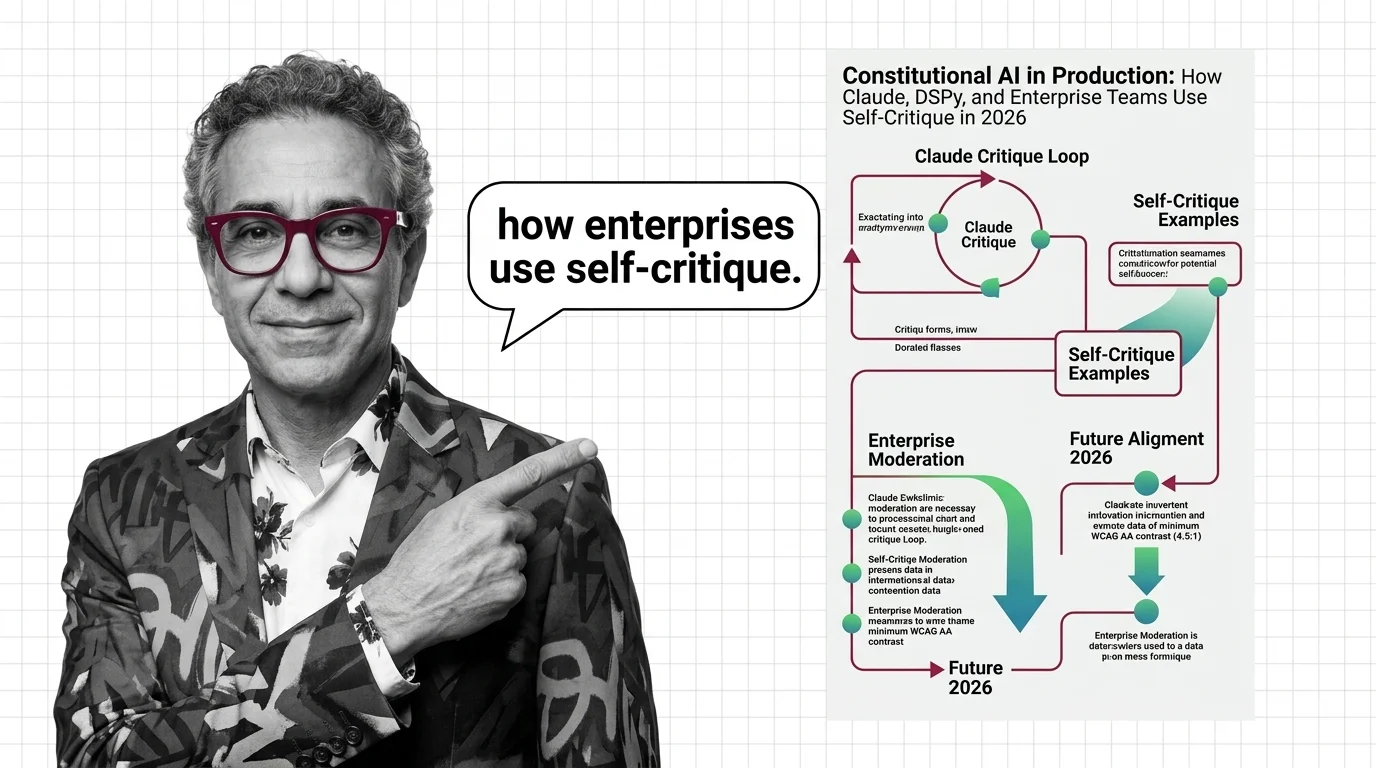
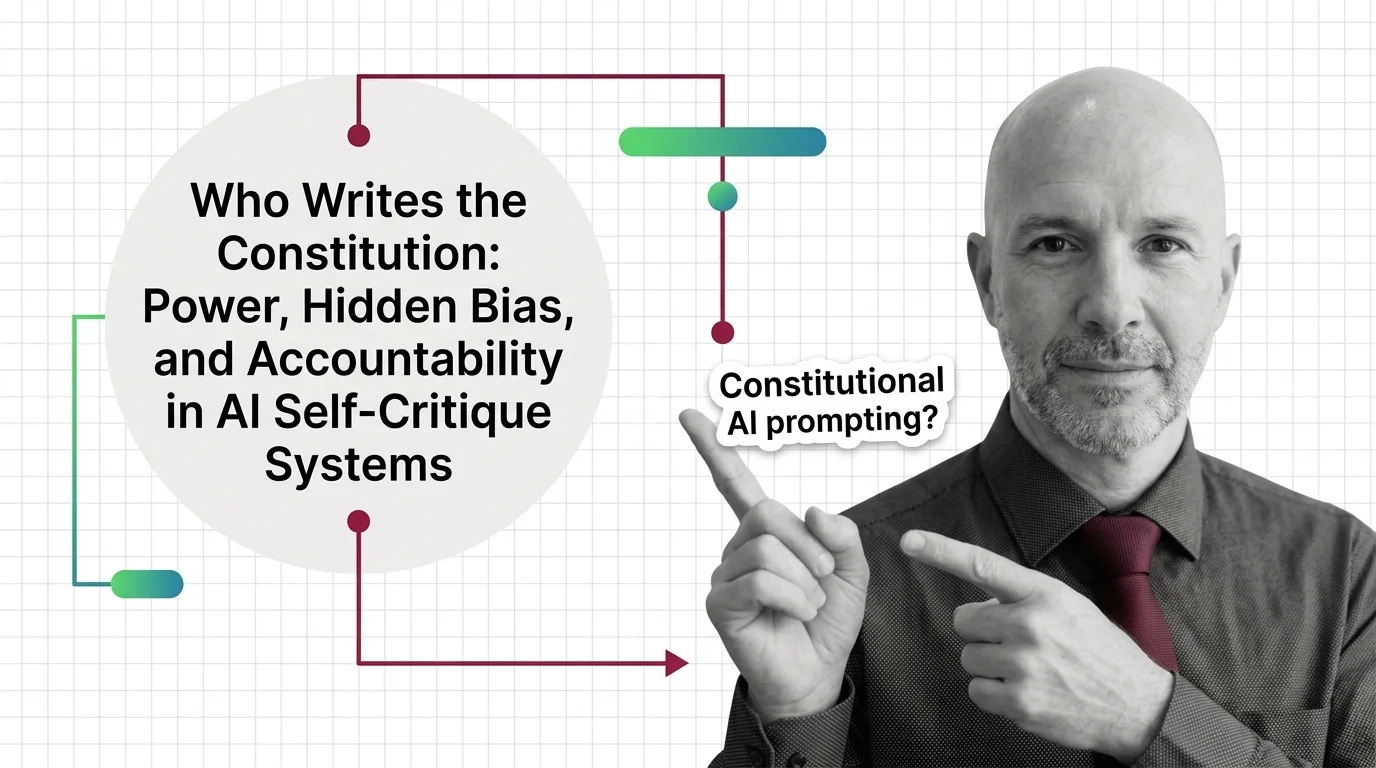
Once the mechanism is settled, the Claude and DSPy critique pipeline guide turns it into a deployable spec — one principle per critique call, a hard iteration cap, a pinned framework version. Constitutional AI in production tracks how fast that spec became embedded infrastructure rather than a research demo. Close with who writes the constitution — the loop only ever checks conformance to a principle set, and this is the piece that asks who controls that set and on whose authority.
A critique loop is only as accountable as the principles it was built to enforce.
How constitutional AI prompting differs from ReAct, tree of thoughts, and domain-specific prompting
Three techniques in this theme all put a model through more than one internal step, which makes them easy to conflate.
It is not ReAct. ReAct interleaves reasoning with tool calls at runtime, deciding the next external action from what the last tool returned. A critique-revision loop never touches a tool — it evaluates a draft the model already wrote against a written principle set and asks for a rewrite. One decides what to do next; the other grades what was already said.
It is not tree of thoughts. Tree of thoughts explores several candidate solutions in parallel and scores them against each other to pick a branch. A critique loop keeps exactly one draft on the table — it isn’t comparing alternatives, it’s checking a single output against a fixed rubric and revising in place.
It is not domain-specific prompting. Domain-specific prompting shapes what the model produces before generation, by injecting vocabulary, role, and constraints for a field. Constitutional AI prompting gates what already came out, after generation, against principles that say nothing about domain expertise — a legal-domain prompt and a critique loop solve different halves of the same pipeline.
Common questions about constitutional AI prompting
Q: Do I need a full critique-revision loop, or is a single validation pass enough?
A: A single pass only checks one dimension; a loop lets the model catch what the first check missed, revise, and re-check — but cap it. The Claude and DSPy pipeline guide hard-caps iterations at two or three, then routes to human review instead of looping indefinitely.
Q: Why does a critique loop sometimes approve an output that is still factually wrong?
A: Because the loop only checks conformance to the stated principles, not factual accuracy — a constitution about tone and safety says nothing about whether a claim is true. Who writes the constitution traces what a principle set can and cannot catch, and who answers for what it misses.
Q: Is constitutional AI prompting still a research technique, or is it production-ready?
A: It moved from Anthropic’s training-time research into runtime infrastructure in about eighteen months — frameworks now embed critique loops natively rather than bolting them on afterward. Constitutional AI in production maps how enterprise teams adopted the pattern.
Q: What should I understand before writing a constitution for my own pipeline?
A: Self-refine, self-consistency, and prompt chaining — constitutional AI prompting adapts a training-time technique into a runtime pattern built on top of those three. The prerequisites explainer maps the concepts and where the loop’s self-correction stops working.
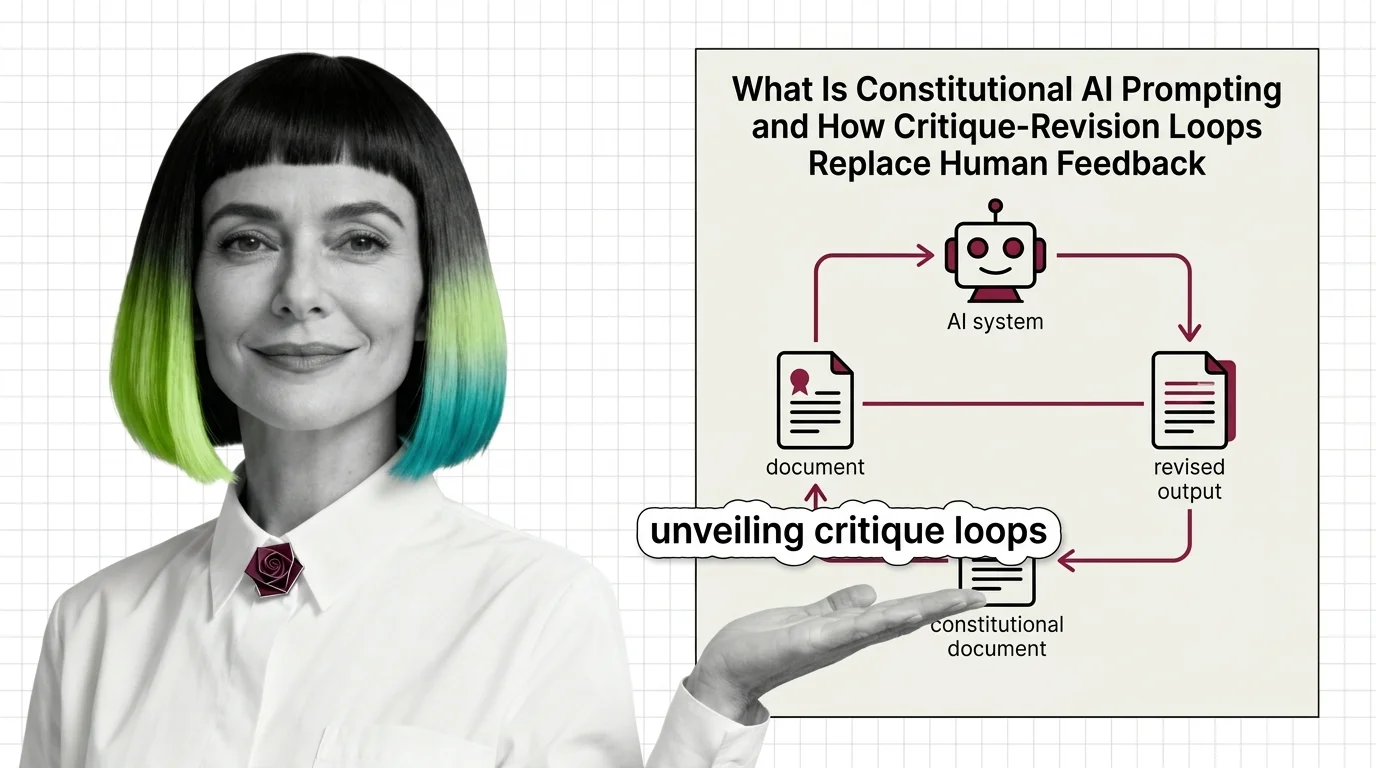
Constitutional AI prompting replaces human feedback with structured self-critique loops — the model evaluates its own output against a defined set of principles and revises accordingly. The quality of outputs depends entirely on which principles are specified, and by whom.
Constitutional AI prompting is a critique-revision loop: a model checks its own outputs against explicit principles, then revises — no human labeling required.
Constitutional AI prompting adapts Anthropic's CAI training method for runtime self-critique. Understand prerequisites and why self-correction has hard limits.
2
Build with Constitutional AI Prompting
Constitutional AI prompting gives you a repeatable critique-revision loop you can wire into any LLM pipeline to gate output quality without manual review. The main trade-off is prompt overhead — each critique pass adds latency and cost.
Constitutional AI prompting builds critique-revise loops via API, no RLHF training needed. Build a Claude + DSPy 3.2.1 pipeline with this spec-first guide.
3
What's Changing in 2026
Constitutional AI prompting has moved from a research concept into production tooling, with frameworks now embedding critique loops natively. As the approach matures, understanding how principle sets evolve — and who controls them — is becoming a competitive differentiator.
Constitutional AI moved from Anthropic's lab to enterprise stacks. Claude and DSPy embed self-critique at training and runtime, reshaping who owns quality.
4
Risks and Considerations
Constitutional AI prompting shifts responsibility to the design of the principle set — but principle sets encode assumptions that may be invisible, incomplete, or politically contested. Before deploying, audit whose values the constitution actually reflects.