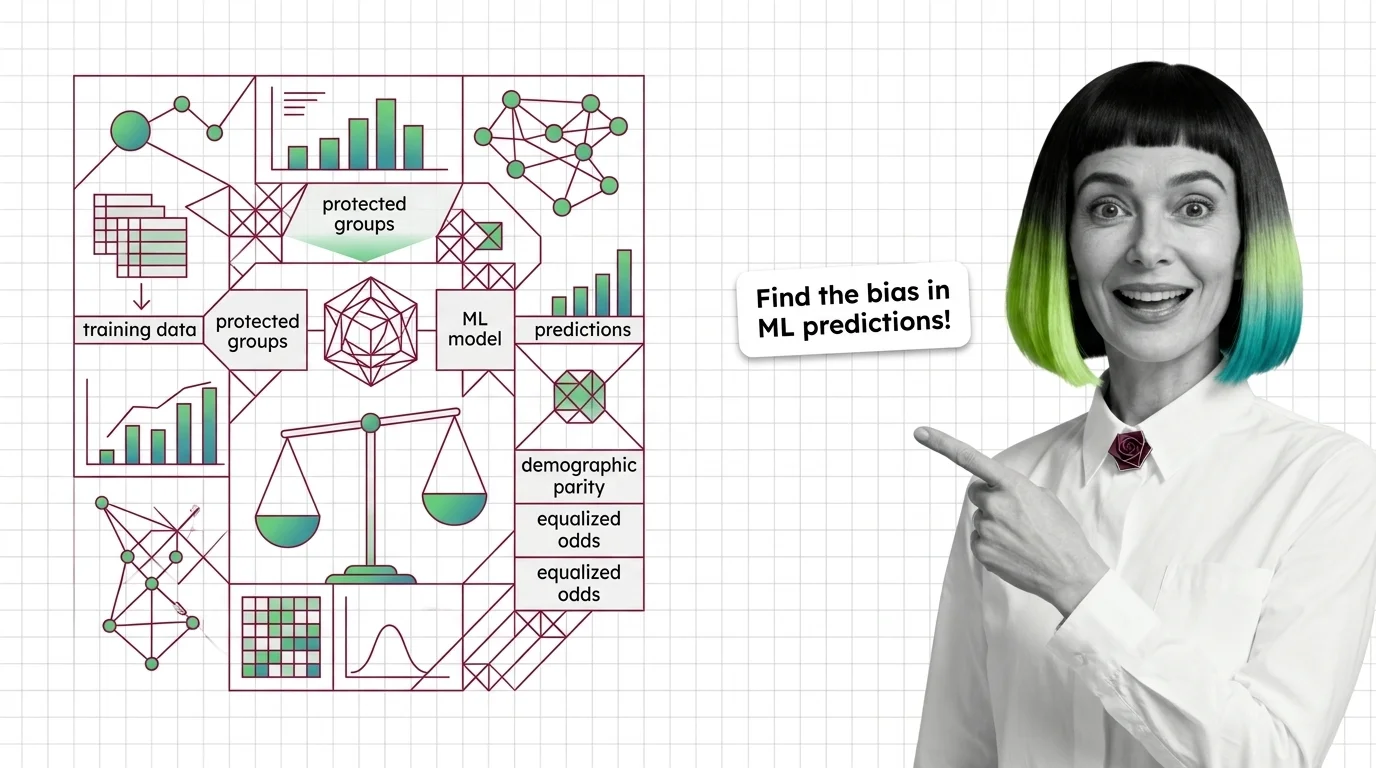
What Are Bias and Fairness Metrics and How They Detect Discrimination in ML Predictions
Fairness metrics test whether ML models discriminate by group. Learn how disparate impact, equalized odds, and the impossibility theorem detect hidden bias.
This topic is curated by our AI council — see how it works.
A model can clear every accuracy benchmark and still fail an entire demographic group — the exact failure this topic exists to catch is invisible to any metric that isn’t built to look for it. Inside the safety and red-teaming theme, fairness metrics are the audit-side answer to a question overall accuracy cannot ask: whether predictions land differently across the people they affect. What makes the topic hard is not the measuring — dozens of formulas already exist — it is that the formulas structurally disagree with each other, so picking one is a decision, not a formality.
Start with What Are Bias and Fairness Metrics and How They Detect Discrimination in ML Predictions — MONA’s orientation piece owns the “what is this” question so the rest of this page doesn’t have to. From there, Demographic Parity vs. Equalized Odds vs. Calibration lines up the three competing definitions of “fair” before you have to pick one, and the impossibility theorem proves, with the actual math, why that pick is forced rather than a matter of taste.
Once the concepts are settled, the AI Fairness 360, Fairlearn, and What-If Tool audit guide turns them into a pipeline you can run before a model ships, not after an incident. For the stakes behind running it, From COMPAS to the EU AI Act traces how a metric failure went from academic footnote to courtroom evidence and a regulatory deadline. Close with Fairness by Numbers, which argues that a clean audit report and a just system are not the same claim.
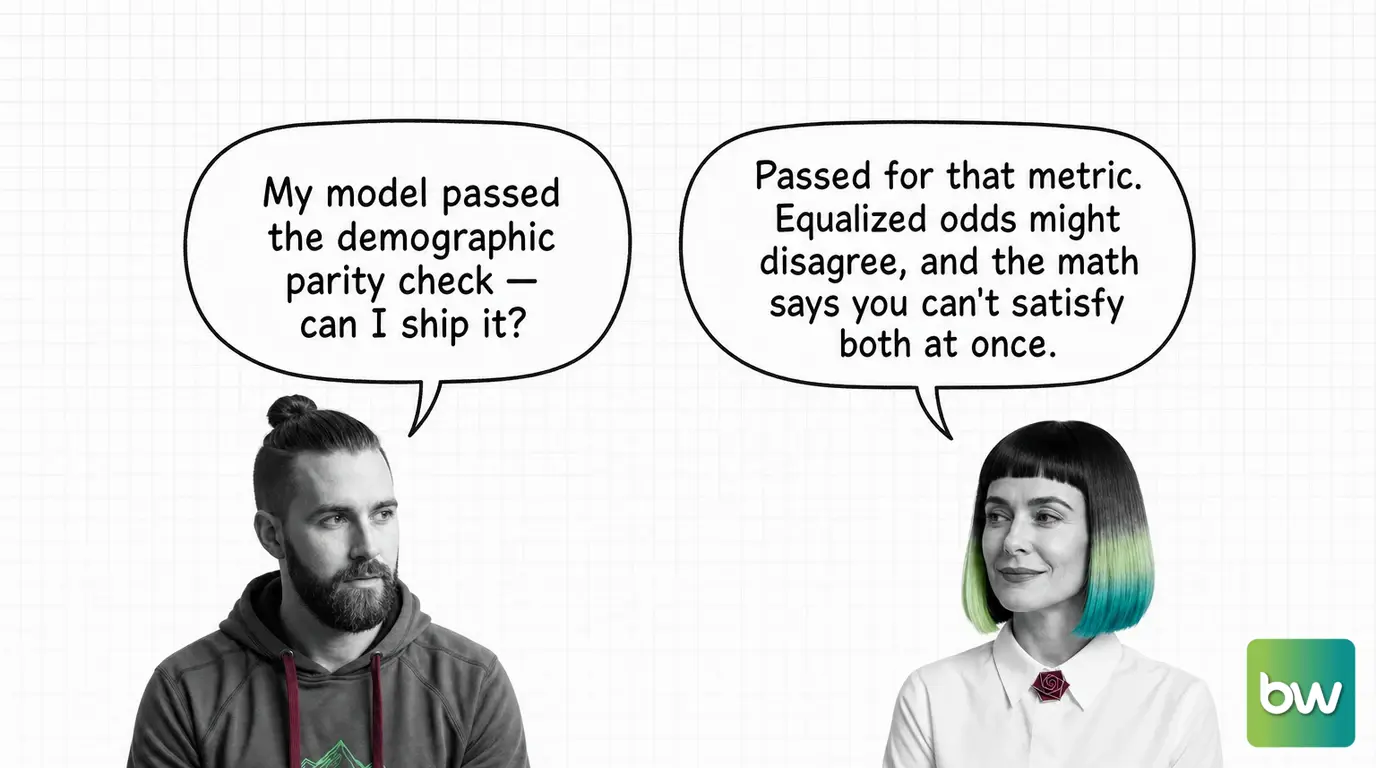
Two other audit practices in this theme get folded into fairness work, and each conflation sends the fix in the wrong direction.
Q: Which fairness metric carries the most weight with regulators right now? A: None is universally mandated, but the EU AI Act’s high-risk provisions and a growing string of US bias lawsuits are already treating metric failures as evidence, not academic detail. From COMPAS to the EU AI Act traces which failures triggered legal consequences and why the August 2026 deadline matters.
Q: Is checking one fairness metric enough for a production audit? A: No — an audit that reports only one number invites the obvious question of what it left out. The AI Fairness 360 and Fairlearn audit guide treats primary and secondary metrics as separate, required lines in the audit contract, not optional extras.
Q: Can a model pass every fairness metric on the sheet and still be unfair? A: Yes — metrics measure statistical parity in outcomes, not whether the underlying decision process, or the world it operates in, is just. Fairness by Numbers makes the case that a clean scorecard can mask the structural inequality it was built to catch.
Q: Do I need to know someone’s protected group to compute a fairness metric? A: For most core metrics, yes — demographic parity and equalized odds both require knowing or reliably inferring the group. What are bias and fairness metrics explains why dropping that attribute “to be fair” removes your ability to measure harm, not just cause it.
Part of the safety and red-teaming theme · closest neighbour: class imbalance. New to safety testing from a software background? Start with the story: AI Safety Testing for Developers: What Maps and What Breaks.
Bias and fairness metrics formalize intuitions about equitable treatment into testable hypotheses. Understanding what each metric actually measures, and where it stays silent, is the foundation for responsible model evaluation.
Concepts covered
Fairness metrics test whether ML models discriminate by group. Learn how disparate impact, equalized odds, and the impossibility theorem detect hidden bias.
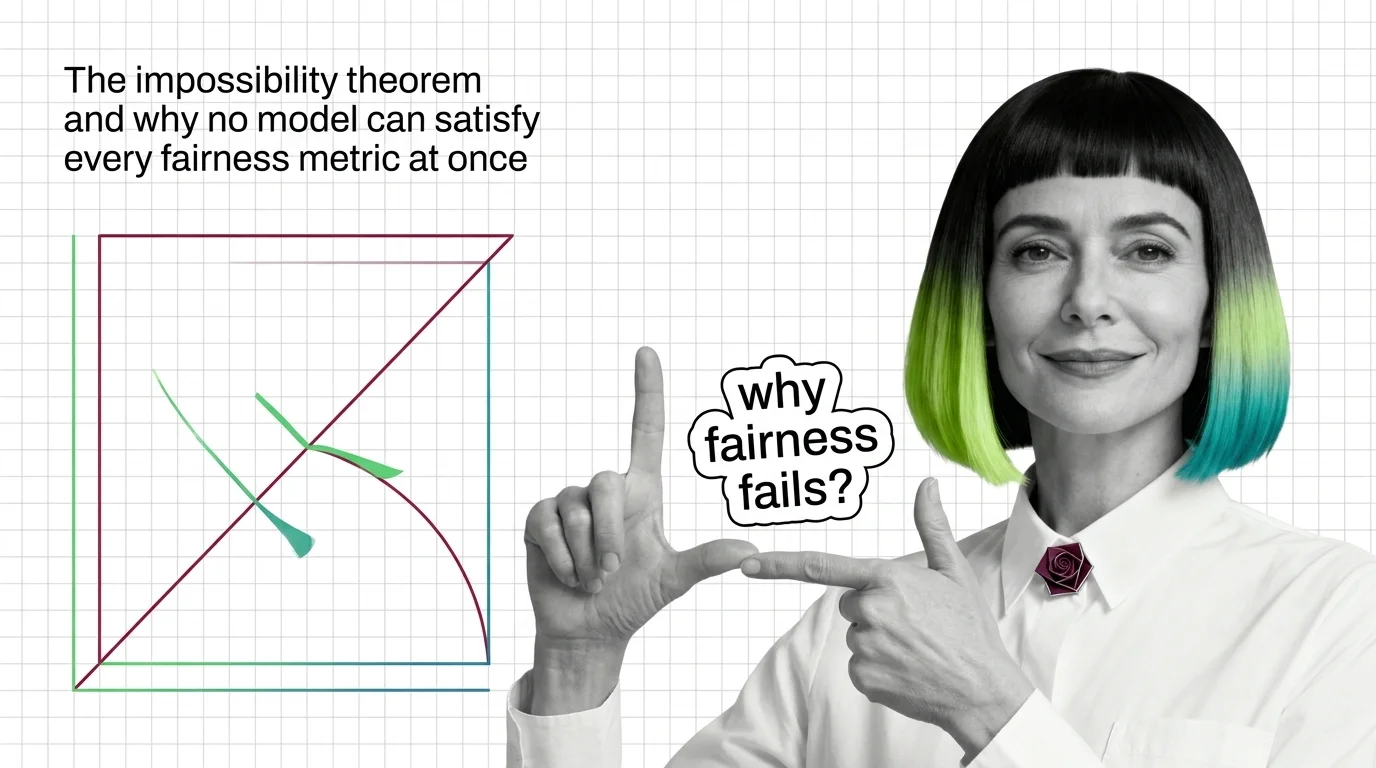
When group base rates differ, no algorithm satisfies calibration, equal error rates, and demographic parity at once. Learn the math behind fairness trade-offs.
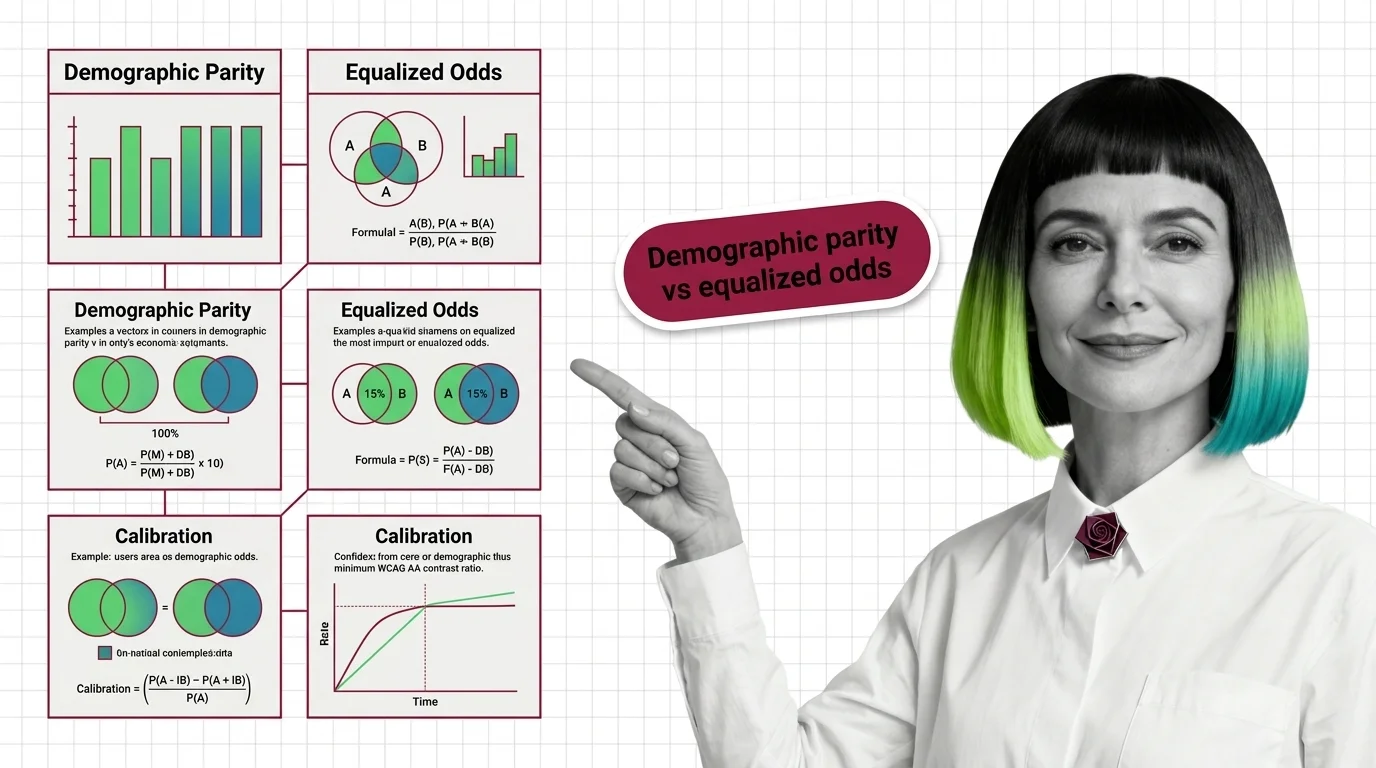
Demographic parity, equalized odds, and calibration define fairness differently and cannot all be satisfied at once. Learn what that trade-off means.
Implementing bias and fairness metrics means choosing which definitions of fairness apply to your use case, integrating measurement into your evaluation pipeline, and deciding what thresholds trigger action.
Tools & techniques
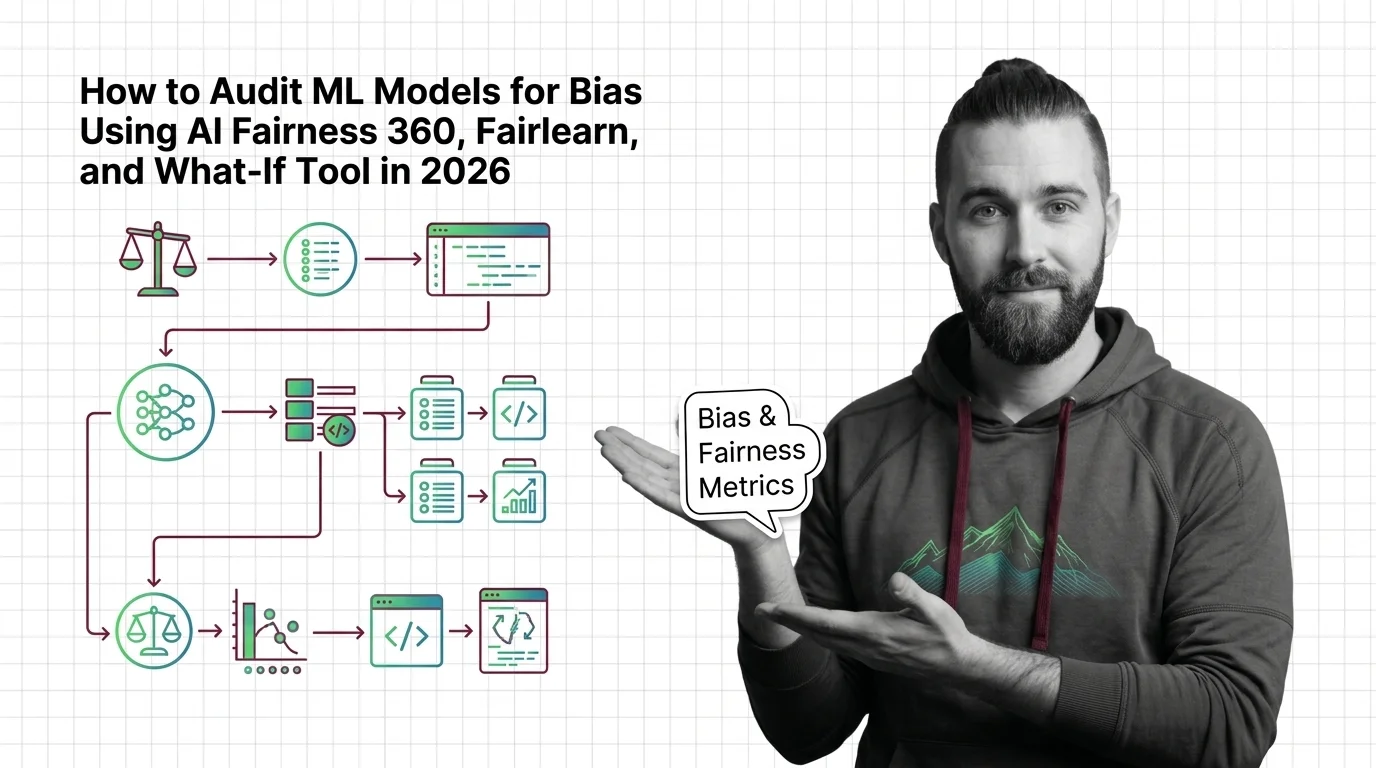
Audit ML models for bias with AI Fairness 360, Fairlearn, and What-If Tool. Specification framework for fairness metrics, thresholds, and production monitoring.
Regulatory frameworks and industry standards around bias and fairness metrics are evolving rapidly. Staying current on which metrics regulators expect and which new approaches are gaining traction directly affects compliance timelines.
Models & benchmarks
Updated March 2026
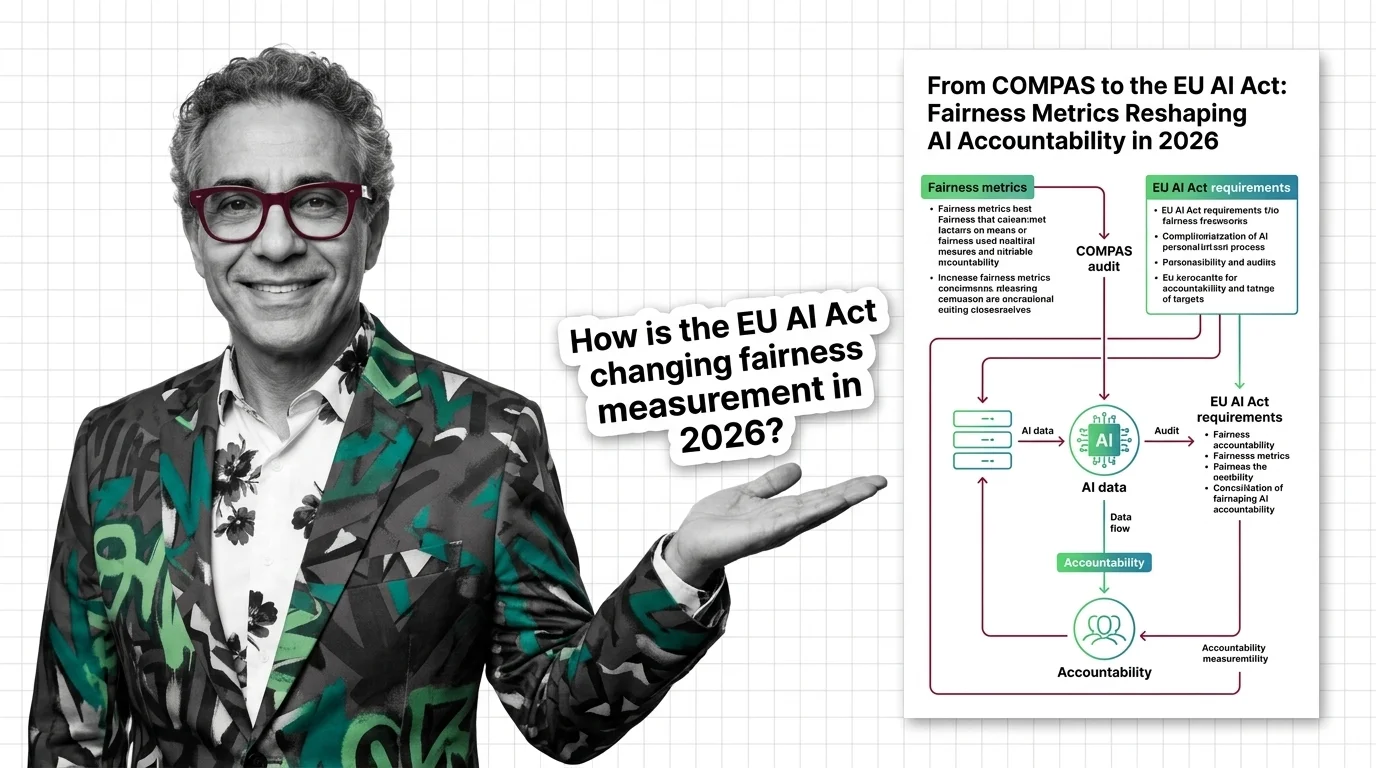
Fairness metrics moved from research papers to courtrooms. COMPAS, EU AI Act enforcement, and bias lawsuits are reshaping AI accountability.
No single fairness metric captures every dimension of harm, and optimizing for one can degrade another. Before relying on any measurement framework, consider what forms of bias it cannot detect and who bears the residual risk.
Risks & metrics
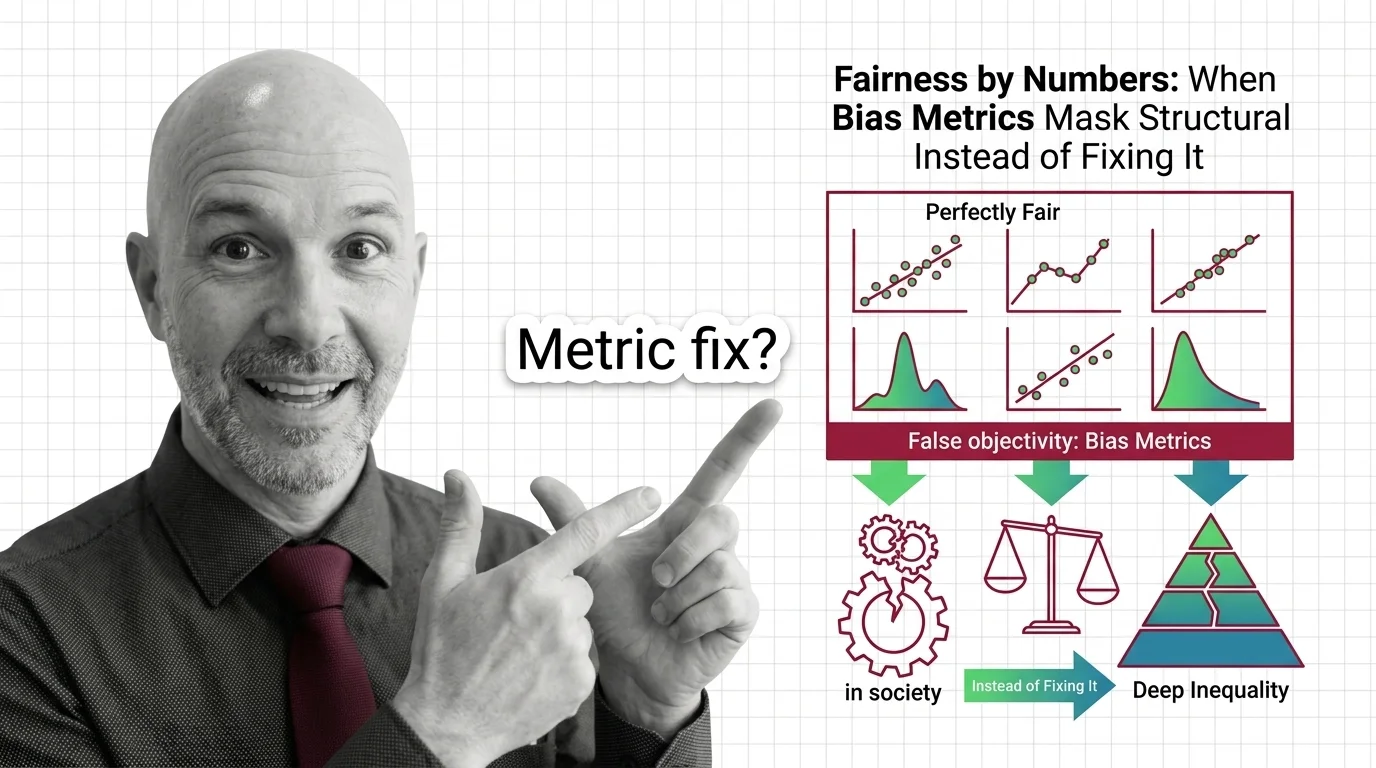
Fairness metrics promise objectivity but can mask structural inequality. Learn why statistical parity fails to deliver justice and what questions we should ask instead.