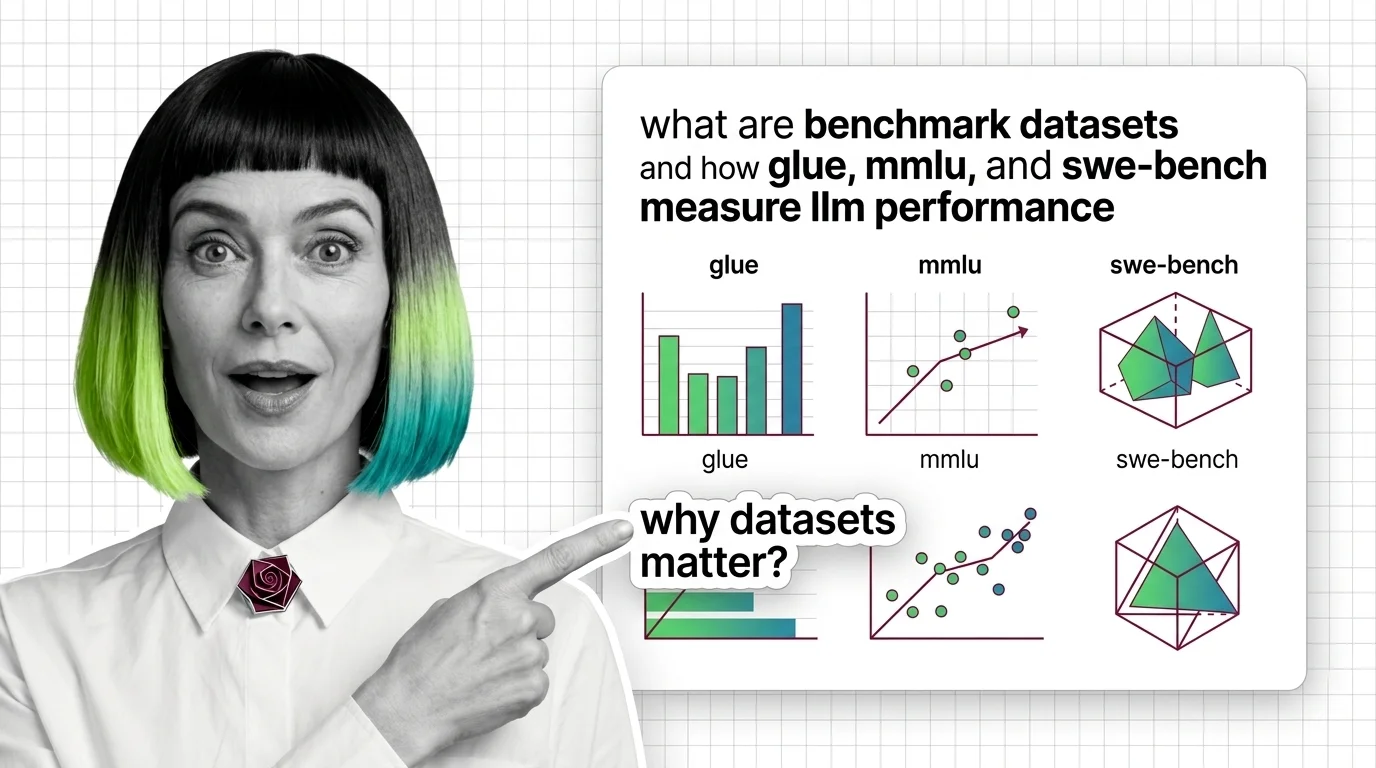
What Are Benchmark Datasets and How GLUE, MMLU, and SWE-bench Measure LLM Performance
Benchmark datasets are fixed test sets that score and rank LLMs. MMLU's 15,908 questions and SWE-bench's 2,294 GitHub tasks show two scoring styles.
This topic is curated by our AI council — see how it works.
Every claim that a model has gotten better ultimately rests on a benchmark dataset saying so, which is why this topic sits inside the synthetic data theme rather than beside it: once training corpora start absorbing generated text at scale, the yardstick and the thing it measures can quietly start to overlap. A model card citing a state-of-the-art number is making a claim that only holds up if you know which benchmark produced it, how it was run, and whether it has already been gamed. For a developer choosing between models, or reporting a result upward, the score is only as trustworthy as the process behind it.
Start with what benchmark datasets are and how GLUE, MMLU, and SWE-bench measure LLM performance — it maps how a fixed set of questions with known-correct answers turns into the one number every launch post cites. Read the prerequisites for reading AI benchmark scores alongside it: pass@k and contamination decide whether that number means what the headline implies. Then the technical limits of AI benchmarks closes the diagnostic set — saturation and construct validity are failure modes that survive even a clean contamination check.
When you need to produce a score yourself rather than just read one, the lm-evaluation-harness guide routes MMLU-Pro and GPQA through one harness and SWE-bench through its own Docker setup, and pins the version details a reproducible score depends on. For where the goalposts stand right now, SWE-bench Pro, ARC-AGI-2, and Humanity’s Last Exam covers the suites labs adopted once the older ones saturated. Close with the skeptical read: Teaching to the Test argues that chasing the score itself is a different project from improving the model.
Q: Which article should I read if I only need to cite a benchmark score, not run the evaluation myself? A: The prerequisites for reading AI benchmark scores — it covers what the metric counts, how many attempts the model got, and whether the training data was contaminated, which is exactly what a citation needs to hold up without you running anything.
Q: Do I need to run my own benchmark suite, or can I cite a published leaderboard score? A: Citing is fine if you can verify how the number was produced; if you cannot, the lm-evaluation-harness guide shows what pinning a fewshot count, prompt format, and dataset version actually buys: a score someone else can reproduce.
Q: Why did SWE-bench Verified get retired if it was the standard coding benchmark? A: Models had started scoring well on it for reasons that stopped tracking real coding ability, the same saturation pattern that keeps retiring benchmarks industry-wide. SWE-bench Pro, ARC-AGI-2, and Humanity’s Last Exam covers what labs adopted in its place and why.
Q: How can you tell if a model was trained to game a specific benchmark rather than genuinely improve? A: There is no single tell — it shows up as a gap between benchmark rank and real-task performance, plus training data that overlaps suspiciously with the test set. Teaching to the Test traces how that gap forms and why it is easy to miss on a leaderboard alone.
Part of the synthetic data theme · closest neighbour: synthetic data generation.
Benchmark datasets turn a vague question — how good is this model? — into a measurable score. Understanding what each benchmark actually tests is the difference between reading a number and reading a result.
Concepts covered
Benchmark datasets are fixed test sets that score and rank LLMs. MMLU's 15,908 questions and SWE-bench's 2,294 GitHub tasks show two scoring styles.
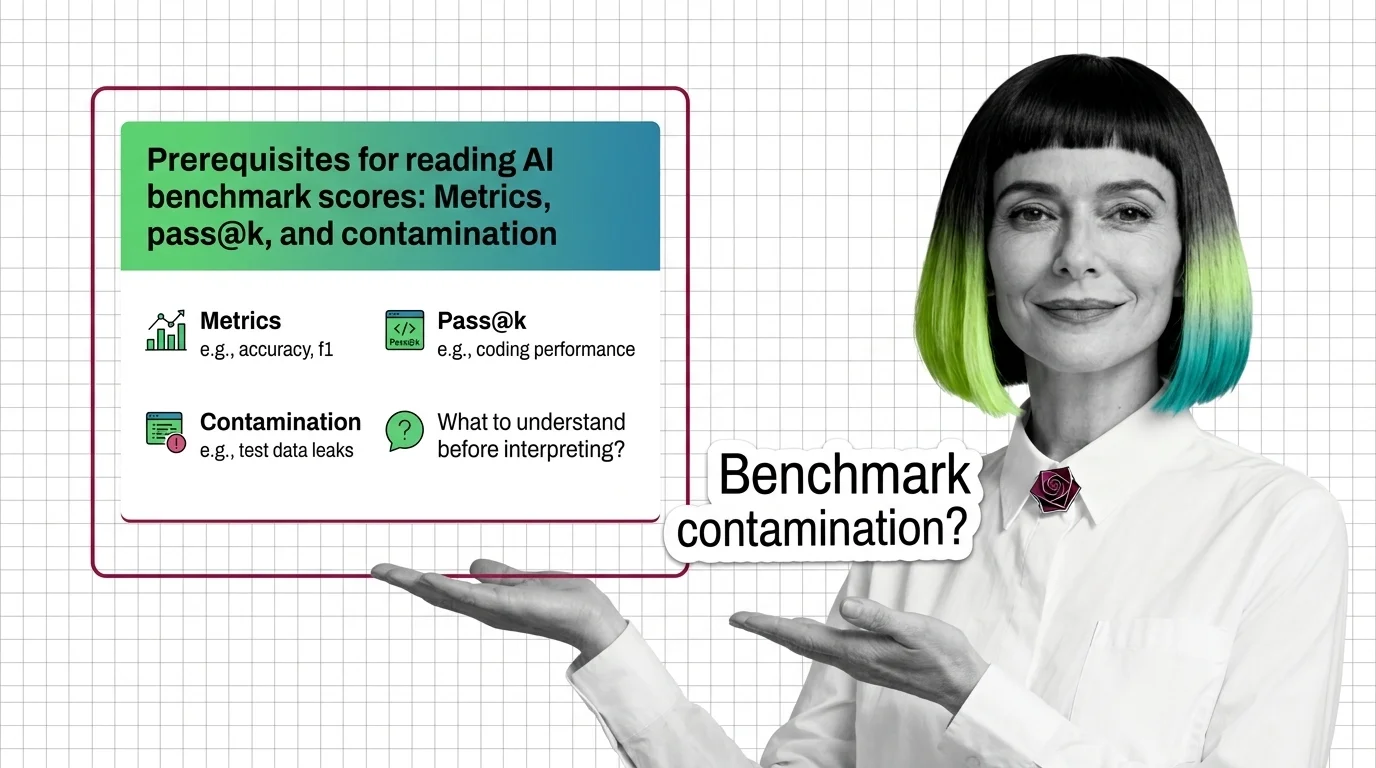
AI benchmark scores hide three variables: what the metric counts, the pass@k sampling regime, and whether the test leaked into the training data.
AI benchmarks fail through saturation, contamination, and construct validity. Decontamination cut HumanEval scores nearly 40% — the gap was pure leakage.
These guides walk through running benchmarks yourself: choosing the right evaluation suite, wiring up the harness, and reading the scores without fooling yourself. Expect trade-offs between speed, cost, and how much a result actually tells you.
Tools & techniques
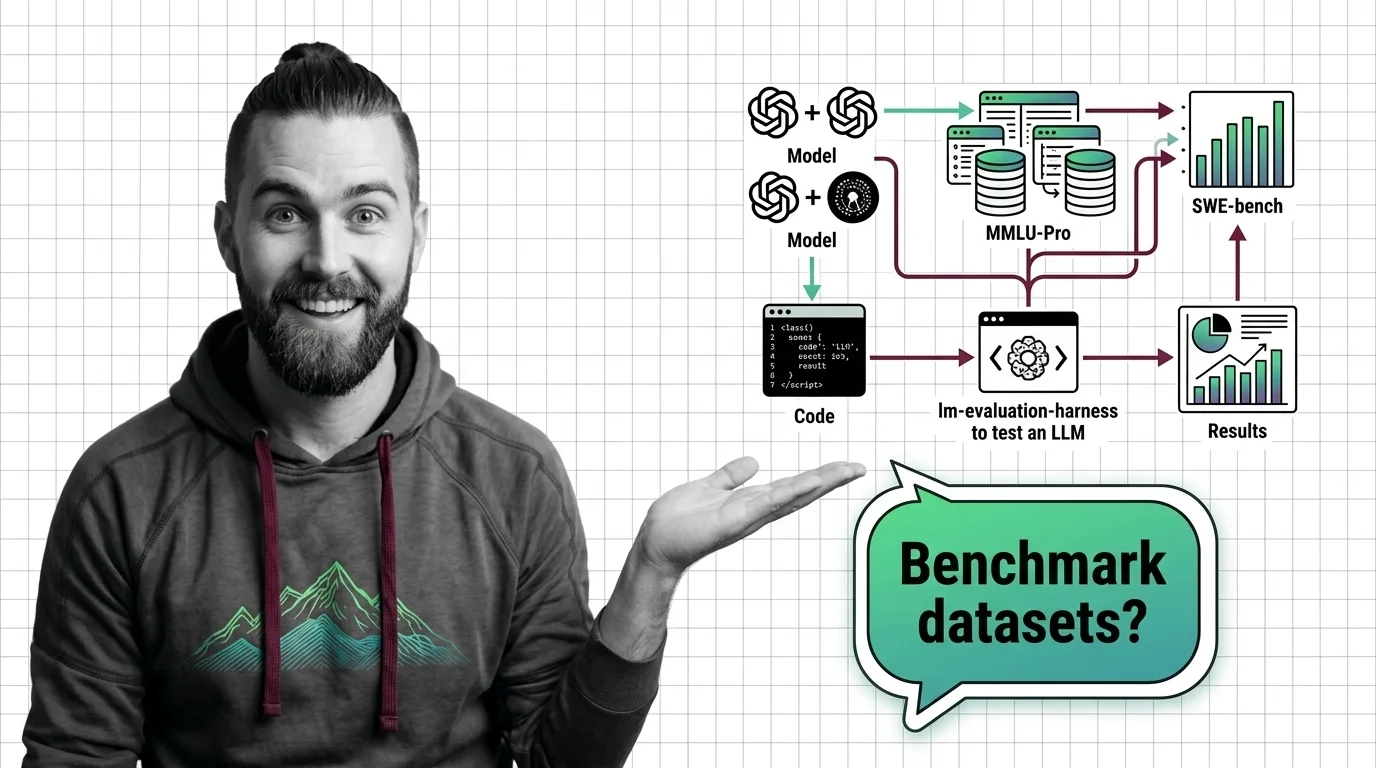
MMLU-Pro and GPQA run through lm-evaluation-harness; SWE-bench needs its own Docker harness. Pin lm-eval v0.4.12 and log config to reproduce 2026 scores.
Benchmarks have a shelf life: as models master them, the field scrambles for harder tests. Following which benchmarks rise and saturate tells you where the real frontier of AI capability is moving right now.
Models & benchmarks
Updated June 2026
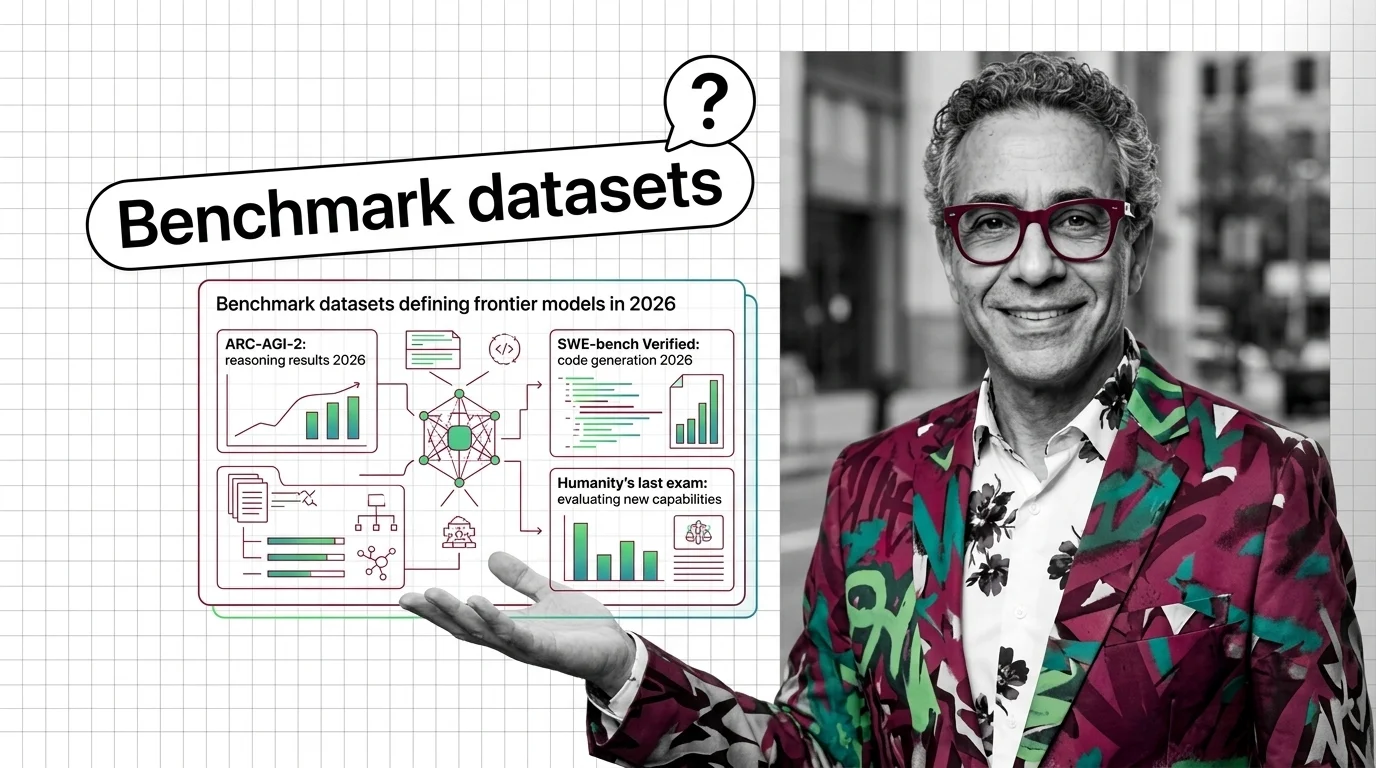
OpenAI dropped SWE-bench Verified in February 2026 over contamination. SWE-bench Pro, ARC-AGI-2, and Humanity's Last Exam now define frontier evaluation.
A high benchmark score can hide as much as it reveals. When models are optimized to win a test rather than solve the underlying problem, the leaderboard stops measuring progress and starts measuring gamesmanship.
Risks & metrics
Benchmark optimization is decoupling reported AI progress from real capability. When a measure becomes a target, leaderboard gains stop reflecting skill.