Benchmark contamination is the reason a leaderboard number can climb without the model underneath getting any better — and it sits at the center of the model evaluation theme’s integrity problem, because harnesses, judges, and arena votes all inherit whatever a compromised benchmark got wrong beneath them. For an engineer choosing between two similarly-scored models, or a team defending a procurement decision, the useful habit is asking not what the score says but what the model was already shown before it was tested. That question is what separates a number you can act on from one you are just repeating.
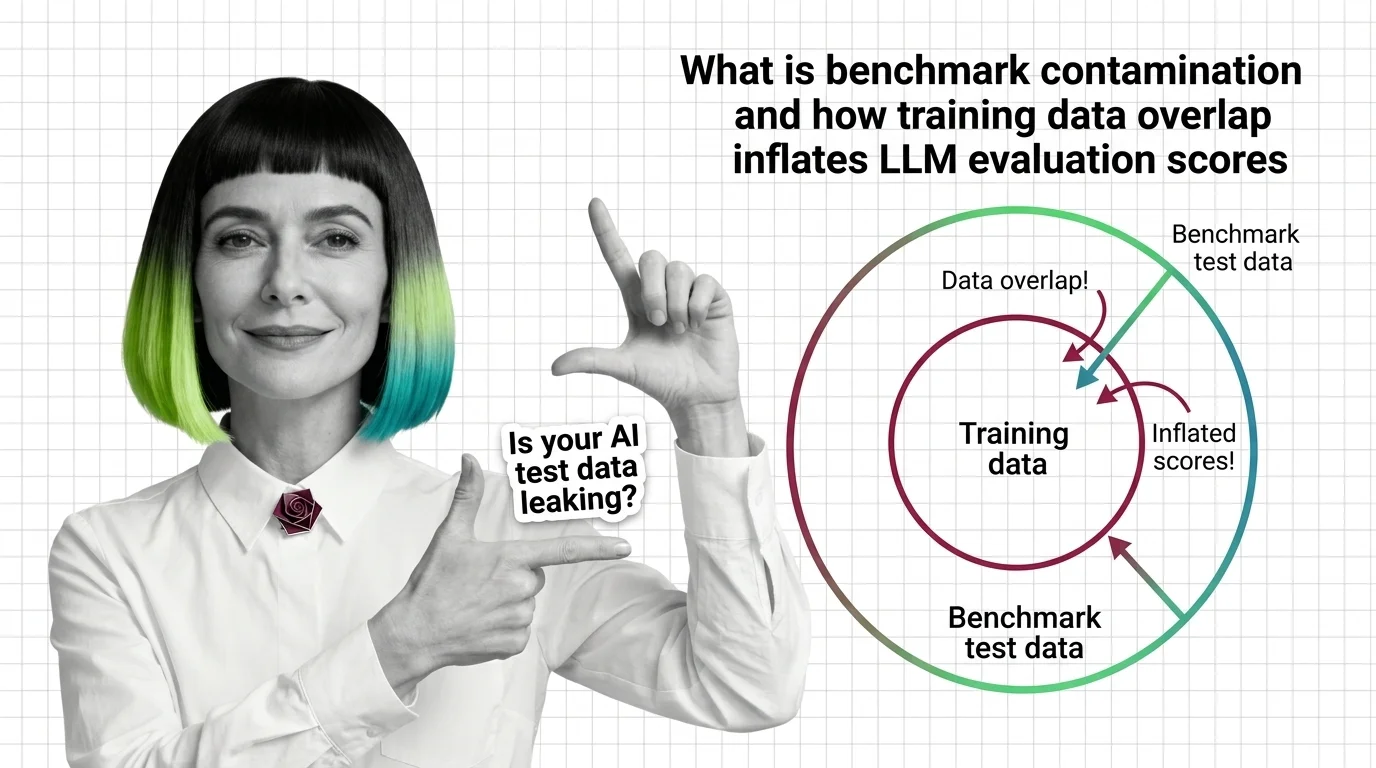
Contamination happens when benchmark test data leaks into a model’s training corpus, inflating scores without inflating real capability.
No single detection method catches everything — CoDeC and Cross-Context Verification each catch a different slice, so a real audit layers at least two.
Contamination-resistant suites like LiveBench and AntiLeakBench fix the leak by rotating or timestamping questions, not by making the test harder.
Leaderboard rankings built on contaminated scores have already shaped funding rounds, hiring calls, and adoption bets — the cost is bigger than one inflated number.
The benchmark-contamination reading path: mechanism, detection, cost
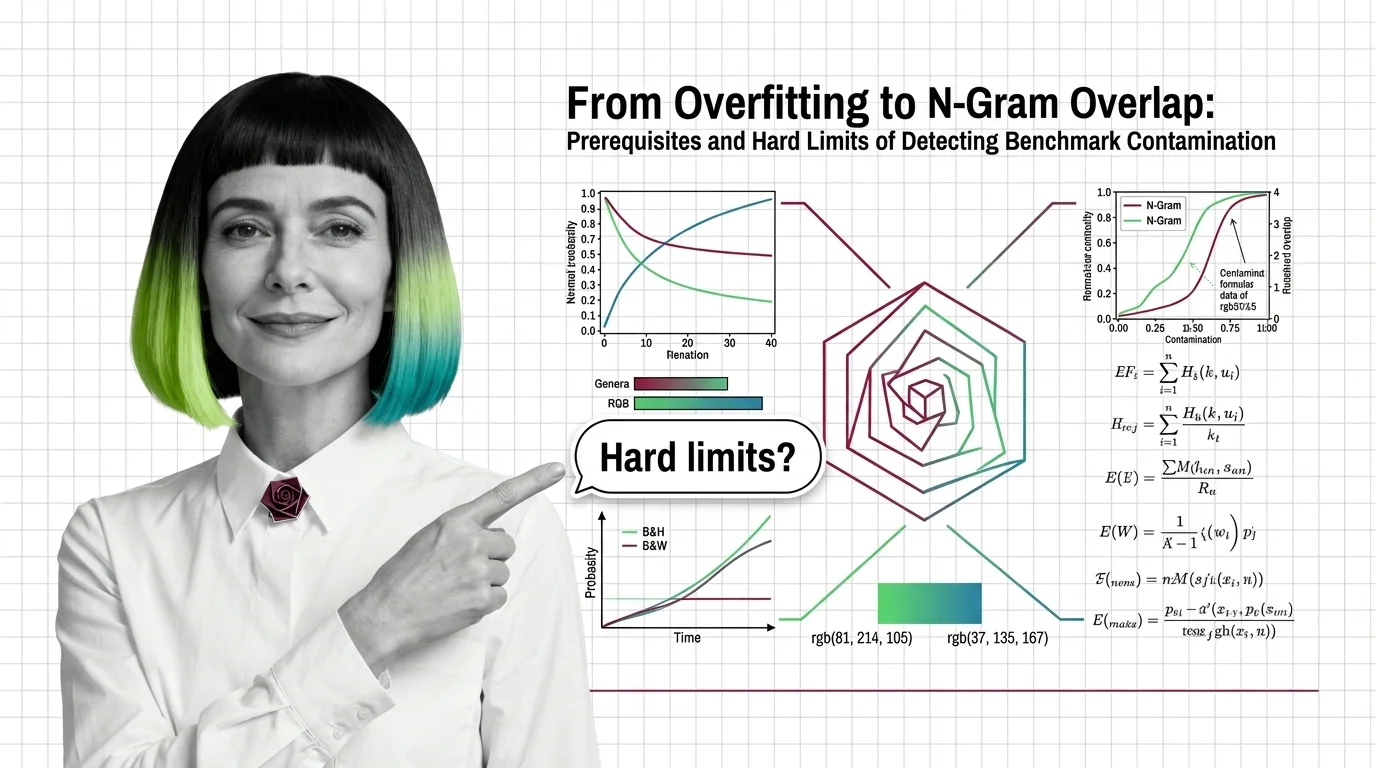
Start with how training-data overlap inflates evaluation scores — it turns “the score went up” into a specific, checkable mechanism: a leaked answer key sitting inside the training corpus. Follow it with the prerequisites and hard limits of detection, which explains why n-gram overlap checks and deduplication still miss most leakage at web scale, and why contamination behaves differently once training crosses Chinchilla-optimal scale.
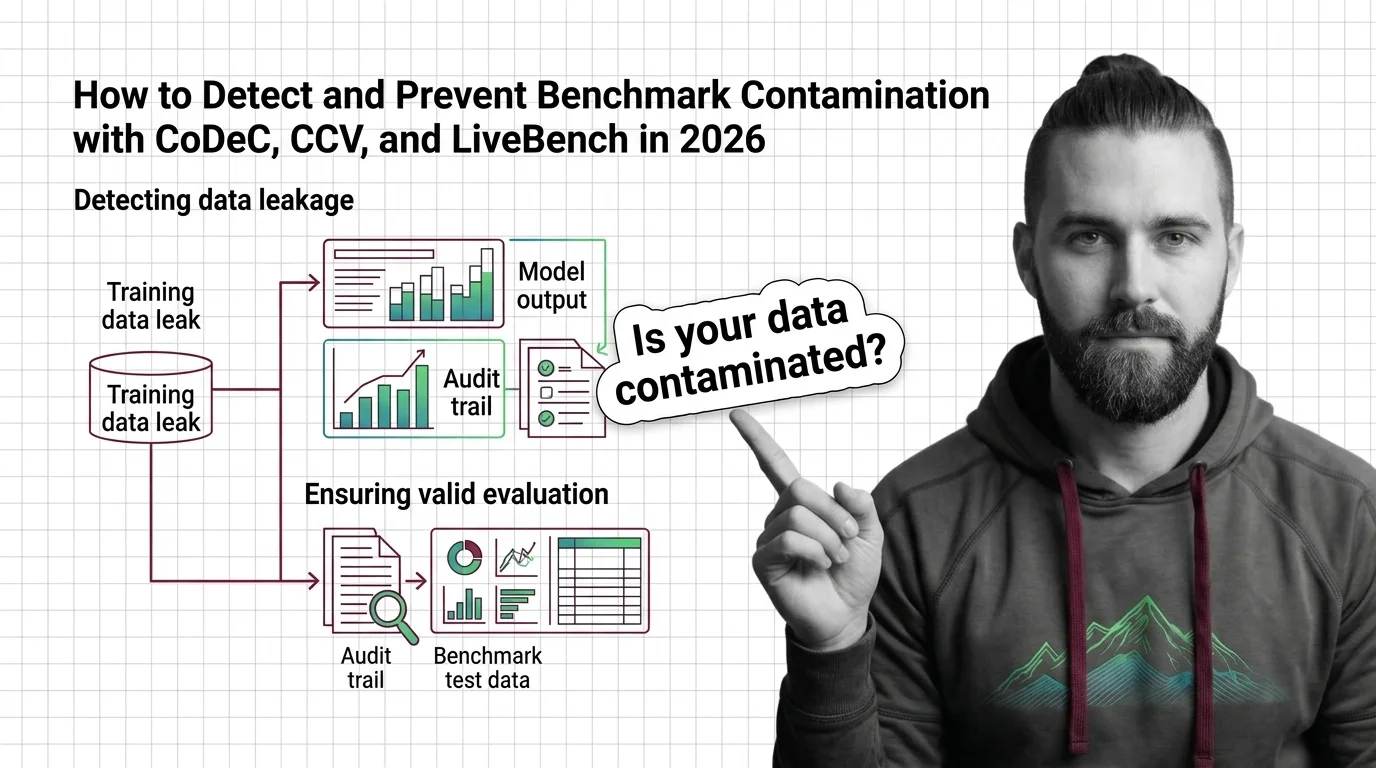
When you need to act on that, the detection and prevention guide walks through CoDeC, Cross-Context Verification, and contamination-resistant suites — a layered workflow, not a single gate. For the industry-wide version of the same problem, the 2026 race to build contamination-proof evaluation traces how compromised leaderboards shaped funding and hiring decisions before anyone checked the training data behind them. Close with the ethical cost of contaminated scores in AI procurement — read it before signing off on a vendor comparison built on leaderboard numbers alone.
A ten-point overnight jump proves memorization before it proves capability.
How benchmark contamination differs from saturation and judge failure
Two other explanations get blamed for the same symptom — a score that does not match production reality.
Contamination is not saturation. On the MMLU benchmark, frontier models now cluster within a few points of each other even where no leak is provable — that is saturation, the task no longer separating capability at the top. Contamination is a specific, tool-detectable event: this exact test set sits inside that training corpus. A saturated benchmark can be clean; a contaminated one can still have headroom left.
Contamination is not a judge failure.LLM-as-a-judge scores can drift from position bias or self-preference on data nobody leaked — a scoring-time distortion. Contamination corrupts the ground truth before any judge or harness ever runs; fixing one problem does nothing for the other.
Common questions about benchmark contamination
Q: Can a benchmark be contaminated and still be worth running?
A: Yes, if you pair it with detection — a documented leak does not make a benchmark useless, but any score from it needs a contamination check alongside it. The detection and prevention guide covers layering CoDeC or CCV against exactly this case.
Q: Is a leaked test set always the model creator’s fault?
A: Not necessarily — at web-scale pretraining, leakage is often structural rather than deliberate, with the same text landing in both the training crawl and a published benchmark. The prerequisites and hard limits of detection explains why overlap checks still miss most of it.
Q: Is the industry replacing contaminated benchmarks, or just patching around them?
A: Both, but replacement is gaining ground — contamination-resistant suites are adopted specifically because patched versions of the old benchmarks kept getting re-contaminated. The 2026 contamination-proof evaluation race tracks how far that shift has already gone.
Q: Who is actually responsible for verifying a vendor’s benchmark score before procurement?
A: Today, often no one — the score gets trusted at face value because no role in the chain owns re-verification. The ethical cost of contaminated scores in AI procurement argues that gap, not any single leaked dataset, is the real failure.
Q: Should I read the mechanism or the detection tooling first if I only have time for one article?
A: The mechanism first — how training-data overlap inflates scores explains what a detector is actually looking for, which makes the tooling in the guide something you apply correctly rather than by rote.
Benchmark contamination undermines the core assumption behind model evaluation — that test data is unseen. Understanding how and why leakage happens is essential to reading AI performance claims critically.
Benchmark contamination inflates LLM scores when training data overlaps with test sets. Learn how data leaks in and why memorization mimics true generalization.
Benchmark contamination and overfitting look identical in scores. Understand what n-gram overlap, deduplication, and scale reveal about detection limits.
2
Build with Benchmark Contamination
These guides cover practical detection methods, from overlap analysis to dynamic benchmark design, and the trade-offs each approach introduces when integrating contamination checks into your evaluation workflow.
Detect benchmark contamination in LLMs using CoDeC, CCV, and LiveBench. A step-by-step workflow for auditing evaluations and choosing resistant benchmarks in 2026.
3
What's Changing in 2026
The community is moving from static benchmarks toward live, regularly refreshed evaluation suites. Following this shift reveals how the field is adapting its measurement tools to keep pace with ever-larger training sets.
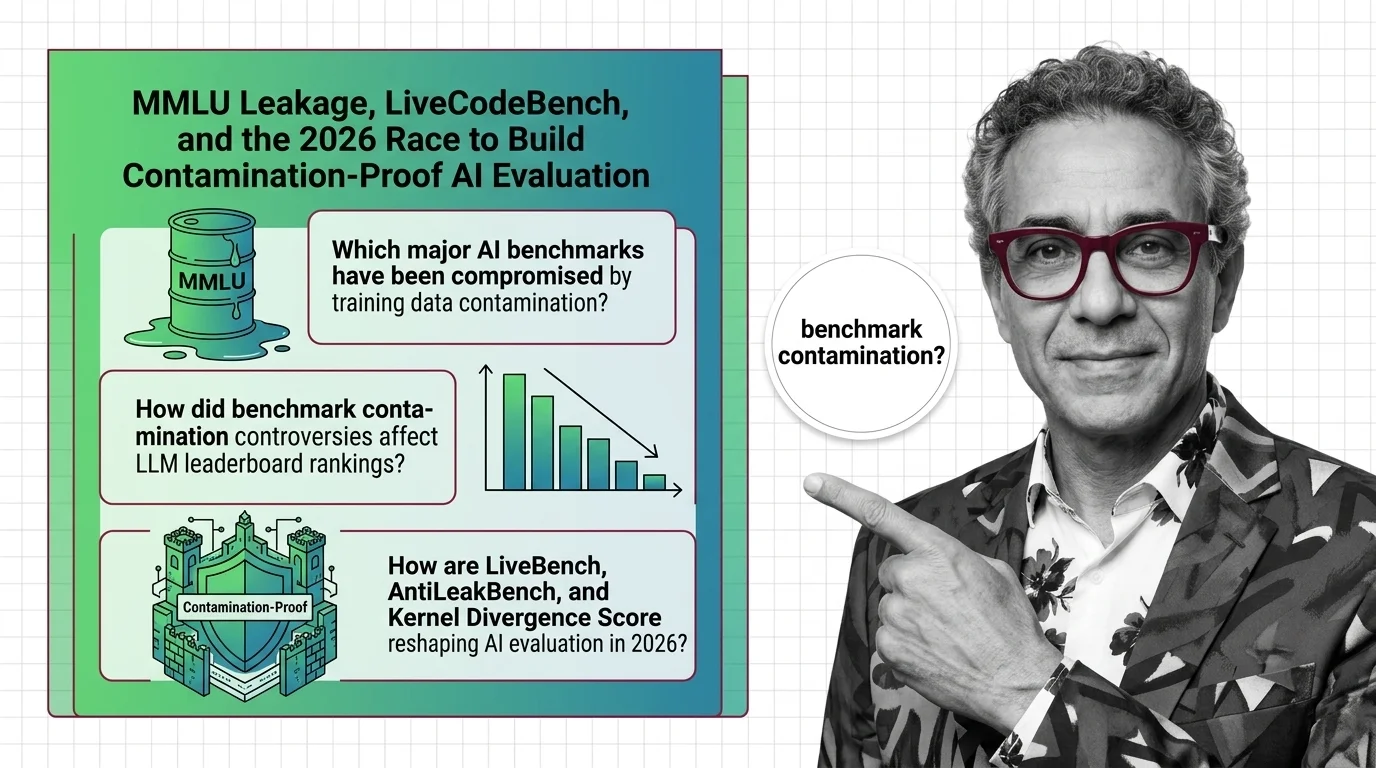
MMLU scores dropped up to 17 points when contamination was removed. How LiveBench, MMLU-CF, and new detection methods are reshaping AI evaluation in 2026.
4
Risks and Considerations
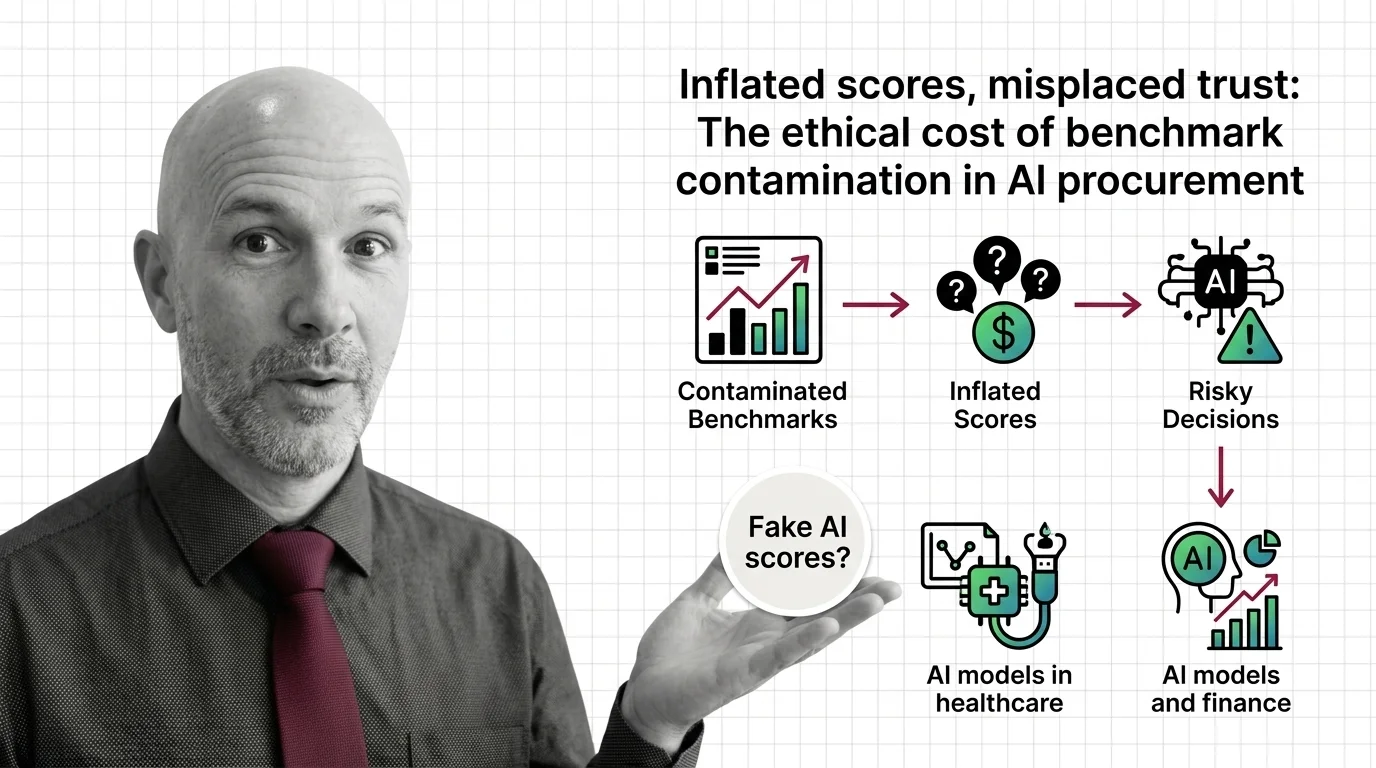
Inflated benchmark scores can drive flawed procurement decisions, erode public trust, and mask genuine capability gaps. Recognizing contamination risk is critical before relying on any published evaluation result.
Inflated benchmark scores shape AI procurement in healthcare and finance. An ethical examination of contamination, accountability gaps, and institutional trust.