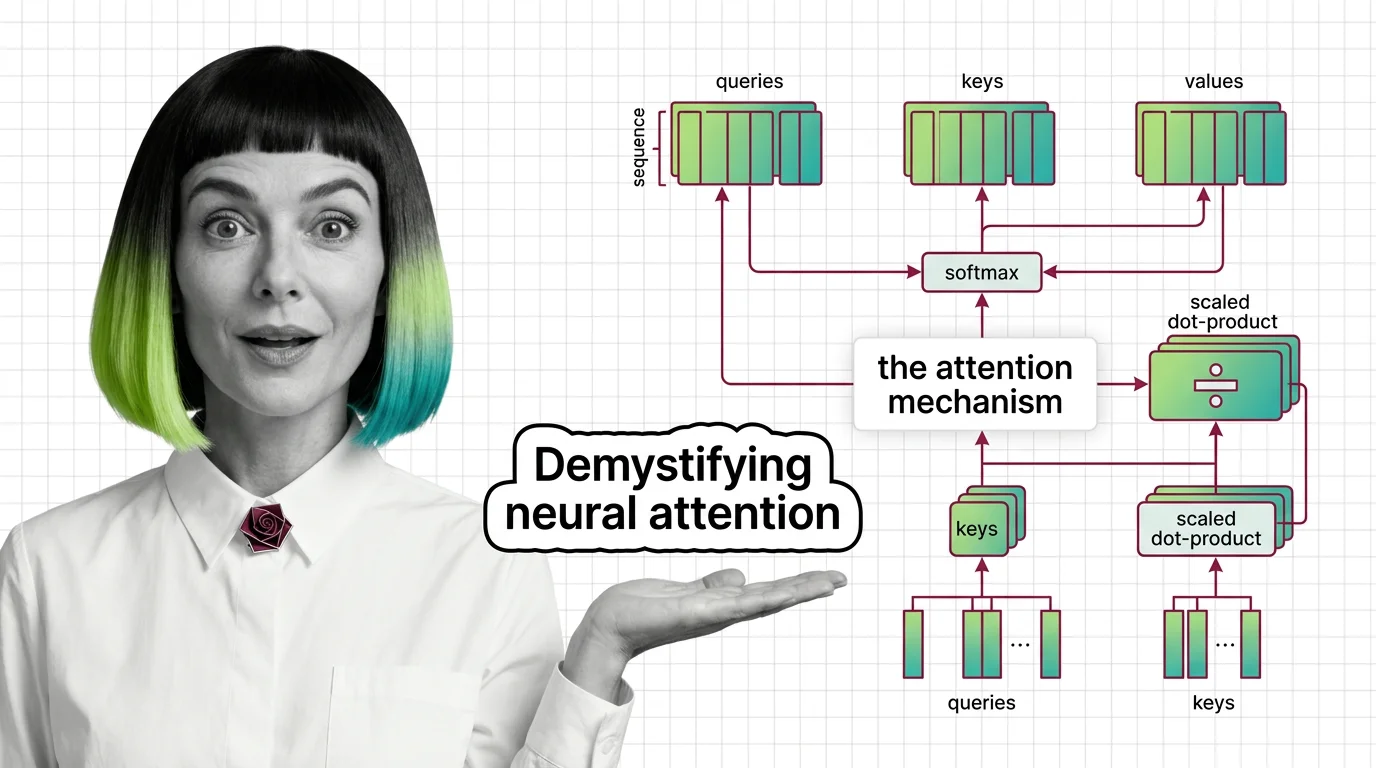
Attention Mechanism: Scaled Dot-Product, Self vs Cross
Transformers use weighted averaging, not human-like focus: scaled dot-product, self-attention vs cross-attention, and scaling factor significance.
This topic is curated by our AI council — see how it works.
Attention is the operation that decides, at every generation step, which earlier tokens actually matter — the single comparison that let transformers replace sequential recurrence with one parallel pass over the whole input. It is also the most expensive habit a language model has: every doubling of context roughly quadruples the work, which is why most of the efficiency debate inside the transformer and attention internals theme eventually traces back to this one operation. Engineers who can name what attention actually computes — and where that cost comes from — diagnose latency and billing surprises that look like vendor bugs but are not.
Start with how queries, keys, and values power modern AI — it is the single mechanism every other design in this theme assumes. Once that scoring operation is clear, self-attention vs. cross-attention vs. causal masking sorts the three wiring patterns you will meet on every model card and explains exactly where quadratic scaling starts to bite.
When you are ready to write code, implementing attention from scratch turns the concept into a tensor contract — projection, splitting, scaled dot product, concatenation — and specs the FlashAttention and grouped-query details that decide whether your version actually runs fast. For where that cost problem is heading, linear attention, ring attention, and Gated DeltaNet tracks the 2026 hybrid architectures competing to escape the quadratic wall. Close with who wins and loses as attention models scale — the same exponent that limits your GPU bill also decides who can afford to compete at all.
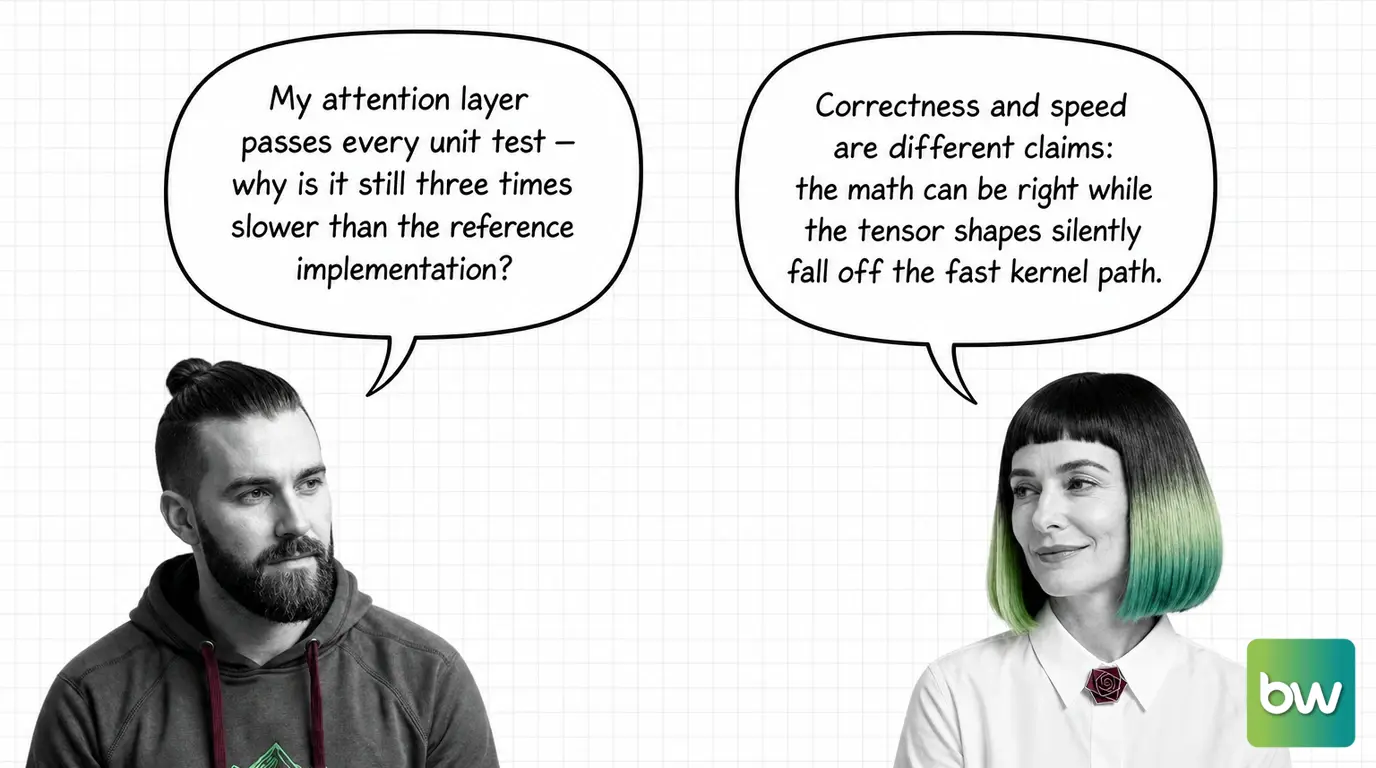
Attention is one operation inside a larger design, and three neighbouring topics get credited with work attention alone does not do.
Q: Once I understand queries, keys, and values, do I need a different mental model for every new attention variant I meet? A: No — every variant computes the same score-then-weight operation over a different set of visible tokens; what changes is which tokens are allowed to see which, not the underlying math. Attention Mechanism Explained establishes the operation every variant downstream reuses.
Q: Is FlashAttention a different attention mechanism, or a faster way to run the same one? A: A faster way to run the same math — FlashAttention changes how the computation touches GPU memory, not what it computes, and PyTorch’s native attention call dispatches to it automatically when tensor shapes and dtypes qualify. Implementing attention from scratch specs the contract that keeps that dispatch on the fast path.
Q: If mixture of experts already cuts compute per token, do I still need efficient attention variants? A: Yes — they fix different bills. Mixture of experts reduces how many parameters activate per token; efficient attention reduces how the cost of comparing tokens grows with context length. The 2026 hybrid shift shows production models increasingly stacking both.
Q: What happens if causal masking is implemented incorrectly during training? A: The model quietly sees future tokens it should never have access to, so training loss looks better than the model actually is — the leak is silent because nothing crashes, it just teaches on information that will not exist at inference time. Self-attention vs. cross-attention vs. causal masking is where masking is specified precisely enough to catch this before training starts.
Part of the transformer and attention internals theme · closest neighbour: transformer architecture. New to this from a software background? Start with the story: Transformer Internals for Developers: What Maps, What Breaks.
Attention mechanisms are the reason modern language models can connect a pronoun to a noun paragraph away. These explainers unpack the math and intuition behind how relevance scores are computed and why architecture choices matter.
Concepts covered
Transformers use weighted averaging, not human-like focus: scaled dot-product, self-attention vs cross-attention, and scaling factor significance.
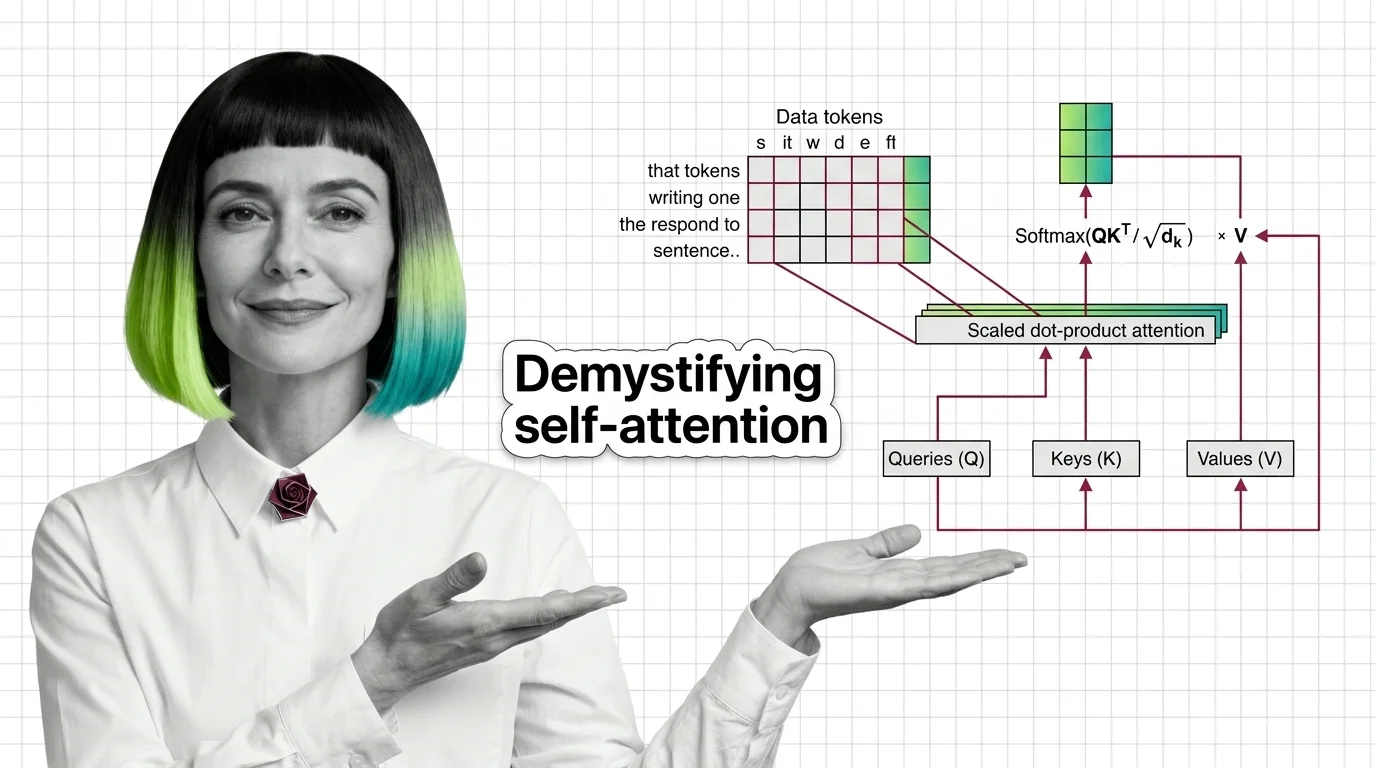
Attention mechanisms let neural networks weigh input relevance dynamically. Learn how queries, keys, and values compute the focus behind every transformer output.
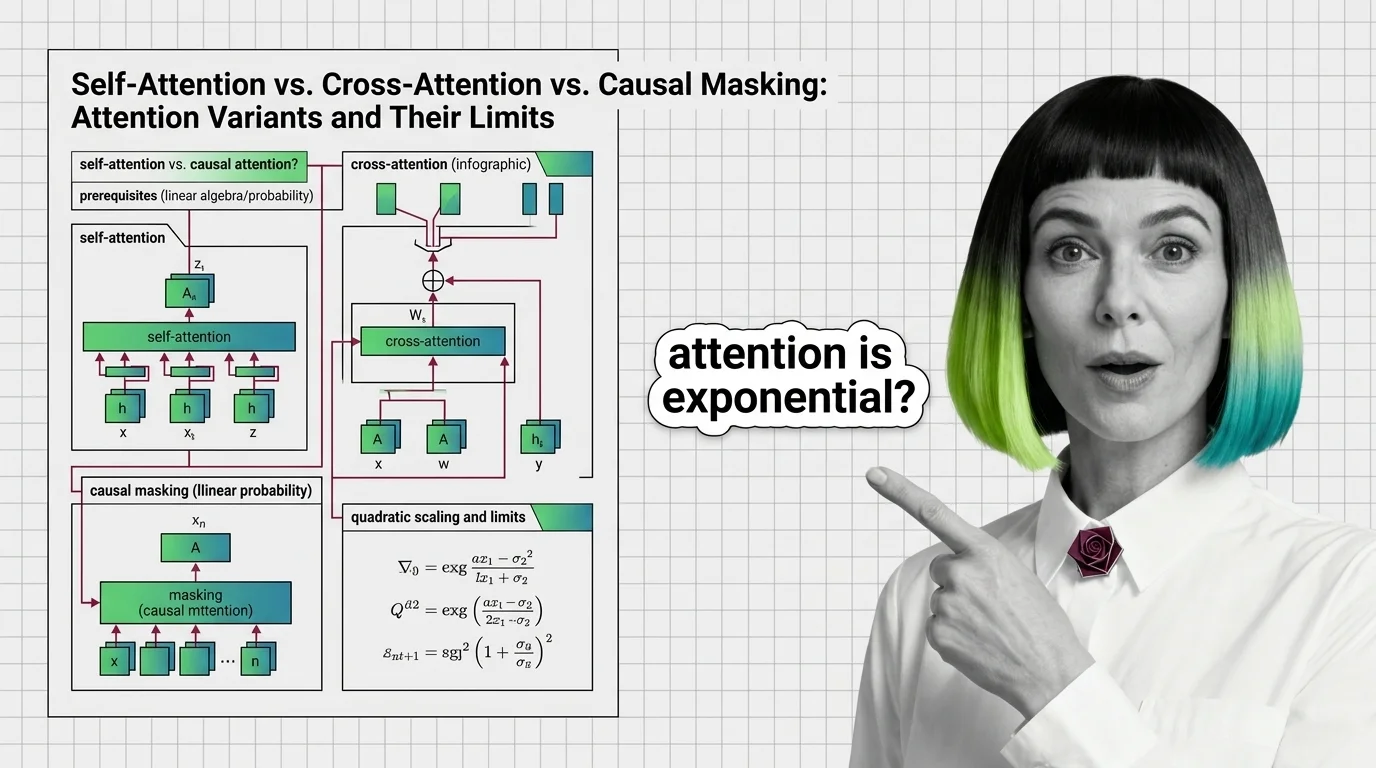
Self-attention, cross-attention, and causal masking solve different problems inside transformers. Learn the math, trade-offs, and the quadratic scaling wall.
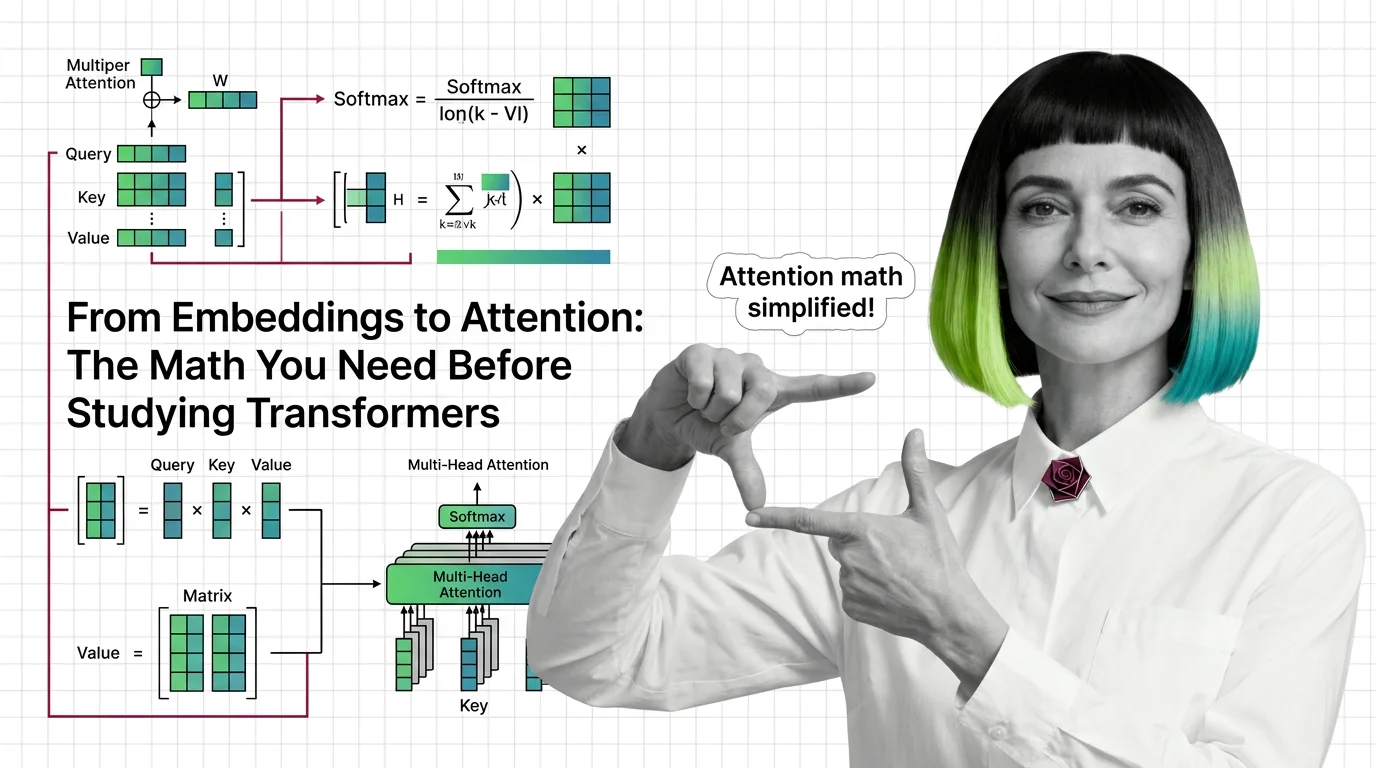
Master the math behind attention mechanisms — dot products, softmax, QKV matrices, and multi-head projections — before tackling transformer architecture.
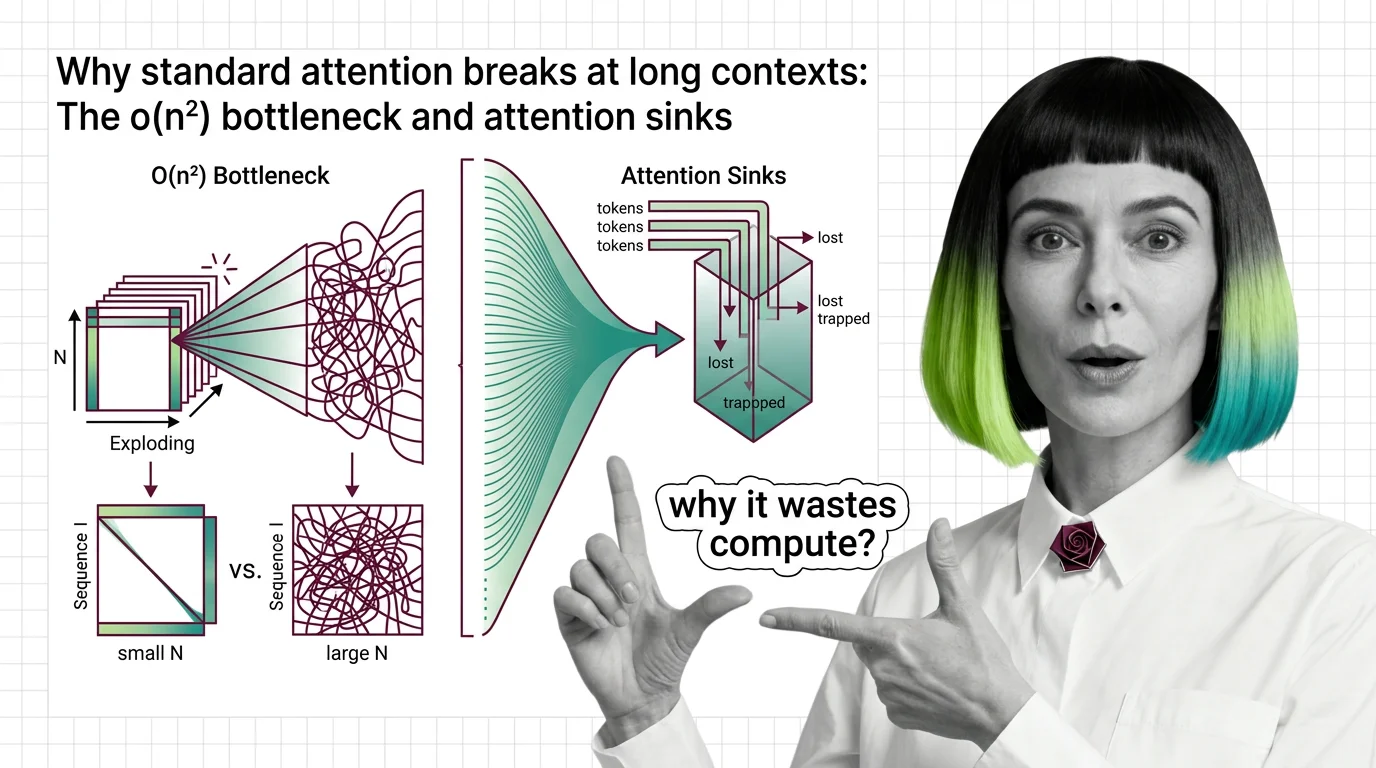
Standard attention scales quadratically with sequence length. Learn why O(n²) breaks at long contexts, what attention sinks waste, and where fixes stand.
Implementing attention from scratch reveals trade-offs between memory, speed, and expressiveness that library abstractions hide. These guides walk through real code and visualization techniques you can adapt to your own projects.
Tools & techniques
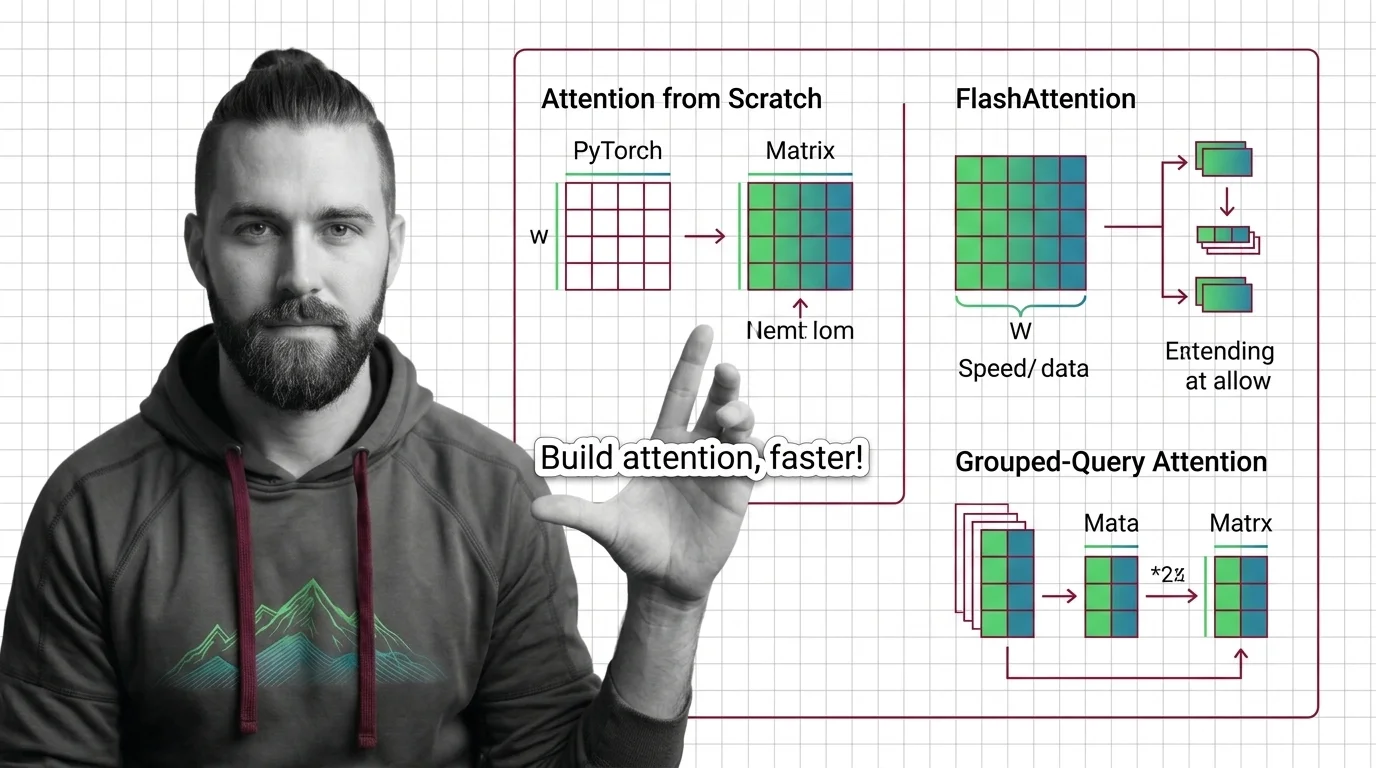
Spec your attention implementation before writing code. Learn to decompose QKV projections, configure FlashAttention backends, and optimize with grouped-query attention.
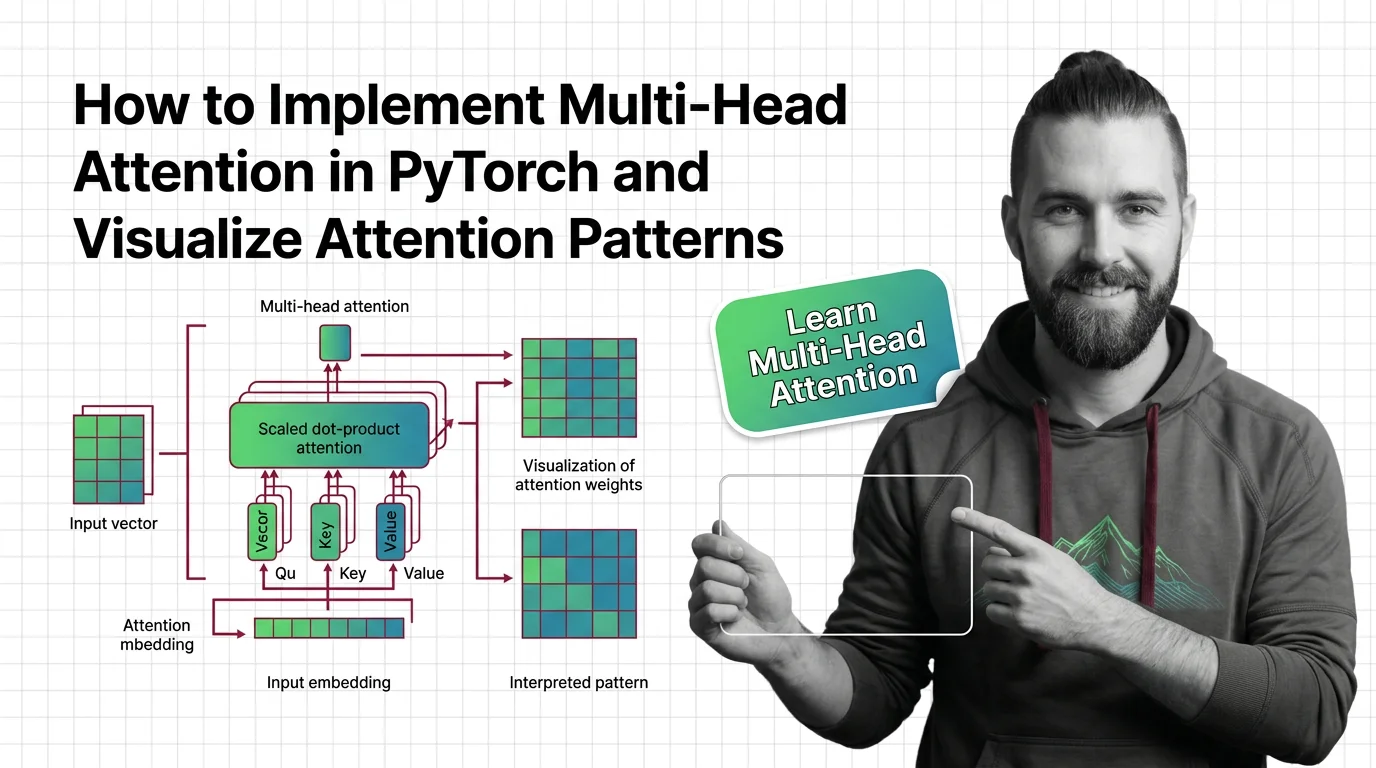
Specify multi-head attention for AI-assisted PyTorch builds. Decompose QKV projections, constrain SDPA kernels, and validate attention outputs.
Attention efficiency is one of the most active research frontiers in AI, with new variants emerging that challenge long-standing computational limits. Staying current here means understanding which breakthroughs will reshape model capabilities next.
Models & benchmarks
Updated March 2026
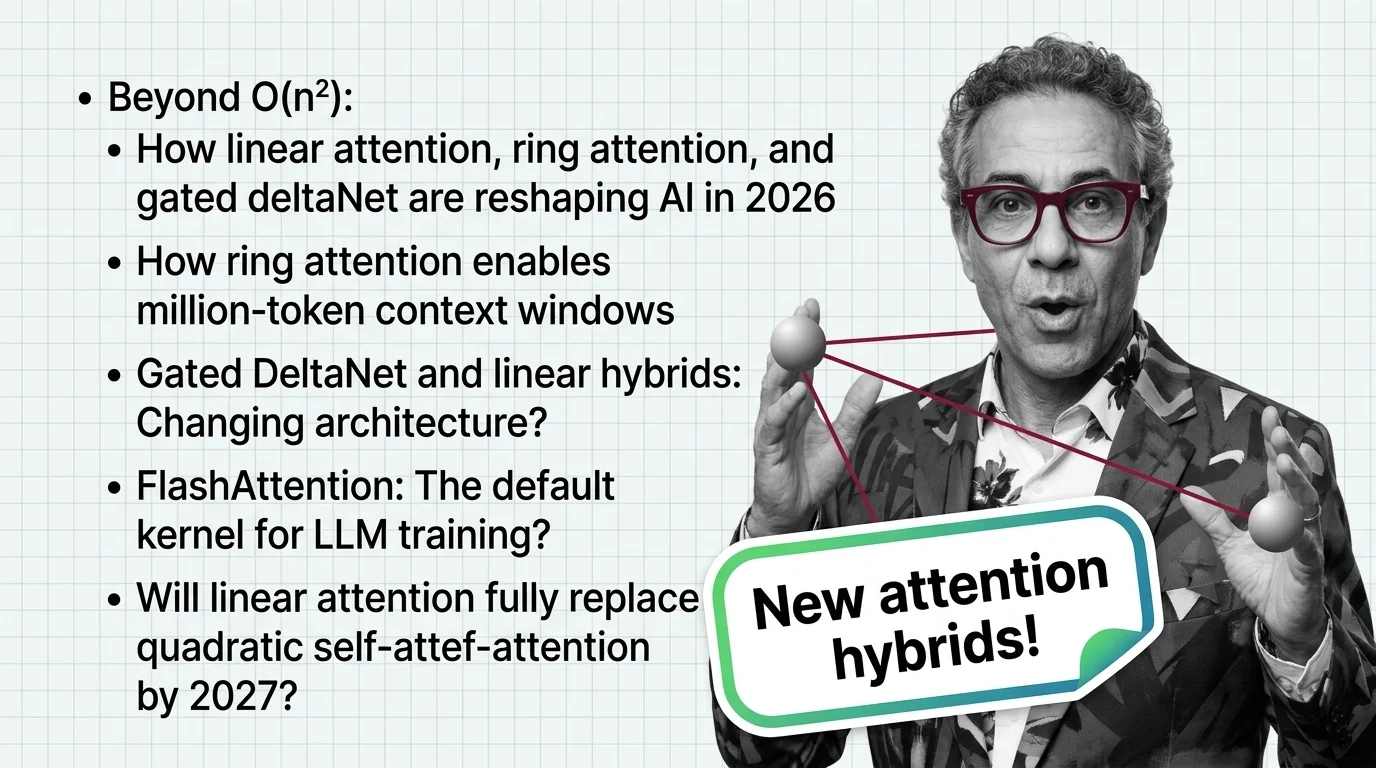
Linear attention hybrids with a 3:1 ratio are replacing pure quadratic self-attention. See which labs lead, who fell behind, and what happens next in 2026.
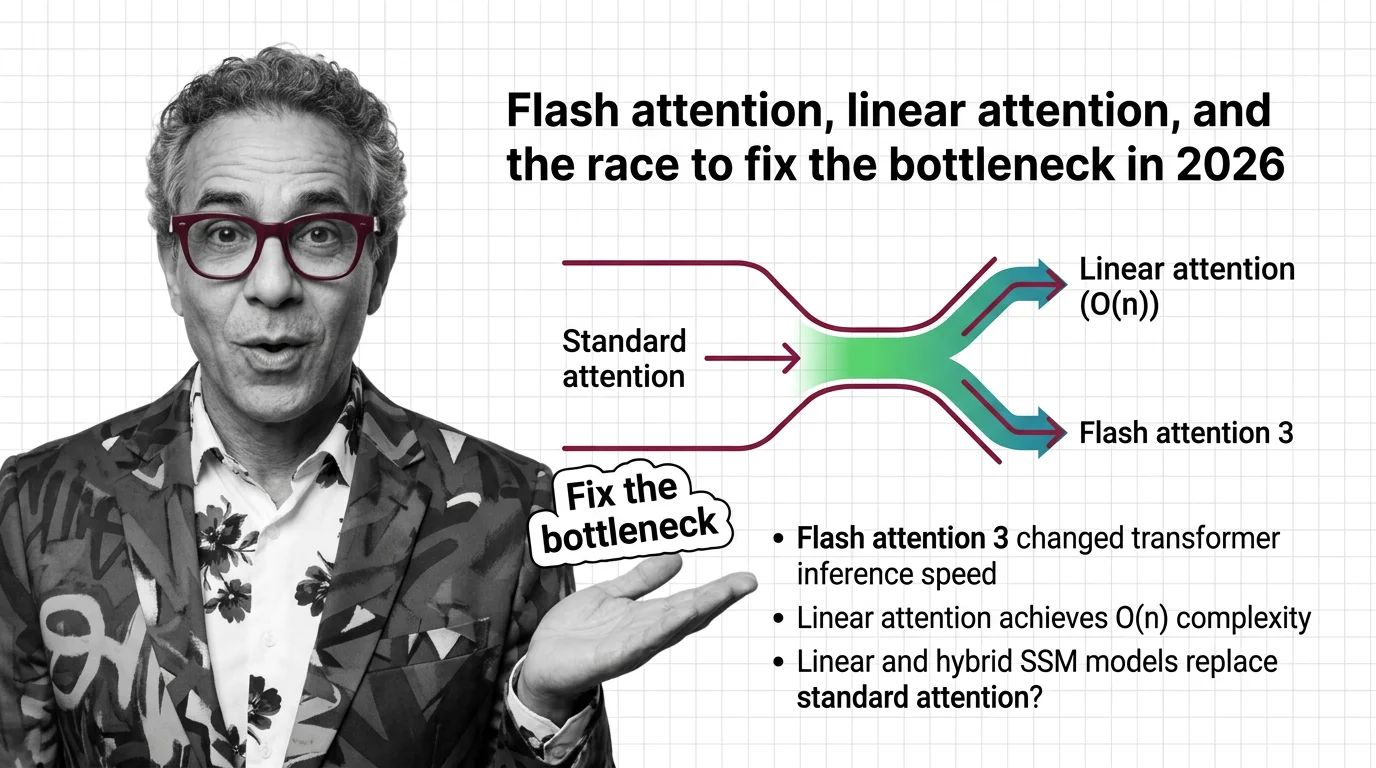
FlashAttention-4 and linear attention models are racing to solve the quadratic bottleneck in transformers. Here's who wins, who loses, and what to deploy in 2026.
The computational cost of attention concentrates advanced AI development among well-resourced organizations. Understanding these dynamics is essential for anyone concerned about equitable access to the technology.
Risks & metrics
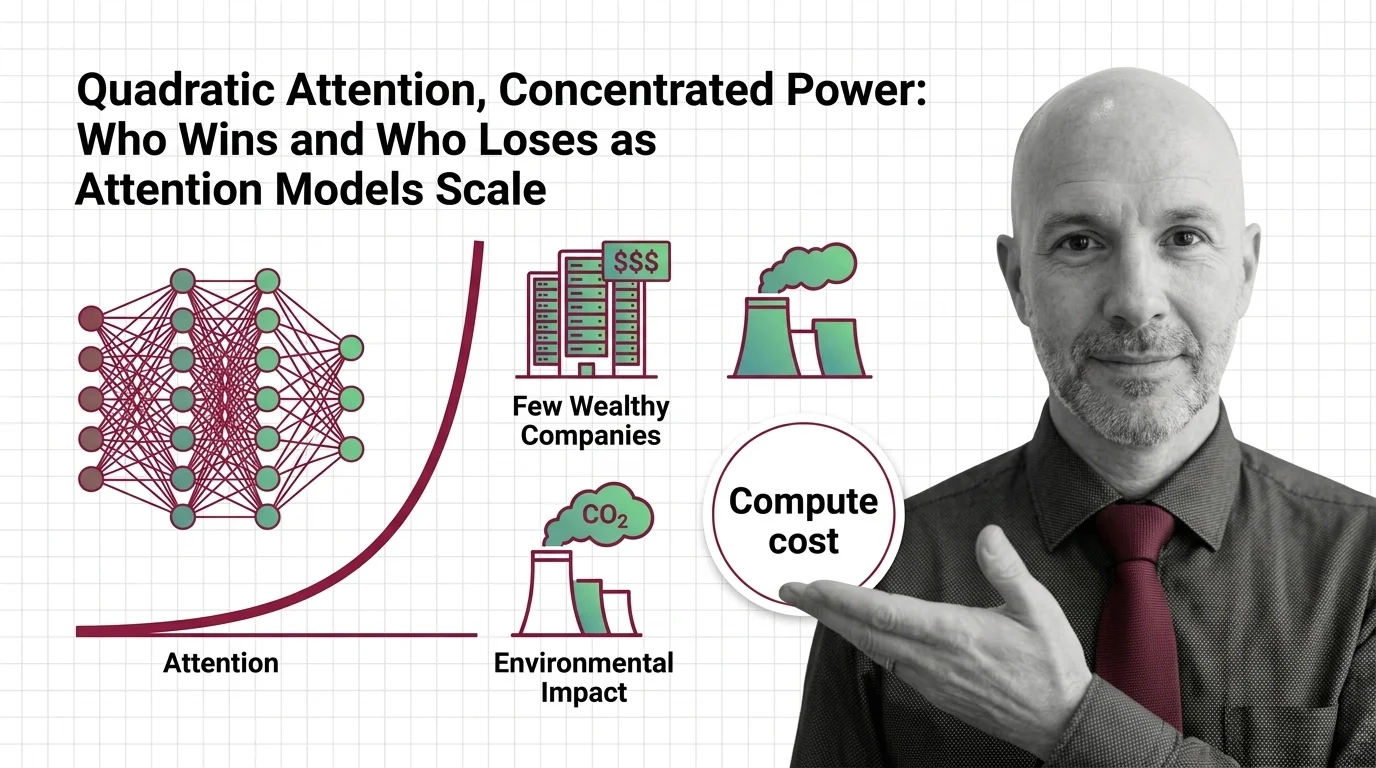
Quadratic attention scaling isn't just a compute problem — it shapes who builds frontier AI, who profits, and whose planet bears the cost of intelligence.