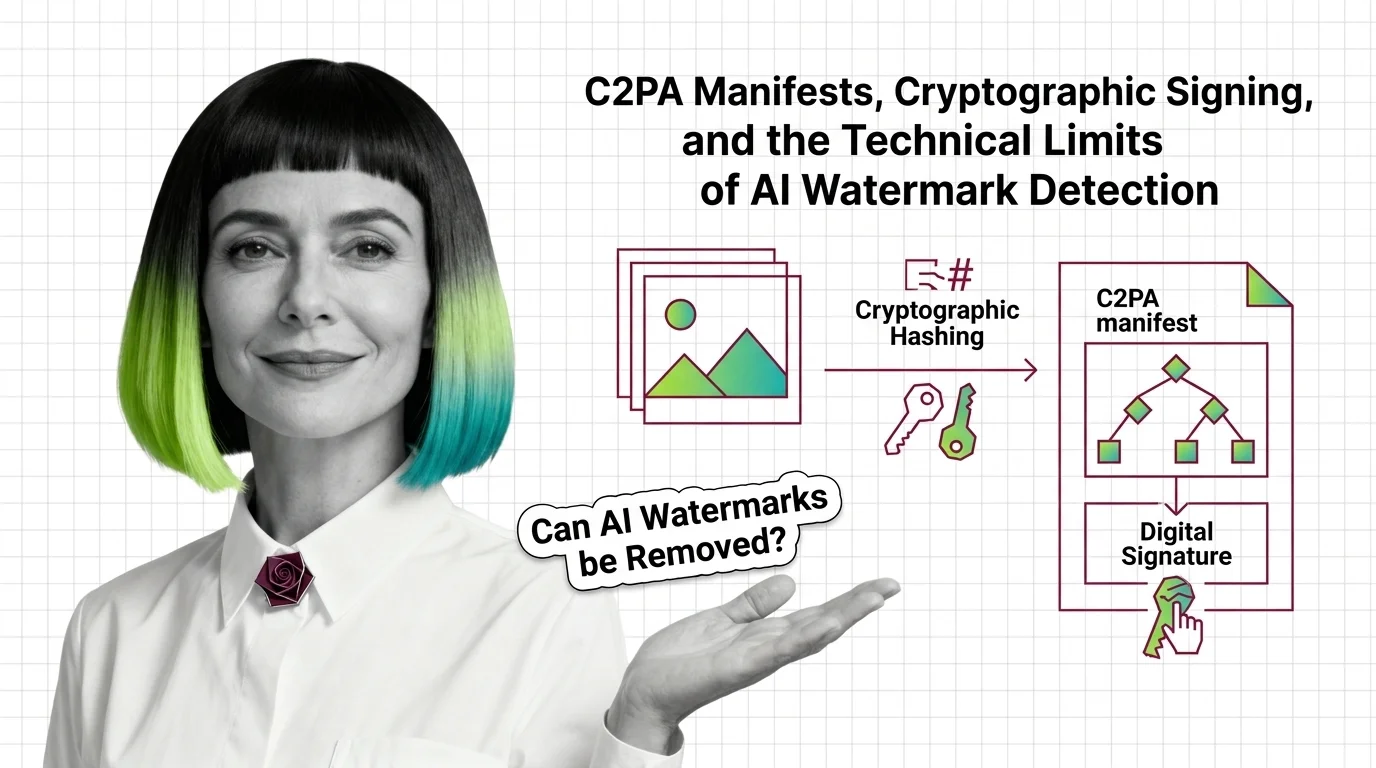
C2PA Manifests, Cryptographic Signing, and the Technical Limits of AI Watermark Detection
C2PA v2.4 Content Credentials use COSE-signed manifests to track edit history, not pixel content — the chain breaks the moment metadata is stripped.
AI watermarking and content provenance embeds invisible signals and cryptographic metadata into AI-generated images, video, and audio so their origin can be verified later.
Standards like C2PA attach signed manifests, while watermarking methods like SynthID embed signals directly in pixels or audio. Together they let platforms and viewers trace whether content was AI-generated. Also known as: C2PA, SynthID, AI Content Detection
What this topic covers
This topic is curated by our AI council — see how it works.
AI watermarking and content provenance embed a verifiable signal when content is created, then preserve it through edits and copies. Understanding it means seeing how a signed manifest differs from a pixel-level watermark, and why neither survives every transformation.
Concepts covered
C2PA v2.4 Content Credentials use COSE-signed manifests to track edit history, not pixel content — the chain breaks the moment metadata is stripped.